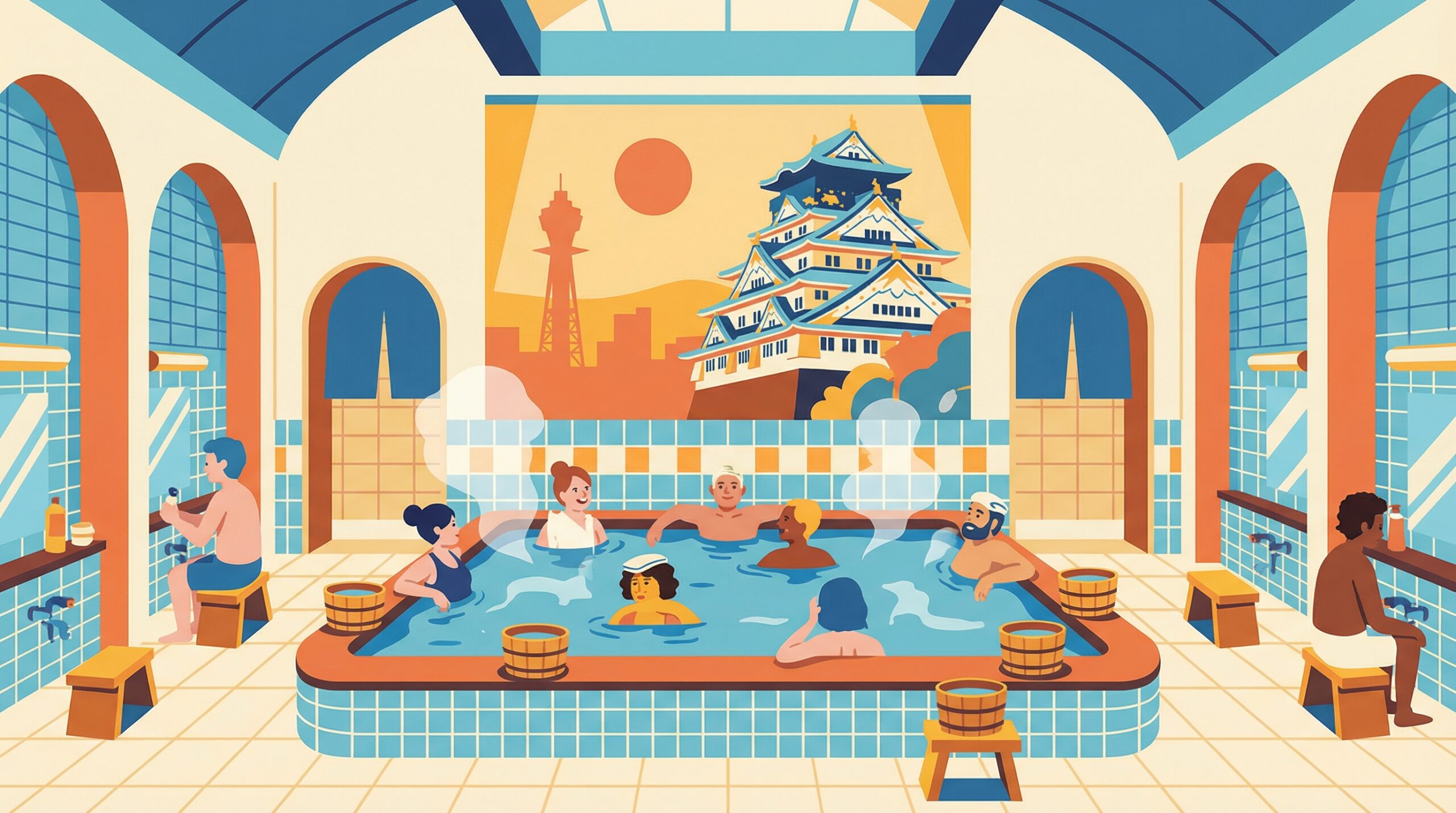
Welcome to Osaka, a city that pulses with an electric energy, a symphony of sizzling takoyaki, booming vendor calls, and the nonstop shuffle of a metropolis that never seems to sleep. It’s a place of incredible warmth, a city that greets you with an open-hearted, “Maido!” and pulls you into its vibrant embrace. Yet, for all its boisterous charm, finding your own quiet rhythm, a genuine connection to the soul of the city, can feel like a quest. You can wander through the neon-drenched streets of Dotonbori, explore the hallowed grounds of Osaka Castle, and eat yourself into a blissful stupor, but where do you find the city’s heartbeat? Where do you go to understand the people who make this place so special? The answer, my friend, is steaming behind the unassuming noren curtains of a neighborhood sento, the Japanese public bathhouse. Forget the grand temples and towering landmarks for a moment. The true sanctuary, the living room of the community, is a place where steam rises to meet worn tile ceilings, where the sound of splashing water is a backdrop to the day’s gossip, and where social statuses are left in a wicker basket with your clothes. The sento is not merely a place to get clean; it is a profound cultural institution, a place to soak away the stresses of the day and, most importantly, a place to connect. It’s where you can break the ice, literally and figuratively, and immerse yourself in the warm waters of local life. This is your guide to navigating that beautiful, steamy world, to transforming from a curious outsider into a welcomed participant in one of Osaka’s most cherished daily rituals.
After experiencing the profound cultural institution of a sento, you might be inspired to learn how to integrate a neighborhood sento into your daily Osaka routine.
The Heartbeat of the Neighborhood: More Than Just a Bath

To truly appreciate the sento, one must understand that its essence is deeply rooted in history, serving as a living relic from a time when private bathrooms were not common in every Japanese home. For centuries, these bathhouses were fundamental to daily life, as indispensable as the local rice vendor or tofu maker. They acted as great equalizers, where a merchant and a craftsman could sit side by side in the same steaming water, leaving behind their daily concerns and worldly belongings in the changing room. This idea is beautifully captured by the phrase hadaka no tsukiai, meaning “naked communication” or “naked fellowship.” It conveys the notion that once clothes, uniforms, and social status symbols are removed, people meet as equals. This fosters a unique form of raw, unfiltered honesty and camaraderie. Although modern apartments have lessened the sento’s role as a daily necessity, its importance as a community hub remains, perhaps growing even more meaningful in today’s increasingly isolated digital age. In a vast city like Osaka, the neighborhood sento serves as an anchor, offering comforting routines and familiar faces. It is where elderly residents find companionship, parents teach bathing customs to their children, and friends reconnect after a long week. The air, heavy with steam and the aroma of hinoki wood or citrusy yuzu peels in the winter bath, is also rich with stories, laughter, and the quiet hum of human connection. This is especially true in Osaka, a city known for its friendly, down-to-earth, and talkative people. Osakans are famous for their openness and love of engaging conversation (oshaberi), and the sento provides the perfect setting for this. It is a place where conversations flow as freely as the water, breaking down walls that might exist on a crowded train or in a formal office environment. Here, you are not only cleansing your body but also taking part in a ritual that has united communities for generations. You are stepping into a stream of living history, a warm and welcoming current carrying the city’s spirit.
Your First Dip: A Step-by-Step Sento Survival Guide
Approaching a sento for the first time can feel somewhat daunting. The traditional architecture, the unfamiliar characters on the curtains, and the mystery of what lies beyond can be overwhelming. But don’t worry. The process is straightforward, logical, and designed to ensure comfort and cleanliness. Think of it not as a strict set of rules but rather as a gentle etiquette dance that guarantees a relaxing experience for all. Let’s take a journey together—from the front door to the serene post-bath glow.
Before You Go: The Sento Starter Kit
Preparation is minimal, which is part of the charm of the sento. The essentials are what you’d expect for any bathing experience. You’ll need two towels: a small, thin one (often called a “modesty towel” or washcloth) and a larger bath towel for drying off afterward. Bring along your soap, shampoo, and conditioner. Many Japanese people keep a dedicated “sento set” in a small plastic caddy. However, if you decide to go spontaneously, you’re usually covered. Most sento sell these items in single-use packets for a nominal fee, and you can often rent towels at the front desk. This is known as the tebura setto, or “empty-handed set.” So really, all you need to bring is yourself, a few hundred yen for the entrance fee, and an open mind. As for what to wear, it doesn’t matter at all. You’ll be shedding your clothes shortly after arrival, so wear whatever feels comfortable for your trip there and back.
Entering the Sanctuary: From Genkan to Datsuijo
Your sento experience begins at the entrance, or genkan. Here, you’ll find rows of small shoe lockers. Remove your shoes, place them inside a locker, and take the wooden key, usually attached to a large tag or wristband so it’s not easily lost. Passing through the noren curtain, you’ll enter the main lobby, where the reception desk, or bandai, awaits. In older sento, this may be a raised platform where the owner sits, overlooking both the men’s and women’s changing rooms. In newer places, it’s a standard front desk. Here, you’ll pay the entrance fee, typically a government-regulated amount, around 500 yen for adults in Osaka. Hand your money to the friendly attendant—often a kindly grandmother (obachan) or grandfather (ojisan) who has run the place for years—and they will direct you to the correct changing room. The entrances are clearly marked, usually blue for men (男) and red for women (女). Now inside the changing room, or datsuijo, you’ll find a transition zone between the outside world and the bath’s inner sanctum. It’s a shared space filled with lockers, wicker baskets, benches, and occasionally a vintage massage chair or an old-fashioned large-dial scale. Find an empty locker or basket for your clothes. It’s time to undress completely. Though it might feel strange if you’re not used to it, remember that no one is watching or judging. This is the place of hadaka no tsukiai, after all. Fold your clothes neatly, store them with your large bath towel in the locker, and lock it. You’ll only take your small towel and toiletries with you into the bathing area.
The Main Event: Mastering Bathroom Etiquette
As you slide open the door to the bathing area, you’ll be greeted by warm, humid air and the sound of flowing water—this is where the main etiquette begins. The first and most vital step is the kakeyu. Near the entrance to the baths, you’ll find large vats of hot water and basins. Before touching the main tubs, you must rinse your body thoroughly. Scoop several basins of water and pour them over yourself, starting from your feet and moving up to your shoulders. This serves two purposes: cleansing any surface dirt before entering the communal water and helping your body adjust to the baths’ heat. After your kakeyu, proceed to the washing area, the araiba. Rows of faucets, each with a plastic stool and bucket, await you. This is where you wash properly. Sit down—it’s considered rude to wash standing, as you may splash others—and give yourself a thorough scrub with soap and shampoo. Be mindful of those nearby; try not to spray suds or water onto others. Once finished, rinse your stool and surrounding area with the showerhead or bucket. Now you’re ready for the soak. With your body clean, you can enter the tubs. Lower yourself in slowly and sigh with contentment—it’s a universal sento sound. Your small towel should never go into the bath water. You can place it on the side of the tub or, as many regulars do, fold it and balance it on your head. It may look amusing, but it’s proper etiquette. Osaka sento often offer a delightful range of baths: a standard hot tub (atsuyu), a slightly cooler one (nuruyu), powerful jet baths (jetto basu) to massage your back, and sometimes a daily or weekly herbal bath (kusuriyu). One unique and startling feature is the denki buro, or electric bath, where a low-level electric current passes between two plates in the water. Sitting between them causes muscles to tingle and contract. It’s reputed to ease soreness but can be an unusual sensation—approach with caution! Don’t linger too long in any one tub. Japanese bathing style involves alternating between soaking, stepping out to cool down, and perhaps washing again before entering another bath. Listen to your body and avoid overheating.
Post-Soak Bliss: The Art of Relaxation
Once you’ve soaked enough, it’s time to return to the everyday world. Before stepping back into the datsuijo, use your small towel to pat off excess water. This simple courtesy helps keep the changing room floor dry. Back in the changing room, grab your large, dry towel and finish drying off. The moments after bathing are just as important as the soak itself. Your body will feel refreshed, warm, and relaxed—a sensation the Japanese call poka poka. This is the perfect time to rehydrate. Look for the classic post-sento drink: a cold bottle of milk, often fruity (furutsu gyunyu) or coffee-flavored (kohi gyunyu), served in an old-fashioned glass bottle. There’s something uniquely satisfying about sipping one after a hot bath. Take your time. Sit on a bench, cool off in front of a large fan, and simply enjoy the feeling of complete relaxation. Often, conversations from the bath carry over here—a final moment of community before everyone dons their daily armor again and steps back into the night.
Breaking the Ice: From Silent Soaker to Sento Regular

Now that you’ve mastered the basics, how do you move from being a silent, anonymous visitor to feeling like a part of the community? In Osaka, that transition is easier than you might expect. The key is to start small and show respect for the space and its established rhythms. Osakans value politeness and a cheerful attitude, and the sento is the perfect place to practice a few simple Japanese phrases that go a long way.
The Unspoken Language of the Bath
Much of the communication in a sento is non-verbal. It’s found in the small nods of acknowledgement, the slight bow as you pass someone in a narrow space, and the simple act of keeping your area clean. When you enter the changing room, a quiet “Konnichiwa” (Hello) or “Kombanwa” (Good evening) to the room at large is a friendly gesture. You don’t need to make direct eye contact with everyone, but it signals that you are a friendly presence. When you leave the bathing area or the changing room, if others are around, it’s polite to say, “Osaki ni” or “Osaki ni shitsureishimasu,” which roughly means, “Excuse me for leaving before you.” These small verbal cues serve as the social lubricant of the sento. They show that you understand and respect the communal nature of the space and open the door for more interaction.
Sparking a Conversation in the Steam
Osakans are naturally curious, especially about foreigners who show interest in local customs. Don’t be surprised if someone strikes up a conversation with you. It often begins with a simple observation. The most common and effective icebreaker is about the water itself. A fellow bather might turn to you and say, “Ii oyu desu ne” (“This is nice hot water, isn’t it?”). A simple agreement—“Hontou desu ne, kimochi ii desu” (“It really is, it feels great”)—is all it takes to get the conversation started. From there, it can go anywhere. They’ll likely ask where you’re from (“Doko kara kimashita ka?”). Your answer will often be met with enthusiasm and perhaps a story about a time they traveled or a piece of trivia they know about your country. Other easy topics include the weather, local food recommendations, or a comment about the Hanshin Tigers, Osaka’s beloved and often beleaguered baseball team. The key is to be open and friendly. Don’t worry about making grammatical mistakes; your effort to communicate will be warmly welcomed. The jouren-san, or the regulars, are the heart and soul of any sento. These are mostly elderly people who have been coming to the same bathhouse for decades. They know everyone and everything. At first, they might seem like a tight-knit clique, but they are also the gatekeepers of the sento’s welcoming atmosphere. If you show up consistently, smile, and follow the etiquette, you’ll gradually be accepted into their ranks. They might start saving your favorite spot by the faucet for you or offer you a travel-sized bottle of a fancy shampoo they’re trying. Such small gestures indicate you have been welcomed.
A Gallery of Osaka Sento Personalities
Every sento is a microcosm of its neighborhood, a stage for a rotating cast of characters. Pay attention, and you’ll begin to recognize the archetypes. There’s the group of obachan who gather in the lukewarm bath, their chatter rising and falling with the steam, a symphony of local gossip and laughter. There are the silent, stoic old men, their bodies weathered by time, who seem able to withstand impossibly hot temperatures without flinching. You’ll see fathers patiently teaching their young sons how to wash properly, a quiet, tender moment of generational bonding. You’ll notice young salarymen and students, their faces tense from a long day, visibly relaxing as the hot water works its magic. And then there are the tattooed individuals. While many gyms and onsen still have strict rules against tattoos due to their historical association with the yakuza, the local sento is often much more tolerant. It remains one of the few public bathing spaces where people with tattoos can often bathe without issue, reinforcing its role as a place for everyone in the community. Observing this diverse tapestry of humanity sharing a simple, peaceful ritual is a powerful reminder of our shared need for warmth, cleanliness, and connection.
An Explorer’s Guide to Osaka’s Diverse Sento Scene
Not all sento are made alike. Just as each neighborhood in Osaka has its own unique character, so do its bathhouses. Exploring various sento offers a wonderful way to experience the city. From enduring traditional establishments to contemporary spa-like complexes, there’s a bath to match every mood and curiosity.
The Classic Neighborhood Spot: A Journey Through Time
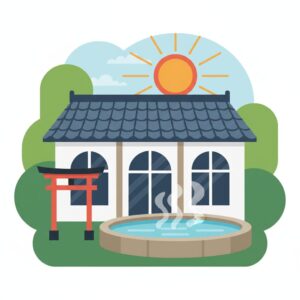
These are the sento from your imagination, those that have endured for generations. Look for distinctive architecture: an impressive, temple-like entrance with a curved karahafu gable and detailed wooden carvings. Inside, the charm continues. Changing rooms often feature high, latticed ceilings and creaky wooden floors. The highlight of the bathing area is usually a large Mount Fuji mural painted on the tiles above the tubs—a tradition that continues even here in Kansai, far from Fuji-san’s watchful gaze. Other common motifs include majestic carp, scenes from Japanese folklore, or beautiful local landscapes. The tilework itself can be artistic, with colorful patterns and intricate mosaics. These sento are typically simple, no-frills venues. The emphasis is on the quality of the water and the pure pleasure of a hot soak. You’ll find them tucked away in residential neighborhoods and down the side streets of old shotengai (shopping arcades). Visiting one feels like stepping into a living museum, a beautifully preserved glimpse of Showa-era Japan.
The “Super Sento”: Modern Amenities and Entertainment
On the opposite end are the “super sento.” These are larger, more contemporary facilities that feel less like simple bathhouses and more like comprehensive wellness centers. For a slightly higher entrance fee (usually between 800 and 1500 yen), you gain access to a wide range of amenities. The bathing areas in super sento are often extensive, featuring a dozen or more kinds of baths. You might find carbonated baths that cover your skin with tiny, tingling bubbles, silky micro-bubble baths, and elaborate outdoor sections (rotenburo) with rock gardens, waterfalls, and sky views. Besides the baths, super sento almost always include various saunas—from dry Finnish saunas to herbal steam rooms—and the essential mizuburo, or cold water plunge pool. The cycle of hot bath, sauna, and cold plunge is regarded as the ultimate way to relax and rejuvenate the body. But the experience goes beyond the bath. Super sento usually have relaxation lounges with reclining chairs and personal TVs, large manga libraries, restaurants serving everything from ramen to draft beer, and on-site massage and spa services. You can easily spend half a day at a super sento, making it a perfect activity on rainy days or a luxurious way to unwind. Places like Tennen Onsen Naniwa no Yu in the Tenjinbashisuji area offer a fantastic rooftop rotenburo with city views, all at a very reasonable price.
Hidden Gems and Distinctive Baths
Between the traditional classics and the modern giants lies an intriguing middle ground of unique and quirky sento. As you explore Osaka, watch for bathhouses with a special twist. Some highlight the mineral quality of their well water, promoting themselves as a local onsen (natural hot spring) even though they are technically sento (using heated tap water). Others may have specific themes, such as a sento that changes the aromatic wood in its sauna weekly. Some have gained fame for their art, commissioning modern artists to create striking murals that revitalize the old spaces. There’s a growing community of “sento runners,” young enthusiasts organizing events, creating guides, and working to preserve and promote bathhouse culture. Their social media channels are excellent resources for discovering hidden gems and learning about special events, like a sento that fills its tubs with fragrant iris leaves on Children’s Day or yuzu fruit on the winter solstice. Don’t hesitate to explore different parts of the city and discover what you find. A sento in the working-class Nishinari district offers a completely different vibe than one in the more upscale Kitahorie neighborhood.
The Sento’s Ripple Effect: Exploring the Neighborhood

The sento experience does not occur in isolation; it is closely connected to the life of the surrounding neighborhood. One of the best ways to enjoy a sento is to incorporate it into a broader local exploration, serving as the perfect conclusion to an afternoon of wandering.
The Pre-Sento Walk
Arrive in the neighborhood an hour or two before your planned bath time. Many of Osaka’s finest sento are situated near bustling shotengai. These covered shopping streets are the lifeblood of local life. Take a leisurely stroll through one. Breathe in the sweet and savory aroma from a takoyaki stand. Browse the goods in a small shop selling handmade ceramics or traditional sweets. Watch the fishmonger skillfully slice sashimi. This pre-sento walk is an excellent way to awaken your senses and soak up the area’s distinctive character. It heightens anticipation for the relaxation ahead and connects you to the community you’re about to join in the bath.
The Post-Sento Meal
Arguably the most delightful part of the ritual. After you step out of the sento, clean, warm, and completely relaxed, your body is perfectly ready for a tasty meal and a cold drink. This is the classic Osaka combination: bath, beer, and B-grade gourmet food. The streets around neighborhood sento are typically dotted with small, unpretentious eateries—izakaya, standing bars (tachinomi), okonomiyaki spots, and kushikatsu restaurants. Entering one of these places in your post-sento glow is pure joy. Order a frosty mug of draft beer (nama biiru) and enjoy the cold liquid warming your core. It’s one of the most satisfying sensations imaginable. Pair it with classic Osaka soul food. The salty, savory taste of grilled skewers, a sizzling cabbage pancake, or deep-fried treats perfectly complements your relaxed state. This post-sento feast continues the sense of community you experienced in the bath. You might even spot some fellow bathers sharing a drink at the counter. A nod and a smile across the room seal that connection. This is living like a local at its finest—a simple, deeply satisfying routine of cleansing, nourishing, and bonding. Walking home through the quiet streets, your belly full and your body warm, you’ll feel a profound sense of peace and belonging.
Preserving a Fading Culture: The Future of Sento
It’s impossible to discuss the beauty of sento without recognizing the challenges they face. With private bathrooms becoming commonplace, the number of sento throughout Japan has been steadily decreasing for decades. Many are operated by elderly owners whose children have chosen different career paths, and the rising costs of fuel and upkeep make it difficult to keep the business afloat. Each time a sento closes, a neighborhood loses a piece of its soul—a vital community space where bonds are formed and traditions are preserved. However, the story is not entirely bleak. A passionate and growing movement is emerging to protect and revitalize these cultural treasures. Young entrepreneurs are taking over their family bathhouses, renovating them with modern aesthetics while retaining their traditional charm. Artists are transforming sento into canvases for breathtaking public art projects. Communities are organizing stamp rallies and events to encourage visits to local baths. As a foreigner living in Osaka, you have a unique opportunity to contribute to this preservation effort. Every time you pay the entrance fee, you’re casting a vote for the survival of that establishment. You are not merely a tourist experiencing something; you are an active participant in the cultural life of the city. By embracing the sento, you help ensure this warm, wonderful tradition continues to thrive for future generations. Your presence shows that the sento’s appeal is universal, transcending language and cultural barriers.
A Warm Invitation
So, there you have it. The unassuming Osaka sento is far more than just a place to wash. It serves as a time capsule, a community hub, a wellness sanctuary, and a classroom for cultural appreciation, all combined into one warm, inviting space. It’s a place to wash away the city’s grime and daily stresses, leaving you feeling refreshed, renewed, and deeply connected to the world around you. Any initial shyness or hesitation will quickly dissolve in the heat and the sincere, down-to-earth friendliness of the people you encounter. The water is warm, and the locals are waiting. Take a deep breath, push aside the noren curtain, and dive in. Step into the steam. You might discover that the true heart of Osaka lies not in its famous landmarks or lively markets, but in the quiet, shared joy of a neighborhood bathhouse.