So you’ve been in Osaka for a few weeks. You’re getting the hang of it. You know which train line gets you to Umeda without a hassle, you’ve found your favorite takoyaki stand, and you can order a beer without pointing. You’re feeling good. Then, it happens. You ask a friendly local for a recommendation. Maybe it’s for the best okonomiyaki in Tenma. They light up, their hands start moving, and they give you a passionate, detailed, and utterly convincing speech. “Ah, you gotta go to that place just past the shotengai entrance, the one with the green noren curtain! They use yam in the batter, makes it super fluffy. Best in the whole city, no doubt. My cousin’s friend went last week, said it changed his life.” You’re sold. You’re ready to go. And then, just as you’re saying thank you, they hit you with it, a little shrug and a grin: “Shiran kedo.”
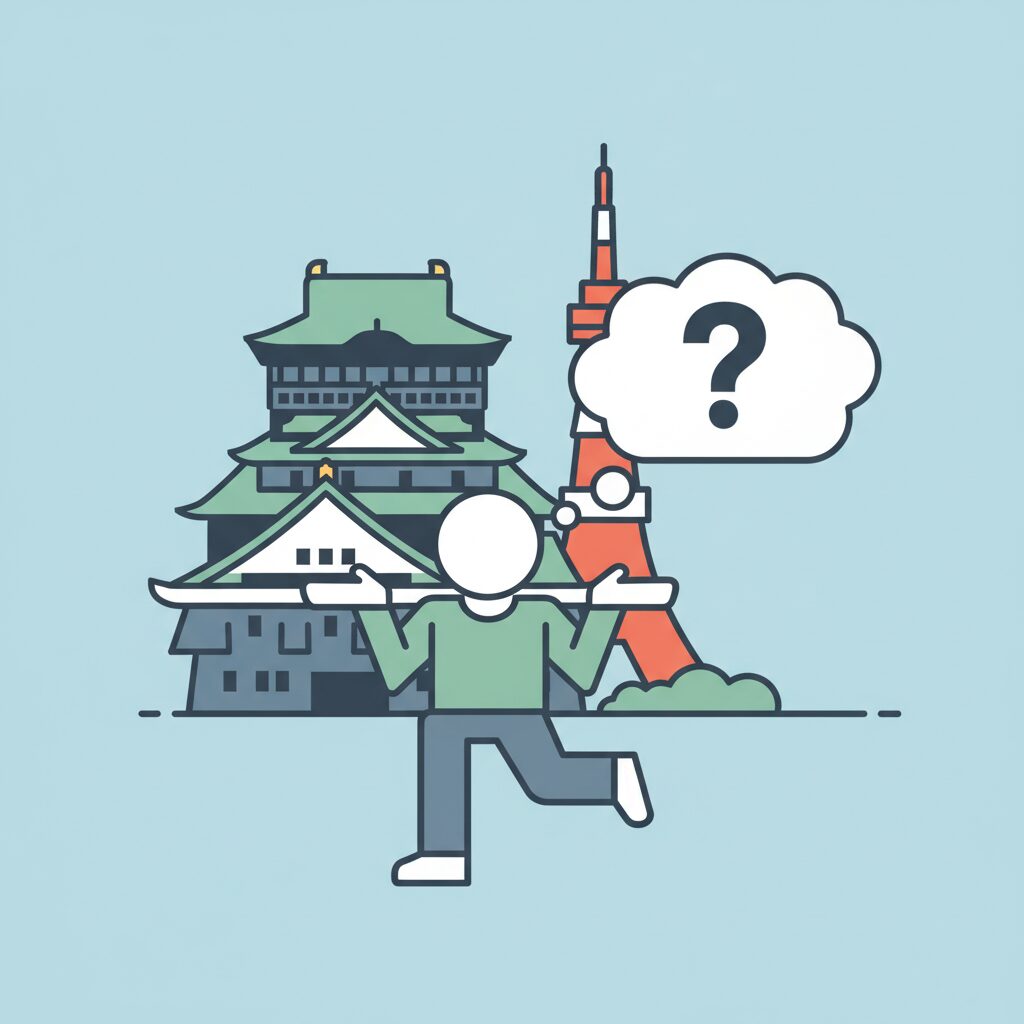
Wait, what? 知らんけど. Shiran kedo. “I don’t know, though.” It’s like a conversational whip-crack that leaves you spinning. Did they just undo everything they said? Are they lying? Are they messing with you? Welcome, my friend, to one of the most fundamental, confusing, and ultimately revealing quirks of the Osaka dialect. This isn’t just a phrase; it’s a worldview packed into four syllables. It’s the key to understanding the city’s rhythm, its people’s pragmatism, and the beautiful, chaotic dance of daily conversation. Forget what you learned in your formal Japanese textbook. We’re going deep into the heart of what makes Osaka, Osaka. And to understand this city, you have to understand its casual uncertainty. Before we dive in, let’s get our bearings on the map. This whole vibrant theater of conversation plays out across these streets.
As you continue exploring the city’s unique conversational rhythm, consider how Osaka’s vibrant Nebaru spirit underpins many of its everyday interactions.
What ‘Shiran Kedo’ Actually Means
Let’s cover the basics first. If you input “shiran kedo” into a translator, you’ll get something like “I don’t know, but…” or “Although I’m not sure.” While that’s technically accurate, it completely misses the essence of the phrase. It’s like describing a rollercoaster simply as “a vehicle that moves on a track.” You lose the excitement, the screams—the entire point of the experience. In Osaka, “shiran kedo” is rarely just a straightforward admission of ignorance. It’s a complex, multifunctional expression that shapes the flow of conversations. It acts as a verbal garnish, a social lubricant, and a philosophical statement all at once.
The Literal Translation and the Reality
The gap between the literal and functional meanings is huge. In standard Japanese, if you’re uncertain about something, you might say a more formal and clear phrase like 「確かではありませんが…」 (tashika dewa arimasen ga…), meaning “I’m not certain, but…” This carries a degree of seriousness, signaling that the following information should be taken cautiously. It’s a precise way to express doubt.
“Shiran kedo,” however, is a conversational Swiss Army knife. It’s tacked onto the end of statements often delivered with absolute confidence. The speaker doesn’t sound uncertain—in fact, they sound completely convinced. The phrase isn’t a prelude to a guess; it’s an epilogue to a declaration. This is the first thing that confuses foreigners. The tone and words don’t seem to align. This contrast is intentional. It’s the magic of the phrase. It allows speakers to share information, opinions, or gossip enthusiastically without bearing the weight of strict factual accuracy. It’s communication designed for speed and connection, not rigorous truth. Think of it less as a factual assertion and more as an offering—a piece of conversational kindling to keep the fire burning.
The Sound of Osaka Conversation
To truly understand it, you need to hear it in its natural setting. Imagine this: you’re at an izakaya in Kyobashi, the noise is loud, and the beer is flowing. Two friends are talking about a new employee at their company. One says, 「新しい田中さん、めっちゃ仕事できるらしいで。前の会社でなんかすごい賞もろたとか。」 (“That new Tanaka-san is said to be super competent. Heard he won some big award at his last company.”) The other friend nods, takes a sip of their highball, and adds, 「ああ、なんか東大卒らしいやん。そら頭ええわな。知らんけど。」 (“Yeah, and I heard he graduated from Tokyo University. No wonder he’s smart. Shiran kedo.”)
Break it down. The second friend isn’t genuinely doubting Tanaka’s intelligence. They’re adding an interesting, unverified detail (the prestigious university) to the story. The “shiran kedo” at the end does several things simultaneously: it signals hearsay, shields the speaker from being accused of lying if Tanaka graduated elsewhere, and, most importantly, casually passes the conversational ball. It’s an open invitation for the other person to contribute their own unconfirmed tidbit. It keeps the rhythm going. Conversation in Osaka is like a game of catch, and “shiran kedo” is the gentle underhand toss that ensures no one drops the ball. It’s not about being right; it’s about playing the game.
The Four Faces of ‘Shiran Kedo’
Once you start paying attention to it, you’ll notice that “shiran kedo” takes on many different forms. It acts like a chameleon, shifting its color and function based on the situation. Recognizing these various “faces” is essential to understanding its true meaning in any context. It’s not just a single phrase, but a versatile toolkit for navigating Osaka’s social dynamics.
Face 1: The Responsibility Deflector
This is the most well-known and practical use of the phrase. It serves as a simple yet effective get-out-of-jail-free card. In a culture that often stresses the importance of providing accurate information, Osaka creates room for advice that’s helpful but not guaranteed. It’s a method to contribute to a solution without taking full responsibility for its outcome.
Picture yourself lost in the complex underground mall of Umeda. You ask someone where the exit to the Hankyu department store is. A Tokyoite might hesitate, pull out their phone, check Google Maps for the exact route, and then give you detailed, step-by-step directions, feeling responsible for delivering accurate info. An Osakan, however, is more likely to confidently gesture down a long hallway and say, “Just go straight down there, you’ll see a big red sign, turn left, and you should come out right in front of it. Shiran kedo.”
Are they being careless? Not at all. From Osaka’s viewpoint, they’re being extremely helpful. They’ve shared their best guess based on experience, saving you the trouble of looking it up yourself. The “shiran kedo” is the crucial second half of the message. It means: “Here’s what I think. It’s probably correct. But you’re smart, so use your own judgment and don’t blame me if you end up somewhere else. We’re in this together.” It shifts the final responsibility to the listener, establishing a subtle partnership. This reflects the city’s merchant roots: be quick, be helpful, close the deal, and move on. Don’t let perfect become the enemy of good.
Face 2: The Conversation Softener
This aspect of “shiran kedo” aims at maintaining social harmony, but in a distinctly Osaka style. It’s used to express a strong opinion, critique, or potentially controversial idea without sounding arrogant or confrontational. It acts as a verbal buffer that softens the impact of a bold statement.
For example, when discussing the ongoing rivalry between Osaka and Tokyo, someone might passionately say, 「やっぱ東京のうどんはアカンわ。出汁の色が濃すぎるし、味も辛いだけやん。大阪の透き通った出汁が一番うまいって。知らんけど。」 (“Man, the udon in Tokyo just isn’t good. The broth is too dark and it’s just salty. Osaka’s clear dashi is the best in Japan. Shiran kedo.”)
Without “shiran kedo,” this would come across as a direct challenge, a clear line drawn in the sand. It’s a definitive, almost aggressive statement. But by adding that little phrase at the end, the speaker transforms it. It becomes less of an absolute fact and more of a personal perspective. It says, “This is my strong belief, and I think I’m right, but I’m not looking to start a fight. It’s just my opinion.” It leaves space for friendly disagreement. It allows people to express passionate regional pride without causing tension. In a culture that often avoids direct confrontation, “shiran kedo” is a clever way to share honest opinions casually and non-threateningly. It’s the difference between slamming a door and leaving it slightly open.
Face 3: The Humorous Punchline
This is where “shiran kedo” truly embodies Osaka’s identity as Japan’s comedy capital. The city is renowned for Manzai, a style of stand-up featuring a funny man (boke) and a straight man (tsukkomi). In everyday talk, people often play these roles, and “shiran kedo” serves as a classic punchline, the ultimate boke move.
A speaker will craft an absurd, exaggerated, or completely made-up story with a serious tone. They’ll lead you further and further into the ridiculous until you’re either puzzled or starting to believe it. Then, at the peak of absurdity, they’ll drop a perfectly timed “shiran kedo,” causing the whole thing to collapse into laughter. It’s a verbal pratfall.
For instance, an old man at a bar might deadpan, “You know, the Tsutenkaku Tower actually receives signals from outer space. That’s why the Billiken statue’s feet are so shiny—from all the alien energy. If you rub them, you get good luck from another galaxy. Shiran kedo.” The phrase is a wink to the audience. It acknowledges that everything he said was nonsense meant for a good story and shared laugh. This is a core part of local humor—the ability to not take anything, especially oneself, too seriously. It reminds us that sometimes conversations aren’t about exchanging facts but simply enjoying talking with someone.
Face 4: The Shy Person’s Shield
Though often delivered with confidence, “shiran kedo” also has a gentler, more understated use. It can serve as a shield for someone who is a bit shy or unsure about offering knowledge. It’s a humble way to provide information without sounding like a know-it-all.
Imagine a younger employee talking to their older, more experienced boss. The boss is complaining about a slow computer. The young worker might know a potential fix but offering direct advice can be tricky in Japanese workplace culture. So they might say, 「あの、もしかしたら再起動したら直るかもしれません。知らんけど。」 (“Um, maybe if you restart it, it might help. Shiran kedo.”)
Here, the phrase isn’t about shifting responsibility or being funny. It expresses respect. It says, “I have an idea that might help, but you’re the boss and know more than I do, so please don’t feel pressured to follow my suggestion. This is just a humble proposal.” It allows the junior employee to be helpful without overstepping. It’s a way to contribute while maintaining humility. In a culture that values modesty, “shiran kedo” offers a safe way for anyone to share an opinion or knowledge, regardless of rank, making communication feel more equal and less daunting.
‘Shiran Kedo’ and the Osaka Mindset
This small phrase acts as a thread; tugging on it begins to unravel the entire tapestry of the Osaka mindset. It’s more than a verbal tic—it’s the audible embodiment of the city’s core values. It reflects a history and way of life that sharply contrasts with the more rigid and formal culture of Tokyo.
Pragmatism Over Perfection
Osaka has long been a city of merchants, traders, and entrepreneurs. From the rice brokers of the Edo period to today’s small factory owners, business is the city’s lifeblood. In business, speed and practicality often outweigh slow, meticulous perfection. The priority is making the deal, shipping the product, and satisfying the customer. There’s no time to write a 100-page report verifying every detail.
The “shiran kedo” mindset channels the spirit of the merchant into conversation. The aim is to be helpful and efficient—offer the information you have, add a disclaimer, and let the other person move on with their day. It’s a culture that trusts others to be smart enough to figure things out. This contrasts sharply with Tokyo, where corporate culture often demands absolute precision. In a Tokyo office, sharing unverified information might be deemed unprofessional. In an Osaka workshop, providing a quick, helpful tip with a “shiran kedo” is seen as efficient and collaborative. It’s about results, not process—a belief that communication should keep pace with life, not the speed of a fact-checking department.
The Anti-Authoritarian Streak
For centuries, Tokyo (formerly Edo) has been the center of government, power, and samurai bureaucracy. Osaka, by contrast, was the nation’s kitchen, a city run by merchants who often had more money but less social status than the ruling class. This history bred a healthy skepticism of authority and a fiercely independent spirit—Osakans dislike being told what to do or think.
“Shiran kedo” subtly expresses this attitude. It’s a way of saying, “This is my opinion, not the official stance.” It challenges the idea that there is one singular, authoritative truth. When someone adds “shiran kedo,” they position themselves as just another person with a thought, not an expert issuing a verdict. This promotes a flatter, more democratic style of communication, encouraging everyone to join in and contribute ideas. It’s a small but persistent rebellion against the top-down, hierarchical communication style more common elsewhere in Japan—a declaration of conversational freedom.
How to Navigate ‘Shiran Kedo’ in Daily Life
Alright, you grasp the theory. But how do you manage this in real-life situations? Learning to both receive and eventually use “shiran kedo” is a key step toward truly feeling at home in Osaka. It’s about understanding the unspoken rules of the local conversational flow.
When You Hear It
First and foremost: stay calm. The person isn’t trying to mislead you. In fact, they want to connect with you. The main message is one of friendliness and a willingness to help. So, your initial response should be to appreciate the gesture. A smile and a nod go a long way.
Next, treat the information as a suggestion, not a definitive answer. If someone says the best ramen is at a certain spot, “shiran kedo,” it means that place is probably worth checking out, but maybe glance at a quick review online before walking 30 minutes to get there. The phrase invites you to apply your own judgment. The appropriate response isn’t to challenge them (“Are you sure? How do you know?”) but to accept the information in the spirit it’s given. A simple 「へえ、そうなんや!」 (“Oh, really!”) or 「教えてくれてありがとう!」 (“Thanks for letting me know!”) is the ideal reply. You acknowledge their help without expecting perfect accuracy.
When (and How) to Use It Yourself
This is the advanced stage. Using “shiran kedo” effectively signals that you’re beginning to think like a local. It can be a powerful way to build rapport and show you understand the local culture. But use it thoughtfully. Start by using it in low-pressure situations. When sharing a personal opinion, it fits perfectly. 「このたこ焼き、今まで食べた中で一番かも。知らんけど。」 (“This might be the best takoyaki I’ve ever had. Shiran kedo.”)
Be aware of the context. While it’s charming in casual settings, using “shiran kedo” during a formal business presentation with Tokyo clients probably won’t go over well. It might be seen as unprepared, uncertain, or even dismissive. It belongs in informal, relationship-based conversations. When used correctly with an Osakan, though, it signals you’re on their wavelength. It shows you don’t take yourself too seriously and that you get the local rhythm. It’s like a secret handshake that can instantly make you feel more like an insider and less like a visitor.
Beyond the Phrase: A Window into Osaka’s Soul
Ultimately, “shiran kedo” is far more than just a quirky piece of slang. It offers a small glimpse into the very essence of Osaka. It embodies the city’s distinctive mix of pragmatism, humor, warmth, and strong independence. It mirrors a culture that values the flow of human interaction more than the strict accuracy of facts. It captures the vibe of a city that moves quickly, talks endlessly, and laughs even more.
Living in Osaka means embracing this beautiful ambiguity. It means realizing that not every statement has to be a binding agreement. It means understanding that a conversation is often about forming a connection rather than simply exchanging information. When you hear “shiran kedo,” you’re hearing the spirit of merchants making swift decisions in a crowded market, the punchline of a comedian in a smoky Namba club, and the humble offer of a neighbor who merely wants to help. To truly flourish here, you must learn to stop seeking absolute certainty and start appreciating the lively, unpredictable, and deeply human rhythm of a conversation that frequently ends with a shrug, a smile, and a cheerful “shiran kedo.”