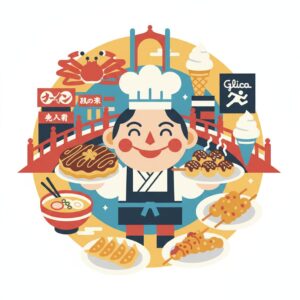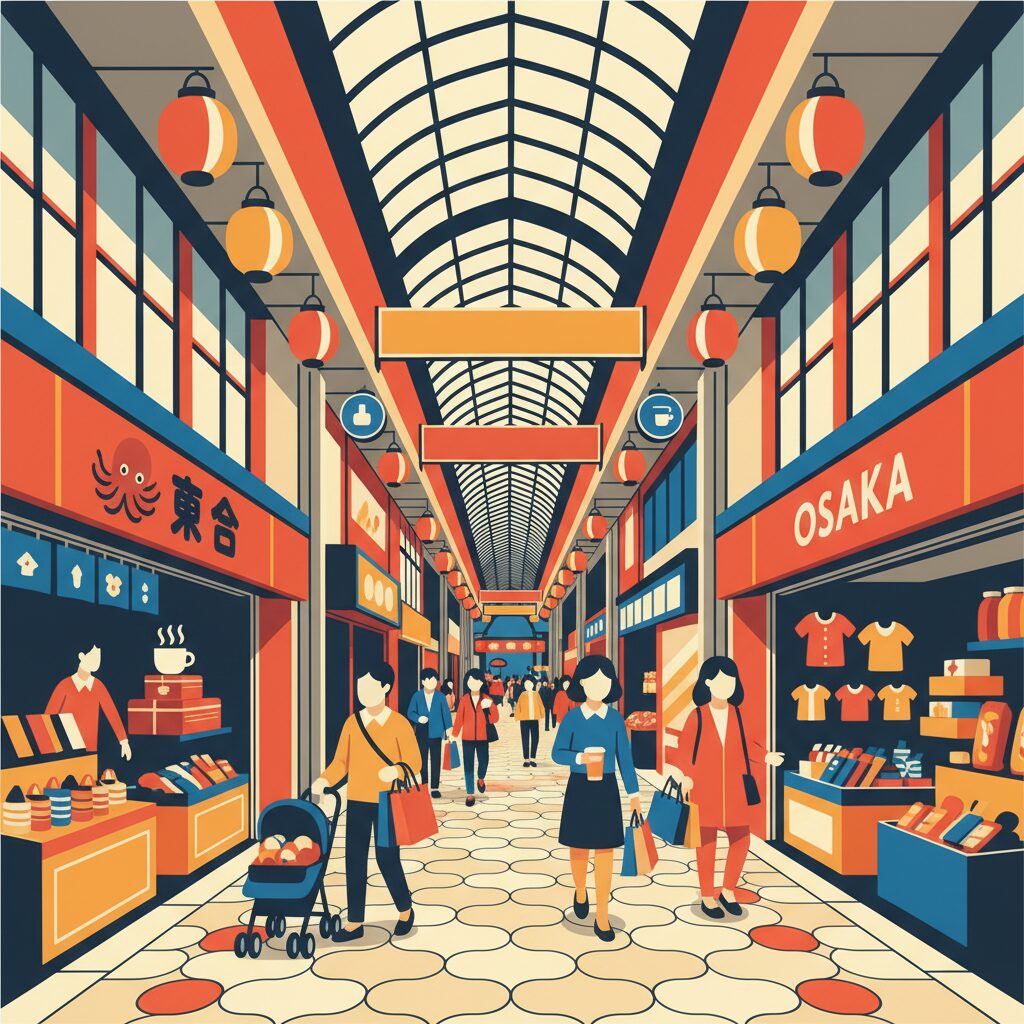
Step into any of Osaka’s great shotengai, the covered shopping arcades that serve as the arteries of local life, and you’re hit with a sensory overload. It’s a riot of sound, a collage of smells, a blur of motion. You’ll hear the gravelly calls of a vendor hawking pickled daikon, the sizzle of takoyaki hitting a hot griddle, the tinny j-pop blasting from a pachinko parlor, and the constant, cheerful hum of a community in conversation. For a newcomer, especially one accustomed to the more restrained public spaces of, say, Tokyo, it can feel like stepping into chaos. There’s a relentless energy, a current of human activity that seems to follow a logic all its own. This isn’t just a place to buy groceries; it’s a living, breathing organism. And to survive, to thrive, you have to learn its language. This language isn’t just about words; it’s about understanding the unspoken rules, the subtle gestures, the entire social architecture that holds this wonderful chaos together. It’s about learning to kuuki wo yomu, to “read the air.” But this is Osaka. Reading the air here isn’t about silent conformity; it’s about attuning yourself to a different, more vibrant frequency. It’s about understanding that the shotengai is the neighborhood’s public living room, a place where the lines between commercial and communal life dissolve into a beautiful, functional mess. To understand the shotengai is to understand the heart of Osaka itself.
These vivid depictions of everyday life in Osaka invite you to further explore the city’s unique cultural undercurrents, as seen in the local trash culture guide, which reveals another fascinating facet of urban authenticity.
The Unspoken Choreography of the Arcade
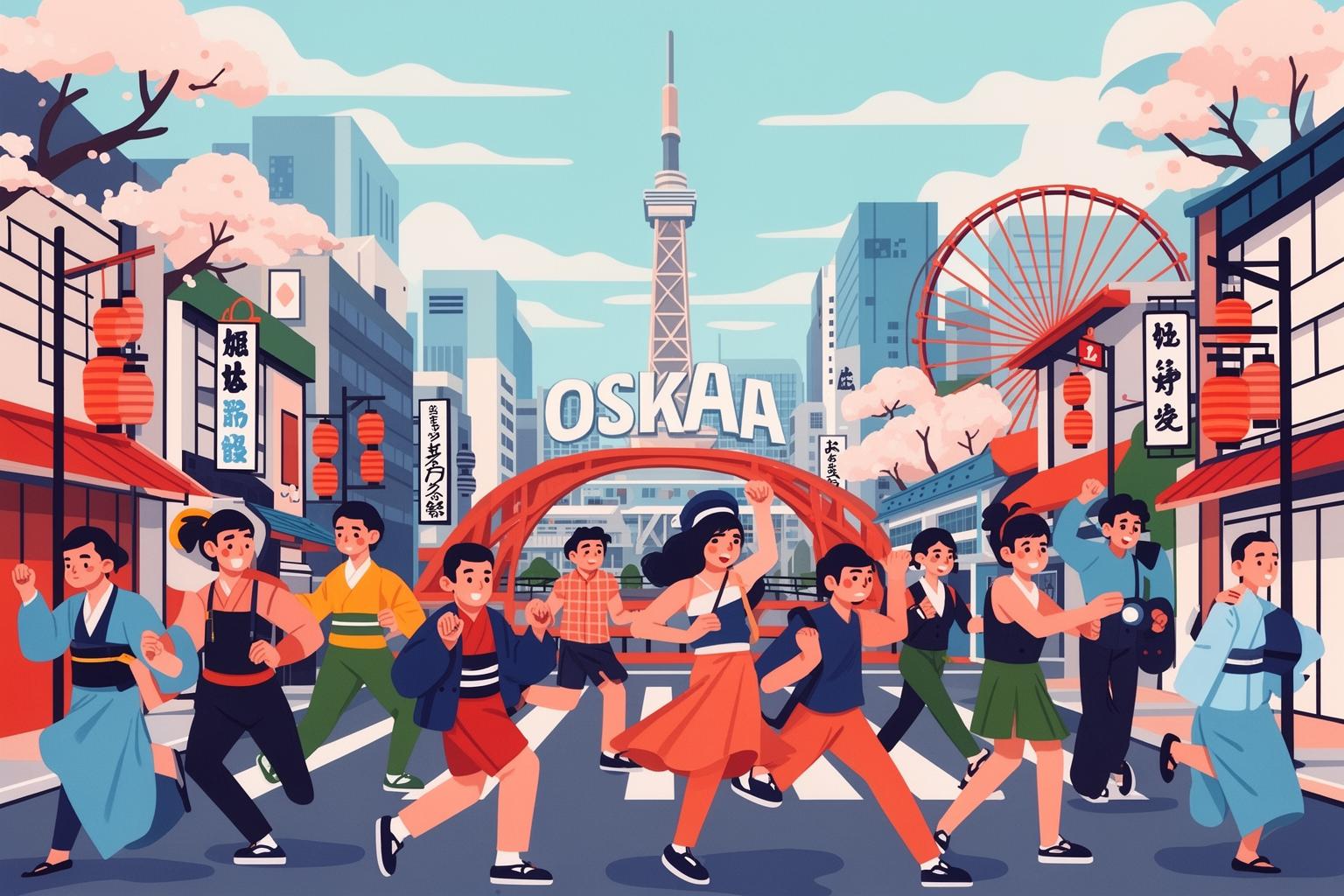
Stroll down a street in Tokyo, and you’ll observe a clear sense of order. People typically stick to one side, creating invisible lanes. Pedestrians move with a shared, unspoken understanding of efficient, non-confrontational forward progress. An Osaka shotengai, however, operates on a completely different principle. It’s a fluid dynamic, a swirling current of humanity that can seem utterly chaotic to the untrained eye. Navigating it without causing a collision requires a certain physical literacy. People drift from side to side, stop suddenly, and change direction on a whim. Yet, it somehow functions smoothly. The key lies in a heightened awareness, a constant, low-level scanning of those around you. Instead of following a straight line, you find the path of least resistance, flowing like water around stationary shoppers and chatty grandmothers. This isn’t rudeness or a lack of consideration; it reflects a collective understanding that the arcade serves multiple purposes, not just as a thoroughfare. It’s a place for wandering, browsing, and living, and the crowd’s movement mirrors this more organic, less rigid function.
The Bicycle Conundrum
The unique choreography of Osaka shotengai is most evident when it comes to bicycles. In many parts of Japan, riding a bike through a crowded pedestrian zone is a serious social no-no, if not strictly forbidden. In an Osaka shotengai, it’s a practiced art. You’ll see mothers with children seated front and back, elderly men on vintage single-speeds, and delivery workers balancing piles of boxes, all skillfully weaving through the crowd. The technique matters. The speed is just above a crawl. The bell’s cheerful chirin-chirin is not a command to “get out of the way,” but a gentle, apologetic announcement of presence—like a verbal “sumimasen.” Pedestrians respond by acknowledging the sound and instinctively moving aside, creating a path. It’s a delicate dance built on mutual trust: cyclists trust pedestrians to make space, and pedestrians trust cyclists to move slowly and be able to stop instantly. This system would cause chaos in Tokyo, where strict spatial boundaries are crucial. Here, space is shared, negotiated, and constantly shifting. It’s a beautiful, albeit occasionally nerve-wracking, example of Osaka’s pragmatic approach to public space: if it works, it works.
The Art of the Stop-and-Chat
Another cultural surprise for those accustomed to the constant forward flow of other cities is the frequent “stop-and-chat.” Two neighbors might run into each other and immediately stop right in the middle of the arcade’s main path to catch up. They’re not unaware of the crowd streaming around them; rather, they prioritize human connection over pedestrian efficiency. Elsewhere, this might provoke glares and muttered complaints. In an Osaka shotengai, it’s so commonplace it goes unnoticed. The crowd simply absorbs the brief block, flowing effortlessly around it. This reveals much about the local mindset. Community here is not an abstract idea; it consists of tangible, active relationships maintained in public space. The arcade isn’t just a passageway from point A to point B; it’s a destination and a social stage where neighborhood life unfolds. The momentary inconvenience to passersby is a small, accepted price for a socially cohesive community.
The Currency of Banter: Beyond “Irasshaimase”
In most Japanese retail settings, interactions are polite, professional, and predictable. You are greeted with a loud, formal “Irasshaimase!” (Welcome!), you make your purchase, you are thanked with a crisp “Arigatou gozaimashita,” and you leave. The exchange is smooth, efficient, and largely impersonal. However, in an Osaka shotengai, this script is discarded. The interaction becomes a performance, a negotiation of personality, a conversation. Here, the stereotype of the friendly, funny Osakan originates—not merely from a desire to be kind, but from a merchant culture that views commerce and communication as deeply intertwined.
“Maido!” and the Rhythm of Recognition
The usual welcome is often replaced with a hearty “Maido!” or “Maido, ookini!” While it literally means something like “each time” or “always,” its significance goes much deeper. It’s a greeting expressing “Thank you for your continued patronage.” It acknowledges that you’re not just a one-time customer, but a regular, a familiar face, a part of the shop’s community. Hearing it for the first time from your local fishmonger or fruit vendor is a milestone—it signifies that you have moved from anonymous outsider to recognized neighbor. The simple word carries the weight of an established relationship. It transforms a routine transaction into an act of community participation. It communicates, “I see you. I remember you. You belong here.”
The Transactional Tease
Beyond the greeting, the entire conversation changes. Osaka shopkeepers excel at friendly teasing, unsolicited advice, and personal comments. The woman at the vegetable stand might notice you picking up some spinach and say, “Oh, making ohitashi tonight? Don’t boil it too long; you’ll lose all the vitamins!” The butcher, seeing you for the third time in a week, might joke, “You again! Your family must have a big appetite!” This can be surprising for foreigners and even for Japanese people from other regions—it can feel intrusive. Yet, it’s almost always a sign of affection and acceptance. The shopkeeper steps beyond the role of a mere vendor to engage with you as an individual. They show they are paying attention and are, however slightly, invested in your life. Responding with silence or a curt, formal reply misses the point entirely. The appropriate reaction is to engage, to banter back: “Yes, my kids are bottomless pits!” or “Thanks for the tip, I always overcook it!” This back-and-forth is the social glue of the shotengai.
Price and Pride: The Haggling Myth
This culture of banter often leads to a common misconception: that Osaka is a city of aggressive hagglers. Tourists might expect to bargain over every price, as in a Southeast Asian market. This is incorrect. While merchants are personable, they are also professionals who take great pride in their products and prices. Directly challenging a price can be seen as an insult, implying they are trying to cheat you or that their goods are not worth the asking price. However, a different, subtler form of negotiation exists: the culture of omake. Omake means a little extra, a bonus. It’s never asked for directly but is a gift from the shopkeeper as a gesture of goodwill and gratitude for your loyalty. Buy a bag of apples, and the vendor might add an extra one. Buy three fish, and you might receive a handful of tiny shrimp for soup stock. The omake physically represents the relationship you’ve built. It’s the shopkeeper’s way of saying “Maido.” It’s far more meaningful than any small discount because it reinforces your status as a valued member of the shotengai community.
Navigating the Social Fabric
The rules of the shotengai go beyond simply moving through the space and shopping. Spending time there means becoming part of a dense social web, governed by principles that may seem foreign to those brought up in the anonymous culture of a modern metropolis. It demands a shift in how one perceives public and private spaces, as well as community and individuality.
The Gaze of the Community
In a large, impersonal city, a key attraction is the ability to remain unnoticed while moving through public spaces. This, however, is not the case in an Osaka shotengai. Here, you are observed. The elderly woman running the tobacco stand, the man hosing down the sidewalk outside his futon shop, the family managing the corner delicatessen—they serve as the neighborhood’s unofficial guardians. They notice who comes and goes, remember newcomers, see when you change your hairstyle, and take note when you carry a newborn. For those unfamiliar, this constant, low-level observation may feel judgmental or invasive. Yet, this interpretation misses the point. This is the gaze of a community, not the scrutiny of an authority. It acts as an informal system of social security, which is why parents feel safe sending their children on small errands within the shotengai. Everyone watches out for one another. This collective vigilance fosters a strong sense of safety and belonging, one that no number of security cameras in a sterile shopping mall can replicate. It is the reassurance that you are a recognized individual and that, even in a sprawling city like Osaka, you are not alone.
Sound and Space: The Osaka Volume
Shotengai are loud—there is no denying it. The cries of “Yasui de!” (It’s cheap!) from vendors, the clatter of shutters, the laughter of shoppers, and the ever-present background music—from sentimental enka ballads to upbeat pop—all merge into a constant, energetic soundscape. Throughout much of Japan, there is strong social pressure to maintain quiet in public spaces; a loud phone conversation on a Tokyo train is considered a serious taboo. However, the shotengai operates at a different volume. It is a space built for lively, vocal interaction, not silence. Trying to enforce quiet here would be like asking a river to stop flowing. This acceptance of noise is part of Osaka’s broader character—a city less focused on pristine, orderly appearances and more attuned to function, energy, and human vitality. Life is noisy, messy, and vibrant, and the shotengai perfectly reflects that philosophy. It is a place to live out loud, and understanding the atmosphere means recognizing that your voice is a welcome part of the chorus.
The Shotengai vs. The Supermarket: A Battle for the Soul of the Neighborhood
The emergence of large, convenient supermarkets poses a fundamental threat to the traditional shotengai. Supermarkets provide one-stop shopping, climate-controlled comfort, and uniform pricing. By all objective standards, they are more efficient. Yet, the shotengai persists. It endures because it offers something that supermarkets cannot: a fundamentally different approach to consumption, community, and daily life.
A Relationship, Not a Transaction
In a supermarket, you are reduced to a data point. Your purchases are scanned and recorded in a vast database. The cashier, if you encounter one, follows a scripted routine. The whole experience aims to be as seamless and anonymous as possible. At a shotengai, however, you are recognized as a person. You buy vegetables from someone who knows you prefer your onions small. You get fish from a man whose father ran the same shop before him and who can tell you exactly where that sea bream was caught this morning. You purchase tofu from a family that makes it fresh daily in the back. These are not mere transactions; they are interactions—small, everyday affirmations of your place within a human network. This network sustains the community, founded on trust, familiarity, and mutual support rather than just the cold calculus of price and convenience.
The Logic of Inconvenience
On the surface, the shotengai’s system appears inefficient. You must visit the butcher for meat, the fishmonger for fish, and the greengrocer for vegetables. It might take four or five different stops to gather ingredients for one meal. But this “inconvenience” is precisely the shotengai’s strength. Each stop provides an opportunity for human connection. Each short walk lets you see neighbors, notice new posters in windows, and sense the neighborhood’s rhythm. The segmented shopping experience encourages a slower, more mindful pace of life. It nurtures community one small purchase at a time. It represents a conscious choice to value social bonds over sheer, unmitigated efficiency. In an increasingly hurried and isolated world, the charming inconvenience of the shotengai feels less like a relic and more like a bold act of community preservation.
Reading the Air: A Foreigner’s Field Guide
So, how can a non-Japanese resident successfully navigate this intricate social environment? It’s less about memorizing a set of rules and more about embracing a particular mindset. It involves being open, attentive, and willing to engage.
Don’t Be Shy, But Don’t Force It
The secret to breaking the ice is to engage gently. A simple “Konnichiwa” and a smile upon entering a shop can make a big difference. If you feel more confident, comment on the weather or ask a straightforward question about a product: “Is this fish good for grilling?” or “How do you cook this vegetable?” Allow the shopkeeper to steer the conversation. Avoid pressing for the kind of instant, exuberant friendliness you may be used to from your home country. The casual banter and warmth that define the shotengai are built over time. They come from relationships, and relationships need time to develop. Be patient. Let interactions naturally progress from polite greetings to familiar recognition to genuine conversation.
The Power of Patronage
Above all else, the most effective way to become part of the shotengai community is to be a consistent presence. Pick your shops and become a regular. Buy your bread from the same bakery, your vegetables from the same stand. Let the vendors see your face week after week. This demonstrates loyalty, a language understood and valued far more than the most perfectly spoken Japanese sentence. Through this simple act of repeated patronage, you stop being a stranger. You earn your “Maido.” You show through your actions that you are more than a temporary visitor—you are a resident invested in the health and vitality of the local community. This is the most important rule of all.
When in Doubt, Observe
The unwritten rules of the shotengai aren’t hidden in a secret manual. They are visible every single day. The best way to read the atmosphere is simply to watch and listen. Notice how elderly residents greet one another. Listen to the flow and tone of conversations between shopkeepers and customers. Watch how people maneuver bicycles and shopping carts through crowded spaces. See who receives an omake and observe the friendly exchange that follows. The shotengai offers a masterclass in social interaction, with lessons freely available to anyone willing to pay attention. By observing, you learn the local rhythm, the acceptable volume, the unspoken social dance. You stop seeing chaos and begin to recognize the beautiful, intricate, and deeply human order lying just beneath the surface.