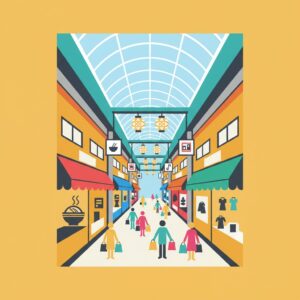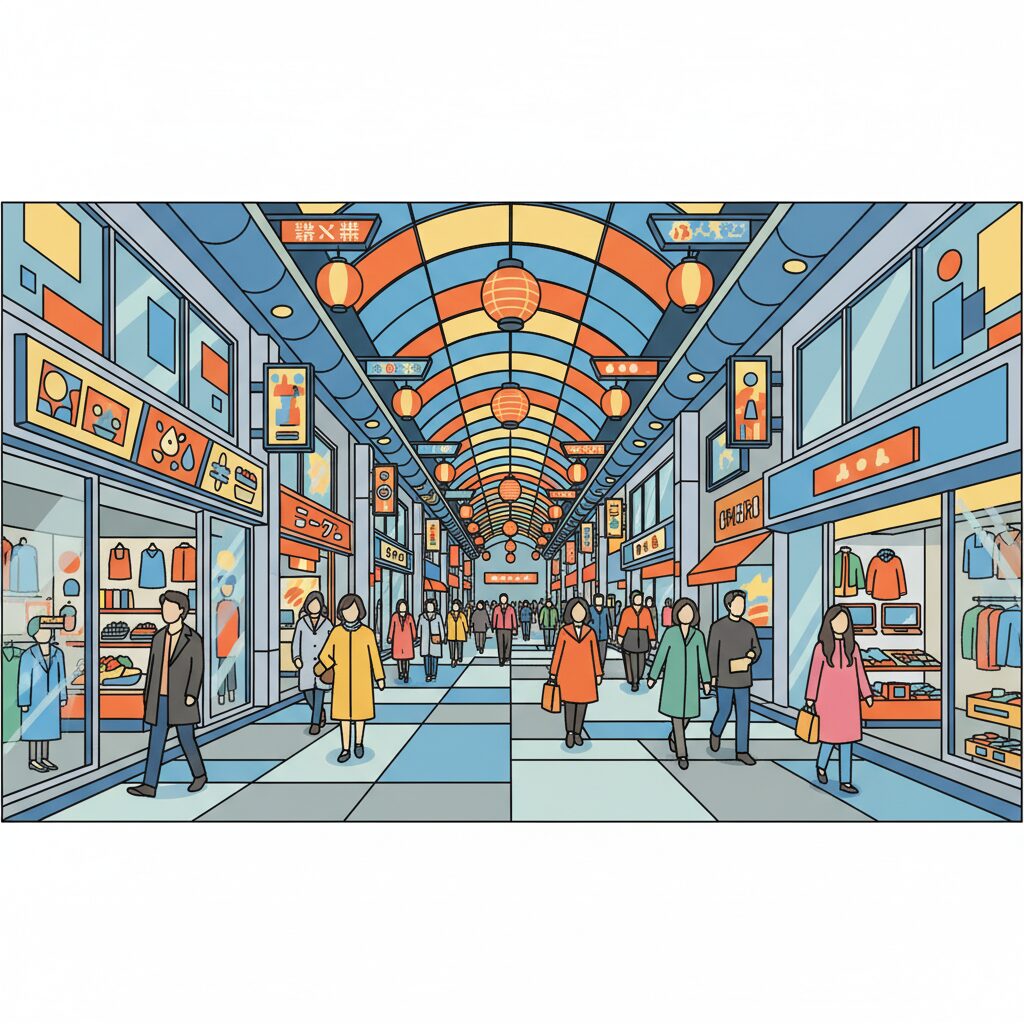
Step out of the station, away from the sleek glass towers and the hushed efficiency of the department stores, and you’ll feel it. The air changes. It’s a sudden shift in rhythm, a wave of sound and scent that washes over you. You hear the rumble of a metal shutter opening, the cheerful, almost sing-song call of a vendor announcing today’s specials, the squeak of a bicycle brake as a housewife navigates a river of pedestrians. You smell grilled eel, fresh-cut flowers, and the deep, savory perfume of simmering dashi. This is the entrance to the shotengai, Osaka’s covered shopping arcade, and it’s more than just a place to buy groceries. It’s the city’s circulatory system, a vibrant, chaotic, and deeply human network that reveals the true character of Osaka in a way no skyscraper ever could. For a foreigner setting up a life here, the shotengai presents a choice. It’s a decision between the sterile convenience of the modern supermarket and the rich, complex, and sometimes demanding world of local commerce. It’s a world that promises community and quality, but asks for your patience, your cash, and a willingness to engage. This isn’t a guide to the best arcades for a quick photo opportunity; it’s a deep dive into the daily life they foster, an honest look at why shopping here can be both the most rewarding and the most frustrating part of living in Osaka. It’s a choice that ultimately defines how you connect with this city, one daikon radish, one friendly nod, one slightly baffling conversation at a time.
The shotengai’s vibrant rhythm not only defines Osaka’s daily pulse, but also invites you to explore how its lively konamon culture shapes the city’s affordable yet rich lifestyle.
The Unspoken Rules of the Arcade
Walking into a bustling shotengai for the first time is like stepping onto a stage mid-play, where everyone else already knows their lines. The pace is brisk, the dialect thick, and interactions are layered with unspoken rules. This isn’t a place of quiet, orderly queues—it’s a performance of community commerce, and learning the choreography is your entry to belonging.
The Human Element: Beyond a Mere Transaction
In a supermarket, you’re just a data point: purchases scanned, loyalty points added, the transaction completed with a polite but impersonal “arigatou gozaimashita.” In the shotengai, you are a person. When you first visit the local fishmonger, you’re just another customer. But with repeated visits, something changes. The owner, whose hands are worn from decades of handling ice and fish, begins to nod at you, maybe asking where you’re from. Soon enough, he remembers how you like your mackerel filleted. This is the essence of `kao o oboetemorau`—“getting your face remembered.” It’s the foundation of shotengai culture: a slow, intentional process of building a relationship that transcends exchanging money for goods. That relationship becomes its own currency, turning a simple shopping trip into a social check-in. The woman at the vegetable stand won’t just sell you tomatoes; she’ll advise which are best for salad and which suit sauces, then ask how your children are doing at the local school. This goes beyond the cliché that “Osaka people are friendly.” It’s a deeply rooted system of mutual recognition and loyalty. Shopkeepers invest in you as a customer, and you invest in their livelihoods. That’s why a regular might receive an extra potato or a handful of spring onions—an `omake`—not as a discount, but as a gesture, a small thank-you for being part of their commercial family.
The Language of Commerce: More Conversation Than Haggling
Many foreigners arrive expecting the shotengai to be a place where haggling is standard. They try to negotiate prices aggressively, only to be met with confused or offended looks. This is a key misunderstanding of Osaka’s merchant culture. The shotengai isn’t a bazaar where prices are mere suggestions; it’s a business run by proud professionals. However, a playful exchange does occur—a dance of words more about connection than price. An older woman might pick up a melon, tap it, and say with a theatrical sigh, `“Chotto takai naa…”` (“A little expensive, isn’t it…”). The owner might respond with a laugh, `“Sonna koto nai, ichiban oishii de!”` (“Not at all, it’s the most delicious!”). The exchange may end with a symbolic 50 yen discount or a free orange. The point isn’t the discount—it’s the interaction itself, reaffirming their relationship. For foreigners, attempting this requires subtlety. A blunt `“Can you make it cheaper?”` usually fails. But a humble, `“Itsumo arigatou, chotto dake makete kureru?”` (“Thanks as always, can you give me just a small discount?”) with a smile, once you’re recognized as a regular, might succeed. It shows you understand the unspoken rules. You’re not just a customer—you’re partaking in the culture. This conversational commerce is the lifeblood of the arcade.
Navigating the Flow: Unwritten Traffic Rules
The shotengai thrives on organized chaos. Without marked lanes or traffic signals, a subtle system of movement ensures smooth flow. The default pace is a gentle meander, called `burabura`. People stroll, pause to chat, or peer into shop windows. Rushing breaks the social code. You’re expected to attune yourself to this slower, more deliberate rhythm. Bicycles are integral but never for speed—they blend into the pedestrian flow, easing along with light braking and occasional polite bell rings. A cyclist barreling through at high speed is met with universal disdain. The rule is clear: pedestrians always have the right of way. You develop a kind of sixth sense, anticipating sudden stops, a child darting after a ball, or an elderly person slowly pulling a shopping cart. It’s a collective dance. Trying to impose a strict, efficient, Tokyo-style personal space and forward momentum is futile. The shotengai demands you surrender to its rhythm, becoming part of the meandering, unpredictable, and fundamentally human movement.
The Shotengai Advantage: Why Osakans Still Flock Here
In an age dominated by the sterile convenience of 24-hour stores and the all-under-one-roof appeal of massive Aeon Malls, the shotengai should be a relic of the past. Yet, on any typical afternoon, these shopping arcades are bustling with customers. This is not merely about nostalgia. The shotengai endures because it offers tangible benefits that modern retail often fails to deliver. It embodies fundamental Osakan values: a profound respect for expertise, an unwavering quest for value, and an inherent belief that a marketplace should also serve as a community.
Freshness, Specialization, and the Expertise Advantage
Stroll through a conventional supermarket and you’ll see everything neatly packaged and uniform. Meat comes in styrofoam trays, fish is pre-cut, and tofu is from a national brand. In the shotengai, you find the exact opposite: intense specialization. You don’t shop at a generic “store”; you visit the butcher, the fishmonger, the tofu maker, the pickle expert, and the tea vendor. Each shop is managed by a specialist, often a family engaged in the trade for generations. These are not mere retailers; they are artisans. The fishmonger (`sakanaya`) can tell you precisely where each fish was caught that morning and suggest three different cooking methods. He’ll scale, gut, and fillet it for you or slice it into perfect sashimi cuts—a level of service unimaginable at a supermarket. The tofu maker (`tofuyo`) offers tofu made in the back just hours earlier, still warm and delicate, with a flavor uncomparable to the mass-produced blocks in the refrigerated aisle. This is the shotengai’s secret strength: access to unmatched freshness and expert knowledge. You’re not just buying a product; you’re investing in the owner’s skill and guarantee of quality. This resonates with the Osakan palate, known for its discerning and demanding nature (`kuidaore`, the local motto meaning to “eat oneself into ruin”).
The “Naniwa no Akindo” Spirit: A Tradition of Value
Osaka’s long history as Japan’s merchant capital means its shopkeepers inherit the `Naniwa no Akindo` spirit—a practical, savvy, and customer-centered philosophy from the old Osaka merchants. This spirit is less about low prices and more about delivering exceptional `kosupa`, or cost performance. Osakan shoppers constantly gauge whether they are getting the best quality and service for their money. The shotengai frequently earns top marks in this mental calculation. Though individual items might not always beat discount supermarket prices, the overall value is greater. Produce is fresher, lasting longer and tasting better. Portions of prepared foods like croquettes (`korokke`) or tempura are often more generous. Expert advice is complimentary. This sharply contrasts with Tokyo’s retail culture, which often emphasizes branding, elegant packaging, and prestigious locations. Osaka commerce is more grounded, focusing on the substance of the deal. A shotengai vendor knows their reputation hinges not on a flashy storefront but on community trust. Selling inferior products leads to rapid neighborhood word-of-mouth that can damage their standing. This accountability creates a strong baseline of quality and fair pricing, which keeps pragmatic Osakans loyal.
A Communal Living Room Beneath a Roof
The shotengai’s most distinctive architectural feature is its roof. This simple covering transforms a street into an all-weather public space, a sheltered passage that serves as the neighborhood’s communal living room. It’s where daily life unfolds, protected from the scorching summer sun and sudden rainstorms of the rainy season. Under this roof, elderly residents sit on plastic stools, chatting for hours; mothers with strollers gather to share parenting advice; local groups hang banners announcing upcoming festivals. The arcade is the default venue for neighborhood events, from Tanabata decorations in summer to mochi-pounding ceremonies at New Year. It provides essential social infrastructure often lacking in modern suburban developments or high-rise apartments. It’s a place of casual, spontaneous social interaction—a `third place` that is neither home nor work. This communal role explains why the vitality of a shotengai is often viewed as an indicator of the neighborhood’s overall health. A lively arcade signals a connected, engaged community. In a country grappling with an aging population and rising social isolation, the shotengai offers a vital and increasingly rare physical space where people can simply come together.
The Flip Side: The Challenges of Shopping Old-School
For all its charm and sense of community, adopting the shotengai as your main venue for daily shopping involves a steep learning curve and several practical challenges. It calls for a fundamental change in habits, moving away from the smooth efficiency we expect in modern life. To romanticize the arcade without acknowledging its real inconveniences is to overlook the full reality. The shotengai operates on its own terms, which don’t always align with the demands of a busy, contemporary lifestyle.
The Inconvenience Factor: Cash, Carts, and Closing Hours
Foremost is the dominance of cash. Although Japan is gradually adopting digital payments, the shotengai remains one of the last holdouts of the cash economy. The small, family-run shops often lack the setup or willingness to deal with credit card fees. This means a visit to the arcade requires an initial stop at an ATM and a wallet filled with bills and coins. Then comes the challenge of managing a full grocery run. Unlike supermarkets with a single large cart holding everything, shopping at a shotengai means juggling multiple plastic bags from different stalls—you buy your vegetables at one, your meat at another, your tofu further down the street. It’s a piecemeal process that takes planning and some physical dexterity. And then there are the hours. The shotengai doesn’t operate on a 24/7 consumer schedule. Shops open when the owner chooses and close when they sell out or decide to end the day. Many close one day a week, often Wednesday, and have short hours. Forgetting to buy soy sauce before a local shop shuts at 6 PM means you’re out of luck until the next day. This rhythm requires planning your life around the community’s schedule, a sharp contrast to the on-demand convenience of stores and online delivery.
The Generational Divide: A Fading Tradition?
Look behind many shotengai counters, and you’ll often find owners in their 60s, 70s, or older. They are custodians of tradition, but also a generation nearing retirement without successors. Their children frequently move away to pursue university degrees and office careers, unwilling to take on the long hours and physical demands of running a small shop. This succession crisis represents the biggest threat to the shotengai’s future. In many less popular or remote arcades, the effect is clear: an increasing number of shuttered storefronts, known as `shattā-gai` (shutter towns). These gaps disrupt the arcade’s flow, creating a sense of decline that’s difficult to reverse. While the most famous shotengai in central Osaka remain lively, many smaller neighborhood arcades quietly struggle to survive. The vibrant community life they support is fragile, relying on a generation of merchants whose knowledge and skills may vanish with them.
The Language and Cultural Barrier for Newcomers
The very feature that makes the shotengai unique—its close-knit community—can also be intimidating for newcomers, especially non-Japanese. Interactions are rapid, colloquial, and often conducted in thick Osaka-ben dialect, which can be impenetrable even for those fluent in standard Japanese. The easy banter between shopkeepers and regulars can feel like belonging to an exclusive club. Breaking into that club requires time, effort, and resilience. You have to be willing to stumble through conversations, smile and nod when you don’t fully understand, and show up regularly until your face is recognized. It’s a social investment with no guaranteed payoff. For someone just trying to finish their grocery run after a long day, the social pressure can be exhausting. It’s much easier to retreat to the anonymity of a supermarket, where the only language needed is pointing and understanding the numbers on the register. The shotengai demands participation, which can be a significant and intimidating ask for those still finding their way in a new country.
Shotengai as a Barometer of Osaka
To understand the shotengai is to grasp the very soul of Osaka itself. These covered streets are more than mere commercial spaces; they serve as living museums of the city’s character, embodying a mindset that distinguishes Osaka from the rest of Japan. The noise, practicality, and unapologetic focus on human connections all unfold daily beneath the arcade’s roof. Shopping here means engaging with the city on its own terms, seeing beyond the polished exterior to connect with its raw, pulsating heart.
More Than Nostalgia: A Mirror of the City’s Spirit
The shotengai stands as a perfect counterpoint to the often monolithic image of Japan. It defies the quiet, orderly, and reserved stereotype frequently associated with Tokyo. Life inside the arcade is loud, straightforward, and driven by a practical search for a good deal. The style is functional rather than minimalist, and the interactions are personal rather than formal. This is the essence of Osaka. Built by merchants, not samurai, the city’s legacy lives on in the shotengai’s DNA. It’s a culture that prizes clever solutions and warm relationships over strict formality and protocol. When a shopkeeper calls out a greeting from across the way or a neighbor stops for a chat, they aren’t being rude; they’re being Osakan—breaking down barriers and welcoming you into a shared public space. The shotengai teaches that community here isn’t passive; it’s an active, ongoing negotiation, a daily practice of showing up, conversing, laughing, and buying from one another.
Finding Your Place in the Arcade
Embracing the shotengai is more of a journey than a destination—it doesn’t happen all at once. The secret is to start small. Don’t try to explore the entire arcade on your first visit. Instead, find a single anchor. Perhaps it’s the friendly man at the fruit stand who always offers the sweetest seasonal mikan, or the woman at the `osozai` (prepared side dishes) shop whose potato salad tastes like home-cooked comfort. Make that one shop your go-to spot. Visit once or twice a week. Use your limited Japanese. Smile. Point. Let them recognize your face again and again. Gradually, that friendly face will become your gateway—they might introduce you to the baker next door or recommend the best fishmonger down the street. Your personal map of the arcade will grow naturally, one relationship at a time. This process—with all its challenges and small triumphs—is a microcosm of what it means to build a life here. It’s about shifting from outsider to a recognized part of the neighborhood fabric. Choosing the shotengai means choosing to engage in the messy, vibrant, and deeply rewarding reality of daily life in Osaka.