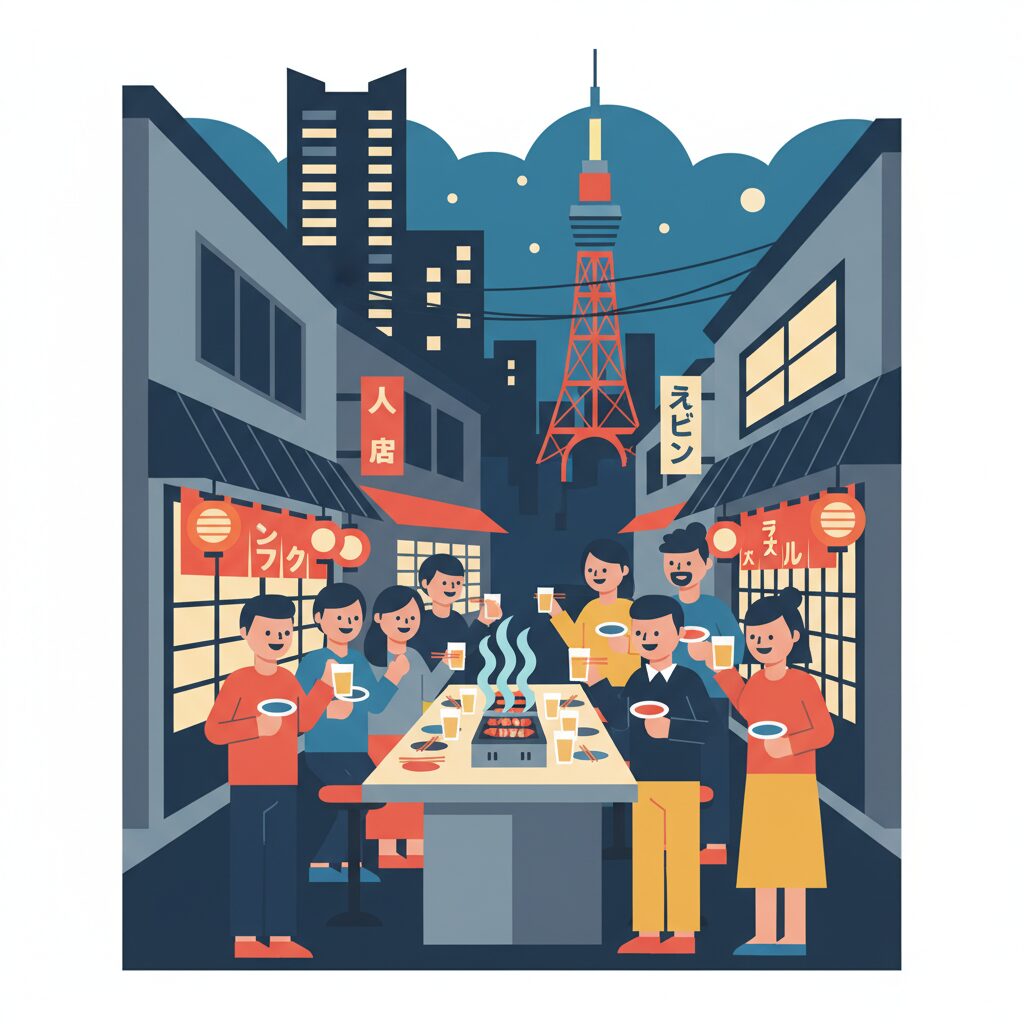
The roar of the JR loop line overhead, a river of humanity flowing out of Umeda Station, the sky shifting from business-like blue to a bruised purple. It’s six o’clock in Osaka. For many, the day is done. The train home awaits, a packed carriage of tired faces and glowing phone screens. But look closer. Tucked under those very train tracks, spilling out from the basements of office buildings, and glowing warmly down narrow side streets, a different ritual is unfolding. People aren’t going home. Not yet. They’re making a pit stop. A brief, almost ceremonial pause at a tachinomi—a standing bar. This isn’t the start of a long night out. This is something else entirely. It’s a cultural buffer zone, a pressure valve, a masterclass in urban efficiency that tells you more about the soul of Osaka than any guidebook ever could. For newcomers, the sight can be puzzling. Why stand when you could sit? Why stop for just twenty minutes? What’s the point? The point, you soon realize, is everything. This is where you learn the city’s rhythm, not as a tourist, but as a resident. It’s where work ends and life begins, one quick drink at a time. This is the art of the tachinomi, and mastering it is a key to understanding the vibrant, pragmatic, and deeply human heart of Osaka.
Embracing the continuous pulse of Osaka’s nightlife can deepen your understanding of local social customs, and exploring the nuances of tachinomi culture might just reveal even more layers of community living.
The Philosophy of Standing: Why No Chairs?

The first question that inevitably arises is the most obvious one: where are the chairs? To a Western mindset, a bar without seating seems to miss the whole point. A bar is meant for relaxing, settling in, and having long conversations. But in the world of Osaka tachinomi, the absence of chairs is not a flaw; it’s the defining feature. It’s a deliberate design choice grounded in a philosophy of practicality and purpose that epitomizes this city. Fundamentally, it’s about economics and space. Osaka is a densely populated merchant city where every inch of space commands a price. By eliminating chairs, a small venue that might seat ten can now accommodate twenty or thirty people. This enables the owner, or taisho, to serve more customers, maintain a higher turnover, and most importantly, keep prices exceptionally low. Your 400-yen draft beer is affordable partly because you aren’t paying for the space a chair would consume. It’s a classic Osaka formula: maximum value with no excess. This approach, known as kosupa (cost performance), is a source of pride here. Osakans relish a good bargain, and the tachinomi is the ultimate deal—a brief alcoholic respite at the lowest possible cost.
Yet the philosophy goes beyond just economics. Standing fosters a distinct social dynamic. It’s a liminal space, a place of transition. You are physically caught between the upright posture of your workday and the seated relaxation of home. This in-between state is intentional. It stops you from getting too comfortable or settling in for the evening. A tachinomi is not your living room. It’s a temporary pause in the day. Standing keeps the energy lively and fluid. People flow freely in and out. There are no reservations or waits for a table to be freed. You spot an opening at the counter and slide in. Once you finish your drink, you move on. This steady, gentle turnover is the bar’s lifeblood. It also cultivates a subtle sense of shared experience. Everyone is literally on the same level. There are no corner booths for private chats or VIP tables. You stand shoulder-to-shoulder with salarymen, shopkeepers, young couples, and solo drinkers. This enforced closeness breaks down social barriers and nurtures a transient community, even without words exchanged. It’s an elegantly efficient system, perfectly tuned to Osaka’s get-it-done spirit.
Decoding the After-Work Ritual: The ‘Chotto Ippai’ Mentality
To fully understand the role of the tachinomi, you need to grasp the phrase chotto ippai. Literally, it translates to “just one quick glass,” but its cultural weight is substantial. It acts as the verbal key that opens the door to the entire after-work routine. When a colleague says, “Chotto ippai, dou?” (“How about a quick one?”), they’re not inviting you to a three-hour drinking session. Instead, they are suggesting a brief, casual, and low-commitment pause to mark the end of the workday. This idea is fundamentally different from the Western concept of “grabbing a drink.” The chotto ippai isn’t the main event; it’s a prelude, an intermission, or a closing note. It’s the mental shift that helps a person move from the rigid hierarchies and stresses of the office to the freedom of their personal time.
Imagine a typical scene in Kyobashi, a neighborhood known for its dense cluster of tachinomi bars beneath the train tracks. A group of office workers, their ties slightly loosened, will stream into a small bar. There’s no lengthy menu consultation. Orders are quick and confident: “Toriaezu, nama mittsu!” (“Three draft beers to start!”). A plate of doteyaki (slow-cooked beef sinew) or some skewers might come next. The conversation remains light, often serving as simple decompression from the day’s work. Twenty or thirty minutes later, the glasses are empty. One person might head home, another might be off to a proper dinner, and a third could be meeting friends elsewhere. There are no long farewells—just a nod and a “Ja, mata ashita” (“Well, see you tomorrow”), before they fade back into the city’s flow. This ritual acts as an essential social lubricant, providing a way to bond with colleagues outside the formal framework of a nomikai (company drinking party), which often involves its own social obligations and pressures. The tachinomi serves as neutral ground: democratic, affordable, and refreshingly brief. For a solo drinker, it has a different but equally meaningful role—a quiet moment to reset the mind before facing the commute and the duties at home. It is a personal ceremony marking the separation between the public self and the private self.
The Unspoken Rules of the Standing Bar Counter

Like many facets of Japanese culture, the seemingly chaotic atmosphere of a crowded tachinomi follows a set of subtle, unspoken rules. Understanding this etiquette is essential to feeling at ease and navigating the space like a local. It’s a delicate balance of awareness, efficiency, and mutual respect. For foreigners, these rules may seem unclear at first, but they are all designed to ensure a smooth and pleasant experience for everyone packed into the small space.
Ordering and Paying: The ‘Cash On’ System
Many traditional tachinomi use a payment system called kyasshu on deribarī, or simply “cash on.” Instead of running a tab, transactions happen directly and in real time. Typically, you’ll find a small tray or bowl on the counter in front of you. The expected practice is to place a 1,000 yen bill or some coins in the tray. When you order a drink or dish, the staff will bring it to you while simultaneously taking the exact amount from your tray, leaving any change behind. This system is incredibly efficient: it removes the need for a cashier, speeds up service, and makes leaving effortless. When it’s time to go, you just pick up your remaining change and leave—no need to call someone for the bill. This method is built on trust and practicality, signaling that this is a place for quick, straightforward business. Some more modern tachinomi may have you pay at a central register on your way out, but the classic “cash on” system remains a hallmark of the authentic Osaka experience.
Personal Space in a Crowded Room
Personal space is a precious commodity in a tachinomi. The key is to be present yet compact. When you enter, look along the counter for a small opening. You don’t need a wide gap—just enough room for your drink and a small plate. The proper way is not to push or shove but to gently and apologetically slide into the space. A slight nod or a quiet “Sumimasen” (“Excuse me”) to your new neighbors is customary. Once settled, the goal is to keep your footprint minimal. Keep your elbows tucked in. Hang your bag on a hook under the counter or place it on a small shelf if available; never put it on the counter itself, as that space is reserved for food and drinks. The entire room participates in this silent understanding of shared space. You’re sharing this experience, and being considerate of those next to you is crucial. It’s a lesson in urban living—a small-scale example of how millions coexist peacefully in a crowded city.
The Art of the Quick Exit
Lingering is the cardinal sin of the tachinomi. These places rely on turnover. The unspoken agreement is that you won’t occupy your valuable spot at the counter for hours. So, how long is too long? There’s no set rule, but generally, one to three drinks is considered appropriate. An hour is pushing it. The idea is to have your drink, maybe a snack or two, and then move on. This is not the place for deep, soul-searching conversations but rather a brief stop. Learning to read the atmosphere is key. If a line is forming behind you and your glass has been empty for ten minutes, it’s time to make your exit. The beauty of the tachinomi is that this brevity isn’t seen as rude; rather, it’s the height of politeness. A quick, tidy departure shows you understand and respect the system. It allows the next guest to enjoy their own chotto ippai, maintaining the vital flow of the establishment.
To Talk or Not to Talk?
Navigating conversation can be tricky. Sometimes, a tachinomi is a place for quiet reflection—a silent moment shared between you, your beer, and the plate of grilled chicken skin before you. Other times, it can be a lively hub of spontaneous social interaction. The mood is often set by the taisho or regulars, called jōren. If the taisho is chatty and the regulars are bantering, you might find yourself drawn into conversation. Osakans are known for being more direct and open than their Tokyo counterparts. Don’t be surprised if a nearby patron comments on the Hanshin Tigers game playing on the small TV or asks where you’re from. The key is to keep things light and brief. This isn’t the place for politics or your life story. It’s about sharing a fleeting connection. A simple compliment on the food, a remark about the weather, or a shared laugh is the currency of tachinomi conversation. If you prefer solitude, that is perfectly acceptable too. A quiet nod and focusing on your drink will signal that you’re not looking to chat, and this is almost always respected.
Osaka vs. Tokyo: A Tale of Two Tachinomi
While Tokyo certainly boasts its share of standing bars, the culture and atmosphere differ markedly from those found in Osaka. This comparison highlights the distinct characters of Japan’s two largest cities. In Tokyo, a tachinomi tends to be a more curated and specialized experience. You’ll encounter chic standing wine bars in Ebisu, craft beer venues in Shinjuku, or refined sake bars in Ginza where patrons discuss tasting notes. The experience often feels polished, intentional, and occasionally performative—an extension of Tokyo’s trend-conscious culture and a stylish way to engage with a specific culinary niche.
Conversely, in Osaka, the tachinomi is less about niche appeal and more a part of everyday life. It feels earthier, grittier, and deeply rooted in the city’s blue-collar, merchant-class heritage. Prime spots aren’t necessarily in trendy areas but in practical hubs: beneath the train tracks in Kyobashi, inside the vast underground Ekimae complexes of Umeda, or spilling into the lively, chaotic shotengai (shopping arcades) of Tenma. The emphasis is squarely and unapologetically on kosupa (cost performance). The pinnacle of this is the senbero concept, literally meaning “1,000-yen tipsy,” a badge of honor for bars where you can enjoy a few drinks and a snack for just a single 1,000-yen coin. This is not merely about being inexpensive; it reflects a cultural obsession with receiving genuine value. It echoes Osaka’s history as a merchant city, where savvy and straightforwardness are prized. Aesthetics are often secondary to practicality. The décor might be worn, the counters sticky, and the air thick with the scent of grilled meat and old cigarette smoke, yet the beer is cold, the food tasty, and the prices unbeatable. This is the Osaka way: substance over style, every single time.
Finding Your Spot: A Neighborhood Guide for the Aspiring Regular
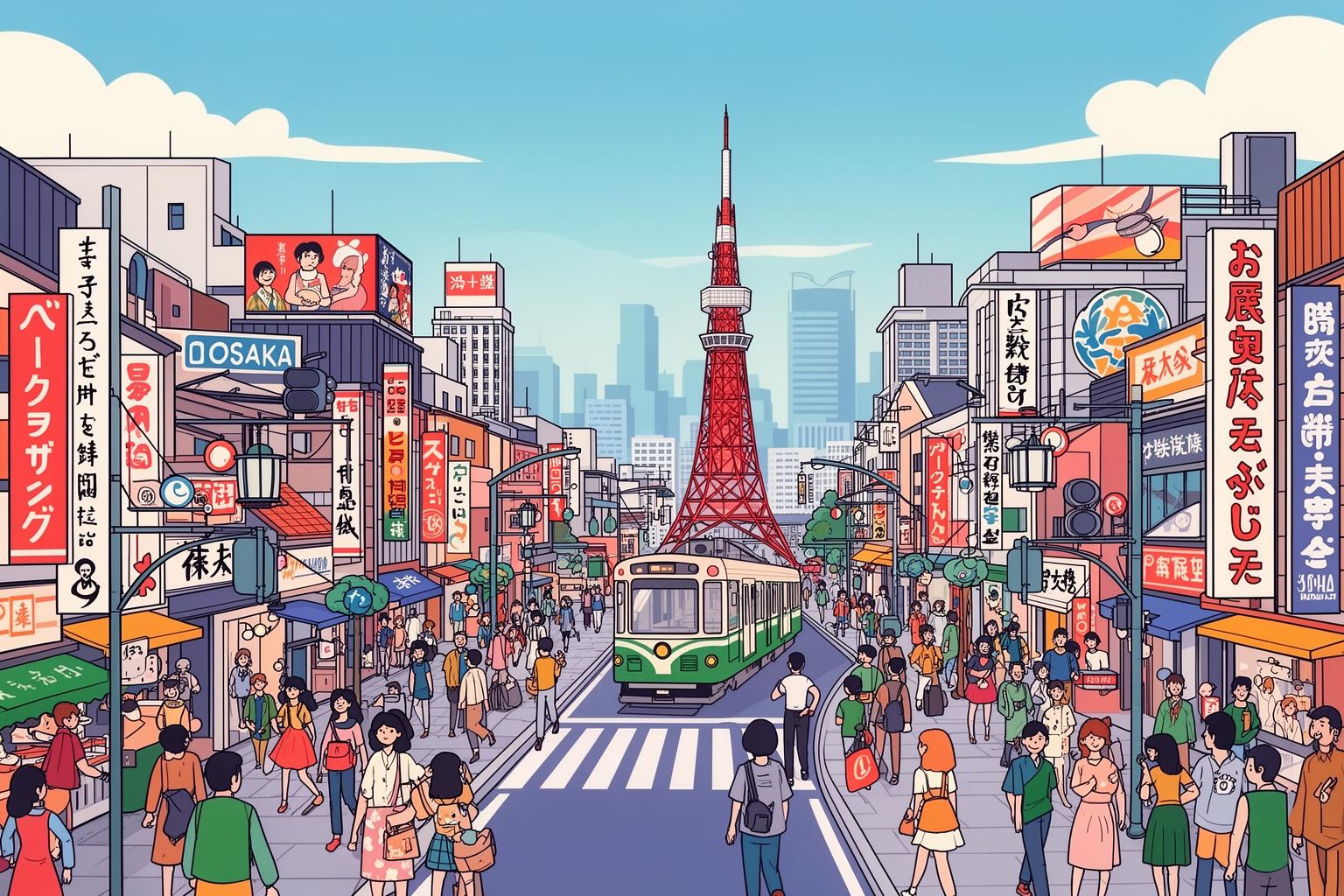
Becoming a jōren (regular) at a local tachinomi bar is a rite of passage for anyone truly living in Osaka. It means discovering a spot that suits your commute, your taste, and your personality. It’s about more than just having a drink; it’s about finding a small anchor amid the city’s vastness. Each neighborhood brings its own unique flavor to the tachinomi experience.
The Salaryman Havens: Umeda and Kyobashi
These neighborhoods are hubs of after-work drinking. Umeda, with its maze-like Ekimae Buildings, is a concrete jungle filled with tiny, efficient bars crowded with office workers. The atmosphere is practical and purposeful. It’s a blur of white shirts and dark suits, the sound of clinking glasses and quick chatter blending with the constant rumble of trains. Kyobashi, nestled beneath the JR Loop Line, presents a slightly rougher, more old-school take on the same theme. The air is thick with smoke from grilling skewers, and the bars feel as if they haven’t changed in fifty years. These aren’t venues for a leisurely night; they are high-turnover spots designed to serve commuter crowds quickly and efficiently.
The Old-School Labyrinth: Tenma
Just one stop from Osaka Station, Tenma feels like a different world. It’s a sprawling, chaotic maze of covered shopping arcades and narrow side streets, all dense with restaurants and bars. The tachinomi scene here is less about the after-work rush and more about a lively, almost perpetual celebration. The crowd is more diverse—students, creatives, retirees, and tourists mingle together. Tenma is a place for discovery. You can wander through alleys to find a tiny bar specializing in fresh sashimi, a noisy spot serving only tempura, or a quiet counter dedicated to premium sake. The vibe is more communal and relaxed than in Umeda. It’s an area to happily lose yourself for an evening, hopping from one small bar to another.
The Gritty Heartbeat: Shinsekai and Namba
For the raw, unfiltered soul of Osaka, head south. Shinsekai, with the Tsutenkaku Tower towering above, is a district preserved in Showa-era nostalgia. The tachinomi here often blend with kushikatsu restaurants and are frequented by a cast of local characters. Drinking here feels less like an after-work routine and more like a lifestyle, with many spots open from morning till late at night. Likewise, the backstreets of Namba, especially around the Sennichimae Doguyasuji Shotengai, hide some of the city’s most authentic and cherished standing bars. These aren’t trendy venues—they are neighborhood institutions with deep roots and loyal patrons. Visiting these areas provides a glimpse into the raw, unapologetic, and fiercely proud spirit of old Osaka.
Beyond the Beer: The Food That Fuels the City
A common misconception is that tachinomi are solely for drinking. In reality, this couldn’t be further from the truth. The food, or ate, plays an equally important role in the experience. These are not just simple bar snacks; they are carefully selected dishes crafted to be flavorful, affordable, quick to prepare, and an ideal match for alcohol. The menu offers a crash course in Osaka’s soul food. The undisputed star is doteyaki, a rich, savory stew made from beef sinew and konjac jelly slow-cooked in a sweet miso broth. It’s the ultimate comfort food, served in a small bowl, and perfectly complements a cold, crisp beer. Not far behind is kushikatsu, deep-fried skewers of meat, seafood, and vegetables. Served with a communal pot of thin, savory dipping sauce (with the strict “no double-dipping!” rule), they are the quintessential Osaka snack.
Other staples include oden, consisting of ingredients like daikon radish, boiled eggs, and fish cakes simmered for hours in a light, flavorful dashi broth. It’s warm, gentle, and deeply satisfying, especially during colder months. Many tachinomi also take pride in their fresh fish, offering small plates of sashimi or seared tuna at remarkably low prices. You might also find simple yet tasty items like hiyayakko (cold tofu with toppings), edamame, or potato salad. The food is never overly complex or fussy. It is honest, hearty, and practical. Designed to be eaten standing up, often with just chopsticks, it satisfies immediate cravings. Each dish tells a story about Osaka’s culinary history—a tradition of making the most of humble ingredients and maximizing flavor without pretension. This culinary approach perfectly complements the no-frills drinking culture of the tachinomi.
A Final Sip: What Tachinomi Teach You About Osaka
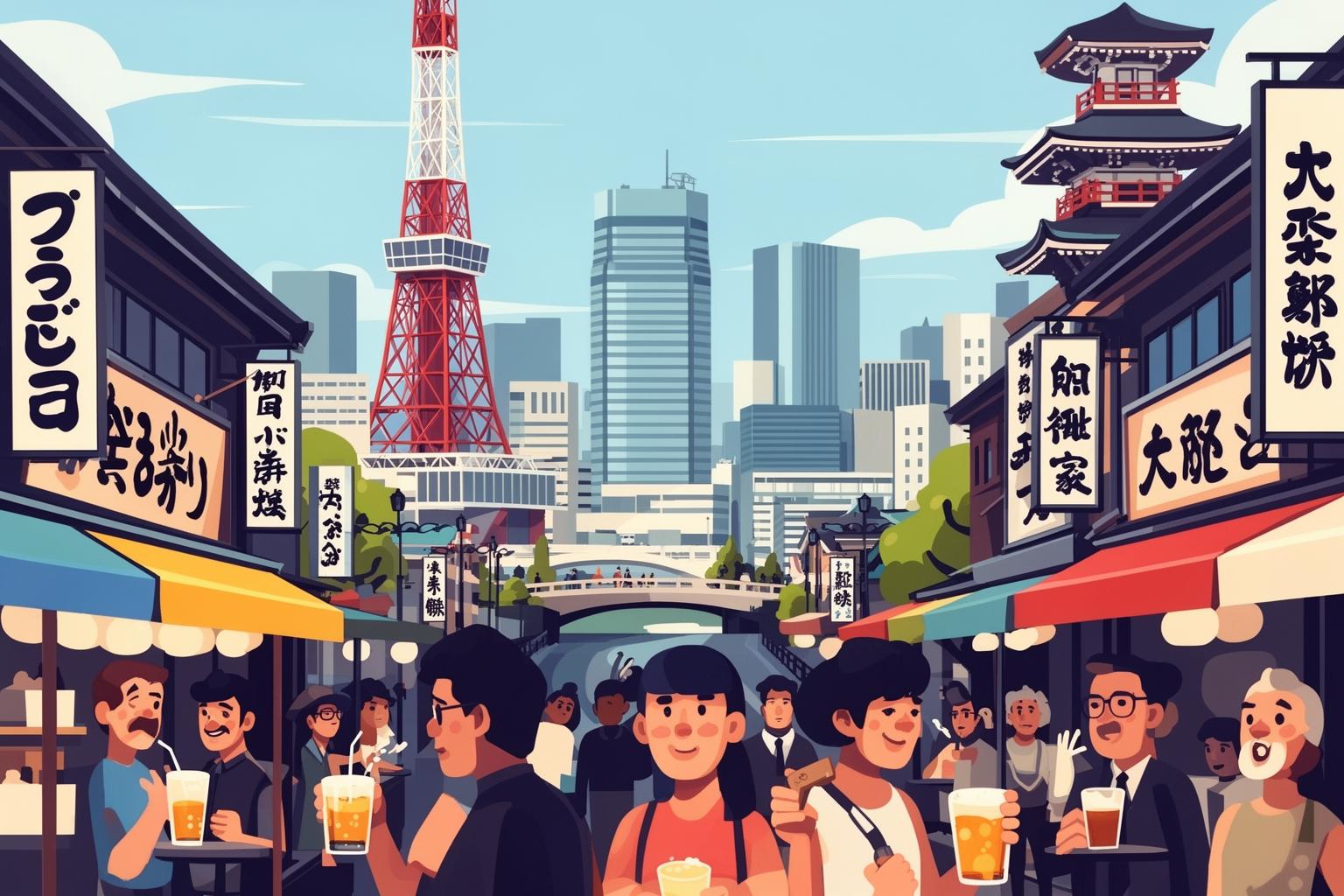
Ultimately, the tachinomi is far more than just a spot for an inexpensive drink. It represents a living, breathing microcosm of Osaka itself, reflecting the city’s core values: pragmatism, efficiency, appreciation for good value, and a straightforward, unpretentious sense of community. It offers a solution to the challenges of modern urban life—a third space that is neither the structured realm of work nor the private refuge of home. It serves as a decompression chamber, a place to shed the day’s armor and, for a brief moment, simply be a person standing at a counter, sharing a drink and a bite with fellow city dwellers.
For a foreigner learning to navigate life in Osaka, embracing tachinomi culture is a meaningful step towards integration. It provides a practical lesson in the city’s unspoken social codes, economic outlook, and unique rhythm. The first time you confidently slide into a spot at a crowded counter, order a beer and some doteyaki via the cash-on-the-spot system, and exchange a friendly nod with your neighbor, you transition from being an observer to a participant. You are connecting with the city’s lifeblood and discovering that community isn’t always built through grand gestures or deep conversations but often through the simple shared ritual of a quick drink—a moment of pause, flavor, and humanity before moving on. You are mastering the art of living in Osaka.