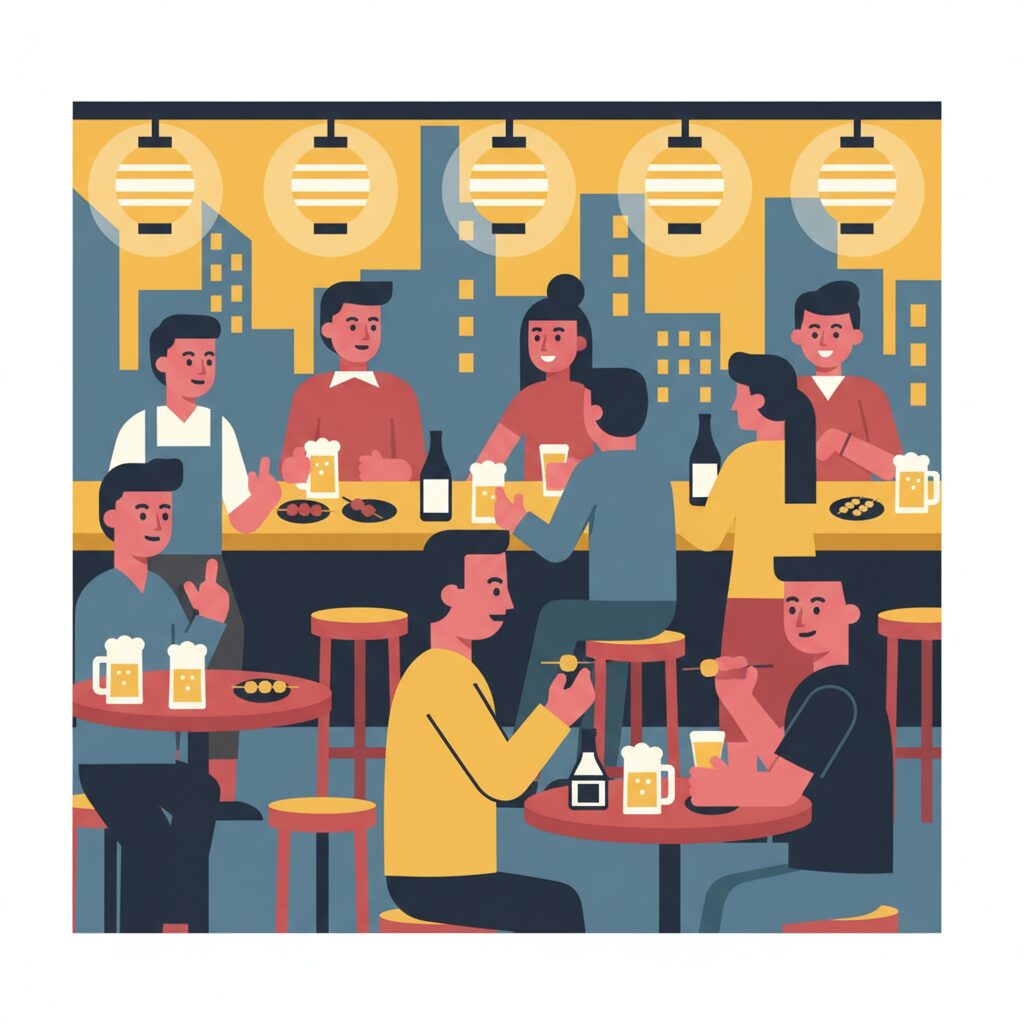
One of the most persistent paradoxes for a foreigner living in Japan is the chasm between public politeness and private connection. You can live here for years, mastering the subtle art of the convenience store bow and the precise angle of a business card exchange, yet find yourself with a social circle that remains stubbornly, exclusively international. The Japanese are unfailingly kind, helpful, and correct, but the wall to genuine, spontaneous friendship can feel impossibly high. It’s a society built on established relationships—from school, from work, from the neighborhood—and breaking into those circles as an outsider can be a life’s work. You begin to accept a certain level of friendly distance as the norm. And then, you walk into an Osaka tachinomi.
Suddenly, the rules don’t apply. Here, in a space often no bigger than a generous living room, packed shoulder-to-shoulder with strangers, the carefully constructed barriers of Japanese society seem to melt away under the warm glow of fluorescent lights and the sizzle of a griddle. A tachinomi, or standing bar, is exactly what its name implies: you drink, you eat, and you do it all on your feet. There are no chairs to claim, no tables to create private islands of conversation. There is only the counter, a river of polished wood or cool stainless steel that everyone shares, and the exhilarating, terrifying, and ultimately liberating proximity to your fellow human beings. This isn’t just a place to grab a cheap beer on the way home from the office; it’s a social engine, a cultural crucible where the raw, unfiltered essence of Osaka is distilled. It’s in these bustling, unpretentious establishments that one can truly begin to understand the city’s unique social software—an operating system built on direct engagement, shared humor, and the profound power of a fleeting connection.
To the uninitiated, a tachinomi can seem chaotic, an intimidating blur of noise and motion. Yet, the design is deliberate, a masterclass in social engineering. The physical constraints force interaction. You will brush elbows. You will have to ask someone to pass the soy sauce. You will overhear the absurd story being told by the salaryman to your left and the heated debate about the Hanshin Tigers to your right. In Tokyo, this proximity would be endured with stoic silence, a shared, unspoken agreement to pretend no one else exists. In Osaka, it’s an invitation. It’s the starting pistol for a conversation. This is where the city’s reputation for being “friendly” sheds its cliché skin and reveals the complex, fascinating mechanics beneath. It’s not just that people are willing to talk; it’s that the entire environment is constructed to make not talking the more difficult option. Let’s delve into the world of these standing bars, not as a tourist looking for a quirky experience, but as a resident seeking to decode the very heart of Osaka’s vibrant, chaotic, and deeply communal soul.
To truly master these spontaneous interactions, one must understand the unique rhythm of Osaka’s comedic banter.
The Architecture of Interaction: Why Standing Breaks Down Barriers
The genius of the tachinomi lies in its physical design. It intentionally defies the conventions that shape most social environments. By removing the furniture of privacy—the chairs, tables, and booths—it fundamentally transforms the social dynamic. What remains is an open, fluid space where human connection is not only possible but nearly inevitable. This is social architecture at its most basic, revealing a core truth about Osaka culture: a preference for the communal over the private, and the direct over the mediated.
No Seats, No Territory
In a typical bar or restaurant, a table functions as a fortress. Once seated, you’ve claimed your territory. You and your companions inhabit an invisible bubble, a semi-private zone where interactions with outsiders require negotiated permission. You might give a polite nod to the next table, but a full conversation is rare, usually needing a specific reason. Sitting creates a psychological anchor, a sense of permanence and ownership. It signals, “This space is mine for the evening.”
In a tachinomi, this entire idea is erased. With no chairs, there’s no territory to claim. You become a transient participant in a constantly shifting environment. The spot you occupy at the counter is temporary, held only as long as you have a drink in hand. This impermanence makes the social membrane highly permeable. People flow in and out. The group beside you might be two people one moment and five the next. A gap opens, someone new slides in, and the conversational ecosystem adjusts. This fluidity is crucial. It means that starting a conversation with a neighbor is not an intrusion into their private space; it is simply acknowledging a fellow participant in a shared public experience. The psychological barrier to initiating contact is lowered nearly to the floor. You’re not crossing a boundary; you’re merely speaking to the person occupying the adjacent coordinates of space and time.
The Counter as a Shared Stage
The counter in a tachinomi is more than a surface for drinks and plates. It’s the central axis of the social world, a stage where the nightly drama of Osaka life unfolds. It acts as a great equalizer. The company president and construction worker lean on the same wood, order from the same menu, and are served by the same master, or taisho. This physical leveling blurs the subtle hierarchies that often define interactions in Japan. For a few hours, titles and status are set aside. Judgment comes not from business cards, but from one’s ability to hold a conversation, land a joke, or show genuine interest in the person next to them.
The taisho or staff behind the counter are more than servers; they are conductors of this social orchestra. Often experts in situational awareness, they keep a mental map of who is talking to whom, who is new, and who is a regular. A skilled taisho acts as social lubricant, gently integrating newcomers into existing conversations. They might say, “Ah, you’re from England? This fellow here was just telling me about his trip to London!” Suddenly, a connection is made. Or they might comment on your order, “Oh, doteyaki! Good choice. Tanaka-san next to you orders that every time.” This provides an immediate, effortless opening to speak with Tanaka-san. The counter becomes a shared reference point, a foundation of common ground for a room full of strangers.
Ephemeral Encounters
Perhaps the most freeing aspect of the tachinomi experience is its transient nature. These are not places for lengthy dinners. Visits are short— a quick beer and some skewers after work, a single glass of sake before the last train. The average stay ranges from twenty minutes to an hour. This quick turnover profoundly affects the social risk-reward calculation.
Knowing that you and everyone else will leave soon dramatically lowers the stakes of social interaction. If a conversation fizzles, there’s no awkwardness. One of you will be gone in ten minutes. There is no pressure to become lifelong friends or exchange contact details. The goal is not to build lasting relationships but to share a pleasant, interesting, or amusing moment. This creates an atmosphere of conversational freedom. You can be more open, playful, and authentically yourself because the interaction is self-contained. It has a beginning, a middle, and a clear, no-fault ending. This philosophy of the ephemeral, of appreciating fleeting beauty, is deeply Japanese (mono no aware), yet in the tachinomi, it’s enacted with a distinctly Osakan, pragmatic energy. It’s social interaction for its own sake—a celebration of temporary community forged over a shared counter.
The Osaka Mindset in Action: “Nande ya nen!” as a Social Lubricant
To truly understand why the tachinomi flourishes in Osaka, one must grasp the city’s unique style of communication. It’s a dialect not only of language but of attitude. While Tokyo’s social interactions tend to be shaped by a quiet, reserved formalism (tatemae), Osaka thrives on direct, humorous, and often playfully confrontational exchanges. This reflects the spirit of manzai, the traditional Japanese stand-up comedy for which Osaka is renowned. The interplay between the funny man (boke) and the straight man (tsukkomi) extends beyond the stage; it forms the essential rhythm of everyday conversation, with the tachinomi as its natural setting.
The Culture of the “Tsukkomi”
The tsukkomi represents the witty retort, the sharp comeback, the exclamation “Nande ya nen!” (loosely, “Why the heck?!” or “You’ve got to be kidding me!”) in reaction to something absurd. In many cultures, contradicting a stranger so directly would be seen as rude. In Osaka, however, it signals engagement. It’s a verbal cue that says, “I’m listening, I’m involved, and I’m joining in.” It serves as social grooming, fostering rapport through shared laughter. In a tachinomi, this happens constantly. For example, if someone orders an unusual food combination, the person beside them might say, “Beer and a sweet red bean pancake? Are you a kid or an old man?” This isn’t an insult; it’s an opening move inviting clever repartee and shared humor, sparking conversation out of thin air.
For outsiders, this can feel startling at first. We’re often taught to be agreeable, to smile and nod. But in Osaka, gentle, humorous opposition is a form of connection. Simply agreeing with everything makes you a dull conversational partner. By joining in this back-and-forth tsukkomi culture, you demonstrate your understanding of the local conversational style. It’s a display of social savvy, and the tachinomi offers a perfect, low-pressure stage to practice. The close quarters ensure your tsukkomi is overheard, and the lively, alcohol-fueled atmosphere guarantees it’s almost always received in good humor.
Tokyo’s Reserved Formality vs. Osaka’s Direct Engagement
The contrast with Tokyo is striking and sheds light on the Osakan character. Picture a small standing bar in a neighborhood like Shinjuku. The vibe would likely be quiet. Customers would face forward, focused on their drinks or phones, preserving personal space even in a crowd. Starting a conversation with a stranger would be a bold social move, possibly met with suspicion or unease. The default behavior is to avoid interaction.
In an Osaka tachinomi, whether in the bustling arcades of Tenma or the rugged streets of Kyobashi, the norm is engagement. The background noise is louder, filled with laughter and animated talk. People turn towards each other, not just the bar. Eye contact is frequent and sustained. This isn’t because Osakans are inherently “nicer” or “friendlier” in a moral sense, but because their view of public space is fundamentally different. In Tokyo, public space often feels like an extension of private space, navigated with minimal disturbance. In Osaka, public space is truly communal—a shared resource where interaction is expected and cherished. The tachinomi stands as the ultimate expression of this mindset: a semi-public living room for the neighborhood.
The Economic Logic of Community
This outlook is no accident; it is deeply rooted in history. Osaka has long been a city of merchants, known as the “kitchen of the nation” (tenka no daidokoro). Its culture was shaped not in rigid, hierarchical samurai courts but in the practical, fast-moving world of commerce. Successful business depended on clear communication, quick rapport, and the ability to haggle and joke. Social status hinged less on birth and more on wealth and business skill, fostering a more egalitarian, down-to-earth social structure.
The tachinomi directly descends from this merchant heritage. It originated as a practical spot for laborers and traders to grab an inexpensive, quick drink and bite. It was efficient, affordable, and unpretentious. Yet it also became a vital center for exchanging information—business leads, neighborhood gossip, and the networks of trust crucial to commerce. This legacy continues today. The tachinomi remains a space where social and economic boundaries blur, fundamentally democratic—a remnant of the city’s merchant spirit where a person’s worth is measured by the quality of their conversation, not the title on their business card.
Unspoken Rules of the Standing Bar: A Foreigner’s Guide to Fitting In
While the tachinomi environment is notably open and forgiving, it still has its own subtle etiquette. It’s a dance, and understanding the steps can be the difference between a memorable night of connection and an awkward evening feeling like an outsider. The rules are unwritten, learned through observation and participation. For a foreigner, a bit of insider knowledge can go a long way in unlocking the full experience of these unique social spaces.
Reading the Room
The key skill in a tachinomi is social awareness. Just because the setting encourages interaction doesn’t mean everyone is open to it at every moment. Before starting a conversation, take a moment to observe. Read the body language. A person or group turned inward, speaking softly, is likely having a private discussion. Someone staring intently at their phone or the menu might not be seeking company. Respect that. However, openness signals are usually clear. People scanning the room, making eye contact with the staff, or with open, outward body language often welcome a friendly approach. A group laughing loudly is practically sending an invitation to join the fun. The key is to be a polite observer before becoming an active participant. The vibe of a tachinomi is like a current; it’s best to sense its direction before diving in.
The Art of the Order
In a tachinomi, ordering food and drink is a social tool—your first and most natural point of interaction. Instead of simply pointing at the menu, use it as an opportunity. If the person next to you is eating something that looks tasty, ask them about it. “Sumimasen, sore wa nan desu ka? Oishisou desu ne.” (Excuse me, what is that? It looks delicious.) This is a universally welcomed compliment and an excellent icebreaker. In most cases, this will spark a conversation about the bar’s best dishes. Similarly, asking the taisho for a recommendation (osusume) not only helps navigate an unfamiliar menu but also shows you are engaged with the environment. Your order becomes a public statement, a small performance in the theater of the bar. By making it interactive, you signal your willingness to connect.
The Graceful Exit
Knowing how to end a conversation is just as important as knowing how to start one. The charm of the tachinomi lies in its transient nature, and respecting this is essential. Don’t overstay your welcome, whether in conversation or at the bar itself. If a conversation naturally slows, it’s perfectly fine to let it end. You can turn back to your drink without any awkwardness. When ready to leave, especially after a pleasant chat with neighbors, a simple acknowledgment shows good manners. A slight nod and a quiet “Osaki ni shitsurei shimasu” (Excuse me for leaving first) politely signals your departure. To the staff, a clear “Gochisousama deshita” (Thank you for the meal) is customary. This clean, crisp exit—what the Japanese call sappari—is the final beat in the rhythm of the tachinomi experience. It honors the connection made without imposing any future obligation, perfectly preserving the magic of the fleeting encounter.
What Foreigners Often Misunderstand
Despite their inviting atmosphere, tachinomi can also cause cultural confusion for non-Japanese visitors. Social cues may be misunderstood, resulting in awkwardness or disappointment. Grasping the cultural context behind these places is essential for navigating them successfully and valuing them as they truly are, rather than through a Western lens. These are not merely Japanese pubs or dive bars; they represent a unique cultural phenomenon with their own assumptions and purposes.
“Friendly” vs. “Friendship”
This is arguably the most important distinction to understand about social life in Osaka, with the tachinomi serving as the primary learning ground. It’s entirely possible to share an incredible, humorous, and deeply personal conversation with a stranger at the counter. You might swap stories, laugh until you cry, and feel a sincere, powerful connection. For that brief hour, you could feel as if you’ve made a new best friend. Then, they finish their drink, say a cheerful “Ja, mata!” (Well, see ya!), and walk out of your life forever. Usually, there’s no exchange of contact information or promise to meet again. For many Westerners, this can seem jarring or insincere. Was that connection not genuine? It absolutely was, but the cultural value is different. The significance lies in the moment itself—the shared experience and the spontaneous camaraderie between two strangers—not as a step toward a lasting friendship. Osaka culture specializes in creating these temporary spaces of intimacy. Foreigners often misinterpret this immediate warmth as an invitation into one’s life. Embracing the tachinomi means learning to appreciate the beauty of these one-time connections and recognizing the accumulation of these friendly encounters as a form of social wealth, rather than seeing each as a failed attempt at a long-term relationship.
It’s Not a “Pick-Up” Scene
With close quarters, free-flowing drinks, and easy conversation, it’s easy for Westerners to misread a tachinomi as a singles bar or a place to make romantic advances. This is a major misunderstanding and a quick way to make others uncomfortable. While romantic connections can develop anywhere, the main purpose of a tachinomi is communal, not predatory. The openness reflects a general social agreement, not a specific invitation. Aggressive flirting or treating the bar as a hunting ground goes against the spirit of the place. The warmth and friendliness are built on mutual, platonic respect. Anyone approaching another with a clear romantic agenda is likely to face a polite but firm rejection. The social harmony of the bar depends on it being a safe, welcoming environment for everyone—men and women, young and old—to simply enjoy a drink and conversation. Approaching interactions with genuine curiosity and a desire to talk, rather than expecting a specific outcome, is the only respectful way.
The Language Barrier Myth
Many foreigners hesitate to enter a tachinomi, worried that their limited Japanese will be a huge obstacle. While language skills certainly help, these standing bars are surprisingly accommodating for beginners. The shared context acts as a strong communication aid. You can point to food, use gestures, and a smile accompanied by a simple “Kanpai!” (Cheers!) can bridge any language gap. In fact, being a foreigner can sometimes be an advantage in a tachinomi. Osakans tend to be curious and often make an effort to communicate, dusting off their high school English with genuine enthusiasm. They don’t expect perfection and appreciate the effort. A willingness to be vulnerable, to try, to make mistakes, and to laugh at yourself is highly valued. The tachinomi is less a measure of your Japanese ability and more a test of your willingness to connect on a basic human level. Enjoying good food and drink together in a lively atmosphere is, in itself, a universal language.
Beyond the Beer: Tachinomi as a Microcosm of Osaka Life
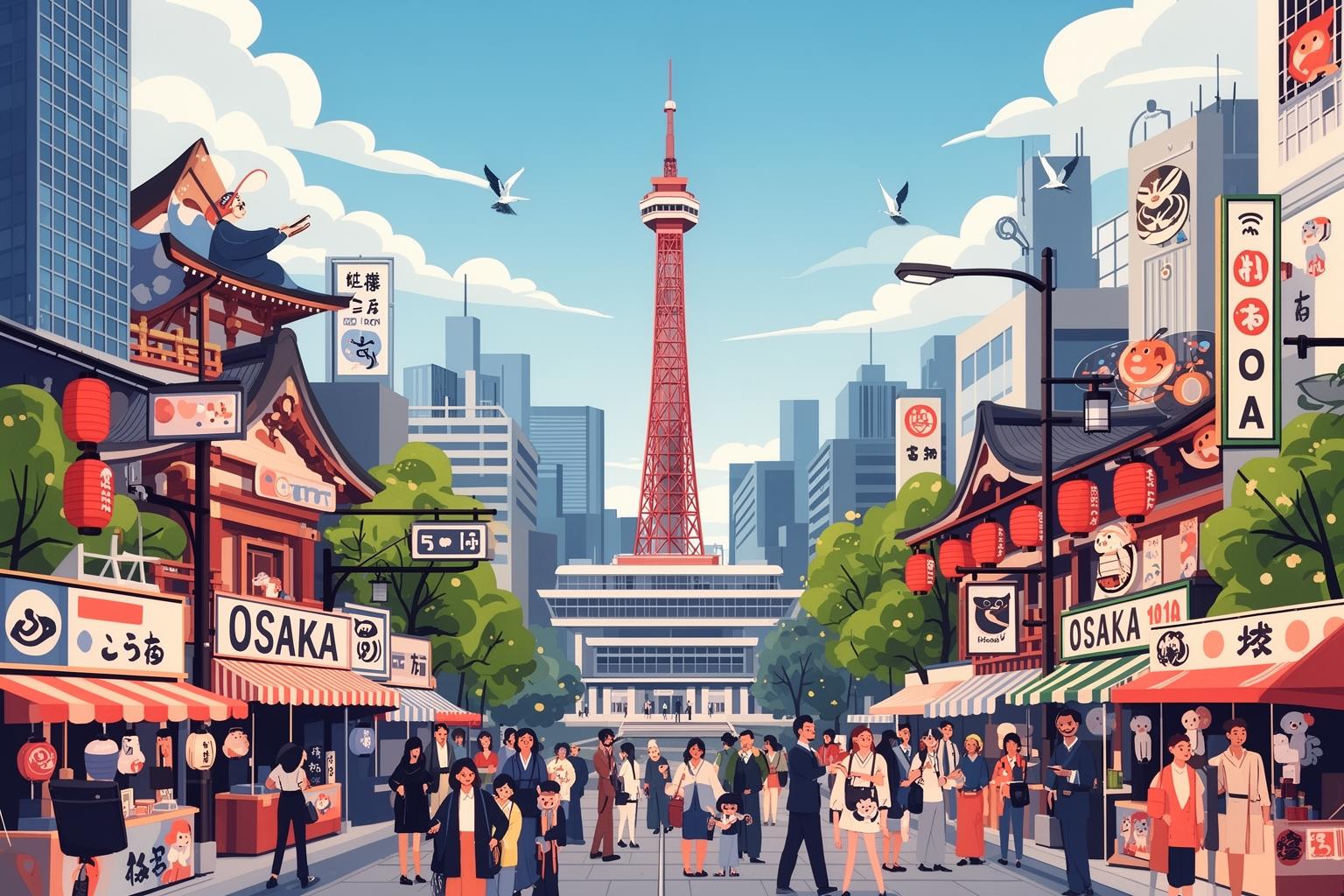
A tachinomi is far more than just a place to drink. It serves as a living museum of Osaka’s culture and a nightly reenactment of the city’s social history. Standing at one of its counters offers a visceral understanding of what sets this city apart. While you can read countless articles about Osaka being a “merchant city” or its people described as “friendly,” these remain abstract ideas until you’ve experienced them firsthand—crammed into a tiny bar in Namba, sharing a plate of grilled chicken skin with a group of laughing strangers.
Here, the city’s pragmatism is evident in the simple, no-frills decor and affordable prices. Its egalitarian spirit shines through in the way a bank manager and a delivery driver converse as equals. You observe its distinctive style of communication in the rapid-fire boke and tsukkomi exchanges that ripple along the counter. You sense its strong community bond in how the taisho greets regulars by name and effortlessly includes newcomers. This is where theory becomes reality.
Now, contrast this with Tokyo. Tokyo is a city of flawless interfaces and carefully curated experiences. It is magnificent, efficient, and beautiful, but its social life often takes place behind closed doors, in reserved booths, among established groups. Osaka, as represented by the tachinomi, unfolds its social life openly. It is messy, loud, and occasionally chaotic, but also profoundly inclusive. It extends a standing invitation to join in, not just observe. For a foreigner trying to find a place in Japanese society, the tachinomi is a revelation. It’s a setting where no formal introduction is needed. Your presence alone is your invitation. By simply showing up and being receptive, you can, for a brief time, stop being a spectator and become part of the city’s vibrant, ongoing conversation.