Welcome to Osaka. You’ve navigated the train system, found an apartment, and maybe even figured out your favorite brand of cup ramen at the local FamilyMart. You’re settling in. Then comes Tuesday night. You see your neighbors meticulously preparing bags for the morning. Not just any bags. Clear, transparent bags filled with crushed plastic bottles, their labels surgically removed. You look at your own sad pile of mixed refuse stuffed into a generic grocery bag. A quiet panic sets in. This isn’t just about taking out the trash. This is a system, a ritual, a window into the soul of the city. Forget the castles and the neon signs for a moment. If you want to understand how Osaka really works, how its people think, and what daily life feels like on these streets, you need to start with the garbage.
This isn’t a simple chore; it’s your first and most fundamental test of community integration. In many cities, trash is an out-of-sight, out-of-mind affair. You toss it in a bin, and it magically disappears. In Osaka, your garbage is a public statement. It’s a declaration of your competence, your consideration for your neighbors, and your understanding of the unwritten social contract. The rules can seem baffling, overly specific, and maybe a little intimidating. But they aren’t arbitrary. They are a reflection of Osaka’s core identity: pragmatic, efficient, and fiercely communal. Unlike the sometimes rigid, top-down order of Tokyo, Osaka’s system feels more organic, a grassroots agreement to keep things running smoothly without a fuss. Mastering this system isn’t just about avoiding a warning sticker on your bag; it’s about earning your place in the rhythm of the neighborhood. So, let’s peel back the layers of this intricate dance and figure out exactly what goes where, when, and most importantly, why.
Understanding how Osaka’s unique blend of candid humor and direct communication informs community integration, you might benefit from a reality check on local conversation to further explore these nuances.
The Philosophy of the Clear Bag: Pragmatism on Display
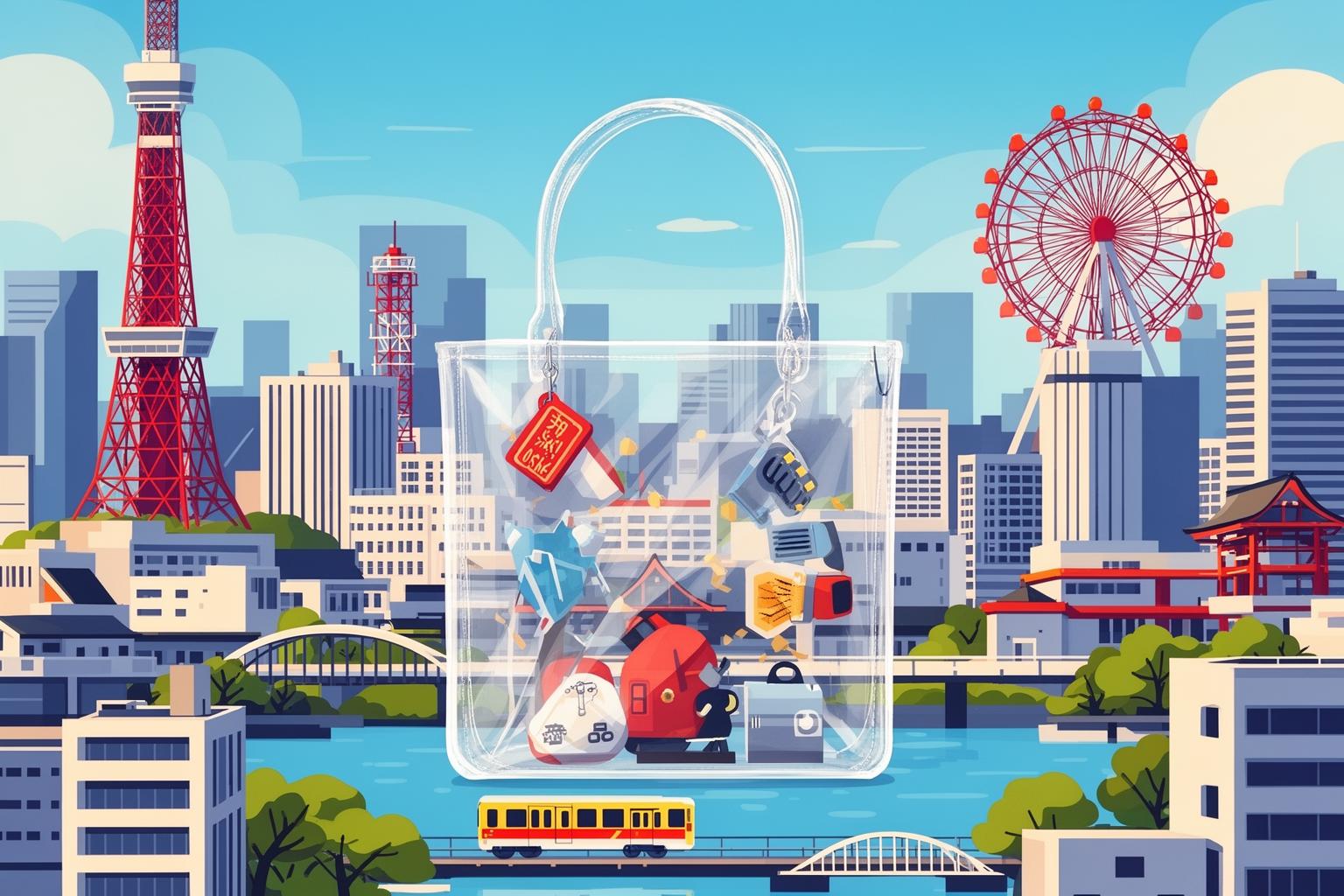
Before we delve into the specifics of what defines “Container and Packaging Plastic,” it’s important to grasp the key feature of Osaka’s waste system: the mandatory use of transparent or semi-transparent bags. Travel to Tokyo, and you’ll find residents using opaque white or blue bags, keeping their trash private until the city collects it. In contrast, in Osaka, your garbage is everyone’s concern. This is not due to nosiness but rather a reflection of pure, straightforward Osakan pragmatism.
Osaka’s long history as a merchant city is founded on trust, efficiency, and directness. When making a deal, there’s no time for misunderstandings. This practical mindset extends even to waste disposal. The clear bag serves several highly efficient purposes. First, it enforces accountability. If someone places a can in the combustibles bag by mistake, it’s immediately obvious. Collectors and, more importantly, neighbors can see it, creating a strong, self-regulating system that needs little enforcement. Nobody wants to be the person whose bag is left behind with a conspicuous red warning sticker. This quiet social pressure keeps the system honest.
Second, it enhances speed and safety for collection workers. They can quickly check a bag’s contents to ensure there are no hazardous items like broken glass or spray cans in the wrong category, making their job safer and faster. An efficient city is a prosperous city, and this logic extends even to local services.
This transparency contrasts sharply with other Japanese cities. In Tokyo, the focus is often on following rules simply because they exist—the process is the priority. In Osaka, the priority is the outcome. Rules exist to achieve a clean, efficient result. The clear bag isn’t about aesthetics or environmental ideals; it’s a straightforward, low-cost, high-impact tool designed to ensure the job is done efficiently. It reveals much about the local character: direct, practical, and committed to solutions that work collectively with minimal fuss.
Decoding the Daily Ritual: The Main Categories Explained
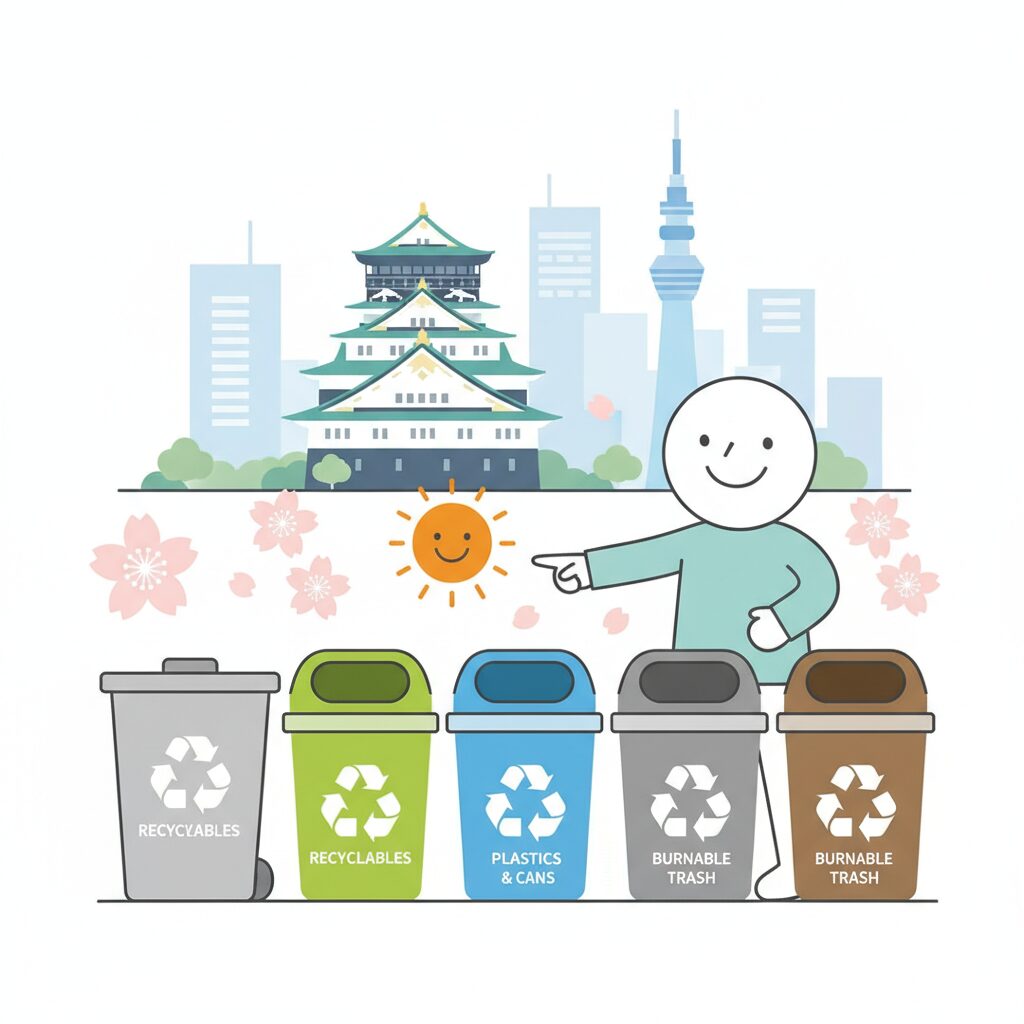
Your life in Osaka will soon center around a weekly schedule printed on a small magnetic calendar provided by the city. This becomes your guidebook, setting the pace for your household chores. Ignoring it is out of the question. Let’s examine the main players in this weekly routine.
Futsu Gomi (普通ごみ) – Regular Garbage
This is your primary event, usually collected twice a week, often on Mondays and Thursdays. While the name means “regular” or “ordinary” garbage, think of it as “combustibles.” These items are destined for incineration. The key is knowing what burns.
What It Is
This category includes kitchen scraps, food waste, soiled paper products (like tissues and paper towels), leather items, rubber goods, and some non-recyclable plastics. Examples are dirty food wrappers, used chopsticks, small plastic toys not related to packaging, and sanitary products. The general rule: if it can’t be recycled and isn’t a large object, it likely belongs here. An important step for kitchen waste is draining excess water—squeeze out tea bags and let vegetable peelings drain in a strainer—to avoid smelly, dripping bags that attract crows and create messes at pickup points.
The Lived Experience
Collection mornings are busy, with a strict deadline usually around 8:30 AM. Putting bags out the night before is a major no-no, an easy invitation for the city’s crafty crows to tear open bags and scatter contents across the street. You come to recognize the garbage truck’s approach by its distinctive loudspeaker melody. People from all walks of life—salarymen, elderly grandmothers, students—make their way to the collection spot. It’s a brief, quiet communal ritual: you place your bag neatly under the green or blue net, nod to your neighbor doing the same, and leave. Forgetting the day means living with a smelly bag in your small apartment for days—a strong incentive to keep on schedule.
Yoki Hoso Purasuchikku (容器包装プラスチック) – Container & Packaging Plastics
This category causes the most confusion among foreigners. Collected once a week, it is only for plastic used as containers or packaging—a crucial distinction new arrivals often miss. Look for the “Pura” mark (プラ) inside the recycling triangle.
What It Is
Items include supermarket plastic trays, PET bottle caps and labels (bottles themselves are recyclable separately), plastic bags, styrofoam, instant noodle bowls, shampoo bottles, and shrink wrap. These must be relatively clean—you don’t need to scrub with soap but should rinse off any food residue. A quick rinse of a yogurt container or tofu tray is sufficient. Leaving dried-on food guarantees your bag will be rejected.
The Lived Experience
This category involves a multi-step preparation that ultimately feels like real participation in the system. For example, with a plastic drink bottle: first drink it, then rinse it, peel off the thin plastic label, unscrew the cap. The bottle goes into one recycling stream (often a supermarket bin or separate collection), while the label and cap go into the “Container & Packaging Plastics” bag. Though tedious, it becomes second nature. You create a small sorting station in your kitchen and derive a peculiar satisfaction from a full, clean bag ready for collection, knowing you’ve done it right. This category highlights the system’s focus on individual responsibility; the city won’t clean items for you. Preparing recyclables is on the consumer, a shared effort reinforced by neighbors doing meticulous prep alongside you.
Koshi / Irui (古紙・衣類) – Used Paper & Clothing
This traditional recycling category is generally collected once or twice a month. It feels like a nod to a simpler era and requires a bit of handiwork—you can’t just throw paper into a bag.
What It Is
It includes newspapers, magazines, cardboard, milk cartons, and old clothes. Bundling is essential: newspapers neatly stacked and tied with string; cardboard boxes broken down flat and bundled; milk cartons cut open, rinsed, and dried; clothes washed and placed in clear bags. Soiled or greasy paper, like pizza boxes, must go into the regular combustibles.
The Lived Experience
Preparing paper and cardboard bundles is a unique domestic art in Japan. You’ll see stacks tied with a special knot that’s secure yet easy to handle. This connects you to a pre-digital past. On collection day, these neat bundles appear on the curb like small offerings. Often, local community associations or children’s groups manage this collection as a fundraiser. The money earned helps fund local festivals or school supplies, giving recycling a direct community benefit rare in anonymous municipal services. This adds social meaning to the chore; you’re not just discarding old boxes—you’re supporting the neighborhood summer festival’s shaved ice stand.
Sodai Gomi (粗大ごみ) – Oversized Garbage
Disposing of large items is a formal, bureaucratic procedure with no shortcuts. You can’t leave an old microwave by the curb and hope for pickup. This is where you engage directly with city administration.
What It Is
This category covers items too large for standard garbage bags: small furniture, broken appliances, bicycles, futons, and similar goods. Each item comes with a specific disposal fee.
The Lived Experience
The process exemplifies Japanese bureaucracy. First, you contact the Oversized Garbage Reception Center or apply online, providing details of your items. They inform you of the fee and designated collection date and location. Then you buy “Oversized Garbage Disposal Fee Tickets” (粗大ごみ処理手数料券) at local convenience stores or post offices—these are stickers. You write your name or a reception number on each sticker, adhere it to the item, and place the item at the designated spot on collection day morning. The process feels very formal but is highly efficient and unambiguous. It ensures disposal costs fall to the waste creator and stops illegal dumping. For foreigners, making that initial call can be intimidating, but successfully navigating the system provides a strong sense of achievement—you’ve cracked the code.
Tools, Terrains, and Taboos: The Unspoken Rules of the Curb

Understanding the categories is only half the challenge. The other half lies in grasping the culture and unspoken rules that govern the actual collection points. This is where Osaka’s social dynamics come into play.
The Collection Point: A Sacred Social Space
Your local garbage collection point, or gomi suteba, is more than just a spot on the pavement. It’s a small, temporary piece of communal territory. It might be a concrete slab at a street corner or simply a designated area in front of an apartment building. It’s usually marked by a large net, typically green or blue, which is either stored nearby or held by the first person to arrive. This net is essential, as it protects the bags from the crows mentioned earlier and from being scattered by the wind. The unwritten rule is to place your bag down and help cover it with the net. Just throwing your bag onto the growing pile and walking away is considered bad manners and shows a lack of respect for the collective effort.
There’s also a subtle hierarchy within the pile. You don’t want your bag teetering precariously on top, at risk of falling into the street. Instead, you find a stable spot, keeping the pile compact and orderly. It’s a small but meaningful act of cooperation. You’ll notice how meticulously long-term residents, especially the elderly, manage the space. They are the unofficial guardians of the gomi suteba. Watching them closely is the best way to learn.
The Red Sticker of Shame: Public Correction
What happens if you mess up? You will be publicly, though anonymously, shamed. If the collection crew finds a bag with improper sorting—a plastic bottle in the burnable trash, for instance—they won’t take it. Instead, they place a large, brightly colored sticker on it, usually red or yellow. This sticker, the keikoku shīru (警告シール), explains the violation. The bag is then left behind for everyone to see.
Finding your bag marked with this sticker is a mortifying experience. It’s a silent, public declaration that you failed your civic duty. Neighbors will walk past it; they might not be able to identify the owner for certain, but in a small community, they probably have a good idea. The process is humbling: you must make the walk of shame, retrieve the offending bag, take it back inside, correct the mistake, and wait for the next proper collection day. It’s an incredibly effective deterrent. Most people only make a serious error once. This isn’t about punishment—it’s education through public accountability, a classic Osaka approach to solving problems.
The “Ma, Eeka” Paradox: Where the Rules Bend
After reading this, you might assume Osaka is a city of strict, unforgiving rule-followers. But that would misrepresent the local character. While the system is strict, it functions within a broader cultural context of pragmatism known as “Ma, eeka” (まあ、ええか), roughly meaning “Ah, whatever” or “Close enough is good enough.”
This isn’t an excuse for laziness, but a practical acknowledgment that perfection is impossible and often unnecessary. Did a few grains of rice remain in that plastic bento box? Is that plastic wrapper technically packaging or part of the product? People do their best, but they don’t lose sleep over minute infractions. The goal is for the system to work on a macro level. As long as you clearly make a good-faith effort—rinsing your plastics, separating your paper, putting out the right category on the right day—no one will ostracize you. The red sticker is reserved for blatant violations, not minor, debatable judgments. This is a key difference from Tokyo, where the process and adherence to rules sometimes seem more important than their spirit. In Osaka, if the outcome is good and you didn’t cause problems for anyone, that’s what matters. Show you’re trying, and the community will give you the benefit of the doubt. It’s a system designed for humans, not robots.