Osaka hits you like a shot of strong espresso. The flashing lights of Dotonbori, the roar of the crowds in Shinsaibashi, the sheer, unapologetic energy of it all. It’s a city that lives out loud, a place of commerce and comedy, where every interaction feels a little more direct, a little more real. For a digital nomad, this energy can be intoxicating, a fuel for creativity. But let’s be honest. There are days when you need to unplug from the city’s voltage. Days when you need a quiet corner, a reliable Wi-Fi signal, and a space to just breathe and get your work done. You could default to the nearest Starbucks, sure. But you wouldn’t be experiencing Osaka. You’d just be in a generic coffee shop that happens to be in Osaka. The real magic, the places where Osakans themselves retreat to focus, to create, to escape—those are hidden. They’re tucked away in basements, crammed into the upper floors of nondescript buildings, and hidden down alleys you’d never think to explore. This isn’t a guide to the most Instagrammable latte art. This is a deep dive into the city’s network of underground cafes, the anagura, or secret spots, that reveal a completely different side of Osaka’s personality. It’s here, in these quiet, subterranean worlds, that you’ll understand the city’s pragmatic soul, its creative undercurrent, and its deep appreciation for a well-kept secret. Forget the slick, minimalist aesthetic of a Tokyo co-working space; we’re going somewhere with more character, more history, and a lot more soul.
For those eager to immerse themselves fully in the local culture, exploring navigating Osaka’s dialect can enrich your experience of the city’s authentic vibe.
The “Anagura” Mentality: Why Osaka Hides Its Best Spots
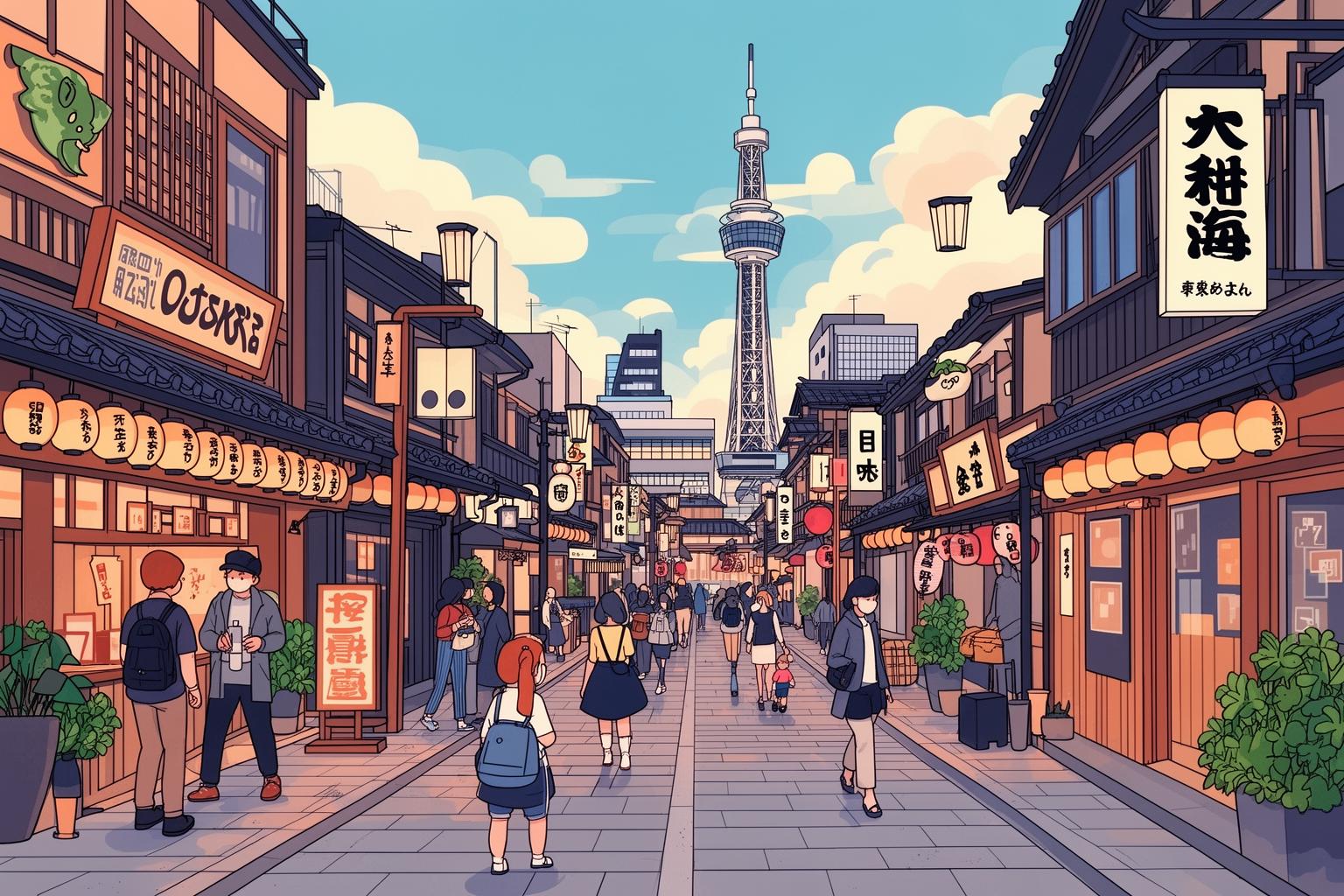
To grasp Osaka’s cafe culture, you first need to understand the concept of an anagura (穴場). Literally, it means something like a “hole spot,” but a more fitting translation would be a “hidden gem” or a “well-kept secret.” While people across Japan enjoy discovering anagura, in Osaka, it’s almost a way of life. This isn’t about snobbery or exclusivity; it’s deeply rooted in the city’s history as a merchant town. For centuries, Osaka served as Japan’s commercial hub. Space was a precious resource, so every square inch had to be used efficiently. This practicality is ingrained in the city’s DNA. Why spend money on a flashy, expensive street-level storefront when a cozy basement or third-floor walk-up suffices—especially if your product, in this case excellent coffee and a quiet atmosphere, is good enough to attract people? This mindset fosters a culture of discovery. In Tokyo, the new, shiny, and visible often steal the spotlight, with trends constantly shifting on the main streets of Shibuya and Omotesando. Osaka, however, honors the survivor—the small, enduring establishments that have operated from basements for decades simply because they’re that good. Finding one of these spots feels like being let in on a secret. You’ll see an Osakan’s eyes light up when they share their favorite anagura curry shop or hidden bar. It’s a source of pride, not due to exclusivity, but because it signifies a smart find, a good deal, and a genuine experience. For digital nomads, this mindset is a treasure. The city is filled with these practical, character-rich sanctuaries, deliberately removed from the tourist crowd, waiting for the curious to explore.
Decoding the Underground Cafe: What to Look For
So how do you discover these hidden gems? You need to learn to interpret the urban landscape in a new way. You must look beyond the bright, polished exteriors and notice the subtle hints, the quiet invitations to a world functioning just beneath the surface. This calls for a touch of adventurousness, a readiness to open a door or descend a staircase without knowing exactly what awaits. But once you recognize the signs, you’ll begin to see them everywhere—a secret language woven into the city’s architecture.
The Distinctive “Kissa” Signboard (喫茶店)
First, learn to tell the difference between a modern カフェ (cafe) and a traditional 喫茶店 (kissaten). The former is what you’d expect: lattes, pastries, bright lighting, and an energetic atmosphere. The latter is a gateway to another time. A kissaten, or kissa, is a classic Japanese coffee house, often dating back to the Showa period (1926–1989). Look for dark wood paneling, velvet-upholstered chairs, the gentle bubbling of a siphon coffee maker, and an owner, known as the “master,” who has honed their craft for decades. Foreigners sometimes mistake the quiet, occasionally smoky atmosphere of a kissa for unfriendliness. It’s actually quite the opposite. The silence reflects respect for the space and the other guests. The master isn’t ignoring you; they’re giving you room to think, read, or work. The unspoken rule is simple: you order a coffee, and the seat is yours for a reasonable amount of time. These were the original co-working spaces, long before the term existed. They’re havens of focus, fueled by strong, carefully brewed coffee and the quiet hum of a city taking a moment for itself.
The Basement Beacon: Descending the Stairs
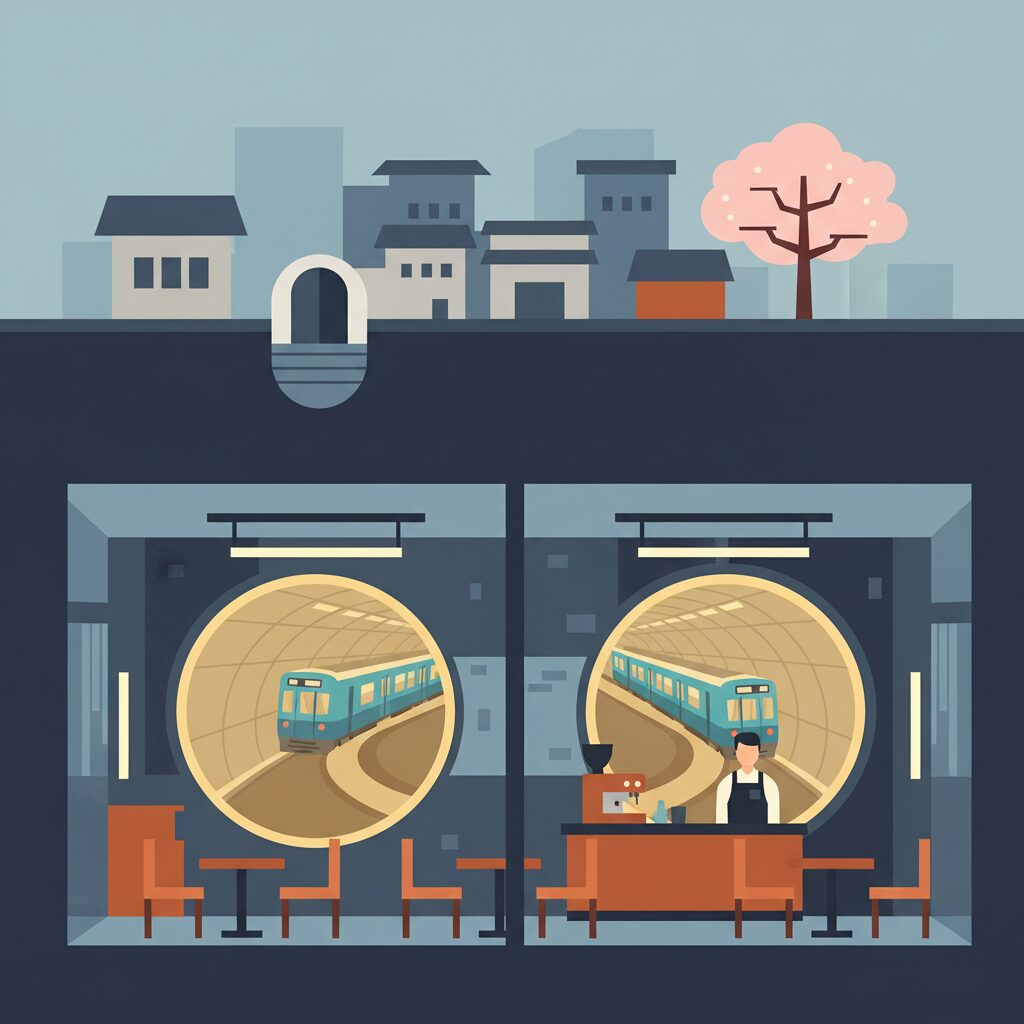
Some of Osaka’s best-kept secrets lie underground. As you stroll through busy commercial areas like Umeda or Namba, train yourself to look downward. You’ll start to notice narrow stairways leading down from the sidewalk, often accompanied by a small, handwritten A-frame sign listing a simple menu—Coffee, Toast, Curry. It can feel intimidating. The entrance is dark, and you have no clue what you’ll find below. This acts as a natural filter, screening out casual passersby and rewarding the curious. Venture down those stairs. More often than not, you’ll find yourself in a space that is surprisingly tranquil. Concrete walls and the earth above isolate you completely from the street’s chaos. The noise of traffic, the chatter of crowds, the city’s constant buzz—all disappear. What remains are the gentle clinks of ceramics, the aroma of roasted beans, and perhaps some soft jazz playing from a vintage sound system. The absence of windows directs your focus inward, creating a perfect setting for deep concentration. These subterranean venues embody the anagura concept—a literal “hole in the wall” offering refuge and peace. They prove that in Osaka, the most valuable real estate isn’t always the one with the best view but the one with the greatest tranquility.
The Multi-Tenant Building Maze (雑居ビル)
Then there’s the zakkyo biru (雑居ビル), the multi-tenant buildings that are the unsung champions of Japanese urban life. From the outside, they may seem uninviting—dull concrete structures from the ’70s or ’80s, with a cluttered collection of signs advertising small businesses: dental clinics, language schools, snack bars, and law offices. They don’t scream “cozy cafe.” Yet these buildings are vertical villages, and hidden within are some of the city’s most unique independent cafes. Your clue is the building directory in the lobby. Scan through the tenant list for characters like 珈琲 (coffee) or 喫茶 (kissa). The cafe might be on the third, fifth, or eighth floor. You’ll ride a small, slow elevator up, and the doors will open to a narrow hallway. At the end, a simple wooden door might be the only indication you’re in the right place. Inside, you’ll discover a space born from passion. These aren’t businesses designed for high volume; they’re curated worlds shaped by their owners. Maybe it’s a cafe focusing on vinyl records, or one filled with antique books, or another dedicated to a specific coffee brewing method. The owners choose a spot in a zakkyo biru for the low rent and freedom it offers. They thrive on regulars and word-of-mouth, cultivating a true sense of community. By stepping inside, you’re more than a customer—you’re a temporary guest in someone’s personal, passion-driven creation.
The Unspoken Rules of Engagement: How to Be a Good Cafe Nomad
Finding the perfect spot is only half the challenge. To truly be welcomed, you must understand the unspoken rules of these spaces. This isn’t like a Western coffee chain where anonymity is expected. These are small, independent businesses where your behavior really matters. The social contract here is subtle but strong, built on mutual respect that feels distinctly Japanese, yet carries a practical Osaka flavor.
The One-Drink Minimum (Per Session)
This is the most basic rule. Your purchase is your payment for the table, chair, Wi-Fi, and atmosphere. Nursing a single coffee for five hours is considered poor etiquette. The general understanding is that one drink covers a couple of hours. If you plan to stay longer—whether through the lunch rush or from morning until afternoon—it’s common courtesy to order something else, whether it’s another coffee, a slice of toast, or a piece of cake. This isn’t an upsell; it’s a way of recognizing that you’re using a valuable resource. The owners are running a business, not a public library. Osakans, with their strong merchant sensibility, get this instinctively. It’s a fair exchange, and honoring it will earn you a quiet nod of approval from the owner.
Reading the Air (空気を読む – Kuuki o Yomu)
Kuuki o yomu, or “reading the air,” is an essential skill for navigating life in Japan, especially in these small shared spaces. It means being mindful of the situation and adjusting your behavior accordingly. If the café is empty, feel free to spread out and settle in for a long work session. But if it’s noon and a line of hungry office workers forms at the door, that’s your signal. If you’ve finished your coffee and are just typing away, it’s time to pack up and free your spot for a paying customer. While a Tokyo owner might quietly tolerate this, an Osaka owner might, after a while, politely but directly ask if you’d like to order something else—a gentle reminder that the table is needed. The key is to be considerate: keep phone conversations outside, use headphones for audio, and type quietly. The goal isn’t to be invisible, but to be a thoughtful part of the calm atmosphere.
Cash is Still King (Sometimes)
Though Osaka is a major city, don’t assume every place has the latest payment technology. Many older, family-run kissaten and hidden cafés operate on a cash-only basis. It’s not because they’re behind the times; it’s simpler and avoids transaction fees—a practical choice fitting perfectly with the Osaka mindset. Always carry some yen, especially when exploring less-traveled areas. Fumbling for a credit card where they clearly aren’t accepted can be awkward. Being prepared with cash is a small sign of respect and shows you understand the reality of daily life in these traditional corners of the city.
Neighborhood Spotlights: Where to Start Your Hunt
Instead of providing a list of specific cafes that may become crowded tomorrow, it’s more helpful to understand the essence of the neighborhoods where these hidden gems thrive. Once you sense the vibe of an area, you can confidently embark on your own treasure hunt.
Nakazakicho (中崎町): The Retro Labyrinth
Just a short stroll from Umeda’s gleaming skyscrapers lies Nakazakicho, a neighborhood that feels like a time capsule. Miraculously spared from wartime bombings, its narrow, winding alleys are lined with pre-war wooden houses (kominka). Many have been lovingly transformed into vintage clothing shops, art galleries, and, of course, cafes. Finding a work spot here is an adventure itself. You’ll duck under low doorways and discover cafes occupying entire two-story homes, complete with steep stairs and tatami mat rooms. The atmosphere is bohemian, creative, and deeply personal. Wi-Fi might not be the fastest, and power outlets can be limited, but the trade-off is an inspiring environment. It’s ideal for writing, sketching, or brainstorming—a true refuge from the modern world.
Shinsaibashi/Amerikamura (心斎橋/アメ村): The Concrete Jungle Dive
On the surface, this district is the heart of Osaka’s youth culture—a vibrant, chaotic blend of fashion, music, and street food. It’s the last place you’d expect quiet and calm. But that’s exactly why its hidden cafes are so rewarding. Here, you have to actively look for refuge. This is prime territory for basement jazz kissaten and upper-floor zakkyo biru spots. The contrast is striking and delightful. One moment you’re navigating a crowd on the street, and the next you’re in a dimly lit, silent room where only an old Miles Davis record plays. These cafes are practical, no-frills sanctuaries. They serve those in the know, offering a vital escape from the sensory overload outside. This is where you go for serious, focused work.
Kitahama (北浜): The Riverside Retreat
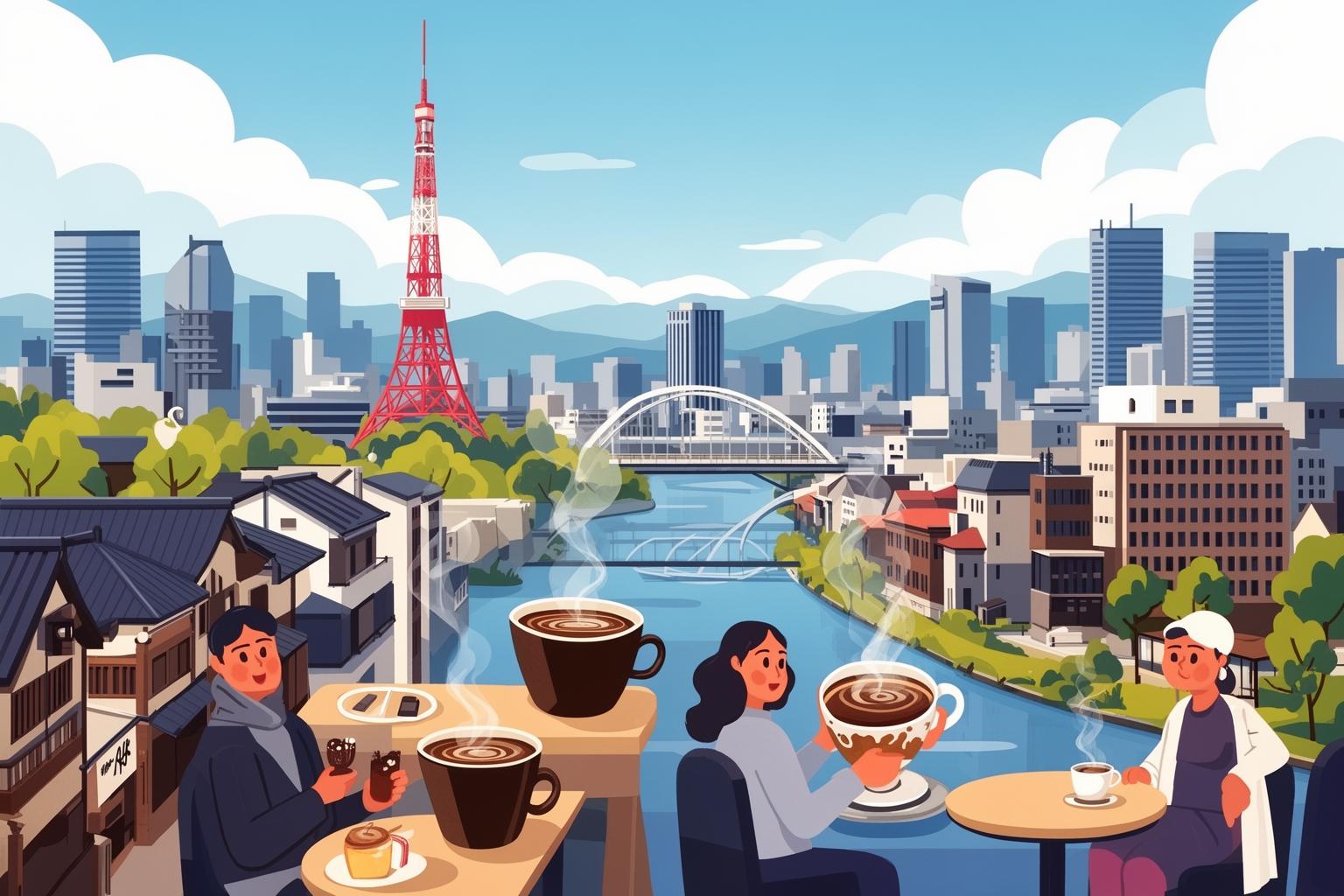
Spanning the Tosahori River, Kitahama brings a different vibe to Osaka. Once a financial district, it boasts stately Western-style buildings from the Meiji and Taisho periods. The mood is more refined, calmer, and somewhat mature. The cafes here reflect that character. Many occupy ground floors of these elegant old buildings, featuring large windows or terraces overlooking the river. While some can be popular, quieter spots remain tucked away on side streets or inside buildings shared with offices or galleries. A cafe in Kitahama offers a unique escape—not from noise, but into beauty. It’s a place to work while watching city life flow by on the water, providing a peaceful, picturesque setting for a productive afternoon.
Conclusion: More Than Just Coffee
Ultimately, the search for the perfect underground cafe in Osaka is about much more than simply finding a place to work. It serves as a practical way to grasp the city’s intricate soul. It challenges you to look beyond the bright, lively facade—the Osaka that everyone believes they know. It reveals the city’s pragmatic, resourceful, and profoundly independent character. These hidden spots represent the city’s quiet core, operated by masters and artisans who value craft over hype. They embody the Osaka conviction that the best things in life are not always the loudest or most obvious. Learning to navigate this concealed network, to interpret the subtle signs and honor the unspoken rules, is a rite of passage. It marks the moment when you stop seeing Osaka as a tourist destination and begin experiencing it as a resident. You haven’t just found Wi-Fi and a good cup of coffee; you’ve discovered your anagura. You’ve found your piece of the authentic Osaka.