Step off the Shinkansen at Shin-Osaka Station, and you might feel it before you even hear it. There’s a different energy in the air, a current that runs a little faster, a little louder, and a lot less predictably than the meticulously curated currents of Tokyo. The prevailing wisdom, whispered in travel guides and shouted from television variety shows, is that you’ve arrived in the land of comedians. Osaka, they say, is Japan’s joke factory, a city where every salaryman has a killer punchline and every grandmother can deliver a masterclass in comedic timing. The expectation is set: prepare to laugh. But living here, day in and day out, reveals a much more nuanced and fascinating reality. The ‘Funny Osakan’ isn’t a simple stereotype; it’s the visible manifestation of a deep-seated communication philosophy, a social survival tool honed over centuries in the merchant capital of Japan. It’s less about telling jokes and more about using humor as the primary language for connection, negotiation, and expressing a shared humanity. For a foreigner navigating daily life, understanding this language is the key to unlocking the city’s true character, moving beyond the caricature to find the genuine, and often disarmingly warm, heart of Osaka. This isn’t about learning a script; it’s about learning to feel the rhythm of a conversation that prioritizes a shared laugh over polite distance.
To truly feel this rhythm, you can start your day by experiencing the unique social atmosphere of Osaka’s retro coffee shops.
The Anatomy of Osaka Humor: More Than Just Jokes
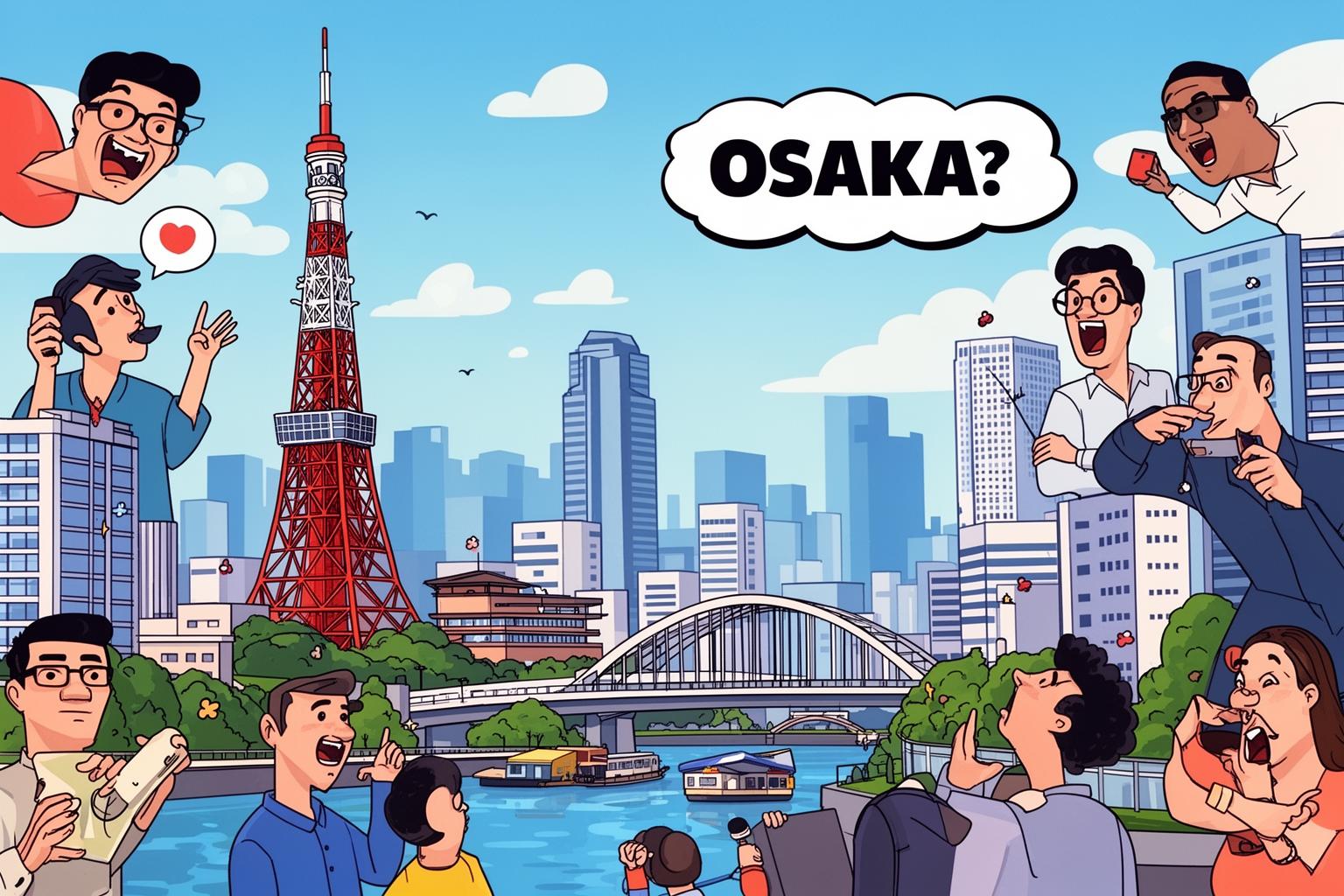
To truly grasp life in Osaka, one must first rethink the concept of a “joke.” In the West, a joke is typically a structured story with a setup and punchline, meant explicitly to provoke laughter. In Tokyo, conversation often serves to exchange information, preserve harmony, and carefully handle social hierarchies. In Osaka, humor is the very medium itself. It acts as the framework, the engine, and the fuel driving social interactions. It is a lively, participatory art form in which everyone is expected to partake—not as performers, but as fellow passengers. This style of humor rests on several core principles that are as integral to daily communication as grammar or vocabulary.
The ‘Ochi’ Principle: Every Story Demands a Punchline
One of the first cultural surprises for a newcomer is the conversational expectation of an ochi. Simply put, an ochi is a punchline, conclusion, or point of a story. In Osaka, telling a story without an ochi feels like a sentence missing its period—it lingers unfinished and unsatisfying, leaving listeners with a sense of conversational frustration. This isn’t about being a professional comedian; it’s about respecting the listener’s time and attention by making your contribution meaningful and ideally entertaining.
Consider a typical office chat in Tokyo: a colleague may say, “I went to the supermarket yesterday. The train was crowded, and they were out of my usual brand of milk.” It’s a straightforward factual account that fulfills its purpose. In Osaka, that same story would be a conversational dead end—it lacks an ochi. The Osakan version might sound more like this: “I went to the supermarket yesterday, right? The train was so packed I swear I was standing on some guy’s shoes for three stops. Then at the store, the milk I like was completely gone—just an empty spot on the shelf. Guess everyone on that train was thirsty for my milk. What am I supposed to do with my cereal now? Eat it with water? It’s a disaster!”
The details are exaggerated and the ending is a playfully dramatic complaint. The ochi isn’t a hilarious joke but a relatable, slightly absurd wrap-up that concludes the narrative and invites a response—usually a laugh or sympathetic jest. This pressure to find the point, twist, or funny takeaway in everyday stories shapes how people think and speak. They’re always scanning their experiences for narrative potential, for that nugget of absurdity to polish into a shareable tale. For outsiders, the lesson isn’t to fabricate punchlines for every story, but to recognize this conversational rhythm. When an Osakan tells a long, winding story, listen for the ochi. Your appreciative laugh or clever reply signals that you understand the game’s rules. Responding with a polite but neutral “I see” is socially equivalent to dropping the ball.
‘Tsukkomi’ and ‘Boke’: The Conversational Rhythm
The engine of Osakan humor runs on the twin forces of boke and tsukkomi. These terms come from manzai, Japanese stand-up comedy, but in Osaka, they form the fundamental building blocks of everyday talk. The boke is the fool, the person who says something silly, absurd, or simply wrong. The tsukkomi is the straight man, who corrects the boke by pointing out the absurdity with a quick, sharp retort. This isn’t a scripted act; it’s a fluid, improvisational dance occurring constantly among friends, family, shopkeepers and customers, and even strangers.
The classic tsukkomi line often heard on TV is “Nande ya nen!” which loosely means “Why the heck?!” or “What are you talking about?!” This phrase epitomizes exasperated but affectionate correction. For example, at a takoyaki stand, the vendor (boke) might hand you your order saying, “That’ll be one million yen.” Without missing a beat, a local customer (tsukkomi) would reply, “Nande ya nen! Are the octopus balls made of gold or something?” This exchange isn’t a serious negotiation or insult. It’s a performance, a brief shared moment of comedy that fosters a genuine, if fleeting, connection. The vendor gets to be playful, the customer sharp, and both leave with a smile.
Foreigners often stumble here, taking the boke’s comment literally and feeling confused or flustered, or interpreting the tsukkomi’s sharp retort as anger or rudeness. The key is to grasp the playful intent. The boke-tsukkomi dynamic is a game: the boke opens a comedic doorway and the tsukkomi completes the pattern. Recognizing this rhythm is vital. If a shopkeeper says the shirt you admire will make you look like a movie star, they’re playing the boke. A good reply isn’t a simple “Thank you,” but a playful tsukkomi like, “Only if it’s a movie about a confused tourist!” This shows you’re not a passive customer, but an active participant in the city’s social life—you get the joke and can join the fun.
Self-Deprecation as a Social Strategy
In many cultures that stress maintaining face, self-deprecation is used cautiously and sparingly. In Osaka, it’s a Swiss Army knife of social interaction. It breaks the ice, displays humility, diffuses tension, and invites others to connect on equal ground. An Osakan will openly call themselves an aho (idiot or fool) for a simple slip, like forgetting their umbrella on a rainy day. This isn’t a sincere expression of low self-esteem; it’s an invitation for others to agree and share a laugh, forging a bond over common human folly.
Contrast this with Tokyo, where such a mistake might prompt quiet, internal embarrassment and a polite, formal apology. In Osaka, the error is externalized and transformed into public comedy: “Ah, look at me—I forgot my umbrella again! I’m such an aho!” This statement doesn’t seek pity; it seeks connection. The expected reply isn’t “Oh, don’t say that,” but a cheerful, “You really are an aho today, aren’t you? Here, share mine.”
This readiness to put oneself down first serves a strategic role: it preempts criticism and lowers social barriers. By calling yourself a fool, you become approachable and non-threatening, signaling that you don’t take yourself too seriously—encouraging others to relax. For foreigners, this can be freeing. You don’t have to uphold a perfect façade. In fact, admitting minor blunders or cultural misunderstandings with humorous self-deprecation is one of the quickest ways to win the trust and affection of Osakans. It shows you’re willing to be vulnerable and, importantly, that you have a sense of humor about yourself—a highly valued trait in Osaka.
The Stereotype vs. The Reality: When the Joke Isn’t Funny
The image of the perpetually cheerful, wisecracking Osakan is a strong one, reinforced by decades of media portrayal. However, like any stereotype, it presents a simplified, two-dimensional version of a complex, three-dimensional reality. Living in Osaka means engaging not just with the caricature but with the real people who live in its shadow. For many, the expectation to be funny can become a burden, and for outsiders, misinterpreting the subtle signals of Osakan humor can cause confusion and misunderstanding.
The Pressure to Perform
Imagine being from Texas and constantly expected to ride a horse, or being from England and asked to quote Shakespeare on demand. This is the reality for many Osakans, especially when traveling to other parts of Japan. The moment they disclose their origin, they are cast as “the funny one.” They are anticipated to lighten the mood, crack jokes, and have a witty comeback for everything. For naturally outgoing and humorous individuals, this poses no problem. But what about the quiet, shy, or introverted Osakan? What about the serious academic, the thoughtful artist, or the reserved engineer?
These individuals exist in large numbers, just as they do in any other metropolis of millions. Yet they are consistently faced with an identity that doesn’t fit. They might feel a sense of failure for not living up to the regional stereotype or frustration at being perpetually misunderstood. A friend from Osaka once shared that during business trips to Tokyo, he deliberately softened his Kansai accent and adopted a more reserved demeanor simply to avoid the pressure to “perform.” He wished to be judged by his work’s quality rather than his ability to entertain colleagues. This internal struggle is a concealed aspect of the Osaka experience. While the city’s famous brand of humor is a source of regional pride, it can also feel like a cage, confining individuals within a collective identity that may not reflect their true personality.
Misinterpreting the Signals: A Foreigner’s Guide
For non-Japanese residents, the greatest challenge is learning to interpret the nuances of Osakan communication. The line between playful teasing and genuine criticism, or between a friendly jab and a real insult, can appear dangerously thin. Context is key. The relationship between speakers, the setting, and the tone of voice are all crucial clues.
A classic example is the word aho. In much of Japan, it’s a strong insult, similar to calling someone an idiot or stupid. In Tokyo, it is used with great caution. In Osaka, its meaning is remarkably flexible. Among close friends, it can be a term of endearment, akin to calling someone a “silly goose.” A mother might affectionately call her child an aho for spilling a drink. A friend might greet another with a cheerful “Aho!” instead of “Hello.” It’s the Osakan equivalent of a playful nudge.
However, if a stranger on the street mutters aho after you accidentally bump into them, the meaning changes entirely. Tone is everything. The friendly aho comes with a smile, a light tone, and open body language. The insulting aho is sharp, low, and accompanied by a glare. Learning to distinguish between these two is a crucial survival skill. Similarly, teasing from a local shopkeeper you’ve known for months signals affection and inclusion. The same words from a new acquaintance might be a test or a probe, and from a complete stranger, they could be genuinely rude. The rule of thumb is this: if the interaction is accompanied by laughter, smiles, and a warm atmosphere, it’s likely friendly banter. If the mood is tense and smiles vanish, caution is warranted.
The Gender Dynamics of Humor
The stereotype of the “Funny Osakan” often implies a male figure. The image that comes to mind is that of a fast-talking manzai comedian or a boisterous salaryman. However, the reality of humor in Osaka is heavily influenced by women, especially the Osaka no obachan (the middle-aged Osaka woman). These women are a cultural force. Known for their loud voices, vibrant fashion (leopard print is a beloved cliché), and straightforward, no-nonsense attitude, they are masters of practical, everyday humor.
Their humor is not about delivering structured jokes; it’s about using wit as a tool to navigate daily life. An obachan might employ humor to haggle at a market, scold a misbehaving teenager on the train without causing a scene, or instantly create a sense of community among strangers. She might see you struggling with a heavy bag and say, “What have you got in there, rocks? Give it here, you’ll break your back!” This isn’t an insult; it’s a humorous way to offer help. She cuts through the formal politeness typical of Tokyo interactions and gets straight to the point, using a gruff, funny exterior to express genuine kindness.
For younger women, the dynamic can be more complex. There is a nationwide pressure to be kawaii (cute), which can sometimes conflict with the Osakan expectation to be omoshiroi (funny or interesting). Yet many Osaka women skillfully balance both, developing a sharp, witty conversational style that is both charming and formidable. They can engage in rapid-fire boke-tsukkomi exchanges as adeptly as men, using humor to assert their intelligence and personality. The notion that women must be passive or demure holds little weight in the lively, opinionated world of Osaka’s everyday life.
Humor as a Philosophy: Why Osaka is This Way
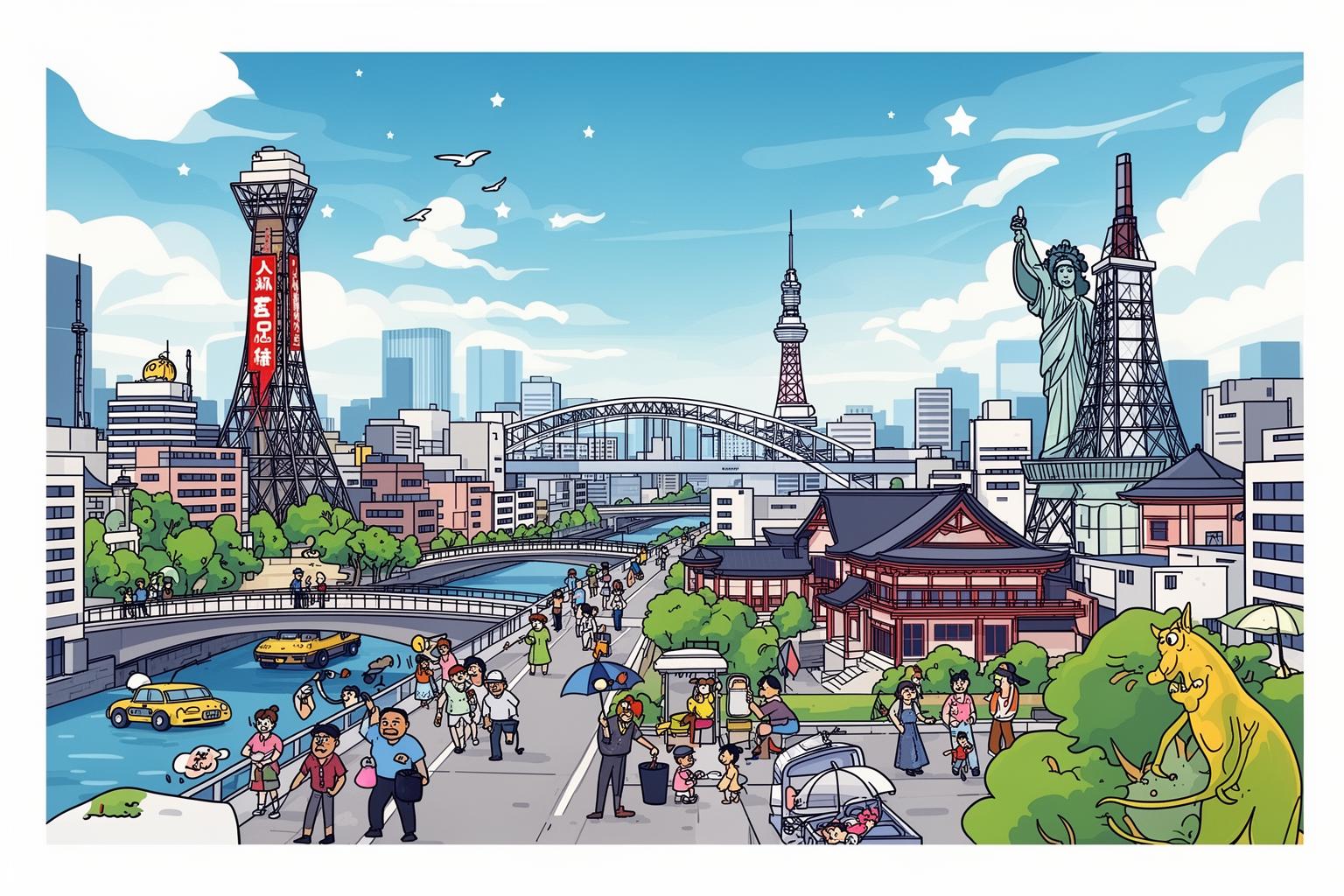
Osaka’s distinctive communication style is no accident; it is the result of a long and unique history that sets it apart from the rest of Japan. While Tokyo (formerly Edo) served as the rigid, hierarchical hub of the samurai government, Osaka was the nation’s kitchen—a lively city full of merchants, artisans, and entertainers. This commercial and practical heritage is the foundation from which its humorous, direct, and deeply human culture emerged. To understand why an Osakan might choose a quick laugh over a formal bow, one must first grasp this history.
The Merchant’s DNA: Building Relationships Through Laughter
In a city founded on trade, the most valuable currency isn’t money but relationships. For Osaka’s merchants, success hinged on their ability to rapidly build rapport and trust with a wide range of people. Formality and strict hierarchical customs—hallmarks of samurai culture—were inefficient for business. A merchant needed to read a customer’s character, negotiate fair prices, and ensure repeat business. Humor became the ultimate tool for these purposes.
A shared laugh instantly breaks down barriers. A playful jab about price creates a dynamic of friendly negotiation rather than adversarial confrontation. A self-deprecating remark signals humility and trustworthiness, not arrogance or authority. This spirit remains vibrant in the city’s many shotengai, or covered shopping arcades. Visit the sprawling Tenjinbashisuji Shotengai, and you’ll witness this philosophy firsthand.
The fishmonger won’t merely sell you a piece of mackerel; he’ll ask what you’re cooking, joke that his wife can make it better, then wink and toss in an extra piece of ginger. The woman selling pickled vegetables might tease you about your poor Japanese before patiently explaining the flavors of each pickle. This banter—the constant back-and-forth—is the soundtrack of commerce in Osaka. The transaction takes a back seat to the interaction. This contrasts sharply with the quiet, efficient, and often anonymous shopping experience typical of Tokyo supermarkets. In Osaka, you’re not just a consumer; you’re a participant in a daily social play, and humor is your script.
A Counter-Narrative to Tokyo’s Formality
A long-standing and often friendly rivalry exists between Osaka and Tokyo. Tokyo symbolizes the establishment, the central government, and the culture of tatemae—the public facade that maintains social harmony. Osaka, by contrast, prides itself on a culture of honne—expressing one’s true feelings and desires. Osakans often perceive Tokyo’s communication style as stiff, indirect, and sometimes insincere. They value straightforwardness and being upfront.
Humor acts as the perfect vehicle for expressing honne without offense. It allows people to be critical, direct, and opinionated in a way that is both palatable and endearing. Instead of bluntly saying, “Your new hairstyle is unconventional and doesn’t suit you,” an Osakan might say, “Wow, what happened? Did you get into a fight with a lawnmower and lose?” The message is the same, but the delivery transforms a potentially awkward critique into a shared joke, enabling brutal honesty while reinforcing friendship.
This preference for directness, wrapped in humor, can be surprising for those used to Tokyo’s subtle, layered communication. A Tokyoite might politely circle around a request for ten minutes, while an Osakan will simply ask for it outright, perhaps softening it with a joke. This isn’t rudeness; it reflects a different cultural value system that emphasizes efficiency and authenticity over performative politeness.
The Language of Laughter: Kansai-ben
The very sound of Osaka differs notably, largely due to the regional dialect, Kansai-ben. Unlike the relatively flat, formal tone of standard Japanese spoken in Tokyo, Kansai-ben is melodic, expressive, and rich with a unique vocabulary well suited for humor. Its rhythm has a natural, almost musical bounce, and its colorful expressions form the foundation of everyday banter.
Words like meccha (very/super) and honma (really/truly) add emphasis and emotion often missing in standard Japanese. The classic phrase nande ya nen carries a punch and rhythm that the standard equivalent doushite desu ka cannot match. Ending particles like ~nen and ~yan lend a friendly, almost persistent tone that draws listeners into the conversation. A simple phrase in Tokyo like “Sore wa chigaimasu” (That is incorrect) becomes “Sore chau yan!” (That’s wrong, isn’t it!) in Osaka—a phrase that feels less like a formal correction and more like a playful, shared discovery of the truth.
Fluency in Kansai-ben isn’t necessary to live in Osaka, but attuning oneself to its distinctive music is important. Understanding the dialect’s flavor helps one grasp the intent behind the words. The language itself is a constant reminder that in Osaka, communication is not merely about conveying information; it’s about performance, emotion, and connection.
How to Navigate Osaka’s Social Landscape: Practical Tips for Residents
For all its warmth and energy, Osaka’s social scene can feel intimidating to newcomers. The unspoken rules of humor and directness aren’t always clear, and the fear of saying or doing the wrong thing is genuine. However, fitting into life in Osaka doesn’t require changing your personality or becoming a comedy expert. It’s more about being attentive, willing to participate, and learning to loosen some of the social defenses you might usually rely on.
To Joke or Not to Joke? Your Role in the Conversation
The biggest mistake a foreigner can make is thinking they have to become a comedian too. Trying to force jokes, especially when you’re not confident with the language or culture, often falls flat or feels awkward. The good news is, you’re not expected to be the one telling the punchlines. Your main role, at least initially, is to be a good audience.
This means noticing and appreciating the humor around you. When the butcher tells a joke, laugh. When your neighbor shares a self-deprecating story, smile and offer a sympathetic nod. Show that you’re paying attention and “getting it.” This is far more important than trying to be funny yourself. As you grow more comfortable, you can join in bit by bit. You don’t need to master the art of the boke. Instead, focus on the tsukkomi. A simple, well-timed, and slightly incredulous “Honto ni?” (Really?) or a playful “Uso!” (No way!) can perfectly respond to a friend’s exaggerated tale. This signals that you’re listening and engaging without needing to invent complicated humor. Your participation is what counts, not your wit.
Finding Your People: Not Every Osakan is a Comedian
While a humorous, outgoing nature is certainly part of Osaka’s public image, it’s important to remember this city of nearly three million people is incredibly diverse. If the lively banter of a busy izakaya isn’t your thing, there’s no need to force it. There are many other worlds to discover within the city.
Osaka boasts a vibrant arts scene with quiet galleries and avant-garde performance venues. It offers a network of calm, minimalist cafes where people read quietly for hours. There are book clubs, hiking groups, religious communities, and specialized hobby circles where communication tends to be more focused and less performative. The stereotype is a broad generalization, not a universal truth. The key is not to get discouraged if the first social environment you try doesn’t click. Give yourself permission to explore niches and subcultures that fit your personality. You will find your people; not everyone in Osaka is waiting to deliver a punchline. Many are simply wanting to enjoy a quiet, meaningful conversation.
The Ultimate Test: Shopping at a Local ‘Shotengai’
If you want a true taste of Osaka’s spirit, skip the tourist spots and spend an afternoon in a local shotengai like those in Senbayashi or Karahori. This is where the city’s life unfolds. Here, communication is a lively exchange, with connection as the aim—not just business. Watch the interactions. Listen to vendors shouting out to passersby, not with generic pitches but personal remarks and questions.
“Hey, miss! That bag looks heavy! Come rest for a moment and try these beans!” “Brother, you’re looking sharp today! A nice piece of tuna will make you even sharper!”
This isn’t the anonymous, transactional feel of a convenience store. This is community. Your part is simple: don’t hesitate to engage. Ask a question. Make eye contact. Smile. If a shopkeeper starts a playful chat, try to keep it going. You may feel awkward at first, but your effort will be noticed and appreciated. Shopping in a place like this is about more than just filling your pantry. It’s about practicing your role as a community member. It’s about gradually, interaction by interaction, becoming not just a resident, but a local.
Beyond the Punchline: The Warmth Behind the Wit
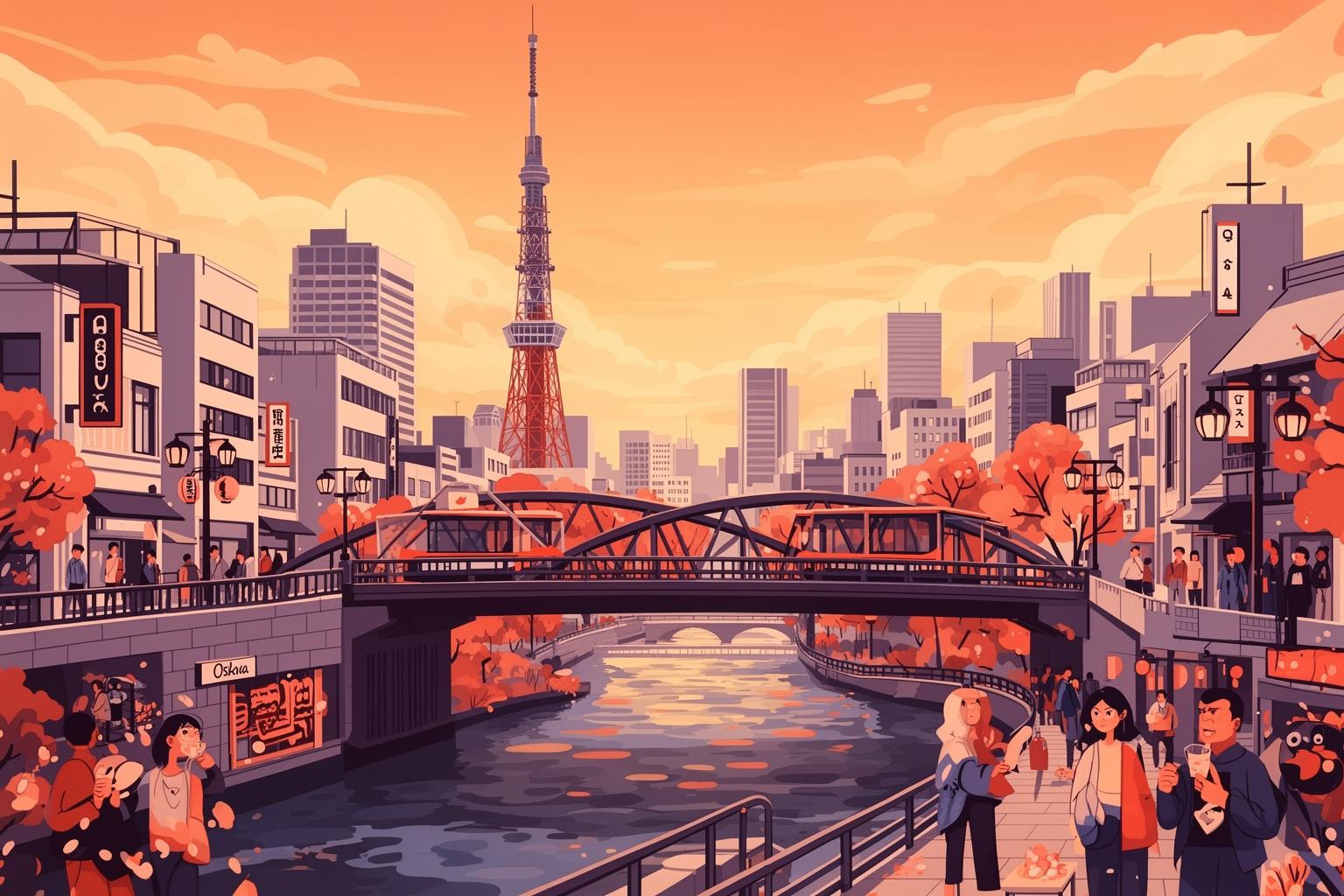
It’s easy to become so absorbed in the mechanics of Osaka’s humor—the ochi, the boke, the tsukkomi—that you overlook the essential point. The humor itself is not the ultimate aim; it is the means of delivery. The package may be funny and occasionally a bit rough, but the core is almost always warmth, acceptance, and a sincere interest in others. Understanding Osaka’s humor means recognizing that beneath the wit lies a deep-rooted kindness.
Humor as a Sign of Acceptance
In many cultures, politeness signifies respect—the more formal and careful your words, the greater the honor shown to others. In Osaka, however, the opposite often holds true. Excessive formality and politeness can create distance and act as a barrier. These are used with strangers you don’t intend to get close to. When an Osakan begins teasing you, playfully poking fun at your clothes or your attempts to speak Japanese, you should take it as a celebration. This is not an insult; it is a promotion.
You have been upgraded from “outsider” to “insider.” The teasing indicates they feel comfortable enough with you to drop the formal tatemae and engage with you on a more genuine, honne level. They are treating you like one of their own. A friend who always speaks to you in overly polite, formal Japanese may respect you, but the friend who lovingly calls you an aho for forgetting your train pass is the one who has truly welcomed you into their world. Silence and distance signal exclusion; playful banter is a warm invitation to belong.
The ‘Sewa-zuki’ Nature: Caring Through Comedy
Osakans are famously described as sewa-zuki, meaning they love to take care of people. They can be meddlesome, nosy, and overly involved in others’ lives, but this impulse arises from a genuine sense of communal responsibility and care. Humor is the grease that makes this endearing rather than intrusive. The classic Osaka obachan who stops you on the street exemplifies this perfectly.
She might say, “Young lady, your skirt is too short for this cold weather! You’ll catch your death! Are you trying to get sick?” In Tokyo, such a personal remark from a stranger would be almost unthinkable—a shocking breach of social etiquette. In Osaka, it’s just another Tuesday. It sounds like criticism, but in its own way, it’s an expression of concern. The gruff, humorous delivery is her way of saying, “I am part of this community, you are part of this community, and I’m looking out for you.” She’s taken a moment from her day to worry about your well-being. Learning to hear the underlying “I care about you” behind the blunt, funny, and sometimes critical exterior is perhaps the final and most crucial lesson in grasping the heart of Osaka.
The stereotype of the “Funny Osakan” is only a starting point—a breadcrumb that leads to a far richer truth. Osaka is not a city of clowns; it’s a city that has elevated humor to an art form of social connection. Laughter is the language used to break down barriers, express genuine feelings, and build community one punchline at a time. For the foreigner willing to listen, learn, and laugh along—even at themselves—the reward is immense. It’s the chance not only to live in one of Japan’s most vibrant cities but to be truly welcomed into its loud, chaotic, and wonderfully human family.