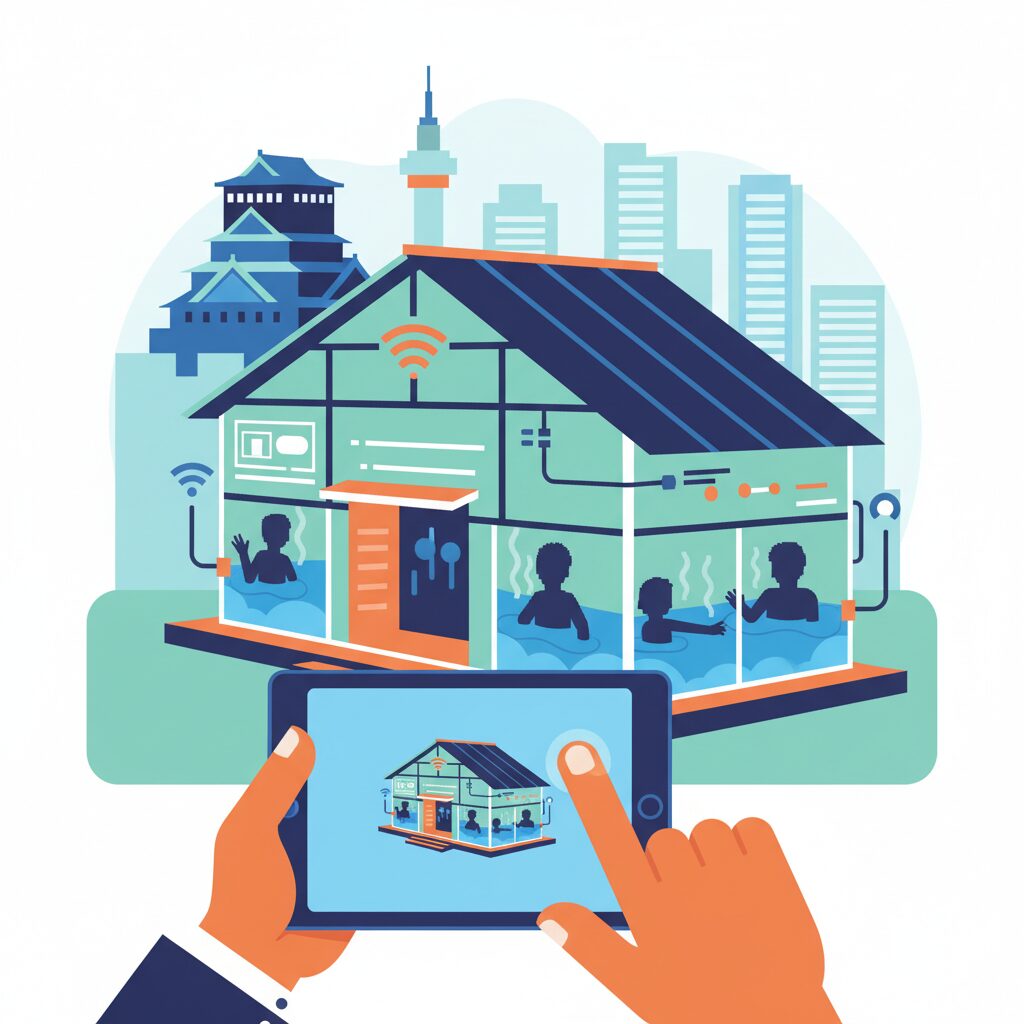
The laptop lid snaps shut. The familiar click echoes in the quiet of your apartment, but the workday doesn’t end. Its ghost lingers in the blue light of the screen, in the Slack notifications still buzzing on your phone, in the corner of your living room that has become your permanent office. For the remote worker, the line between labor and life has dissolved into a blurry, unending hum of digital presence. The commute, that once-dreaded but necessary ritual of decompression, is gone. Your home is your office, your office is your home, and the ‘off’ switch feels impossibly far away. But here in Osaka, in the dense, labyrinthine neighborhoods humming with a different kind of energy, an ancient solution to this very modern problem awaits. It’s a solution that smells of hinoki wood and steam, a place where the only clocking-in you do is with a 500-yen coin. This is the world of the neighborhood sento, the public bathhouse, and it’s where Osaka’s remote workers are rediscovering the lost art of truly finishing the day.
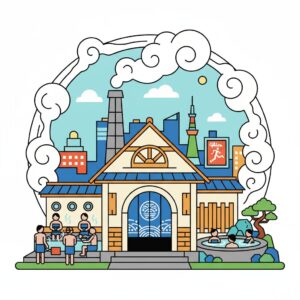
This isn’t about luxury spas or tourist-focused onsen resorts. This is about the humble, tile-and-steam sanctuaries tucked behind nondescript sliding doors, nestled between a greengrocer and a bicycle repair shop. It’s a cornerstone of daily life that offers more than just a place to get clean. It’s a third space, a transition zone, a community living room where status is left in a locker with your clothes. It’s where you disconnect from the global network to plug into the hyper-local one, one scalding hot bath at a time. For anyone trying to understand the real rhythm of this city, forget the guidebooks for a moment. The deepest truths about Osaka’s soul are often found simmering in these public waters.
As the soothing ritual of the sento helps dissolve the daily grind, some Osaka locals also find rejuvenation in a well-planned break, like exploring a Kobe escape with stylish bakeries that offers a refreshing departure from the usual pace of work and routine.
The Five O’Clock Whistle in a Pail of Hot Water
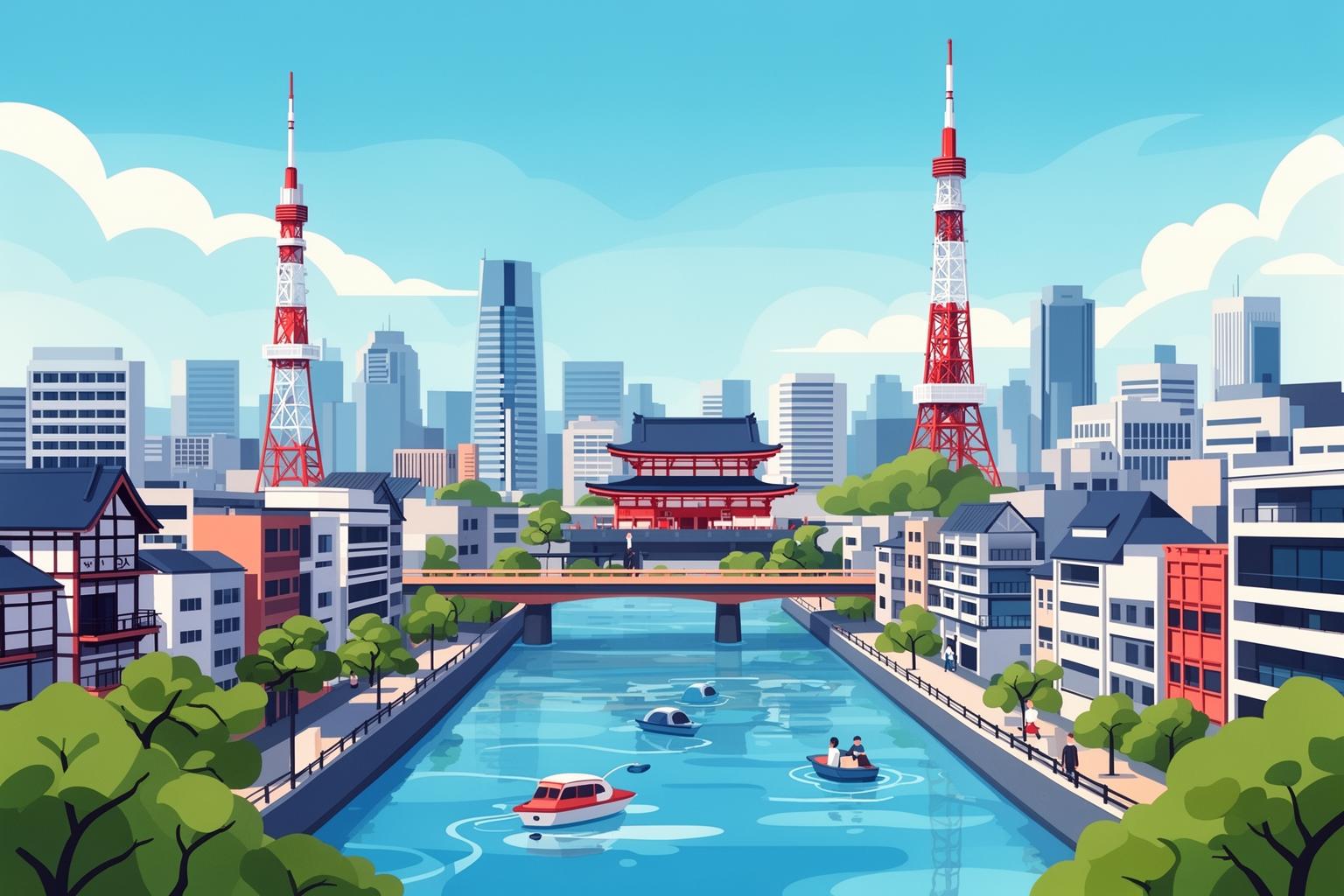
The end of the workday is no longer marked by a physical exit but rather a mental challenge. You close your laptop, yet your work-focused mind continues to spin. In Osaka, the walk to the sento has become the new commute. It’s a intentional, physical act that establishes a boundary the digital world tries to erase. It starts with a small ritual: gathering your sento kit—a modest tenugui towel, perhaps a bar of soap, shampoo in a travel-sized bottle. This simple preparation sends a powerful signal to your brain. You are no longer a worker; you are now someone heading to the bath.
The walk is itself part of the transition. You step out from your apartment-office and into the sensory environment of your neighborhood. You hear the rumble of the train, catch the scent of yakitori grilling at a nearby stall, and nod to the elderly woman sweeping in front of her shop. This brief journey reconnects you to a physical place, shifting your focus from intangible digital tasks to the tangible reality of your community. Then you arrive. You slide open the wooden door, and warm, humid air envelops you. The chime of the bell, the friendly “Irasshai!” from the owner at the bandai counter—this is your genuine clocking-out moment.
Contrast this with the Tokyo experience. For many office workers there, the commute is a grueling, hour-long ordeal squeezed into a silent, overcrowded train. It serves as a form of separation, yes, but it is isolating and stressful. The objective is to endure it, to disappear into your headphones. The Osaka sento commute is quite the opposite. It’s short, local, and about gently reconnecting with your surroundings. While a Tokyo remote worker might unwind at a sleek, costly gym with a monthly fee, the Osakan approach is grounded in a pragmatic, community-oriented mindset. Why pay a fortune for an anonymous treadmill when, for the price of a coffee, you can enjoy spacious hot tubs, an intense sauna, and a cold plunge pool? It’s not just about cost-saving; it’s about valuing shared resources. It’s the merchant city’s logic at its best: maximum physical and social value for a reasonable price. This isn’t about performative wellness; it’s about practical, everyday care for body and mind.
Beyond the Bubbles: The Unspoken Rules of Sento Society
Entering the changing room of a sento means stepping into an entirely different social realm. The first thing you discard isn’t your clothes, but your identity. Your job title, nationality, online persona—they all get folded up and stashed in a locker. This is often misunderstood by many foreigners. They view the sento simply as a place to bathe, yet it’s actually a complex social ecosystem governed by unwritten rules, and learning them is key to understanding the spirit of Osaka.
The ‘Naked’ Network
Within the bathing area, everyone stands on equal footing. The local construction worker, the retired teacher, the young university student, and you, the foreign remote worker, are all reduced to the same common denominator. This physical vulnerability cultivates a unique kind of social openness. Hierarchies fade away in the steam. It is here that you might receive a gruff but helpful tip from an elderly man on sauna etiquette or find yourself chatting with a local business owner about the latest Hanshin Tigers game. There’s a bluntness that can be surprising. People in Osaka, less bound by the formalities common in Tokyo, are more inclined to strike up conversations out of simple curiosity. They aren’t being intrusive; they’re being neighborly. At the sento, you are not an outsider to be politely ignored but a temporary member of the same circle, and the only membership fee is simply being present and sharing the water.
The Art of ‘Maido’ and Micro-Interactions
Much communication in a sento is non-verbal, expressed through small gestures and subtle acknowledgments. It’s the slight bow to other patrons as you enter the bathing area. It’s the quiet splash of water used to rinse your stool and bucket after washing. It’s ensuring your small towel never dips into the communal bathwater. These aren’t just hygiene rules; they represent mutual respect for a shared space. You learn to navigate the area, giving others plenty of room, not monopolizing the jet bath. Over time, you begin to recognize the regulars. A simple nod becomes a quiet “Domo,” which, after several weeks, may evolve into a “Maido,” the classic Osaka greeting signifying mutual recognition. This is how community is crafted in Osaka—not through grand gestures, but via the steady accumulation of tiny, repeated exchanges. You’re not merely a customer; you are a joren, a regular, and your presence becomes part of the place’s daily rhythm.
Reading the Air, Osaka-Style
Tokyo is known for kuuki wo yomu—“reading the air”—which often means polite restraint and avoiding confrontation. Osaka has its own version, but it’s more pragmatic and less focused on preserving impeccable surface harmony. In a sento, reading the air involves spatial awareness. It means understanding the flow of people moving between the cold plunge and the sauna. It means refraining from loud, boisterous conversations when the room calls for quiet reflection. The rules are practical, not abstract. The core principle is meiwaku wo kakenai—don’t cause trouble or inconvenience to others. But it’s enforced with a human warmth. If you make a minor mistake, you’re more likely to receive a straightforward but kind correction than a cold glare. This attitude reflects the city’s broader spirit: be considerate, be pragmatic, but don’t be so rigid that you can’t function. It’s a social fabric that’s both forgiving and resilient.
The Third Space: Where Community Simmers
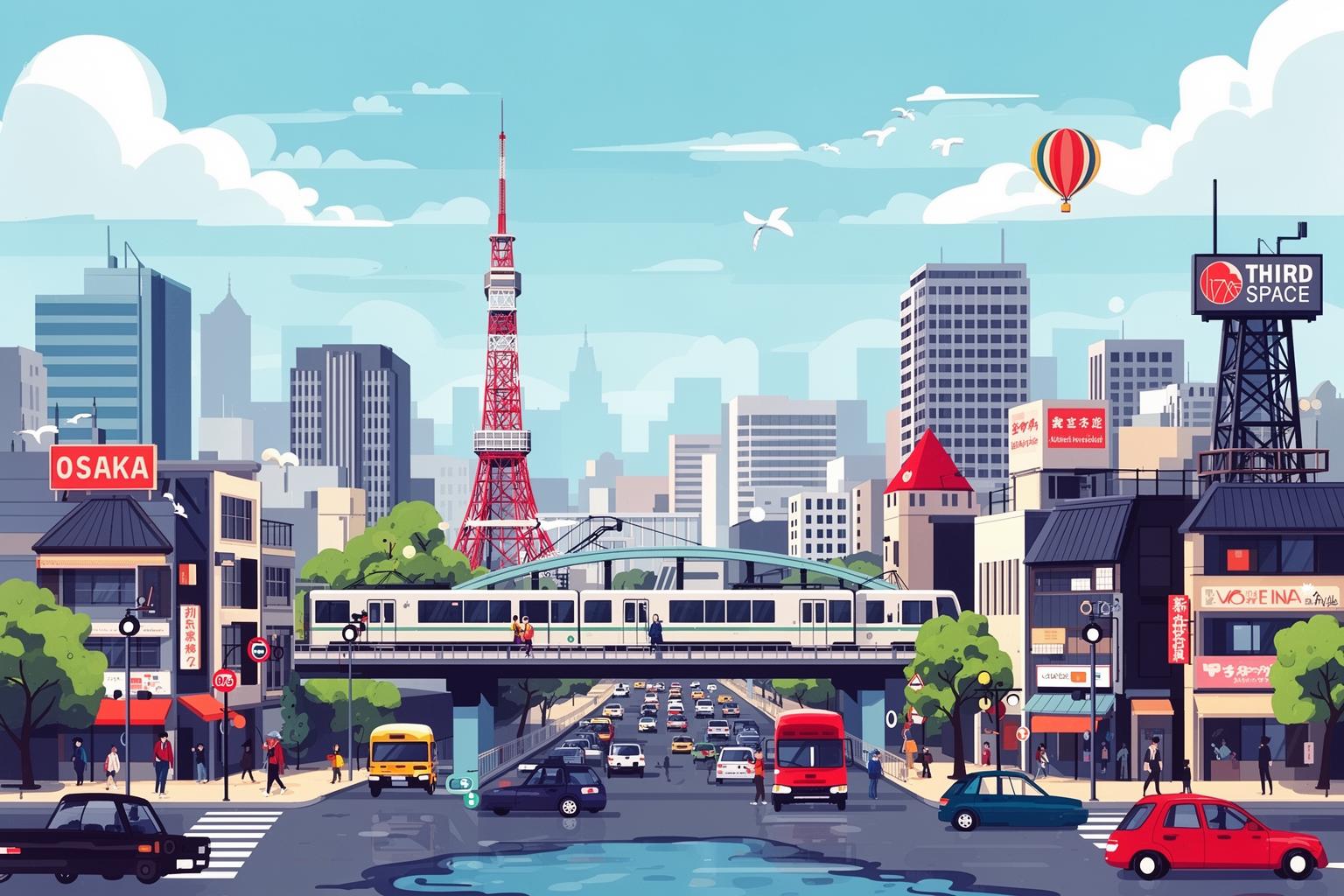
The sociologist Ray Oldenburg introduced the term “third space” to describe places outside of home (the first space) and work (the second space) where informal community interactions occur. In contemporary society, these spaces are disappearing. The local pub, coffee shop, and town square have largely been replaced by commercialized, impersonal settings. For many people in Osaka, the sento represents the ideal third space. It serves as the neighborhood’s living room—a place for relaxation, socializing, and a quiet sense of belonging.
The Post-Bath Ritual: From Vending Machine Milk to Neighborhood Izakaya
The sento experience doesn’t end once you dry off. The post-bath ritual is equally meaningful. After changing back into your clothes, you step into the lobby, your body still warm and your mind pleasantly clear. This area acts as a decompression zone. Here, you’ll find elderly men in yukata watching a baseball game on a bulky CRT television, families chatting, and solo bathers enjoying peaceful moments. The traditional move is to grab a drink from the vintage vending machine. A cold bottle of milk—whether coffee-flavored or plain—is the classic choice, a nostalgic taste of post-war Japan that has stood the test of time. Alternatively, you might opt for a bottle of Pocari Sweat or a chilled beer.
As you sip your drink, there’s no hurry. You linger. This is where casual conversations begin—a comment about the weather, a question about where you’re from. It’s a relaxed, low-pressure interaction. The lobby functions as a social airlock, gently easing you back into the outside world. For some, the ritual extends further. Feeling refreshed and calm, the perfect next stop is a nearby tachinomi (standing bar) or small izakaya for a quick beer and some fried food. The sento primes you for this spontaneous, local engagement. It acts as a catalyst for community, nudging you out of your private realm and into the shared life of the neighborhood.
A Different Kind of ‘Work-Life Balance’
The Western idea of work-life balance often involves intricate scheduling, productivity tricks, and an ongoing effort to optimize oneself. It becomes another task to manage. The sento presents an alternative philosophy. It’s not about maximizing your downtime; it’s about surrendering to it. You can’t bring your laptop into the bath. You can’t check your email in the sauna. The space enforces full disconnection. This is an analog firewall against the digital world. This mindset is truly Osaka: straightforward, effective, and free of unnecessary embellishments. It’s not a luxury but a necessity—a practical tool for living, as essential as a good pair of shoes or a sturdy umbrella. Foreigners might initially see the sento as a quaint relic, a piece of “Old Japan.” But for residents, especially in the era of remote work, it’s a vital, modern institution that helps preserve sanity and nurture authentic human connection.
Why Sento Culture Thrives in Osaka’s Soil
Public bathhouses are found throughout Japan, but they feel especially at home in Osaka. The city’s distinctive history, urban design, and cultural mindset have combined to create ideal conditions for the neighborhood sento to not only endure but also remain a vital part of Osaka’s social fabric. This tradition perfectly aligns with the character of the city.
A City of Merchants and Pragmatists
For centuries, Osaka served as Japan’s commercial center, known as the “nation’s kitchen.” This heritage cultivated a culture grounded in pragmatism, efficiency, and a down-to-earth attitude. Osaka’s merchants were recognized for their rationality, directness, and indifference to the strict formalities upheld by the samurai class dominating Edo (now Tokyo). The sento embodies this mentality—it is a communal facility, an efficient way for a densely populated area to bathe. It encourages straightforward, no-nonsense social interaction. When everyone is naked, there’s little room for pretense. This merchant spirit explains why conversations in Osaka’s sento often seem more open and less coded than elsewhere in Japan. It’s a city that values substance over style, where what you see is typically what you get.
Neighborhood Density and the ‘Shotengai’ Ecosystem
Osaka is a city defined by its neighborhoods. Life unfolds on a human scale. Unlike Tokyo’s sprawling, station-focused hubs, Osaka features dense, walkable residential areas, each anchored by its own shotengai—a covered shopping arcade serving as the neighborhood’s main thoroughfare. The sento is an essential part of this ecosystem, often situated just off the main arcade, alongside the tofu maker, fishmonger, and tea merchant. The daily ritual of walking to the bath reinforces your connection to this neighborhood network. You are not an anonymous resident in a vast metropolis; you belong to a specific community. You recognize familiar faces, frequent local shops, and engage in everyday communal life. The sento acts as a cornerstone in this environment, a place that anchors your identity as a local.
A Counterpoint to Tokyo’s Polish
If Tokyo is a city of polished surfaces and curated experiences, Osaka revels in its raw honesty. It’s louder, messier, and more spontaneous. Life spills onto the streets in a way that can feel both chaotic and vibrantly alive. The sento perfectly embodies this spirit. It is an essentially raw and unrefined space. There are no filters, no elegant branding, no carefully crafted aesthetics aimed at social media. It is a place of real bodies, genuine conversations, and authentic relaxation. For many who choose Osaka over Tokyo, it is precisely this lack of pretense that is so appealing. The sento is more than a place to wash; it is a statement of cultural values—a preference for the real over the virtual, the communal over the individual, and the practical over the polished.
Finding Your Flow, One Bath at a Time
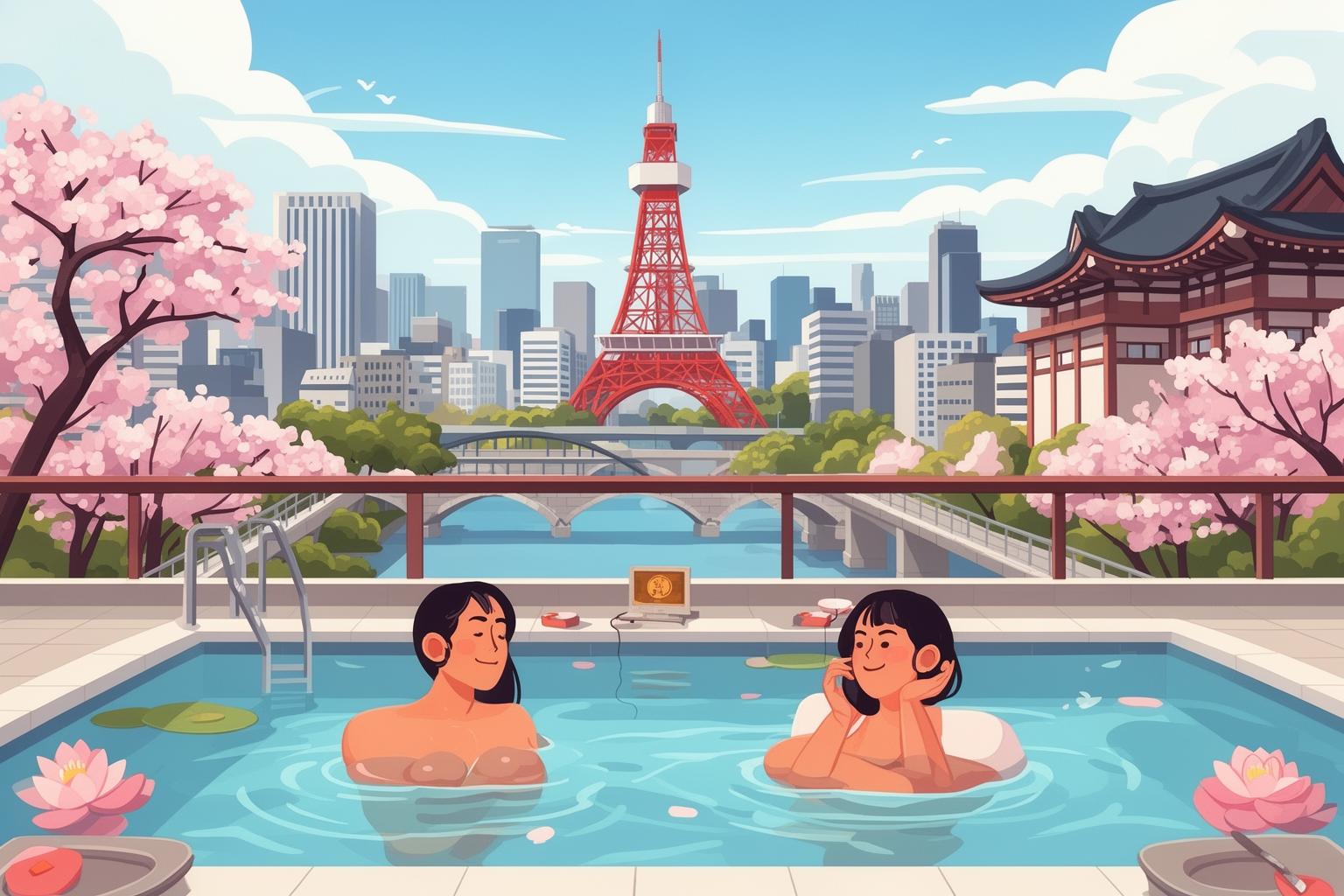
We began with the sound of a closing laptop, the lingering shadow of work that haunts the remote employee’s home. The sento provides a solution—not through an app or new technology, but through the simple, profound act of soaking in hot water alongside neighbors. It’s a ritual that clearly separates the world of work from the world of life. It serves as the definitive punctuation mark at the end of the day.
For any foreigner seeking to move beyond a superficial understanding of Osaka, the local sento is an essential classroom. It’s where you can learn the city’s unspoken social language, observe the practical, unpretentious, and deeply communal spirit of its people. It’s the place where you stop being an outsider and begin to participate, even in a small, quiet way. You come to realize that the city’s famous friendliness isn’t just a cliché; it’s a real, tangible experience shaped by thousands of daily micro-interactions in places like this.
Living in Osaka means more than just finding an apartment; it’s about finding your rhythm within the city’s vibrant heartbeat. It’s about discovering your local shotengai, your favorite takoyaki stand, and, if you’re fortunate, your neighborhood sento. It’s there, amidst the steam and the sound of flowing water, that the digital world fades away. The workday is truly and finally over when you slide open that door, step into the humidity, and hear the familiar, welcoming call: “Irasshai!”