There’s a rhythm to Osaka that you won’t find in any guidebook. It’s a low, happy rumble of chatter and clinking glasses, the sizzle of something delicious hitting a hot grill, and the hearty, open-throated laughter that seems to be the city’s official soundtrack. This symphony is loudest and clearest in the city’s hallowed halls of social life: the tachinomi, or standing bars. Forget cavernous pubs or hushed cocktail lounges. A tachinomi is a beautifully simple, wonderfully chaotic concept. It’s a place where you stand, shoulder-to-shoulder with strangers, for a quick drink and a bite. There are no chairs, no pretense, and often, no barriers between you and a genuine connection with the heart of this incredible city. For any foreigner living in Osaka and feeling that pang of wanting to bridge the gap between being a resident and truly belonging, the tachinomi isn’t just a bar—it’s a gateway. It’s where the city’s soul comes to unwind, and where you, with a little courage and a few key phrases, can join the conversation and find your place in the vibrant tapestry of Osaka life. It’s a place to shed the day’s fatigue, to celebrate small victories, and to remember that the best things in life are often the simplest: good food, a cold drink, and the warm buzz of human connection.
After a night of forging connections at a tachinomi, you might find that another quintessential Osaka experience, like visiting a local sento, offers a perfect way to continue soaking up the city’s unique community spirit.
The Electric Atmosphere: What Makes a Tachinomi Tick

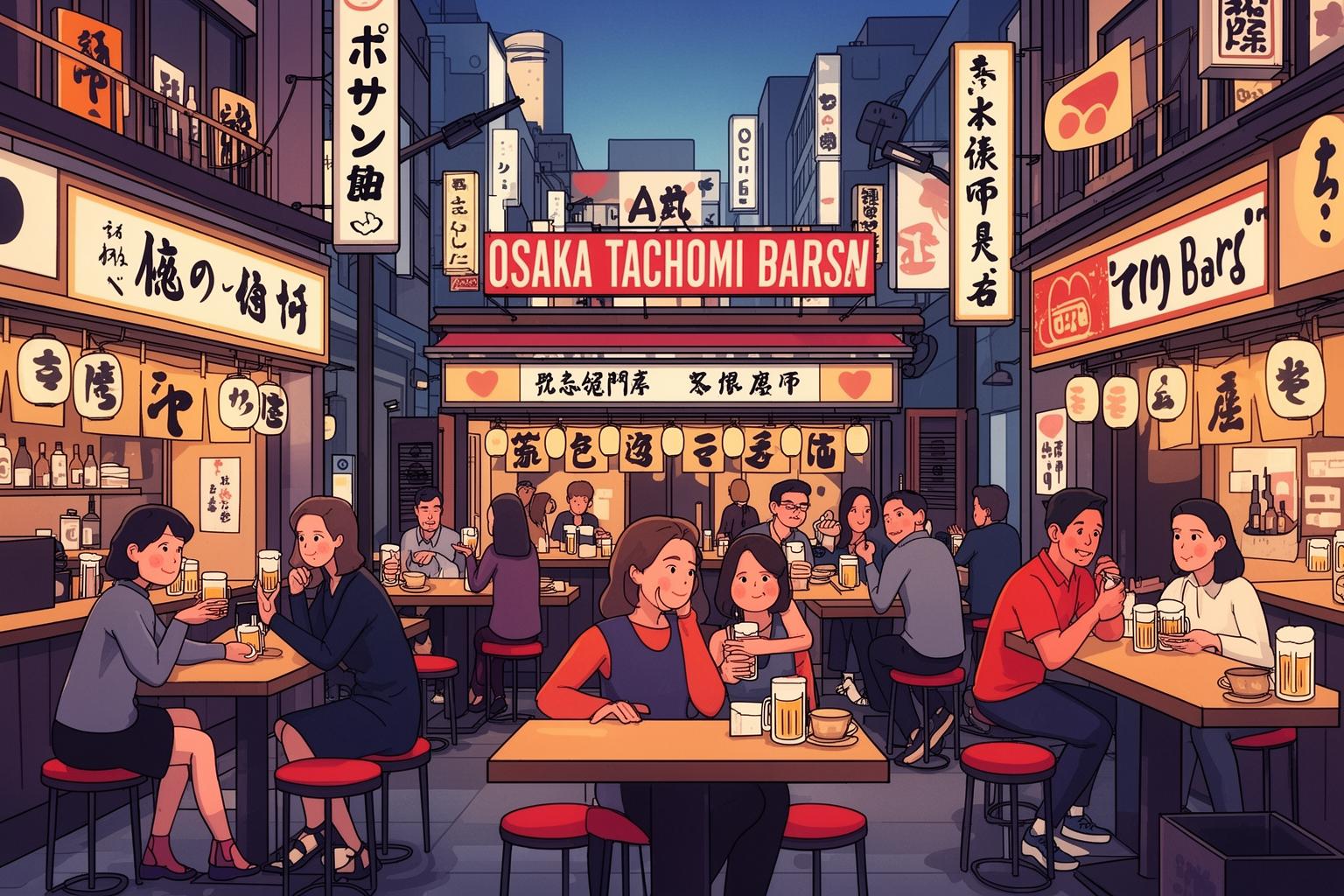
Step over the threshold of a classic Osaka tachinomi, often marked by a simple noren curtain and a red lantern gently swaying outside, and you enter another world. The first thing that strikes you is the energy—a palpable force, a warm and inviting chaos that instantly surrounds you. Space is a precious commodity here. You’ll find yourself weaving through a cozy maze of bodies, a delicate dance of gentle nudges and quiet sumimasen (excuse me) as people make their way to the counter. There are no tables for two, no private booths for quiet reflection. The bar itself is the centerpiece, a long stretch of worn wood that has absorbed decades of spilled sake and countless stories. In some of the more rustic spots, the bar might simply be a collection of upturned beer crates. This isn’t a flaw; it’s a feature. The forced closeness is the secret ingredient, breaking down usual social barriers before you’ve even ordered your first drink. You’re not just a customer; you’re part of the temporary, ever-shifting community that gathers within these four walls each evening.
The soundscape is a rich tapestry. Beneath the constant sizzle and pop from the small kitchen—often just a grill and deep-fryer right behind the counter—lies the steady hum of conversation. It’s mostly in Kansai-ben, Osaka’s distinctive dialect, which has a musical, friendly rhythm even to the untrained ear. Laughter bursts out frequently and freely. The Taisho (master) or staff shout orders and greetings across the room, their voices adding to the lively clamor. The smells are intoxicating and quintessentially Japanese: the smoky char of yakitori, the sweet and savory scent of doteyaki (beef sinew stew) simmering in rich miso broth, the sharp tang of soy sauce, and the crisp aroma of draft beer poured into frosted mugs. Visually, it’s a feast of details. Handwritten menus, called tanzaku, are often pasted on the walls, their calligraphy highlighting the day’s specials. Shelves are stocked with bottles of sake and shochu. The faces around you represent a cross-section of Osaka society: salarymen loosening their ties after a long day, young couples on a casual date, grizzled old-timers who have been holding the same corner of the bar for forty years, and university students fueling up before a night out. It’s this mix of people, all equalized by the simple act of standing together, that makes the tachinomi an authentic, living museum of the city’s culture.
The Social Lubricant: Why Standing Breaks Down Walls
The physical arrangement of a tachinomi is a masterclass in social engineering. By removing chairs, it eliminates the unspoken social contract of personal territory and privacy. You don’t ‘own’ a spot; you simply borrow it for a short time. This temporary setup encourages interaction. When you’re standing shoulder-to-shoulder with someone, it feels much more natural to start a conversation than it would across a large, empty table. The shared experience of balancing a drink in one hand and a plate of food in the other creates an immediate, unspoken connection. Everyone is united in navigating the enjoyable challenge of a standing meal.
Moreover, Osakans themselves play a crucial role in this dynamic. The people of Osaka are widely known across Japan for being outgoing, straightforward, and having a sharp sense of humor. There’s a culture of fureai, or warm, open interaction, deeply embedded in their local identity. They are curious and generally welcoming to foreigners, often treating it as a fun chance to practice their English or simply learn where you’re from. This isn’t Tokyo, where polite distance is often standard. In Osaka, a stranger is often just a friend you haven’t shared a joke with yet. The tachinomi is their natural environment, a stage where this social and communicative spirit truly shines. They come not just to drink, but to connect, to vent about their boss, to boast about their favorite baseball team (the Hanshin Tigers, naturally), and to exchange banter with the Taisho and fellow patrons. By simply being present, you become part of this daily ritual—initially an observer, but with the potential to quickly become a participant.
The Gentle Art of Tachinomi Talk: Your Guide to Breaking the Ice

Alright, so you’ve spotted a promising tachinomi spot, taken a deep breath, and squeezed your way to the counter. Now what? Starting a conversation with a complete stranger in a foreign language can be intimidating, but in a tachinomi, the setting works in your favor. Here’s a gentle, step-by-step guide to turning strangers into drinking companions.
The First Step: Ordering with Confidence (or at Least the Appearance of It)
Your first encounter will likely be with the staff—consider this your warm-up. Many tachinomi use a kyasshu on (cash on delivery) system: you order, they bring your item, and you pay on the spot. Have some coins and a 1000-yen note ready on the counter to show you know how it works and to keep things running smoothly. Not sure what to order? Here’s your opening.
Start with the simplest and most universal order: “Nama biru, kudasai!” (A draft beer, please!). It’s a classic for good reason. When the staff brings your drink, try asking for a recommendation. Point at the simmering pots or the handwritten menus and say, “O-susume wa nan desu ka?” (What do you recommend?). This straightforward question does two things: it gets you a delicious dish you might not have picked yourself and signals to those around you that you’re open, curious, and friendly.
If you notice something on a neighbor’s plate that looks amazing, that’s your golden opportunity. Wait for a natural pause, make brief eye contact, and nod toward their food. A simple “Sumimasen, sore, oishisou desu ne. Nan desu ka?” (Excuse me, that looks delicious. What is it?) is one of the most effective icebreakers in the tachinomi playbook. The person will almost certainly be eager, even proud, to tell you what they’re eating. I once tried this with what I thought was fish, and the gentleman next to me launched into a passionate five-minute explanation of kujira (whale bacon), even offering me a taste. It was a memorable flavor and an even more memorable connection.
The Kanpai! Gambit and Other Conversation Starters
Once your drink is in hand, take a moment to observe. You’ll see that when new groups arrive or friends meet, they raise their glasses for a toast. Kanpai! (Cheers!) is the magic word. If the person next to you gets a fresh drink, catch their eye, raise your glass slightly, and quietly say, “Kanpai!”. It’s a small gesture of camaraderie, acknowledging that you’re sharing this space and moment. More often than not, they’ll gladly return the gesture, which can be the spark that starts a conversation.
Compliments are another great tool. A simple “Kono mise, ii funiki desu ne.” (This place has a great atmosphere, doesn’t it?) said to no one in particular can sometimes get a nod or a word of agreement from a neighbor. Or you might compliment the chef: “Taisho, ryouri jouzu desu ne!” (Master, you’re a great cook!).
When a conversation begins, keep it light and easy. People aren’t here to debate heavy topics. Good subjects include:
- Food and Drink: The safest and most loved topic. Ask what their favorite tachinomi dish is, and share your favorite food from back home.
- Your Origins: People will be curious about where you’re from. Be ready to answer questions about Australia, the UK, America, or wherever you call home. Having a few photos on your phone can help.
- Travel: Ask for recommendations on places to visit in Osaka or the Kansai region. Osakans love showing off their city and will have fantastic, off-the-beaten-path tips.
- Sports: If you know anything about the Hanshin Tigers, you’ll have an instant conversation starter with about half the city. Even just saying “Hanshin Tigers, sugoi!” (Hanshin Tigers are amazing!) can win you a lifelong friend.
Don’t worry about perfect grammar. Your effort counts most. Speak slowly, use gestures, and smile. Laughter is universal, and good-natured attempts—even with mistakes—will endear you to locals far more than flawless Japanese ever could. Remember, they are just as interested in you as you are in them.
Mind Your Manners: The Unspoken Rules of the Standing Bar
While tachinomi are casual, they follow a set of unspoken rules and etiquette. Observing these will help you blend in naturally and show respect for the culture of the space.
- Be a Space Ninja: This is the golden rule. Space is extremely limited, so be mindful of your presence. Hang your bag on a hook if available, or hold it in front of you. Avoid spreading your arms wide. Move carefully to remain a compact, considerate presence.
- The Counter is Sacred: The bar counter is meant for food and drinks. Refrain from placing your phone, wallet, or other personal items on it, as it occupies valuable space needed for serving. Use the small shelf often located under the bar for your belongings.
- Cash is King: As noted, many traditional tachinomi only accept cash. The kyasshu on system is efficient, so have your money ready. Tipping is not customary in Japan, so you simply pay the price shown.
- The Art of the Quick Exit: Tachinomi are not intended for long stays. They traditionally serve as a quick stop on the way home from work or the first stop in a night of bar hopping (hashigo-zake). Typical visits last 30 to 60 minutes. Pay attention to the atmosphere—if you’ve had a couple of drinks and food plates and the crowd is growing, it’s polite to finish, thank the Taisho (“Gochisousama deshita!” – Thank you for the meal!), and make room for others.
- Don’t Monopolize the Master: The Taisho often handles cooking, serving, and chatting with many guests at once. It’s fine to exchange greetings and ask questions, but be mindful of their time. Avoid engaging them in long conversations when the bar is busy and they appear overwhelmed.
- Sharing and Pouring: You might notice regulars pouring drinks for each other—a common custom. As a newcomer, wait for others to initiate. If someone offers to pour you a drink, accept it politely and hold your glass with both hands. If sharing a sake bottle with a new friend, offer to pour for them in return.
A Local’s Map: Navigating Osaka’s Tachinomi Hotbeds

Osaka is home to thousands of tachinomi, but certain neighborhoods are renowned for their concentration and quality. Each area boasts its own unique character. Exploring these districts is an adventure in itself.
H4: Tenma: The Undisputed Champion
If tachinomi had a spiritual home, it would be Tenma. Situated just north of the city center along the JR Loop Line, this district is a sprawling, intoxicating maze of bars and restaurants. The main thoroughfare is the Tenjinbashisuji Shotengai, Japan’s longest covered shopping street, but the real charm lies in the narrow, lantern-lit alleys branching off from it. The atmosphere in Tenma, especially on Friday or Saturday nights, is electric and resembles a street festival. Laughter and the sizzle of food spill out from every doorway. Here, you’ll find every imaginable type of tachinomi—from Showa-era establishments that have served the same oden and sashimi menu for generations to trendy new spots specializing in craft beer or natural wine, and ultra-specific bars focusing solely on grilled tuna or tempura. The sheer abundance of options is staggering. You can easily spend an entire evening doing hashigo-zake, hopping from one tiny bar to the next, sampling one specialty dish and one drink at each, collecting stories and friends along the way. Tenma feels like the vibrant heart of Osaka’s culinary and social scene—a place of endless discovery.
H4: Kyobashi: Gritty, Authentic, and Old-School
To the east of Osaka Castle lies Kyobashi, a major transportation hub that feels rougher and more unpolished than Tenma. This is salaryman territory, a working-class neighborhood where the tachinomi are straightforward, affordable, and deeply authentic. The area around the station is a maze of narrow streets and covered arcades, several looking much the same as they did in the 1960s. The bars here are often crowded by 5 PM with workers grabbing a drink before their commute home. The food is hearty and classic: expect mountains of yakitori, rich doteyaki, and simple yet perfectly executed sashimi. Prices in Kyobashi rank among the lowest in the city, making it an ideal spot for a budget-friendly night out. The vibe focuses less on trendiness and more on function—offering good, cheap food and drink in a convivial setting. For an unfiltered glimpse into Osaka’s everyday drinking culture, Kyobashi is an essential pilgrimage.
H4: Ura-Namba: The Energetic Heart of Minami
Namba, the chaotic, neon-lit southern hub of Osaka, is famous for Dotonbori’s Glico Running Man sign. But just behind the bustling department stores and tourist-packed streets lies Ura-Namba (Back Namba). This dense network of back alleys is a haven for foodies and drinkers in the know. Ura-Namba’s tachinomi scene is more modern and varied than Kyobashi’s, blending traditional spots with trendy new bars that attract a younger, fashionable crowd. You’ll find Spanish-inspired tapas bars, Italian aperitivo standing bars, and classic izakaya-style tachinomi all within close proximity. The energy is high, fueled by the neighborhood’s closeness to the city’s main entertainment district. It’s a great place to start an evening before heading to a show or exploring the livelier parts of Namba. Compared to Tenma, the vibe here feels a bit more curated, but the quality remains consistently high and the atmosphere continually buzzing.
H4: Shinsekai: A Trip Back in Time
For a truly unique, only-in-Osaka experience, visit Shinsekai. Centered around the iconic Tsutenkaku Tower, this neighborhood is a kitschy time capsule. It’s famous for two things: billiken statues (chubby, smiling good-luck gods) and kushikatsu—deep-fried skewers of meat, seafood, and vegetables. Many of Shinsekai’s eateries are tachinomi specializing in this local delicacy. You stand at a high counter, mark your order on a slip of paper, and the skewers arrive fresh from the fryer. The most important rule here, prominently displayed on signs everywhere, is “Nidozuke kinshi!”—no double-dipping! Each skewer can be dipped once into the communal pot of thin, savory sauce—and only once. Breaking this rule is the ultimate faux pas. The tachinomi in Shinsekai are loud, affordable, and incredibly fun, offering a taste of Osaka’s past alongside a serving of delicious, deep-fried goodness.
The Tachinomi Menu: What to Eat and Drink
The food and drink at a tachinomi are as essential as the atmosphere. The selections are generally simple, affordable, and meant to be eaten easily while standing. Think of it as Japanese tapas.
When it comes to drinks, the holy trinity consists of beer, chuhai, and sake. Nama biru (draft beer) is the go-to starting point. A chuhai (or sar-wah, a phonetic variation) is a refreshing highball made with shochu and a carbonated mixer; lemon is the classic flavor, but you can find options ranging from grapefruit and plum to Calpis. Sake can be served hot (atsukan) or cold (reishu), making it an ideal match for many savory dishes. Whisky highball is also a very popular choice.
For food, or ate (snacks to accompany alcohol), you’re in for a treat. Here are some classic options:
- Doteyaki: A rich, slow-cooked stew of beef sinew and konnyaku jelly in a sweet-savory white miso broth. It’s a quintessential Osaka comfort food—meltingly tender and deeply flavorful.
- Kushikatsu: Skewers of meat, fish, and vegetables coated in panko and deep-fried to a golden crisp. From lotus root and shiitake mushrooms to pork and shrimp, the variety is endless.
- Oden: A classic winter dish available year-round at many places. It’s a one-pot wonder where ingredients like daikon radish, boiled eggs, tofu, and fish cakes simmer for hours in a light, delicate dashi broth. It’s warming, wholesome, and incredibly satisfying.
- Sashimi: Many tachinomi offer excellent, surprisingly fresh sashimi. Look for the day’s specials, which might include maguro (tuna), hamachi (yellowtail), or shime saba (cured mackerel).
- Potato Sarada: It may sound simple, but Japanese potato salad is a creamy, tangy, and beloved izakaya staple. Each bar has its own recipe, providing a wonderful cooling contrast to fried and savory dishes.
A Final Word of Encouragement
Entering a tachinomi for the first time can feel like stepping onto a stage without a script. It’s noisy, packed, and you might not grasp everything happening around you. That’s perfectly fine. In fact, that’s part of its charm. As a mother of two, moments of quiet solitude are rare, but so are chances for spontaneous, unscripted connections. The tachinomi offers that in abundance. It’s a place where you feel not merely like a tourist or temporary visitor, but as an integral part of the city’s vibrant social tapestry.
So take a chance. Stroll down the lantern-lit alley. Part the noren curtain. Order a beer and something on the menu that catches your eye. Smile at the person beside you. You might mispronounce a word or make a minor etiquette slip. None of that matters. What counts is the effort, the open heart, the willingness to engage. In the warm, lively, and delightfully human world of the Osaka tachinomi, you’ll find more than just great food and affordable drinks. You’ll discover a community, a sense of belonging, and perhaps a few new friends to share a laugh with. Kanpai to that.