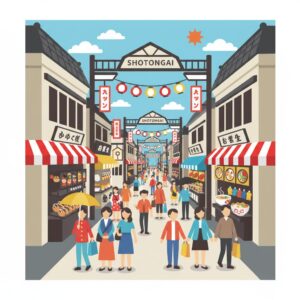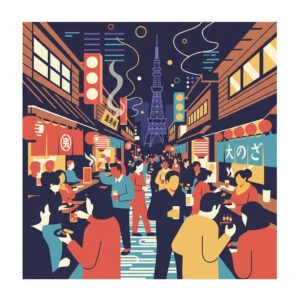
The roar hits you first. It’s not the polished hum of a Tokyo cocktail bar or the polite chatter of a Kyoto izakaya. It’s a wave of sound, a cacophony of laughter, clinking glasses, and rapid-fire Kansai-ben that spills out from under a faded noren curtain onto the damp pavement. Peeking inside, you see a blur of motion: salarymen in loosened ties, young women sharing a plate of fried skewers, an old man reading a racing form, all packed shoulder-to-shoulder along a worn wooden counter. This is the world of tachinomi, Osaka’s standing bars. For the uninitiated, it can look like pure, unadulterated chaos. A social maze with no clear entry point. But for those who live here, it’s not chaos at all. It’s the city’s circulatory system, the place where Osaka’s true pulse can be felt. Tachinomi isn’t just about grabbing a cheap drink. It’s a masterclass in Osaka’s social dynamics, a theater of everyday life played out in real-time. It’s where you learn the unwritten rules of community, efficiency, and the fine art of the fleeting connection. Forget your preconceived notions of Japanese formality and reserved personal space. To understand Osaka, you must first understand the philosophy of standing, drinking, and belonging in a crowd. This is your guide to navigating that beautiful, boisterous world.
To truly master the art of the fleeting connection in these spaces, it helps to understand the local customs, such as the art of decoding the signature phrase for ending conversations.
The Tachinomi Philosophy: More Than Just a Bar
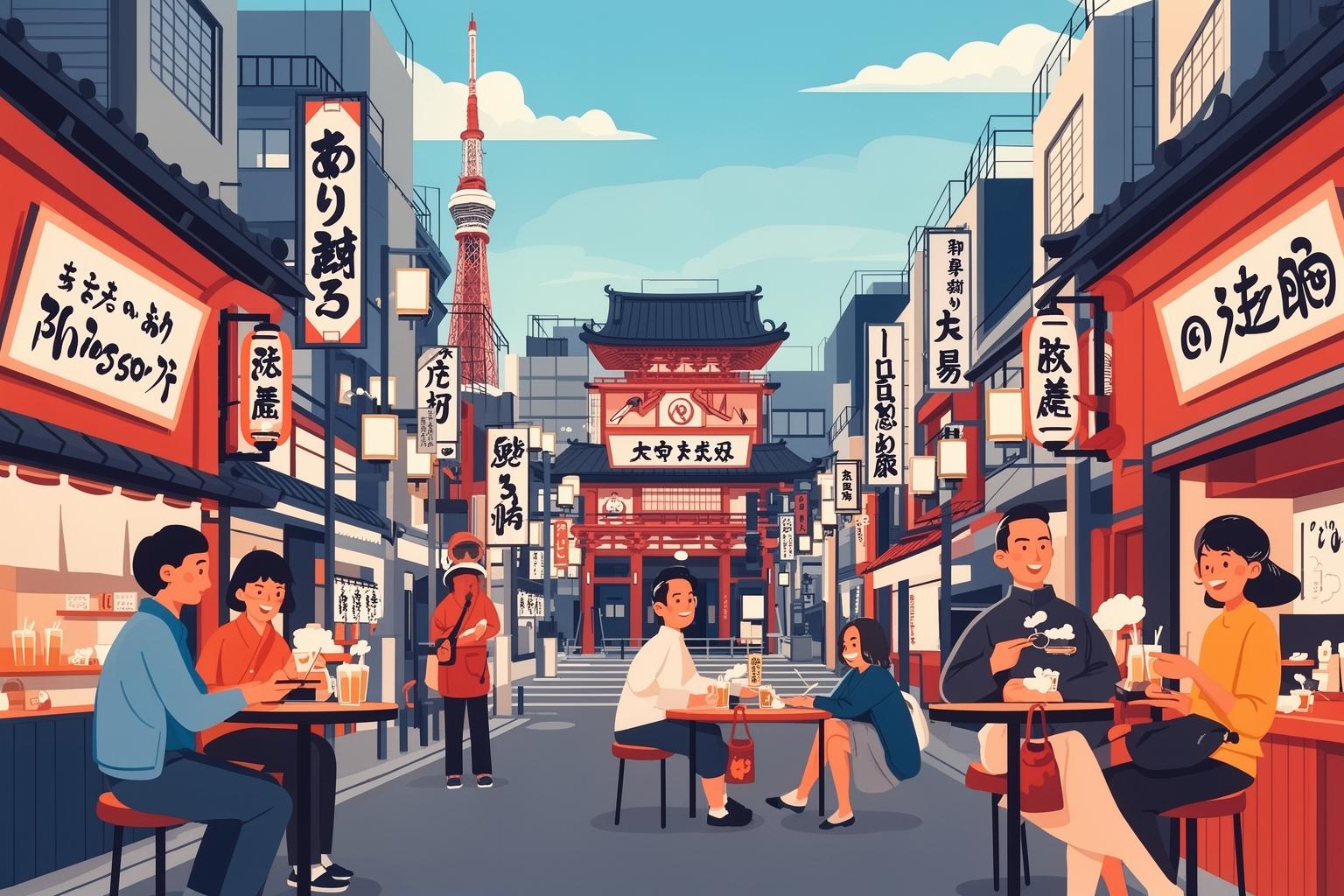
To view a tachinomi merely as a place for drinking misses its true essence entirely. It is a complex social institution cleverly disguised in a simple, functional form. These venues are grounded in core Osaka values: pragmatism, community, and a profound appreciation for good value. Unlike a seated bar where you settle in for the night, a tachinomi acts as a transitional space. It serves as a pause in the day—a quick stop after work before heading home, a warm-up before dinner, or a final nightcap before catching the last train. The act of standing maintains a lively energy and a fleeting experience. It fosters a unique kinetic social energy that encourages interaction and awareness of those around you, something a private table would inhibit. The concept aims to maximize social and culinary enjoyment in minimal time and space, reflecting the fast-paced, merchant-class history of the city.
The Art of the “Senbero”: A Thousand Yen Buzz
The idea of senbero, literally meaning “1000 yen drunk,” powers the tachinomi culture economically. It’s both a promise and a challenge: can you reach a pleasant buzz for just a crisp 1000-yen note? In Osaka, the answer is an emphatic yes. A typical senbero might include three drinks and a couple of small food items, or simply a set of drink tickets. This isn’t about being cheap; it’s about being savvy. Osaka’s culture centers on kosupa, or cost performance. It’s a city that hates waste and celebrates a good bargain. Paying a fair price for excellent quality is a source of pride. The senbero isn’t just a marketing tactic; it’s a declaration of a bar’s efficiency and dedication to the working person. It says, “We recognize your hard work, and we believe you deserve to unwind without overspending.” This pragmatic leisure approach stands in stark contrast to the expensive, brand-focused bar scenes in other major cities, offering a refreshingly straightforward exchange between customer and establishment.
A Stage for Social Theater
Stepping into a tachinomi feels like entering a stage in the middle of a performance. The cast shifts constantly, yet often follows a familiar pattern. There’s the seasoned taisho (master) behind the counter, moving with practiced economy, grilling skewers, pouring beers, and bantering with regulars. Salarymen are found here too, their shoulders relaxing after a long day’s grind, conversations easing from office politics to the latest Hanshin Tigers game. Young couples sit on dates, sharing small plates and laughing amid the noise. And solo drinkers occupy their own space, simultaneously part of the collective rhythm. The charm of the tachinomi lies in how these diverse groups don’t stay isolated. The close quarters and shared counter act as social glue. A passing remark about a dish can spark a 15-minute conversation with a stranger. A shared groan over a Tigers mistake creates an instant connection. It’s a performance where audience and actor blur, and everyone is invited to take part, however briefly.
Navigating the Unspoken Rules: The Tachinomi Code
Despite its seeming disorder, the tachinomi operates according to a strict, though unspoken, set of rules. This internal system enables many people to share a small space harmoniously. Mastering this etiquette is essential to experiencing a truly local atmosphere. It involves reading the room, understanding the flow of people and orders, and respecting the shared environment. These aren’t rules to exclude newcomers but a collective understanding that ensures the space works for everyone, from first-timers to longtime regulars. It’s a dance of subtle gestures, quick decisions, and spatial awareness. When done right, it feels like fitting perfectly into the bar’s living, breathing rhythm.
The Entry: Finding Your Place in the Flow
Your first challenge is simply getting inside. Don’t just push toward the counter. Pause at the entrance and take in the scene. Look for a small gap, just wide enough for one person. Catch the eye of the taisho or a staff member; a slight nod usually signals your intent. As you move to the spot, be mindful. A quiet “sumimasen” (excuse me) suffices. Hang your bag on a hook beneath the counter or place it on a small shelf if available. Never put it on the counter itself, which is reserved for food and drinks. The key is to make yourself small and blend in seamlessly. You are not marking your own territory but joining an existing flow. This respect for the shared space is crucial. It’s your first sign that you understand how things work here.
The Order: Quick, Decisive, and Cash on Delivery
Tachinomi aren’t places for hesitation. The pace is fast, and the staff is busy. Check the menu—often handwritten strips of paper posted on the wall—before staff approaches. When it’s your turn, order confidently. “Nama hitotsu!” (One draft beer!) is a classic opener. If unsure, point to what your neighbor is having and say “are, kudasai” (that, please). Many traditional tachinomi use a kyasshu on deribarii (cash on delivery) system. When your drink and food arrive, you pay immediately. The staff places your money in a small tray or bowl, using it to make change as you order more. This system is wonderfully efficient, eliminating the need for a final bill and allowing people to leave whenever they want without hassle. It’s a system built on trust and speed—two pillars of Osaka’s business culture.
The Social Contract: Sharing Space and Time
The most important rule is understanding the temporary nature of your visit. A tachinomi is neither a library nor a coffee shop. You’re there for a drink, a snack, and a brief social recharge. Lingering for hours on a single drink is a major faux pas. It takes up valuable space someone else might use and disrupts the bar’s natural flow. Ideally, stay between 20 minutes and an hour. Drink, eat, and move along. This rapid turnover keeps prices low and the atmosphere lively. When it comes to interaction, the rules are flexible. It’s perfectly fine to enjoy your drink quietly. However, be open to conversation. If a regular starts chatting, respond politely. If you overhear an engaging conversation, it’s often fine to join in with a laugh or brief comment. The key is to be a good neighbor. Don’t dominate conversations, avoid loud complaints, and always be aware of those around you. It’s a shared experience, and your role is to contribute to the positive energy, not detract from it.
The Osaka-Tokyo Tachinomi Divide: A Tale of Two Cities
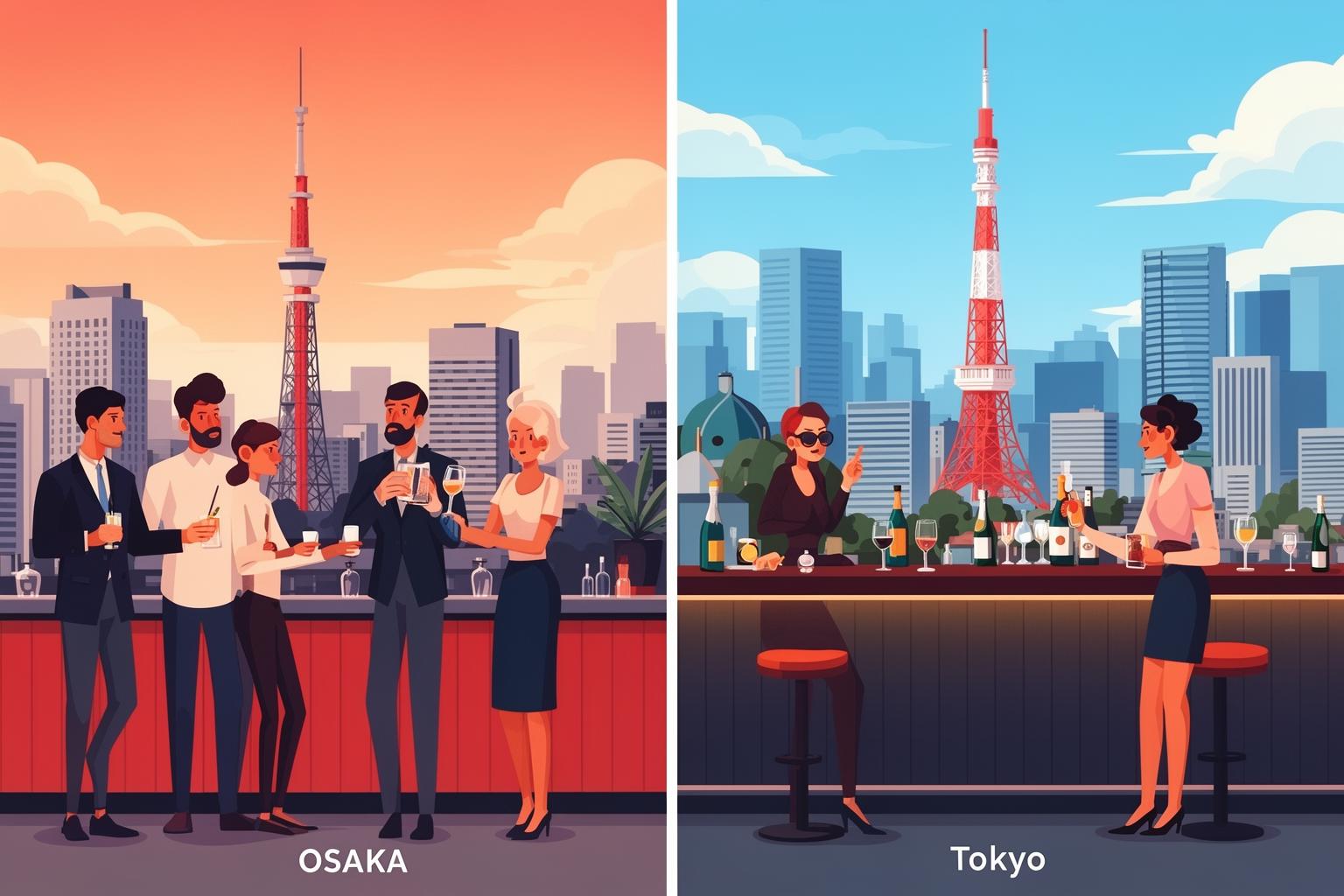
While Tokyo also has standing bars, they often seem like they belong to an entirely different realm. The contrast between the tachinomi scenes in Japan’s two largest cities provides a clear insight into their distinct cultural priorities. One tends to focus on curated style and controlled experiences, while the other centers on raw energy and spontaneous connection. This is not a judgment of which is superior, but rather an observation of how each city’s character emerges in its most basic social settings. The variations in atmosphere, clientele, and the fundamental purpose of the establishments underscore the deep-rooted cultural tensions that shape the relationship between these two metropolises.
Tokyo’s Stylish Stands vs. Osaka’s Gritty Hubs
In Tokyo, you’ll find a growing number of sleek, modern standing bars, often referred to as “stando.” They frequently specialize in craft gin, natural wine, or artisanal sake. The design is deliberate, the lighting is flattering, and the crowd tends to be fashionable. These spots are destinations unto themselves, places to see and be seen. They are the standing equivalent of trendy seated bars—just without the chairs. Osaka’s tachinomi, especially the traditional ones, couldn’t be more different. Many are tucked gaado-shita (under the train tracks), housed in peeling post-war buildings, or nestled down narrow, lantern-lit alleys. The decor is incidental; function dominates. Fluorescent lighting, worn linoleum floors, and counters sticky with the remnants of countless beers are typical. The charm lies not in aesthetics but in the atmosphere. These are not destinations but hubs—integral parts of everyday life, prized for their speed, affordability, and authenticity, rather than their Instagram appeal.
Conversation Styles: Transactional vs. Relational
Social interaction styles differ markedly as well. In a Tokyo stando, conversations usually stay within one’s own group. Engagements with staff are polite, efficient, and mostly transactional. You order, receive, and pay. While cordial, there is a certain professional distance. In Osaka, the boundaries are delightfully blurred. The taisho is more than a service provider; they are host, conductor, and often the chief entertainer. They might ask where you’re from, comment on your food choices, or tease a regular about a new haircut. Other customers freely join the exchange. A Tokyoite might find this intrusive, but in Osaka, it is the whole point. It’s a relational rather than transactional experience. You’re not just buying a drink—you’re temporarily becoming part of a loosely knit, ever-changing community. This is why foreigners often misinterpret the stereotype that “Osaka people are friendly.” It’s not simple, unconditional friendliness; it’s an interactive, participatory warmth that invites reciprocal engagement.
What Foreigners Often Get Wrong: Avoiding Tachinomi Faux Pas
For a non-Japanese resident, the tachinomi can represent the ultimate cultural immersion experience. However, it is also a setting prone to misunderstandings. Approaching it with incorrect expectations or mindset can result in an awkward and uncomfortable visit. These issues are not faults of the establishment but often simple cultural misinterpretations. Being aware of these common challenges can help you navigate them smoothly and blend into the local rhythm, turning you from a curious outsider into a relaxed participant in one of Osaka’s most genuine daily traditions.
Misinterpreting the “Welcome”
When you walk into a tachinomi, you are met with a loud and hearty “Irasshaimase!” (Welcome!). A foreigner might take this as a personal, enthusiastic invitation to engage deeply with the staff. In truth, it is a routine, almost automatic greeting in any Japanese service setting. The real welcome in a tachinomi is more understated. It comes through the small nod from the taisho acknowledging your order, the way a regular shifts slightly to give you space, or the quick eye contact during a collective “kanpai!” at the bar. Don’t be discouraged if the initial loud greeting doesn’t lead to instant friendship. Relationships here are formed through shared moments and unspoken understanding, not overt friendliness.
Understanding the Pace and Purpose
One of the most frequent errors is misjudging the core purpose of a tachinomi. It is not a Western-style pub where you claim a spot for the whole evening, nor is it a workspace. Bringing a laptop, spreading out documents, or trying to hold serious business talks is frowned upon. Similarly, nursing a single beer for hours is considered inconsiderate. The business model relies on volume and turnover. Lingering disrupts this flow, essentially costing the owner money and keeping others from enjoying the experience. The tachinomi is a quick stop—a place for a brief, efficient, and enjoyable break. Respecting this rhythm is the most important way to show your cultural understanding.
Matching the Room’s Volume
Tachinomi venues are indeed loud, but in a particular way. It’s a collective, layered murmur of many small conversations, the clatter of dishes, and the sizzle from the grill. It’s not a contest to be the loudest. A common mistake by foreigners used to rowdy pubs is to talk at a volume that disrupts this layered hum. Your voice should blend with the ambient noise, not overpower it. Observe the energy of the room. If the bar is jubilantly celebrating a baseball victory, feel free to join in. But if it’s a calmer, after-work atmosphere, adjust your tone accordingly. It’s about joining a chorus, not performing a disruptive solo.
A Final Sip: Integrating into Osaka’s Flow
To master the art of tachinomi is to grasp the spirit of Osaka. It’s a city that prioritizes substance over style, efficiency over ceremony, and community over individuality. The standing bar embodies these values physically. It’s a spot where a company president might stand beside a construction worker, both savoring the same 300-yen beer, their status diminished by the shared wooden counter. It’s a social equalizer and a great leveler. It teaches you to be considerate of others, to communicate succinctly, and to find joy in simple, fleeting moments of connection. The next time you pass one of these glowing, lively little sanctuaries, don’t be put off by the noise and the crowd. Take a deep breath, locate a small space, and step into the flow. Order a beer and a plate of doteyaki. You don’t even need to speak. Just stand, listen, and observe. In that half-hour, you’ll discover more about the real, unfiltered character of Osaka than any guidebook could ever reveal. You’ll feel the city’s true rhythm, and for a brief moment, you’ll become part of it.