There’s a certain glow that defines the Osaka nightscape, a polychromatic hum that pulses through its veins long after the sun has dipped below the horizon. It’s not just the Blade Runner-esque glow of Dotonbori’s Glico Man or the warm lantern light of a secluded izakaya. There’s another, more chaotic beacon that calls to the city’s residents, a light that promises both salvation and suspicion. It’s the blinding, pachinko-parlor aesthetic of Super Tamade, Osaka’s most infamous and beloved budget supermarket. To the uninitiated, the facade is an assault on the senses—a riot of garish yellow and red, festooned with blinking, chasing LED lights that would make a Las Vegas casino blush. It doesn’t look like a place you buy groceries; it looks like a place you might lose your money and your dignity. But for those of us who call this vibrant city home, Super Tamade is more than just a store. It’s a rite of passage, a cultural landmark, and a masterclass in the Osakan art of squeezing every last drop of value out of a single yen. It’s a place of incredible bargains and questionable produce, a treasure hunt where the prize might be a week’s worth of meals for the price of a fancy coffee, or it might be a bag of slightly-too-soft onions. This is the dichotomy of Tamade, a place you learn to navigate with a savvy eye and a spirit of adventure. It represents the raw, unfiltered, and deeply pragmatic soul of Osaka, a city that prides itself on its merchant roots and its unpretentious love for a good deal. Diving into its narrow, cluttered aisles is to dive into the city itself. Welcome to the neon jungle.
A Symphony of Sights and Sounds: The Tamade Atmosphere
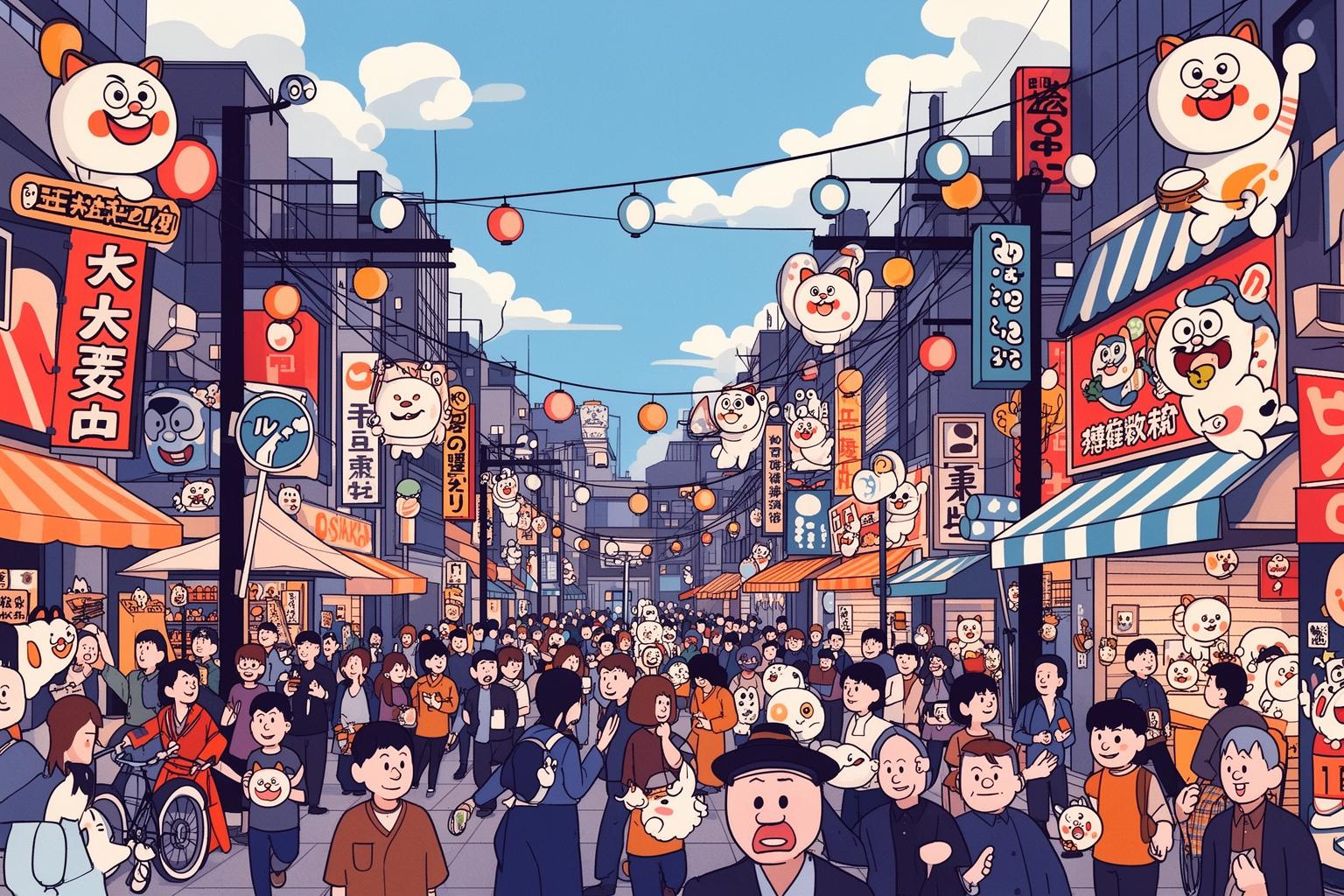
Entering a Super Tamade is an experience that stimulates every sense, whether you expect it or not. The shift from the relative quiet of the street to the store’s interior is sudden and striking. The first thing that greets you is the sound—a persistently cheerful, upbeat jingle playing on an endless loop, an annoyingly catchy melody that burrows into your subconscious and lingers in your quiet moments for days. The lyrics are straightforward, celebrating the joy of shopping at Tamade, and its constant repetition serves as both a brilliant branding tactic and a subtle form of psychological warfare. This soundtrack is layered with the store’s own noise: the rumble of shopping cart wheels on linoleum floors, the crinkle of plastic bags, the steady beep-beep-beep of cash registers, and the murmurs of shoppers navigating the cramped aisles, occasionally interrupted by the loud exclamation of a found bargain.
The visual scene is equally overwhelming. Forget the minimalist, sleek design of upscale grocers. Tamade embraces maximalism wholeheartedly. Every surface appears plastered with signs. Brightly colored, hand-written posters shout prices in thick black marker. Red and yellow starbursts highlight special offers. Products are not simply arranged on shelves; they are piled into towering, precarious pyramids that seem ready to topple at the slightest touch. The aisles are notoriously narrow, forcing an often frustrating, intimate dance with other shoppers. You quickly learn the delicate art of cart-dodging and the polite yet firm squeeze-past. The lighting is harsh—a flat fluorescent glare that exposes everything without softness, making the bright snack packaging and deep red discounted meat stand out with an almost hyper-realistic intensity. There’s a distinct smell as well—a unique blend of fried foods from the prepared meals section, the subtle earthy scent of root vegetables, and the clean, briny aroma from the seafood counter. It’s not unpleasant, but it is unmistakably Tamade.
Yet, the true soul of the place lies in its people. This is a cross-section of Osaka life in its rawest form. Elderly women with permed hair and sharp elbows move with practiced precision, hunting the best deals on daikon radishes. University students with tight budgets pile their baskets high with instant noodles and cheap cuts of pork. Young mothers, children in tow, navigate the chaos to gather ingredients for dinner. Salarymen in slightly rumpled suits stop by on their way home to pick up discounted bentos and cans of chu-hai. And then there are the expats—the other foreigners—faces a mixture of confusion and resolve. You can almost see their minds working as they try to decipher kanji-only labels and weigh the incredible price of a product against its somewhat dubious appearance. Shopping here is a communal experience, a shared struggle and victory. There’s an unspoken camaraderie in the quest for bargains, a sense that everyone is in this together, navigating the beautiful, chaotic, and authentically vibrant world of Super Tamade.
The Allure of the Almighty Yen: The Unbeatable Benefits
The main reason anyone dares to face the sensory overload of Super Tamade is straightforward and compelling: the prices. In a country where the cost of living can be overwhelming, Tamade stands as a beacon of affordability. It’s a place where your yen stretches farther than you imagined, allowing you to stock your pantry and refrigerator without draining your wallet. The benefits aren’t just small; they are significant, tangible, and for many, absolutely crucial.
The Legendary 1-Yen Sales
The most iconic of Tamade’s strategies is the nearly mythical 1-yen sale. This is no typo. For the cost of a single coin, you can buy a particular item, provided you meet a minimum purchase amount, usually around 1,000 yen on other products. These are premium loss-leaders, crafted to draw you into the store where you’ll inevitably buy more. The items available can range from a carton of eggs to a pack of instant ramen, a bottle of tea, or even a head of cabbage. These deals are promoted on flyers and posters at the store entrance, generating a tangible buzz of excitement. Seeing a 1-yen sale unfold is quite a spectacle. There’s a frantic urgency as shoppers scramble to meet the minimum, grabbing last-minute items before rushing to the special display to claim their prize. It feels less like shopping and more like winning at a carnival. While the actual savings might only be around a hundred yen, the psychological win is enormous. You’ve outsmarted the system. You’ve conquered the neon jungle and walked away with an almost free trophy.
Rock-Bottom Prices on Daily Necessities
Beyond the flashy 1-yen sales, Tamade’s true, ongoing value lies in the consistently low prices on everyday essentials. This is where the thrifty resident can genuinely flourish. A block of firm tofu, a staple of Japanese cooking, can often be found for less than 50 yen. A bag of udon or soba noodles may cost as little as 20 or 30 yen. Basic vegetables like onions, potatoes, and carrots are sold in bulk at prices that make other supermarkets seem exorbitant. The meat counter, while requiring a careful eye, offers packages of ground pork or thinly sliced chicken at a fraction of the cost you’d find elsewhere. Even eggs, a daily necessity, are reliably cheaper here. These savings accumulate, turning a weekly grocery trip from a source of worry into a manageable expense. For students, part-time workers, or anyone trying to save money living in an expensive city, Tamade is more than a convenience; it’s a lifeline. It makes home cooking accessible and affordable, democratizing the ability to eat well on a tight budget. You learn to shape your weekly meal plan around Tamade’s current specials, embracing the challenge of transforming a pile of discounted vegetables and inexpensive meat into something delicious.
The Treasure Trove of Prepared Foods (Sozai)
Perhaps the greatest gift Tamade offers to the busy, the tired, or the culinarily challenged is its extensive and incredibly affordable selection of prepared foods, known as sozai. This section is a shining paradise of convenience. Massive platters are piled high with golden-brown karaage (fried chicken), crispy korokke (croquettes), and assorted tempura. There are rows and rows of bento boxes, each a complete meal with rice, a main protein, and several small sides, often priced as low as 250 or 300 yen. Sushi packs, while not of Ginza-quality, provide a satisfying fix at an amazing price. Onigiri rice balls, perfect for a quick snack, come in dozens of fillings. The real magic, however, occurs in the evening. As closing time nears, the staff begin their sacred ritual: applying discount stickers. A red “半額” (hangaku—half price) sticker is placed on bentos, sushi, and fried foods, instantly slashing their already low prices in half. This sparks a feeding frenzy among late-night shoppers, a silent, coordinated rush to snatch the best items before they vanish. Scoring a half-price katsu-don bento for 150 yen feels like a major victory. The quality is, admittedly, varied. It’s mass-produced comfort food, not gourmet fare. But it’s hot, filling, and incredibly cheap. For anyone who’s ever come home late, exhausted with an empty fridge, the warm glow of the Tamade sozai section is a vision of pure, unadulterated joy.
Buyer Beware: The Not-So-Hidden Drawbacks

For every remarkable advantage Super Tamade provides, there is an accompanying drawback—a caution that the discerning shopper must always bear in mind. The low prices come with a price, frequently paid in terms of quality, consistency, and peace of mind. Shopping at Tamade means accepting a certain degree of risk, becoming an amateur food inspector, and realizing that not every bargain is truly a good deal. This is the flip side of the neon-lit coin, the aspect of the experience that tests both your patience and judgment.
The Quality Gamble
The biggest challenge at Tamade is the unpredictable inconsistency in the quality of its fresh products. The produce section perfectly illustrates this gamble. One day, you might discover a stunning pile of fresh, crisp bell peppers at an unbeatable price. By the next, the same batch may appear tired and wrinkled, with a few suspiciously soft spots hidden below. You have to take an active role in quality control—picking up each item, turning it over, checking apples for bruises, feeling tomatoes for firmness, and inspecting leafy greens for wilting. Pre-packaged produce like oranges or potatoes is especially risky; the top layer might look flawless, but the items hidden underneath could be nearing spoilage. It’s a lesson you typically only need to learn once. The meat and fish counters demand similar vigilance. Though the prices are tempting, close attention to color and texture is essential, and expiration dates become your most reliable guide. This connects to a notorious, though probably apocryphal, urban legend that only adds to Tamade’s mystique: the tale of a branch once selling improperly prepared fugu (pufferfish), a potentially lethal delicacy. Though no solid proof exists, the story’s endurance says much about the store’s reputation. Shopping here is more than a routine; it’s a mission, with skepticism as your chief tool.
The Shopping Experience Itself
Even if you find high-quality products at good prices, shopping at Tamade can be an ordeal. The stores are often cramped, and during peak hours, the narrow aisles turn into battlegrounds. Maneuvering a shopping cart through the crowd requires the agility of a running back and the spatial awareness of an air traffic controller. Expect cart collisions, sudden stops when someone spots a deal ahead, and the claustrophobia that comes with many people packed into a small space. The checkout is a model of bare-bones efficiency, with little focus on customer service frills. Lines can be lengthy and slow. Until recently, many branches only accepted cash, and though this is changing, it remains wise to carry cash just in case. Don’t expect the cashier to carefully bag your groceries. More often than not, items are scanned and placed in a holding area for you to bag yourself—that frantic dash against the clock as the next customer’s items pile up. The entire experience can be exhausting. It’s loud, crowded, and chaotic—the very opposite of a calm, leisurely stroll through a farmers’ market. You come to Tamade with a purpose: you complete your mission and get out.
Reading Between the Lines (and Labels)
For foreign residents, an extra challenge lies in interpreting the labels. While this applies to any Japanese supermarket, it’s especially important at Tamade, where low prices may reflect products nearing their expiration date. Knowing the difference between the two main types of dates is vital. 賞味期限 (shoumikigen) is the “best before” date, indicating peak flavor but often safe to consume afterward. Conversely, 消費期限 (shouhikigen) is the “use by” date and must be strictly observed, as it applies to highly perishable items such as raw meat, fresh fish, and some dairy products. Given Tamade’s business model, you’ll frequently encounter products close to their shoumikigen. It’s also important to note product origins: much of the inexpensive produce and meat is imported, often from China or other parts of Asia. While this isn’t inherently problematic, it’s a consideration for shoppers who prefer locally sourced food. Understanding these nuances is crucial to making informed choices and ensuring that the bargain you bring home is both safe and satisfying.
A Pro’s Guide to Conquering Super Tamade
Successfully navigating Super Tamade is a skill developed over time through trial and error, and occasionally sacrificing a tragically mushy avocado. For first-time visitors or newly arrived expats, a few key strategies can help ease the steepest part of the learning curve. Conquering Tamade isn’t about brute force; it’s about timing, strategy, and understanding the unwritten rules of the game. With the right approach, you can maximize the benefits while skillfully avoiding pitfalls, turning what could be a stressful chore into a rewarding treasure hunt.
Timing is Everything
Your experience at Tamade will vary greatly depending on when you visit. The absolute worst times are weekday evenings between 6 PM and 8 PM, and throughout the weekend. During these peak hours, the store becomes a claustrophobic human traffic jam. Aisles are blocked, lines at the registers stretch back into the store, and stress levels soar. The best time for a relatively calm shopping trip is weekday mornings between 10 AM and 11 AM. Shelves are freshly stocked from the morning delivery, crowds are sparse, and you can leisurely inspect produce without feeling rushed. If your goal is to hunt for half-price prepared foods, then a late-night visit is ideal. Discount stickers typically start appearing around 7 PM, with better selections and deeper discounts as the night progresses. A trip around 9 or 10 PM will often yield the best bargains on cheap bentos and sozai, though you’ll be competing with other savvy bargain hunters. Choosing your timing wisely is the most effective way to manage your Tamade experience.
The Essential Shopper’s Toolkit
You wouldn’t embark on a jungle expedition without proper gear, and a trip to Tamade is no different. A few essential items will make your shopping trip significantly easier. First, always bring your own bags. Japan has implemented a nationwide fee for plastic bags, but even before that, carrying a sturdy eco-bag was a wise choice. You’ll likely buy a lot, so having reliable bags (or two) is crucial. Second, while many locations now accept credit cards and electronic payments, the old saying “cash is king” still holds true. Some smaller branches or specific registers may be cash-only, so having enough yen on hand avoids awkward moments at checkout. Finally—and perhaps most importantly—bring a plan. Come prepared with a mental or physical shopping list. The sheer volume of products and deals can be overwhelming, and it’s easy to get distracted and fill your basket with impulse buys instead of essentials. Knowing what you need keeps you focused amid the chaos and lets you hunt bargains efficiently.
The “Know What to Buy” Strategy
The ultimate key to mastering Tamade is knowing which items are almost always great deals and which are risky gambles. Certain categories stand out where Tamade offers unbeatable value. Tofu, natto, eggs, and basic dairy products like milk and yogurt are consistently cheap and reliable. Dry goods such as pasta, curry roux, and basic sauces are safe bets. In the produce section, stick to hardy, less perishable vegetables like onions, potatoes, carrots, daikon radish, and cabbage. These are nearly always fantastic bargains and have good shelf life. Udon, soba, and ramen noodles are extremely inexpensive staples suitable for any budget pantry. Conversely, be cautious with delicate leafy greens, pre-cut fruit, or berries, since their shelf life is short and they may already be past peak freshness. While meat and fish prices can be tempting, if you want high-quality cuts for a special meal, it’s better to visit a dedicated butcher or a more upscale supermarket. Tamade’s golden rule is simple: if a deal looks too good to be true, examine the item with the scrutiny of a forensic scientist. Check the date, inspect the packaging, and trust your gut. By following this strategy, you can confidently fill your basket, knowing you’ve secured the best treasures the neon jungle has to offer.
More Than a Store: Tamade’s Place in Osaka Culture

To dismiss Super Tamade as just a cheap, flashy grocery store is to overlook its deeper importance. This vibrant chain is a cultural landmark, a living, breathing symbol of the city’s distinctive character. Its existence and remarkable success are closely linked to the merchant spirit and pragmatic outlook that have defined Osaka for centuries. To understand Tamade is to understand a crucial part of the Osakan identity.
Historically, Osaka was Japan’s commercial center, known as the “nation’s kitchen,” a city of merchants, traders, and artisans. This heritage fostered a culture that is famously practical, grounded, and relentlessly focused on value. Osakans are known as shrewd negotiators and passionate bargain hunters. There’s a local phrase, “Mokkari makka?” which roughly means “Are you making a profit?” This is more than just business talk; it reflects a mindset where securing a good deal is a source of pride and joy. Super Tamade serves as the modern, neon-lit cathedral for this philosophy. Its boldly garish exterior, unbeatable deals, and no-frills style perfectly embody a culture that values substance (low prices) over style (fancy décor and polite service). It’s loud, a bit rough around the edges, and unpretentious—much like Osaka itself.
Tamade’s role in the city becomes even clearer when compared with other Japanese supermarkets. There’s the ubiquitous AEON, a dependable, clean, and standardized one-stop-shop that feels familiar and safe. Chains like Life or Hankyu Oasis cater to a slightly more upscale crowd with a broader selection of organic products and imports. Gyomu Super focuses on bulk and frozen items for businesses and families. Then there are the depachika, dazzling gourmet food halls in the basements of department stores, offering premium delicacies and beautifully packaged culinary gifts at top prices. Super Tamade exists in a league of its own, proudly outside this hierarchy. It doesn’t compete on organic choices or artisanal quality. It competes on one thing only: price. This singular focus makes it an indispensable part of the ecosystem, serving a demographic other stores might overlook. Osakans regard it with mixed feelings: fondness for its kitschy charm, respect for its business model, and for many, genuine reliance on its affordability. It may not be the place you take visitors to impress them, but it reveals the truth about how a large segment of the city lives, eats, and survives.
Shopping at Tamade means participating in this culture. It’s engaging in the city’s favorite pastime: the pursuit of value. It’s a small act of rebellion against the polished, often expensive image of Japan shown in travel guides. It’s a statement that you’re not just a tourist, but a local who understands the rhythm of the city, knows where to find real bargains, and isn’t afraid to dive into the lively, chaotic, and colorful everyday life of Osaka.
Your first visit to Super Tamade might feel overwhelming. The second time, it might be frustrating. But by the third, you’ll start to get it. You’ll learn the best days for fresh produce, memorize the store layout, and feel a rush of triumph when you snag the last half-price bento. Shopping at Tamade is more than a task; it’s an education. It teaches you to be a more thoughtful shopper, to look beyond flashy packaging, and to savor the simple joy of a home-cooked meal that didn’t break the bank. So take a deep breath, grab a cart, and step through those flashing, chaotic doors. It’s an experience unavailable in any guidebook—a true slice of Osaka life in all its bold, budget-friendly glory. Go forth and conquer the neon jungle. Your wallet and your stomach will thank you.