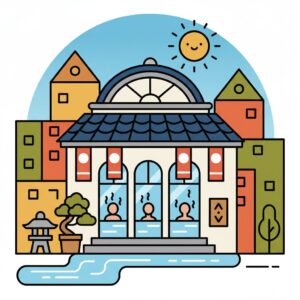
Walk down a quiet residential street in Osaka, away from the neon blaze of Dotonbori or the commercial rush of Umeda. Look for the skinny, towering chimney, a brick-and-mortar sentinel standing guard over a sea of tiled roofs. You might hear the distant clatter of a plastic washbasin on a concrete floor, or the muffled laughter of old men broadcast from a television set. Follow that sound. You’re getting close to the heart of the neighborhood, the real social hub, a place that’s far more important than the local convenience store or post office. You’re looking for the sentō, the public bathhouse. And in Osaka, the sentō is not just a place to get clean. It’s the city’s living room, its steam-filled confessional, its soap-scented social club. It’s where the unspoken rules of Osaka life are written, shared, and passed down, all in the nude. For anyone trying to understand what makes this city tick, what separates its rhythm from the sterile efficiency of Tokyo, the journey begins here, in hot water. But you have to be quick. These places, these vital organs of community, are disappearing one by one, taking a piece of Osaka’s soul with them.
To truly understand the unspoken rules that govern these spaces, you can learn more about Osaka’s sentō etiquette.
The Bathhouse Isn’t Just for Bathing
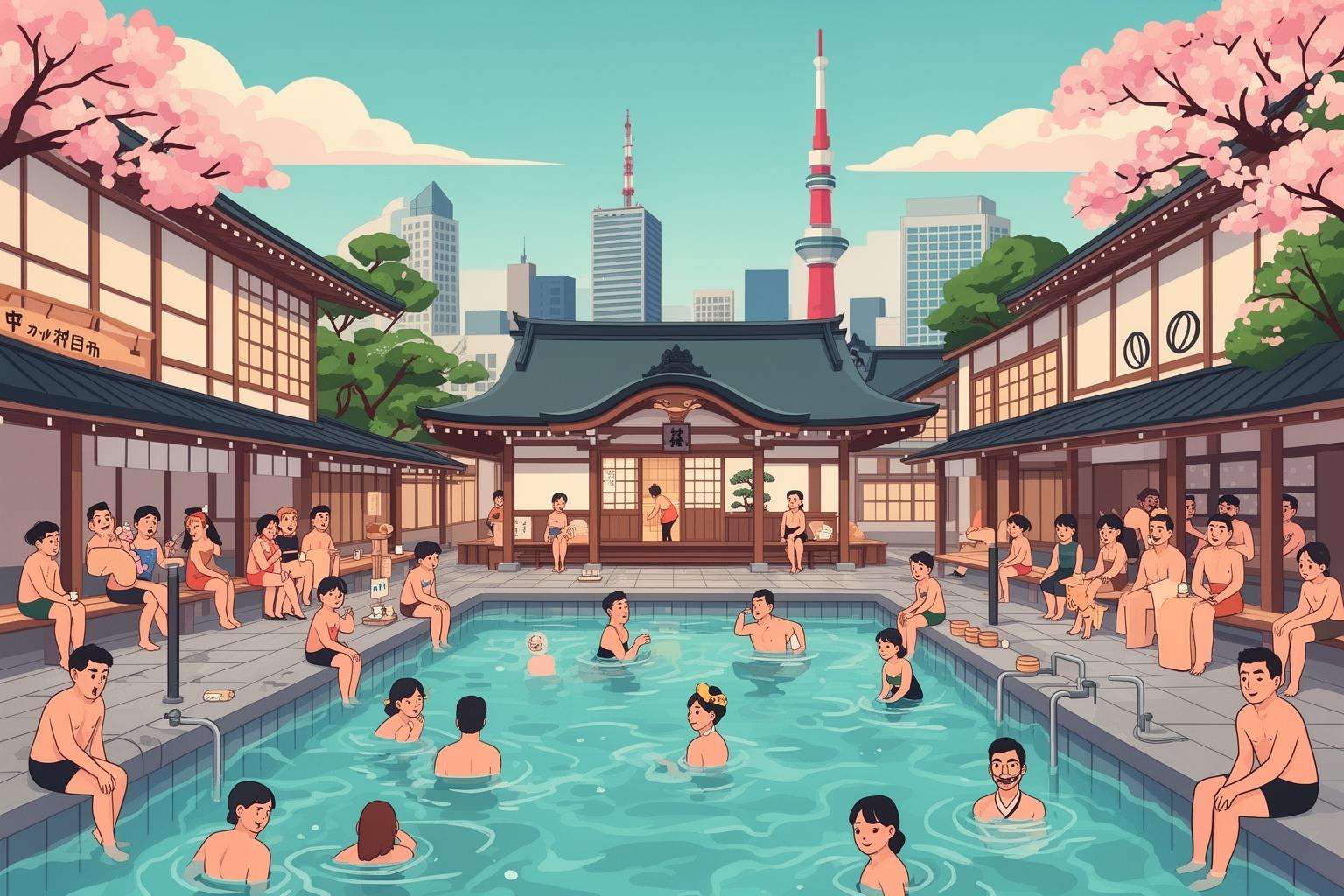
Let’s clear one thing up. This isn’t about luxurious hot springs, or `onsen`, tucked away in the mountains. This is the `sentō`. It’s urban, practical, and costs about as much as a cup of coffee. When modern apartments began featuring private bathrooms as a standard, the sentō’s main purpose became outdated. Yet, in many parts of Osaka, they still endure. Why? Because their true purpose was never only about cleanliness. It was, and remains, about community.
The charm begins before you even see the water. You push aside the `noren`, the thick fabric curtain adorned with the iconic `ゆ` (yu, meaning hot water) symbol. You step into the `genkan` to exchange your shoes for a locker key, then enter the `datsuijo`, the changing room. This is the opening act. And this room is the heart of the place. In Tokyo, a changing room is a quiet, transitional area. People come and go with eyes downcast, embodying urban anonymity. In an Osaka sentō, the `datsuijo` is the main attraction. It’s a lounge where the lines between public and private life completely blur.
You’ll spot a group of grandfathers, fresh from their baths and wrapped in towels, gathered around an old-fashioned television, loudly debating the Hanshin Tigers’ latest game. You’ll observe a mother juggling her toddler while chatting with another mom about the local elementary school. In a corner, a local shop owner might be venting about his sales to anyone willing to listen. The air is thick with the scent of soap and the warm, humid breath of the baths, but it’s the sound that truly defines the space: a steady, low hum of conversation. It’s the sound of a neighborhood talking to itself.
This highlights a fundamental difference in how space is experienced. In Tokyo, silence and privacy are the norm. In Osaka, engagement and shared experience take precedence. No one compels you to speak, but the entire setting is designed to encourage it. The large wicker baskets for clothes instead of sterile lockers, the vintage massage chairs that rumble and creak, the communal hair dryers, the big analog scale everyone uses—it all fosters a feeling of collective ownership. This isn’t just a business you visit; it’s a club you belong to, simply by living down the street.
The Unspoken Rules of Naked Communication
The biggest challenge for many foreigners is, understandably, the nudity. The idea of being completely exposed around strangers can feel intimidating. But to fully grasp the sentō experience, you need to understand the Japanese concept of `hadaka no tsukiai`, which roughly means “naked communication” or “naked relationship.” It’s the profound notion that once you remove the clothes—the business suits, work uniforms, brand labels—you also shed the social hierarchies and pretenses that shape everyday life. In the bath, the company president and the factory worker are simply two men trying to wash away the day’s fatigue. Everyone is equal.
This principle fuels the social dynamics of Osaka. People here are known for their directness, but `hadaka no tsukiai` isn’t about deep, soul-searching conversations. Quite the opposite. It’s the freedom to engage in casual, everyday small talk with no underlying agenda. It’s commenting on the water’s temperature. It’s asking someone where they got that interesting soap. It’s sharing a relieved sigh as you both sink into the hottest tub. This is the fabric of community, woven from dozens of tiny, seemingly insignificant threads of interaction.
Naturally, there are rules. These aren’t so much about social etiquette as they are about respect for the shared space. You must wash your body thoroughly before entering the tubs. This is non-negotiable. At the washing stations, you’ll find a small stool and a basin. You sit, scrub, and rinse. Everything gets rinsed. The soap, shampoo, the stool you sat on, the floor around you. As a guest in a communal space, your responsibility is to leave it as clean as you found it. Your small hand towel, the one used for scrubbing, never goes into the bath water. You can fold it and place it on your head, like the old-timers do, or set it aside. Splashing, swimming, or loud, boisterous behavior is prohibited. The atmosphere is calm, not rowdy.
A foreigner might see these as a list of restrictions, causing anxiety. But for an Osakan, they represent a shared rhythm, a silent dance everyone knows the steps to. Following these rules isn’t about avoiding mistakes; it’s a way to signal that you belong, that you understand and respect the communal spirit here. Get it right, and you’re no longer a visitor. You’re a participant.
An Architecture of Community
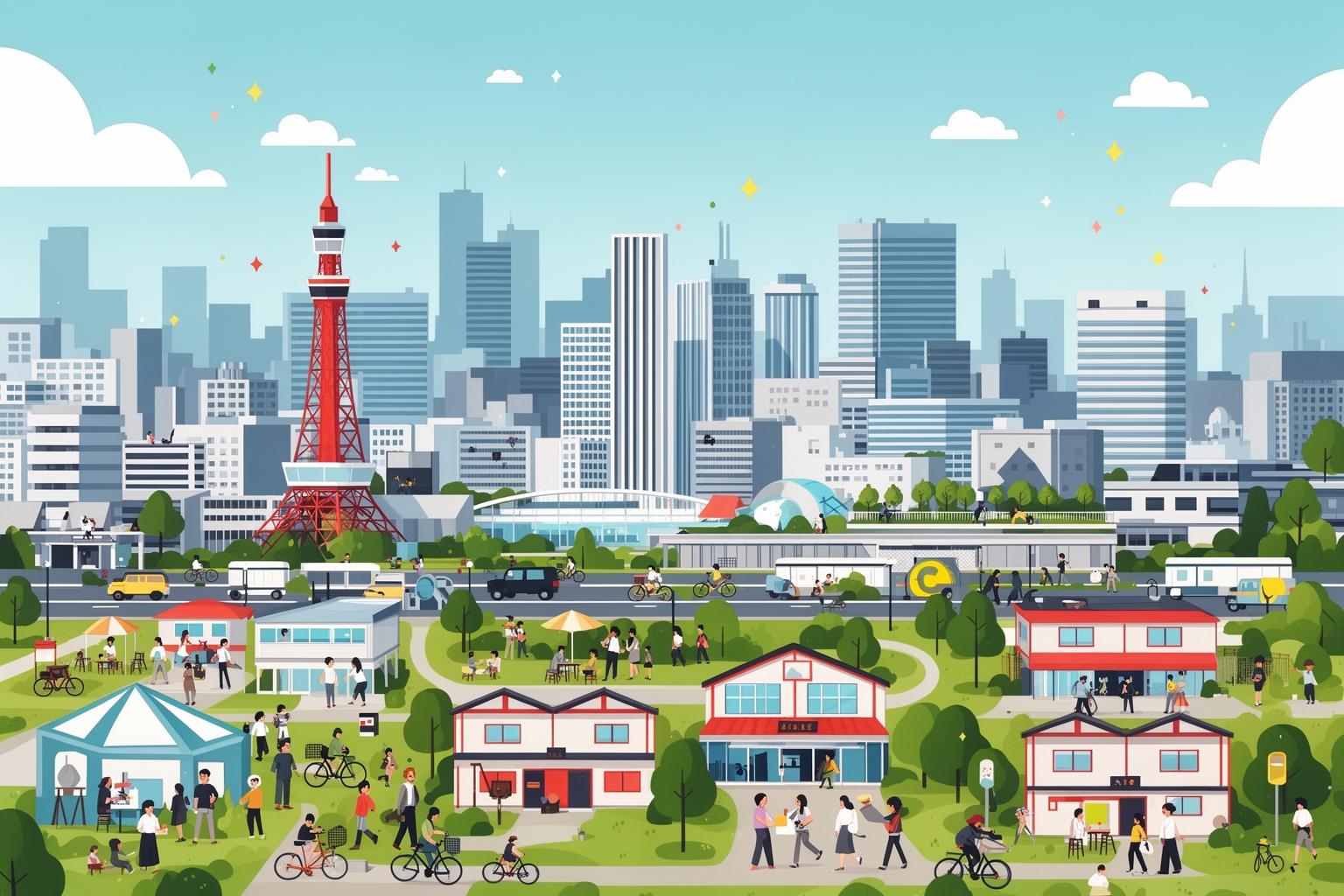
The very design of a traditional sentō exemplifies the art of encouraging social interaction. Upon stepping from the changing room into the bathing area, the first thing you’ll notice is the ceiling. It’s remarkably high, a soaring, vaulted structure often crafted from dark wood, intended to allow the copious steam to rise and circulate. This architectural element fosters a feeling of openness and shared space, akin to a secular cathedral. Your voice echoes softly, blending with the sounds of flowing water and hushed conversation, becoming part of the room’s distinctive acoustics.
Next, there is the art. Occupying an entire wall high above the tubs is almost always a grand mural, typically painted on ceramic tiles. These murals famously depict Mount Fuji. The amusing irony of seeing Japan’s most iconic eastern peak in the heart of western Japan adds a charming whimsy. It serves as a shared point of reference, a piece of art that everyone in the room can look up to from various angles, acting as a unifying focal point.
The tubs themselves are not private retreats. They are large, communal pools arranged to encourage a gradual, leisurely progression. You might begin in the standard bath, heated to a comfortable 41 or 42 degrees Celsius. Then, you might dare the `atsuyu`, the punishingly hot bath, where only the seasoned bathers can endure for more than a minute. There may be a `denki-buro`, or “electric bath,” with low-voltage currents passing through the water—a strange, tingling sensation regarded as a rite of passage. Moving among these tubs is a social ritual. You yield space to others, exchange a nod, and might even strike up a conversation while sitting on the edge to cool down.
Even the post-bath ritual is communal. Back in the `datsuijo`, the social hour continues, sometimes even intensifies. This is when you see people pull a cold bottle of milk from the vending machine—coffee milk or fruit milk being the classic selections—and drink it with one hand on their hip, adopting a posture of pure, unrestrained satisfaction. This is the moment of deepest relaxation when the warmth of the bath has seeped deep into your bones and your mind feels clear. It is here that conversations begun in the bath carry on, plans for the next day are made, and the day is properly concluded. The architecture, the art, and the rituals all combine to achieve one goal: transforming a solitary activity into a shared experience.
Why Osaka Clings to the Sentō (And Why It’s Fading)
The sentō is deeply embedded in the historical fabric of Osaka. This city has always been a hub of merchants, where people lived and worked in dense, crowded neighborhoods called `shitamachi` (literally, “low city”). Houses were small and often lacked private bathing facilities, making the sentō an essential part of daily life. However, it quickly evolved into much more than that. It became the neighborhood’s hub for exchanging information, its support network, and its outlet for stress relief. In a city centered on commerce and negotiation, the sentō was the one place where the business dealings paused and simple neighborly connection took precedence.
This heritage shapes a mindset still evident in Osaka today. The neighborhood identity here is stronger and more fiercely local than in Tokyo. Tokyo feels like a sprawling constellation of individual commuters, each in their own separate orbit. Osaka, on the other hand, feels like a patchwork quilt of unique villages, each with its own character, dialect nuances, and sentō. The sentō stands as a tangible symbol of that local pride. Saying “I go to Taihei-yu” is more than just stating where you bathe; it’s a declaration of the urban tribe you belong to.
Yet this tradition is now on life support. The reality is grim. Official statistics show that there were over 2,000 sentō in Osaka Prefecture in the late 1960s, but today fewer than 300 remain, and the number continues to decline annually. The reasons are all too familiar. Owners are aging, and their children, often having pursued different careers in other cities, show little interest in taking over the demanding, low-profit business. The aging facilities require constant and costly upkeep. Moreover, the land occupied by sentō is often far more valuable when redeveloped into new apartment buildings or parking lots.
Each time a sentō closes for good, the neighborhood loses more than a place to wash; it loses its central gathering spot. Elderly residents lose a vital venue for daily social interaction, a crucial safeguard against isolation. The subtle bonds between neighbors grow weaker. The shared stories and collective memory of the community begin to fade. Passing by a new, sterile condominium where a grand old bathhouse with a curved `karahafu` roof once stood feels like attending a funeral for part of the city’s identity. If you look closely, you can still glimpse the ghost of the chimney against the sky.
Finding Your Neighborhood Spot: A Practical Guide to Being a Good Guest
For a foreigner living in Osaka, stepping into a sentō for the first time can feel like crashing a private party. But the charm lies in the fact that you are welcome, provided you bring the right attitude: one of humility, observation, and respect. This isn’t a tourist spot; it’s someone’s living room. Your aim should be to blend in, not to stand out.
Finding one is part of the experience. Sentōs are seldom found on main streets. You need to explore the back alleys. Look for the chimney. In the evening, spot a softly lit entrance with the `ゆ` noren curtain hanging outside. When you go in, have cash ready. A bath usually costs about 500 yen. The person at the front, the `bandai`, might be an elderly woman who has been stationed there for fifty years. A polite “konnichiwa” and a smile can make a big difference.
What should you bring? Ideally, a small washcloth (for scrubbing), a larger towel (for drying), soap, and shampoo. But if you have nothing, don’t worry. You can often purchase a “tebura setto” (empty-handed set) containing all the basics for a few hundred yen. The key is to be low-impact. This isn’t a spa day; it’s a quick, efficient, and soothing daily ritual.
Once inside, the most important skill is reading the room. Observe before you act. Watch how the regulars move. Notice where they place their belongings. Listen to the volume of the chatter. Some sentōs are quiet and meditative; others are lively and full of conversation. Match the local vibe. The biggest mistake foreigners make is being either too timid or too loud. Don’t whisper and creep around like you’re in a library, but also don’t engage in a loud conversation that overwhelms the space. Just be present, calm, and respectful.
Don’t be surprised if someone tries to strike up a conversation. An older man might ask where you’re from or comment on your basic Japanese. This isn’t an interrogation. It’s an invitation. In Osaka, curiosity is a form of friendliness. A simple, polite response is all that’s needed. This is how you’ll learn the real, unfiltered Osaka-ben—the phrases and intonations you won’t find in textbooks. You’ll pick them up by listening to two grandmothers complain about the price of cabbage while soaking in 43-degree water.
The Sentō vs. The Super Sentō: Old Soul vs. New Entertainment
It’s essential to recognize the significant difference between a neighborhood sentō and a modern Super Sentō. Super Sentō facilities are advertised everywhere. They are large, resort-like complexes, typically located on the city outskirts, with extensive parking lots. These venues offer a dozen types of baths, multiple saunas, restaurants, massage services, manga libraries, and nap rooms. They provide a fantastic, all-day entertainment experience, yet they are not the same as a sentō.
A Super Sentō is a commercial service. You pay a higher price for a variety of amenities. It’s designed for visits with friends or family, aiming for group entertainment. The experience is curated, polished, and mostly anonymous. Whether you’re in Osaka, Nagoya, or Saitama, the experience remains almost identical.
In contrast, a neighborhood sentō is a cultural institution. You pay a small fee to join a community ritual. It has no frills at all. The experience is raw, authentic, and deeply tied to its specific location. It’s a place to be with neighbors and connect to the local rhythm. The peeling paint on the walls, the particular brand of milk in the vending machine, the distinctive character of the bandai—these aren’t flaws but the unique personality and terroir of that bathhouse.
This distinction highlights a broader change occurring throughout Japan, especially noticeable in places like Osaka. It marks a gradual shift from communities based on inherent, location-based connections to ones shaped by chosen, consumption-based lifestyles. The Super Sentō is about selecting your leisure activities, while the sentō is about belonging to your neighborhood. One serves as an escape from daily life; the other embodies its very essence.
What the Disappearing Sentō Tells You About Modern Osaka
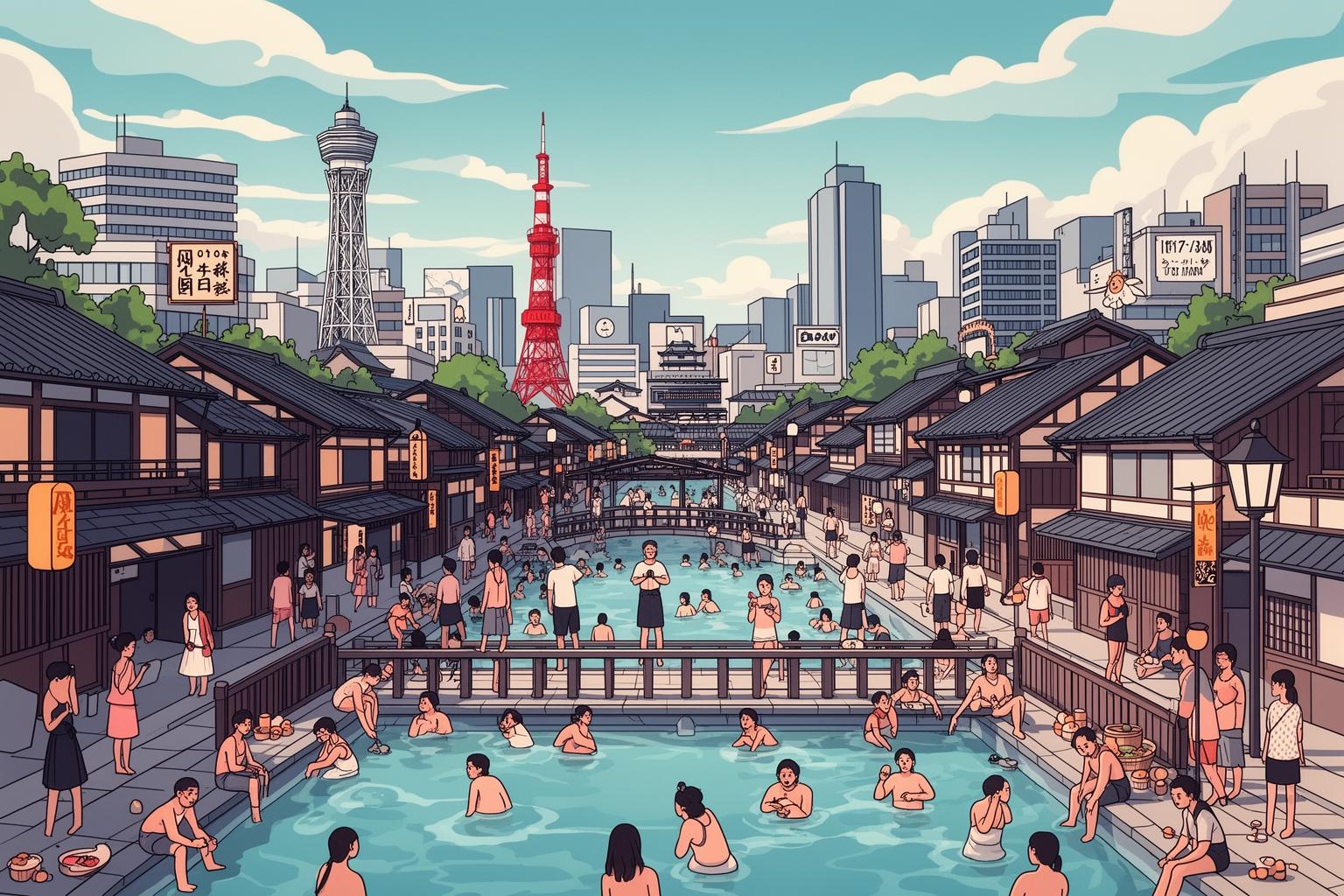
So why spend your weekend moving between these humble, fading bathhouses? Because the story of the sentō is the story of modern Osaka. It’s a tale of the tension between a fiercely communal, stubbornly analog past and an increasingly individualistic, ruthlessly efficient future. Sitting on a small plastic stool in a room full of strangers, scrubbing away the city’s grime, is to understand Osaka on a fundamental level.
You start to see the city not just as a map of train lines and tourist sites, but as a living, breathing organism made up of countless small, interconnected neighborhoods. You begin to realize that the famous Osaka “friendliness” is more than a cliché. It’s a behavior pattern born in these shared spaces, where close physical proximity required a certain kind of direct, unpretentious, and forgiving social interaction.
As these spaces disappear, you have to wonder if that social behavior will disappear with them. Will Osaka gradually become more like Tokyo—perhaps more polite, but also more distant and anonymous? When the last sentō closes, where will the old men go to grumble about the baseball team? Where will neighborhood news be shared? The internet is no substitute. A LINE group chat doesn’t carry the same binding power as sharing a tub of hot water.
Visiting a sentō today is more than just taking a bath. It’s an act of participating in a living history. It’s a chance to witness a form of community that once formed the foundation of Japanese urban life. It’s a quiet, meditative way to connect with the true spirit of Osaka—a spirit that is warm, a little rough around the edges, and deeply human. Seek out that chimney on the skyline. Push aside the noren curtain. The water’s hot, and the city’s living room awaits you. But don’t wait too long. The lights are dimming, and the doors are closing, one by one.