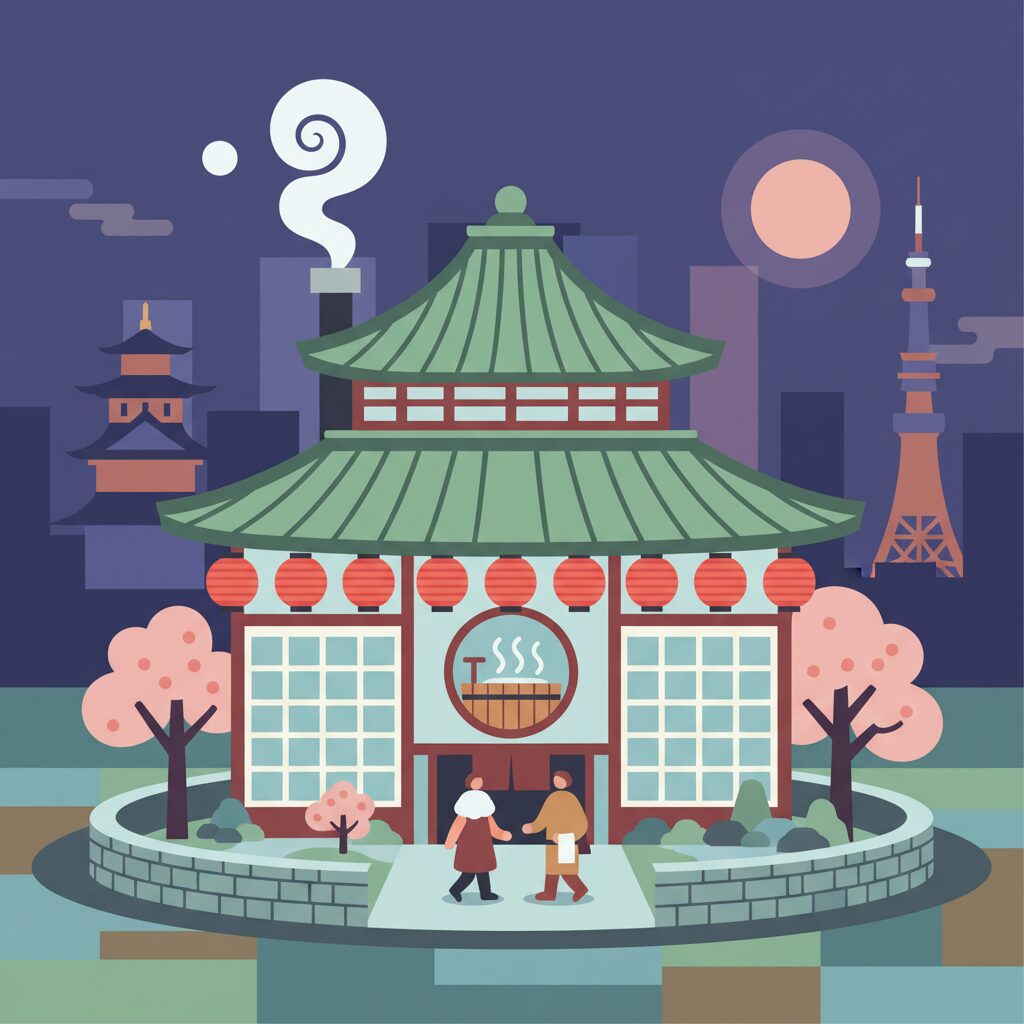
You arrive in Osaka, ready to build a life. You start looking for routines, for ways to stay healthy and sane. The gym seems like a logical first step. You check the prices. Ten thousand yen a month. Eight thousand if you commit to a full year. It’s a hefty slice of your budget. Then you consider a spa, a place to decompress after navigating the glorious chaos of the city. A single massage or treatment sets you back five, six, seven thousand yen. It’s a luxury, a special occasion. You start to think that wellness in Japan is an expensive, high-commitment game. And then you see it, tucked between a greengrocer and a tiny ramen shop: a building with a tall chimney, a split curtain in the doorway, and the character ゆ (yu), meaning hot water. This is the sento, the neighborhood public bath, and it costs about 500 yen. Your first thought might be, “Why would I go there? I have a shower at home.” That question, right there, is where the deepest misunderstanding about Osaka life begins. The sento isn’t about hygiene. It’s about community, economics, and a philosophy of well-being that feels fundamentally different from anywhere else in Japan. It’s the city’s soul, steamed and served hot.
Embracing the unexpected charm of Osaka’s affordable hot water culture becomes even more rewarding when you explore this local sento guide to navigate the community and traditions of neighborhood bathhouses like a true local.
The Sento Is Not a Spa: Deconstructing the Wellness Experience
First, we need to completely redefine our understanding. A Western gym represents a temple of individualism. You put on headphones, track your metrics, and concentrate on personal goals. It’s about self-improvement through solitary effort. A spa is a sanctuary of quiet indulgence, where you pay for pampering, curated tranquility, and a temporary escape from the world. Both are valid, but the sento functions on an entirely different plane.
Entering a traditional Osaka sento means stepping into a living, breathing community hub. You slide open a door and are welcomed not by a silent receptionist, but by the bandai, a raised platform where an attendant—often an older woman or man—keeps watch over both the men’s and women’s entrances. You pay your fee, perhaps purchase a small towel or a packet of shampoo if you forgot yours. The air is thick with the damp, clean scent of soap and steam. The clatter of plastic stools on tiled floors, the murmur of conversations echoing off the high ceilings, and the sound of a TV playing in the changing room fill the space.
This is not a quiet place; it’s a social one. The aim isn’t to escape the world, but to reconnect with it on a more fundamental level. The experience is free of pretense. In the changing room, the datsuijo, salarymen, students, laborers, and retirees all shed their daily uniforms together. Inside the bathing area, there are no frills. You sit on a small plastic stool before a faucet and a mirror and wash—thoroughly. This is the first and most important rule. The large baths, the furo, are for soaking, relaxing, and communal warming—not for cleaning your body. The water is shared, as is the responsibility to keep it clean. This simple act reflects a core Japanese value of collective consideration, practiced in Osaka with a notably straightforward efficiency.
The Unspoken Economics of Osaka’s Pragmatism
To grasp the sento’s endurance, you need to understand Osaka’s connection with money. While Tokyo centers on status and brand names, Osaka is the city of merchants. Here, the highest virtue is kosupa, or cost performance. It’s not about being cheap; it’s about getting the utmost value from every single yen.
Let’s break it down. A monthly gym membership costs ¥10,000. For that amount, you could visit a sento twenty times. A single spa visit is ¥5,000, which equates to ten sento trips. An Osakan sees this clearly. Why pay a monthly fee for a service you might not use daily, a cost that continues even when you’re sick or busy? It feels inefficient and wasteful. In contrast, the sento is the perfect pay-per-use model. You pay a small amount and get immediate, tangible benefits: warmth to your core, relaxed muscles, a clear mind, and some social interaction.
This mindset is ingrained in the city’s DNA. Osakans will line up for a bargain, haggle with a smile, and carefully assess the value of every purchase. The sento offers an unbeatable high-value proposition. For the price of a fancy coffee, you gain access to huge tubs of hot water (much bigger and hotter than any at home), often a sauna, sometimes a cold plunge pool, and occasionally unique baths like an electric bath (denki-buro) or a herbal one. It’s a full-body wellness experience with no contract or lifestyle commitment. Practical, effective, and smart. This isn’t poverty; it’s a philosophy of resourcefulness. A true Osakan feels wealthier for finding a great deal than for spending a lot of money.
More Than a Bath: The Sento as a Neighborhood Living Room
If economics explain why sento survive, the social aspect reveals why they flourish. The sento exemplifies a classic “third place”—a setting that is neither home nor work, where community bonds are formed. Yet in Osaka, it operates with a distinctive absence of social friction.
This is the realm of hadaka no tsukiai, or “naked communication.” When everyone is unclothed, their social status is also stripped away. The company director soaks next to the delivery driver. The university professor sits beside the shopkeeper. All subtle markers of hierarchy—the suit, the watch, the branded handbag—are left in a wicker basket in the changing room. This fosters an exceptionally level playing field for interaction.
In Tokyo, a sento might be a place of quiet, mutual respect where people keep to themselves. In Osaka, the atmosphere is often more open. An elderly man might ask where you’re from without any introduction. Two women might be loudly discussing the price of cabbage or the latest Hanshin Tigers baseball game. It’s not intrusive; it reflects a shared experience in a common space. This is what foreigners often confuse with simple “friendliness.” It’s more nuanced than that. It’s a culture of casual, low-stakes community. There’s no pressure to form a deep friendship, just a brief acknowledgment of your shared humanity. It’s the urban equivalent of neighbors chatting over a garden fence, except the fence has been removed.
Here is where you truly learn the rhythm of a neighborhood. You hear the local dialect, discover local events, and see the network of relationships that bind the community. The sento is both an information hub and a support system, all unfolding from a plastic stool.
A Guide to Sento Etiquette, The Osaka Way
Navigating a sento for the first time can feel intimidating. The rules are unspoken yet essential. Following them isn’t merely about etiquette; it’s about demonstrating your understanding of the space’s logic.
The Pre-Soak Scrub Down
This is the absolute, non-negotiable rule of the sento. You must wash your entire body with soap before entering any of the baths. Locate an empty washing station—consisting of a stool, a faucet, and usually a handheld showerhead—and begin. Washing in front of others might seem unusual at first, but no one is paying attention. They simply expect you to respect the shared water. Entering a bath without washing is the greatest offense. It’s like stepping inside a home with muddy shoes, only much worse.
Mastering the Modesty Towel
You’ll receive or can purchase a small, thin towel about the size of a dishcloth. Its purpose often confuses newcomers. Primarily, it is for washing and scrubbing your body at the station. When walking from the washing area to the baths, you may use it for modesty. However, once at the tub, the most important rule applies: the towel must not touch the bathwater. It is considered unclean. Regulars often place it folded on their heads or set it beside the tub. Just keep it out of the water.
Soaking, Not Swimming
The baths are intended for quiet reflection and relaxation. Splashing, swimming, or rough play is prohibited. You’ll often find tubs at varying temperatures, sometimes marked in Celsius. Test the water before fully entering, as some can be unexpectedly hot. Move carefully, find a spot, and let the warmth soak in. It’s a meditative experience, even amid the soft murmur of conversation.
The Post-Bath Ritual
The experience doesn’t end once you leave the bath. The changing room serves as a social lounge. Dry yourself before re-entering the main changing area to keep the floors dry. You’ll notice old-fashioned platform scales, hair dryers that run for a few minutes at 20 yen, and, importantly, a vending machine selling cold drinks. The classic post-sento beverage is a bottle of fruit milk or coffee milk, enjoyed as you cool down. This is where people might linger, read a newspaper, or watch TV. It’s a gentle transition back to the clothed world and a vital part of unwinding.
The Modern Sento: Evolution and Survival
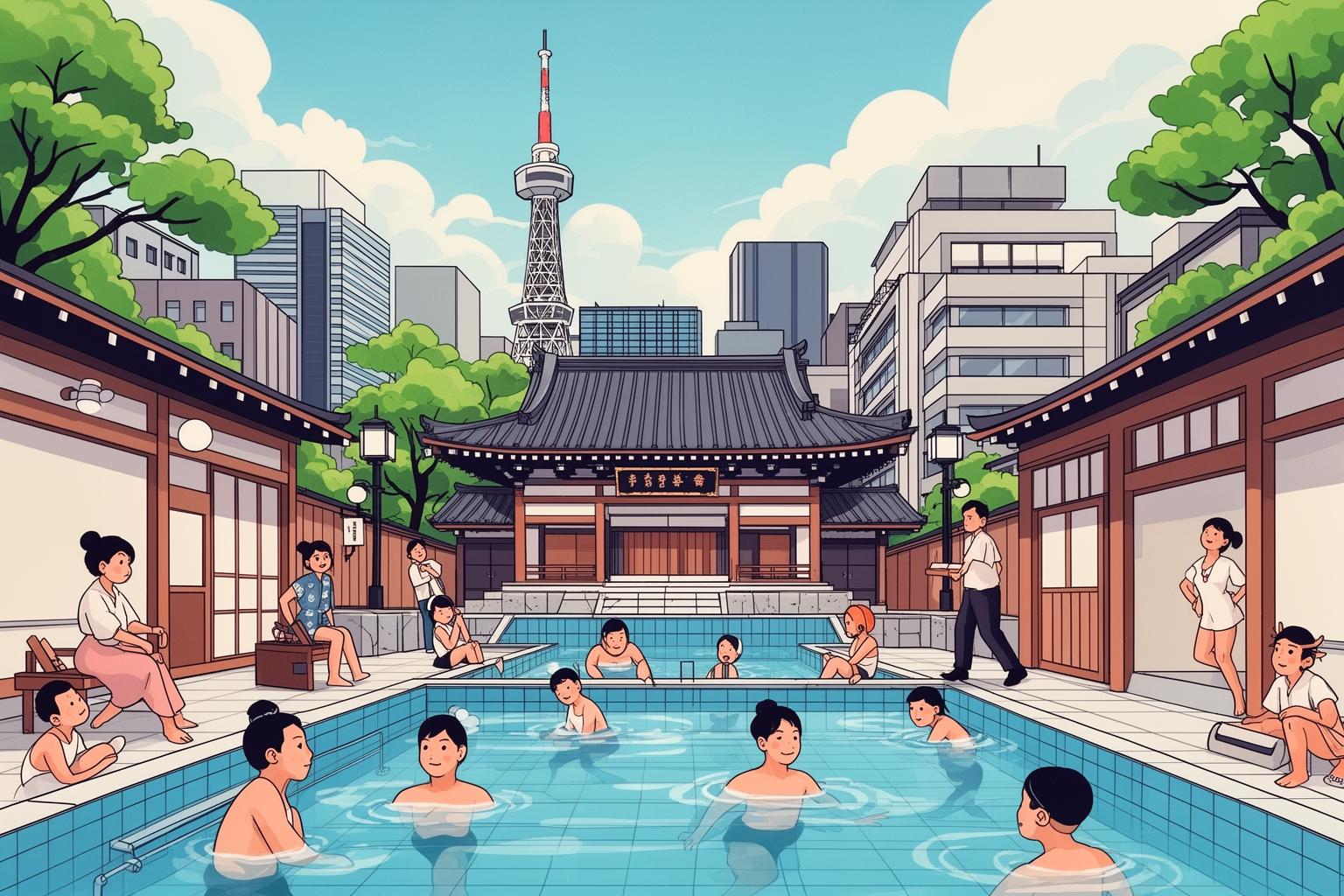
Sento are indeed disappearing throughout Japan as modern apartments with advanced bathrooms become standard. However, in Osaka, many are pushing back not by transforming into something else, but by enhancing their original identity. They aren’t shifting into minimalist, costly spas. Instead, they are focusing more on what makes them indispensable.
You’ll find “designer sento” that have hired artists to paint the iconic Mount Fuji mural on the walls. Others have invested in high-tech features, such as a carbonated spring bath (tansan-sen) that envelops your skin with tiny, tingling bubbles, or an upgraded sauna equipped with a TV. Some larger establishments, called “super sento,” blur the boundaries by adding restaurants, massage chairs, and relaxation lounges stocked with extensive manga collections. Still, even in these enhanced versions, the core price remains affordable and the atmosphere remains genuinely unpretentious. The emphasis is always on offering maximum relaxation at a reasonable cost. This innovation is guided by the Osakan principle of kosupa.
What the Sento Tells You About Osaka
So, why should a foreigner living in Osaka understand the sento? Because it serves as a living museum of the city’s core values. It’s not an artifact; it’s a reflection. It reveals a city that prioritizes community over isolation, practicality over luxury, and genuine well-being over aspirational marketing.
Life in a large city can often feel anonymous and exhausting. While gyms and spas provide escapes into individualism and contrived tranquility, the sento offers a different path: an entry into a warm, lively, and unpretentious community. It’s a place to feel connected, not only to a neighborhood but to a deeply human way of life. For 500 yen, you’re not simply buying a bath. You’re purchasing a moment of shared vulnerability, a reminder that beneath all the layers of language, culture, and social status, we’re all just people seeking warmth. And in Osaka, that simple act forms the foundation of wellness.