Stepping into Osaka is like stepping into a current. It’s a city that moves with a palpable rhythm, a pulsing energy that thrums up from the pavement and through the soles of your shoes. As someone who usually finds their rhythm on winding mountain trails, the urban topography of Osaka presents a different kind of expedition, but one no less compelling. The peaks here are not granite, but gleaming skyscrapers. The trails are not dirt paths, but sprawling, covered shotengai arcades teeming with life. And the force of nature that carved this landscape is not wind or water, but a relentless, centuries-old spirit known as Akindo. This isn’t just a word for a merchant; it’s the city’s DNA. It’s the philosophy of the deal, the art of the hustle, the warmth of the human connection, and the engine of a work ethic that is distinctly, unapologetically Osakan. To understand Osaka, you must first understand the Akindo, the merchant soul that built this city from a marshy delta into the commercial heart of a nation, and whose beat still drives the metropolis forward today. This is a journey into that spirit—a deep dive into the historical roots, modern expressions, and the enduring work culture shaped by the legendary merchants of Osaka.
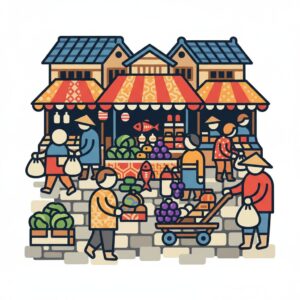
To truly feel the Akindo spirit in action, you can explore its modern-day marketplace heart in the bustling shotengai arcades.
The Heartbeat of Commerce: Understanding the Akindo Spirit
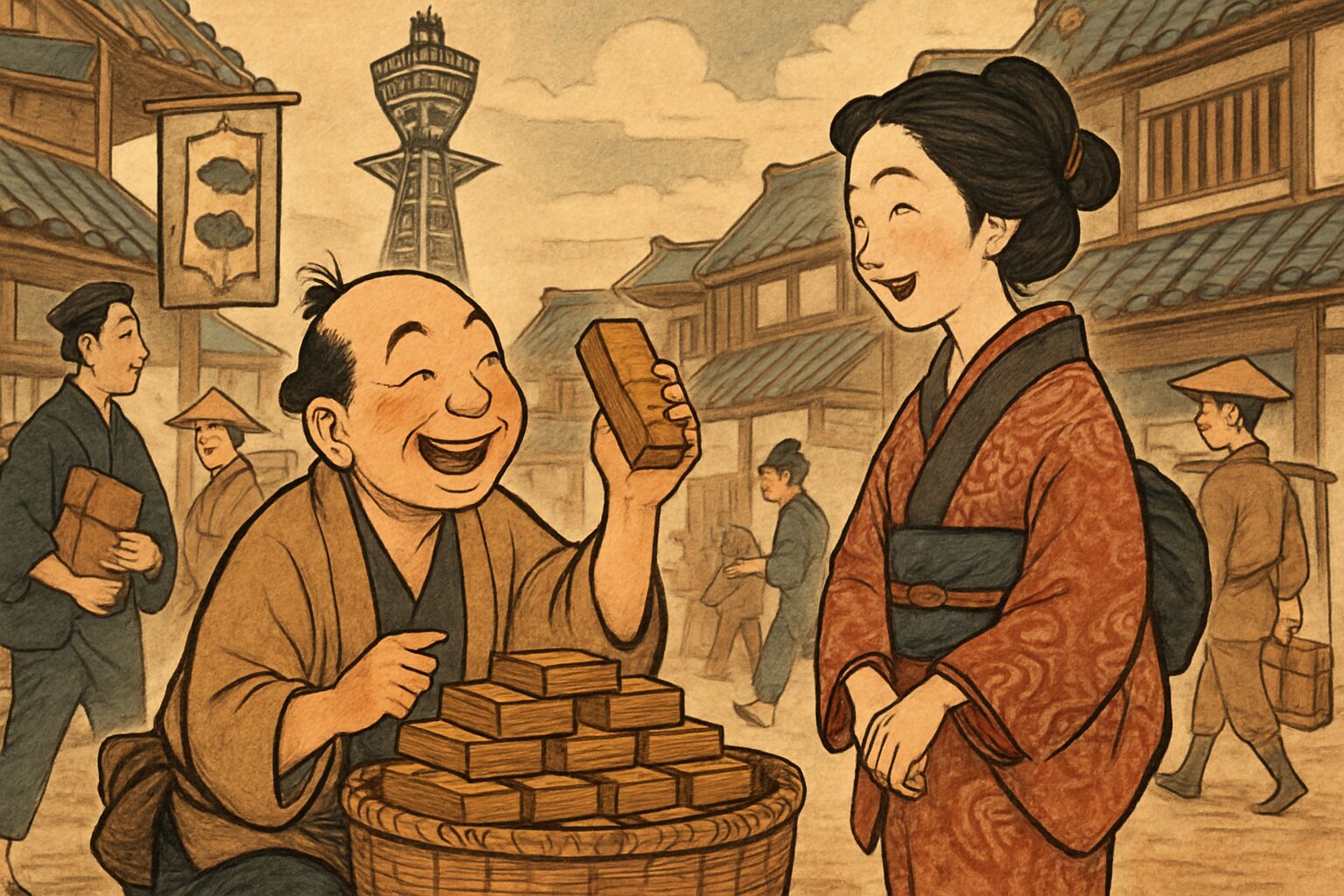
To truly understand Osaka, one must look beyond its neon-lit entertainment districts and famed cuisine. The city’s genuine character is shaped by commerce—the daily rhythm of buying and selling—which has become a deeply rooted cultural art form. This is the realm of the Akindo, a term that goes far beyond the simple English translation of “merchant.” It embodies a complex identity combining sharp business skills with a strong sense of community, practicality, and unexpectedly rich humor. Unlike the stoic samurai code that defined Japan’s feudal ruling class, the Akindo spirit emerged from the people, for the people. It embodies a philosophy of survival and prosperity where wit, reputation, and relationships were the only true currencies. This ethos forms the foundation of the modern city and its distinctive work ethic—a living heritage influencing every exchange, from street vendors selling takoyaki to multinational firms sealing billion-yen deals.
More Than Just a Merchant: Defining the ‘Akindo’
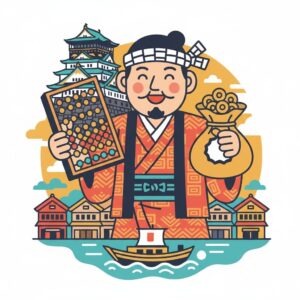
The term Akindo (商人) consists of two kanji: aki (商), meaning trade or commerce, and do (人), meaning person. Yet this simple structure masks profound cultural meaning. An Akindo was more than a shopkeeper; they were a community pillar, an expert in logistics, a skilled negotiator, and often a patron of the arts. Their philosophy rested on core values emphasizing practicality and mutual benefit. The ultimate aim was shobai hanjo (商売繁盛)—a thriving business—but this was achievable only through trust and long-standing relationships. A well-known Osakan saying, Akinai wa kadokado (商いは角々), roughly translates to “business happens on every corner with a smile.” It reflects a belief that commerce should be open, friendly, and an essential part of everyday life—not a cold, impersonal exchange. This sharply contrasted with the rigid, hierarchical samurai society, where commerce was often looked down upon. For the Akindo, business was life itself—a dynamic, demanding, and ultimately fulfilling pursuit that propelled the city’s growth and vitality. This spirit nurtured resilience, viewing setbacks as lessons and success as something to be shared, ensuring prosperity for the whole community rather than just the individual.
Echoes from the Edo Period: The Birth of a Commercial Giant
The roots of the Akindo spirit lie deep in the Edo Period (1603-1868), when Japan was unified under the Tokugawa shogunate. Though Edo (modern Tokyo) was the political capital, Osaka swiftly became the undisputed commercial heart. Its prime location, with access to the sea and an extensive network of rivers and canals, made it an ideal logistics hub. Feudal lords nationwide were obliged to send their surplus rice and goods to Osaka for storage and sale. This led to the establishment of vast warehouses, or kurayashiki, along the waterways, managed by shrewd local merchants. This system earned Osaka the nickname Tenka no Daidokoro (天下の台所), meaning “The Nation’s Kitchen,” as it controlled the distribution of Japan’s most crucial commodity. In this setting, the Akindo flourished. They did more than simply store and sell goods—they developed advanced financial instruments to manage them. The famed Dojima Rice Exchange, founded in the late 17th century, is widely regarded as the world’s first organized futures market. Here, merchants traded not in physical sacks of rice, but contracts promising future delivery, standardizing agreements and introducing financial abstraction centuries ahead of its time. This innovation brought immense wealth back into the city, fostering a lively townspeople culture known as chonin bunka. The prosperous Akindo became significant patrons of the arts, supporting Bunraku puppet theater and Ukiyo-e woodblock printing, cultivating a cultural scene as rich and vibrant as the economy that sustained it.
The Modern Manifestation: Where to See the Akindo Spirit Today
The historical foundations established during the Edo period are not mere museum artifacts; they form the vibrant, living framework of modern Osaka. The Akindo spirit, emphasizing directness, value, and community, can be seen everywhere—from modest neighborhood markets to the boardrooms of global corporations. To truly grasp Osaka’s work ethic, one must explore these contemporary spaces where the timeless principles of the merchant class remain active. It’s an urban safari, offering a chance to observe the direct descendants of the Dojima rice brokers in their natural environments, whether expertly slicing tuna, passionately sharing the merits of a particular kitchen knife, or leading multinational conglomerates with the same practical, straightforward approach that has characterized Osaka’s business ethos for generations.
The Endless Corridors of Commerce: Exploring Osaka’s Shotengai
No better place exists to experience the Akindo spirit in its purest form than inside a shotengai, a covered shopping arcade. These bustling lanes are the lifeblood of the city’s neighborhoods, vibrant hubs of commerce and community. Walking through one immerses all the senses—you hear vendors rhythmically calling out, neighbors catching up with cheerful chatter, and the sizzle of fresh food being prepared. You smell the sweet aroma of baked goods mingled with grilled fish and the earthy freshness of produce. Among the most iconic is the Tenjinbashisuji Shotengai, which at 2.6 kilometers proudly stands as Japan’s longest. It’s a microcosm of Osaka life, offering everything from traditional kimono shops and family-run tofu makers to modern cafés and discount clothing stores. The interactions here are crucial—the obachan at the vegetable stand might offer you a seasonal fruit or toss an extra onion into your bag with a smile. The butcher remembers exactly how you like your meat cut. This is not anonymous, transactional shopping; it’s commerce rooted in relationships. Another must-visit spot is the Kuromon Ichiba Market, the modern incarnation of the “Nation’s Kitchen.” Focused on food, the quality here is exceptional. Top chefs source their ingredients here, yet it’s also welcoming to curious tourists and local home cooks alike. The vendors are masters of their craft, their passion contagious. They embody the quintessential Akindo spirit—proud of their products and eager to share their knowledge, reflecting the principle that successful business is built on quality, trust, and genuine human connection.
From Micro-Businesses to Global Giants: The Corporate Akindo
The Akindo spirit extends far beyond small retail shops. It has scaled impressively, forming the philosophical foundation for some of Japan’s most successful and innovative global corporations. Companies like Panasonic, Suntory, Itochu, and Keyence all emerged from Osaka’s unique commercial culture. Their corporate ethos often mirrors the Akindo core values: pragmatism, speed, customer focus, and a healthy skepticism toward unnecessary formality. Perhaps the most famous example is Panasonic’s founder, Konosuke Matsushita, a pure embodiment of Akindo. His business philosophy was deeply humanistic; he famously asserted that a business’s purpose was to serve society by producing high-quality goods at reasonable prices, as abundantly accessible as tap water—his well-known “water-tap philosophy.” He advocated a management style empowering employees and placing customers at the center of everything. This ethos remains evident in the direct, results-driven approach of many Osaka-based companies. Business meetings here tend to focus less on ceremony and more on getting straight to the point. The popular Osakan greeting Mokkari-makka? (Are you making a profit?), often jokingly said, reveals a fundamental emphasis on profitability and concrete results. This corporate Akindo spirit fosters relentless innovation and practical problem-solving, a direct legacy of merchants thriving in the competitive forge of Tenka no Daidokoro.
Semba and the Wholesale Heart
To experience a different, more intense aspect of the Akindo spirit, one must venture into the Semba district. Historically Osaka’s wholesale center for textiles and dry goods, Semba remains a vital hub for B2B commerce. The district’s standout feature is the Semba Center Building, a colossal, elevated complex stretching for a kilometer like a concrete spine beneath an expressway. Within its maze-like corridors are hundreds of tightly packed shops offering everything from fabrics and formal wear to industrial supplies and imported goods, mostly at wholesale prices. This is no place for casual browsing; it is where serious business unfolds. The atmosphere buzzes with focused, professional energy. Here, the Akindo spirit is expressed through deep expertise and the art of long-term business relationships. Shop owners are masters in their niches, possessing encyclopedic product knowledge. Negotiations are quick and direct, founded on years or even generations of trust. Exploring Semba offers a glimpse into the engine room of Osaka’s economy, where principles of volume, value, and reliability reign supreme. It stands as a testament to the enduring strength of specialized knowledge and the robust networks that have underpinned Osaka’s commercial success for centuries.
The Akindo Ethic: A Guide to the Osakan Work Style
Navigating the professional environment in Osaka offers a distinctive experience, particularly for those familiar with the more reserved and hierarchical business culture commonly found in Tokyo. The Osakan work ethic directly reflects its Akindo roots: it is pragmatic, efficient, approachable, and refreshingly straightforward. Grasping this ethic is essential to truly understanding the city. Here, results often outweigh titles, a lighthearted joke can close a deal, and efficiency is highly valued. This mindset is embedded in the local dialect, communication style, and core values that shape daily work, creating a professional atmosphere as dynamic and resilient as the merchants who originally forged it.
“Mokkari-makka?” – The Language of Osakan Business
Language offers a glimpse into culture, and the Osaka-ben dialect is filled with expressions that highlight the Akindo spirit. The greeting Mokkari-makka? (儲かりまっか? – Are you profiting?) and its typical reply, Bochi bochi denna (ぼちぼちでんな – So-so, can’t complain), perfectly capture the local mindset. It is a frank, almost humorously candid acknowledgment of business’s core purpose, while the playful tone transforms it into a social bonding ritual. This directness characterizes Osakan communication. In business settings, people generally get straight to the point, steering clear of lengthy introductions and subtle, indirect language typical in other parts of Japan. This is not rudeness; rather, it reflects a profound respect for efficiency. Time is money, and the Akindo philosophy insists on avoiding waste of either. For newcomers, this style may initially seem abrupt, but it stems from a desire for clarity and honesty. In Osaka, you usually know where you stand, fostering trust and enabling swifter decision-making.
Rationality, Frugality, and Closing Deals
Another pillar of the Akindo ethic is the concept of shimatsu (始末), a term that’s challenging to translate precisely but encompasses ideas of frugality, resourcefulness, and careful management. It focuses on minimizing waste—in time, money, materials, and effort. An Akindo is expected to master shimatsu, extracting maximum value from every resource. This leads to a rational and practical approach to work. Processes are judged by their effectiveness rather than tradition. Unnecessary bureaucracy is met with skepticism. The emphasis remains on the ultimate goal: a successful result, a satisfied customer, a profitable enterprise. This encourages a flexible and adaptable working style, where employees are empowered to find the most efficient solutions rather than rigidly following established procedures. It’s a culture grounded in common sense, where the question “Does this make sense for the business?” matters more than “Is this how it has always been done?” This unwavering pragmatism drives the Osakan economy, promoting continuous improvement and practical innovation.
The Role of Humor and Humanity
One of the most distinctive and charming aspects of the Osakan work ethic is the central role of humor. Osaka is Japan’s comedy hub, known as the birthplace of manzai stand-up comedy. This affinity for laughter doesn’t stay outside the office—it’s a vital tool in the Akindo’s arsenal. Humor breaks the ice, builds rapport, and eases tension during tough negotiations. A well-timed joke can forge a human connection more powerful than any slide deck. It conveys that while business is serious, the individuals involved need not be solemn. This challenges the stereotype of the stoic Japanese salaryman. The Osakan Akindo prioritizes building relationships. They recognize that people do business with those they like and trust, and laughter is the fastest route to both. Integrating humor and humanity into commerce creates a work environment that is often more relaxed, more creative, and ultimately more resilient. This enduring principle—that every transaction rests on a human interaction—has guided Osaka’s merchants for centuries.
An Urban Hike Through Merchant History: A Practical Guide for Explorers
To truly grasp the story of the Akindo, you need to walk the streets they once walked. Consider it an urban trek, a journey through the canyons of commerce, tracing the flow of history and wealth that shaped this city. While my usual hikes involve scaling mountains for panoramic views, in Osaka, that wide perspective is found by immersing yourself in the dense, vibrant fabric of its commercial districts. Each neighborhood acts as a different stage of the climb, revealing a new layer of the city’s merchant spirit. So, lace up your most comfortable shoes and let’s begin at the trailhead of Osaka’s commercial history.
Trailhead: Nakanoshima and Kitahama
Our journey begins on Nakanoshima, a narrow island nestled between the Dojima and Tosabori rivers. This was the center of the kurayashiki system, the island of warehouses where the nation’s wealth was stored. Today, those warehouses have vanished, replaced by an impressive collection of architectural gems that reflect the immense prosperity the Akindo created. Start your walk here in the early morning, when the light illuminates the grand facades of Osaka Central Public Hall, a magnificent neo-renaissance masterpiece, and the stately Bank of Japan Osaka Branch—where money was once counted and managed. From Nakanoshima, cross a bridge into Kitahama, Osaka’s financial heart, home to the Osaka Exchange, the direct descendant of the Dojima Rice Exchange. The atmosphere here exudes quiet, established power. The retro buildings housing securities firms and cafes give off an air of old money, feeling like the foundational base camp of our hike—the place where the capital and institutions that fueled the city’s commercial ascent were first built. Grab a coffee at one of the riverside cafes and soak in the sense of history before continuing upward.
The Main Ascent: From Shinsaibashi to Namba
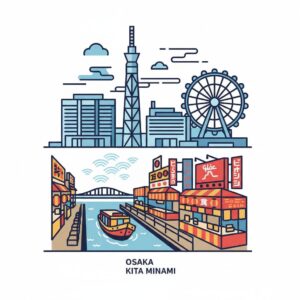
Leaving the institutional calm of Kitahama, we move into the vibrant, chaotic, and utterly thrilling core of modern Osakan commerce. This is the main ascent. Head to Shinsaibashi-suji Shopping Arcade, an apparently endless covered street flowing with people. This is the Akindo spirit most visible to the consumer. For over 600 meters, you’ll be surrounded by a dazzling mix of shops—from high-end department stores like Daimaru to centuries-old kimono merchants, trendy boutiques, and drugstores offering an overwhelming variety of goods. Let the crowd’s current carry you south. The energy is contagious. Emerging from the arcade, you’ll find yourself on the iconic Ebisu Bridge overlooking the Dotonbori Canal. This is the summit of sensory overload. You’ll be confronted by a riot of sound and light, dominated by gigantic, animated signboards: the famous Glico Running Man, the enormous mechanical Kani Doraku crab, the pufferfish lantern of Zuboraya. This entertainment district—the premier one in Japan—was built by and for the merchant class. It was their playground, a place to spend their hard-earned wealth on theater, food, and drink. Yet amidst this dazzling modernity, pockets of the past remain. Just steps from the neon glare, seek out Hozenji Yokocho, a narrow, stone-paved alleyway with traditional lanterns and a moss-covered statue at the tranquil Hozenji Temple. It feels like a secret passage back in time, a powerful reminder of the historical layers beneath this bustling city.
The Culinary Summit: Kuromon Ichiba and Doguyasuji
No exploration of the “Nation’s Kitchen” is complete without reaching its culinary peak. From Dotonbori, a short walk brings you to Kuromon Ichiba Market. If Nakanoshima was about storing the nation’s wealth, Kuromon is about enjoying its bounty. This market showcases the Akindo spirit through a deep commitment to quality. It’s a vibrant tapestry of sights and smells. Vendors expertly grill fresh scallops in butter and soy sauce, sear marbled Kobe beef on skewers, and display glistening cuts of tuna like jewels. This is a place of passion. Engage with shopkeepers. Ask about their products. The fishmonger will tell you the best way to enjoy his sea urchin; the pickle vendor will offer samples of a dozen varieties. Here you can taste the pride of the Akindo. Just a stone’s throw from Kuromon lies Doguyasuji, or “Kitchenware Street.” This fascinating arcade is dedicated to culinary tools. Chefs and restaurateurs come here to outfit their kitchens. You’ll find everything from handcrafted, professional-grade knives that are true works of art to the incredibly life-like plastic food samples (sampuru) used in restaurant displays. Doguyasuji showcases the specialization and dedication of the merchant culture—an entire ecosystem built to support the city’s food industry. It’s the perfect place to end our urban hike, a tribute to the practical, specialized, and deeply interconnected world of the Osaka Akindo.
A Note for the Urban Hiker: Navigating the Crowds
For first-time visitors, the crowds in places like Shinsaibashi and Dotonbori can be overwhelming. The best advice is to go with the flow. Try visiting on a weekday morning when there are fewer people. When enjoying street food at Kuromon, it’s polite to stand aside near the stall where you bought it rather than walking and eating. Most importantly, be curious. Osaka’s merchants are famously friendly and outgoing. Unlike other parts of Japan, where you might hesitate to interrupt a busy shopkeeper, here it’s often welcomed. A simple question can spark a fascinating conversation and deepen your appreciation for their craft. This is the true Akindo spirit—always ready to engage, share, and connect.
The Enduring Legacy and the Future of the Akindo
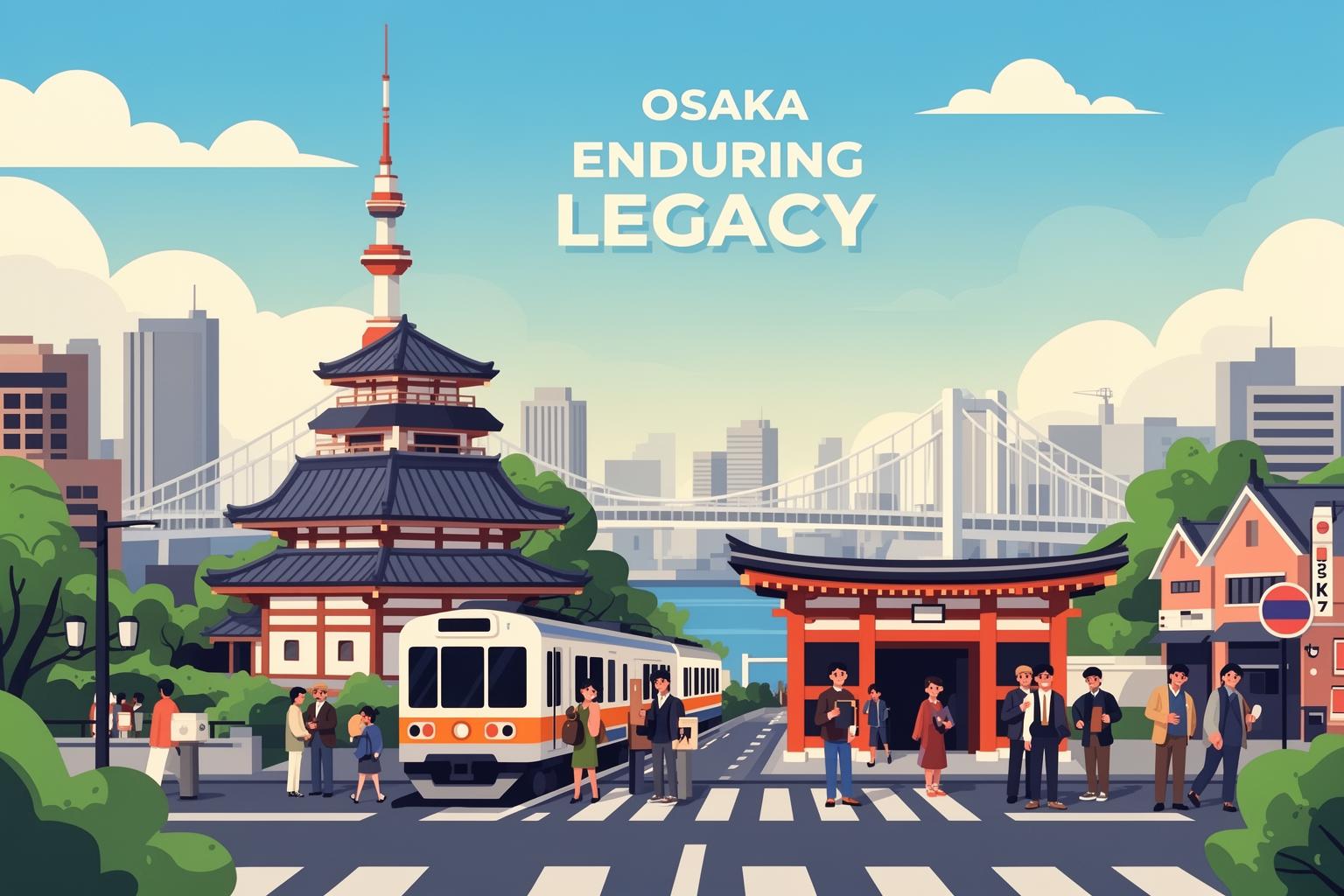
In an era of globalized e-commerce and evolving economic landscapes, one might question the relevance of a merchant philosophy that dates back centuries. Yet, the Akindo spirit has shown remarkable resilience, adapting and evolving while remaining true to its core principles. The challenges of the 21st century are considerable—the rise of online giants threatening traditional retail, a declining population, and the erosion of some local communities. However, the same pragmatism, ingenuity, and emphasis on human connection that helped Edo-period merchants flourish now empower their modern counterparts to navigate this new environment. The legacy of the Akindo is not a static relic of the past; it is a dynamic, forward-looking force continuously shaping Osaka’s future.
Challenges in the 21st Century
The biggest challenge is faced by traditional brick-and-mortar businesses, particularly the cherished shotengai. Online shopping’s convenience has altered consumer habits, causing some smaller, family-owned shops to struggle against the logistical power of companies like Amazon and Rakuten. Certain arcades have experienced drops in foot traffic, with shuttered storefronts becoming increasingly common. Additionally, Japan’s economic center has long tilted towards Tokyo, pulling talent and investment away from other regions. Yet, the Akindo spirit is one of endurance. In response, many merchants and communities are fighting back with innovation. They capitalize on the unique advantage they hold: a personal touch. They organize local events, enhance the shopping experience, and use social media to build direct relationships with customers, transforming their stores into community hubs rather than mere retail points. They emphasize what makes them unique: expertise, personal service, and a strong connection to their neighborhood.
The New Generation of Merchants
Perhaps the most inspiring evolution of the Akindo spirit is evident in the city’s growing community of young entrepreneurs. In neighborhoods like Nakazakicho, with its quirky vintage shops and artisanal cafés nestled in old wooden houses, or Horie, known for its trendy design stores and independent fashion labels, a new generation is redefining what it means to be an Osakan merchant. These modern Akindo might sell specialty coffee instead of rice, or handcrafted leather goods instead of textiles, but they embody the same core values. They are fiercely independent, deeply passionate about their product quality, and dedicated to building a community around their brand. They utilize modern tools like Instagram to share their stories, but their goal remains unchanged: to create something valuable and cultivate a loyal following through trust and authenticity. They are agile, creative, and collaborative, often joining forces to promote their neighborhoods and craft unique customer experiences. This blend of tradition and innovation ensures that Osaka’s entrepreneurial spirit continues to burn brightly.
Why the Akindo Spirit Will Never Fade
The Akindo spirit is more than a business philosophy; it is at the heart of Osaka’s identity. It is woven into the city’s social fabric, language, humor, and outlook on life. A belief in pragmatism over empty formality, in human connection over cold transactions, and in resilient optimism amid hardship—these are timeless qualities. As long as Osaka remains a city that values a good laugh, a fair deal, and a warm conversation, the Akindo spirit will persist. It is a mindset that sees opportunity in every challenge and understands that a city’s true wealth lies not in its buildings or infrastructure, but in the energy, creativity, and determination of its people. This enduring legacy of the merchants who built the Nation’s Kitchen continues to drive one of Japan’s most dynamic and fascinating cities.
To wander through Osaka is to feel this spirit at every turn. It’s in the hearty greeting from a shopkeeper in the Tenjinbashisuji arcade, the meticulous care of a chef in Kuromon Market, and the straightforward, friendly demeanor of the people you encounter. The city’s pulse is the rhythm of commerce—but commerce that remains profoundly human. It’s a reminder that business, at its best, is about connection, community, and the shared pursuit of prosperity. So, when you visit, don’t just admire the sights; immerse yourself in the flow. Start a conversation, ask a question, share a laugh. Get a little lost in the endless corridors of a shotengai. By doing so, you won’t just be a tourist; you’ll be partaking in a centuries-old cultural tradition, experiencing the unmistakable, vibrant, and welcoming beat of the Akindo heart.