Step off the clean, orderly platform at Shinsaibashi Station, navigate a river of designer shopping bags, and take a sharp turn into a different dimension. The air changes here. It crackles with the low thrum of bass from a hidden bar, the clatter of skateboard wheels on concrete, and the electric hum of a thousand different stories unfolding at once. Welcome to Amerikamura, or ‘Amemura’ as the locals breathe it. This is the vibrant, chaotic, and unapologetically creative heart of Osaka’s youth culture, a concrete canvas where fashion, music, and art collide in a glorious, ever-changing mural. For decades, this neighborhood has been a beacon for anyone looking to break the mold, a place where self-expression is the only currency that matters. And right in the middle of this swirling vortex of cool, a humble street food classic has undergone a radical transformation. We’re talking about takoyaki, those deceptively simple, molten-hot balls of octopus-filled batter that are the very soul of Osaka. But in Amemura, takoyaki isn’t just food. It’s a statement. It’s an edible art form, a culinary rebellion served up in a paper boat. Here, the traditional recipe is merely a starting point, a familiar beat over which a new generation of culinary artists lays down explosive, unexpected, and utterly unforgettable tracks. This is the story of how Osaka’s favorite snack learned to speak the language of the streets, evolving into a wild symphony of flavors that perfectly captures the spirit of Amerikamura.
To continue exploring Osaka’s vibrant food and nightlife scene, discover the electrifying energy of Dotonbori’s neon-lit streets and midnight feasts.
The Soul of Osaka on a Griddle: A Takoyaki Primer
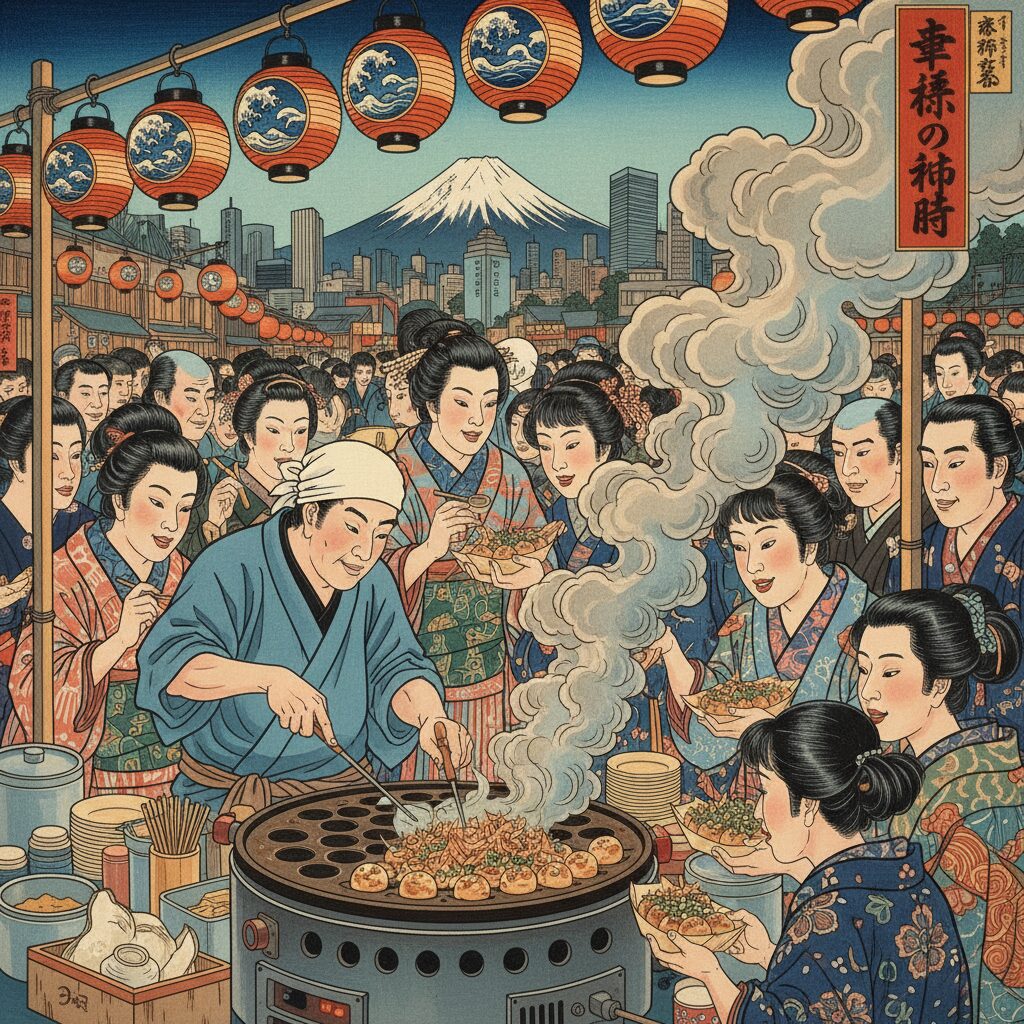
Before we plunge into the vibrant chaos of Amemura’s takoyaki scene, let’s take a moment to honor the original. To grasp the revolution, you must first appreciate the tradition it emerged from. At its heart, takoyaki is a masterpiece of Japanese street food simplicity. The name itself holds a hint: ‘tako’ means octopus, and ‘yaki’ means grilled or fried. The base is a savory batter, a delicate blend of wheat flour enriched with dashi, a kelp and bonito-based stock that imparts a subtle, oceanic umami flavor. This liquid gold is poured into a special cast-iron griddle, a heavy plate dotted with perfect hemispherical molds.
As the batter starts to set, the magic unfolds. A skilled vendor, armed with little more than a pair of long, sharp picks, moves with the mesmerizing grace of a seasoned performer. Into each half-cooked mold goes a precious trio of fillings: a tender piece of boiled octopus, a sprinkle of tenkasu (crispy bits of deep-fried tempura batter), and a dash of beni shōga (pickled red ginger) for a sharp, palate-cleansing zing. Then comes the flick of the wrist. With incredible speed and precision, the vendor flips and turns the forming spheres using the picks, tucking in the edges and coaxing them into their signature ball shape. The air fills with the tantalizing sizzle and the warm, comforting aroma of cooking batter and savory dashi. It’s a dance, a rhythm perfected on the street corners of Osaka for nearly a century, since a vendor named Tomekichi Endo first had the brilliant idea in 1935.
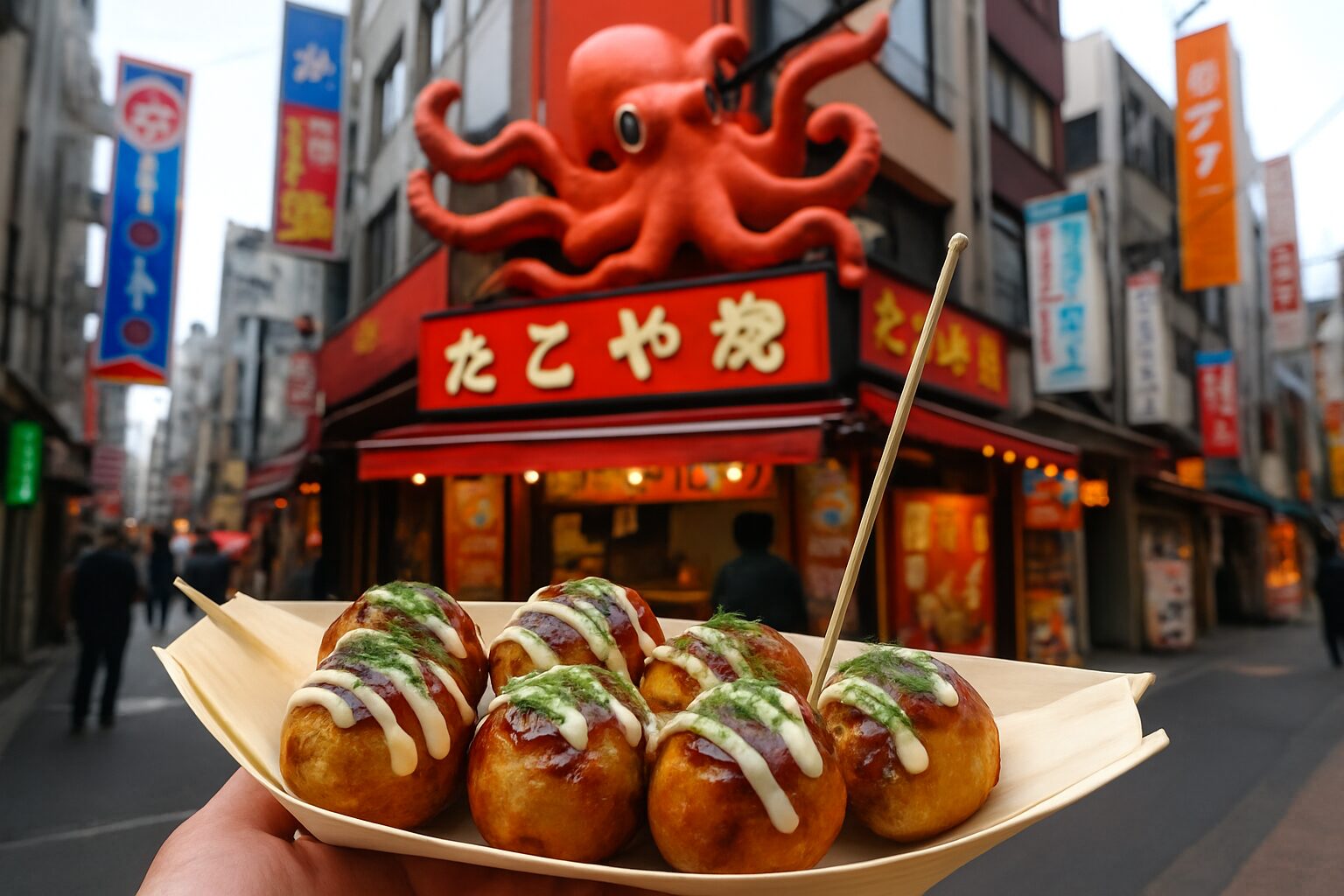
The final product is a beautiful study in contrasts. The exterior is a delicate, golden-brown shell, crisp and fragile. But break through that crust, and you encounter a molten, almost custard-like interior, a rush of savory batter and hidden treasures. This lava-hot core is exactly why eating takoyaki is a skill—a rookie mistake is popping a whole one in your mouth, a decision you’ll regret instantly. The classic presentation, the style found at countless stalls across the city, is a work of art. The piping hot balls rest in a paper boat, generously drizzled with sweet and tangy brown takoyaki sauce, crisscrossed with creamy Japanese mayonnaise, dusted with vibrant green aonori (powdered seaweed), and crowned with a fluttering, dancing cloud of katsuobushi (dried, smoked bonito flakes). As heat rises from the takoyaki, the paper-thin bonito flakes writhe and wave as if alive, a final theatrical flourish before the first, magnificent bite. This is the takoyaki of Osaka’s collective memory—the taste of festivals, after-school snacks, and comforting nights out. It is the solid, delicious foundation upon which Amerikamura built its empire of flavor.
Welcome to the Concrete Jungle: The Vibe of Amerikamura
Amerikamura feels unlike anywhere else in Japan. It’s a small universe unto itself, a neighborhood that chose to create its own rules. The name itself reveals its roots. In the 1970s, this area was a quiet grid of warehouses and vacant lots. Then, visionary entrepreneurs began transforming these spaces into shops offering imported goods from the United States—vintage denim, Hawaiian shirts, records, and other unique items that captivated the local youth. A culture emerged. Amemura became the hub for those seeking a different rhythm, a place to see and be seen, a stage for showcasing subcultures ranging from rockabilly and punk to hip-hop and goth.
Strolling its streets today is an immersive experience. The buildings themselves add to the spectacle, their plain concrete facades turned into a vast art gallery of graffiti and elaborate murals. A large clown-like sculpture, the iconic Peace on Earth statue by local artist Seitaro Kuroda, overlooks the scene from a building wall. Peek down any alley, and you might discover a new piece of street art that wasn’t there last week. The neighborhood’s soundtrack is a lively mix—J-pop blasting from one shop, heavy metal from another, the melodic buzz of hundreds of conversations, and always, the steady roll and clap of skateboards echoing across the pavement of Sankaku Koen, or Triangle Park. This small, triangular plaza is the undisputed heart of Amemura. It’s not a conventional park with grass and trees, but a concrete amphitheater where the daily drama of youth culture unfolds. Here, fashion takes center stage. You’ll find teenagers in carefully curated vintage outfits, aspiring models in avant-garde creations, and skaters in brand-name streetwear, all coexisting and inspiring each other. There’s an energy here that’s both impressively cool and warmly welcoming. It’s a place that thrives on change, on the newest trends, on the bold and the eccentric. This relentless drive for individuality and reinvention naturally extends beyond fashion and music into the one thing that truly connects all Osakans: food. In Amerikamura, a simple food stall isn’t just a spot to grab a snack; it’s a platform, a creative outlet, an opportunity to make a delicious, edible statement that’s as loud and proud as the graffiti on the walls.
The Takoyaki Transformation: From Classic to Cutting-Edge
In the competitive, trend-driven environment of Amerikamura, even a cherished classic like takoyaki must evolve or risk being overshadowed. The vendors here recognized that, to capture the interest of a generation raised on visual culture and global tastes, mastering the perfect flip alone wasn’t enough. They needed to innovate, experiment, and occasionally break all the rules. This approach has sparked a captivating divergence within the takoyaki scene, crafting a culinary landscape that respects tradition while propelling it forward.
The Original Spot with a Twist: Kogaryu (甲賀流)
Before appreciating the bold innovations, one must pay homage to the pioneer. Located in the heart of Amemura, overlooking Triangle Park, is Kogaryu. For many, it’s not merely a takoyaki stall but an institution and a pilgrimage destination. Since opening in 1974, Kogaryu has become synonymous with Amemura takoyaki, earning a longstanding place in the Michelin Guide’s Bib Gourmand category. The constant line winding from its counter speaks to its legendary reputation.
Kogaryu stands out for its texture. While many takoyaki strive for a crispy outer shell, Kogaryu favors a softer, more delicate approach. Its batter, infused with a seven-ingredient dashi and a touch of mountain yam, creates a sphere that is incredibly tender and practically melts in your mouth. The interior is famously creamy and トロトロ (toro toro), a Japanese term describing a soft, gooey consistency. However, Kogaryu’s most notable contribution to the Amemura scene may be its toppings. They were among the first to popularize the combination of sauce and mayonnaise in a web-like pattern, which has since become an industry standard. They also offer inventive variations like the ‘negi-pon,’ swapping the traditional brown sauce for a refreshing ponzu (citrus-soy) and piles of fresh green onions. Perhaps their most iconic creation is the ‘tako-sen,’ a simple yet brilliant snack where their signature takoyaki is sandwiched between two large, crisp shrimp crackers (ebi-senbei). This combination offers a perfect textural contrast—the soft, warm takoyaki against the crunchy, salty senbei. Eating a Kogaryu tako-sen on the steps of Triangle Park, watching the world go by, is a quintessential Amemura experience—an initial step in the evolution of this classic, subtly adapted to its surroundings.
The Culinary Canvas: Experimental Toppings Galore
The foundation laid by pioneers like Kogaryu gave the next generation of takoyaki creators the freedom to get truly imaginative. The new wave of stalls in Amemura treats the humble takoyaki ball as a blank canvas—a starchy, savory sphere ready to be adorned with a global mix of flavors. These are not your grandfather’s octopus balls.
Picture a stall named “Tako-Fusion,” hidden on a narrow side street, pulsing with old-school hip-hop. The stall bursts with color, decorated with neon signs and graffiti. The owner, a young man wearing a backward cap and a friendly smile, works his griddle with effortless rhythm. The menu reads like a culinary world tour. First is the “El Mexicano,” a bold twist replacing traditional sauce with vibrant chunky salsa, a swirl of sour cream, fresh guacamole, and a fiery dusting of chopped jalapeños. The savory dashi batter surprisingly complements the zesty, spicy Mexican flavors perfectly. Next is the “Italiano Primo,” a pizza-inspired delight smothered in rich marinara, layered with melted mozzarella and provolone, and finished with fresh basil chiffonade. It’s a gooey, cheesy, delightfully heretical treat. For those craving Asian fusion, the “Seoul Scorcher” drenches takoyaki in a sweet-spicy gochujang sauce, topped with funky fermented kimchi and a generous layer of melted cheese. Each option delivers a culture shock in the best way, reflecting Amemura’s role as a cultural melting pot where global influences are welcomed, remixed, and transformed into something uniquely Osakan.
Just a few blocks away, another stall fully embraces the Instagram era’s visual demands. Let’s call it “Cheese Vortex Takoyaki.” This spot is all about one glorious ingredient: cheese. Its business model revolves around crafting outrageously cheesy, visually stunning takoyaki creations. The air is thick with the aroma of toasted dairy. Their signature dish, “The Volcano,” presents takoyaki in a cast-iron skillet surrounded by a moat of cheddar, mozzarella, and fontina cheeses, which is then melted with a blowtorch before your eyes. The result is a bubbling, golden cheese crater, perfect for dipping, dunking, and pulling apart. Social media fans flock to the “Raclette Avalanche,” where a huge wheel of Swiss raclette is heated until molten and scraped over freshly made takoyaki. The visual spectacle rivals the taste experience. Another crowd favorite is the “Carbonara Dream,” featuring takoyaki bathed in creamy, peppery carbonara sauce, loaded with crispy pancetta, and dusted with parmesan. This stall understands its audience perfectly; it’s about flavor but also about crafting shareable moments—a delicious performance piece guaranteed to rack up likes and views. It’s proof of how youth culture’s digital life directly shapes street food’s evolution.
Beyond the Toppings: Reinventing the Core
The most avant-garde chefs in Amemura push the boundaries even further, not satisfied with merely altering toppings. They are deconstructing and reinventing takoyaki’s very essence, challenging what the dish can be.
One such minimalist stall offers the striking “Black Pearl Takoyaki,” where the batter is infused with edible bamboo charcoal and squid ink. The resulting spheres are dramatic jet-black, contrasting vividly with toppings like spicy red chili mayo or bright yellow yuzu-kosho aioli. The flavor is subtly distinct, with a deeper, brinier umami from the squid ink, matching the dish’s bold appearance.
Another innovator reimagines the fillings. Knowing that not everyone loves octopus or craves novelty, a stall like “The Rebel Core” offers alternative centers: plump shrimp (‘ebi-yaki’), creamy camembert cheese that melts inside (‘chee-yaki’), or spicy chorizo sausage (‘pari-yaki,’ inspired by its Parisian nickname). This approach broadens the palate and transforms takoyaki from a single-flavor snack into a versatile platform for diverse ingredients. The most forward-thinking vendors are also embracing dietary trends. Vegan Takoyaki is no rarity here, using shiitake and kelp-based dashi, plant-based binders replacing egg, and konjac (a firm yam cake) substituting for octopus to replicate its chewy texture. This inclusivity speaks to the younger generation’s mindset while smartly expanding the market, ensuring this beloved street food is accessible to all. These radical reinterpretations prove that in Amemura, no tradition is so sacred it can’t be lovingly and deliciously reinvented.
The Social Sphere: How to Eat Takoyaki in Amemura
In Amerikamura, takoyaki is seldom enjoyed alone. It acts as a social catalyst, fueling an afternoon of people-watching and absorbing the vibrant atmosphere. The ritual of eating holds as much significance as the dish itself and almost always ends at Sankaku Koen, known as Triangle Park. This concrete plaza serves as the neighborhood’s communal living room. After picking up a boat of piping hot takoyaki from your preferred vendor, the next step is to find a spot on the broad concrete steps or ledges surrounding the park.
Here, you become part of the scene. You’ll observe skaters attempting tricks, aspiring dancers rehearsing their moves, friends catching up, and a constant stream of intriguing street fashion. The park is a shared dining space where patrons from multiple takoyaki stalls converge. You might spot someone beside you enjoying a classic Kogaryu, while another group dares each other to try the spiciest offering from a fiery chili-head stall. It’s a communal and democratic experience. The air buzzes with joyful conversations and the universal pleasure of savoring good food.
For first-time visitors, a few practical tips can help navigate this tasty tradition. Most stalls accept cash only, so come prepared. Ordering is typically straightforward; a mix of pointing and holding up fingers for quantity usually suffices. The most important advice, however, concerns the temperature. Takoyaki is famously, notoriously, and scorchingly hot inside. The crispy outer shell perfectly insulates the molten batter within. Experienced eaters know not to pop a whole piece in their mouth at once. The right method is to use your toothpick to pierce the sphere, letting steam escape and the filling cool slightly. Then, you can enjoy it without burning your taste buds. Lastly, be respectful of waste disposal. Japan is known for its cleanliness, and Amerikamura is no exception. Designated trash and recycling bins are near the park; hold onto your empty paper boat until you find the proper place to toss it. Observing these simple customs lets you enjoy takoyaki like a local, fully immersing yourself in the social spirit of this distinctive urban spot.
A Taste of Rebellion: Why Takoyaki Thrives Here
So why did this dramatic transformation of a simple street food occur so profoundly in Amerikamura? The answer lies in the very essence of the neighborhood. Amemura has always been a haven for the young and restless, a refuge for those who felt restricted by the confines of traditional Japanese society. It’s a place founded on the spirit of rebellion, a drive to take established forms—whether fashion, music, or food—and reshape them in one’s own image.
The takoyaki vendors of Amemura are not merely cooks; they are entrepreneurs and artists embodying this spirit. They recognized that their audience wasn’t just seeking a taste of home; they craved novelty, excitement, and something that reflected their own eclectic, globally influenced preferences. Adding cheese and salsa to takoyaki is, in its own small way, an act of rebellion. It’s a playful disregard for culinary purity, a statement that flavor knows no boundaries. It’s the same drive that inspires a teenager to pair a traditional kimono with Doc Martens or a DJ to blend a classic enka ballad with a heavy techno beat.
Moreover, the economics of street food offer a low barrier to entry for young, creative chefs. Opening a full-scale restaurant is a massive financial risk, but a small takoyaki stall is a realistic aspiration. It’s a space where a young person with a great idea and a hot griddle can make their mark, experimenting with bold flavor combinations and receiving immediate feedback from customers. This creates a dynamic, competitive environment where innovation is not just encouraged but vital for survival. The takoyaki of Amerikamura is more than just a snack; it’s an edible reflection of the neighborhood’s entire philosophy. It stands as proof that tradition is not a fixed museum piece but a living entity that can be challenged, transformed, and made vibrant and relevant for a new generation.
Practical Guide for Your Takoyaki Pilgrimage
Ready to embark on your own flavor journey through the streets of Amemura? Here’s everything you need to know to make your adventure smooth and delicious.
Access: Getting to Amerikamura is remarkably easy. Located in the heart of Osaka’s Minami district, the two most convenient subway stations are Shinsaibashi Station, served by the main Midosuji Line and Nagahori Tsurumi-ryokuchi Line, and Yotsubashi Station on the Yotsubashi Line. From either station, it’s a quick 3-5 minute walk west. Simply follow the crowds of fashionably dressed young people, and you’ll be sure you’re heading the right way.
Best Time to Visit: Amemura is open all day but truly comes alive in the late afternoon and evening. That’s when the shops buzz with activity, street performers take the stage, and food stalls see their busiest hours. Neon lights flicker on, bathing the neighborhood in a cinematic glow. Weekends are peak times, offering prime people-watching and an electric atmosphere, though you’ll face longer lines at popular spots like Kogaryu. For a calmer experience with shorter waits, visit on a weekday afternoon.
What to Bring: Above all, bring an empty stomach and a curious palate. This isn’t the place to stick to the familiar—you’ll want to try something new and unexpected. While more vendors accept electronic payments, many smaller, independent stalls still operate on cash-only, so carrying a good amount of yen is essential. Comfortable shoes are also a must, as you’ll be walking and standing plenty while exploring the winding streets and alleys.
Beyond Takoyaki: Though takoyaki stands as the iconic treat, Amemura offers a feast for all your senses. Dedicate time to peruse the numerous vintage clothing shops, where you’ll find everything from classic American denim to quirky Japanese designer pieces. Explore the record stores, browse the unique 雑貨 (zakka) shops featuring artistic home goods and accessories, and don’t forget to look around at the ever-changing street art. When you need a break from savory flavors, the area also boasts some of Osaka’s most imaginative dessert spots, from giant cotton candy to elaborate soft-serve ice cream creations. Amerikamura is a place to get wonderfully and delightfully lost.
A Flavorful Farewell
To follow the journey of takoyaki through Amerikamura is to experience the story of Osaka itself—a city that honors its rich history while boldly embracing the future. This story begins with a simple, perfect sphere of dashi-scented batter and a tender piece of octopus, a flavor cherished across generations. Yet, in the vibrant, rebellious core of Amemura, that narrative expands into countless new variations. It transforms into a tale told with mozzarella and salsa, with squid ink and vegan fillings, with a blowtorch and a heap of green onions. Each creation adds a verse to the ongoing poem of the neighborhood, a delicious reflection of the restless, creative energy defining Osaka’s youth.
So when you visit Osaka, head to that concrete triangle at the city’s heart. Let the sights and sounds of Amerikamura envelop you. Be adventurous. Sample the takoyaki that looks the most unusual, the one topped with an ingredient you can’t quite place. Stand with the crowd, take that first cautious, steam-releasing poke with your toothpick, and then take a bite. What you’ll taste is more than just a snack. You’ll taste innovation, individuality, and the unapologetic spirit of a place unafraid to reinvent a classic. You’ll be tasting the real, living, and ever-evolving soul of Osaka.