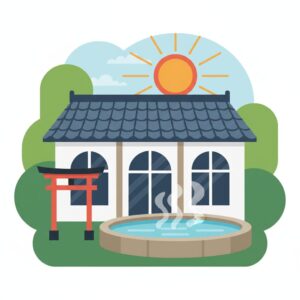
You see them tucked away in quiet residential streets, squeezed between modern apartment buildings and dusty, Showa-era bicycle shops. A tell-tale short, split curtain, the noren, emblazoned with the character for hot water, ゆ (yu), hanging over a sliding door. A tall, slender chimney often rises from the back, a relic from a time of wood-fired boilers. This is the neighborhood sentō, the public bath, an institution that feels both anachronistic and utterly essential to understanding the soul of Osaka. When I first moved here, I saw them as curiosities, charming remnants of a bygone era. My apartment had a perfectly functional, if comically small, ‘unit bath.’ Why would I ever pay a few hundred yen to go bathe with a bunch of strangers? It took a sweltering August evening and a friendly, insistent nudge from my neighbor, Tanaka-san, for me to finally step through that curtain. What I discovered wasn’t just a bigger bathtub; it was a front-row seat to the unvarnished, unfiltered, and deeply human rhythm of daily life in this city. This isn’t about the serene, picture-postcard onsen (hot spring) experience you see in travel brochures. The sentō is grittier, louder, and infinitely more revealing. It’s a place that explains more about how Osaka people think, act, and connect than any guidebook ever could. For anyone trying to decide if Osaka is the right place for them to live, the question isn’t just about jobs or apartments; it’s about whether you’re ready to embrace the culture of the public bath.
To truly understand the city’s daily rhythms, one must also experience its unique morning rituals, such as those found in a classic Osaka kissaten.
The Sentō as a Social Thermometer
In the West, we have pubs, coffee shops, and town squares. In Osaka, there’s the sentō. Sociologists refer to it as a ‘third space’—a place beyond home and work where community is created. But here, that community-building occurs without the barriers of clothing, brand names, or job titles. This idea of hadaka no tsukiai, or ‘naked communion,’ is found throughout Japan, yet in Osaka, it takes on a unique character. In Tokyo, a sentō visit can be a meditative, almost solitary experience. People generally keep to themselves, observing a quiet, unspoken respect for personal space, even when the room is crowded. In Osaka, personal space is a much more flexible concept. The silence is often broken by the loud laughter of elderly men debating the latest Hanshin Tigers game, the sharp, lively gossip of neighborhood obachan (older women), and the shrieks of children splashing alongside their fathers. Strangers will strike up conversations with you. It’s not a matter of if, but when. They’ll ask where you’re from, what you do, and whether you’re scrubbing your back properly. This isn’t the polite, surface-level friendliness commonly linked with Japanese service culture. It’s a more direct, earthy, and sometimes intrusive style of interaction. It’s a social atmosphere where the city’s famously thin filter between thought and speech completely fades away. You’re not just an anonymous face in the crowd; you’re a temporary member of a very warm, very loud, and very naked community. This is the first and most crucial lesson the sentō imparts about Osaka: community here isn’t an abstract concept; it’s a concrete, everyday practice rooted in shared vulnerability and a willingness to connect with those you share space with, no matter how different they may be.
The Pros: More Than Just Cleanliness
Beyond the initial cultural immersion, incorporating the local sentō into your daily or weekly routine brings a surprising array of benefits that extend well beyond basic hygiene. It’s a gateway to forming a deeper bond with your neighborhood, a glimpse into living history, and a practical enhancement to the often cramped conditions of urban apartment life. These benefits reflect the practical, community-focused values at the heart of Osaka society.
The Genuine Community Connection
Your apartment building may provide neighbors, but the sentō creates a true neighborhood. This is where the analog social network genuinely comes alive. The conversations you overhear—and inevitably join—are the lifeblood of the local community. You discover details that Google Maps and city websites can never reveal. You learn that the little tofu shop on the corner is the best, but you need to visit before 10 AM. You hear news about Mrs. Sato’s grandson passing his university entrance exams. You get real-time reviews of the new ramen spot two blocks away. It’s the raw data of daily life, shared openly and without pretense. Once, I spent a good ten minutes receiving a passionate, detailed lesson on the proper water-to-flour ratio for takoyaki from an elderly man with a magnificent dragon tattoo covering his back, all because he overheard me telling a friend about my failed attempt the night before. There was no judgment, only a sincere, almost urgent wish to share his expertise. This is Osaka in a nutshell. People meddle, but from a place of shared experience. In the locker room, standing in front of the massive, vibrating massage chairs that seem to have come straight from the 1970s, social hierarchies dissolve. The man carefully folding his clothes might be a small company CEO, or a day laborer. Without the markers of suits and uniforms, they are simply two men, complaining about the humidity and enjoying a cold drink after a hot bath. For a foreigner, this space can be an incredible equalizer, turning the label of ‘outsider’ from a barrier into a conversation starter.
A Glimpse into Showa-Era Osaka
Entering many of Osaka’s neighborhood sentō is like stepping back in time. While some have been modernized, many remain lovingly preserved capsules of the Showa period (1926–1989). The atmosphere is far removed from the minimalist chic of modern Japan. You’re greeted by worn wooden getabako (shoe lockers) with chunky wooden key tags. The changing rooms often feature latticed ceilings, wicker baskets for clothes rather than metal lockers, and a large analog scale that you suspect may no longer be entirely accurate. The centerpiece is often the tile art dividing the men’s and women’s baths. Though iconic Mount Fuji is a common motif throughout Japan, Osaka’s sentō might instead showcase vibrant mosaics of swimming carp, local castles, or idyllic landscapes. These are more than decoration; they are artifacts from a time when the sentō was the grand, luxurious heart of the community. They offered working-class people, whose homes were small and simple, a sense of escape and grandeur. This history is tangible—you can feel it in the slight sag of the floorboards and the echoes in the high-ceilinged bathing rooms. The post-bath ritual is another piece of this living heritage. In the lounge or changing area, old refrigerators are stocked with classic glass bottles of milk—plain, coffee, or fruit-flavored—with an unwritten rule that you place one hand on your hip while drinking. Watching a grandfather teach his grandson this simple tradition is witnessing the passing of a small but meaningful cultural torch. For a resident, this isn’t about nostalgic tourism; it’s about connecting with the historical fabric of the city, understanding that Osaka’s bold modernity is built on these humble, communal spaces.
The Practical Benefits of a Spacious Bath
Let’s be frank: Japanese apartments, especially for singles or couples in a packed city like Osaka, are not known for spacious bathrooms. The typical ‘unit bath’ is a prefabricated plastic pod where sink, toilet, and shower-tub combo are squeezed into a closet-sized space. You can’t fully stretch out in the tub, and the room often feels damp and claustrophobic. For the price of a fancy cup of coffee (around 500 yen), the sentō offers an extraordinary upgrade. The sheer size is a luxury. The main tubs, or yubune, are vast pools of perfectly heated water where you can float, stretch, and let the stress of the day dissolve. But it rarely ends there. Most sentō provide a range of bathing experiences. There’s often a jacuzzi-style jet bath that massages your back muscles into submission. There may be a sauna, typically a dry, cedar-paneled room where older men sweat in quiet stoicism while watching a small wall-mounted TV. Nearby is the mizuburo, a small, deep tub of shockingly cold water designed for a quick plunge after the sauna to stimulate circulation. And then there’s the famous denki-buro, or electric bath—an area of the tub with low-voltage electric currents passing between two plates. Sitting between them creates a strange, tingling, muscle-contracting sensation that can be either therapeutic or torturous, depending on your viewpoint. It’s a uniquely Japanese experience you should try at least once. For many residents, especially in Osaka’s brutally humid summers, a trip to the sentō is the only way to truly cool down and feel refreshed. In winter, it’s a way to warm yourself to the core. It’s not indulgence; it’s a deeply practical resource for health and comfort in the city.
The Cons: Navigating the Unspoken Rules and Realities
Despite all its charms, the sentō experience is not without its challenges, especially for newcomers. It involves a steep learning curve, an array of unwritten rules, and social dynamics that can feel uncomfortable or intimidating. To suggest it’s purely joyful, communal bliss would be misleading. Recognizing the potential drawbacks is just as crucial as appreciating the benefits, as they highlight some of the more difficult aspects of integrating into Japanese society.
The Intimacy Barrier and the ‘Gaijin’ Gaze
There’s no avoiding it: your first few visits to a sentō will probably feel awkward. Public nudity is uncommon in Western cultures, and undressing in front of strangers can be unsettling. You are exposed, both physically and emotionally. This sensation is often intensified by the ‘gaijin gaze.’ While Osakans generally expect foreigners, within the intimate setting of a neighborhood sentō, you might stand out. Stares are frequent. Though usually driven by simple curiosity rather than hostility, they can still make you feel scrutinized. Children may point, and older men might linger with their gaze a little too long. You’ll probably face the usual questions: ‘Where are you from?’, ‘Can you use chopsticks?’, ‘Your Japanese is so good!’ even if you’ve only managed a basic ‘Konnichiwa.’ For some, this adds charm to the experience. For others, it’s exhausting. Then there’s the complex, sensitive issue of tattoos. Historically linked to the yakuza (organized crime), tattoos remain taboo in many public baths across Japan. Onsen, especially upscale ones, often enforce strict bans. Sentō, particularly in a city like Osaka, tend to be more lenient. The unspoken rule usually revolves around the type of tattoo: a small, trendy tattoo might go unnoticed, whereas a full back piece will attract attention. Some sentō display signs explicitly forbidding tattoos, others don’t mind at all, and some adopt a ‘don’t ask, don’t tell’ approach. Navigating this requires some research or the readiness to be turned away at the entrance. It’s a clear reminder that even in relaxed Osaka, deep-rooted cultural norms must be learned and respected.
The Hygiene Hurdle: It’s Not Your Private Spa
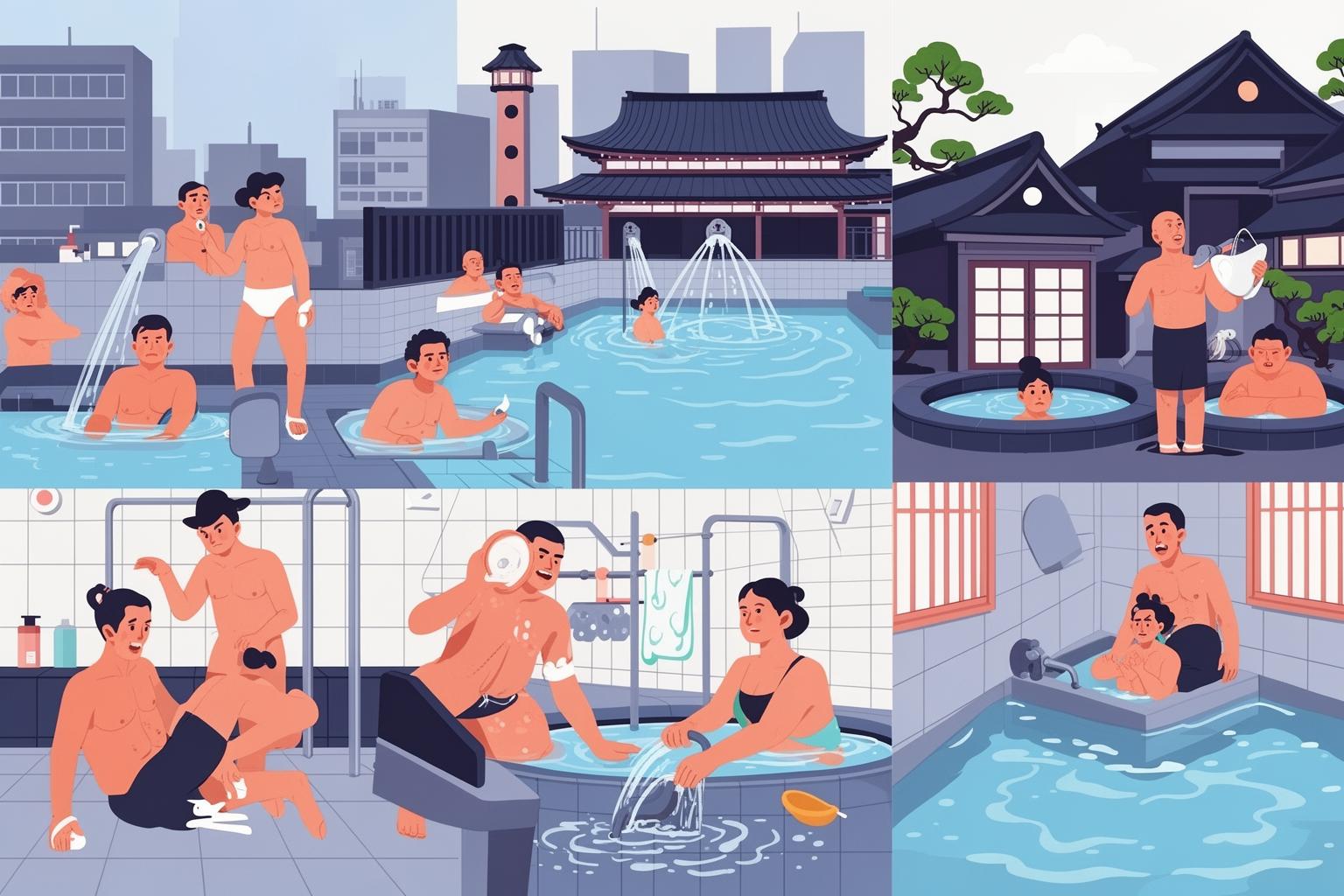
A major mistake foreigners often make at a sentō is treating it like a personal spa or their own bathroom. The bathwater is communal, and the rules protecting its cleanliness are absolute and non-negotiable. Violating these rules is considered the gravest offense. The entire system is founded on one key principle: you must wash your body before entering the tubs. The bathing area is lined with washing stations, each equipped with a stool, a faucet, and a showerhead. This is where you truly clean yourself. You are expected to scrub every part of your body with soap and rinse off thoroughly. Only after that may you enter the clean, hot tubs for soaking. Entering the tub with soap still on your skin will draw sharp looks—and in Osaka, a direct, vocal correction from a watchful grandmother. The small towel provided often causes confusion. It can be used for scrubbing or for modesty when walking around, but it must never be dipped into the bathwater. People often place it on their heads or on the tub’s edge. Allowing it to touch the water is a major faux pas. Other rules include no splashing, no swimming, and no wringing out towels into the bath. Although these rules seem straightforward, the social pressure to follow them correctly can be intense. The sentō is self-regulated. Regulars know the rules and expect newcomers to know them too. This isn’t Tokyo, where mistakes might be tolerated silently. In Osaka, you will be corrected—and not gently. It’s not intended to be harsh; it’s a direct, practical reminder to keep order. However, for a newcomer, being publicly corrected while naked can be deeply embarrassing. It’s a crash course in local communication style: efficiency takes precedence over politeness.
The Fading Institution: A Declining Tradition?
Perhaps the most poignant downside is bittersweet: the neighborhood sentō is gradually disappearing from the Japanese landscape. Each year, more of them close for good. The causes are numerous and interconnected. First, nearly every home in Japan now has its own bath, making the sentō more of a choice than a necessity. Second, many sentō owners are elderly, with few children willing to inherit the demanding, low-profit business. Third, soaring fuel costs to heat the large boilers make profitability increasingly difficult on a 500-yen entry fee. This decline is visible throughout Osaka’s neighborhoods. Sites that once housed beloved sentō are now parking lots or sterile apartment buildings. When a sentō closes, it’s not just a business lost; a vital community hub disappears. For the elderly, who depend on their daily bath trips for social interaction and exercise, closure can be devastating. It severs social connections and disrupts routines. For those who have grown attached to their local sentō, this loss can be heartbreaking. You become a regular, get to know the owners and fellow patrons, and then one day find a closure notice on the door. Participating in sentō culture is, in some ways, like visiting a living museum. You support a tradition struggling to survive, fully aware that the unique experience you treasure is slowly fading away.
Sentō vs. Super Sentō: The Old School and the New Wave
It’s important to differentiate the traditional neighborhood sentō from its modern, oversized counterpart, the Super Sentō. This distinction is crucial to understanding the evolving bathing culture in Osaka. Super Sentō are large, purpose-built facilities, often situated in the suburbs or near major train stations. They are to the neighborhood sentō what a multiplex cinema is to a classic movie palace. The experience is fundamentally different. Super Sentō are designed for entertainment and relaxation as leisure activities, rather than daily use. They typically feature a dozen or more types of baths: herbal baths, carbonated baths, open-air rock pools (rotenburo), and themed saunas. Beyond the baths, they usually include restaurants, massage parlors, comic book libraries, and relaxation rooms with reclining chairs and personal televisions. They serve as a one-stop destination for an entire day of pampering. For foreigners, Super Sentō can be a much easier entry point. Rules are often displayed in multiple languages, the atmosphere is more anonymous, and some are more lenient regarding tattoos (sometimes offering patches to cover small tattoos). However, this convenience often comes at the expense of authenticity. You won’t experience the same intergenerational mingling or genuine neighborhood chatter. Patrons are there for a specific, transactional visit, not as part of a long-established daily ritual. The choice between a sentō and a Super Sentō reflects a broader cultural dynamic in Osaka. The older generation, guardians of tradition, remain fiercely loyal to their local, no-frills sentō. Younger people, while they may appreciate the nostalgic charm of a classic sentō, often lean toward the resort-like environment of a Super Sentō for weekend outings with friends or dates. Neither is inherently better; they simply serve different purposes. The neighborhood sentō centers on community and routine, while the Super Sentō focuses on comfort and entertainment.
What the Sentō Tells You About Living in Osaka
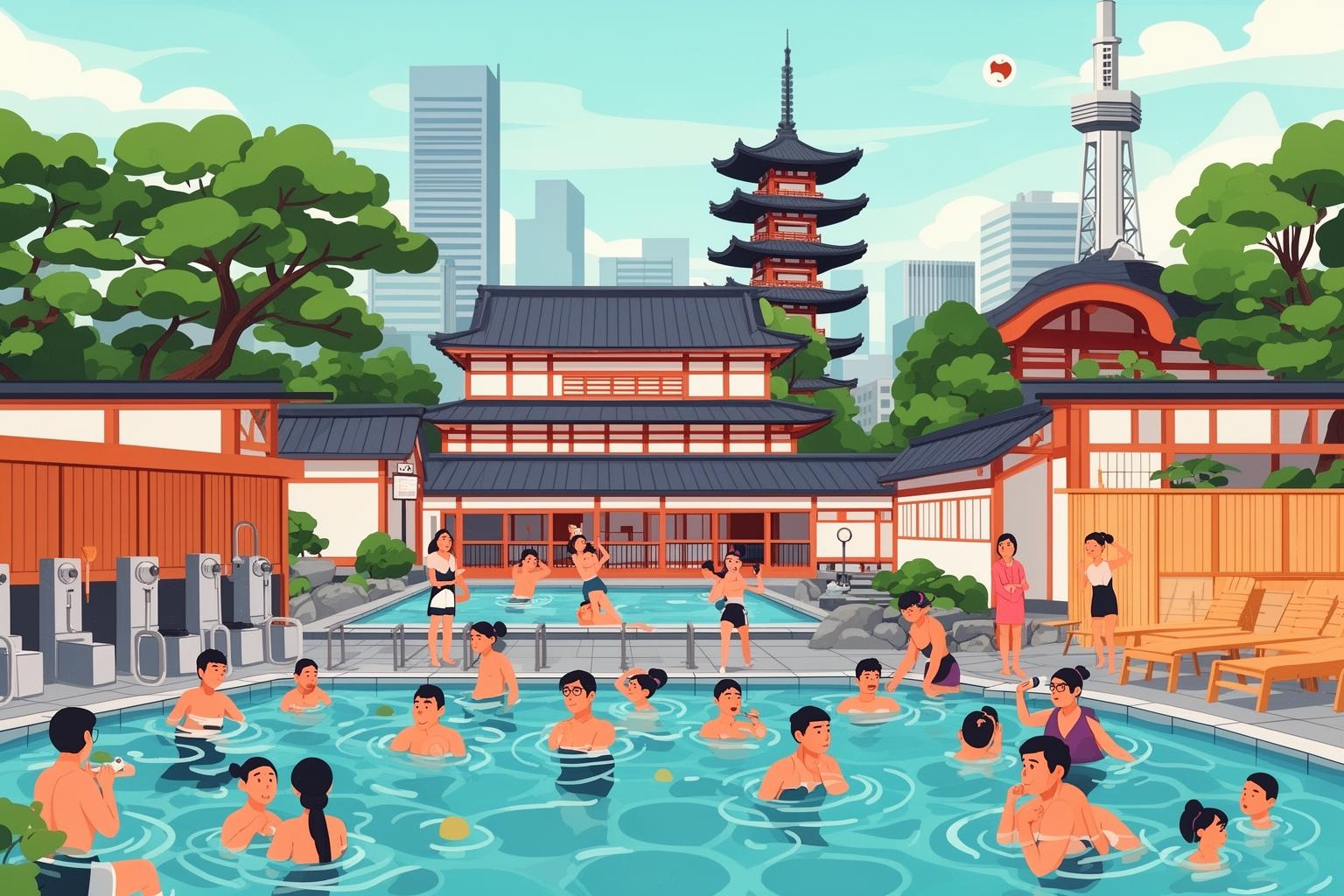
So, what does a steamy room filled with naked people really reveal about life in Osaka? Everything. The sentō is a miniature version of the city itself. It captures the city’s renowned pragmatism — a simple, efficient, and affordable solution for cleanliness, relaxation, and social connection. There’s little pretense or excessive decoration; it’s all about function, a characteristic deeply rooted in this city of merchants and craftsmen. It also perfectly reflects Osaka’s distinctive sense of community—one that is physically close, vocally engaged, and deeply interconnected. Privacy takes a backseat to an unspoken social contract of looking out for each other, even if it means offering unsolicited advice or asking personal questions. This is the basis for the ‘friendly’ reputation so often attached to Osaka. It’s not the reserved, polite friendliness of a Tokyo department store clerk, but an active, sometimes noisy warmth that invites participation. In the sentō, you can’t stay a passive observer for long. This sharply contrasts with Tokyo, where anonymity in public spaces is often the norm. In an Osaka sentō, as in the city overall, your presence is noticed and engagement is expected. For anyone thinking of moving to Osaka, I often recommend visiting a local sentō as a litmus test. If the idea of casual nudity, direct communication, and a shared space that prioritizes function over fancy makes you uneasy, the broader Osaka culture may prove challenging. But if you find warmth in the noise, charm in the aged tilework, and value in a community that literally strips away all barriers, then you’ve discovered a key to understanding—and truly enjoying—daily life in this wonderfully raw and human city. You’ll realize that in Osaka, people don’t just live side by side; they share a bath.