To live in Osaka is to learn its rhythms, and the first one you master is the rumbling heartbeat of the JR Loop Line. For a newcomer, that green or orange train is your lifeline, a constant, circling reassurance that you can always find your way back to Tennoji, Osaka Station, or Kyobashi. But after a few months, the loop can start to feel less like a lifeline and more like a cage. The same views of concrete and steel, the same crush of bodies, the same electric hum of a city that never fully sleeps. You start to wonder, is this it? Is Osaka just this dense, pulsing core of commerce and chaos, a place where the only green is the felt on a mahjong table or the neon Glico sign reflected in the canal? This is a question that gnaws at many of us who choose to build a life here. We fall in love with the city’s raw energy, its unapologetic realness, its incredible food scene. Yet, we crave a breath of fresh air that isn’t filtered through a department store’s HVAC system. That’s when you discover the secret that long-term residents hold dear: Osaka isn’t an island of concrete. It’s a city deeply, intimately connected to its surrounding nature, and the key to unlocking it isn’t a Shinkansen ticket to some far-flung prefecture. It’s a ticket for a tiny, local train line most tourists have never even heard of: the Nose Dentetsu.
This isn’t a travel guide. This is an explanation. It’s about understanding the dual-hearted nature of Osaka by taking a journey just forty-five minutes, but a world away, from the Umeda terminus. It’s about exploring the satoyama—that uniquely Japanese concept of a managed countryside, a buffer zone between urban sprawl and true wilderness—and what it reveals about the Osakan mindset. It’s about how the city’s inhabitants decompress, reconnect, and maintain a sense of balance that feels fundamentally different from the all-or-nothing ethos of Tokyo. To truly grasp what it feels like to live in Osaka, you have to get off the Loop Line and ride to the end of a much smaller, quieter track. You have to go to the land of the Nose Railway.
This journey into the satoyama offers a different kind of sustenance than the efficient, solo experience of mastering Osaka’s meal ticket vending machines.
The Decompression Chamber: From Hankyu Red to Noseden Green
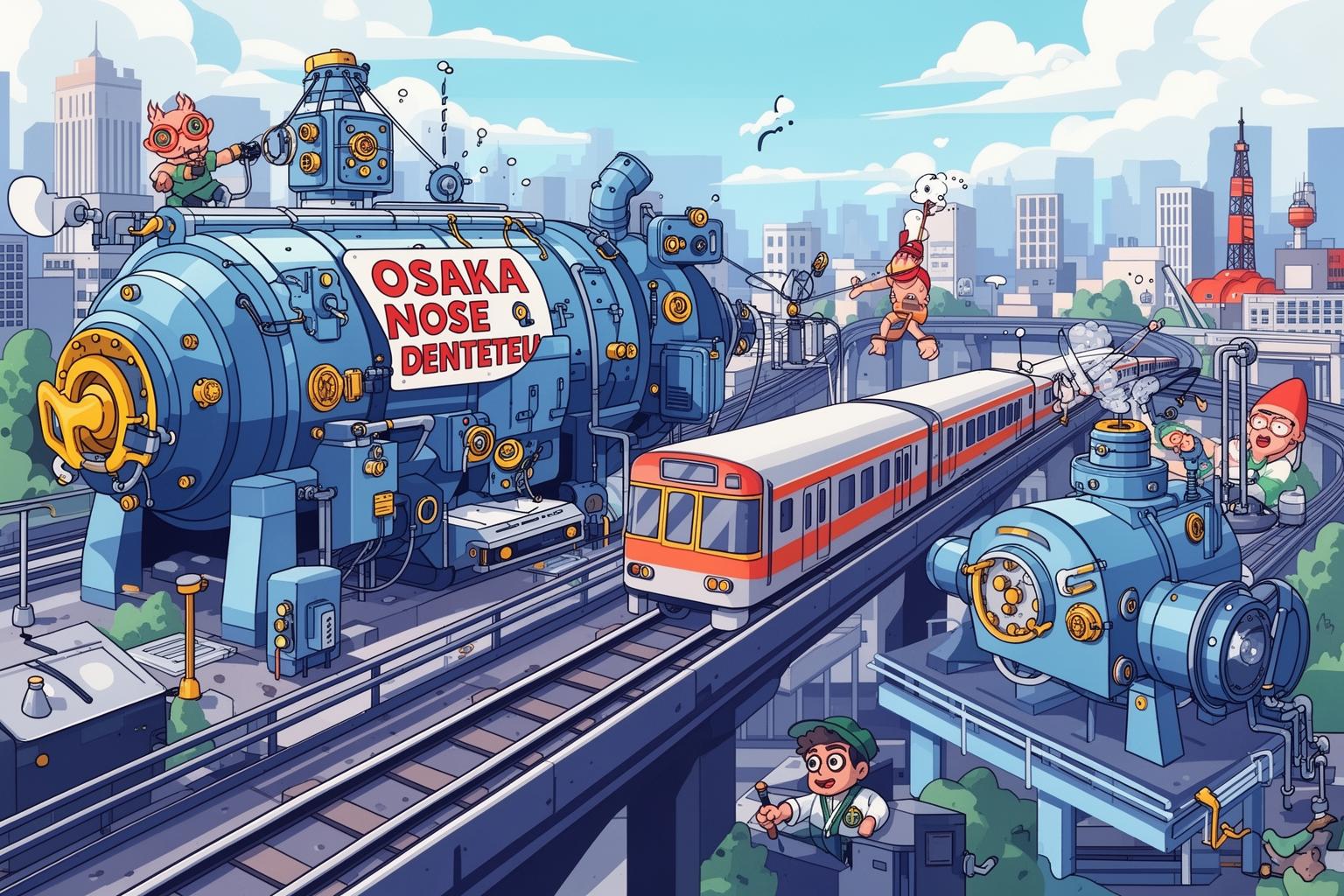
The journey does not start on the bustling JR platforms but within the sleek, orderly environment of Hankyu Umeda Station. This distinction is key to understanding the Kansai region. While JR serves as Japan’s national, practical rail network, private railways like Hankyu, Keihan, and Kintetsu are the cultural heartbeat of the area. Hankyu, with its distinctive maroon trains and pristine interiors, has long cultivated an aura of elegance. It is the railway that established department stores, the Takarazuka Revue, and entire suburban neighborhoods, shaping the dreams of the Kansai middle class. Boarding a Hankyu train at Umeda feels less like commuting and more like a carefully designed departure. The train moves smoothly, the seats are plush, and the passengers exude a calmer, more composed energy compared to the frantic salarymen rushing for the last train on the Loop Line.
Your destination is Kawanishi-Noseguchi, a station just beyond the border in Hyogo Prefecture but still deeply connected to Osaka’s cultural and economic sphere. This is the transfer point, the gateway. As you step off the sleek Hankyu express, the atmosphere already shifts. It’s a busy hub, yet the pace is more relaxed. You follow the signs to the Nose Dentetsu, affectionately known as the “Noseden.” The platform is smaller and more exposed to the weather. Then the train arrives—it’s shorter, often only a handful of carriages, painted in a cheerful green and cream. Its sound is different—not the high-tech whoosh of a city train, but a more mechanical, friendly clatter. This is the sound signaling the crossing of a threshold.
The Rhythm of the Single Track
Boarding the Noseden feels like stepping back into another era. The interior is simple, functional, and clean, lacking the corporate sheen of its Hankyu parent. The passengers reflect the landscape you’re about to enter. Elderly couples with walking sticks and small backpacks, clearly prepared for a gentle hike, share the space with families eager for an outing involving more nature than screens. High school students in uniforms head home to sprawling suburban towns near the early stops. The further the journey continues, the fewer salarymen in suits remain, replaced by people dressed for weather and terrain.
The train soon leaves behind dense suburban housing and begins its true journey. For long stretches, the line narrows to a single track. This marks a significant change for anyone used to the multi-track superhighways of urban Japanese rail. A single track brings a different rhythm. Trains must wait at certain stations for oncoming trains to pass. This is not a delay but the tempo of the line itself, imposing moments of stillness. Gazing out the window, you see not a blur of buildings but a bamboo grove, a small Shinto shrine nestled on a hillside, or a farmer tending a daikon radish patch. The announcements are softer, the station names—Tsuzumigataki (Drum Waterfall), Uneno (Ridge Field), Yamashita (Under the Mountain)—invoking a realm of geography and folklore rather than urban commerce. It becomes a rolling decompression chamber, gently easing the city’s pressure from your ears, one quiet station at a time.
What ‘Satoyama’ Actually Means on an Osaka Weekend
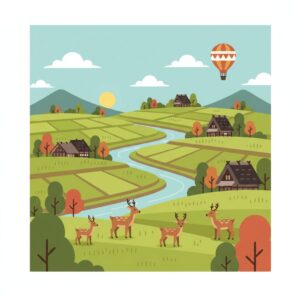
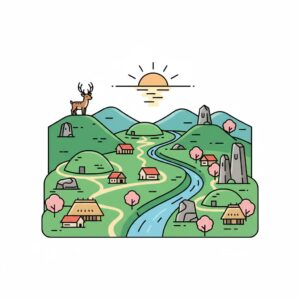
Foreigners often learn the Japanese words for city (tokai) and countryside (inaka), imagining a clear, binary divide. However, the world revealed by the Noseden is something in between—a concept fundamental to the Japanese psyche but often difficult to translate: satoyama. Sato means a village or inhabited place, and yama means mountain or hill. It is not untouched wilderness, but a managed landscape where people have lived for centuries, cultivating rice in terraced paddies, harvesting bamboo, foraging wild vegetables, and coppicing forests for charcoal. It is a landscape shaped by human hands, representing a sustainable collaboration between people and nature.
This marks a critical difference from the Western understanding of the countryside. It’s not about vast, empty plains or rugged, untamed mountains. The beauty of satoyama lies in its detail and utility. It’s a productive landscape, a human-scale garden. For the people of Osaka, the satoyama isn’t a place to conquer; it’s a place to engage with. A weekend trip here isn’t about escaping civilization; it’s about experiencing an older, different form of it—one that feels profoundly restorative.
The Air Changes First, Then the People
The most noticeable change as the Noseden climbs into the hills is the quality of the air. Even with train windows closed, you can feel it. When you step off at a station like Myokenguchi, the line’s terminus, the difference is striking. The air is cooler, carrying the scent of damp earth, cedar trees, and occasionally, woodsmoke from a farmhouse. The constant, low-frequency hum of the city vanishes, replaced by birdsong, the rustle of leaves, and a deep, grounding silence. This sensory shift immediately affects people. The hurried, defensive posture of the urban commuter fades. People walk more slowly. They make eye contact and nod. Conversations take on a quieter tone. You might hear hikers discussing their route or a family pointing out a dragonfly to their child. These conversations no longer focus on deadlines or office politics but on the afternoon’s weather or whether the kuri (chestnuts) are ready for harvest.
Here, you glimpse a side of the Osakan character that defies the stereotype of the loud, impatient merchant. There is a deep appreciation for the seasons and a quiet competence in navigating the natural world. People here aren’t merely consumers of nature; they are knowledgeable participants. They know which mushrooms are safe to eat, the best time to see fireflies, and how to read the clouds over the mountains. This connection to the land acts as a quiet anchor, preventing the city, despite its modernity, from becoming completely detached from its agricultural roots.
An Economy of Trust: The Unmanned Vegetable Stand
Nothing captures the spirit of the satoyama better than the mujin hanbaijo, the unmanned vegetable stand. You’ll find them along quiet roads and paths: simple wooden shelves piled with whatever is in season—perfectly shaped cucumbers, lumpy, flavorful tomatoes, bags of freshly dug potatoes, bunches of bright green spinach. There’s no shopkeeper, only a small wooden or tin box with a coin slot and a handwritten sign listing prices, usually a wonderfully reasonable 100 yen per item. You select what you want, total the cost yourself, and drop the coins into the box. That’s it. This operates on a principle that feels almost radical in the hyper-commercialized city just kilometers away: trust. The farmer trusts you to pay; you trust the farmer to have grown the produce carefully. It is a simple, direct transaction that feels deeply human. It speaks to a community where reputation and mutual respect matter more than surveillance cameras and anti-theft tags. For a foreigner used to the anonymous, transactional nature of city life, finding one of these stands feels revelatory. It suggests a different social contract is possible—one based not on suspicion but on shared understanding within a small community. This isn’t quaint or performative nostalgia; it’s a living, functioning part of the local economy and a powerful antidote to urban cynicism.
Myokenguchi: The End of the Line and the Start of a Different Osaka
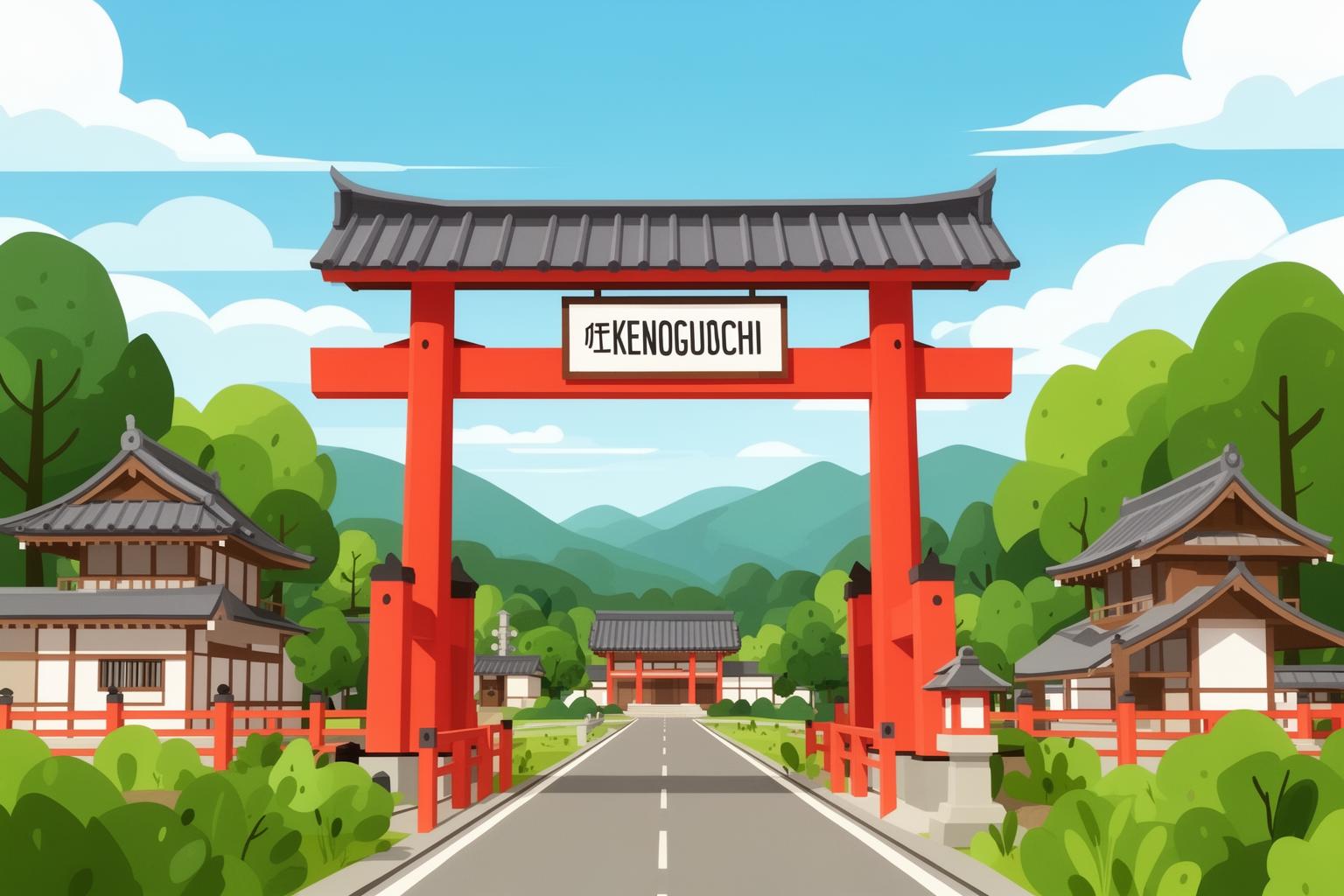
Arriving at Myokenguchi, the final stop on the main Noseden line, feels like a true destination. The tracks simply end here. There’s no bustling terminal or grand station building—just a small, tidy station, a map of nearby hiking trails, and the entrance to the forest. The stillness is profound. This is the edge of the vast megalopolis, and the prevailing sensation is one of peace. It marks the starting point for numerous trails weaving through the hills, leading to scenic viewpoints, shrines, and forests of towering cedar trees. It’s where Osakans come to stretch both body and mind, exchanging the vertical climb of subway stairs for the gentle, sloping ascent of mountain paths.
The Flavor of Terroir: A Soba Shop Story
As a food enthusiast, my travels are always directed by my appetite, and the satoyama offers a culinary experience quite different from the famous kuidaore (eat ’til you drop) culture of Dotonbori. Here, the cuisine isn’t about flash or quantity; it’s about purity and origin. Tucked away on a quiet side street just a short walk from the station, I discovered a small, family-run soba shop. It was an old wooden building, furnished with a few simple tables overlooking a lush green valley.
The owners were an elderly couple who moved with slow, deliberate grace. Their menu was modest: hot soba, cold soba, and a handful of seasonal side dishes made with mountain vegetables (sansai). I ordered the zaru soba—cold noodles served with dipping sauce. When it arrived, it was a lesson in simplicity. The noodles were a lovely dusky grey, clearly handmade, with a nutty, earthy fragrance. The dipping sauce was dark and rich, accompanied by freshly grated wasabi and finely chopped green onions. The secret, the owner explained with quiet pride, was the water. The water used to prepare and boil the noodles came directly from a nearby mountain spring. It was clean, pure, and soft, allowing the buckwheat’s true flavor to shine. As I ate, it became clear: this was the essence of the place. Every bite was a direct link to the soil, water, and mountain air. It contrasted sharply with the heavy, fried, sauce-loaded street food Osaka is known for, yet it felt equally essential in understanding the region’s palate. It spoke of deep respect for ingredients and the belief that the finest flavor arises from the land itself, pure and unadorned.
This experience underscores an important facet of Kansai’s food culture often overlooked. While the city celebrates bold tastes and abundance, there’s an equally strong tradition of refined simplicity rooted in the availability of top-quality natural resources from nearby mountains and sea. The satoyama is, in many respects, the pantry that has long nourished the city’s soul.
The Everyday Mountain Gods
High on the mountain overlooking the area stands Nose Myoken-san, an important Buddhist temple of the Nichiren sect. It can be reached by scenic cable car and lift or by hiking through the forest. Yet what is most striking about religion in the satoyama isn’t just the large, famous temples. It’s the persistent, quiet presence of spirituality woven into the everyday landscape. Along the hiking trails, you’ll encounter small, nearly hidden Shinto shrines (hokora), marked by simple stones or miniature torii gates. You’ll notice jizo statues—protectors of travelers and children—wearing hand-knitted red bibs placed there by local people. These are not tourist sights; they are places of quiet, personal worship embedded in daily life. They reflect a relationship with the divine that is intimate and rooted in the land itself. Every mountain, waterfall, and ancient tree can be viewed as a home to a kami (god or spirit). This animistic worldview, the foundation of Shinto, feels strikingly present and logical here. It reminds us that for much of Japan’s history, faith was not about grand cathedrals or elaborate theology; it was about recognizing the sacredness of the natural world one lived in and relied upon for survival. For city dwellers from Osaka, a walk through these woods is a way to reconnect with that ancient spiritual current.
The Osaka Mindset, Re-calibrated
Spending a weekend in the Nose region offers more than just a scenic view. It fundamentally reshapes your perception of what it means to live in Osaka and how its local mindset differs from, say, Tokyo’s. While the two cities are often broadly characterized—Tokyo as polished and formal, Osaka as loud and mercantile—the differences go much deeper, reaching into their very psychological geography.
Why This Isn’t Tokyo’s Countryside
Tokyo is a magnificent but overwhelmingly vast metropolis. Truly escaping its pull to find a genuinely rural area often requires significant time and expense—a lengthy train ride, perhaps even an overnight stay. Its sprawl seems endless. In contrast, Osaka is a much more compact city. Its urban core is densely packed, but you can leave it surprisingly quickly. The shift from city to suburb to satoyama is swift and clear. This close proximity to nature isn’t just convenient; it shapes daily life’s rhythm. For an Osakan, a proper mountain hike isn’t a major expedition requiring weeks of planning. It’s a spontaneous decision on a Saturday morning. This fosters a more integrated lifestyle. Nature isn’t a separate, idealized getaway; it’s the city’s backyard. This closeness serves as a psychological pressure valve, making urban intensity easier to bear. Knowing this peaceful, green world is just a short train ride away makes crowded subways and noisy shopping arcades more tolerable.
The Pragmatic Escape
Another hallmark Osakan trait visible here is pragmatism. There’s a distinct absence of romanticism about the countryside. People come here to do things. They are hiking, foraging, tending small vegetable plots, or taking kids to streams to catch crayfish. It’s an active, purposeful engagement with their environment. The satoyama is viewed as a resource—for health, food, family time, and mental clarity. This reflects a very Osakan mentality: find something good and make the most of it. It’s not about losing oneself in poetic meditation on a misty mountain (though that can occur); it’s about the tangible benefits of spending a day outdoors. It’s practical rejuvenation. This mindset is an extension of the merchant culture from the city center. A savvy merchant understands the value of resources and uses them wisely. For Osakans, the beautiful natural environment at their doorstep is a precious asset, and they won’t let it go to waste.
Beyond the “Friendly” Cliché
We’re all told that “Osaka people are friendly.” It’s the first thing mentioned in any guidebook. In the city, this often takes the form of boisterous, direct, and sometimes intrusive friendliness. People might strike up a conversation at a bar, comment on your clothes, or offer unsolicited advice. It’s part of the city’s charm. But the friendliness you meet in the satoyama is different. It’s quieter, subtler, and rooted in shared experience. It’s a nod and a soft “Konnichiwa” from a passing hiker. It’s a farmer pausing work to point you in the right direction. It’s a shared smile with someone else admiring the view from a lookout. This isn’t the friendliness of a salesman trying to connect; it’s the quiet recognition of a fellow human sharing the same beautiful space. It reveals another layer of the Kansai personality, one less about performance and more about a simple, communal sense of place. It shows that the Osakan character is not a single stereotype but highly adaptable to its surroundings.
Coming Home: The Loop Line Looks Different Now
The journey back is a gradual process of re-acclimatization. As the Noseden clatters toward Kawanishi-Noseguchi, the houses grow denser and the fields become scarcer. Switching back to the polished maroon Hankyu train feels like stepping into the modern world once more. By the time you’re swept up in the human flow at Umeda Station and make your way back to the JR Loop Line, the contrast is striking. The noise, the lights, and the sheer throng of people can feel overwhelming after a day of mountain silence.
Yet something has shifted. The Loop Line no longer feels like a cage. Instead, it feels like a hub—the central ring of a much larger, more intricate system. You realize that the city’s energy isn’t created solely within this circle of steel; it’s drawn from the mountains and valleys surrounding it. The food in the markets, the water from the taps, and the resilience of the people are all linked to that hinterland. To live in Osaka means having access to both worlds. You can plunge headfirst into the exhilarating, 24/7 chaos of Namba, then the very next day find yourself standing in a silent cedar forest, listening only to the wind. This duality is the city’s hidden strength. It’s what makes life here not only exciting but profoundly livable. The real Osaka isn’t just the city inside the Loop Line; it’s the city and its satoyama—the concrete and the greenery, the merchant’s shout and the farmer’s quiet nod—all connected by a little green train rattling its way to the end of the line.