So you’ve made it to Osaka. You’ve navigated the human rivers of Umeda Station, eaten yourself into a coma in Dotonbori, and maybe even mastered the delicate art of not standing on the right side of the escalator. You’ve heard the legends—Osaka people are friendly, outgoing, a different breed from the reserved crowds in Tokyo. And it’s true, in a way. The cashier at FamilyMart might crack a joke, the guy next to you at the standing bar might ask where you’re from. You’re having plenty of conversations, but maybe you’re not making connections. The city feels wide open but your social circle feels… small. You have your work friends, your language exchange partners, your fellow expats you meet in bars in Shinsaibashi. It’s a life, for sure. But does it feel like home? Are you just living in Osaka, or are you a part of it?
This is the question that hums beneath the surface for so many of us who move here from abroad. We crave that sense of belonging, the feeling that if we disappeared for a week, someone other than our landlord would notice. The popular advice is to join a club, take a class, hit the international parties. And that’s fine. But it’s operating on the surface. The real, beating heart of Osaka’s community life isn’t found in a sleek co-working space or a trendy bar. It’s found on a laminated sheet of paper tacked to a telephone pole. It’s in the early morning clatter of neighbors setting up for a local festival. It’s in a group of people in tracksuits armed with tongs and plastic bags. It’s in the chōnaikai, the hyper-local neighborhood association, a concept that sounds either boringly bureaucratic or terrifyingly insular to most foreigners. But I’m telling you, this is the secret level. This is the backdoor into the real Osaka, the one that doesn’t make it into the travel guides. It’s where you stop being a temporary guest and start becoming a neighbor. It’s where you find your people, not by searching for them, but by working alongside them.
To truly feel at home, it’s also worth learning the local rhythm, such as the art of Koujitsu, which helps forge a sustainable work-life balance.
What on Earth Is a Chōnaikai? Decoding the Neighborhood Machine
Before joining the party, you need to understand what you’re stepping into. The term chōnaikai (町内会) or jichikai (自治会) translates to neighborhood association, but that hardly conveys the full atmosphere. It’s not a homeowner’s association with executives and a strict rulebook about lawn height. Instead, it’s a grassroots, volunteer-driven, sometimes chaotic, and deeply human organization covering a small part of the city—maybe just a few blocks. It serves as the crucial link between the large, impersonal city ward office (kuyakusho) and the actual residents of a particular street.
More Than Just a Bulletin Board
On the surface, the chōnaikai handles practical tasks. They circulate the kairanban (回覧板), a clipboard with official city announcements passed from house to house. They organize disaster drills, oversee local garbage collection points to ensure everyone follows the complex rules of waste separation, and post notices about public health campaigns. It all sounds rather mundane, like the civic equivalent of eating your vegetables. But that’s only the framework. The true purpose of the chōnaikai is to weave the social fabric of the neighborhood. It powers small-scale festivals, New Year’s mochi-pounding events, summer street barbecues, and seasonal cleanup days. It’s run by longtime residents—the ojichan who owns the bike shop, the obachan from the dry cleaner’s, the retired couple who knows everyone’s stories. They are the custodians of local culture, the living memory of the community.
The Osaka Twist: Pragmatism Over Protocol
Here’s where Osaka stands apart from Tokyo. In the capital, a neighborhood association may feel more formal and structured. There are agendas, minutes, and a pressure to adhere to established procedures. It can come off as just another layer of bureaucracy, with more rules to follow. Osaka’s approach is different. Rooted in the city’s history as a merchant town, it emphasizes practicality, efficiency, and a healthy skepticism of authority. The driving question in an Osaka chōnaikai isn’t “Are we following the rules?” but “Are we getting things done, and can we have fun doing it?”
This captures the spirit of genjitsu-shugi (現実主義), or pragmatism, that defines Osaka’s mindset. It values tangible outcomes over performative politeness. A meeting to plan the summer festival might not take place in a sterile community center, but as a lively, noisy brainstorming session over cheap tea in the back of a shop, punctuated by laughs. The winning plan isn’t the most carefully researched; it’s the one that sounds like the most fun and can be pulled off with minimal fuss. There’s a beautiful, functional chaos to it. The goal is collective good, but the path is flexible, adaptable, and profoundly human. They aren’t striving to build a perfect system; they’re building a vibrant neighborhood. This informal, results-driven attitude makes it easier for newcomers to get involved. They care less about your background and more about your willingness to roll up your sleeves.
The Events You’re Probably Ignoring (But Absolutely Shouldn’t)
So, how do you unlock this hidden social world? You begin by attending the events that most foreigners either aren’t aware of or dismiss as insignificant. These gatherings aren’t flashy or headline-grabbing. They are small, regular, and deeply communal. This is where the real magic unfolds.
The Unsung Champions: Community Cleanups (Chiiki Seisō 地域清掃)
I get it. Waking up at 8 AM on a Sunday to pick up other people’s trash sounds like a punishment, not a social strategy. But hear me out. Community cleanups are perhaps the most effective and accessible way to enter your neighborhood’s social scene. About once a month, you’ll spot a notice on the bulletin board. You show up at the designated park or street corner, and someone hands you a pair of tongs, a garbage bag, and maybe a neat high-visibility vest. You join a small group of neighbors—families with kids, elderly couples, the guy who runs the ramen shop—and you simply walk, spending an hour collecting stray cans, cigarette butts, and windblown plastic wrappers from gutters and bushes.
It might sound boring, but the social dynamic is brilliant. There’s no pressure. You’re engaged in a shared, simple, and honorable task. Conversation flows naturally in brief bursts between moments of focused trash picking. “What even is this thing?” “The crows were troublesome last night.” “Your daughter’s grown so tall!” You’re not trying to impress with your job title or wit. You’re just two people improving your shared space. Working together, even briefly, forges a strong, unspoken bond. That’s how I truly met my next-door neighbor, Mrs. Sato. Before, we’d only exchanged brief, awkward bows in the hallway. But during a cleanup, we spent ten minutes untangling a plastic sheet from a tree and laughed about how silly it was. The next day, she left a bag of homegrown tomatoes at my door. The ice wasn’t just broken; it melted like sunshine on a shared, everyday effort. In Osaka, this isn’t about stern civic duty; it’s like tidying your own front yard—practical, communal, and natural. And it often ends with everyone sharing a can of coffee or iced tea, basking in the satisfaction of a job well done.
Festival Prep: The Real Party Before the Party
Osaka treasures its festivals, the matsuri. While grand events like the Tenjin Matsuri grab headlines, there are countless small festivals centered on local shrines or temples. These local festivals are where community connections truly grow. The festival day itself is fun, but the real bonding happens in the days and weeks before it, when volunteers are called to help.
Don’t just show up to watch the parade—show up when they’re building stages, hanging paper lanterns (chōchin), and setting up food stalls. That’s where the neighborhood’s heart beats strongest. No special skills are needed. If you can carry a plank, tie a knot, or paint a sign, you’re a valuable part of the team. You’ll work alongside local carpenters, electricians, and business owners, all taking time from their busy lives to make the event happen. The vibe blends focused work with lively camaraderie. Jokes fly, stories spill out, and everyone enjoys a steady supply of snacks and drinks courtesy of the organizers.
The first time I helped, I got stuck assembling the frame for a yakisoba stall, clueless and putting poles in the wrong places. Rather than getting annoyed, a retired carpenter named Mr. Yamamoto laughed and nicknamed me “professor” for overthinking it, then showed me a simple, clever way to join the beams. Throughout the day, he called out, “Hey, professor! Need a hand?” We worked, sweated, and laughed for hours. By festival day, I was no longer anonymous. I knew the game operators and cooks, and wherever I went, I got a free beer. When the mikoshi (portable shrine) was carried through the streets, one of the carriers recognized and called my name. In that moment, I felt a deep sense of belonging that nearly overwhelmed me. Osaka’s love for matsuri isn’t passive—it’s an active, participatory joy. The best party is the one you help build.
Disaster Drills and Mochi Pounding: The Quirky and the Delightful
Beyond cleanups and festivals, the chōnaikai calendar features many other events valuable for connecting with others. The bōsai kunren (防災訓練), or disaster drill, perfectly exemplifies the Osaka spirit. Japan treats disaster preparedness seriously, and these drills are essential. But in Osaka, they turn a serious subject into a community gathering. You’ll learn to use fire extinguishers and see emergency rescue demos, but you’ll also find kids playing in fire trucks, neighbors chatting over coffee and surprisingly tasty emergency rations, and an atmosphere more like a block party than a drill. It’s a practical way to engage people with a serious issue: making it social. You’re not just learning to save yourself—you’re learning to save one another.
Then there’s mochitsuki (餅つき), the traditional New Year rice pounding. It’s pure, joyful, physical fun. A giant mortar (usu) is filled with steamed sticky rice, and people take turns pounding it with a huge wooden mallet (kine). It requires rhythm and teamwork—one pounds while another quickly turns the rice between strikes. As a foreigner, you’ll almost certainly be invited to try. Your first swing will be awkward, the mallet heavy. Everyone cheers you on. It’s a brilliant icebreaker. You share a tradition, create something delicious together, and make a bit of a fool of yourself—all great ways to build friendships. Afterwards, everyone gathers to eat the warm mochi with sweet bean paste or soy sauce. It’s a taste of culture, a shared moment, and a memory that lingers long after the flavor fades.
How to Actually Get Involved: A Practical Field Guide
Alright, you’re convinced. You’re ready to trade your Saturday lie-in for a pair of work gloves. But how do you transition from reading this article to actually getting involved? It can feel like trying to jump onto a moving train.
Step 1: Find the Source of Information (The Bulletin Board)
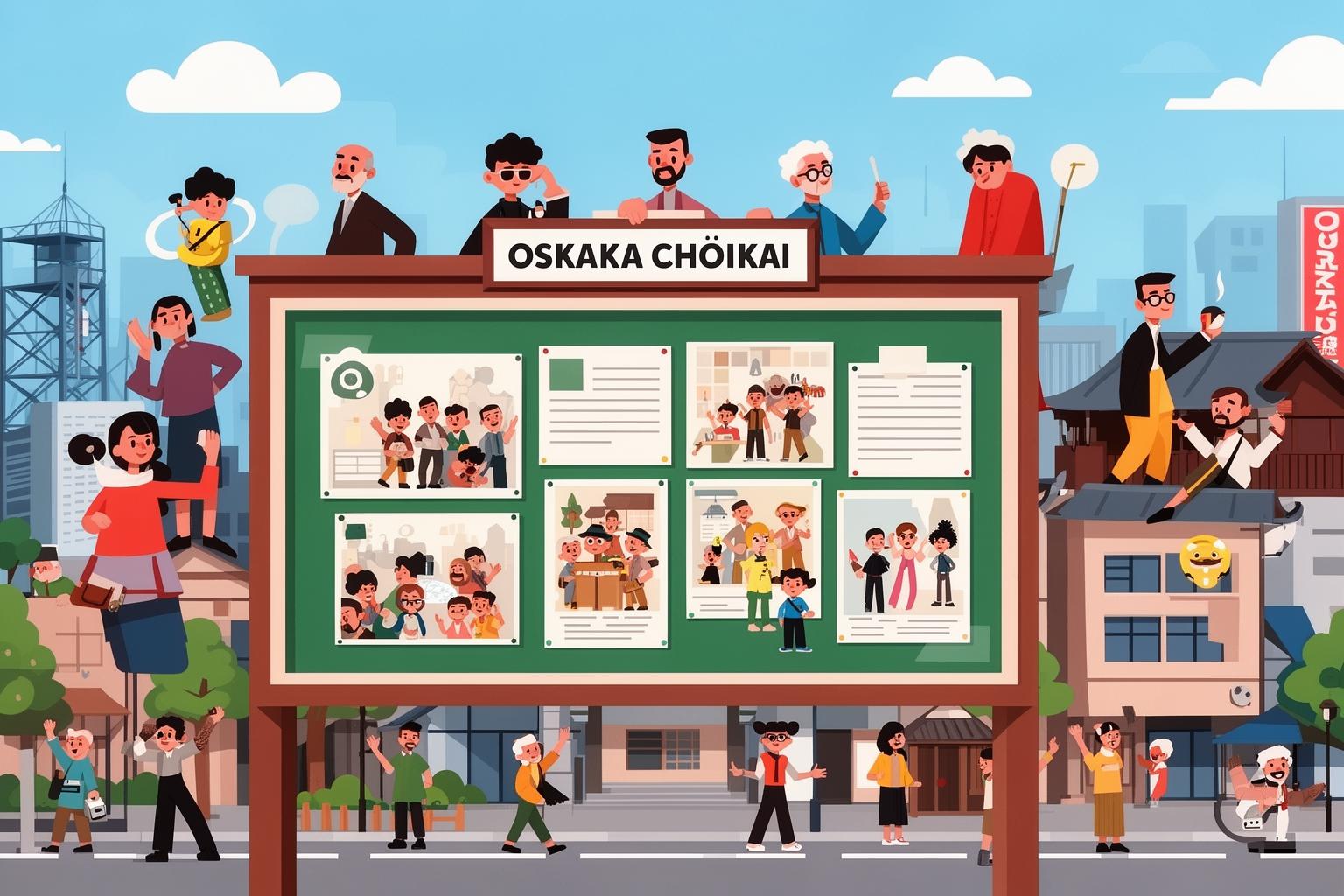
Your first task is to locate your neighborhood’s central hub: the keijiban (掲示板). This is the local bulletin board, usually a weatherproof glass case mounted on a wall or a freestanding structure near the garbage collection point, a small park, or a community hall. It’s not digital but a dense patchwork of paper. You’ll see monochrome printouts from the ward office, handwritten notices about a lost cat, and, most importantly, posters announcing upcoming cleanups, festivals, or meetings. Its design is unapologetically old-fashioned, often featuring charmingly amateurish clip art. Make a habit of checking these boards regularly. Even with limited Japanese, you can spot dates, times, and keywords like seisō (清掃, cleaning), matsuri (祭り, festival), or bōsai (防災, disaster prevention). Snap a photo with your phone and use a translation app. This is your treasure map.
If you can’t locate the board or if it lacks details, your next option is the local ward office (kuyakusho). Their community relations department can tell you which chōnaikai you belong to and may even provide the name of the person in charge. Another very Osaka approach is simply asking around—visit a small local shop—the tobacconist, rice seller, or fruit stand—and ask, “Sumimasen, kono hen no chōnaikai no yotei, wakarimasu ka?” (Excuse me, do you know the schedule for the local neighborhood association?). These shopkeepers are often community pillars and will know what’s going on.
Step 2: Breaking the Ice (Without Awkwardness)
This is often the toughest part. Showing up at an event where you don’t know anyone and might not speak perfect Japanese can be intimidating. The key is to remember the Osaka mindset: they value action over words.
Just Show Up. This is the most important rule. Don’t wait for a personal, engraved invitation—it won’t come. The poster on the bulletin board is your invitation. Your presence is your RSVP. Showing up shows your interest and willingness to be part of the community far better than any polished introductory phrase.
Learn the Magic Phrase. Your greatest asset is the question: “Nani ka tetsudaimashou ka?” (何か手伝いましょうか?), meaning “Is there anything I can help with?” This simple sentence conveys everything: you’re not just there to watch, you want to contribute. It’s a humble and solid gesture that will be appreciated immediately. Someone will find a task for you, even a simple one. That’s your way in.
The Power of the Temiyage. If you’re feeling particularly nervous, bring a small gift, a temiyage (手土産). It doesn’t have to be fancy—a multi-pack of canned coffee, a box of rice crackers, or some chilled tea bottles to share is perfect. Hand it to the apparent leader and say “Kore, minna-san de dōzo” (これ、皆さんでどうぞ), meaning “This is for everyone, please enjoy.” This classic Japanese social gesture shows that you understand the culture of sharing and reciprocity and will be warmly received.
Embrace Imperfection. You will make mistakes, misunderstand directions, and your Japanese will falter. None of it matters. In Osaka, effort beats elegance every time. They’d prefer someone who tries hard and slips up over someone too afraid of looking foolish to try. Laughter is the universal cure for awkwardness. Laugh at your errors, and they will laugh with you, not at you.
The Unspoken Rules of Participation
Joining in isn’t just about attending events—it’s about becoming part of the neighborhood’s daily rhythm. These subtle actions build your reputation as a “good neighbor.”
Master Garbage Etiquette. It may sound trivial, but it’s crucial. Learn your area’s complex, color-coded trash separation system. Put out your garbage on the correct days and times, under the protective net. A tidy garbage point signals a healthy community. Messing it up is the fastest way to annoy your neighbors. Doing it right is a small but daily sign of respecting shared rules.
Consistency is Key. Attending one event is good, but showing up consistently builds trust and transforms you from a curiosity into a fixture. They need to know you’re not just a tourist in your own neighborhood. Join the cleanup every month. Help with festival prep each year. This steady presence nurtures lasting relationships.
The Principle of Reciprocity. Osaka was built by merchants, and the give-and-take mindset is woven into its fabric. If a neighbor brings you vegetables from their garden, you return the favor with a souvenir from your next trip. If someone helps you assemble IKEA furniture, you offer help with their English emails. It’s not a strict ledger but a continuous flow of mutual support that strengthens community bonds. Always look for ways to give back.
The Payoff: Why This Is All Worth It
This all sounds like a lot of effort—definitely more than just downloading a language exchange app. So why put in the work? Because the rewards are on an entirely different level. They are profound, life-changing, and they mark the difference between merely living in Osaka and truly belonging here.
Beyond “Konnichiwa”: Building Genuine Connections
The connections you make at a bar tend to be situational. The friendships forged while working on a festival stall are foundational. These are the people who look out for you. They notice when the lights in your apartment have been off for days and check to make sure you’re alright. They bring you homemade okayu (rice porridge) when you’re unwell. When they hear you’ll be alone for New Year’s, they insist you come to their home to share osechi ryori. These are not mere acquaintances; they are your chosen family. They become your anchor in a foreign place. This is the famed warmth and friendliness of Osaka—but it’s not handed to you freely. It is something earned and cultivated through shared effort and experiences.
The “Real” Osaka Language and Culture
No textbook or classroom can teach you what you gain by standing around a fire barrel with a group of 70-year-old men during festival preparations. You’ll hear the unfiltered, colorful, direct, and often hilarious Osaka-ben dialect. You’ll learn the history of your neighborhood—who has owned which shop for generations, the story of the old tree in the park, the long-standing friendly rivalry with the chōnaikai two blocks away. You’ll come to understand the complex social fabric of your area. This is the living, breathing culture of the city, and the only way to truly experience it is to be part of it.
An Unexpected Safety Net
Living in Japan means constant, low-level awareness of natural disasters. Earthquakes, typhoons, and floods are part of everyday life. In an emergency, your most vital resource isn’t the government; it’s the people around you. When you take part in disaster drills, you know where emergency supplies are stored. When you know your neighbors by name and face, you understand who might need help evacuating or who has medical training. At its heart, the chōnaikai is a mutual aid society. This deep, practical sense of interdependence is a profound comfort. Knowing you belong to a community that truly has your back in a crisis provides a security money can’t buy.
The Final Word: Ditch the Guidebook, Find Your Bulletin Board
Many people come to Osaka seeking something different, an alternative to what they perceive as Tokyo’s coldness. They search for it in the food, the nightlife, the lively humor. And it’s all there. Yet the true essence of Osaka’s distinct character—its practical warmth and strong sense of community—is not found in the tourist areas. It is hidden in plain sight, tucked away in quiet residential alleys and the everyday routines of civic life.
Tokyo might offer a more polished, curated experience, with countless services and events for foreigners, making it easy to live there without ever truly engaging with the local community. Osaka, in its own rough-edged way, demands more from you. It doesn’t serve up a community on a silver platter. Instead, it provides the raw materials—a festival to organize, a park to maintain, a neighborhood to look after—and invites you to get involved. It challenges you to step beyond the comfortable expat bubble and enter the sometimes puzzling, often amusing, and always rewarding world of a Japanese neighborhood.
It takes some courage. It calls for humility. But the rewards are immeasurable. You will stop being a mere spectator in your own life and become an active participant in the life of your city. Your real life in Osaka, the one that will sustain you and make you feel genuinely at home, is waiting. It’s on that cluttered bulletin board down the street. Go find it.