In the sprawling, energetic metropolis of Osaka, a city that pulses with a rhythm all its own, there exists a sanctuary of steam, tile, and tradition. It is a place where the frenetic pace of modern life dissolves into the gentle lapping of hot water, where the barriers of language and status melt away, and where the true, unfiltered heart of the community beats strongest. This is the world of the local Japanese public bath, the sento. To the uninitiated, it may seem a simple facility for hygiene, a relic from a time before every home had its own bath. But to understand the sento is to understand a fundamental aspect of Japanese social life, and particularly the warm, unpretentious character of Osaka itself. It is not merely a place to get clean; it is a place to connect, to unwind, and to participate in a ritual that has bound neighborhoods together for centuries. It is, in the most profound sense, the city’s living room, and stepping through its noren curtains is an invitation to experience a form of communion that transcends words. Here, in the shared vulnerability and simple comfort of the bath, lies a unique opportunity for any newcomer to forge genuine connections and transform from a mere resident into a true member of the local fabric.
For those looking to forge connections in other uniquely Osaka settings, consider the vibrant world of standing bars, or tachinomi.
The Soul of the Neighborhood: Understanding the Sento’s Place in Osaka Life
To fully appreciate the sento, one must look beyond its practical purpose and understand its cultural importance. In Japan, bathing is not a rushed task but a treasured ritual, serving as a cleansing process for both body and soul. The neighborhood sento transforms this private act into a public, communal event, integrating it into the everyday rhythm of life. For many generations, especially within Osaka’s densely populated urban areas, the local bathhouse was the community’s focal point. It was where neighbors shared gossip, made informal agreements, and where children learned social manners under the watchful guidance of their elders. Although the widespread availability of private bathrooms has reduced its necessity as a daily routine, the sento continues to embody the spirit of a vital community institution, providing a valuable space for face-to-face interaction in an increasingly digital age.
More Than Just a Bath: The Concept of ‘Hadaka no Tsukiai’
At the heart of the sento experience lies the uniquely Japanese concept of hadaka no tsukiai, which literally means “naked communion” or “naked friendship.” This profound idea implies that by shedding clothes symbolizing status, wealth, and occupation, social barriers are also removed. Within the warm, steamy bathhouse environment, a company president and a factory laborer, a student and a retiree, stand as equals. This egalitarian spirit is especially strong in Osaka, a city historically shaped by its merchant class and known for its pragmatic, straightforward, and humorous people who often value substance over formality. Hadaka no tsukiai is not about enforced closeness but about creating a relaxed and open atmosphere where real connections can thrive. It’s the collective sigh of relief upon entering the hot water, the silent understanding among bathers sharing the space, the casual nod acknowledging shared humanity. These moments spark genuine conversations naturally—not out of obligation, but rooted in shared ease and vulnerability. For foreigners hoping to connect with locals, this setting offers an invaluable opportunity, providing direct access to the community’s heart while bypassing social formalities that can sometimes seem impenetrable.
An Architectural Time Capsule
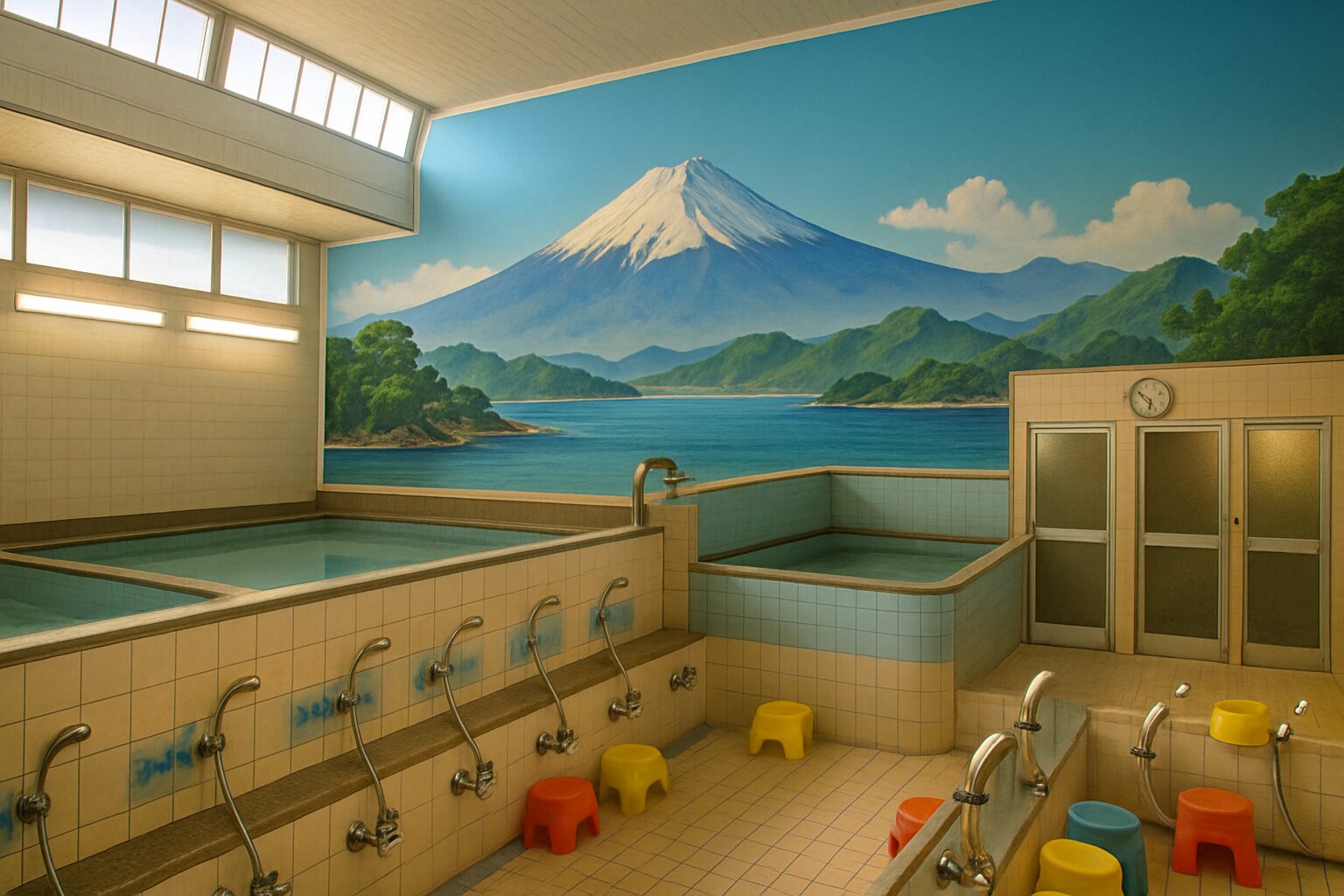
Many traditional sento themselves serve as living historical artifacts, with their architecture reflecting a bygone era of Japanese craftsmanship and design. The most iconic style is miyazukuri, or shrine-style architecture, distinguished by its grand, sweeping karahafu gabled roof that imparts a sacred grandeur to the humble bathhouse. Even before entering, visitors are welcomed by these symbols of tradition. Shoes are stored in small wooden lockers called getabako before stepping up into the main building. The entrance is usually separated by gender, marked by distinct noren curtains—typically blue for men (男) and red for women (女). Inside, the datsuijo, or changing room, often features high ceilings to allow steam to dissipate, dark wooden lockers with ornate keys, and sometimes a large wooden bench in the center. Floors may be simple wood or tatami mats, cool to the touch. A defining characteristic is the bandai, a raised platform where the owner or attendant sits, collecting fees and keeping watch over both male and female changing rooms—an efficient arrangement that reflects the sento’s long history. The bathing area is itself a showcase of tilework, often centered around a large mural painted or tiled above the main tubs. While Mount Fuji is the most traditional and renowned subject, Osaka sento may display local landmarks, folkloric scenes, or vivid mosaic designs. These architectural details go beyond decoration, coming together to create an atmosphere filled with nostalgia, cleanliness, and a sense of communal sanctity.
Your First Visit: A Step-by-Step Guide to Sento Etiquette and Ritual
Bathing with strangers can be intimidating for first-timers, but the experience follows a straightforward, logical set of rules designed to maintain hygiene and comfort for all. Learning this etiquette is the key to feeling relaxed and embracing the social aspect of the ritual. Rather than viewing it as a list of restrictions, see it as a shared choreography everyone present understands. Participating in this dance marks your first interaction with the community.
Before You Even Get Wet: Arrival and Preparation
Your journey starts the moment you spot the sento’s distinctive tall smokestack (entotsu) or its graceful roofline. Upon entering, the first step is to remove your shoes in the entryway, or genkan, and place them in one of the provided shoe lockers. Beyond this point, the floor is regarded as a clean indoor space. Next, head to the front desk, which may be a modern counter or a traditional bandai. Here, you’ll pay the entrance fee, generally a reasonable, standardized amount, usually under 500 yen. If you haven’t brought your own supplies, this is where you can rent a towel set and buy small packets of soap, shampoo, and conditioner. The attendant at the desk, called the bandai-san, often serves as the heart and soul of the establishment, sharing neighborhood news and offering a friendly face who has witnessed generations pass through. A simple “Konnichiwa” (Hello) is always appreciated.
After paying, proceed through the appropriate noren curtain into the datsuijo. Find an empty locker or, in some older places, a wicker basket (kago) for your belongings. This is the point of no return: it’s time to undress completely. Although it may feel unusual, being fully naked is the norm, and wearing a bathing suit would be a major faux pas. Store all your clothes and your large bath towel in the locker. The only items you bring into the bathing area are your small wash towel (often called a “modesty towel”) and your toiletries.
Entering the Bathing Area: The Art of Washing
As you step through the door from the changing room into the bathing area, you’ll be greeted by a warm, humid air filled with the clean scent of soap and minerals. The sounds include splashing water, quiet conversation, and footsteps echoing on wet tile. Before you even approach the inviting tubs, you must follow the sento’s cardinal rule: wash your body thoroughly first. Find an empty washing station, which includes a low plastic or wooden stool, a faucet with hot and cold taps, a handheld showerhead, and a basin or bucket. Sit on the stool—it is considered rude to wash standing, as this might splash others. Use the bucket to mix water to a comfortable temperature and the showerhead to rinse yourself completely. Then lather up with soap and scrub every part of your body. This pre-soak wash is not only about personal hygiene but also a gesture of respect toward your fellow bathers, ensuring the communal bathwater stays clean for everyone. Only once you have rinsed away all soap suds are you ready to enter the tubs.
Now, what about that small towel? This is often confusing for newcomers. The small towel should never be put into the bathwater, as it is considered unclean. Most people fold it neatly and place it on their head, which also helps keep them cool. Others leave it on the tiled edge of the bath, well away from the water. Some may use it to gently scrub their body at the washing station, but once you’re ready to enter the tubs, its sole purpose is to remain out of the water.
Immersing Yourself: The Baths and the Experience
With the washing ritual complete, the true enjoyment of the sento begins. The main bathing hall is a collection of various pools, each providing a distinct sensation. The experience is a journey through temperature, pressure, and occasionally scent, and exploring these different baths is part of the delight. It’s a sensory adventure that soothes the mind and relaxes the muscles.
A Symphony of Tubs: Discovering the Different Waters
Nearly every sento features a large, main tub (shuhitsu) filled with water heated to a comfortably hot temperature, usually between 40 and 44 degrees Celsius (104-111°F). Ease into this bath slowly to let your body adjust. This is often the most social tub, where regulars gather and converse. Next to the hot tub, you will almost always find a mizuburo, a small, deep tub containing shockingly cold water. Alternating between the hot and cold baths is believed to enhance circulation and invigorate the body. It takes courage, but the exhilarating rush is addictive.
Beyond these essentials, many Osaka sento offer a charming variety of specialty baths. Look out for the denki buro, or electric bath. This tub passes low-voltage electric currents between two plates on opposite sides. Sitting between them causes your muscles to tingle and contract—a strange but surprisingly pleasant feeling that many locals swear by for easing muscle pain. You might also encounter jet baths, such as a “dream bath” where you recline while powerful jets massage your back, or standing jet showers that target your shoulders and lower back. Another common feature is the kusuriyu, or medicinal bath. The water is infused with seasonal herbs, minerals, or traditional Chinese medicines, often turning the water a deep green or brown and filling the air with a fragrant, earthy scent. Some larger or more modern sento may even include a rotenburo, an outdoor bath that lets you soak under the sky—a truly blissful experience.
The Sauna and Cold Plunge: The ‘Totonou’ Phenomenon
Many sento also have a sauna. The etiquette here mirrors that of the baths—you should rinse your body before entering, and many people bring a small, damp towel inside to sit on. The sauna experience in Japan often reaches a new level with the ritual of alternating between the intense dry heat of the sauna and the icy shock of the mizuburo. Repeating this cycle several times is key to a modern wellness concept called totonou. Though difficult to translate directly, it describes a state of profound physical and mental balance that follows intense stimulation. Your heart rate stabilizes, your mind becomes clear and calm, and a gentle euphoria envelops you. The pursuit of totonou has grown popular, and you will often see dedicated sauna enthusiasts quietly going through their cycles with serene focus. Experiencing this state yourself offers a deep dive into contemporary Japanese relaxation culture.
The Art of Connection: How to Actually Make Friends
Now that you grasp the mechanics and the environment, how do you bridge the gap from silent bather to friendly acquaintance? The charm of the sento is that it facilitates much of the process itself. The shared setting naturally lays the groundwork for interaction. The key is to be relaxed, respectful, and open to the chance of connection without forcing it.
Breaking the Ice Without Breaking the Rules
Starting a conversation in the bath should be done gently. Loud, boisterous talk is generally discouraged; the atmosphere is meant for relaxation. A simple nod or a slight bow to someone entering the tub is a polite way to acknowledge their presence. A universally understood icebreaker is a comment about the water itself. Saying something like “Ii oyu desu ne” (“This is nice hot water, isn’t it?”) to a nearby bather is an ideal opener. It’s a shared observation that invites a simple, affirmative response and often leads to further small talk. Don’t be surprised if locals, especially older Osakans, show curiosity about you. They might ask where you’re from in simple Japanese or English. Respond with a smile, and don’t worry about perfect grammar—the effort to communicate is what counts. The key is to read the atmosphere. If someone seems quiet and contemplative, respect their space. If they appear open and chatty, feel free to engage.
The Post-Bath Social Hour
Arguably, the richest ground for conversation is not inside the baths themselves, but in the datsuijo and lobby area afterward. This is the sento’s social hub, the true “living room.” After you finish bathing and dry off thoroughly with your large towel before re-entering the changing room, the post-bath ritual begins. This is a time to linger. You’ll see regulars chatting as they get dressed, weighing themselves on old-fashioned scales, or applying lotion. In the lobby, you’ll often find vending machines offering classic post-bath refreshments. The quintessential choices are fruit milk (furutsu gyunyu) or coffee milk (kohi gyunyu) in small glass bottles, often enjoyed with one hand on the hip. A cold beer is also a popular option. Grab a drink, find a seat on one of the vinyl couches, and relax. Here, you might join a conversation already underway or start one with someone else enjoying a drink. There’s often a television showing a baseball game or sumo match, providing a perfect, neutral topic to discuss. This in-between space—between the deep relaxation of the bath and the return to the outside world—is where acquaintances often begin to feel like friends.
Universal Languages: Shared Laughter and Simple Gestures
Remember, communication is about more than just words. A smile is a universal greeting. Sharing a laugh at a dramatic moment in the baseball game on TV creates connection. If you notice an older person struggling to scrub their back, offering help is a kind gesture (though wait to be asked or for a clear signal). Conversely, don’t be surprised if a friendly obachan (a familiar term for an older woman) offers unsolicited but well-meaning advice on the best way to rinse or the best water jet to use. This isn’t criticism; it’s a sign of inclusion. It’s the community’s way of gently guiding you into its customs. These small, non-verbal interactions foster a sense of belonging and camaraderie that is deeply rewarding. The sento teaches you to be present, to observe subtle social cues, and to communicate through shared experience.
A Historian’s Perspective: The Rise, Fall, and Rebirth of Osaka’s Sento

The history of the sento is closely linked to the urbanization of Japan. Although bathing has been part of Japanese culture for over a thousand years, connected to Buddhist purification rituals, the commercial public bathhouse as it is known today truly thrived during the Edo period (1603-1868). As cities like Edo (Tokyo) and Osaka expanded, many homes were small and lacked private bathing facilities, making the sento an essential everyday service. These bathhouses were not only places for washing but also social hubs and centers for exchanging information, similar to European coffee houses.
From Edo Necessity to Post-War Center
The sento’s golden age came in the post-World War II period. During rapid reconstruction and the economic boom, the sento stood at the heart of every neighborhood. It symbolized a return to normalcy and growing prosperity. Families would visit together each evening, strengthening community bonds. The iconic Mount Fuji murals became widespread during this era, providing city dwellers with an aspirational vision of a unified and beautiful Japan. However, starting in the 1960s and 70s, as the economy flourished, more homes were built with private bathrooms (uchiburo). The daily visit to the sento shifted from a necessity to a choice, leading to a gradual decline in traditional bathhouses, many of which eventually closed.
The Modern Challenge and the Designer Sento
Today, traditional sento face competition not only from private baths but also from large, modern “super sento” and health spas that offer resort-like experiences including restaurants, massage services, and extensive relaxation amenities. Nonetheless, the classic neighborhood sento is experiencing an unexpected revival. A new generation of owners and designers is embracing the cultural significance and unique appeal of these historic venues. Across Japan, including Osaka, old sento are being carefully restored. Some return to their former Showa-era splendor, while others are reinvented as stylish, minimalist spaces featuring modern art, craft beer on tap, and DJ events. These “designer sento” attract a younger, trendier crowd, introducing communal bathing to new generations and helping this important cultural tradition to evolve and flourish. They demonstrate that the need for a tangible, physical community space is perhaps more vital than ever in our hyper-connected yet often isolated contemporary world.
Practical Tips for the Aspiring Sento Master
A bit of preparation can make your first few sento visits completely smooth, allowing you to focus on relaxation and social connection instead of worrying about logistics. Here are a few final tips to help you arrive feeling confident and ready to soak.
What to Bring and What to Rent
For a full typical experience, you can put together your own sento kit, which usually includes a large towel for drying, a small towel for washing, soap or body wash, shampoo, and conditioner. Many people carry these items in a small, waterproof basket or bag. However, one of the great conveniences of the sento is that you can come empty-handed. Nearly every bathhouse offers a tebura set, meaning “empty-handed.” For a small additional fee, you can rent a towel set and purchase single-use packets of all the toiletries you need. This makes spontaneous trips to the sento easy and accessible for everyone.
The Tattoo Question: A Modern Guide
This is a common concern for foreign visitors. Historically, tattoos in Japan have been strongly linked to the yakuza, or organized crime groups. As a result, many bathing facilities—especially high-end hot springs (onsen) and fitness clubs—have strict rules banning anyone with tattoos. However, local neighborhood sento often have a more relaxed and nuanced approach. In a cosmopolitan and welcoming city like Osaka, many sento owners recognize the difference between yakuza tattoos and foreign fashion tattoos. Policies vary widely: some have no restrictions, some request covering small tattoos with waterproof patches (available at convenience stores), and some still enforce a strict ban. The best approach is to check their website in advance if possible, or look for signs at the entrance (often a pictogram of a tattooed figure crossed out). If unsure, you can politely ask at the front desk: “Tatuu wa daijoubu desu ka?” (“Are tattoos okay?”). As attitudes slowly evolve, more places are becoming tattoo-friendly, but it’s always best to be respectful and discreet.
Finding Your Local Gem
While this article offers a general overview, every sento has its own unique character, community of regulars, and special features. The best way to experience the culture is to find a local bathhouse in your neighborhood and become a regular. To locate one, search Google Maps for “sento” or the Japanese characters “銭湯.” Or use the traditional method: take a walk through a residential area and look for the tall, slender smokestack. Visiting the same sento week after week, you’ll start recognizing familiar faces. Nods will turn into greetings, greetings into small talk, and small talk into genuine conversations. You’ll discover your favorite bath, the best times to avoid crowds, and the tastiest brand of coffee milk. In essence, you will become part of the rhythm of the place.
A Warm Invitation to Osaka’s Living Room

The local sento serves as a microcosm of Osaka society. It is spirited yet subdued in sound. It embodies tradition while remaining practical. It is a place where social hierarchies dissolve, revealing the simple, warm reality of human connection. To immerse yourself in its waters is to do more than cleanse your body; it is to wash away the day’s worries and engage in a timeless ritual that captures the community’s soul. It is an act of trust, a shared vulnerability that nurtures a unique and profound sense of belonging. For any foreigner living in or visiting this vibrant city, the key to understanding its heart is not found in famous tourist spots or gleaming shopping malls. It is here, in the humble neighborhood bathhouse, among the steam, the tiles, and the quiet camaraderie of neighbors. So bring a towel, leave your preconceptions behind, and take the plunge. The water is warm, and an entire community awaits your discovery.