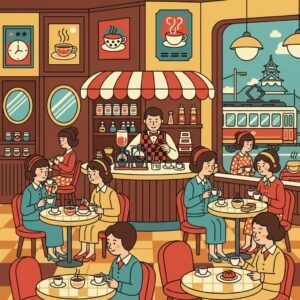
Walk into any given neighborhood cafe in Osaka, one of those quiet spots tucked away in a shotengai or down a residential side street, and your first challenge isn’t the menu. It’s the seating chart. Not a literal chart, of course. That would be too easy, too straightforward for this city. No, this is a living, breathing map of social dynamics, a silent test of your cultural fluency. You see an empty table—a nice, spacious four-top booth in the corner—and your tired feet and heavy laptop bag whisper, “That’s the one.” But a deeper instinct, honed by a few months of living here, screams, “Danger, Will Robinson!” Choosing a seat in an Osaka cafe isn’t a simple matter of logistics; it’s your opening line in a long, unspoken conversation with the neighborhood. It’s a declaration of intent. Are you here to work, to socialize, to quietly disappear, or to become part of the furniture? The chair you pick says it all before you even order your coffee. This isn’t just about finding a place to sit. It’s about finding your place. In Tokyo, a cafe can often feel like a public utility, a transactional space designed for maximum efficiency and minimal interaction. You tap your card, grab your drink, and find an approved, designated spot for your activity. Here in Osaka, the local cafe, or kissaten, is something else entirely. It’s an extension of the community’s living room, a stage where the daily drama of neighborhood life unfolds. And your choice of seat is your audition for a role in the play. Get it right, and you’re on the path to becoming a welcome regular. Get it wrong, and you’ll be met with a subtle, polite, yet unmistakable chill that has nothing to do with the air conditioning.
Just as your choice of seat in an Osaka kissaten signals your intent, navigating the nomikai tightrope equally relies on a delicate balance of personal flair and local etiquette.
The Neighborhood Cafe: More Than Just Coffee
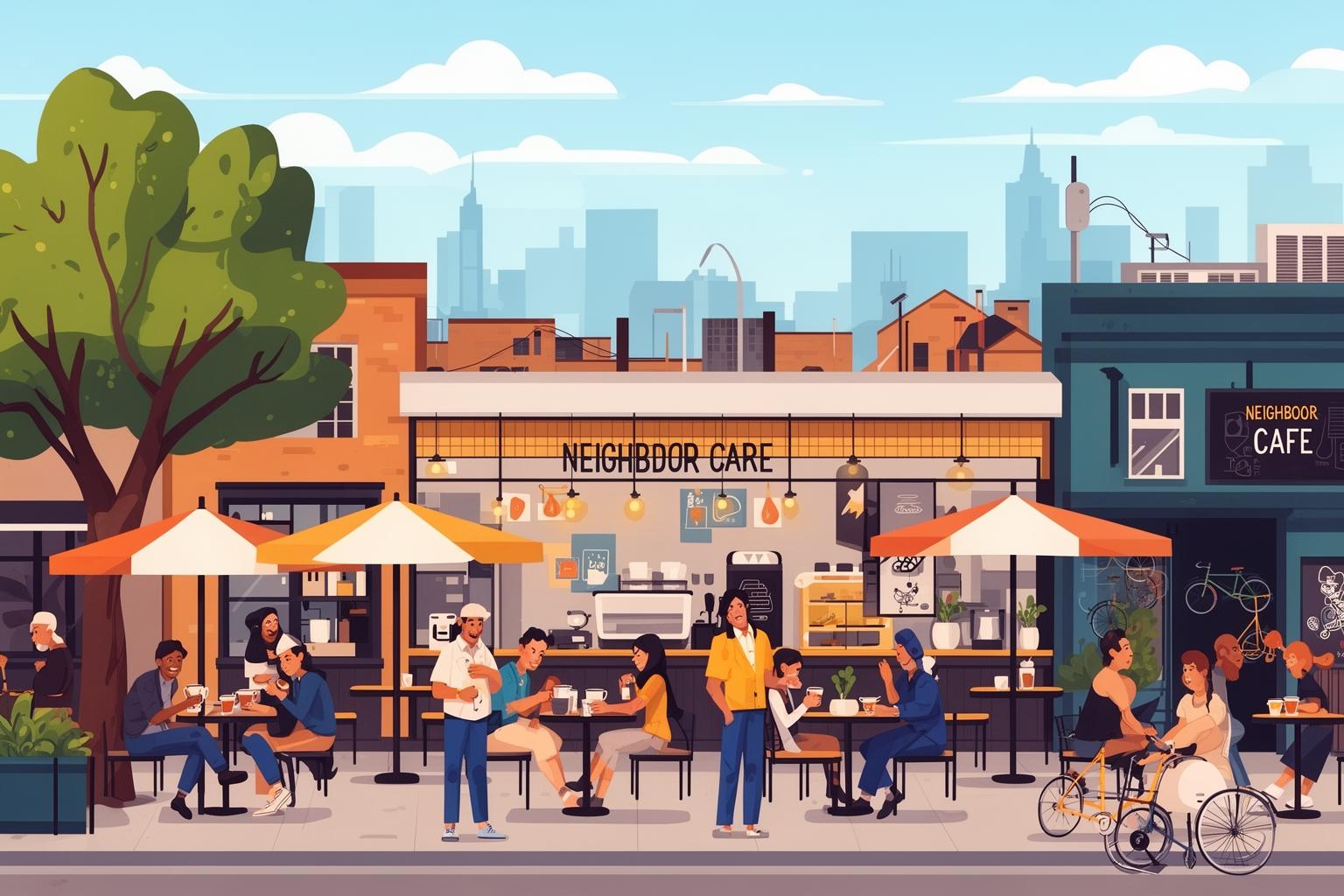
To understand the politics of seating, you first need to recognize what these places symbolize. They are not Starbucks. They are not WeWork. They are sovereign territories, governed by a benevolent ruler known as the ‘Master’ or ‘Mama-san,’ the owner who has probably been pouring the same coffee blend behind the same counter for thirty years. This is more than just a business; it’s their realm, a carefully crafted environment that reflects their personality and the rhythm of the local community.
The ‘Nushi’: The Unofficial Cafe Guardian
Every genuine neighborhood cafe has its nushi—the owner—and its jōren—the regulars. Their relationship forms the cafe’s gravitational center. The jōren are more than patrons; they are an informal family. They share each other’s stories, check on absent members, and occupy their quietly assigned seats with a comforting sense of belonging. As a newcomer, you enter this complex social web as a guest. The owner acts as gatekeeper, quietly watching and evaluating your every move, starting with where you choose to sit. This gaze is rarely judgmental; it is practical. The owner conducts this small orchestra, keeping all instruments in harmony. A misplaced soloist—like a laptop user commandeering the main group table during lunch—can disrupt the entire arrangement. The atmosphere they protect is delicate: it is neither the hushed, monastic stillness of a study-focused cafe near a Tokyo university, nor a chaotic free-for-all. It is a gentle, productive hum: the clink of ceramic on saucer, the murmur of conversation, the rustle of a newspaper. Your presence should enhance this hum, not disturb it.
Osaka’s Sense of ‘Ma’: The Importance of Social Space
This leads to the vital concept of ma (間), which loosely means ‘space’ or ‘pause.’ In a cafe setting, ma is more than just the physical distance between tables. It encompasses social awareness. It is the invisible buffer people create to coexist peacefully in a crowded urban environment. In Tokyo, the sheer density of people often demands a culture of willful ignorance. People maintain privacy by pretending others don’t exist, cocooned in headphones and averted gazes. Osaka‘s approach to ma is different—more active, more engaged. It involves consciously adjusting your presence out of respect for others’ space. Choosing your seat is your first and most essential act of ma. Spreading your coat, bag, and laptop across a four-person table when alone is a disastrous breach of ma. It signals a lack of consideration, a self-centeredness that contradicts the unspoken social contract of shared neighborhood spaces. It’s like shouting in a library, but the offense is visual rather than auditory. You are occupying more social space than you deserve, and in a city that values resourcefulness and fairness, this is a cardinal sin.
The Seat Selection Playbook: Decoding the Cafe Layout
Consider the cafe as a chessboard, where each square holds a unique power and purpose. To play the game well, you must understand the pieces and their movements. The arrangement is deliberate—a carefully crafted map of social zones.
The Power Seat: The Corner Booth
Here lies the throne room. That cozy, tucked-away corner booth with its plush vinyl seating is the cafe’s most coveted spot. It offers privacy, a sweeping view of the room, and ample space to spread out. For these reasons, it’s almost certainly off-limits to you, the solo visitor. This seat is guarded by an unseen barrier, reserved for a few specific types of patrons: the most senior jōren holding court with friends, a small business meeting among local shopkeepers, or a family indulging in a weekend treat. Sitting here alone with a laptop is akin to waltzing into a party and putting your feet up on the host’s coffee table. It signals either deep ignorance or bold arrogance. Staff won’t likely confront you directly but will hover, suggesting a “more comfortable” two-person table by the drafty window. This is not merely a recommendation; it’s a subtle, face-saving nudge. Pay attention.
The Work Zone: The Counter and the Two-Tops
If you come alone, especially to read or work, the counter is your safe haven. The counter seat is the great equalizer—a spot designated for individuals. Sitting here shows humility and awareness. You’re not claiming a large space; you’re happy with a compact, efficient footprint. Another perk: the counter places you within easy, low-pressure reach of the owner, where you can build rapport. A simple chat about the weather or a compliment on the coffee initiates the gradual shift from “anonymous customer” to “recognized face.” The small two-person tables, especially those lined along a wall, are the next best choice. They offer a bit more privacy than the counter but still convey that you’re a party of one. Generally intended for shorter stays, working here is possible but comes with a socially louder time limit than the counter.
The Social Hub: The Central Four-Tops
Those larger tables in the middle of the room? They’re the town square—where friends gather, where lively laughter and rapid-fire Kansai-ben chatter form the cafe’s vibrant heart. Sitting here alone with noise-canceling headphones is a serious misread of the space’s purpose. It’s like hosting a silent disco in the middle of a family reunion. You become a dead zone amid the lively social buzz, an obstruction forcing conversation and movement to detour around you. Osakans excel at coexisting in shared spaces. While these conversations may sound loud to an outsider, there’s a clear internal logic: the energy stays contained within the group. It rarely feels intrusive to others because everyone respects the invisible boundaries defining each social circle. Occupying an entire table alone silences a crucial node of communal energy rather than contributing to it.
Reading the Signals: The Subtle Art of Osaka Communication

So you’ve picked your seat, ordered your coffee, and opened your laptop. But your job isn’t finished yet. Now you need to stay attentive to the subtle, non-verbal signals that shape the cafe’s atmosphere. This is where the true skill of being a considerate patron comes into play.
The Unspoken Time Limit
Unlike chain cafes in busy stations, most neighborhood kissaten don’t post signs declaring a 90-minute seating limit. The rule exists, but it’s enforced through a delicate, almost theatrical dance of indirect communication. How can you tell if you’ve overstayed your welcome? The signals are subtle, but noticeable. The owner might start refilling your water glass more frequently—each visit a gentle nudge, a polite acknowledgment of your presence. Cleaning the table next to you might become more… thorough, with vigorous wiping or a deliberate rearrangement of the sugar dispenser. It’s a kind of stagecraft intended to catch your attention. The clearest signal often comes as a direct, yet warmly pleasant, smile from the owner as they make eye contact across the room. That smile says, “We’ve enjoyed having you, but now the lunch rush line is forming.” This isn’t passive-aggression as it might be seen in the West. Instead, it’s the preferred local way of maintaining harmony (wa) without the discomfort of direct confrontation. The expectation is that you, as a socially aware individual, will read these signals and gracefully yield your seat. In Tokyo, you receive a laminated time-limit card; in Osaka, you receive a lesson in social intuition.
The Laptop Question: To Work or Not to Work?
Bringing a laptop into a traditional kissaten can be a delicate choice. To the owner, a laptop can symbolize everything they are not. It represents work, efficiency, and a transactional mindset, turning their cozy, social salon into a sterile office cubicle. The clatter of a keyboard can be as jarring as a ringing phone. Before opening your bag, do some reconnaissance. Are power outlets visible? Does anyone else, literally anyone, have a laptop out? What kind of clientele and decor define the space? If the cafe features dark wood paneling, velvet chairs, and the faint aura of decades-old cigarette smoke, it’s probably best to keep the MacBook tucked away. The golden rule in Osaka is simple: when in doubt, ask. A polite, deferential “Koko de pasokon o tsukatte mo ii desu ka?” (“Is it okay to use a computer here?”) works wonders. The act of asking often matters more than the answer. It shows respect, acknowledges you’re a guest in their home, and accepts that their spoken or unspoken rules come first. You’ll almost always get an honest, personal response: “Ah, ee yo. Demo o-hiru no isogashii toki wa chotto gomen na.” (“Ah, sure. But maybe not during the busy lunch hour, sorry about that.”) This is the Osaka way: flexibility grounded in mutual respect and direct, personal communication rather than rigid, impersonal policies.
The ‘Aimaise’ vs. The Direct Question
Much has been said about the Japanese concept of aimai, or ambiguity. It’s true that the cafe’s rules are intentionally vague. But what sets Osaka apart is how this ambiguity coexists with surprising accessibility. While the system depends on unspoken understanding, it doesn’t punish those who seek clarity. When you ask a respectful, direct question, you’ll get a direct answer, often with a friendly explanation. This contrasts sharply with more formal, hierarchical cultures, where asking might be viewed as an inconvenience. In Osaka, a sincere question is an opportunity for connection. It invites the owner to engage with you, explain their philosophy of the space, and welcome you into the community on their terms. This mix of unspoken rules and approachable authority is a defining feature of the city’s character.
Why This Matters: The Osaka Mindset in a Coffee Cup
This intricate dance of seating etiquette goes beyond being merely a quirky local custom. It offers a glimpse into the core values of Osaka society, revealing a worldview that emphasizes community, relationships, and a practical approach to shared living.
Community Over Transaction
At its essence, the unspoken code at local cafes centers on a fundamental choice: are you entering a community or simply a place of business? In many parts of the world, and especially in the hyper-efficient spaces of Tokyo, the latter is standard. You pay for a product and temporary use of a space, making the relationship purely transactional. In an Osaka neighborhood cafe, however, you step into a pre-existing social ecosystem. Your payment for coffee is just part of the entry fee. The other part involves your willingness to engage considerately within the community. Your demeanor, awareness, and respect for the shared atmosphere are all integral to the experience. The space is meant to be in, not just used. This key distinction is often missed by foreigners, leading to the impression that Osaka is “nosy” or bound by too many rules. In reality, these rules preserve the communal nature of the space.
The Logic of ‘Kankeisei’: Relationship Building
Life and business in Osaka rest on the concept of kankeisei, or relationship-building. Everything is personal. Your connection with the cafe owner, however small it may seem, begins the moment you enter. By demonstrating understanding of the unspoken rules—choosing a modest seat, asking permission before using your laptop, leaving when it gets busy—you are making deposits into a social bank account. You show that you understand the social contract. This is how you earn the status of jōren. This explains why Osakans often appear so “friendly.” Their famous chattiness is not random extroversion but a continuous, low-level process of nurturing and sustaining relationships. Being a good customer, a good neighbor, and a respectful user of shared space is how you engage in this relational economy. The reward is a sense of belonging that a sterile, transactional environment can never provide.
What Foreigners Misunderstand
The greatest challenge for many non-Japanese is confusing ambiguity with a lack of rules. The absence of signs doesn’t mean anything is allowed; it means rules are enforced by people rather than posted notices. This requires shifting from following explicit guidelines to reading subtle cues. Another frequent misconception is interpreting the owner’s quiet, constant observation as intrusive. It’s not nosiness in the Western sense, but situational awareness. The owner manages the space to ensure comfort for all guests, not just for you. Finally, the ambient noise and chatter may feel distracting to those used to silent cafes as co-working spaces. But to see it that way misses the point entirely. The chatter isn’t a flaw; it’s the central feature. It is the sound of a vibrant, thriving community, and in Osaka, that is something to be treasured, not silenced.
Your Guide to Becoming a Neighborhood Cafe Regular
Navigating this intricate social environment can feel overwhelming, but the route to acceptance is surprisingly simple. It involves a three-step process based on observation, respect, and steady consistency.
The First Visit: Scout and Observe
Your initial visit to a new cafe should be approached like a reconnaissance mission. Pause briefly at the entrance. Don’t rush to the first available table. Survey the room like a skilled strategist. Where do the other solo visitors sit? Where are the groups located? What is the owner doing? Let your eyes adapt to the social layout of the space. For your first visit, always pick the safest, most neutral spot: a seat at the counter. It signals humility and says, “I’m new here, and I come in peace.” Order something simple, like a house coffee or tea. This isn’t the moment for complicated, off-menu requests. Simply watch, listen, and absorb the rhythm of the place.
The Second Visit: Acknowledge and Engage
On your subsequent visit, you can build upon the foundation you established. As you enter, make brief eye contact with the owner. A slight nod and a quiet “Konnichiwa” are enough. This simple gesture transforms you from an anonymous customer into a returning one. You’ve become a familiar face. Sit at the counter again, or perhaps at a small two-person table if the counter is full. If the owner or another regular initiates conversation—and in Osaka, this is likely—respond politely but briefly. This is a small test. A friendly yet concise reply shows you’re approachable but not intrusive. You’re passing the vibe check.
The Third Visit: You’re Almost In
By your third visit, a subtle but meaningful change may take place. The owner might greet you with a nod of genuine recognition. The usual “Irasshaimase” may be replaced by a more familiar “Maido” (thanks, as always). They might even gesture toward what is becoming your regular spot at the counter. This is the moment. This quiet, unceremonious acceptance into the fold. You haven’t been handed a membership card or a loyalty stamp. Instead, you’ve received something far more valuable: a subtle acknowledgment that you fit in. You’ve read the room, respected the space, and through your considerate behavior, earned your place. You are no longer just a customer in a cafe; you are part of the community.