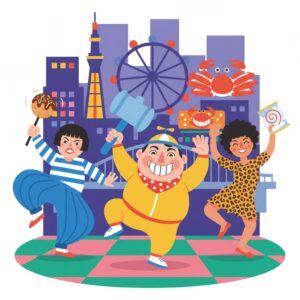
The clock on your computer screen flashes 5:31 PM. The frantic energy of the workday finally subsides, replaced by the low hum of servers and the collective sigh of a workforce powering down. You’re packing your bag, your mind already on the train ride home, when you feel a tap on your shoulder. It’s your colleague, Tanaka-san, a veteran of the sales department with a perpetually mischievous glint in his eye. He leans in, not as a boss, but as a conspirator, and utters the five syllables that form one of Osaka’s most potent social invitations: “Chotto ippai, dou?” How about a quick drink?
To the uninitiated, the phrase seems simple enough. “Chotto” means “a little bit,” and “ippai” means “one glass” or “one drink.” A quick, single drink. Straightforward, right? But here, in the kinetic, no-nonsense heart of Kansai, those words are a cultural Trojan horse. They carry the weight of unspoken rules, social expectations, and a philosophy of life that sets Osaka distinctly apart from the buttoned-up precision of Tokyo. This isn’t just an invitation; it’s a key that unlocks the city’s back-alley soul, a portal into the real, unfiltered world of Osakan communication where relationships are forged not in boardrooms, but over cheap beer and grilled skewers. For any foreigner hoping to truly understand the rhythm of daily life here, learning to decode “Chotto ippai” is as essential as learning to navigate the city’s sprawling subway system. It’s the difference between observing Osaka from the outside and truly living within its vibrant, chaotic, and deeply human embrace.
This invitation to connect over drinks is a perfect example of the unique Osakan communication style, where humor and honesty build genuine relationships.
The Anatomy of an Invitation: More Than Just “One Drink”
To truly understand Osaka’s after-work culture, you first need to unpack the invitation itself. Every element is a masterpiece of Japanese subtlety, designed to be as non-committal and pressure-free as possible, standing in sharp contrast to the strictness often found in other facets of Japanese professional life. It’s a verbal trick, and grasping this nuance is the initial step toward fluency in the local social language.
“Chotto”: The Subtle Art of Softening
The word “chotto” drives this entire social exchange. Literally meaning “a little,” its role here is entirely psychological. It acts as a softener, a buffer, diminishing the perceived weight of the request. Using “chotto,” the inviter isn’t just hinting at a brief visit; they are signaling informality and a lack of obligation. The message is: “This isn’t a big deal. This isn’t a formal, compulsory company event. This is a spontaneous decision. You can easily decline without any hard feelings.”
This reflects Osaka’s practical mindset. In a merchant city, time and social capital are precious. A formal invitation demands a formal reply and carries commitment. But a “chotto” invitation? It’s as light as a breeze. It lets both sides gauge the moment in real-time. If you’re tired, you can politely decline, and the casual “chotto” ensures no offense is taken. If you’re free, you can accept, knowing you’re not committing to an all-night affair. This careful use of understatement smooths social interactions, eliminating the planning friction and pressure often found in Tokyo’s social gatherings. Whereas in Tokyo, a drink invitation often feels like scheduling a formal event, in Osaka, it’s more like a passing breeze you may catch or let go.
“Ippai”: The Drink That Implies More
This is where misunderstandings often arise for foreigners. “Ippai” literally means “one cup” or “one glass.” A literal interpretation might suggest the invitation is for a single drink before everyone leaves. Nothing could be further from the truth. In the phrase “chotto ippai,” “ippai” serves as a symbolic token—it signifies the act of beginning to drink, not the quantity consumed.
Think of it as the entry fee. The “first drink” marks the shift from “colleagues” to “people sharing a moment.” It’s the spark. No one expects to stop at just one beer. The unspoken agreement is that “ippai” will lead to “nihai” (two drinks), perhaps followed by more drinks, a plate of yakitori, and a lively chat about the Hanshin Tigers’ latest game. The length of the evening is deliberately undefined. The night continues as long as the conversation flows and the mood holds, bounded only by the last train home. This vagueness is intentional, allowing the gathering to develop organically. By setting a ridiculously low initial expectation (“just one drink”), it creates a pressure-free space where a genuine, multi-hour bonding session can unfold naturally.
The Unspoken Prompt: “Dou?”
Invitations often conclude with a simple “dou?” (how about it?) or the Osaka dialect equivalent, “ikarehen?” (can’t you come?). This phrasing is crucial; it’s neither a demand nor a formal question. Rather, it’s an open-ended, almost hopeful suggestion. The tone carries an easygoing, “no worries if you can’t” vibe. This stands in stark contrast to the more rigid nomikai (drinking party) invitations typical of corporate Tokyo, which can feel less like invitations and more like summons.
The Osaka “dou?” functions as a mood check. The inviter is essentially feeling out the group’s interest. They are putting out a trial balloon to see who responds. When several people enthusiastically say “Iko ka!” (Let’s go!), a critical mass quickly forms, and the plan comes together in an instant. This democratic, fluid consensus happens in seconds—a stark departure from the top-down scheduling common in corporate social life elsewhere. It embodies a collective choice to reclaim personal time from work, even if just for a few hours.
The Osaka Stage: Where “Chotto Ippai” Happens
The setting for this ritual is just as crucial as the words used to start it. You won’t find the genuine “chotto ippai” experience in a sleek cocktail lounge or a restaurant that requires reservations. The essence of this practice lives in the city’s unpretentious, high-turnover, and vividly atmospheric drinking spots. These places are designed for speed, value, and human connection—not for Instagram.
Under the Tracks and Down the Alleys: The Realm of the Tachinomi
Perhaps the most iconic venue for a “chotto ippai” is the tachinomi, or standing bar. These are often just narrow counters tucked into the cavernous spaces beneath elevated train tracks, or squeezed into a narrow building in a bustling shotengai (shopping arcade). There are no chairs, a deliberate design choice that promotes quick service and constant movement. The closeness is immediate and inescapable; you’ll be shoulder-to-shoulder with your colleagues and a mix of other salarymen, shopkeepers, and local characters.
This enforced intimacy is the point. It breaks down the formal barriers of the office. There’s no head of the table, no carefully arranged seating plan. Everyone is equal, standing together at the same counter, shouting their order to the busy staff. The menu is simple and inexpensive: draft beer, highballs, and an assortment of fried or grilled skewers (kushikatsu being an Osaka favorite). The charm of the tachinomi lies in its transient nature. You can be in and out within 30 minutes if that’s all the time you have. It’s the perfect place for spontaneity. You don’t go to a tachinomi to settle in for the night; you go there to kick things off, to catch the first wave of post-work energy. Neighborhoods like Kyobashi, Tenma, and the maze of alleys around Osaka-Umeda Station overflow with these gems, each a lively hive of chatter and clinking glasses.
The Neighborhood Izakaya: Your Second Living Room
If the tachinomi is the launchpad, the small neighborhood izakaya is the orbit. These are the traditional Japanese pubs, but in Osaka, they often have a particularly cozy, almost familial feel. Forget the polished, corporate chains found in major commercial districts. The ideal “chotto ippai” izakaya is a place that’s been around for decades, run by a husband-and-wife team (the “master” and “mama-san”), with yellowed posters on the walls and a menu of handwritten daily specials.
In these spots, you are not just a customer; you become a temporary member of a community. The master might know your usual drink and begin pouring it the moment you walk in. He’ll banter with the regulars, comment on the news playing on the small television in the corner, and share his opinions on both important and trivial matters. This atmosphere is essential for nurturing the kind of open, honest conversation that “chotto ippai” aims for. It feels less like a commercial transaction and more like being invited into someone’s slightly cluttered, very comfortable living room. It’s a safe space to vent about your boss, celebrate a small success, and connect with your colleagues on a purely human level. The food is hearty, the drinks affordable, and the atmosphere rich with the stories of countless other workdays.
Why Not the Fancy Bar? The Philosophy of Practicality
An invitation to a fancy, expensive, or trendy bar is seldom a “chotto ippai” invitation. That would be something quite different—a date, a special celebration, a formal business dinner. The spirit of “chotto ippai” is fundamentally democratic and unpretentious. It’s rooted in Osaka’s merchant culture, which values cospa (cost-performance) above all else. The aim is maximum social return for reasonable financial input.
Spending a fortune on artisanal cocktails and minimalist decor would defeat the purpose. It would introduce a sense of pressure and performance that runs counter to the concept. The beauty of the experience lies in its accessibility. It’s something you can do several times a week without breaking the bank. The focus is entirely on the people and the conversation, not the surroundings. A true Osakan would take far more pleasure in discovering a shabby-looking bar that serves incredible doteyaki (beef sinew stew) for 400 yen than in paying 2,000 yen for a craft cocktail in a mood-lit venue. This pragmatism forms the foundation of the city’s social life. It’s not about showing off; it’s about connecting efficiently and authentically.
The Social Contract: Navigating the Unwritten Rules
While the “chotto ippai” culture is founded on spontaneity and casualness, it remains distinctly Japanese. There are unwritten rules, subtle signals, and social protocols that shape these interactions. Grasping this delicate balance is essential for participating smoothly and avoiding awkward moments. It’s a mixture of improvisation and etiquette that might seem confusing at first but quickly becomes instinctive.
The Art of Saying Yes (and Why You Probably Should)
The charm of the “chotto” invitation lies in its easy exit. A simple “Kyou wa chotto…” (“Today is a little…”) accompanied by a vague gesture or polite smile is an acceptable way to decline. Yet, repeated refusals will be noticed. While a single “no” is acceptable, consistently turning down invitations may be seen as a lack of interest in joining the team’s social circle. In Osaka workplaces, the bonds formed at these spontaneous gatherings are often as important as the work conducted from 9 to 5.
For a foreigner, accepting these invitations—especially early on—is the fastest way to integrate. It shows you’re a team player, open, and attuned to the local culture. Even if you stay for just one (real) drink and a quick snack, simply showing up speaks volumes. It’s an investment in your social standing within the group. If you must decline, the best approach is to express sincere regret and suggest an alternative: “Ah, I can’t today, but please invite me next time!” This conveys that the issue is scheduling, not a lack of willingness to participate.
The First Round: A Sacred Ritual
Once the group gathers at the venue, the first order of business is quick and decisive. There’s no lingering over the menu for ten minutes. Someone, usually the inviter, will say, “Toriaezu, Nama!” meaning, “For now, draft beer!” or more precisely, “Let’s start with a round of draft beers.” This default choice serves as a universal icebreaker. It’s efficient, removing the need for individual decisions and allowing the conversation to begin immediately.
Even if you’re not a big beer drinker, it’s often easiest to go along with the first round. You can order something else afterward. The key is the collective act of getting that first drink in hand. This is followed by a toast. Everyone raises their glass, someone says “Otsukaresama desu!” (a versatile phrase acknowledging the day’s hard work), and everyone drinks. This ritual officially signals the shift from work mode to relaxation mode. It’s a simple but powerful ceremony drawing a clear boundary between the day’s duties and the evening’s leisure.
The Bill: The Beauty of the “Warikan”
When it’s time to pay, the process is usually as straightforward and egalitarian as the invitation. The standard method is warikan, or splitting the bill evenly. Someone quickly calculates on their phone, and everyone contributes their share, often rounded to the nearest 1,000 yen. This system reinforces the casual, non-hierarchical spirit of the event. It’s not about who ordered more or earns more; it’s a shared experience with a shared cost.
There are exceptions. Sometimes a senior member (senpai) or a boss (joushi) might insist on paying for everyone, or at least a larger portion. This is a gesture of goodwill and mentorship. When this happens, a chorus of protests (“Ie, ie, ie!” – “No, no, no!”) is expected, but you should graciously accept with a heartfelt “Go-chisou-sama deshita!” (Thank you for the meal/treat). Trying to insist on paying a senior who has offered to cover the bill can be seen as disrespectful, as if you are rejecting their generosity. Navigating this requires reading the atmosphere, but most of the time, the simple and clear logic of warikan prevails, keeping the entire gathering lighthearted and free of social debt.
The Osaka Mindset vs. The Tokyo Protocol
To fully grasp the subtleties of “chotto ippai,” one must consider it against the social backdrop of Tokyo. The contrasts in after-work culture between Japan’s two largest metropolitan areas perfectly encapsulate their deeper historical and psychological divides. It’s a story of two cities, told through the language of beer and conversation.
Spontaneity vs. Scheduling
This is the key divide. In Osaka, social impulses are immediate and reactive. An invitation for a drink often arises from the specific mood of that afternoon. A tough meeting, a job well done, or simply the shared feeling of Friday-eve restlessness can spark the “chotto ippai” call. It’s a spontaneous decision, a collective embrace of the present moment. The question is, “What are we doing now?”
In Tokyo, life tends to follow a carefully planned schedule. A colleague might say, “We should all go for a drink sometime,” which is not an invitation for that night but the start of a logistical negotiation involving calendar checks, group chat discussions, and setting a date weeks ahead. Once scheduled, the event becomes another item on the to-do list, another appointment to keep. It’s usually more organized, sometimes held in a reserved private room at a large chain izakaya, resembling a planned corporate function more than a spontaneous gathering. This reflects Tokyo’s status as the nation’s political and corporate hub—a place where order, planning, and formality dominate. By contrast, Osaka, traditionally a merchant city, prizes agility, quick decisions, and responsiveness, whether closing a deal or grabbing a beer.
Honne and Tatemae: The Great Divide
All of Japan follows the principles of honne (true feelings) and tatemae (public face), but the balance varies greatly by region. Tokyo, as the center of power, is the stronghold of tatemae. Social interactions, even casual ones, can be guarded, overly polite, and focused on maintaining harmony and protocol. An after-work drink in Tokyo can sometimes feel like an extension of the office, where professional roles are still performed.
In Osaka, however, there is a strong cultural preference for honne. People value directness, honesty, and good-natured bluntness. The “chotto ippai” is the ideal setting for this. It’s where professional masks come off. The beer and informal atmosphere act as social lubricants, enabling a candor that would be unthinkable at work. People openly complain about their boss (often humorously exaggerated), share genuine frustrations, offer unsolicited but well-meaning advice, and engage in the rapid-fire, witty banter known as manzai. For Osakans, the after-work drink is a vital pressure-release valve, a chance to vent and reconnect on a sincere, human level. This is where authentic team-building occurs—not through corporate-mandated trust exercises, but through shared complaints and laughter.
The Cost-Performance Obsession
The difference in mindset is most evident in attitudes towards money. While “cospa” (cost-performance) is valued nationwide, in Osaka it borders on a religion. An Osakan takes great pride in finding high quality at a low price and enthusiastically shares such finds. This philosophy fuels the “chotto ippai” culture.
The entire network of tachinomi and affordable izakaya caters to this outlook. Success is measured not by spending but by the fun had for little money. A 300-yen beer is inherently better than a 600-yen beer, even if identical in taste, because the value is greater. This contrasts with Tokyo, where more emphasis is placed on image, trendiness, and atmosphere. A Tokyoite may choose to pay extra to drink at a fashionable new bar in a trendy neighborhood like Daikanyama. An Osakan is more likely found in a well-worn but beloved bar in Tenma, proudly recounting how five people ate and drank for under 10,000 yen all night. It’s not about being cheap, but smart, practical, and disdainful of pretense—the essential virtues of Osaka’s merchant spirit.
Life Beyond the First Bar: The Art of the Nijikai
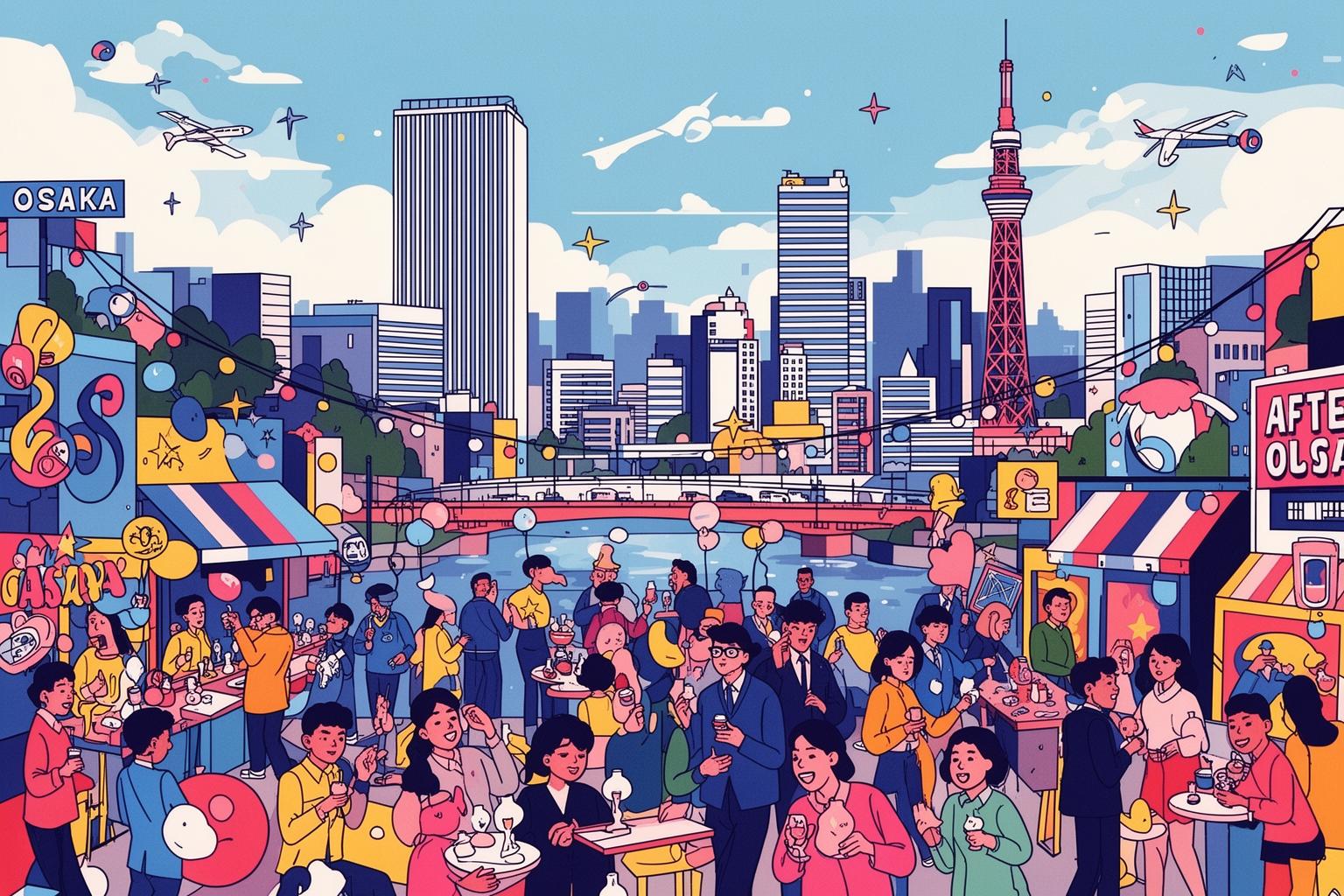
The night rarely concludes after the first stop. The “chotto ippai” is often merely the opener. As the initial excitement gives way to a more relaxed camaraderie, the inevitable question of “what’s next?” arises. This leads to one of Japan’s most beloved and sometimes intimidating social traditions for foreigners: the nijikai, or second party.
Reading the Room: Is the Night Over?
Knowing when to call it a night is an essential social skill. The end of the first round is usually marked by a subtle shift in atmosphere. Conversations may lull, people might check their phones for the last train’s schedule, and someone might tentatively suggest: “Soro soro kaero ka?” (Shall we start thinking about heading home?). This is a pivotal moment. The group’s reaction will dictate what happens next. If there’s unanimous agreement, the bill is settled, and everyone heads out.
However, if a core group hesitates or responds with a direct “Mou ikken iku?” (Shall we go for one more?), the night moves into its next stage. The nijikai is a self-selecting event. Those who are tired, have an early morning, or simply want to stop socializing will politely bow out here. There’s no shame in this. The nijikai is meant only for the willing, and pressuring someone to join is a major breach of etiquette.
The Second Stop (Nijikai): Deepening the Connection
The nijikai is where genuine bonding often takes place. After the less committed leave, the remaining group is smaller, more intimate, and truly invested in extending the evening. The choice of location often shifts to match this change in tone. The lively atmosphere of the tachinomi might give way to a quieter, more subdued bar where deeper conversations can unfold. Alternatively, the group may switch to a completely different activity, most commonly karaoke.
A karaoke box offers a private, soundproof space where the group can let down their last defenses. The talks between songs are often the most personal moments of the night. It’s here you might discover a colleague’s passion for obscure ’80s rock or their secret dream of opening a coffee shop. The nijikai is a journey further into the social fabric of the group—a sign you have moved beyond just being a colleague to becoming a friend.
The Last Train Home: The Ultimate Deadline
No matter how memorable the night becomes, it is almost always governed by a strict, non-negotiable deadline: the shuuden, or last train. Japan’s public transportation usually stops running around midnight, and missing that final train is a serious issue. It means either an expensive taxi ride home or a long wait until the first train around 5 AM. This shared deadline fosters a sense of camaraderie and urgency. The last hour of drinking is often marked by frequent checks of the train schedule app. The final sprint to the station is a familiar ritual for any city resident in Japan. This practical limitation serves as a natural boundary, ensuring even the liveliest “chotto ippai” stays grounded in the demands of the next workday. It balances Osakan fun with a dose of pragmatism.
A Foreigner’s Field Guide to “Chotto Ippai”
For non-Japanese residents, the world of “chotto ippai” can feel like a complicated social maze. However, with a few key principles in mind, you can not only navigate it successfully but also thrive within it. This is your crash course in becoming a welcomed participant in one of Osaka’s most significant daily rituals.
Your First Invitation: A Step-by-Step Guide
When Tanaka-san leans over your desk and says the magic words, your reply should be a warm and slightly enthusiastic “Zehi!” (By all means!) or “Ii desu ne! Ikimashou!” (Sounds great! Let’s go!). Grab your bag and join the group. Don’t worry about not knowing the destination—that’s part of the fun. At the tachinomi or izakaya, follow the group’s lead when ordering your first drink—almost certainly “Nama.” Once the drinks arrive, wait for the toast before taking a sip. Your main role at this stage is to be a pleasant, observant, and positive presence. Listen more than you speak, smile, and try to learn the names of the dishes everyone orders. Your enthusiasm and eagerness to participate matter far more than your Japanese proficiency.
What to Talk About (and What to Avoid)
The conversation will probably be light, fast-paced, and full of inside jokes. Don’t worry if you can’t catch every word. Good topics for you to bring up include asking colleagues about their hobbies, favorite local restaurants, or their thoughts on the Hanshin Tigers or Orix Buffaloes baseball teams. Complaining about work is practically a national pastime and a good way to bond, but as a newcomer, it’s best to keep your complaints general and lighthearted instead of targeting specific individuals. Avoid delicate topics such as politics, salary comparisons, or overly personal questions about marriage or family unless your colleague raises them first. The goal is to build camaraderie, not conduct an interview.
Mastering the Etiquette
Japanese drinking etiquette has several important points. It is customary to pour drinks for others, especially those senior to you, before pouring your own. Watch your neighbors’ glasses; if one is running low, pick up the bottle and offer to pour for them with a “Douzo.” They will likely return the favor. When someone pours for you, it is polite to hold your glass with both hands. The toast, “Otsukaresama desu,” is essential. At the end of the evening, as you leave, be sure to thank the person who invited you and say a general “Gochisousama deshita” to the group. These small gestures demonstrate respect and an understanding of local customs and will be greatly appreciated.
Ultimately, “chotto ippai” is not a test to pass. It is an invitation to connect. It represents the lifeblood of Osaka’s social scene, a nightly ritual that strengthens bonds, eases workplace tensions, and transforms a group of individual employees into a cohesive, if occasionally dysfunctional, family. It’s in these crowded, noisy, smoke-filled bars that the city’s true character shines through—pragmatic, unpretentious, deeply human, and always ready for a good laugh. Accepting this simple invitation is the first and most important step toward truly understanding what it means to live and work in Osaka. It’s a journey that begins with one quick drink and ends with a profound appreciation for the heart and soul of this remarkable city.