Hey, I’m Mia. As a storyteller, I chase ghosts. Not the spooky kind, but the phantoms of what a place was, what it is, and the shimmering mirage of what it sells itself to be. In Japan, two such powerful specters haunt the urban landscape, offering radically different narratives of the nation’s soul. One is a dazzling, high-frequency broadcast of futuristic ambition and polished cool; the other is a hushed, static-laced whisper of grit, survival, and unfiltered truth. I’m talking about the tale of two cities within cities: Tokyo’s Shinjuku and Osaka’s Nishinari Ward. To the casual observer or the first-time visitor scrolling through glossy travel blogs, Japan can appear as a monolith of serene temples, hyper-modern cityscapes, and impeccable service. Shinjuku is the poster child for this image. It’s the Japan of Blade Runner fantasies and high-fashion dreams, a place where the world’s busiest train station pumps millions of souls a day through veins of neon and steel. But travel a few hundred kilometers southwest to Osaka, and you’ll find Nishinari, a place that exists in the shadow of that gleaming image. Nishinari is the city’s heart, stripped bare. It’s where the concrete is cracked, the prices are rock-bottom, and the faces tell stories not of corporate conquest, but of daily persistence. Comparing them isn’t about crowning a winner. It’s about understanding the profound duality of modern Japan. It’s about peeling back the slick veneer to see the complex, beautiful, and sometimes harsh machinery that makes this country tick. This is a journey into the unfiltered reality, a deep dive into two worlds that, while only a bullet train ride apart, represent different universes of the Japanese experience. They are the yin and yang of the concrete jungle, and to truly know one, you must be willing to face the other.
To see how Osaka’s vibrant energy can be experienced on a budget, consider exploring the Super Tamade district.
The Aura of Arrival: First Steps into Two Worlds
Your first five minutes in a place can reveal everything. Exiting Shinjuku Station is an intense sensory barrage, a baptism in neon and noise. You become less a person and more a particle caught in a vast, flowing river of humanity. The sheer magnitude is overwhelming. Towers that pierce the sky, gigantic video billboards blaring ads for pop idols and energy drinks, the cacophony of train announcements, jingles from countless shops, and the murmur of a million conversations blending into one electric hum. The air itself feels different—charged, dynamic, thick with ambition and the scent of luxury department stores. You instantly sense that you are in a global hub, a place where fortunes are forged and dreams chased with relentless, driving energy. It is intoxicating and utterly impersonal. You are one among many, a face in a sea of faces, and there is a strange freedom in that. Shinjuku doesn’t ask who you are; it simply demands you keep moving.
Now, compare that to your arrival in Nishinari. You’ll likely disembark at Shin-Imamiya or Dobutsuen-mae Station, and the shift is just as striking, but in the opposite direction. The metropolis’s roar softens to a low murmur. The air, thick with the smell of grilled offal, cheap cigarettes, and damp concrete, feels heavier, more grounded. The visual landscape flattens. Instead of gleaming skyscrapers, you find a jumble of low, weather-beaten Showa Era buildings, their facades telling stories of decades of sun and rain. The crowd thins significantly. The people here don’t rush; they shuffle, linger, watch. Mostly older men, their faces lined with marks carved by life rather than laughter. There is an immediate, palpable sense of history, of a place largely bypassed by time and perhaps progress. You are no longer anonymous. You are an outsider, an observer, and your presence is noticed, not with hostility, but with quiet curiosity. The silence between sounds is deeper here. You hear the clatter of a pachinko parlor, the distant clang of a streetcar, the rough banter spilling out from a standing bar onto the sidewalk. Nishinari doesn’t overwhelm with scale; it envelops you in its atmosphere. It is a place that wears its heart, its struggles, and its history openly for all to see.
Shinjuku: The Polished Engine of Tomorrow
To truly grasp Shinjuku, you must view it as a city of diverse personalities, each confined within just a few city blocks. It represents a masterclass in urban planning and controlled chaos, exemplifying Japan’s remarkable ability to rebuild and reinvent itself with visionary ambition.
West Shinjuku: The Concrete Canopy
Step out of the station’s west exit, and you enter a completely different realm. This is Nishi-Shinjuku, the skyscraper district—a dense forest of steel and glass where sunlight barely reaches the spotless sidewalks below. This area serves as Tokyo’s administrative and business core. Its centerpiece, the Tokyo Metropolitan Government Building, is a magnificent Kenzo Tange-designed monolith, resembling a cathedral devoted to commerce and governance. The highlight? The panoramic observation decks on the 45th floor are entirely free. From there, the vast, breathtaking expanse of the Tokyo megalopolis stretches before you. On a clear day, the sacred peak of Mount Fuji appears, a serene natural icon overlooking the world’s largest urban sprawl. This view puts everything into perspective. Below, impeccably dressed salarymen and women move purposefully between corporate headquarters of giants like Sumitomo and Mitsui. The atmosphere is sterile, efficient, and awe-inspiring—a physical embodiment of Japan’s post-war economic miracle and a district literally built on ambition. The feeling here is one of order and power. Wide, clean streets and towering skyscrapers create a scale that dwarfs the individual, reminding you that you are part of a vast, intricate economic machine.
East Shinjuku: The Neon Jungle of Desire
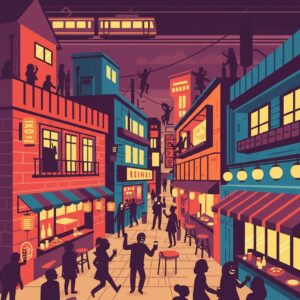
Cross the tracks to the east side, and you dive headfirst into the electric chaos defining Shinjuku’s global image. This is the entertainment district, a place that truly never sleeps. Its notorious, pulsating core is Kabukicho. Named after a post-war plan to build a kabuki theater that never came to be, it has instead evolved into Asia’s largest red-light district. But it encompasses much more than that—it’s a theme park of human desire. Walking beneath the iconic red archway feels like stepping onto a movie set. The overwhelming density of neon signs creates an artificial daylight that banishes the night. Giant screens flash music videos, while the Godzilla Head atop the Toho Cinema roars on the hour, acting as a pop-culture guardian over the revelry. This was home to the world-famous, now-closed Robot Restaurant—a fever dream of lasers, dancers, and giant fighting robots that perfectly captured the wonderfully bizarre side of Japanese entertainment. The streets are a whirl of host and hostess clubs, smoky izakayas, karaoke bars, ramen shops, and arcades. Tourists with wide eyes mix with touts, yakuza, and late-night revelers. There’s a palpable edge to Kabukicho, a hint of danger that makes it thrilling, yet for the most part, it’s a spectacle—a carefully managed ecosystem of entertainment. Adjacent are two beloved pockets of genuine grit: Golden Gai and Omoide Yokocho. Golden Gai is a preserved relic, a cluster of six narrow alleys packed with over 200 tiny bars, some barely seating five. Each bar has its own unique theme and loyal patrons. It offers a slice of post-war Tokyo, a fire-hazard labyrinth filled with incredible character where you can share intimate conversations with bartenders and strangers over whiskey. A short walk away lies Omoide Yokocho, affectionately known as “Piss Alley” due to its historic lack of facilities. Today, it’s a smoky, atmospheric lane lined with tiny yakitori stalls, where paper lanterns cast a warm glow on diners hunched over grills, savoring skewers of every part of a chicken imaginable. The scent of charcoal and grilled meat is intoxicating—a primal and delicious contrast to Kabukicho’s synthetic glitz.
Shinjuku’s Softer Side: Oases of Calm and Culture
But Shinjuku is not all concrete and neon. Just a ten-minute walk from the station’s chaotic south exit lies a tranquil sanctuary: Shinjuku Gyoen National Garden. Without exaggeration, it is one of the world’s most beautiful public parks. For a modest entrance fee, you can completely escape the city. The garden is a masterpiece of landscape design, seamlessly melding three distinct styles: a traditional Japanese garden with ponds and pagodas, a formal French garden with geometric precision, and a sprawling English landscape garden with expansive lawns. In spring, it transforms into a cherry blossom paradise, attracting thousands for hanami picnics. In autumn, the maples burn in brilliant reds and golds. It’s a place to breathe, unwind, and observe the changing seasons—reminding you that even inside the world’s busiest city, nature’s quiet rhythms continue. Then there is Shinjuku Ni-chome, the vibrant hub of Tokyo’s LGBTQ+ community. This compact neighborhood houses hundreds of bars, clubs, and cafes, creating one of the most open and inclusive atmospheres in Japan. It’s a space of celebration, community, and self-expression—a vital facet of Shinjuku that exists alongside the corporate and entertainment realms. Shinjuku is a microcosm of modern Japan’s ambitions: a place where corporate power, hedonistic pleasure, serene beauty, and cultural diversity coexist, all meticulously arranged within one electrifying square mile.
Nishinari: The Unvarnished Soul of the Working City
Nishinari functions on an entirely different wavelength. Unlike Shinjuku, which embodies aspiration, Nishinari is a place of existence. Its story is not one of bright futures but of a long, complex, and often challenging past that still shapes its present. To truly appreciate Nishinari, you need to put aside the typical tourist checklist and open yourself to a deeper, more human experience.
Kamagasaki: The Heart of the Matter
At the center of Nishinari, both geographically and spiritually, lies the area informally known as Kamagasaki, or the Airin-chiku district. It is Japan’s largest ‘yoseba,’ a traditional hub for day laborers. Its history is deeply intertwined with the country’s modernization. During the post-war boom, men from across Japan came here, finding cheap lodging in ‘doya’ (flophouses) and daily construction work that rebuilt Osaka and fueled the economic miracle. These men were the invisible hands building the skyscrapers that now define cities like Shinjuku. When the bubble economy burst in the early 1990s, jobs vanished, leaving many stranded, aging, and without social support. This legacy is visible throughout the area. The population is mostly elderly and male. The streets are dotted with ‘doya,’ many of which have been converted into ultra-budget hotels for backpackers, creating an unusual mix of residents. You’ll see men gathering early in the morning, hoping to find work that is now rare. Others pass the time in parks, playing shogi (Japanese chess), or simply sitting. This is a side of Japan seldom acknowledged: poverty, aging, and those left behind by economic progress. Yet dismissing it as a place of sorrow misses the mark entirely. A powerful sense of community thrives here, forged through shared adversity. Various organizations and volunteers provide food, medical care, and support. Kamagasaki’s resilience and raw honesty make it deeply moving. Walking its streets offers a lesson in Japanese social history and a confrontation with a reality as integral to the country as the bullet train and anime.
The Economy of Survival: Vending Machines and Standing Bars
Nishinari exemplifies frugal living. One of its most notable features is the abundance of 50 and 80-yen vending machines. In a country where a typical vending machine drink costs 130 to 160 yen, these exceptionally cheap machines are a lifeline. They reveal the local economy—an economy born of necessity. The drinks often include brands you’ve never heard of or major brands nearing expiration, but they are cold, refreshing, and affordable. This principle applies broadly. Local ‘supa’ (supermarkets), such as the famous Super Tamade with its bright neon lights and unbelievably low prices, are attractions in their own right. You can buy an entire bento box for 200 yen, a fraction of the cost elsewhere. The food scene revolves around ‘tachinomi’ (standing bars) and inexpensive eateries specializing in ‘horumon’ (grilled offal), a classic working-class dish utilizing every part of the animal. Visiting a Nishinari tachinomi is an immersive cultural experience. You stand shoulder-to-shoulder with locals, communicate through gestures and broken Japanese, point to dishes behind the counter, order a cheap beer or shochu, and become part of a temporary community. Conversations are gruff, laughter is loud, and a strong camaraderie fills the air. This is not theater for tourists; it represents the authentic social fabric of the neighborhood.
Shinsekai and Tobita Shinchi: Echoes of a Bygone Era
Nishinari borders and blends into one of Osaka’s most iconic and eccentric districts: Shinsekai, which means “New World.” Developed before the war, its design draws inspiration from two cities: Paris for its northern half, centered around the Tsutenkaku Tower (a loose homage to the Eiffel Tower), and New York’s Coney Island for its southern half. Today, it feels frozen in time. The garish, retro-futuristic signs, giant blowfish lanterns, and the image of the Billiken (a whimsical god of “things as they ought to be”) are everywhere. Shinsekai is loud, kitschy, and unapologetically old-fashioned. It’s known for kushikatsu—deep-fried skewers of meat and vegetables—with the unbreakable rule of “no double-dipping” in the communal sauce. While technically separate from Nishinari, it shares the same gritty Showa-era spirit and offers a more tourist-friendly introduction to the area’s ambiance. Further within Nishinari lies a more complex and controversial area: Tobita Shinchi. This is Japan’s largest and one of its last traditional red-light districts. Out of respect for residents and due to the area’s nature, photography is strictly prohibited, and visitors should be discreet. Historically and architecturally, however, it is fascinating. The district has preserved its Taisho-era wooden buildings, complete with intricate carvings and glowing lanterns. Operating within a legal gray zone, Tobita Shinchi offers a startling glimpse into a hidden side of Japanese society—a world that has existed for over a century, governed by its own ancient rules just steps away from the modern cityscape.
The Philosophical Divide: Efficiency vs. Resilience
The contrast between Shinjuku and Nishinari goes beyond aesthetics; it represents a clash of philosophies. Shinjuku embodies the philosophy of constant motion and unyielding efficiency. It is a city built with clear objectives: to move people, generate capital, entertain, and project the image of a powerful, forward-looking Japan. Its systems are highly complex yet designed for smooth operation. The train network, pedestrian pathways, and district zoning—all are feats of human engineering aimed at maximizing productivity and experience. Here, the individual functions as a cog within this grand machine. Value is placed on what you do, what you buy, and where you are headed. It reflects a top-down vision of a city, meticulously planned and executed.
Nishinari, on the other hand, represents resilience. It is not a planned district but an organic one, shaped from the ground up by the needs of its residents. Its systems are not efficient but human. Community networks, informal economies, and shared spaces such as parks and standing bars have developed out of necessity for mutual support and survival. The value lies not in production, but in endurance. Nishinari has withstood economic downturns, social changes, and aging, continuing to function as a place marked by stubborn persistence—a refusal to be erased or sterilized. While Shinjuku is about building the future, Nishinari carries the weight of the past. It stands as a living museum of the social and economic forces that shaped modern Japan, reminding us that progress always leaves some behind.
As a writer, I find stories everywhere, yet their nature differs deeply. Shinjuku sparks tales of cyberpunk ambition, lonely souls lost in neon glows, and high-stakes corporate intrigue. It is a backdrop for grand, spectacular narratives. Nishinari inspires quieter, deeper, and more intimate stories—the old man who plays shogi in the park daily, the woman running a tiny food stall for fifty years, the unspoken bonds among men with nothing but each other. It is a place for character studies, revealing the epic within everyday struggle.
A Guide for the Curious Soul: Navigating Both Realms
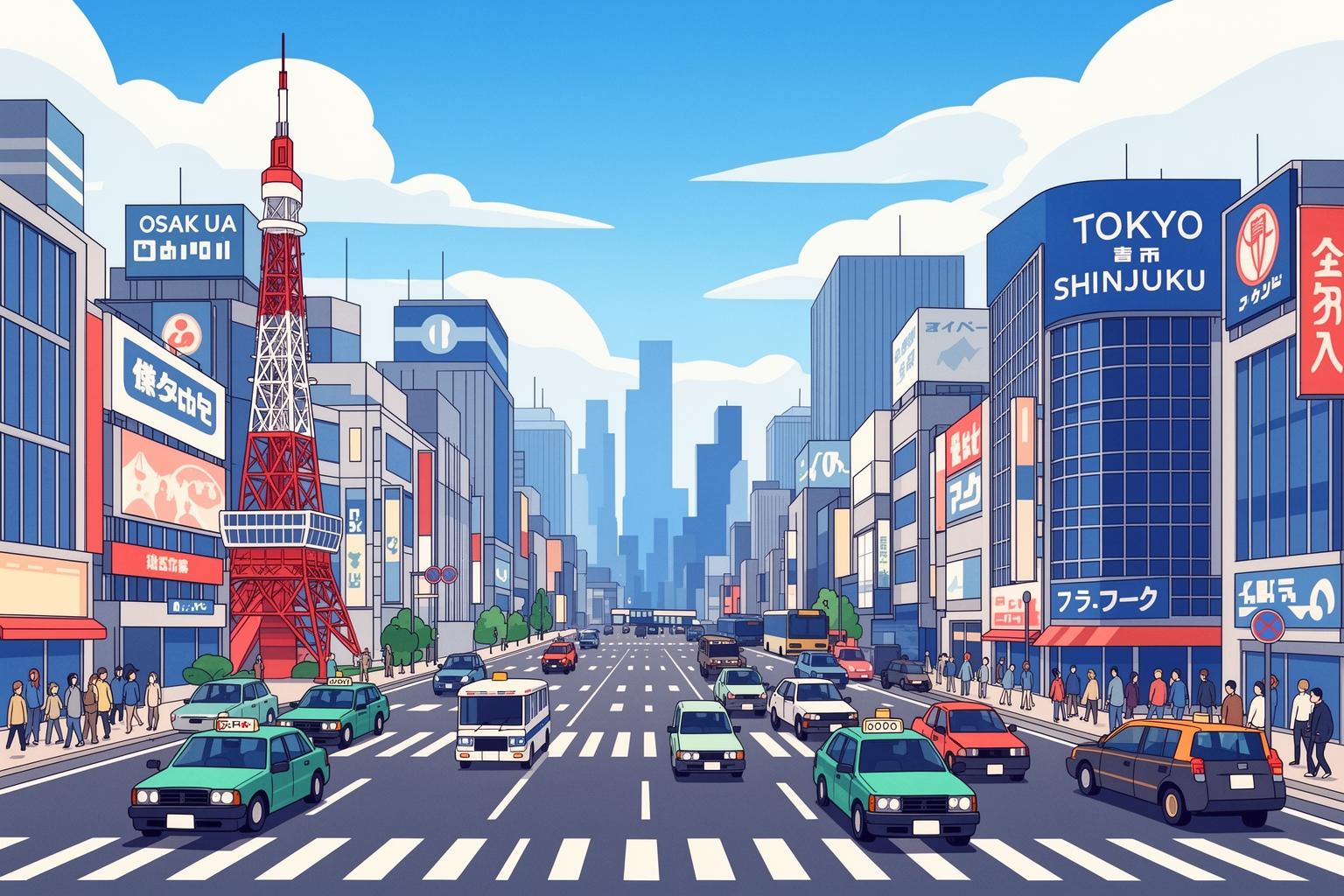
To get the full experience of Japan, you need to explore both areas, though each demands a different mindset.
For Shinjuku, my suggestion is to embrace the chaos. Let yourself get lost and don’t just stick to the main streets. Step into a random building and explore its basement restaurants. Take the elevator to the top of the Metropolitan Government Building at sunset and watch the city lights come alive. Enjoy a drink in a tiny Golden Gai bar, then another in a sprawling department store rooftop beer garden. Catch a strange show, sing some off-key karaoke, and eat ramen at 3 AM. Shinjuku is a playground; the key is to play. Be ready for crowds, have your transport card handy, and wear comfortable shoes. It’s a marathon of stimulation—pace yourself but dive in wholeheartedly.
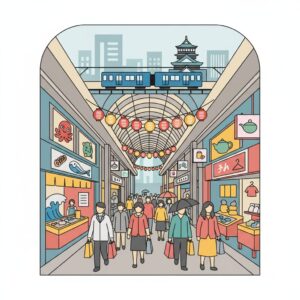
For Nishinari, the approach is quite different. Slow down. Be an observer rather than just a visitor. Put your camera away, especially when photographing people. The residents are not tourist attractions, and their privacy must be respected above all else. Stroll through the shopping arcades like Haginochaya Hon-dori to glimpse everyday life. Sample the local food with humility and gratitude; even a simple “oishii” (delicious) means a lot. Stay aware of your surroundings, as you should in any unfamiliar city, but let go of the fears stirred up by sensationalist stories. This neighborhood is full of people simply living their lives. The greatest gift you can offer Nishinari is quiet, respectful curiosity. See the humanity, not just the poverty. See the history, not just the decay. It will reward you with a depth of understanding no flashy landmark ever could.
The Unseen Connection
Ultimately, what strikes me most is that these two places are not truly separate. They represent two sides of the same coin, deeply intertwined. The labor of the men from Nishinari constructed the skyscrapers of Shinjuku. The wealth generated within Shinjuku’s corporate towers creates the economic pressures and social inequalities that are keenly felt on the streets of Nishinari. One cannot exist without the other. Shinjuku is the bright, dazzling flower of Japan’s economic landscape, while Nishinari is the soil and roots—gritty, hidden, yet absolutely essential. To visit only Shinjuku is to admire the bloom without understanding what sustains it. To visit only Nishinari is to witness the struggle without recognizing the extraordinary heights it enabled. Exploring both offers a way to grasp the beautiful, painful, and profound contradictions of this remarkable nation. So, when you come to Japan, by all means, lose yourself in the neon-lit canyons of Shinjuku. But then, take a train to Osaka, wander through the quiet, worn-down streets of Nishinari, and listen. Listen to the ghosts. They have a very different, yet equally important, story to share.