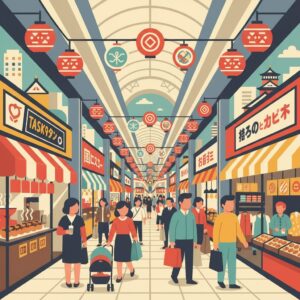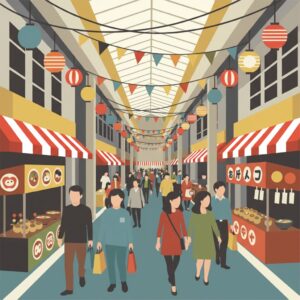
Welcome to Osaka, a city that moves to a different beat. If you’ve spent any time here, especially after coming from the polished, predictable rhythm of Tokyo, you’ve probably felt it. It’s a certain kind of energy, a raw, unfiltered hum that rises from the pavement and echoes in the covered shotengai shopping arcades. And at the very heart of this vibrant chaos, you’ll find its most powerful conductors: the Osaka Obachan. Forget the stereotypes of quiet, demure Japanese women. The Obachan—a term for middle-aged and older women—is a force of nature, a whirlwind of leopard print, practical advice, and unsolicited candy. For the uninitiated, an encounter can be bewildering. One minute you’re quietly waiting for the Hankyu train, the next an Obachan is inspecting the contents of your grocery bag, telling you that you paid too much for your daikon radish and that the shop three blocks over has a better deal. It’s direct. It’s personal. It can feel like an invasion of the personal space bubble you’ve been so carefully taught to maintain. But here’s the secret every long-term resident learns: this isn’t rudeness. It’s the language of Osaka. It’s a communication style born from a merchant city’s DNA, where efficiency, honesty, and community are the highest currencies. This is your guide to decoding that language, to understanding the method behind the delightful madness, and to appreciating the Obachan not as a caricature, but as the truest embodiment of Osaka’s soul. They are the gatekeepers to understanding what it really means to live, not just exist, in this incredible city.
To truly grasp this unique social fabric, you can see these principles in action within the unspoken rules of the local shotengai.
The Art of Straight Talk: Why Obachan Say What They Mean

In Tokyo, conversation often feels like a delicate dance. You carefully navigate a maze of politeness, reading between the lines and interpreting what isn’t said. This is the realm of tatemae (public face) and honne (true feelings), where being direct can come across as unsophisticated or even aggressive. Then you arrive in Osaka, where an Obachan shatters that entire idea before you’ve even finished your morning coffee. The communication style in Osaka, especially among its matriarchs, is founded on radical pragmatism. They prioritize clarity and efficiency over subtlety. Why waste time hinting when you can just say it?
A Grocery Store Intervention
Imagine this: you’re at a local supermarket, maybe the Life or Mandai near your apartment. You’re standing in front of a wall of soy sauces, overwhelmed by choice. Suddenly, you sense someone beside you. An Obachan, likely in her late sixties with a formidable perm, points decisively at a particular bottle. “Kocchi no hou ga oishii de. Yasui shi,” she says. (This one tastes better. And it’s cheaper.) She’s not an employee—just another shopper. She might then glance into your basket. “Ara, sono gyuuniku takai wa! Mukou no suupaa, kyou tokubai yattande.” (Oh, that beef is expensive! The supermarket over there had a special sale today.) For a foreigner, and even for someone from Tokyo, this can feel shocking and intrusive. But in her mind, she’s done a public service: saved you from mediocre soy sauce and overpriced beef. She’s made your life just a bit better. This isn’t criticism; it’s sharing useful, practical information. In a city built by merchants, a good deal is news worth spreading, and letting a neighbor overpay feels almost like a communal sin.
The Health and Wellness Check You Didn’t Ask For
The Obachan’s bluntness extends well beyond shopping. It’s part of a broader approach to community care. You might be on the bus, looking exhausted after a long day. An Obachan sitting across from you might catch your eye and say with genuine concern, “Anata, tsukareteru kao shiteru naa. Hayaku ie kaette yasuminasai.” (You look tired. Go home early and rest.) There’s no hidden meaning—just a straightforward observation paired with a caring directive. In Tokyo, a stranger would rarely comment on your appearance, as it would be seen as an invasion of privacy. But the Osaka Obachan follows a different social contract. She sees you as part of her community, even just for the bus ride, and feels a responsibility for your well-being. Ignoring your visible fatigue would feel cold and indifferent. By speaking up, she recognizes you, connects with you, and reinforces that you’re not just an anonymous face.
How to Respond to Radical Honesty
So, how do you react when faced with this blunt kindness? The worst response is to become defensive or offended, which only adds confusion. The Obachan’s intentions are rarely anything but well-meaning. The best approach is to lean into it.
When she offers shopping tips, a great reply is a slightly theatrical, wide-eyed, “Honma desu ka?! Uwaa, arigatou gozaimasu! Tasukarimasu!” (Really?! Wow, thank you so much! That’s a big help!) This shows you respect her expertise and appreciate the gesture. You don’t have to follow her advice, but you should acknowledge its value.
If she comments on your tiredness, just smile and agree. “Hai, chotto tsukaremashita. Yasumimasu!” (Yes, I’m a little tired. I’ll rest!) This closes the interaction nicely. You’ve received her concern, acknowledged it, and confirmed you’ll act on it. You’ve successfully navigated a classic Osaka encounter. By responding with grace and a touch of humor, you demonstrate you understand. You’re no longer just a visitor—you’re beginning to think like a local.
“Ame-chan” Diplomacy: The Unspoken Language of Candy
If you live in Osaka for more than a week, it will happen. Whether you’re on a train, standing in line, or sitting on a park bench, a hand will appear, offering you a small, hard candy. This isn’t just a random gesture of kindness; it’s a fundamental social ritual. This is Ame-chan, the secret currency of the Osaka Obachan. The “-chan” suffix is a diminutive, a term of endearment, which reveals everything you need to know. It’s not merely candy; it’s a small token of affection.
The Transaction of Trust
An Obachan’s purse is more than a bag; it’s a mobile diplomacy kit, and Ame-chan is its primary tool. They carry an impressive variety—classic Kuro-ame (black sugar candy), salty Nodo-ame (throat lozenges), milky Ichigo Miruku (strawberry milk)—ready to be shared at a moment’s notice. The act of giving Ame-chan is a layered social gesture. It serves as an icebreaker, a way to instantly dissolve the barrier between strangers. It might be a reward for a child who has stopped crying. It can express solidarity with a fellow commuter during a train delay. It might simply say, “Hello, I see you. We are sharing this space together.”
I once witnessed an Obachan ease a tense moment on the JR Loop Line. A young couple was quietly having a stressful argument. An Obachan nearby observed them briefly, then rummaged through her spacious bag, pulled out two lemon-flavored candies, and leaned forward. “Kore, tabe,” she said simply. (Eat this.) The couple was so surprised they paused their quarrel. They accepted the candies, mumbled their thanks, and the tension just melted away. The Ame-chan wasn’t a solution to their problem but a pattern interrupt—a tiny, sweet reminder from the universe to take a breath. That is the power of Ame-chan.
Why Candy? The Cultural Roots
This tradition is deeply embedded in Osaka’s culture of practicality and mutual support. In the busy, often cramped merchant quarters of old Osaka, neighbors lived closely together. Building and maintaining good relationships wasn’t just a courtesy; it was essential for survival and business. A small, inexpensive, shareable item like candy became an easy and effective way to foster goodwill. It’s a low-stakes offering that yields a high emotional return. It costs almost nothing but says so much. It says, “I am prepared for any situation.” It says, “I am thinking of others.” It says, “Let’s make this shared experience a little more pleasant.”
This contrasts sharply with the more anonymous public life in Tokyo. While people are polite, the default is to maintain a respectful distance. Offering candy to a stranger on the Yamanote Line would be unusual—perhaps even suspicious. In Osaka, it’s quite the opposite. Having a supply of Ame-chan signals that you are a good citizen.
The Etiquette of Acceptance
When you are offered Ame-chan, there is only one correct response: accept it with a smile and a clear “Arigatou gozaimasu.” Do not refuse unless you have a life-threatening allergy. Refusing is like rejecting a handshake or a smile; it breaks the social circuit and causes confusion. The Obachan is not trying to harm you; she is trying to include you. Take the candy. You can choose to eat it later. The important part is the act of acceptance. It’s a transaction of trust. By accepting her Ame-chan, you accept her, and in turn, you accept the warm, slightly meddlesome, and wonderfully human spirit of Osaka.
Laughter as a Lifeline: The Bedrock of Obachan Humor
Osaka is undeniably Japan’s comedy capital. It’s the birthplace of Manzai stand-up, home to the Yoshimoto Kogyo entertainment empire, and a place where a love of laughter thrives throughout society. While Tokyo may boast power and polish, Osaka delivers the punchline. This comedic flair extends beyond the stage; it serves as a survival mechanism and social glue, with the Obachan as its most adept practitioner. Their humor is quick, self-deprecating, and intricately woven into everyday conversation.
The Punch and the Punchline
Osaka humor often follows the classic boke and tsukkomi pattern of a Manzai duo. The boke is the silly, air-headed character who makes absurd remarks, while the tsukkomi is the straight-man who points out the ridiculousness with a sharp, witty jab, often accompanied by a light slap. The Osaka Obachan excels at both roles, especially the tsukkomi. She is the keen observer who keeps things in check with timely zingers.
Picture yourself at a takoyaki stand in Tenjinbashisuji Shotengai, Japan’s longest shopping arcade. You fumble with your chopsticks, and a piece of octopus falls on your shoe. An Obachan behind you won’t ignore the moment. She won’t pretend it didn’t happen. Instead, she might call out loud enough for all to hear, “Niichan, sono tako ikiteru de! Nigeyou to shiteru!” (Hey kid, that octopus is still alive! It’s trying to escape!) followed by a robust laugh. She’s not being cruel; she’s turning your embarrassing slip into shared comedy, inviting everyone to laugh with you, easing your embarrassment, and turning the incident into a funny story. You become less the clumsy foreigner and more a co-star in a spontaneous street comedy.
Self-Deprecation as a Superpower
A defining trait of Obachan humor is its strong streak of self-deprecation. They often poke fun at themselves—their age, clothing, or forgetfulness. This clever social tactic disarms others by immediately presenting themselves as humble and approachable. It’s a way of saying, “I don’t take myself too seriously, so feel free to be relaxed around me.”
If you compliment an Obachan on her bold leopard-print blouse, a Tokyo woman might demurely reply, “Sonna koto arimasen” (That’s not true). An Osaka Obachan, however, would likely strike a pose and grin, saying, “Eeyaro? Naniwa no yoru no hyou ya de!” (Pretty great, right? I’m the leopardess of the Naniwa nightlife!), followed by a wink. She’s aware of the stereotype of the loud, animal-print-loving Osaka Obachan and instead of shying away, she embraces and amplifies it for comedic effect. This confidence and readiness to laugh at oneself is central to the city’s spirit. Life can be tough, so why not have a good laugh?
Your Role in the Comedy Routine
When an Obachan jokes with you, it’s expected that you join in the fun. A deadpan or serious response shuts down the energy. Your role is to keep the comedic flow going. If she teases you about dropping your takoyaki, the best reply is to play the boke. You might look down at your shoe with mock shock and say, “Hontou da! Abunai tokoro datta!” (You’re right! That was a close call!) and thank her. This shows you’re a good sport who gets the rhythm of Osaka banter. Feel free to throw in some gentle tsukkomi yourself. The key is to keep things light and playful. This verbal juggling is how bonds are formed here—it’s more effective than formal introductions. Sharing a laugh communicates more than a dozen polite bows ever could.
The Unsolicited Guide to Everything: Navigating Obachan Advice
One of the most distinctive—and for newcomers, most startling—traits of the Osaka Obachan is her seemingly endless capacity to offer unsolicited advice. This isn’t confined to particular areas; she considers herself an expert on everything from the proper way to wash vegetables to how to raise children, and even which train line you should take, regardless of whether you’re already on the train. Such behavior can easily be seen as nosy, pushy, or critical. However, to truly understand Osaka, you need to view this impulse differently. It doesn’t come from a desire to control but from a deep sense of communal responsibility.
The City as a Shared Household
In the eyes of an Osaka Obachan, the city isn’t just a random collection of individuals; it’s one vast, somewhat chaotic household, and she acts as one of its caretakers. So, if she notices someone doing something inefficiently or incorrectly, she feels it’s her duty to step in for the good of the household. She is like the neighborhood’s living instruction guide. For example, you might be standing at a bus stop, looking at the route map on your phone, when an Obachan nearby will inevitably lean over, glance at your screen, and say, “Sore ja nai wa. Sono basu, mecha toomawari suru de. Mukou no 10-ban noriba no hou ga hayai.” (Not that one. That bus takes a huge detour. The number 10 bus from the stop over there is faster.) She didn’t ask if you needed help; she simply identified inefficiency and provided a solution. Her intervention saved you fifteen minutes. From her perspective, why wouldn’t you want that information?
Parenting by Committee
This sense of collective oversight is especially strong when it involves children. If you’re a parent in Osaka, be ready for parenting to become a communal effort. If your child isn’t wearing a hat on a sunny day, an Obachan may approach with concern and warn that the child might get sunstroke. If your toddler drops a snack, an Obachan might promptly offer a wet wipe from her purse and deliver a brief lecture about germs. To a foreign parent who values independence, this can feel highly judgmental. But once again, the motivation is rarely to criticize your parenting. It’s based on the traditional “it takes a village to raise a child” mindset. That child belongs to her community, so their well-being is her concern. She is simply the village elder on duty.
Decoding the Underlying Message
The key to not just surviving but thriving amid this flood of unsolicited advice lies in understanding the message beneath the words. The specific advice—about buses, vegetables, or sun hats—is secondary. The primary message is always: “I see you. You are part of my world. Your well-being and efficiency matter to me.” This is a powerful counter to the urban loneliness often found in big cities. In Tokyo, you might wrestle with a map for ten minutes without anyone approaching. In Osaka, you won’t stand confused for more than thirty seconds before an Obachan task force springs into action to solve your problem. They express care in the most practical, results-driven way they know—offering actionable intelligence rather than empty platitudes.
Your best approach is to receive their advice graciously, even if you have no intention of following it. A simple, “Sou nan desu ka! Benkyou ni narimasu. Arigatou gozaimasu!” (Oh, really? That’s helpful. Thank you!) is the ideal response. It acknowledges their effort, respects their assumed authority, and gracefully concludes the interaction. You have allowed them to fulfill their role as community caretakers, leaving everyone feeling productive and connected.
Masters of the Deal: The Shotengai as an Obachan’s Stage
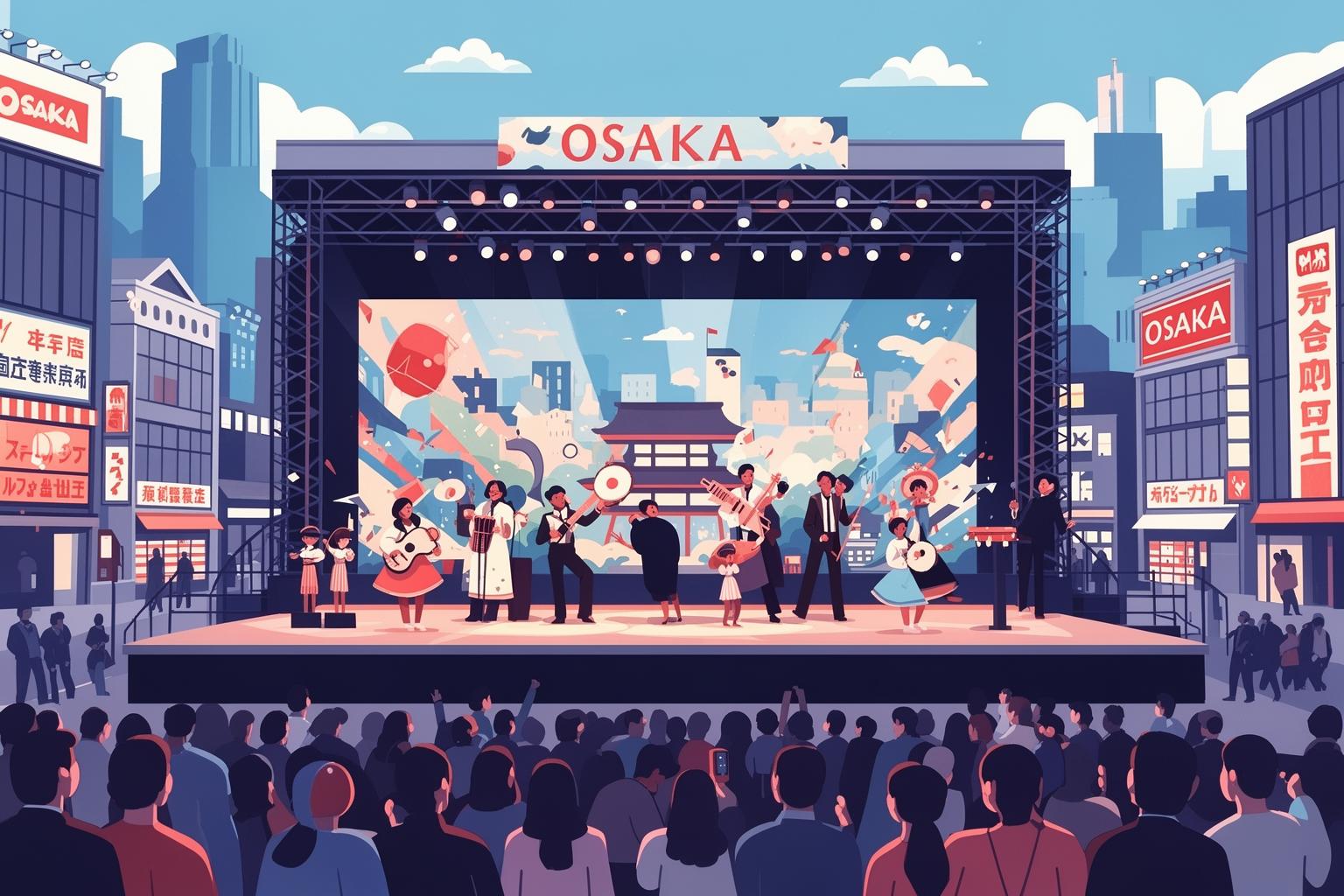
To truly understand the essence of the Osaka Obachan, you need to see her in her natural environment: the shotengai, or covered shopping arcade. These lively commercial corridors, such as Shinsaibashi-suji or the previously mentioned Tenjinbashisuji, are more than mere shopping spots. They serve as community hubs, social arenas, and economic battlegrounds where the Obachan’s talents shine brightly. Here, negotiating is a performance, and the bond between customer and vendor unfolds like an ongoing play.
The Philosophy of “Mけてや” (Make-te-ya)
In a polished Tokyo department store, prices are fixed. Haggling is not just discouraged; it’s almost unthinkable. However, in an Osaka market, the price tag often marks the beginning of a negotiation. The crucial phrase is “Chotto make-te-ya?” or the more polite “Chotto makete kuremasen ka?” (Could you give me a little discount?). This isn’t considered cheap or disrespectful. It’s a natural part of the exchange, showing you’re an engaged and savvy shopper.
Watching an Obachan bargain is an art. She doesn’t simply request a discount. She builds her argument: praising the shop owner’s fish quality, noting her twenty years as a loyal customer, lamenting about living costs, and then, with perfect comedic timing, asking if he can add an extra green onion or shave a hundred yen off the total. It’s a conversation and a form of entertainment. The shop owner responds by complaining about his slim profits and lazy son-in-law, then dramatically concedes with a sigh, slipping something extra into her bag. “Kyou dake ya de!” he says. (Just for you, only today!) They both know this is said to everyone, but it’s all part of the act. The transaction isn’t merely monetary; it’s about nurturing their relationship.
It’s Not Stingy, It’s Frugal
Osaka has a famous saying: “Kechu ya nai, shimatsu ya.” (It’s not stingy, it’s frugal/resourceful.) This perfectly reflects the mindset. The Obachan’s pursuit of a bargain isn’t about hoarding money; it’s about avoiding waste and securing the best value for her hard-earned yen. This merchant spirit flows through her veins. Why pay full price when a friendly conversation can lead to a better outcome for everyone? She gets a small discount, and the shopkeeper gains a loyal customer who’ll return tomorrow to enjoy the tradition again. This emphasis on value and human connection distinguishes Osaka’s culture from Tokyo’s more consumerist, brand-driven retail scene. In Osaka, the relationship with the seller often matters more than the brand itself.
How to Participate in the Game
As a foreigner, you might feel hesitant about haggling. But in the right setting—small, independent shops in markets or shotengai—it’s worth trying. Don’t be pushy. Be friendly. A good way to start is by buying several items. Once you have a few things, smile and ask, “Chotto o-make dekimasu ka?” (Could you give me a little extra/a small discount?). The worst answer is no. More often, especially if you’re warm and genuinely interested, they’ll play along. They might round down the price or offer a small freebie. When they do, express heartfelt gratitude. You haven’t just saved a few coins; you’ve embraced a vital cultural ritual. You’ve shown you understand that in Osaka, business is personal, and a good deal is a shared celebration.
Community Keepers: The Obachan as the Neighborhood’s Eyes and Ears
Beneath the loud blouses, quick-witted humor, and nonstop stream of advice, the Osaka Obachan fulfills one essential role: she is the social glue that holds her neighborhood together. She acts as an unofficial security camera, a walking community bulletin board, and a vigilant guardian who ensures the unspoken social rules are respected. This responsibility helps explain why she feels so comfortable and justified interacting with strangers. In her view, if you’re in her neighborhood, you are never truly a stranger.
The Informal Surveillance Network
In many modern cities, anonymity is the norm. People keep to themselves, and neighbors can live next to each other for years without ever learning each other’s names. This is much less common in Osaka’s traditional neighborhoods, largely due to the Obachan network. They know who is new to the apartment building, which children should be attending school, and when elderly Mr. Tanaka next door hasn’t collected his newspaper for days. This isn’t harmful gossip; rather, it’s a low-tech, high-touch social safety net. Their regular presence on the streets—walking to the market, watering plants, sweeping sidewalks—creates a web of casual surveillance that makes the community safer. They are the guardians of collective peace. When something seems off, they don’t hesitate to intervene, whether it’s scolding a teenager for riding his bike too fast or reporting a broken streetlight to local officials.
The Keepers of Local History and Culture
The Obachan also serves as a living archive of local knowledge. She knows the history of every shop in the shotengai, which clinics provide the best care, which parks have the cleanest restrooms, and the best times to avoid crowds at the post office. None of this information is written down in guidebooks; it’s a body of wisdom passed down through conversations and daily exchanges. By talking with everyone, they constantly update and share this essential community knowledge. They are the original hyperlocal search engines. When you receive unsolicited advice about which bus to take, you’re witnessing this system in action. She is offering a piece of data from her vast internal neighborhood database.
Why This Matters for You as a Resident
For foreign residents, this can sometimes feel intrusive, but it is ultimately a great asset. It means that when you genuinely need help, you’re not alone. If you lock yourself out of your apartment, an Obachan likely knows a reliable locksmith. If you’re ill, she might be the one to notice your absence and leave a bag of rice crackers and sports drinks at your door. The cost of this communal safety net is a bit of your privacy. You have to accept daily check-ins, remarks about your recycling habits, and questions about your personal life. But what you gain in return is a sense of belonging that is rare in a city of millions. You become woven into the social fabric, with the Obachan’s constant, friendly meddling acting as the thread that weaves it all together. Understanding this changes her from a nosy neighbor into the linchpin of your community—the fierce, funny, and unfailingly kind guardian of your new Osaka life.