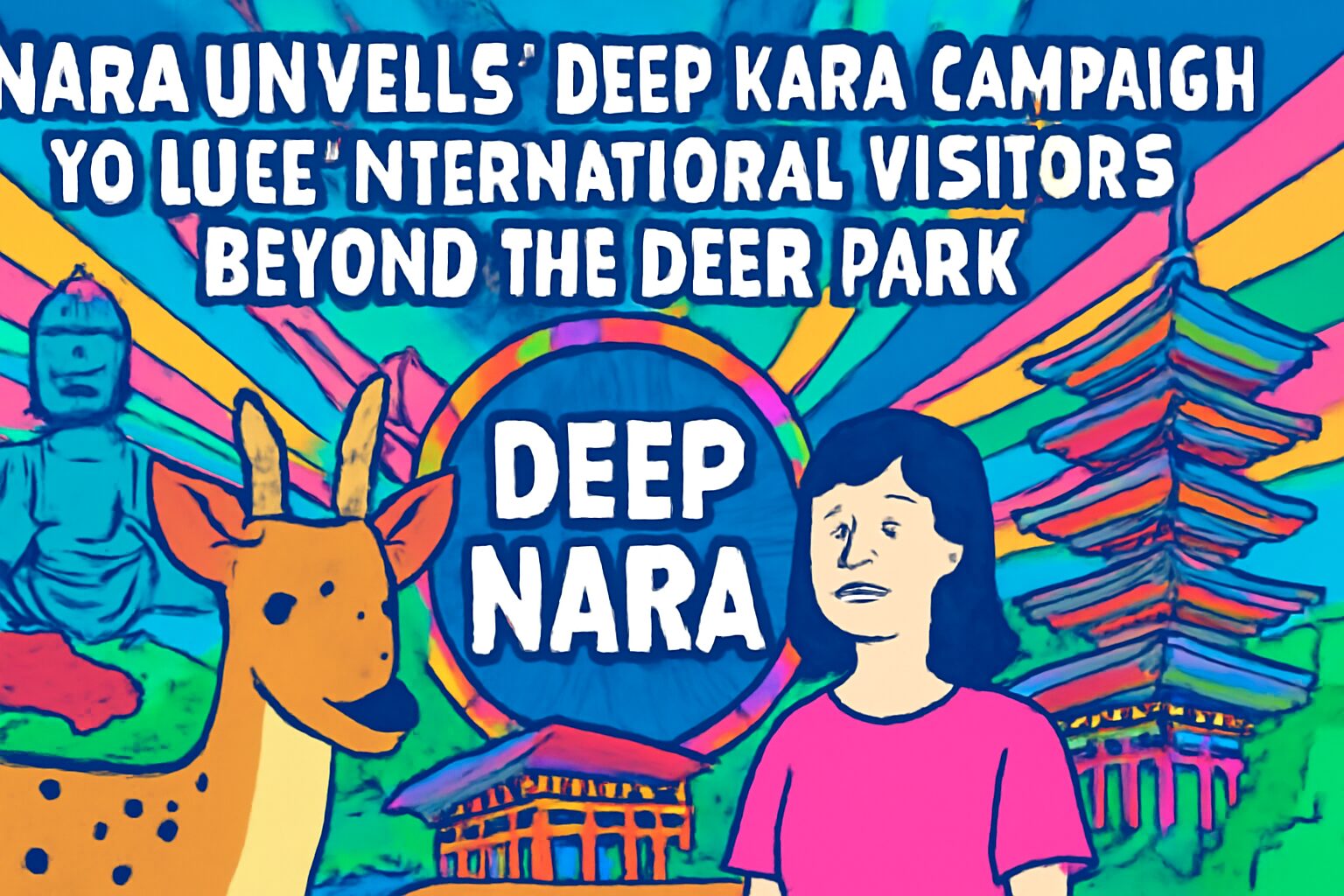
Exploring the Untouched Soul of Japan’s Ancient Capital
The Nara Prefectural Government has officially launched ‘Deep Nara,’ an ambitious new tourism campaign designed to showcase the prefecture’s hidden gems to an international audience. Moving beyond the world-famous deer of Nara Park, the initiative aims to guide travelers towards more authentic and immersive cultural experiences scattered throughout the region.
Background: Addressing Overtourism and Changing Traveler Demands
For years, Nara has been a popular day-trip destination from nearby Osaka and Kyoto. However, this popularity has led to a heavy concentration of tourists in a very small area, namely Nara Park and its surrounding temples like Todai-ji. Before the pandemic, in 2019, Nara Prefecture welcomed approximately 1.17 million overnight stays from foreign visitors, but the economic benefits were not evenly distributed across the prefecture. The vast majority of visitors rarely ventured beyond Nara City’s central attractions.
This new campaign is a strategic response to two key factors: the challenge of overtourism in specific locations and the evolving preferences of post-pandemic travelers. Today’s tourists, particularly those from Western countries, are increasingly seeking unique, off-the-beaten-path experiences. They want to connect with local culture on a deeper level, something ‘Deep Nara’ is perfectly positioned to offer.
What is ‘Deep Nara’?
The ‘Deep Nara’ campaign focuses on promoting activities that offer genuine cultural immersion. Instead of just seeing the sights, visitors are encouraged to participate and connect. Key experiences being promoted include:
- Traditional Craft Workshops: Engaging in hands-on activities like making traditional ink sticks (sumi) in Nara City or fine linen (Nara-zarashi) in other parts of the prefecture.
- Farm-Stays and Rural Experiences: Staying with local families in agricultural areas like the village of Asuka, known for its ancient burial mounds and idyllic landscapes, to experience rural Japanese life firsthand.
- Guided Historical Tours: Exploring lesser-known historical routes and sites with local experts who can share stories and insights not found in guidebooks.
The campaign will be promoted heavily through online travel agencies (OTAs) and social media platforms, directly targeting independent travelers looking to design their own unique Japan itineraries.
Future Outlook: A New Chapter for Nara and the Kansai Region
The success of the ‘Deep Nara’ campaign could have a significant and positive impact, not just for Nara but for the entire Kansai region.
For Nara Prefecture
By successfully dispersing tourists, the campaign could alleviate pressure on Nara Park while simultaneously revitalizing local economies in more remote areas. It fosters a more sustainable model of tourism, one that helps preserve local traditions and creates new opportunities for small businesses, artisans, and farmers.
For Travelers from Osaka
For the many international tourists who use Osaka as their base, ‘Deep Nara’ transforms Nara from a half-day excursion into a multi-day destination. The ease of access from Osaka via the Kintetsu and JR lines makes exploring these deeper parts of Nara incredibly convenient. Travelers can enjoy the vibrant city life of Osaka at night and immerse themselves in the serene, traditional culture of rural Nara during the day, creating a richer and more balanced travel experience.
This initiative positions Nara as a vital component of a longer, more diverse Kansai journey, encouraging visitors to extend their stay in the region and explore the incredible depth that lies just beyond the golden tourist trail of Osaka, Kyoto, and Nara Park.