Welcome, fellow traveler, to the brilliant, beating heart of Osaka’s nightlife: Dotonbori. Step into a world where neon signs paint the night sky in kaleidoscopic colors, where the air hums with an energy that’s both chaotic and utterly captivating, and where the city’s unofficial motto, kuidaore—to eat until you drop—is not just a saying, but a way of life. This is more than just a street; it’s a living, breathing theater of culinary delight, a place where every corner turned reveals a new aroma, a new spectacle, a new taste to discover. For anyone seeking the authentic flavor of Osaka, a night spent wandering through the izakayas and street food stalls of Dotonbori isn’t just recommended; it’s essential. It’s here, along the shimmering canal guarded by the iconic Glico Running Man, that you’ll find the soul of this incredible city, served up hot, fresh, and with a whole lot of personality.
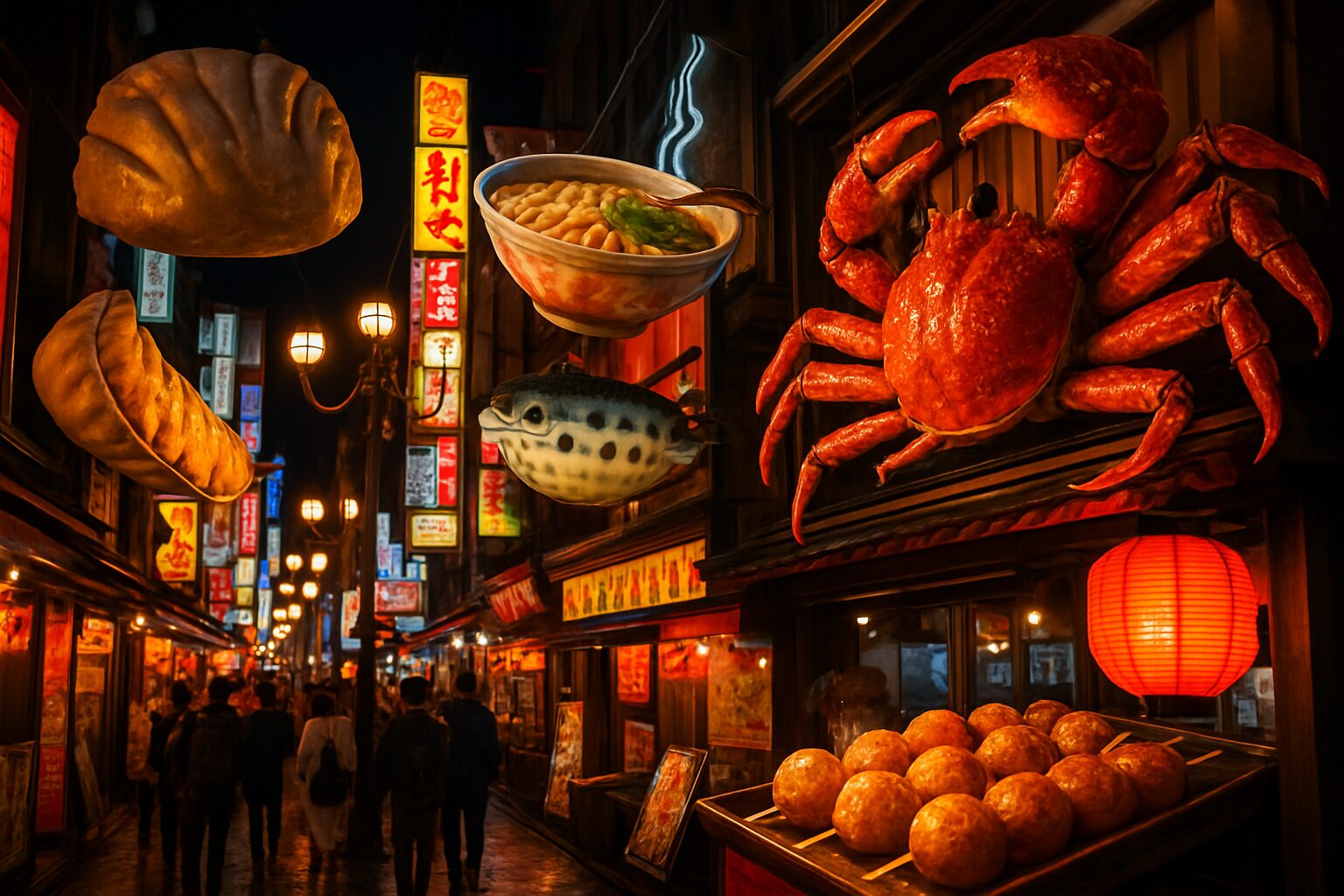
Imagine a symphony of sensations. The sizzle of batter hitting a hot griddle, the rhythmic clatter of spatulas, the cheerful shouts of vendors luring you in, and the collective murmur of happy crowds all blend into a unique urban soundtrack. Towering above you are mechanical crabs with waving claws, giant pufferfish lanterns glowing ominously, and a dragon coiling around a ramen shop entrance. It’s a feast for the eyes before you’ve even taken a single bite. Dotonbori is a place to let go of your inhibitions, follow your nose, and dive headfirst into one of the world’s most exciting food scenes. Whether you’re a seasoned foodie or a curious first-timer, this guide will help you navigate the glorious, delicious maze of Dotonbori’s after-dark offerings, from the tiniest street stall to the most welcoming izakaya.
To truly understand the origins of the incredible ingredients and tools used by Dotonbori’s chefs, consider a visit to Osaka’s famous kitchenware street, Sennichimae Doguyasuji.
The Electric Atmosphere: Stepping into the Neon Dream
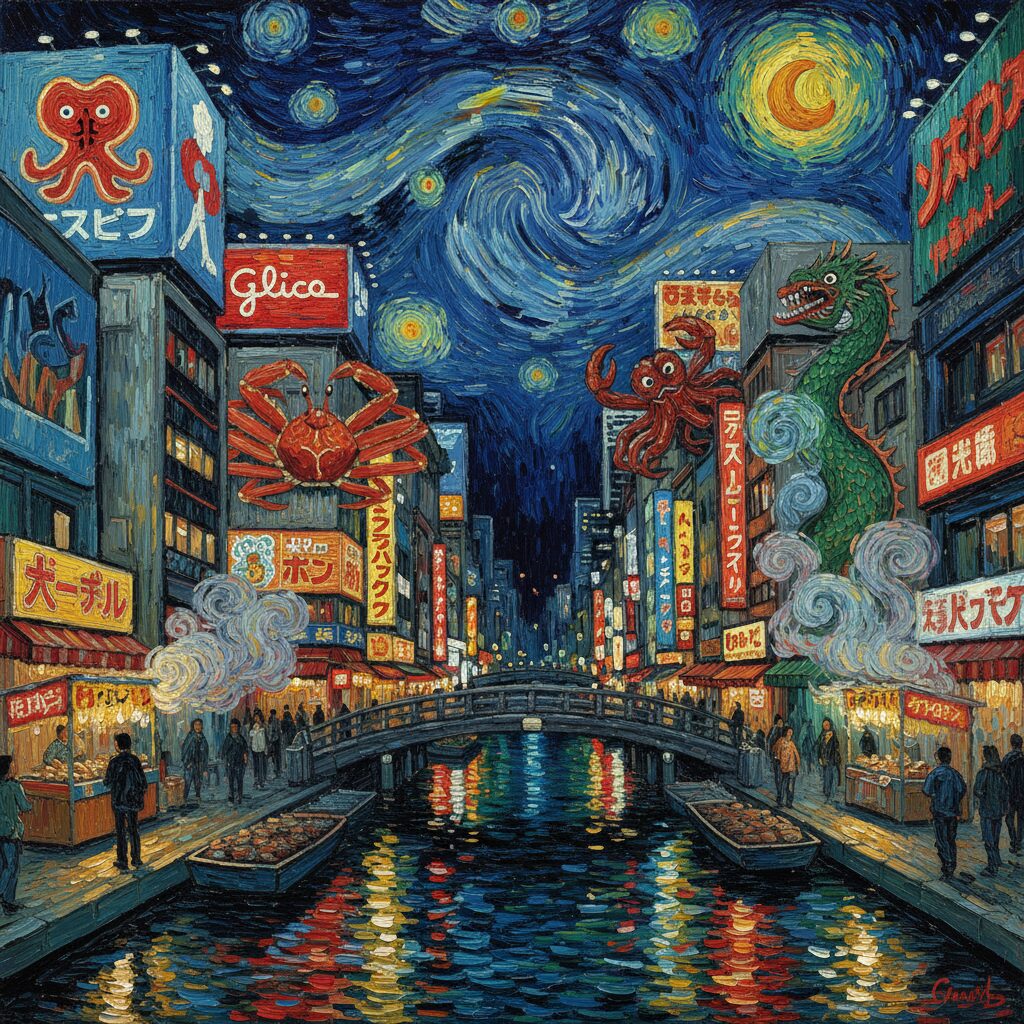
The instant you emerge from the maze-like underground of Namba Station and step onto the streets leading to Dotonbori, the world transforms. The energy is tangible, a current that draws you into the heart of the spectacle. Dotonbori at night is an overwhelming feast for the senses—in the most delightful way. It feels impossibly vibrant, as if the entire city has gathered along this single stretch of canal-side land to celebrate the simple pleasures of food and fun. The air, heavy with humidity and the enticing aromas of grilled meats, savory sauces, and sweet batters, carries the sounds of a thousand stories unfolding simultaneously.
The visual scene is dominated by a riot of lights and movement. These are more than just signs; they are landmarks, characters in Dotonbori’s grand drama. The Glico Running Man, arms raised in eternal triumph since 1935, reigns as the undisputed king. He races across his digital screen, a symbol of endurance and Osaka’s vibrant spirit. Below him, the Ebisubashi Bridge acts as the main stage, a favorite meeting place and the ideal spot to take it all in. Across the canal stands the Kani Doraku crab, a magnificent red crustacean whose mechanical legs and claws wave a slow, mesmerizing greeting to hungry visitors. Further along, a giant hand clutches a piece of sushi, and an enormous octopus looms over the front of a takoyaki shop. It’s whimsical, extravagant, and unmistakably Osaka.
Walking down the main street feels like being carried along by a gentle river of people. You’ll encounter everyone here: locals grabbing post-work meals, couples on dates, families with wide-eyed children, and travelers from around the world, all united by one goal—to eat. The soundscape is a rich mosaic of J-pop blasting from storefronts, the sizzle and pop of countless grills, the rapid tak-tak-tak of takoyaki masters skillfully flipping their delicacies, and the cheerful, guttural shouts of “Irasshaimase!” (Welcome!) from every doorway. It’s a place alive with human connection, where sharing a laugh with a stranger over freshly fried skewers feels as natural as breathing. There’s an easygoing informality here, a lack of pretense inviting you to simply be yourself and savor the moment. The atmosphere encourages curiosity and spontaneity; your only plan should be to have no plan at all.
The Street Food Safari: An Edible Tour of Osaka’s Greatest Hits
Street food is the heartbeat of Dotonbori. It’s quick, affordable, and incredibly delicious. Taking a street food tour here is a rite of passage, a dive into the essence of Osakan cuisine. The trick is to nibble your way through, sampling a bit of everything and letting your senses lead you from stall to stall.
Takoyaki: The Iconic Osaka Snack
If there’s one dish that embodies Osaka, it’s takoyaki. These delightful, steaming-hot balls of savory batter are a must-try, and Dotonbori is arguably the best place in the world to enjoy them. Watching them being made is part of the experience. Rows of cast-iron pans, each filled with hemispherical molds, are filled with a seasoned, dashi-infused batter. A generous piece of octopus (tako) is placed in the center of each, followed by sprinkles of pickled red ginger (beni shoga), tempura scraps (tenkasu), and green onion. Then, the magic unfolds. Using two long metal picks, the vendor rapidly and skillfully turns the balls, folding the cooked edges inward to form perfect spheres. It’s a captivating show of speed and expertise.
When served, usually on a boat-shaped paper tray, the takoyaki shine golden brown. The classic toppings include a thick, sweet-savory takoyaki sauce (similar to Worcestershire sauce), a generous drizzle of Japanese mayonnaise, a sprinkle of green laver (aonori), and a shower of dried bonito flakes (katsuobushi). Be careful—they’re scorching hot inside, with a molten core of creamy batter surrounding the tender octopus. Locals suggest poking a hole in the top to let steam escape before biting. The result is a flawless blend of textures and flavors: a slightly crisp exterior gives way to a gooey, savory inside, with the sweetness of the sauce, the creaminess of the mayo, and the umami-rich toppings creating a perfect bite. You’ll find many vendors, but stalls like Kukuru, famous for its large octopus pieces, and Acchichi Honpo, right on the canal, are beloved local landmarks for good reason.
Okonomiyaki: The Savory Pancake You Dream Of
Often called a “Japanese savory pancake” or even “Japanese pizza,” okonomiyaki is much more than that. The name means “grilled as you like it,” reflecting its customizable and comforting nature. The base is a batter made from flour, grated nagaimo (a yam that adds fluffiness), dashi, and eggs, mixed with a mountain of finely shredded cabbage. To this, you add your choice of ingredients—pork belly is classic, but shrimp, squid, or mixed seafood are popular too. The mixture is poured onto a large flat iron grill (teppan) and cooked like a thick pancake until the cabbage softens and the outside turns golden and slightly crispy.
Many Dotonbori restaurants, such as the renowned Mizuno and the multi-level Chibo, feature teppans built into the tables, letting you watch the chef prepare it or even try cooking it yourself. The final presentation is an art. The cooked pancake is coated with a sweet, dark okonomiyaki sauce, adorned with delicate lattice patterns of Japanese mayonnaise, and finished with a sprinkle of aonori and a generous pile of katsuobushi. The steam rising from the pancake makes the bonito flakes twirl and dance, bringing the dish to life. Each bite offers a warming combination of sweet, savory, and tangy flavors, with tender cabbage and your choice of fillings providing a hearty, deeply satisfying meal. It’s the ultimate Osakan comfort food, perfect for sharing over a cold beer.
Kushikatsu: The Craft of Deep-Fried Skewers
Although the Shinsekai district is the traditional home of kushikatsu, Dotonbori boasts many excellent spots dedicated to this wonderfully simple yet addictive dish. Kushikatsu features various ingredients—meats, seafood, and vegetables—skewered on bamboo sticks, coated in a light panko breadcrumb batter, and deep-fried until golden. The menu can be delightfully broad, from classics like beef (gyu), pork (buta), shrimp (ebi), and onion (tamanegi) to adventurous choices such as lotus root (renkon), quail eggs (uzura no tamago), and even cheese (chiizu).
When your platter of steaming skewers arrives, it comes with a communal pot of thin, dark dipping sauce. Here, kushikatsu etiquette demands the most important rule: no double-dipping! Dip your skewer once, and only once, before taking a bite. If you need more sauce, use the complimentary cabbage leaves served alongside as a scoop. This rule is for hygiene, and breaking it is a serious faux pas. The experience delights the senses—the crunch of the panko, the tenderness of the filling, and the tangy sweetness of the sauce. Well-known chains like Kushikatsu Daruma, with their iconic angry-faced mascot, provide a fun and approachable introduction to this beloved Osakan specialty.
More Street Food Gems
The culinary journey doesn’t end there. Watch for stalls selling gyoza, savory dumplings stuffed with minced pork and vegetables, fried to have crispy bottoms and tender, steamed tops. You might be tempted by the sweet scent of taiyaki, a fish-shaped cake typically filled with sweet red bean paste (anko) or custard, cooked in a fish-shaped mold. And of course, there’s ramen. Dotonbori is home to some of Osaka’s most famous ramen shops, known for their extravagant facades. Kinryu Ramen, with its giant 3D dragon, and Ichiran, famous for its individual “flavor concentration booths,” serve steaming bowls of rich, pork-based tonkotsu ramen—an ideal way to end a night of indulgence.
Diving into the Izakaya Scene: The Japanese Pub Experience
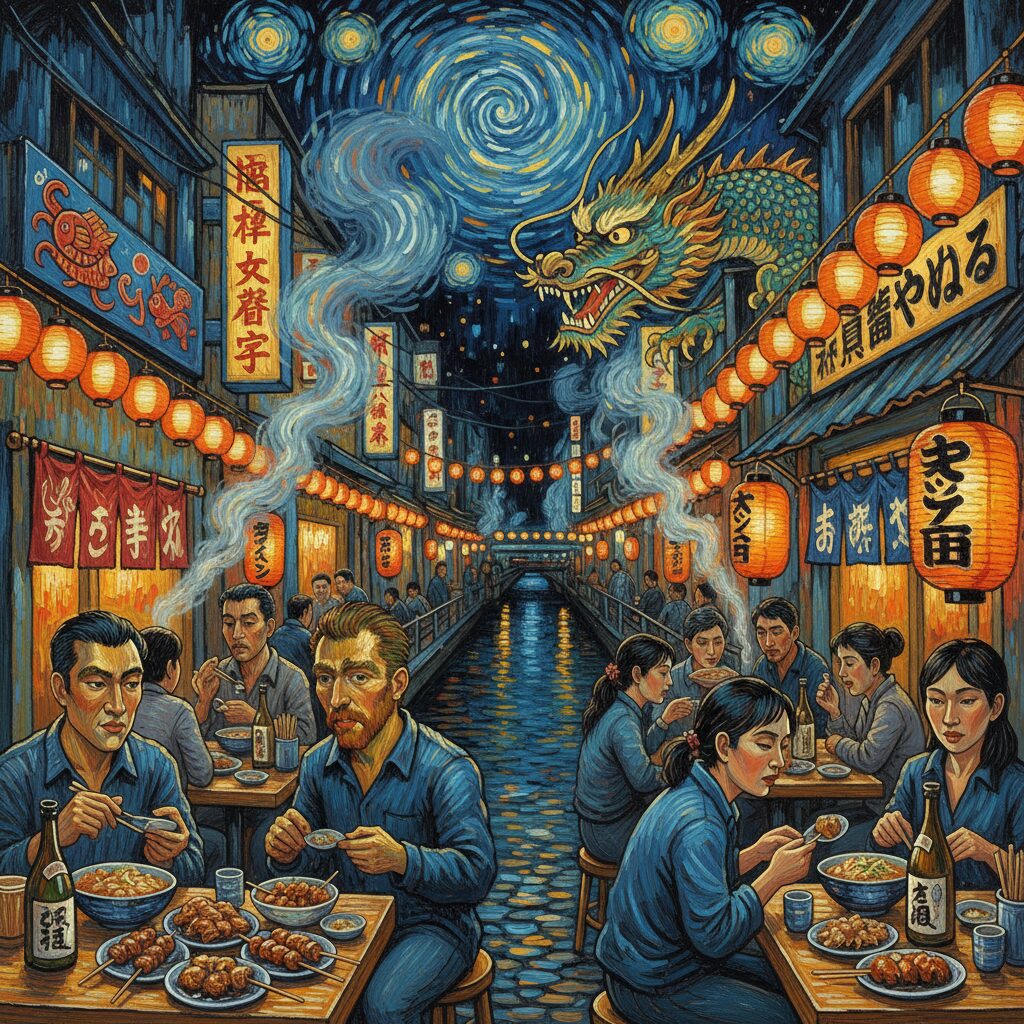
While street food provides quick and tasty snacks on the move, an izakaya offers a different kind of Dotonbori experience—a chance to sit down, unwind, and absorb the local ambiance over drinks and a variety of shared dishes. Often translated as a Japanese pub or tavern, an izakaya is more comparable to a Spanish tapas bar. The emphasis is as much on the food as on the drinks, with a menu designed for communal dining.
What to Expect in an Izakaya
When you enter an izakaya, you’ll be welcomed with a loud and hearty “Irasshaimase!” The atmosphere is usually lively, bustling, and filled with the sounds of conversation and laughter. Some izakayas are bright and modern, while others lean towards traditional décor, featuring wooden interiors, paper lanterns, and cozy tatami mat seating. Don’t worry if you don’t speak Japanese; many izakayas in tourist-heavy areas like Dotonbori offer English or picture menus to help you order.
Once seated, you will almost always be served a small appetizer called otoshi or tsukidashi. This complimentary dish also acts as a seating charge and can range from a small bowl of edamame to pickled vegetables or a piece of simmered fish. It’s a typical part of izakaya culture, so simply enjoy it as the opening act to your meal.
The menu is a delightful array of flavors. You’ll find a wide variety of small plates meant for sharing. Classic dishes to watch for include yakitori (grilled chicken skewers seasoned with salt or a sweet soy-based tare sauce), karaage (Japanese-style fried chicken that’s crispy and juicy), agedashi tofu (deep-fried tofu served in a savory dashi broth), and fresh salads. Ordering is a leisurely process; you generally start with a few dishes and a round of drinks, then continue ordering more as the evening goes on. It’s a relaxed, social dining style that encourages you to take your time and enjoy both the food and the company.
Hozenji Yokocho: A Step Back in Time
Just a stone’s throw from the neon brightness of the main Dotonbori strip lies a hidden treasure that feels like a portal to another era: Hozenji Yokocho. This narrow, stone-paved alleyway, softly lit by traditional paper lanterns, offers a calm and atmospheric contrast to the vibrant energy of the main street. The alley hosts a collection of upscale traditional restaurants, intimate bars, and charming izakayas, many of which have been in business for generations.
At the heart of the alley is Hozenji Temple, where you’ll find a famous statue of Fudo Myo-o, one of the Five Wisdom Kings of Buddhism. The statue is entirely covered in a thick, vivid green moss. Worshippers pour water over the statue as they pray for good fortune, and over time, this ritual has nurtured the lush moss growth, earning the deity the nickname Mizukake Fudo (the water-splashing Fudo). The atmosphere here is peaceful and scented with incense, offering a moment of quiet reflection amid the culinary bustle. Dining at one of the izakayas in Hozenji Yokocho is a truly special experience, providing a taste of old-world Osaka in a setting that is both romantic and deeply nostalgic.
Practical Guidance for Your Dotonbori Night
Navigating Dotonbori is quite simple, but a few helpful tips can enhance your visit and make it more enjoyable.
Getting There
Dotonbori sits in the heart of Osaka’s Minami (South) district and is conveniently accessible from several key train stations. The nearest is Namba Station, a major hub served by the Midosuji, Yotsubashi, and Sennichimae subway lines. It also connects to Osaka-Namba Station (for the Hanshin and Kintetsu lines) and JR Namba Station. All these stations are part of a large underground complex, so just follow the signs for Dotonbori or Ebisubashi Bridge to find your way above ground and into the action.
Timing is Everything
Dotonbori truly comes alive after sunset. Although visiting during the day is possible, the real charm starts when the neon lights illuminate around 5:00 PM. The area grows busier throughout the evening, peaking between 7:00 PM and 10:00 PM. Weekends, particularly Saturday nights, can be extremely crowded, which can be exciting but overwhelming for some. For a slightly calmer yet still lively experience, consider visiting on a weeknight.
A Note on Money
While Japan is becoming more credit card-friendly, many smaller street food vendors and traditional izakayas in Dotonbori still operate on a cash-only basis. It’s wise to carry enough Japanese Yen to avoid any hassle. Larger restaurants and chains almost always accept credit cards, but for an authentic street-level experience, cash remains king.
A Family Perspective
As a mom, I always consider what suits the whole family. Dotonbori, with its vibrant lights and delicious food, can be a wonderful experience for children and teens, especially earlier in the evening. The dazzling spectacle appeals to all ages. However, be ready for the crowds, as it’s easy to get separated, so keep a close watch on little ones. Maneuvering strollers through the busiest areas can be challenging. Overall, the atmosphere is safe and festive, but later at night, it shifts toward a more adult, bar-centered vibe. An early evening visit with dinner and a stroll along the canal makes for an ideal family outing.
Embrace the Spirit of Kuidaore
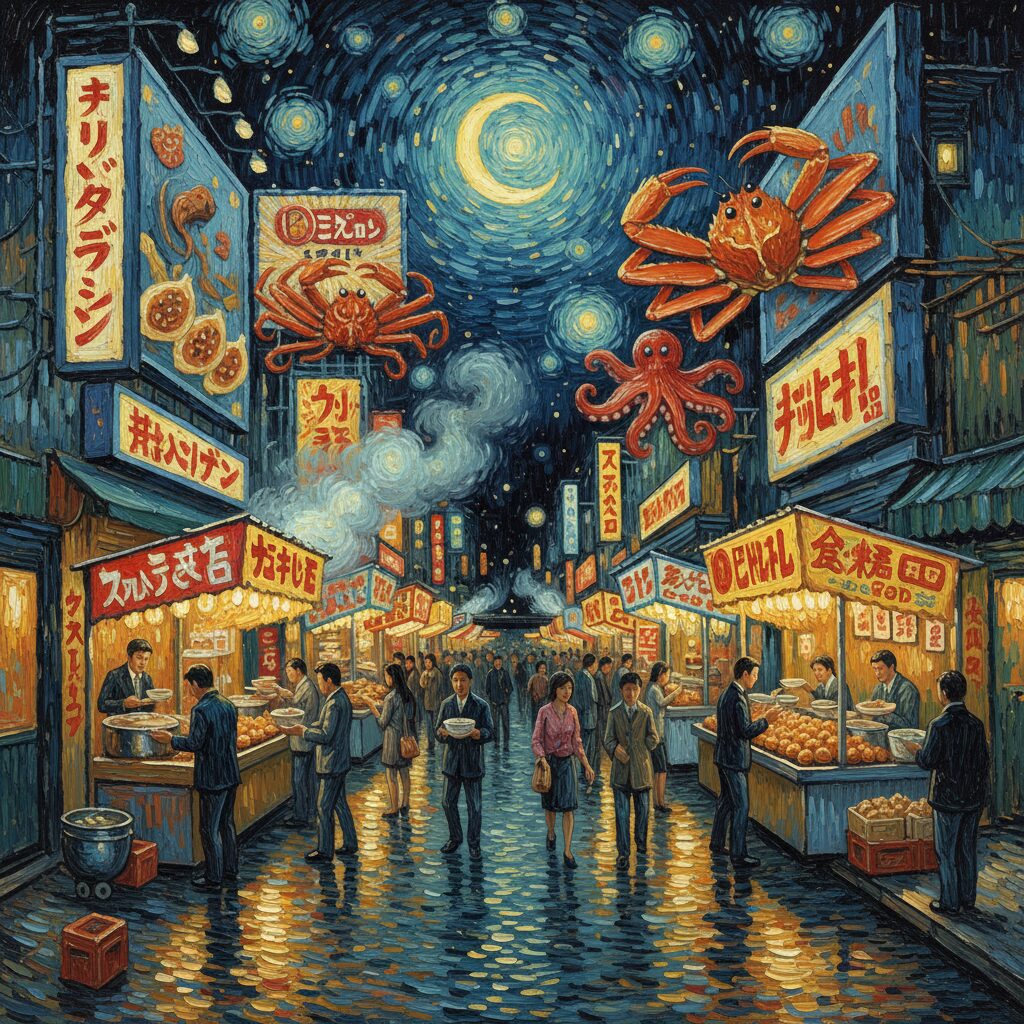
An evening out in Dotonbori is far more than just having a meal. It’s an immersion in a culture that deeply values the joy of eating. It’s a celebration of community, craftsmanship, and the delicious, straightforward food that has earned Osaka its reputation as Japan’s kitchen. This is a place that doesn’t take itself too seriously, encouraging you to be loud, messy, and adventurous. So come with an empty stomach and an open mind. Let the neon lights guide you, follow the most enticing aromas, and don’t hesitate to try something new.
Whether you find yourself admiring the skill of a takoyaki master, sharing skewers in a lively izakaya, or simply standing on Ebisubashi Bridge soaking in the vibrant energy, you’re taking part in a tradition that embodies the spirit of Osaka. Dotonbori stands as proof that food is more than nourishment; it’s a source of joy, a reason to gather, and a universal language everyone can understand. So go ahead, dive in, and eat until you can’t anymore. You’ll leave with a full belly and a heart brimming with unforgettable memories.