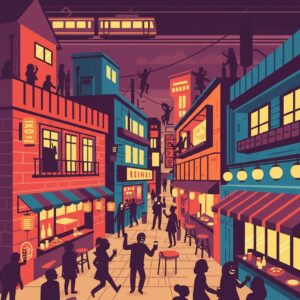
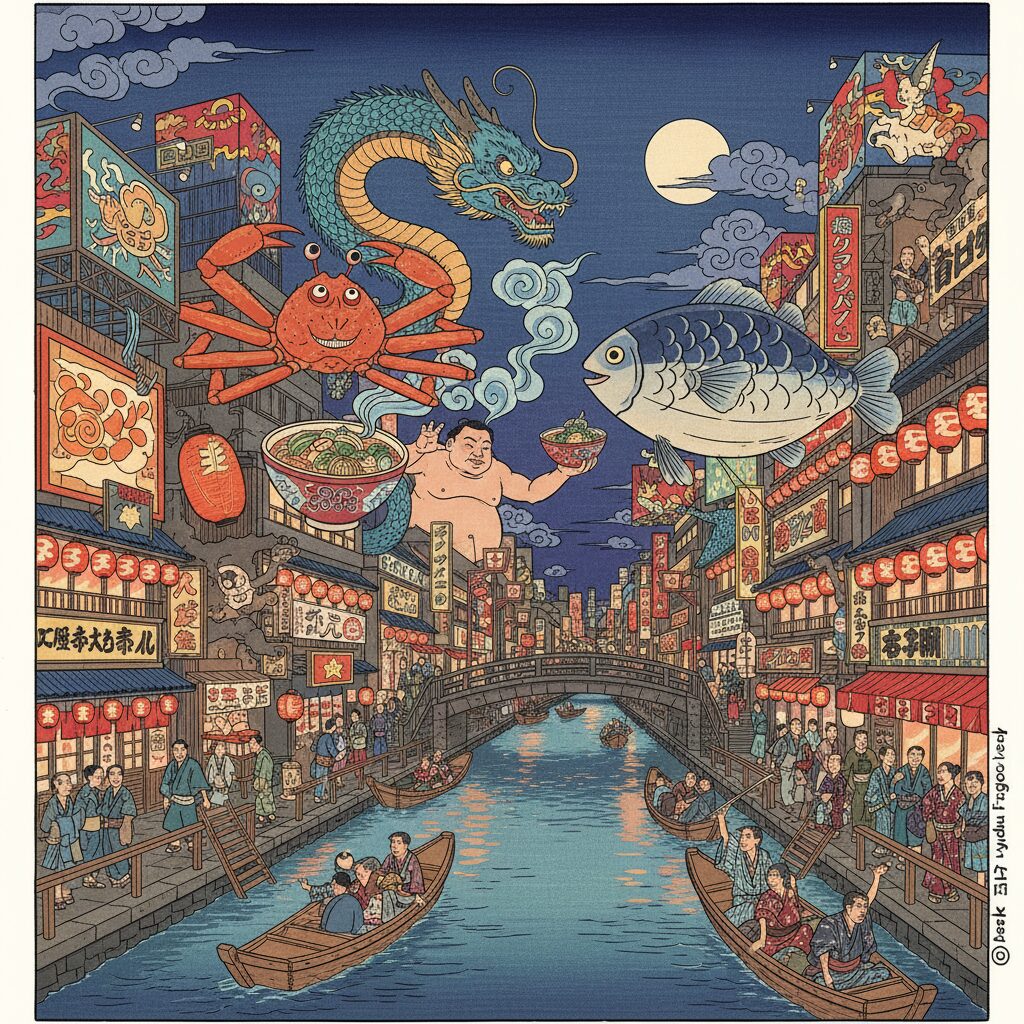
There’s a place in Osaka where reality seems to bend, where the night sky is not black but a riotous, electric canvas of neon dreams and giant, mechanical sea creatures. This is Dotonbori, a place that isn’t just a street, but a living, breathing theater of commerce and culture. It’s a sensory symphony that plays its loudest and most brilliant notes through its legendary signboards. To walk along the Dotonbori canal is to step into a storybook written in glowing lights and larger-than-life sculptures. It’s a place that buzzes with an energy so palpable you can almost taste it in the air, a delicious mix of sizzling takoyaki, sweet crepes, and the faint, clean scent of the canal itself. People from every corner of the globe gather here, their faces upturned, mouths agape, captured by the sheer, unapologetic spectacle of it all. This isn’t just advertising; it’s a declaration of identity, a visual shout that embodies the very soul of Osaka—bold, warm, and utterly unforgettable. It’s here that commerce becomes art, and a simple stroll transforms into an adventure through a gallery of urban masterpieces, each telling a story of ambition, flavor, and a uniquely Osakan flair for the dramatic.
The air itself carries the scent of sizzling takoyaki, a delicacy perfected by the Michelin-crowned Kougaryu just steps away.
The Glico Man: An Enduring Symbol of Victory
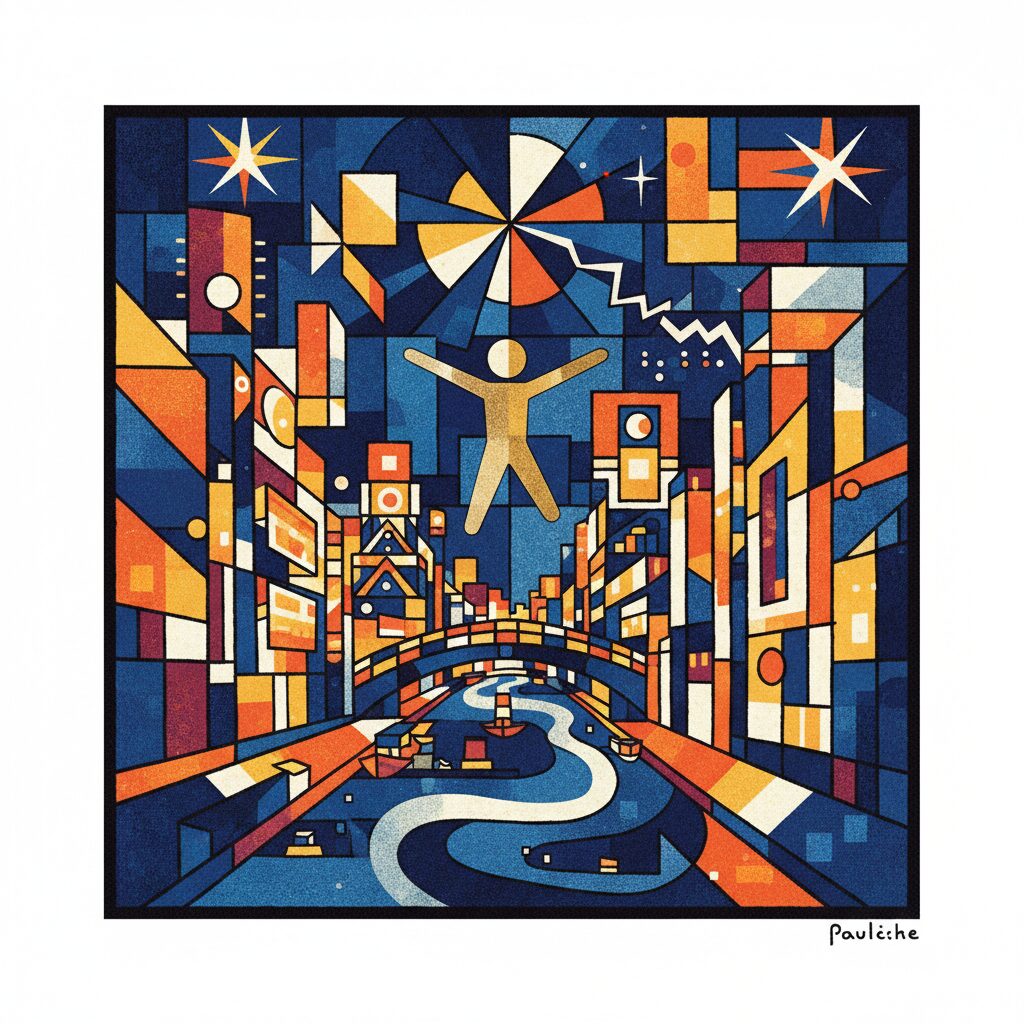
Before you notice anything else, you sense his presence. High above the Ebisubashi Bridge, set against a backdrop of constantly shifting digital colors, a solitary athlete sprints toward an unseen finish line, arms raised in triumph. This is the Glico Running Man, perhaps the most iconic image in all of Osaka. He represents more than a simple billboard for a confectionery company; he is a landmark, a meeting place, and a cultural symbol that has been part of the city’s skyline since 1935. Standing here, with the hum of the crowd around you, it’s impossible not to feel a rush of energy reflecting from his powerful stance.
His story is one of endurance. The Glico sign has been rebuilt and modernized numerous times throughout its history, surviving wars and embracing technological progress. The very first version was a modest neon tower, a beacon of modernity in its era. Over the years, it has evolved, with the current sixth-generation model showcasing dazzling LED technology. This is not just a static image; it’s a dynamic display. The blue track he runs on remains constant, but the background cycles through famous landmarks from around the world, symbolically spreading his message of health and vitality globally. Watching the sign, you might see him run past the Eiffel Tower one moment and the Pyramids of Giza the next. It’s a clever and captivating piece of visual storytelling.
The philosophy behind the Glico brand itself is built on a simple concept. The company’s first product was a caramel candy fortified with glycogen from oysters, marketed with the slogan, “300 Meters in a Single Piece.” The running man embodies this burst of energy. He became a symbol not only for the candy but also for Osaka’s post-war recovery and unyielding forward momentum. He has witnessed countless moments of public celebration. When the local baseball team, the Hanshin Tigers, wins a championship, fans famously leap from the Ebisubashi Bridge into the canal below in a ritualistic display of joy, all under the watchful gaze of the Glico Man. He is a silent observer of the city’s highest moments. For a visitor, the quintessential Dotonbori experience is to stand on that bridge, mimic his victorious pose for a photo, and feel, if only for a moment, as if you’re at the finish line of something extraordinary.
Kani Doraku: The Mechanical Marvel of the Canal
Just a short stroll from the Glico Man, another giant icon of Dotonbori’s visual charm demands your gaze. A massive red crab, its legs and claws moving with an eerily lifelike rhythm, clings to the facade of the Kani Doraku restaurant. This isn’t a static sculpture; it’s kinetic art, a captivating mechanical puppet that has been inviting hungry guests since 1962. The sheer size is astounding. The main crab at the flagship store weighs an impressive 650 kilograms and stretches over six meters wide. Its slow, intentional movements—a twitch of a claw, a slight leg shift—give it a character that is both amusing and deeply striking.
There is a brilliant, almost childlike ingenuity to this kind of advertising. In a district bursting with neon and noise, how do you stand out? For Kani Doraku, the answer was motion. The sign doesn’t merely tell you what the restaurant offers; it demonstrates it in the most dramatic fashion. You see the giant crab, and your mind instantly imagines the deliciously steaming crab legs and savory grilled crab dishes served inside. It’s a direct and powerful sensory cue, a masterclass in non-verbal communication. The artistry lies in its simplicity. It’s not a complicated digital display but a triumph of old-school engineering and craftsmanship that still fascinates today’s audience.
Observing the crab from across the canal gives another view. It appears as part of a larger scene, its bright red shell starkly contrasting the blues and whites of the surrounding neon lights. It moves with a mesmerizing elegance, a silent guardian of seafood amidst a river of illumination. The design has been so successful that Kani Doraku has duplicated it at other locations, but the original Dotonbori crab remains the icon. It embodies a central principle of Osakan business philosophy: be bold, be straightforward, and have a bit of fun along the way. It serves as a reminder that sometimes the most effective communication isn’t spoken but conveyed by a giant, mechanical crustacean.
The Echoes of Extravagance: Lost and Legendary Signs
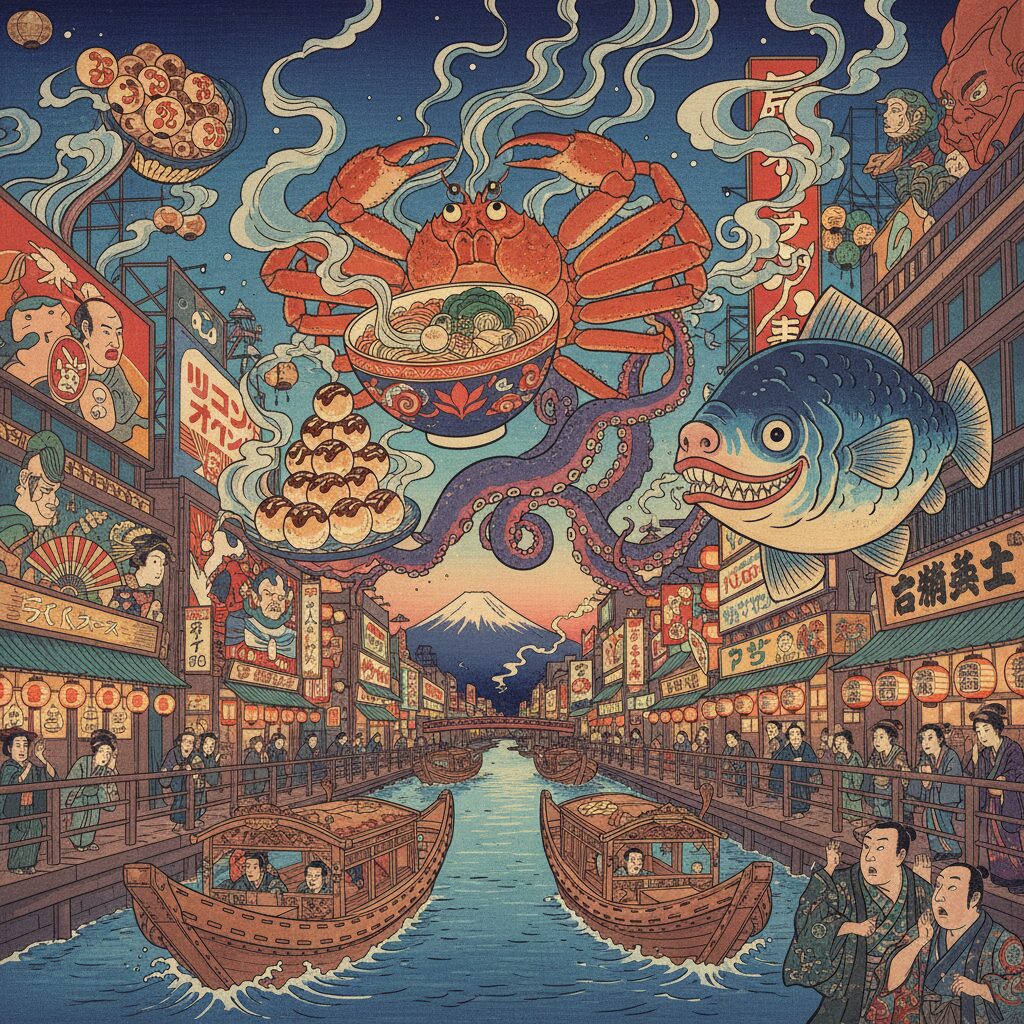
Dotonbori’s skyline is a living, ever-changing entity. While new signs emerge, some iconic figures have faded into history, leaving a legacy that continues to shape the area’s identity. Perhaps the most deeply missed is the giant fugu lantern of Zuboraya. For decades, this enormous three-dimensional blowfish, glowing with a soft, warm light, floated above the street. It was a charming and slightly whimsical landmark, its puffed cheeks and gentle expression a comforting presence. The fugu, or blowfish, is one of Osaka’s most daring culinary delicacies, and the lantern served as a perfect, friendly invitation to try it. Its removal in 2020, following the restaurant’s closure, was felt like losing an old friend by many locals and regular visitors.
Similarly, other signs have come and gone, each leaving their own mark. There were once giant models of sushi, enormous gyoza dumplings attached to buildings, and even a dragon coiling around a ramen shop. These weren’t just signs; they were landmarks in their own right, part of the city’s collective memory. Their absence underscores the fleeting nature of this urban landscape. It’s a reminder to appreciate the wild, creative energy of the present moment, because the Dotonbori you see today may look very different a decade from now. This constant evolution is part of what makes the district so thrilling. It is not a museum preserved in amber, but a dynamic stage where new acts are always waiting in the wings, ready to capture the public’s imagination.
This history of change reflects the competitive spirit that drives Dotonbori. The signs engage in a continuous, friendly battle for attention, known as “kanban gassen” or “signboard battle.” Each new creation must be bigger, brighter, or more clever than the last. This advertising arms race has fueled the incredible creativity we witness today. The legacy of the lost signs is not one of sorrow but of inspiration. They set the bar for extravagance and pushed their successors to be even more inventive, ensuring that the spirit of Dotonbori’s visual culture will never grow stale.
The Art of Medatsu: Why Osaka Shines So Brightly
To grasp the visual chaos of Dotonbori, one must first understand the Osakan concept of “medatsu,” which roughly means “standing out” or “being conspicuous.” Throughout much of Japan, harmony, subtlety, and blending in are esteemed social virtues. However, Osaka, with its rich history as a merchant city, has always followed a slightly different set of rules. Here, being noticed is beneficial for business. A quiet shop means no customers. Osaka’s merchants recognized early on that success demanded making a bold statement. They had to be louder, brighter, and more memorable than their rivals. Dotonbori represents the ultimate embodiment of this medatsu philosophy.
The signboards reflect a culture that values directness, humor, and a certain theatrical flair. A giant hand holding a piece of sushi? A grimacing face of a kushikatsu chef? A cow overlooking a yakiniku restaurant? These signs do not aim for subtlety. They are literal, playful, and extremely effective. They instantly overcome language barriers. A visitor unfamiliar with Japanese can look at the giant octopus above a takoyaki stand and immediately understand what is being sold. It’s a universal language of appetite, delivered with a joyful Osakan twist.
This culture is deeply linked to Dotonbori’s history as an entertainment district. Since the Edo period, this area was the center of Osaka’s theater scene, housing numerous kabuki and bunraku puppet theaters. Theatricality is woven into its essence. The elaborate costumes, dramatic poses, and expressive makeup of kabuki actors created a visual spectacle aimed at capturing the audience’s attention. The signboards of modern Dotonbori are the spiritual heirs of these traditions. They are the new performers on this urban stage, entertaining day and night the crowds along the canal. They continue a long lineage of using bold visuals to tell a story and evoke excitement and wonder. The district has simply shifted from wooden stages of the past to concrete facades of the present, yet the performance remains as captivating as ever.
Kuidaore Taro: The Drum-Beating Heart of the City
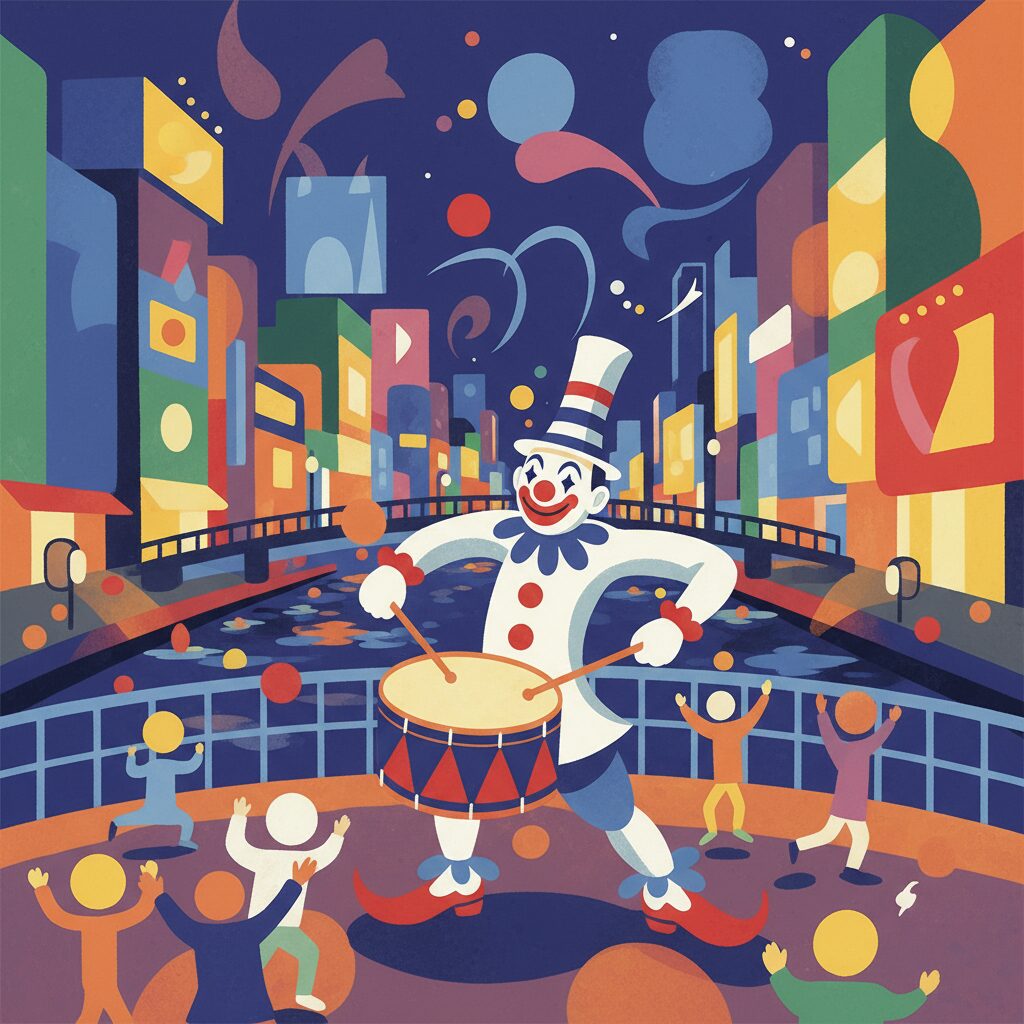
Amid the glowing neon lights and giant food models stands a figure who may be the most human and beloved of all Dotonbori’s icons: Kuidaore Taro. He is a mechanical clown dressed in a red-and-white striped suit with round glasses, endlessly beating his drum with a cheerful, tireless rhythm. A fixture here since 1950, he was originally placed outside the Cui-daore restaurant. Although the restaurant has since closed, Taro’s immense popularity ensured his preservation, cementing his status as a city mascot.
His name, Kuidaore, is a well-known Osaka phrase meaning “to eat oneself into ruin” or “to eat until you drop,” perfectly capturing the city’s passionate love of food. Taro embodies this concept fully. With his lively drumming and slightly manic grin, he seems to be encouraging everyone to indulge and savor the culinary delights of Dotonbori to the fullest. He isn’t promoting a specific product; rather, he represents an idea—a lifestyle of joyous gluttony central to Osaka’s identity.
Unlike the massive, imposing Glico Man or the Kani Doraku crab, Taro is approachable. Standing at street level, he attracts crowds eager to take photos with him. He comes across less as a corporate mascot and more as a quirky local celebrity, complete with his own merchandise, backstory, and a special place in the hearts of Osakans. During celebrations or important events, he is often dressed in special costumes, which only increases his appeal. Surrounded by flashing lights and the tempting smells of street food, seeing him evokes a sense of warmth and welcome. He serves as a reminder that despite Dotonbori’s overwhelming scale, it has a playful, human heart that beats in time with a small mechanical drum.
Navigating the Neon Jungle: A Practical Guide
Experiencing Dotonbori is less about sticking to a strict itinerary and more about letting yourself be carried along by its vibrant energy. That said, a bit of practical knowledge can help you fully enjoy the bustling chaos. The district is most easily reached from Namba Station, a major transport hub served by several subway lines (Midosuji, Yotsubashi, Sennichimae) as well as the Nankai and Kintetsu railways. From there, it’s a short, clearly marked walk heading north.
The key advice for first-time visitors is to see Dotonbori at night. While it’s lively and interesting during the day, the area truly comes alive after dark. When thousands of lights and neon signs illuminate the canal, their reflections double the spectacle, transforming the whole district into a surreal landscape of color and light. The atmosphere is electric, bursting with the energy of the crowds and the enticing aromas from countless food stalls.
Speaking of crowds, be prepared for them. Dotonbori—especially around the Ebisubashi Bridge—is almost always bustling. The best approach is to embrace the crowd rather than rush through. Take your time, wandering slowly so you can notice the little signs, savor the delicious smells wafting from open doors, and hear the vendors’ calls. If the main street feels too overwhelming, slip into one of the quieter side alleys, where you’ll discover hidden bars, cozy eateries, and a more local vibe.
For a different perspective, consider the Tombori River Cruise. These short boat rides offer a stunning view of the neon signboards from the water. Seeing the Glico Man and the Kani Doraku crab from below gives a fresh sense of their impressive scale. The cruise is especially magical at night as you glide through a canyon of lights. It’s a relaxing way to take in the sights and give your feet a much-needed break.
Beyond the Billboards: The Soul of the Streets
While the signs are the main attraction, the true charm of Dotonbori is found in the life unfolding beneath them. This area is the heart of Osaka’s “kuidaore” culture, and visiting without indulging misses the essence completely. The streets are filled with vendors offering an extraordinary variety of food. You have to try takoyaki, the renowned octopus balls that are crispy outside and gooey inside, cooked in special cast-iron pans right before your eyes. Another must-try is okonomiyaki, a savory pancake stuffed with cabbage, meat, or seafood, topped with a sweet-savory sauce, mayonnaise, and bonito flakes that seem to dance from the heat.
For a break from the neon-lit main street, head to Hozenji Yokocho. This narrow, stone-paved alley feels like stepping back in time. The atmosphere is quiet and traditional, a stark contrast to the futuristic buzz just meters away. Traditional lanterns light the alley, with Hozenji Temple at its center, home to a famous moss-covered statue of the deity Fudo Myo-o. Worshippers pour water over the statue as they pray, resulting in a thick, vivid green moss coating. It is a serene and beautiful oasis of calm amid the chaos—a perfect place to pause and reflect.
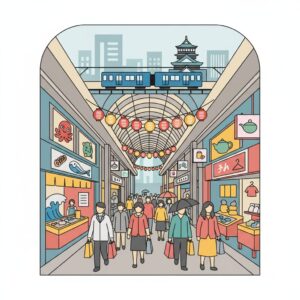
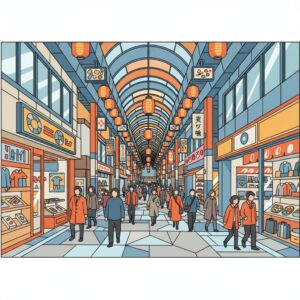
Be sure to explore the extensive covered shopping arcade, Shinsaibashi-suji, which runs perpendicular to the Dotonbori canal. This lively street extends for hundreds of meters and offers everything from high-end fashion boutiques to quirky souvenir shops and traditional craft stores. It’s an excellent spot to experience the vibrant energy of Osaka’s commerce on a more intimate scale and to find unique gifts. The contrast between the open-air spectacle of Dotonbori and the covered, linear energy of Shinsaibashi-suji highlights the diverse experiences available within this compact area.
A Parting Glance
As you finally tear yourself away from the magnetic glow of Dotonbori, heading back toward the relative calm of the subway station, the images linger with you. The triumphant runner, the slowly waving crab, the cheerfully drumming clown. These are more than just advertisements; they are characters in the grand, ongoing drama of Osaka. They symbolize a city that refuses subtlety, a place that welcomes joy, appetite, and a generous dose of showmanship with open arms.
Dotonbori is much more than a tourist spot; it’s an experience. It’s the excitement of sensory overload, the warmth of a shared public space, and the delicious satisfaction of a perfectly cooked piece of street food. It reminds us that cities can be fun, buildings can have character, and a simple sign can become a cherished work of art across generations. Whether you spend an hour here or an entire evening, you leave feeling as though you have witnessed something truly unique—a vibrant, pulsating heart of a city, illuminated by a million watts of pure, unfiltered imagination.