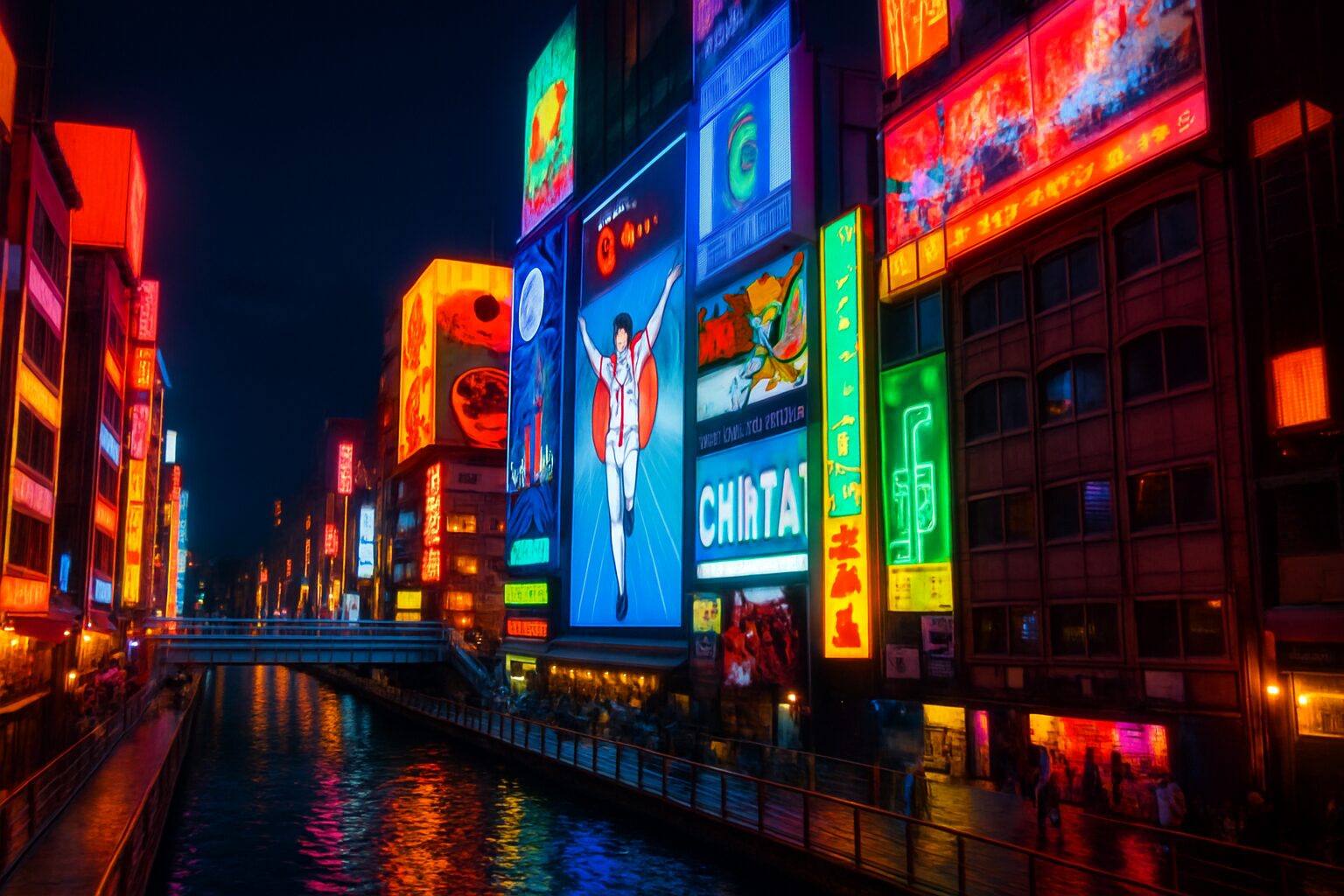
There are places in the world that hum with a quiet energy, and then there is Dotonbori. Step out of Namba station on a moonless Osaka night, and you don’t just see Dotonbori, you feel it. It hits you like a tidal wave of light, sound, and the intoxicating aroma of sizzling street food. This isn’t just a district; it’s a living, breathing entity, the roaring soul of Osaka’s famously boisterous and food-obsessed culture. Dotonbori is a theatrical stage where massive, mechanized sea creatures cling to buildings, where legendary athletes run in an endless loop of neon glory, and where the philosophy of ‘kuidaore’—to eat oneself into ruin—is not a warning, but a joyful invitation. It is here, along the banks of a narrow canal, that the city sheds its daytime skin and reveals its true, dazzling character. This is where modern Japan’s electric dreams meet centuries-old culinary traditions, creating a dizzying, unforgettable spectacle that defines the quintessential Osaka experience. Prepare to have your senses completely overwhelmed in the most wonderful way possible.
For a different kind of early morning culinary adventure, consider a visit to the bustling Kizu Wholesale Market for a sushi breakfast.
The Symphony of Neon: A Visual Feast
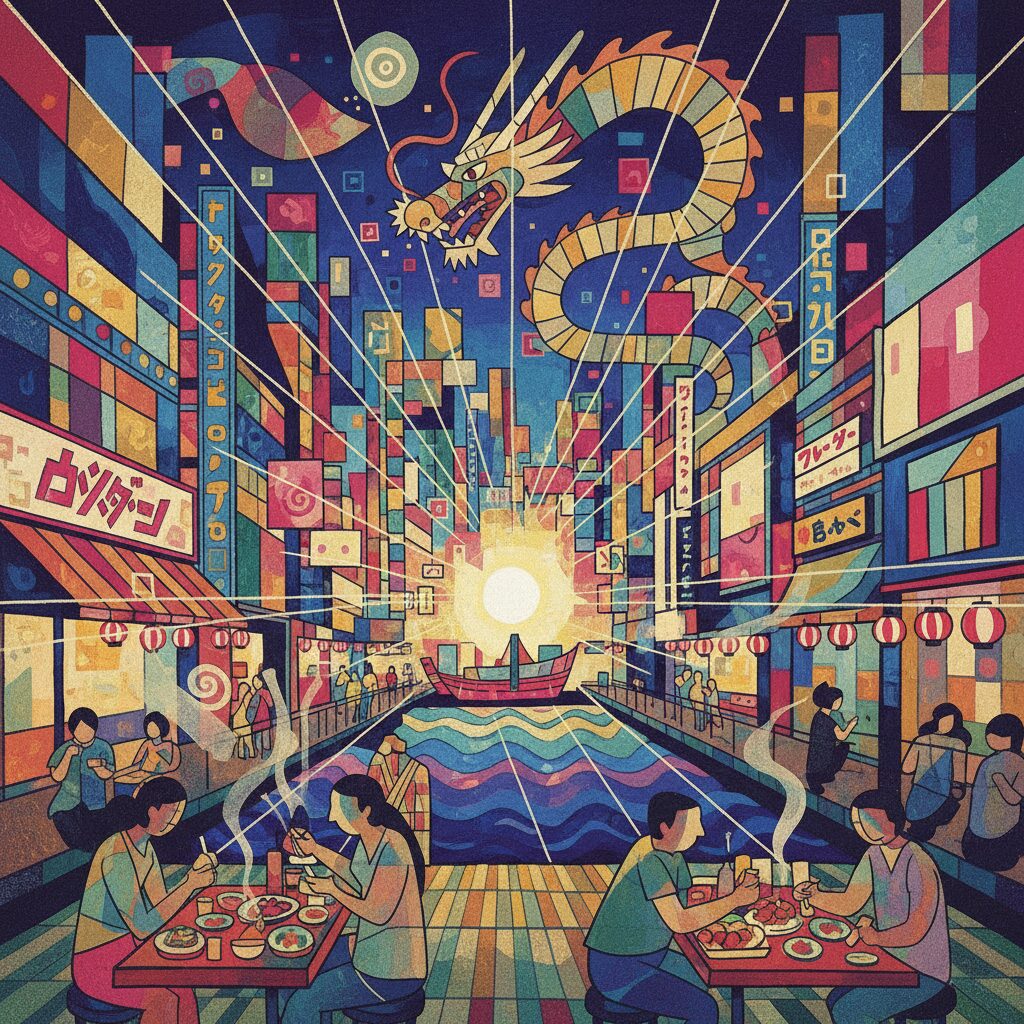
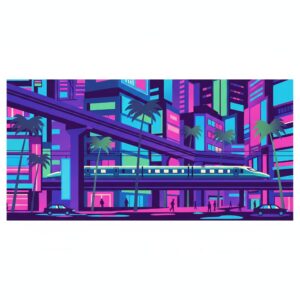
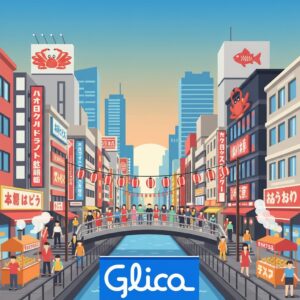
The first thing that captures your attention and refuses to let go is the light. Dotonbori’s neon signs are more than just advertisements; they are immense, dazzling works of pop art that have become as iconic to Osaka as any temple or castle. They illuminate the night sky with electric blue, fiery orange, and brilliant white, their reflections shimmering on the calm, dark surface of the Dotonbori Canal below. It’s a canyon of light, and standing on the legendary Ebisubashi Bridge feels like being at the heart of a vibrant, chaotic explosion.
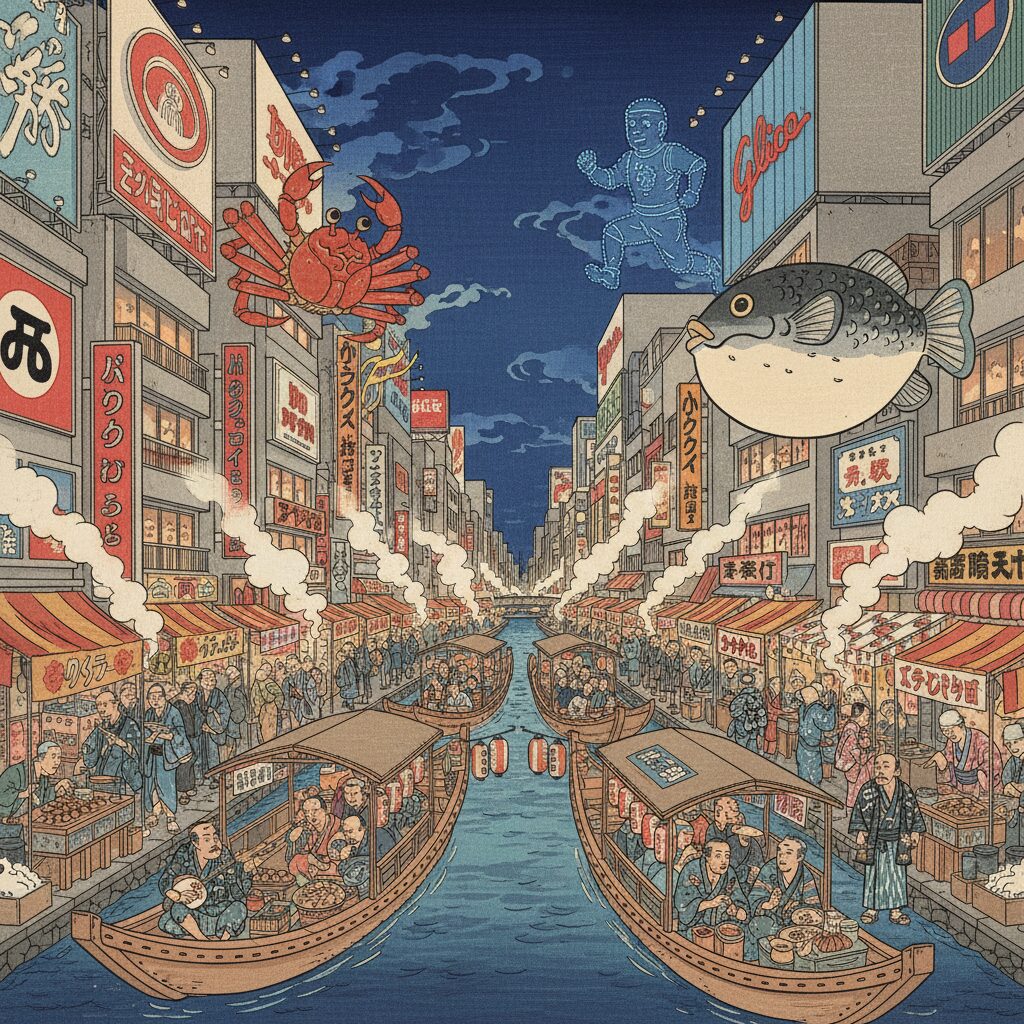
Dominating the skyline is the undisputed king of Dotonbori: the Glico Running Man. First installed in 1935, this emblem of the Glico confectionery company has been updated multiple times over the years, evolving from neon tubes to the dynamic, energy-efficient LED display it is today. Yet the image remains unchanged: a victorious athlete crossing the finish line with arms raised in triumph. He is more than just a mascot; he embodies Osaka’s resilience and forward momentum. Watching him run against his ever-shifting digital backdrop, from a sunlit stadium to a starry night, you can’t help but feel a wave of optimism. For every visitor, posing on the bridge in his iconic stance for a photo is a rite of passage, a shared moment connecting millions who have stood there before.
Across the street, another contender demands your gaze from the Kani Doraku restaurant’s facade. A massive, mechanical red crab, its legs and claws moving slowly in a mesmerizing rhythm, invites guests to savor its famous crab dishes. The sheer size and detail captivate, perfectly showcasing Japan’s talent for ‘kanban’—elaborate storefront signs designed to entertain as much as inform. Further along, you might notice the huge, three-dimensional pufferfish lantern of the now-closed Zuboraya, a nostalgic symbol still vivid in the memories of locals and longtime visitors. There’s the enormous face of a mustachioed chef, the emblem of Kushikatsu Daruma, looking down with a serious but welcoming expression. Giant, steaming bowls of ramen sculpted in plastic, enormous models of gyoza dumplings, and the bold, graphic logos of brewers like Asahi and Kirin all compete for your visual focus. Each sign weaves a tale of commerce, rivalry, and a deep desire to stand out in Osaka’s lively entertainment scene. The result is a richly layered visual story—a history of Japanese branding and public art unfolding in real time right before your eyes.
Kuidaore Culture: Eating ‘Til You Drop in Osaka’s Kitchen
If the neon lights represent Dotonbori’s soul, then the food is undoubtedly its heart. The air itself is infused with the enticing promise of culinary delights, a rich aroma blending grilled octopus, savory sauces, and deep-fried treats. Osaka is often nicknamed ‘tenka no daidokoro,’ or ‘the nation’s kitchen,’ a title earned centuries ago as Japan’s central hub for the rice trade. This heritage of nourishing the nation has blossomed into a passionate, almost sacred dedication to food, embodied in the local philosophy of ‘kuidaore.’ This famous phrase roughly means ‘to eat until you drop’ or ‘to consume yourself into bankruptcy.’ In Dotonbori, this is not a warning but a cherished goal. The district is like a vast, open-air buffet—a playground for your taste buds where every stall and restaurant promises a new culinary adventure.
The Unmissable Savory Bites
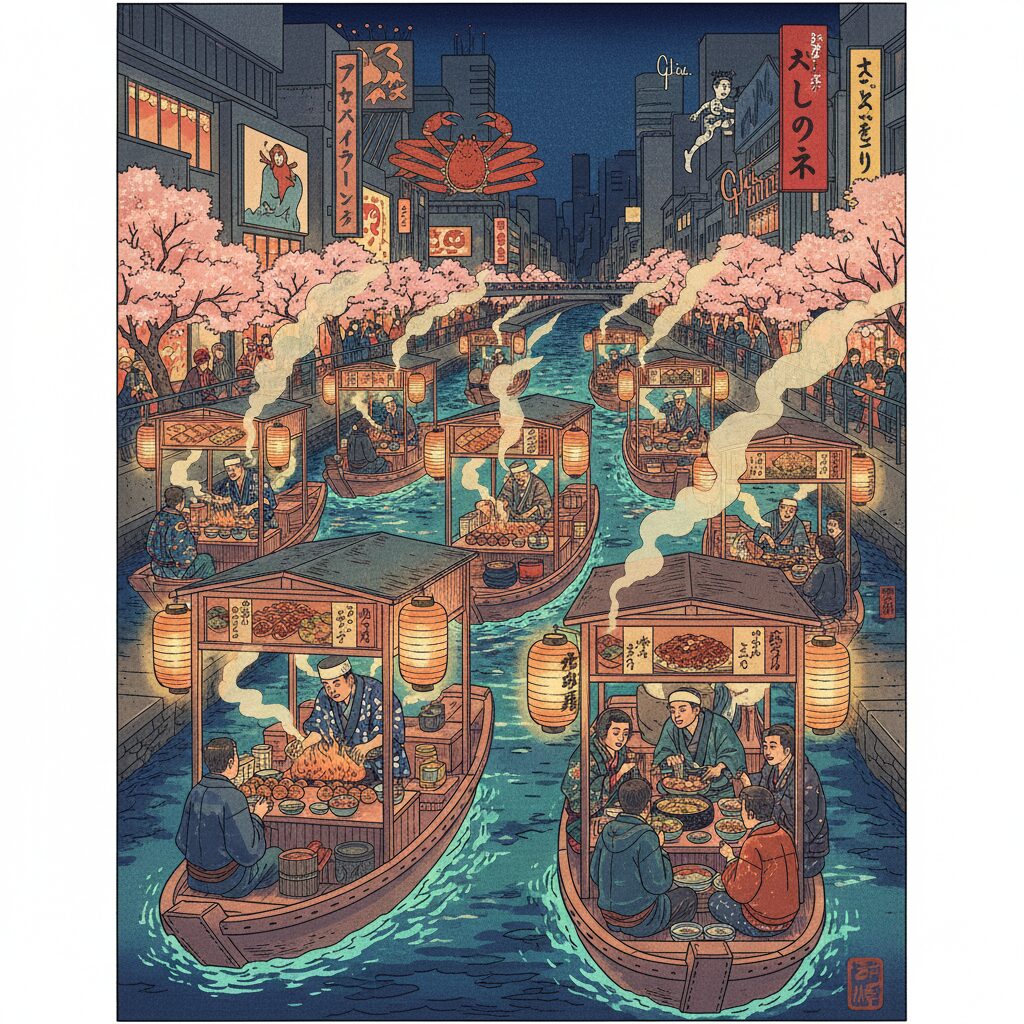
The iconic street food of Dotonbori, the one whose aroma precedes its sight, is takoyaki. These are far more than simple octopus balls; they are spheres of molten, savory bliss. Watching the takoyaki artisans at work is a spectacle in itself. With practiced, lightning-quick precision, they pour a thin, seasoned batter into cast-iron pans filled with half-spherical molds. Each mold receives a piece of tender, boiled octopus (‘tako’), along with bits of pickled ginger and green onion. Then, using two metal picks, the chefs deftly turn the balls, coaxing them into perfect spheres as the exterior crisps to a golden brown while the inside remains rich, creamy, and piping hot. Typically served in small, boat-shaped paper trays, they are generously topped with a tangy, sweet brown takoyaki sauce, a drizzle of Japanese mayonnaise, a sprinkling of ‘aonori’ (green seaweed powder), and finished with a flourish of ‘katsuobushi’ (dried, smoked bonito flakes) that dance from the heat. The first bite is a risk—you know it’s lava-hot, but resistance is futile. The combination of crisp outer shell, gooey center, chewy octopus, and symphony of sauces delivers a flavor and texture explosion that is pure, unfiltered Osaka.
Equally treasured is okonomiyaki, often called a Japanese savory pancake. Its name means ‘grilled as you like it,’ reflecting its versatile nature. The base is a batter made from flour, grated nagaimo (a type of yam that imparts a fluffy texture), and dashi, mixed with a generous amount of finely shredded cabbage. From there, you can add your choice of fillings, with pork belly and assorted seafood being the favorites. The entire mix is poured onto a large, flat ‘teppan’ griddle, shaped into a thick disk, and cooked until both sides turn golden and the interior is steamed tender. Like takoyaki, the toppings are essential: a thick layer of okonomiyaki sauce (similar to a sweeter, thicker Worcestershire sauce), Japanese mayo (often applied in a decorative lattice), aonori, and moving bonito flakes. Many Dotonbori eateries have the teppan built into the table, so you can watch the chef prepare it right before you or even try cooking it yourself. It’s a hearty, comforting, deeply satisfying meal—a warm embrace from the city itself.
For lovers of fried foods, kushikatsu is a must. Originating in the nearby Shinsekai district but immensely popular in Dotonbori, kushikatsu features a variety of items—meat, seafood, vegetables, cheese, even quail eggs—skewered on bamboo sticks, dipped in a light panko breadcrumb batter, then deep-fried to a perfect, non-greasy crisp. The magic lies in the dipping sauce. Traditional kushikatsu spots have a large stainless-steel container of thin, savory sauce shared among customers at the counter. This is where the most important kushikatsu rule comes in: no double-dipping under any circumstances. You dip your skewer once, and only once, before taking a bite. If you need more sauce, you use a provided cabbage leaf to scoop some onto your plate. This rule isn’t just about hygiene—it’s a social pact, part of the communal dining culture. Biting into kushikatsu—the satisfying crunch of panko, tender filling, and tangy sauce—is a simple yet exquisite pleasure.
Noodle Nirvana and Beyond
Dotonbori is also home to some of Japan’s renowned ramen empires. The selection is vast, each shop boasting its own secret broth recipe and signature style. One landmark is the large green dragon adorning the Kinryu Ramen facade, a 24-hour institution famous for its light, clear tonkotsu (pork bone) broth, served from stalls resembling traditional food carts. Perhaps the most globally recognized is Ichiran, known for its ‘flavor concentration booths’—individual cubicles designed to let you savor your ramen undistracted. Here, you personalize every detail on a paper form, from broth richness and garlic level to noodle firmness and spiciness of their signature red sauce. The experience is distinctive, and the ramen consistently exceptional—a rich, creamy tonkotsu that has captivated fans worldwide. Slurping a hot bowl of ramen in a bustling Dotonbori shop, sharing the steam and satisfied sighs of fellow diners, is a quintessential part of the local nightlife.
While ramen often takes center stage, Osaka is also the birthplace of Kitsune Udon. This comforting noodle soup features thick, chewy udon noodles in a light, savory dashi broth, topped with a large piece of ‘aburaage’ (deep-fried tofu pouch) simmered in sweet soy sauce. The name ‘kitsune’ means fox, inspired by the legend that foxes are fond of fried tofu. This dish offers a more subtle, delicate flavor compared to the boldness of takoyaki or ramen, providing a gentle, warming relief from the sensory intensity outside.
The Atmosphere After Dark: Sounds, Smells, and People
To truly experience Dotonbori, you need to engage more than just your eyes and taste buds. It’s a full-body, multi-sensory immersion. Close your eyes for a moment on Ebisubashi Bridge and simply listen. You’ll hear the constant, lively calls of ‘Irasshaimase!’ (‘Welcome!’) from shopkeepers eager to entice you. You’ll catch the sizzle and pop of food hitting hot griddles, the rhythmic clatter of takoyaki picks, and the low hum of countless conversations in a dozen different languages. J-pop music blasts from storefronts, competing with announcements from river tour boats and the overall roar of a happy, well-fed crowd. It is a symphony of organized chaos.
The aromas are equally complex. The sweet, caramelizing scent of okonomiyaki sauce mingles with the smoky, savory smell of grilled meat from a yakiniku restaurant. The briny odor of fresh seafood is balanced by the sharp tang of pickled ginger. Beneath it all lies the faint, earthy scent of the canal—a constant reminder of the waterway that gave this district its name and purpose. It’s an olfactory map of everything Dotonbori has to offer.
And then there are the people. Dotonbori is a river of humanity, a cross-section of the world flowing through Osaka’s neon heart. You’ll see wide-eyed tourists, cameras permanently in hand, trying to capture the impossible scale of it all. You’ll see local salarymen unwinding after a long day at work, laughing over beers and skewers. You’ll see groups of fashionable young people out for a night of fun and feasting, and families sharing memorable meals. The energy is infectious. There is a palpable sense of joy and discovery in the air, a collective embrace to indulge and enjoy the moment. For a more relaxed perspective, take a stroll along the Tombori River Walk, a promenade running along both sides of the canal. From here, you can view the neon signs from a different angle, watch tour boats glide by, and find a quieter spot to sit and soak in the incredible atmosphere.
Exploring the Sidestreets: Beyond the Main Drag
While the main Dotonbori street offers a unique experience on its own, some of the area’s most captivating charms lie hidden within the maze of narrow streets and alleys branching off from it. Exploring these smaller pathways can feel like stepping into a completely different world. The most renowned among them is Hozenji Yokocho. As you veer off the main avenue, the neon lights instantly give way to the soft, warm glow of traditional paper lanterns. The ground beneath shifts from modern pavement to uneven, moss-covered stones, worn smooth by centuries of foot traffic. This alley, barely wide enough for two people to walk side by side comfortably, feels like a preserved relic of old Osaka. It is lined with small, intimate restaurants and traditional izakayas, whose wooden façades exude a quiet elegance.
At the center of the alley stands Hozenji Temple, a tiny Buddhist sanctuary that feels almost out of place amid the modern cityscape. The temple houses a famous statue of Fudo Myo-o, one of Buddhism’s fierce Wisdom Kings. Over time, the statue has become completely enveloped in a thick, green layer of moss, obscuring much of its original form. This moss growth results from the long-standing tradition of worshippers splashing water on the statue while praying. The sight of this verdant deity, surrounded by incense smoke and gentle lantern light, offers a deeply serene and spiritual moment just steps away from the wild energy of Dotonbori.
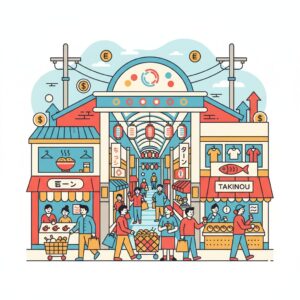
If you head north from Dotonbori, you’ll eventually enter the Shinsaibashi-suji Shopping Arcade, the area’s premier shopping destination. This covered street spans over 600 meters and presents a fascinating contrast to Dotonbori’s food-centered focus. Here, you’ll find a mix of international high-fashion brands, trendy local boutiques, department stores, drugstores stacked with Japanese cosmetics, and quirky souvenir shops. It’s easy to spend hours wandering this retail haven, making it an ideal activity before or after dinner. To the west lies America-mura, or ‘Amemura,’ Osaka’s hub for youth fashion and counterculture. With its vintage clothing stores, record shops, street art, and small live music venues, it offers a grittier, more alternative vibe than the mainstream energy of Dotonbori, revealing yet another facet of Osaka’s diverse character.
Practical Tips for a Perfect Dotonbori Night
Exploring Dotonbori for the first time can feel a bit overwhelming, but a few straightforward tips can help you enjoy your visit to the fullest. Above all, timing is crucial. Although the area is lively during the day, it truly comes alive after dark. Plan to arrive around twilight, around 6:00 or 7:00 PM. This timing lets you experience the enchanting shift as the sky darkens and hundreds of signs and lanterns light up one after another. The district remains bustling late into the night, with many restaurants and stalls open until midnight or beyond, especially on weekends.
Getting to Dotonbori is very easy. Located in Osaka’s Minami (South) district, it’s most conveniently reached via Namba Station. This major transit hub services several subway lines (Midosuji, Yotsubashi, Sennichimae), along with Kintetsu and Hanshin railways, linking it to other parts of Osaka and nearby cities like Kyoto, Kobe, and Nara. From any of the many station exits, a well-marked, quick five-minute walk leads you to the canal.
Be ready for crowds. Dotonbori, especially around Ebisubashi Bridge, can get extremely busy. Wear comfortable shoes since you’ll be on your feet for hours. Adopt the slow, steady pace of the crowd and move along with the flow. If you need a break from the hustle, the nearby Tombori River Walk or the quieter side streets like Hozenji Yokocho provide peaceful retreats. Also, while major restaurants and shops generally accept credit cards, many smaller street food vendors operate on a cash-only basis. Carry a good amount of yen so you can sample anything that catches your interest.
Lastly, embrace the ‘kuidaore’ spirit wisely. It’s tempting to fill up on the first mouthwatering dish you find, but resist that urge. Instead, treat your visit like a tasting experience. Share dishes with your companions—grab a small portion of takoyaki from one stall, a single kushikatsu skewer from another, and a half-bowl of ramen from a third. This approach lets you try a broader range of delicacies without becoming too full early on. Remember, it’s a culinary marathon, not a sprint.
A Final Thought on the Dotonbori Experience
Dotonbori is far more than just bright lights and food stalls. It embodies Osaka’s character: bold, noisy, somewhat chaotic, and utterly dedicated to having a great time. It’s a place that celebrates the simple yet profound joy of a perfectly prepared meal shared in a lively, spirited environment. Walking through Dotonbori at night means tapping into the city’s energy, feeling its heartbeat in the flashing signs and cheerful crowds. While the experience might initially feel overwhelming, if you go with its flow, you’ll find a place full of fun and unforgettable flavors. So arrive hungry and open-minded. Lose yourself in the glowing maze, let your nose lead you from stall to stall, and eat until you’re completely and joyfully satisfied. That’s the spirit of Dotonbori—an experience you’ll carry with you long after leaving its vibrant shores.