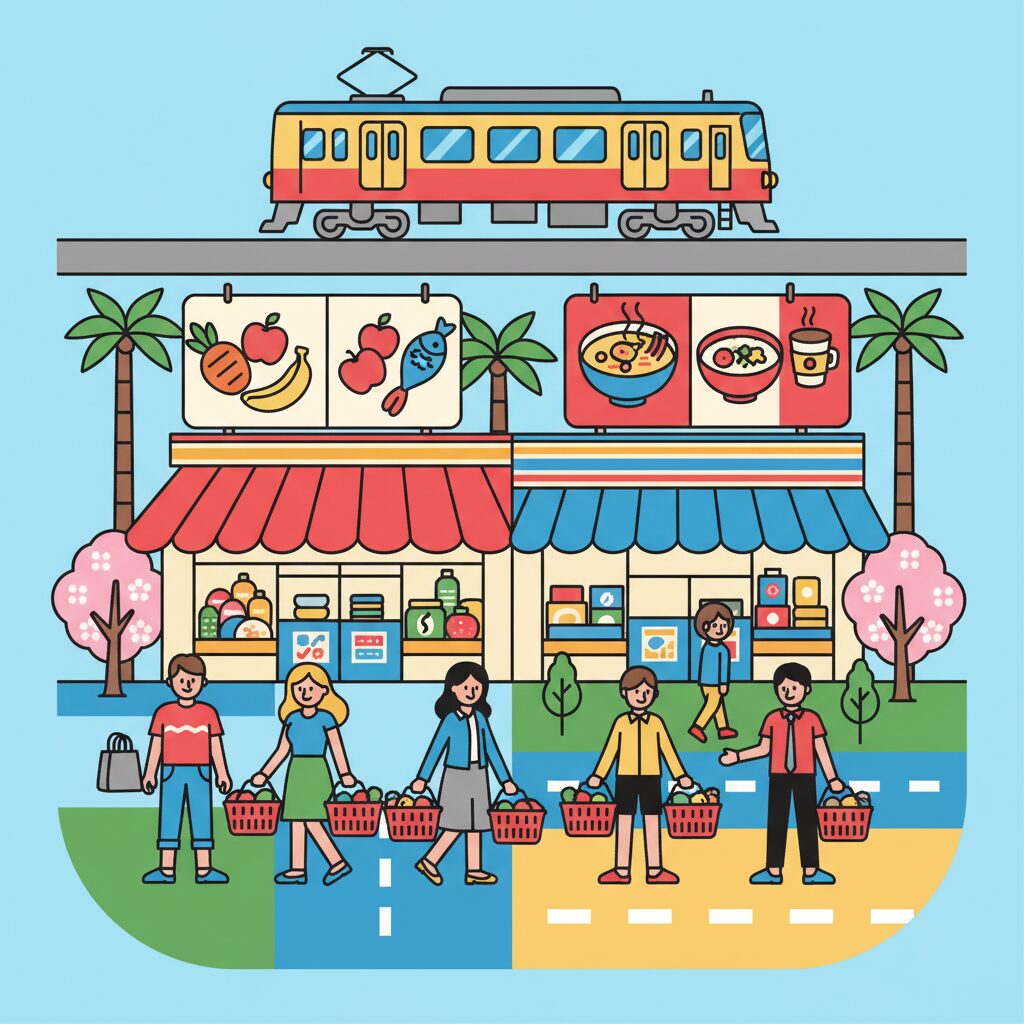
The glow is the first thing that gets you. It’s a clean, humming, fluorescent beacon cutting through the quiet residential streets of Osaka at 2 AM. It promises everything and asks for nothing but a few coins. This is the siren song of the Japanese convenience store, the konbini. Inside, the shelves are a testament to perfect order: triangular onigiri standing in flawless rows, chilled bento boxes presenting a mosaic of color, and hot coffee brewing at any hour. For a foreigner finding their footing, the konbini feels like a safe harbor. It’s simple, predictable, and asks no difficult questions. It’s your first friend in a new city.
But then, you hear another sound. It’s a chaotic symphony just a few blocks away. It’s the rattle of shopping carts with one squeaky wheel, the energetic, looped jingle of a store you’ve never heard of, and the boisterous calls of staff announcing a flash sale on cabbages. This is the local Osaka “suupaa,” the supermarket. The lights are harsh, the aisles are crowded, and the signage looks like it was written by a hyperactive child with a magic marker. It’s overwhelming, a little gritty, and utterly intoxicating. This is where real life in Osaka happens. It’s a battleground for bargains, a theater of daily life, and the beating heart of the city’s obsession with value.
The choice between these two worlds isn’t just about what you’ll have for dinner. It’s a fundamental question about how you want to live in this city. Are you here for the slick, pre-packaged version of Japan, or are you ready to dive into the messy, vibrant, and ultimately more rewarding reality of Osaka? This isn’t just a guide to grocery shopping. It’s a roadmap to understanding the soul of Osaka, a city built by merchants who knew the value of a yen and passed that wisdom down through generations. The city’s famous slogan, “kuidaore” – to eat oneself into ruin – is misunderstood by tourists. It’s not about extravagant spending. It’s about the relentless pursuit of the absolute best-tasting food for the lowest possible price. It’s a philosophy of maximum return on investment, played out every single day in the aisles of its supermarkets. Forget the tourist traps; your real education in the Osaka mindset begins right here, under the buzzing lights of the grocery store.
To truly understand the cost of living in Osaka and how neighborhoods like Kyobashi fit into the city’s unique economic fabric, you can explore more details in our guide to the real cost of living in Osaka Kyobashi.
The Konbini Siren Song: Convenience at a Cost
The Psychology of the 24/7 Glow
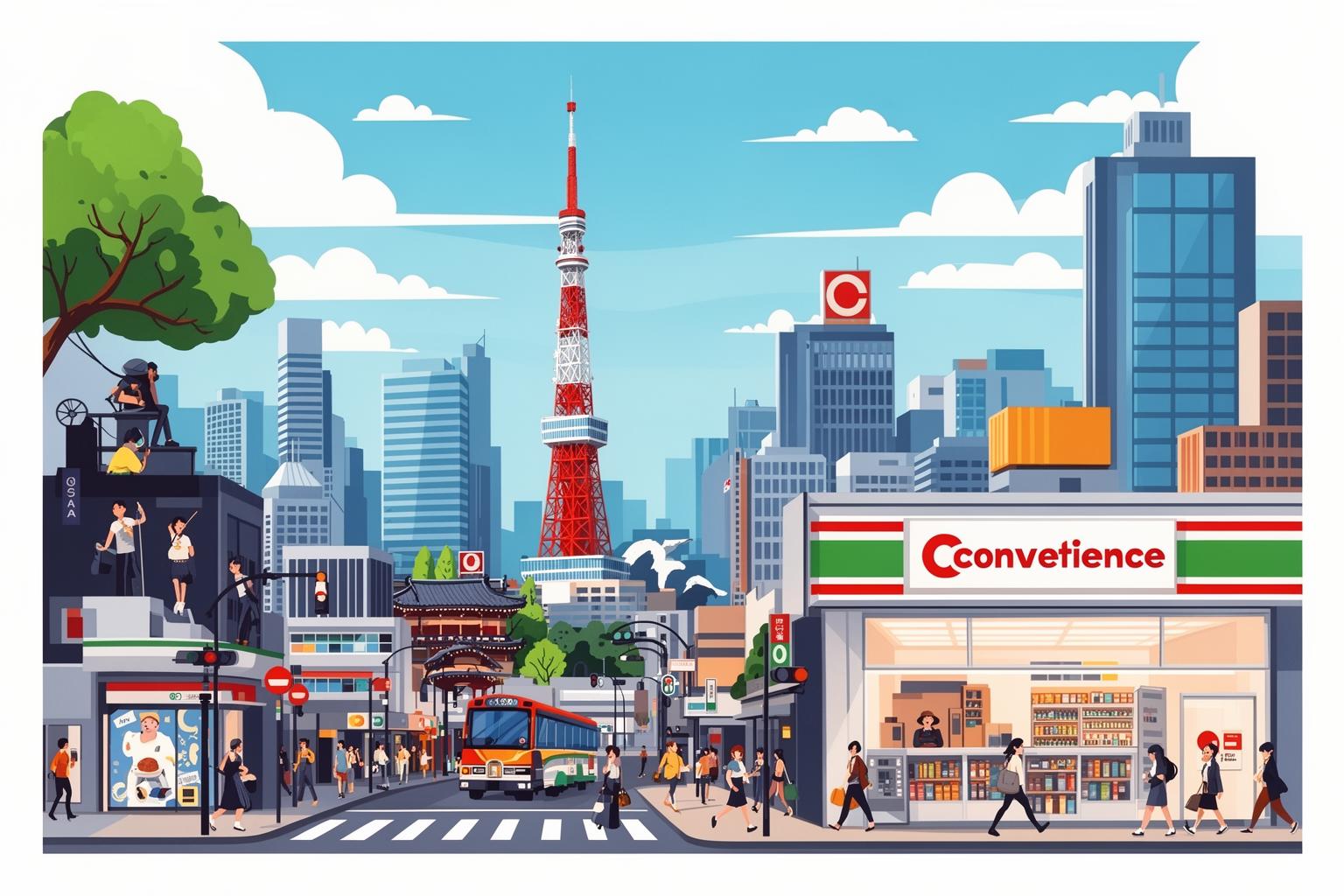
The convenience store is a marvel of psychological design. Every detail is fine-tuned for effortless consumption. The doors slide open with a soft chime, inviting you into an environment of climate-controlled comfort. The lighting is bright and uniform, eradicating shadows and making every product stand out with vivid color. The aisles are wide enough for one person to pass comfortably, yet narrow enough that everything is within easy reach. There is no searching or hunting. The route from the entrance to the cashier is a smooth, frictionless glide.
This design is no accident. It’s created to calm the weary mind of the modern city dweller. After a long day on a crowded train, the last thing you want is another challenge. The konbini offers a world without decisions. Thirsty? Drinks are right there, perfectly chilled. Hungry? A dozen varieties of bento, pasta, and sandwiches await, each a complete, self-contained solution to your hunger. The staff are efficient, polite, and swift. The whole transaction, from entry to exit, can take less than two minutes. You are paying for this seamlessness. You are buying back your time and your mental energy.
In Tokyo, a city that operates at a relentless, high-speed pace, the konbini has become an essential extension of the home. Apartments are tiny, kitchens even smaller, and work hours longer. The konbini acts as a communal pantry and microwave. But in Osaka, the situation is subtly different. While konbini are equally widespread, they face a deeply rooted cultural competitor: a populace that actively enjoys the process of finding a bargain. The sleek efficiency of the konbini can feel, to an Osakan, somewhat sterile, a bit too easy. It lacks the thrill of the hunt. It represents a surrender to paying full price, an idea that runs counter to the local DNA.
Deconstructing the Konbini Price Tag
At first glance, the prices seem fair. A salmon onigiri for 160 yen. A bottle of green tea for 150 yen. A small bowl of udon for 450 yen. None of these individual amounts will break the bank. This is the konbini’s greatest trick: it fragments the cost. You’re not considering your weekly food budget; you’re just focused on this one meal, right now.
Let’s do the math. A simple lunch—a bento box (around 600 yen), a bottle of tea (150 yen), and maybe a small yogurt (140 yen)—totals nearly 900 yen. If you do this every workday, you’re spending 4,500 yen a week just on lunch. Add a quick breakfast of an onigiri and coffee (around 400 yen), and your weekly total for two meals a day already approaches 6,500 yen. Now imagine grabbing dinner there too. The costs escalate, quietly and insidiously.
The real issue is in the unit price, a concept Osakans instinctively understand. That 150-yen, 500ml bottle of tea at the konbini sits beside a 2-liter bottle of the exact same brand at the supermarket for 160 yen. You’re paying the same price for one-quarter of the product. A small, sad-looking bag of shredded lettuce at the konbini costs 120 yen. At a local supermarket, a large, crisp head of lettuce can be yours for 99 yen on a sale day. A single banana, wrapped in plastic, is 100 yen. A bunch of five costs 150 yen at the suupaa. The pattern is relentless. The konbini charges a hefty premium for portioning, packaging, and convenience.
This is the value trap. Each purchase feels minor, but the cumulative effect significantly drains your finances. You’re paying a steep tax for the privilege of not having to plan ahead, of not having to walk an extra two blocks to the supermarket. It’s a trade-off many busy people willingly make, but it prevents them from fully engaging with the economic rhythm of Osaka.
The Foreigner’s First Friend
It’s completely understandable why newcomers to Osaka, or Japan in general, rely on the konbini. It’s a controlled environment in a country that can often feel overwhelming. The products are easy to identify. The checkout process is standardized. You can use a credit card without hassle. You can even pay bills, purchase concert tickets, and send packages. The konbini is a one-stop shop for navigating daily life’s bureaucracy.
When your Japanese is limited and you’re still learning how to use your rice cooker, the konbini bento is a godsend. It’s a guaranteed edible meal with no risk of failure. It feels safe. It offers a sense of stability and normalcy when everything else is new and strange.
But this comfort comes at the price of integration. Living off the konbini is like traveling in a country but only ever eating at the hotel restaurant. You’re being fed, but you miss out on the full local culinary culture. It keeps you on the surface of Osaka life, observing through a clean, well-lit window but never truly partaking. To transition from temporary visitor to genuine resident, you must eventually push through the doors of that chaotic, noisy, and wonderful supermarket. You have to step into the arena.
The Supermarket Arena: Where Osaka’s Soul is Priced to Move
Welcome to the Jungle: Navigating the Osaka Suupaa
Stepping into a traditional Osaka supermarket for the first time is a full sensory overload. The air is thick with a blend of aromas: fresh fish from the seafood counter, frying oil from the 惣菜 (sozai) section, and the sweet fragrance of ripe fruit. The store’s jingle—an upbeat, annoyingly catchy tune—plays relentlessly, embedding itself into your mind. Handwritten signs in bright, clashing colors shout prices and deals from every possible angle. It’s the complete opposite of the konbini’s serene orderliness.
This environment operates by its own set of rules, and to thrive, you need to recognize the key players. Each has its distinct personality and its unique role within the city’s ecosystem.
First, there’s the unchallenged king, the legend, the spectacular Super Tamade. Instantly identifiable by its gaudy yellow exterior and blazing neon lights more fitting for a pachinko parlor, Tamade is a local institution. Inside, it’s a cacophony of color and noise. The aisles are narrow and often crowded with bargain hunters. The business model is straightforward: offer products at prices so low they seem unreal. Here, you find the famed 1-yen sales (with a minimum purchase), 98-yen bento boxes, and vegetables costing less than the plastic bags they come in. Tamade isn’t about premium organic produce or artisanal cheeses; it’s about sheer volume and rock-bottom prices. Shopping here is a leap of faith and a treasure hunt, perfectly embodying the Osaka spirit of prioritizing cost above all else.
Next is Gyomu Super, or “Business Supermarket.” The name is somewhat misleading; although it caters to small restaurant owners, it’s a haven for anyone looking to buy in bulk. This is the place for those fully committed to home cooking. Frozen foods are their specialty. You can pick up a kilogram of Brazilian chicken cheaply, a massive bag of frozen gyoza that will last for weeks, and industrial-sized bottles of sauces, spices, and cooking oils. Gyomu Super reflects the strategic, forward-thinking side of Osaka thriftiness. You spend more upfront on a single trip but stock your freezer and pantry for weeks, drastically cutting your per-meal costs.
Finally, there are everyday chains like Life, Mandai, and Kansai Supermarket. These serve as the dependable backbone of Osaka’s grocery scene. They strike a balance between Tamade’s extreme bargain hunting and the quality expected from a mainstream grocer. These stores are cleaner, better organized, and offer a wider range of products, including excellent private-label brands. Most people do their main weekly shopping here, filling up on essentials before making targeted runs to Tamade or Gyomu for specific deals.
The Art of the Deal: Understanding Osaka Shopping Strategy
Shopping in an Osaka supermarket isn’t passive—it’s a competitive sport, and knowing the rules is essential to winning. The most crucial rule centers on the magical 割引シール (waribiki shiru), the discount sticker.
As closing time nears, a quiet but intense energy builds in the store, especially around the prepared foods, sushi, and fresh meat sections. This is the hunting hour. Shoppers—from university students to elderly grandmothers—begin to loom like patient predators. Everyone waits for the appearance of a store employee wielding a pricing gun. This worker is the signal of bargain time. With swift, practiced movements, they start slapping yellow stickers on products. First come the 20% off tags. Some shoppers take the bait. Then, about an hour later, the 30% off stickers go on. The tension builds. Finally, the holy grail arrives: the 半額 (hangaku) sticker, marking items at half price. That’s when the silent dance turns into a frenzy. With practiced speed and near-telepathic spatial awareness, shoppers swoop in, grabbing their prizes. A tray of premium sashimi that was 1200 yen becomes 600. A family-sized portion of fried chicken, previously 500 yen, is now 250. This is how you feast on a budget. Mastering this nightly ritual is the single most effective way to drastically reduce your food expenses in Osaka.
Beyond the nightly sticker chase, there’s a weekly rhythm. Osakans follow an internal calendar of deals. Tuesday might be “Egg Day” at Life, where a pack of 10 eggs sells for only 99 yen. Wednesday could be the 100-yen frozen food sale at Mandai. Shoppers plan their trips around these promotions, often hitting multiple stores to cherry-pick the very best bargains. This dynamic pricing sharply contrasts with the konbini’s fixed prices. The supermarket is a living marketplace where costs shift daily, sometimes hourly, rewarding the savvy consumer.
Another important tactic is embracing the Private Brand (PB). Every major supermarket chain carries its own line of products, from milk and bread to curry roux and coffee. These items often come from the same factories as big-name brands but sell at a fraction of the price in simpler packaging. An Osakan shopper won’t hesitate to choose the store-brand “Smile Life” soy sauce over famous Kikkoman if it saves 50 yen. It’s a practical decision, dismissing marketing hype in favor of pure function. The quality is usually indistinguishable, and the savings accumulate significantly over time.
Decoding the Aisles: What to Actually Buy
Let’s put this strategy into an actual shopping basket. The difference between a konbini haul and a supermarket haul at the same price is astonishing.
Imagine you have 1,000 yen to spend on dinner. At a konbini, you might get a decent bento box (650 yen), a bottle of tea (150 yen), and a small dessert (200 yen). It’s a single meal for one night. It’s okay.
Now, take that 1,000 yen to a supermarket, especially during discount hour. You could buy a discounted pack of three servings of fresh ramen noodles (100 yen), a half-price pack of chashu pork (200 yen), a bunch of green onions (90 yen), a pack of four eggs (120 yen), and a discounted tray of six gyoza (150 yen). For the remaining 340 yen, you could get a 2-liter bottle of tea (160 yen) and a large bag of shrimp crackers (180 yen). Now you have the makings for a huge, delicious bowl of ramen tonight, enough leftover pork and eggs for tomorrow’s lunch, a side of gyoza, snacks, and a large bottle of tea that will last two days. It’s not just one meal—it’s the foundation for several. The value comparison is staggering.
The sozai section is the supermarket’s secret weapon against the konbini bento. This counter is packed with pre-made dishes sold by weight or piece. Here you find golden-brown korokke (croquettes) for 50 yen each, crispy tempura, grilled fish, yakisoba, and dozens of other Japanese home-style dishes. When these items get the half-price sticker in the evening, the value is incredible. You can build a custom, hot meal for less than 300 yen. It offers all the convenience of a konbini bento but with more variety, larger portions, and at a fraction of the cost. This is the ultimate Osaka life hack: let the supermarket do the cooking, and you just swoop in for the discounted final product.
The Mindset Shift: From Consumer to Strategist

“Meccha Yassui!” – The Joy of Scoring a Bargain
In many cultures, a strong focus on saving money can be viewed as stingy or cheap. In Osaka, however, it is celebrated as a virtue. There is a phrase you’ll hear frequently in supermarkets, shopping arcades, and everyday conversations: 「めっちゃ安い!」 (Meccha yassui!). It means “super cheap!” and is exclaimed with genuine, unfiltered joy. Discovering a fantastic bargain isn’t something to keep quiet about; it’s a victory to be shared and a source of pride.
This mindset stems directly from Osaka’s history as Japan’s merchant capital. For centuries, the city thrived on commerce, where fortunes were earned not by birth but through sharp business acumen. The guiding principle was always to buy low and sell high, to recognize the true worth of things, and never overpay. This commercial spirit is ingrained in every Osakan. Saving 50 yen on soy sauce isn’t just saving 50 yen; it’s a successful deal, a small triumph in life’s game. Spending more than necessary is regarded as illogical, even foolish.
This creates a clear contrast with Tokyo. While Tokyoites are also mindful of their budgets, there tends to be a greater focus on aesthetics, brand status, and the shopping experience. In Osaka, price holds the greatest sway. A Tokyo resident might willingly pay extra for beautifully packaged fruit at a department store, whereas an Osakan proudly shows off slightly imperfect but delicious apples bought for a fraction of the price from a street vendor. The satisfaction comes from the smartness of the purchase, not its luxury.
The Kitchen as Your Command Center
Embracing the supermarket lifestyle requires a subtle yet important change in habits: you need a kitchen. This may sound obvious, but for many who live fast-paced, convenience-oriented lives, the kitchen often becomes little more than a storage space for instant noodles and bottled drinks.
Living the supermarket life means you’re no longer simply a consumer—you become a home logistics manager. You plan a day or two ahead. When pork goes on sale, you buy it, knowing you can make ginger pork (shogayaki) the next day. When you grab discounted sashimi, you make sure you have soy sauce and wasabi at home. You cook a large batch of rice that will last several meals. This forward-thinking approach is the fundamental difference between these two food philosophies.
The konbini lifestyle is reactive, focusing on the question, “What do I want to eat right now?” The supermarket lifestyle is proactive, asking, “What can I create with today’s amazing deals?” This shift from reactive to proactive thinking is a key step toward taking control of your life and budget in a new city. It encourages self-sufficiency and creativity. Even if your “cooking” involves simply assembling various discounted sozai on a plate with fresh rice you prepared, you’re curating your meal rather than just accepting a ready-made one. This small act of agency can be remarkably empowering.
Common Misconceptions Foreigners Have
This leads us to some frequent myths foreigners have about living in Japan, often rooted in a konbini-centered experience.
Myth 1: “Living and eating in Japan is extremely expensive.” If your reference is eating out for every meal or relying only on convenience stores, this may be true. But most locals don’t live this way. By embracing supermarket culture, Japan—especially Osaka—can be one of the most affordable places to eat well in the developed world. The abundance of high-quality, fresh ingredients at low prices is remarkable. The myth of expensive living comes from a tourist or short-term resident perspective.
Myth 2: “Supermarkets are too confusing if you don’t speak Japanese.” Although they can appear visually overwhelming, the basics are universal. Vegetables look like vegetables, meat is in the meat section, and prices are prices. You don’t need to understand every sign to know that a big red number means a bargain. Cashiers are pros; they scan your items, show you the total, and efficiently accept payment, whether cash or card. They’ve seen it all. Don’t let a language barrier keep you from saving thousands of yen monthly.
Myth 3: “I don’t have time to cook full meals daily.” Few people do. This is the biggest misconception. The secret is a hybrid approach. The Osaka supermarket expert isn’t necessarily a gourmet chef—they are a master assembler. They use the supermarket’s sozai section as their personal chef, buying discounted main dishes like grilled fish, tonkatsu, or stir-fries, while providing the affordable, easy staples themselves. The only “cooking” needed is pressing a button on the rice cooker or boiling water for miso soup. This system brilliantly combines the convenience of ready-made food with the savings of home preparation.
A Practical Hybrid Strategy for Modern Osaka Life
The Best of Both Worlds
Realistically, the aim is not to wage a holy war against the convenience store. The konbini is an essential part of urban life, and even the most thrifty Osakan grandmother relies on it. The trick is to redefine its place in your routine. It isn’t your pantry—it’s your emergency backup.
Your supermarket is your strategic hub. This is where you carry out your main weekly or bi-weekly missions to stock up on essentials. It’s where you buy rice, noodles, drinks, cooking oils, and other long-lasting items. It’s your primary source for fresh produce, meat, and fish. Most importantly, it’s your nightly hunting ground for discounted prepared foods that form the backbone of your dinners.
Your konbini serves as your tactical support. It’s the stop for a 6 AM coffee before an early train, the late-night pint of ice cream you suddenly crave, or the place to grab milk when you realize you’re out and already in pajamas. You use it for specific, occasional needs where convenience justifies the extra cost. By limiting the konbini to this role, you enjoy all its perks without letting it drain your budget.
A Sample Week’s Food Budget: The Shocking Truth
Let’s put some concrete numbers to this. The results are striking.
Scenario 1: The Konbini Dweller This person depends on the konbini for most meals due to convenience.
- Breakfast: Coffee and a pastry or onigiri. (Approx. 400 yen)
- Lunch: A standard bento box and a bottle of tea. (Approx. 800 yen)
- Dinner: A pasta bowl or a larger bento plus a drink. (Approx. 700 yen)
- Daily Total: 1,900 yen
- Weekly Total: 1,900 yen x 7 = 13,300 yen
Scenario 2: The Supermarket Savant This person makes one major supermarket shop and supplements it with nightly discount hunts.
- Weekly Staples Purchase: A 2kg bag of rice (lasting more than a week, 1,000 yen), a 10-pack of eggs (200 yen), a block of tofu (80 yen), a 3-pack of udon noodles (150 yen), a 2-liter bottle of tea (150 yen), a 2-liter bottle of water (100 yen), a loaf of bread (150 yen), assorted sale vegetables for the week (cabbage, onions, carrots, bean sprouts – around 600 yen).
- Initial Weekly Staples Cost: 2,430 yen
- Daily Dinners: This is the nightly hunt. Average cost for a discounted main dish (such as karaage, grilled fish, or a hamburger steak) is about 250 yen, paired with rice and vegetables from the staples purchase.
- Daily Dinner Cost: 250 yen
- Breakfast & Lunch: Made from staples—toast and eggs for breakfast; rice with leftovers, tofu, and simple soup for lunch. Marginal cost is minimal.
- Total Weekly Cost: 2,430 yen (Staples) + (250 yen x 7 dinners) = 2,430 + 1,750 = 4,180 yen
That’s a difference of over 9,000 yen per week, almost 40,000 yen a month. Enough for a domestic flight, new furniture, or a significant savings boost. The numbers speak for themselves. One lifestyle adjustment can transform your living costs in one of Japan’s biggest cities.
Embracing the Osaka Way
Ultimately, learning to shop like an Osakan is about more than saving money. It’s a form of cultural immersion that goes beyond temple visits or festival dates. It’s about engaging in the city’s vibrant economic rhythm.
When you stand in the sozai section at 7:30 PM, you’re no longer just a foreigner. You become part of a temporary, unspoken community—standing shoulder-to-shoulder with students, salarymen, and grandmothers, all united by the quiet, respectful chase for the hangaku sticker. You’re all players in the same game.
To understand Osaka, you must grasp its relationship with value. It’s a city that finds elegance in efficiency, beauty in a bargain. It honors the hustle. The smartest person in the room isn’t the one flashing the most cash, but the one leaving Super Tamade with a full bag of groceries and a receipt that looks like a misprint. By learning the supermarket’s rhythms, you learn the rhythm of Osaka itself—discovering that the city’s true flavor lies not in its priciest restaurants, but in the satisfaction of a delicious, hearty meal cleverly scored for just a handful of coins.