There are places in Osaka, in all of Japan, where the veil between the modern world and the ancient past feels impossibly thin. Places where the air itself seems to hum with stories centuries old, where every stone and every tree whispers of a time before the city’s neon pulse even existed. In the southern reaches of Osaka, nestled in a quiet district that still holds the scent of the nearby sea, lies one such portal: Sumiyoshi Taisha. This is not just another shrine; it is a declaration. A bold, architectural statement of purely Japanese spirituality, a sanctuary born from the waves and winds, standing resolute and vibrant long before Buddhism first touched these shores. To walk its grounds is to walk through a living museum of faith, to feel the powerful, rhythmic heartbeat of a culture deeply intertwined with the ocean that surrounds it. Sumiyoshi Taisha is the grand head shrine of over two thousand Sumiyoshi shrines scattered across the nation, a spiritual anchor for sailors, travelers, and poets for nearly two millennia. It’s a place where you can witness a form of sacred design that is unapologetically and profoundly Japanese, a style that speaks of strength, purity, and a direct connection to the divine forces of nature. Forget what you think you know about Japanese shrines for a moment; Sumiyoshi Taisha offers a different, older story, and it’s a story worth listening to.
After immersing yourself in this ancient spiritual world, you can explore the modern culinary delights of Osaka by visiting the famous Kushikatsu street for a completely different local experience.
The Gateway to the Gods: Crossing the Sorihashi

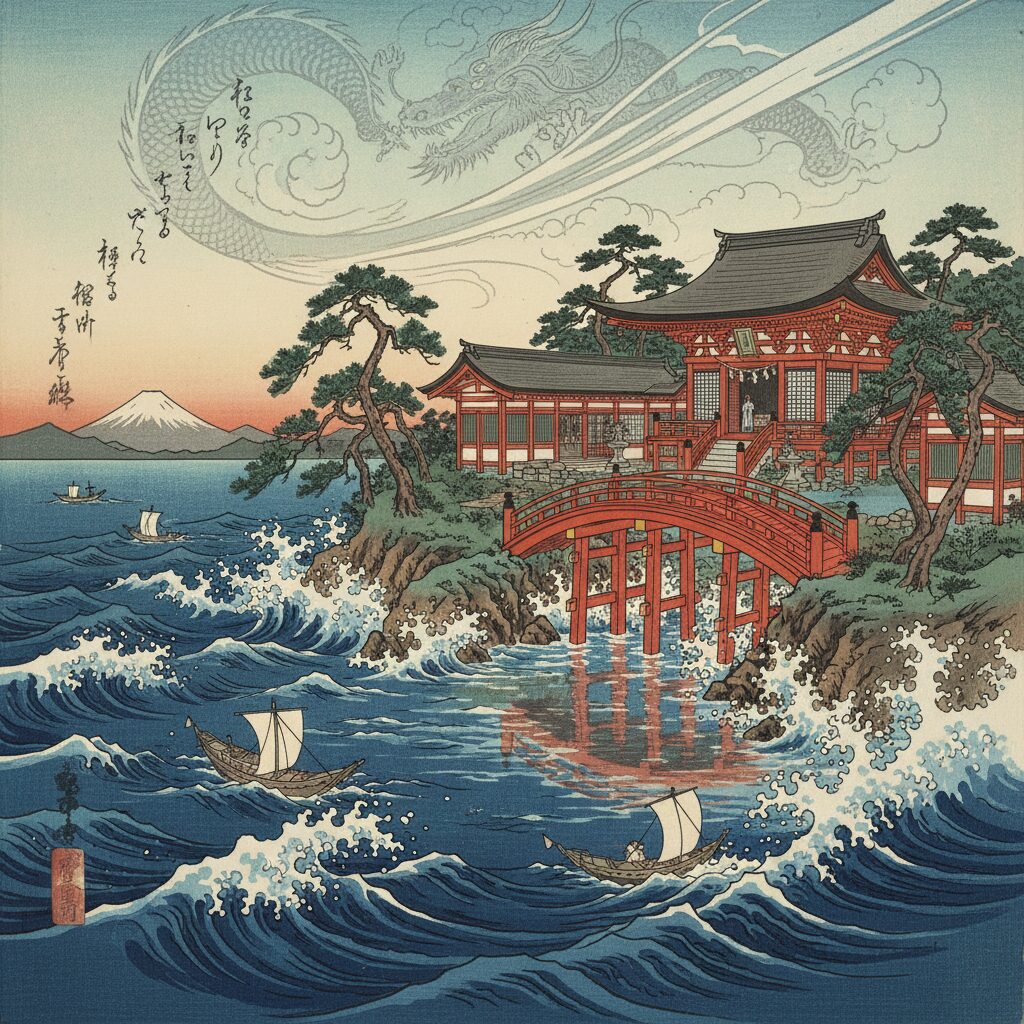
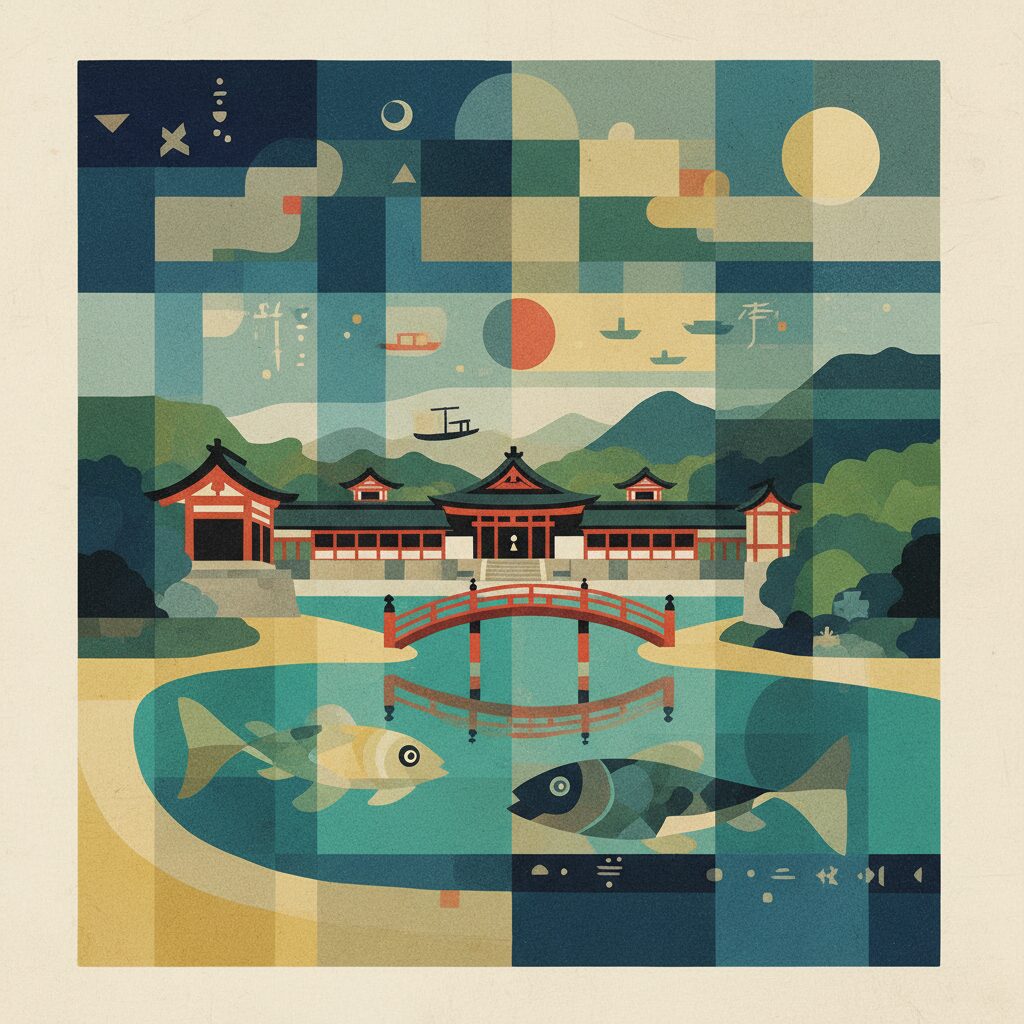
Your journey into the sacred realm of Sumiyoshi Taisha does not begin at a gate, but with both a challenge and a purification. Before you stands the Sorihashi Bridge, often called Taiko-bashi or “drum bridge” due to its high, semi-circular arch resembling the body of a drum. Its steep incline offers both a visual marvel and a physical experience. Painted in a brilliant vermilion that contrasts beautifully with the green of the surrounding trees and the blue of the sky, the bridge is more than just a crossing; it serves as a ritual passage. As you approach, you notice its perfect reflection in the still pond below, forming a complete circle—a powerful symbol of wholeness and cosmic harmony. The climb is surprisingly steep, encouraging you to slow down, watch your step, and be fully present in the moment. Each step upward is a deliberate act, a shedding of the mundane world left behind. It is believed that by crossing this bridge, you cleanse yourself of sins and impurities, preparing your spirit to greet the deities. Upon reaching the apex, you are rewarded with a breathtaking view of the shrine grounds stretched out before you. The descent on the other side is equally deliberate, a gentle re-entry into a world that feels quieter, older, and infused with a palpable spiritual energy. The Sorihashi is the shrine’s most iconic feature for good reason. It offers the perfect introduction, an architectural handshake that primes your body and soul for the profound history that lies ahead.
Architecture of the Earth: The Purity of Sumiyoshi-zukuri
Crossing the bridge onto the main grounds, you immediately notice that something feels different here. The buildings of the main sanctuary, the Hongu, exhibit a stark, linear beauty that contrasts sharply with the gracefully curved roofs and ornate details typically found in Japanese religious architecture. This is Sumiyoshi-zukuri, one of Japan’s oldest and purest shrine architectural styles, originating before any significant continental or Buddhist influence. It is a style deeply rooted in Japanese soil and spirit, inspired by the simplicity and strength of ancient granaries and dwellings.
The four main halls are arranged in a distinctive formation—a straight line resembling a fleet of ships sailing toward the western sea, the very direction from which invaders were once feared and gods believed to come. Each hall is dedicated to one of the Sumiyoshi Okami—the three great sea gods—and the legendary Empress Jingu, who is said to have founded the shrine in the 3rd century after her victorious campaign in Korea, guided and protected by these deities. The third and fourth halls stand side-by-side, further enhancing the imagery of a naval fleet.
Take a closer look at the roofs. They are gabled and straight, a style called kirizuma, constructed from layers of cypress bark. Unlike later shrine styles, there are no sweeping curves or upturned eaves. Two distinctive features project from the roofline: forked finials called chigi that reach skyward and cylindrical logs known as katsuogi laid horizontally along the ridge. Originally functional elements in ancient architecture, these became potent symbols of divine authority. The vivid vermilion pillars contrast strikingly with the pristine white walls, creating a color palette that feels both earthy and otherworldly. Each hall’s entrance is located on the gabled side, another hallmark of this ancient style. There are no winding corridors or elaborate verandas—just a straightforward, honest, and powerful design. Standing before these buildings, you sense a connection to primordial Japan, an era when divinity was embodied by the raw power of nature and architecture served as its most direct and sincere expression.
The Four Sanctuaries: A Fleet Anchored in Time
To truly understand Sumiyoshi Taisha is to grasp its layout. The experience involves moving through a sequence of sacred spaces rather than visiting a single building. You start at the Dai-ichi Hongu (First Main Sanctuary), then proceed to the Dai-ni (Second) and Dai-san (Third) Hongu, before reaching the Dai-yon (Fourth) Hongu. This linear arrangement feels deliberate, like a miniature pilgrimage. Each hall is a distinct entity, yet they form a unified whole. The gravel crunches quietly beneath your feet, calming the mind and sharpening your senses. The air is rich with the scent of ancient camphor trees and burning incense. Unlike many larger shrines where the main halls are roped off and observed from afar, here you can get remarkably close. You can study the grain of the massive wooden pillars, admire the intricate metalwork on the doors, and feel the profound weight of history these structures bear. The fences around each hall are also unique—a simple, rustic design known as Sumiyoshi-gaki, further emphasizing the shrine’s singular aesthetic. As you walk this line of sacred halls, you feel as if you are journeying alongside that mythical fleet, protected and guided by the powerful sea kami.
Whispers on the Wind: The Spiritual Heart of Sumiyoshi
Beyond its architectural magnificence, Sumiyoshi Taisha exudes a profound and accessible spirituality. The grounds are scattered with what locals call “power spots,” locations where the shrine’s energy feels especially concentrated. One of the most cherished is the Omokaru-ishi, a small stone lantern tucked away in a quiet corner of the precinct. The ritual is simple yet meaningful. First, you make a wish or pose a question. Then, you lift one of the round stones resting atop the lantern. After putting it back, you silently repeat your wish with heartfelt sincerity and lift the stone again. If it feels lighter the second time, your wish is believed to be on its way to fruition. If heavier, it may require more time and effort. This tactile form of divination serves as a personal dialogue with the spirit of the place.
Another beloved custom is the search for the Go-Dai-Riki, or the “Five Great Powers.” Within the goshuden, a sacred area behind the fourth main hall, stands a stone fence. It is said that if you search among the pebbles at the fence’s base, you can discover three special stones: one inscribed with 五 (five), one with 大 (great), and one with 力 (power). Collecting these stones and placing them in a special amulet pouch, purchased at the shrine office, is believed to grant five great blessings: physical strength, wisdom, wealth, fortune, and longevity. This transforms a shrine visit into a gentle treasure hunt, a mindful quest that forges a direct connection to the earth of this sacred site. The concentration needed to find the stones becomes a form of meditation. Once your wish is fulfilled, it is customary to find three new blank pebbles, inscribe the characters yourself, and return them to the fence along with the original set, doubling the blessing for the next seeker. This beautiful cycle of receiving and giving back lies at the heart of the shrine’s communal spirit.
The Guardians of the Grounds
The entire complex is overseen by immense, ancient camphor trees, some believed to be over a thousand years old. Their gnarled trunks are as wide as cars, and their sprawling branches form a cooling canopy that filters sunlight onto the paths below. Many of these sacred trees, or goshingi, are adorned with shimenawa, sacred ropes marking their divine status. Standing beneath them evokes a sense of humility in the face of time’s vastness. They have borne witness to centuries of prayers, festivals, and quiet moments of contemplation. They are not mere scenery; they are living pillars of the shrine’s enduring spirit, silent guardians of its history. The very atmosphere around them feels distinct—calm, protective, and deeply peaceful. As an outdoor enthusiast, I regard these ancient sentinels as spiritually significant as the man-made halls. They embody the foundational Shinto belief in the divinity of nature itself, a conviction Sumiyoshi Taisha exemplifies so beautifully.
A Shrine for All Seasons: Festivals and Rhythms
Sumiyoshi Taisha is more than a static monument; it is a lively hub of cultural and spiritual life that reflects the changing seasons. While a visit on a quiet weekday morning provides a moment of peaceful reflection, attending one of its major festivals reveals the shrine’s vibrant spirit.
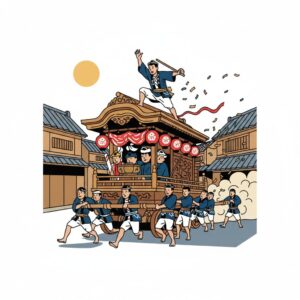
The most significant event of the year is the Sumiyoshi Matsuri, held at the end of July. It stands as one of Osaka’s three great summer festivals and a stunning showcase of tradition. The festival’s highlight is a grand procession where the mikoshi, a portable shrine carrying the deity’s spirit, is paraded through the streets and then ritually purified in the waters of the Yamato River. This powerful and energetic event reconnects the shrine to its maritime heritage, echoing ancient prayers for safety at sea.
In June, the shrine hosts the Otaue Shinji, a sacred rice-planting festival recognized as an Important Intangible Folk Cultural Property of Japan. This event is more than a symbolic gesture; it is a complete performance of ancient rituals. Women dressed in traditional clothing plant rice seedlings in the shrine’s sacred paddy field while traditional music and dance, including the refined bugaku court dance, are performed on a nearby stone stage. It is a beautiful and deeply moving prayer for a plentiful harvest, transporting visitors back to Japan’s agrarian past.
Like many major shrines, Sumiyoshi Taisha is also a central location for Hatsumode, the first shrine visit of the New Year. During the opening days of January, the tranquil grounds transform into a bustling crowd, as over two million people come to offer their first prayers of the year. The air fills with incense smoke, the scent of festive food stalls, and the collective hopes and dreams of the community. Experiencing Hatsumode here reveals the shrine’s role not only as a historic landmark but also as a living, vibrant center of the city’s life.
A Traveler’s Guide to Ancient Osaka
Reaching Sumiyoshi Taisha is surprisingly easy, which makes its serene, otherworldly ambiance all the more striking. From the lively hub of Namba in central Osaka, it’s a brief ride on the Nankai Main Line to Sumiyoshi Taisha Station, followed by just a short walk to the shrine. Alternatively, for a more nostalgic experience, you can take the Hankai Tramway, Osaka’s last remaining streetcar line. The tram moves at a gentle pace, providing a charming view of daily life in the city’s southern neighborhoods. Disembarking at Sumiyoshi Torii-mae station brings you right to the shrine’s main stone torii gate.
For first-time visitors, I recommend arriving early in the morning. The soft morning light filtering through the camphor trees creates a magical atmosphere, and the grounds feel most tranquil then. You might hear priests chanting in the main halls and birds singing among the ancient branches. Allow at least two hours for your visit, though you could easily spend half a day exploring the maze of smaller sub-shrines scattered throughout the large compound, each devoted to a different deity.
A useful tip is to follow a natural path: begin by crossing the Sorihashi Bridge, cleanse your hands and mouth at the chozuya water pavilion, and then proceed to the four main sanctuaries to offer your respects. Afterward, take time to wander. Seek out the Omokaru-ishi, look for your Go-Dai-Riki pebbles, and find a quiet bench beneath one of the great trees to absorb the peaceful atmosphere. Remember, this is an active place of worship. Be respectful to those praying, walk along the sides of the paths rather than the center which is reserved for the gods, and embrace the calm and serenity.
The Enduring Voyage
A visit to Sumiyoshi Taisha is more than a simple sightseeing stop; it is an immersion into the very foundation of Japanese culture. It is a place that reminds you that long before majestic castles and expansive temple complexes existed, there was a simpler, more direct faith—a reverence for the sea’s power, the earth’s strength, and the purity of honest design. Here, the gods of the ocean still seem present, their protection still sought by the people of this historic port city. As you cross back over the Sorihashi Bridge, leaving the sacred grounds behind, a feeling of calm and clarity washes over you. The drum-like arch no longer feels so steep. You have been cleansed, connected with something ancient and powerful, and carry a small piece of its timeless spirit back with you into the modern world. Sumiyoshi Taisha is not just a relic of the past; it is an anchor, a spiritual homeport that continues its quiet, steadfast journey through the currents of time.