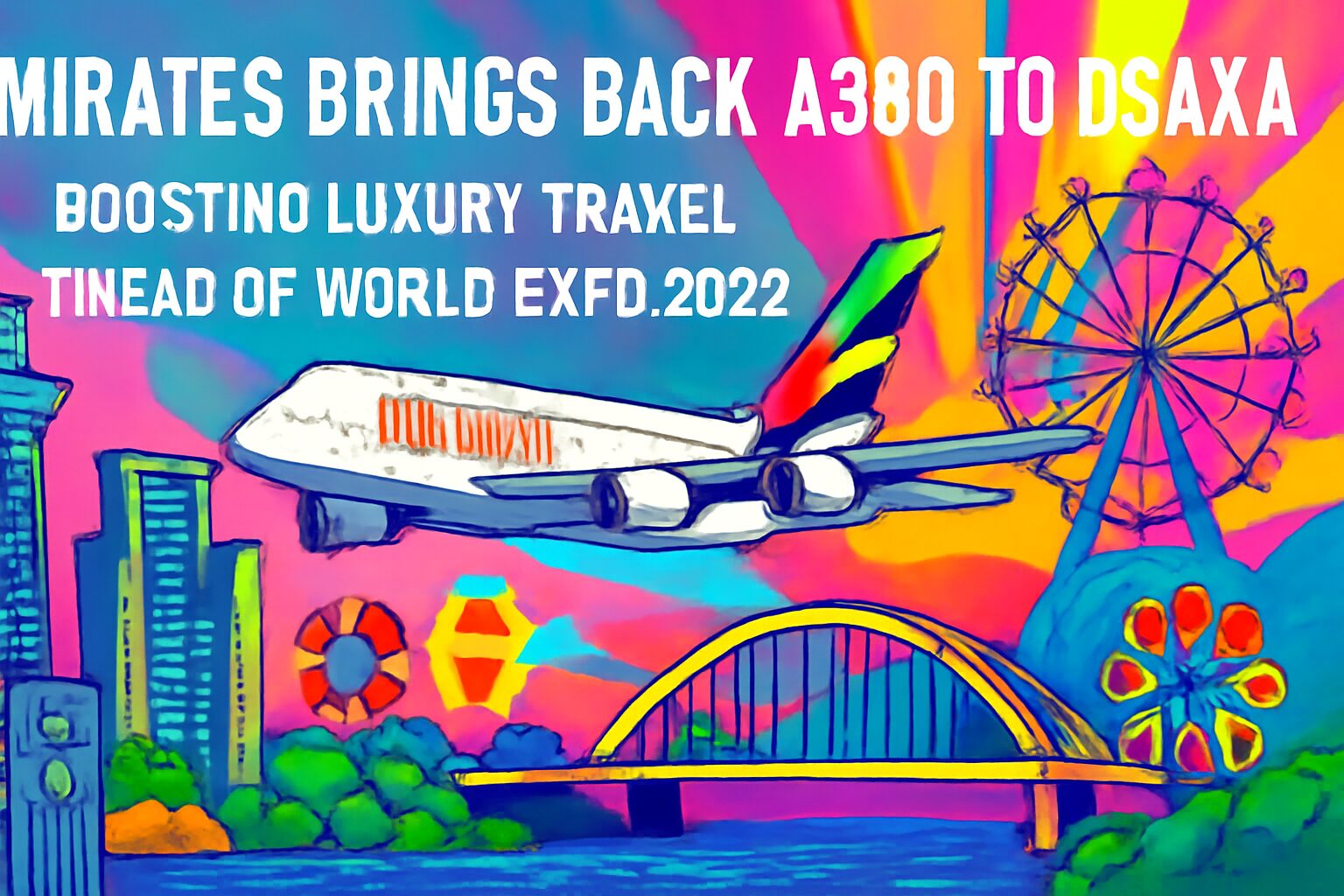
Emirates has announced the reintroduction of its iconic Airbus A380 superjumbo on the Dubai-Kansai International Airport (KIX) route, starting with the upcoming summer schedule. This strategic move signals a powerful vote of confidence in the Kansai region’s tourism revival and caters to a surge in demand from high-end international travelers.
The Return of the Superjumbo: A Response to Surging Demand
The decision to redeploy the world’s largest passenger aircraft is a direct response to Japan’s remarkably strong post-pandemic tourism recovery. According to the Japan National Tourism Organization (JNTO), March 2024 saw a record-breaking 3.08 million visitors to Japan, surpassing pre-pandemic levels.
Notably, the growth is driven by high-spending tourists. Visitors from the Middle East, a key market for Emirates, increased by over 53% in March 2024 compared to the same month in 2019. Similarly, travelers from Europe and North America are not only returning in large numbers but are also spending significantly more. The average spending per international visitor in the first quarter of 2024 was ¥209,000, a staggering 41.6% increase from 2019.
The A380, often dubbed a “flying hotel,” is perfectly positioned to meet the needs of this demographic with its renowned First Class private suites, lie-flat Business Class seats, and the famous Onboard Lounge.
A Major Boost for Kansai’s Economy and Tourism
Increased Capacity and Connectivity
The switch from the Boeing 777-300ER to the A380 will significantly increase seat capacity on the route. The A380 typically accommodates around 500 passengers, representing an increase of over 40% compared to the approximately 350 seats on the 777. This capacity boost is crucial for alleviating the current high demand and potentially stabilizing airfares.
Dubai serves as a major global hub, connecting Kansai not only to the Middle East but also to a vast network of destinations across Europe, Africa, and South America. The A380’s return strengthens KIX’s position as a key international gateway to Western Japan, offering seamless and luxurious travel options for both leisure and business visitors.
Attracting High-Value Tourism
The reintroduction of the A380 is expected to have a tangible economic impact on the Kansai region. High-spending travelers are more likely to stay in luxury hotels, dine at high-end restaurants, shop at department stores, and engage in unique cultural experiences like private tours and traditional arts workshops. This influx will provide a vital stimulus to Osaka’s hospitality and retail sectors.
Paving the Way for Expo 2025 and Beyond
This enhancement in air connectivity comes at a pivotal moment for Osaka. The city is gearing up to host the World Expo 2025, an event projected to attract millions of international visitors. Emirates’ capacity increase is a strategic move to accommodate the anticipated surge in travel demand, ensuring smooth and ample access to the region for Expo attendees.
Looking further ahead, this strengthened link supports Kansai’s long-term vision as a global hub for tourism and business, which includes the development of Japan’s first integrated resort (IR) in Osaka. The presence of flagship aircraft like the A380 elevates the international prestige of Kansai International Airport and the entire region.
In conclusion, the return of the Emirates A380 is more than just a change of aircraft; it’s a clear indicator of the Kansai region’s rising prominence on the world stage. For travelers, it means more choice, comfort, and a premium gateway to the vibrant culture and commerce of Osaka and its surroundings.