Osaka. The name itself crackles with energy, a symphony of sizzling street food, neon-drenched nights, and the warm, boisterous laughter of its people. It’s a city that pulls you in, a place where history and hyper-modernity dance on every corner. The dream of calling this vibrant metropolis home is a powerful one. But as you start to plan your move, you’ll inevitably encounter the unique, and often daunting, financial hurdles of renting in Japan: key money, gift money, agent fees, guarantor requirements. These initial costs can feel like an insurmountable wall, a barrier between you and your new life in the heart of Kansai. What if there was a different way? A path that bypasses these towering expenses, offering a smoother, more affordable entry into the Osaka housing market? There is. It’s called UR Housing, and it might just be the best-kept secret for foreigners looking to build a life in Japan.
UR, or the Urban Renaissance Agency, is a semi-governmental organization that manages a vast portfolio of rental properties across the country. Think of it not as a typical landlord, but as a public utility for housing. Their mission is to provide quality, safe, and affordable homes, and in doing so, they’ve created a system that feels tailor-made for international residents. The UR process strips away the most stressful and costly parts of the traditional Japanese rental system, allowing you to focus on the excitement of your new beginning. It’s a key that unlocks the door to your Osaka adventure, without demanding a hefty, non-refundable “gift” just to turn it. This guide is your map, your step-by-step companion on the journey to securing your own UR apartment in the city of soul.
For those seeking an even more social and budget-friendly entry point to life in the city, exploring a share house in Osaka can be another excellent option.
What’s the Big Deal with UR Housing? Decoding the Perks
So, what’s the secret? What sets UR apart from the many real estate agencies scattered throughout Namba and Umeda? The key lies in what UR doesn’t require. It’s a system founded on simplicity and fairness, standing in sharp contrast to a private rental market that often feels opaque and exclusive to newcomers. Let’s explore the groundbreaking advantages, known as the “Four Zeros,” that make UR a game-changer for anyone relocating to Osaka.
The “Four Zeros” Advantage: Financial Flexibility
First is the elimination of Key Money (Reikin). In Japan, it’s common to give landlords a non-refundable “thank-you” payment of one to two months’ rent. This tradition can be confusing and costly for foreigners since the money is never returned. UR completely does away with this practice. The thousands of dollars saved can go towards furnishing your home, enjoying Osaka’s food culture, or boosting your savings. This provides immediate and significant financial relief.
Next is the absence of an Agent Fee (Chukai Tesuryo). Renting a typical apartment involves a real estate agent who charges a fee equal to one month’s rent plus tax for their services. Since UR manages its properties directly or through their own counters, there is no middleman and no agent fee. This again means you keep an extra month’s rent in your pocket.
Then there’s the benefit of Zero Renewal Fees (Koushinryo). Many Japanese rental contracts last two years and require a renewal fee — often up to one month’s rent — to continue. This recurring cost can be unexpected. UR contracts omit this fee entirely, allowing you to stay as long as you want without paying extra to renew your lease. This offers remarkable financial stability and predictability.
Finally, and most importantly for foreigners, is the Zero Guarantor (Hoshonin) requirement. The guarantor system is a major obstacle for international residents, who must find a Japanese guarantor with steady income or pay costly guarantor companies. UR removes this barrier by not requiring any guarantor or guarantor company. Eligibility depends solely on your own income, opening housing opportunities for many who would otherwise struggle.
Together, these four benefits significantly reduce the upfront cost of moving into a UR apartment. Instead of putting down five to six months’ rent upfront, you generally only need a refundable security deposit (usually two months’ rent) plus your first month’s pro-rated rent and common fees. This isn’t just a discount — it’s a fundamental change that makes starting a life in Osaka more affordable and much less stressful.
Are You Eligible? The Gateway to Your Osaka Home
The UR system is refreshingly straightforward, yet it operates under a clear set of rules. Their main priority is ensuring tenants can reliably pay their rent. Consequently, eligibility is almost entirely based on two factors: your legal status in Japan and your financial stability. There are no hidden criteria or subjective evaluations; the process is transparent for everyone, regardless of nationality.
The Income Requirement: Demonstrating Your Stability
This is the most crucial aspect. You must prove a stable income sufficient to cover the rent. UR sets specific benchmarks, calculated based on the monthly rent of the apartment you want. The guidelines are generally as follows:
If the monthly rent is under 200,000 yen (covering most UR properties), your average monthly income needs to be at least four times the rent. For instance, to rent an apartment costing 80,000 yen per month, you must demonstrate a monthly income of at least 320,000 yen.
Alternatively, you may qualify based on annual income. The typical required annual income is around 4,000,000 yen for most apartments, with some exceptions for lower-rent units. Official documentation is necessary here.
There are several ways to prove you meet this requirement:
- For current employees in Japan: Common documents include the Gensen-choshu-hyo (Withholding Tax Slip), provided by your employer at year-end, or the Kazei-shomeisho (Taxation Certificate), obtainable from your local city or ward office. These documents officially verify your previous year’s income.
- For new employees: If you haven’t yet received the above documents, a formal employment contract (Koyou Keiyakusho) that specifies your monthly or annual salary is generally acceptable. It must be an official document, signed and stamped by your company.
- Using Savings: This option is especially helpful for students, freelancers, or those whose monthly income falls short but have substantial savings. You can qualify by presenting a bank statement showing a balance equal to or greater than 100 times the monthly rent. For an 80,000 yen apartment, this means showing at least 8,000,000 yen in savings. This proves you have sufficient funds to cover rent for an extended period.
- Paying a Year in Advance: Another flexible option is paying a full year’s rent plus the security deposit upfront. This immediately meets the financial requirement and suits those who have the funds but lack the usual income documentation.
Residency Status: Your Legal Basis
In addition to financial criteria, you must hold a valid status of residence in Japan. This means possessing a Residence Card (Zairyu Card) that confirms your legal permission to live in Japan for a medium to long term. This could be a work visa, student visa, spouse visa, or another qualifying status. You cannot apply for a UR apartment from abroad before officially entering Japan and obtaining your Residence Card. This is an essential legal requirement for any rental agreement in the country.
The Hunt Begins: Your Step-by-Step UR Application Journey

Once you’ve confirmed your eligibility, the exciting part begins: searching for your future home. The process is straightforward and organized. While it involves some effort and paperwork, it’s a journey you can confidently navigate. Think of it as a quest with clear stages, each bringing you closer to holding the keys in your hand.
Step 1: The Search (Kensaku)
Your journey starts online. The official UR housing website is your main resource. Although the site is mostly in Japanese, modern browsers with built-in translation tools make it easy to use. Here, you can browse the entire inventory of available apartments. Begin by selecting Osaka Prefecture (Osaka-fu). Then narrow your search by city, ward, or even train line, which helps in planning your commute. You can also filter by rent range, apartment size (1K, 1LDK, 2DK, etc.), and other features.
While reviewing listings, pay close attention to floor plans (madorizu), monthly rent (yachin), and the common service fee (kyoekihi). Listings include photos, the building’s age, and information on recent renovations. Some units fall under UR’s “new life” series, meaning they have been fully modernized with new kitchens, bathrooms, and flooring, offering a contemporary living experience within a classic building. Make a shortlist of properties that appeal to you and fit your budget.
Step 2: The Visit (Naiken)
Unlike private real estate agencies where an agent accompanies you, UR has a unique self-tour system. Once you’ve found an apartment you’re seriously interested in, you need to visit a UR office—often called a UR Plaza, UR Shop, or Sales Center—to arrange a viewing (naiken). These offices are located in major areas like Umeda and Namba. It’s a good idea to call ahead or check their hours online before visiting.
At the office, provide the listing details of the apartment you want to see. A staff member will confirm its availability and, if approved, will hand you the key. You then travel to the property on your own. This is your chance to fully experience the apartment. Take your time, open the windows, check the water pressure, and test the light switches. Bring a measuring tape to ensure your furniture fits. Most importantly, explore the neighborhood. Is there a supermarket nearby? What’s the atmosphere? Quiet or lively? This self-guided viewing lets you explore at your own pace without sales pressure.
Step 3: The Reservation (Kari-moshikomi)
If you visit an apartment and instantly feel it’s the right one, act quickly. Popular UR apartments, especially in desirable locations, are in high demand and allocated on a strict first-come, first-served basis. Return to the UR office as soon as possible to make a temporary application (kari-moshikomi). You’ll need your Residence Card and possibly your passport. This provisional application reserves the apartment for about one week at no cost, taking it off the market and giving you essential time to gather all required documents for your formal application.
Step 4: Document Submission (Shorui Teishutsu)
This step involves the most paperwork and requires careful attention. The UR office will provide an official application form along with a list of necessary documents. Your task during the one-week reservation period is to collect everything on that list. Generally, you’ll need:
- The completed Application Form.
- Proof of Income: such as your Gensen-choshu-hyo, Kazei-shomeisho, employment contract, or proof of savings, as detailed in the eligibility section.
- Certificate of Residence (Juminhyo): an official document obtained from your local city or ward office, proving your registered address in Japan. If moving with family, you’ll need a juminhyo that includes all family members.
- Photocopies of the front and back of your Residence Card.
- A photocopy of the photo page of your Passport.
Once all documents are complete, submit them to the UR office for screening. They will verify that you meet all the requirements. This review process usually takes a few days.
Step 5: The Contract (Keiyaku)
Once your documents are approved, you’ll receive the good news and be invited back to the UR office to sign the official lease agreement (keiyaku). This is the final formal step before the apartment officially becomes yours. During contract signing, you must make the initial payment, which includes:
- Security Deposit (Shikikin): usually equivalent to two months’ rent. This deposit is refundable at the end of your lease, minus any charges for damages beyond normal wear and tear or cleaning.
- First Month’s Rent and Common Service Fee: pro-rated based on your official move-in date.
The contract will be entirely in Japanese. Staff will explain the main points, but the legal language can be complex. If your Japanese isn’t fluent, it’s highly recommended to bring a Japanese-speaking friend, colleague, or professional interpreter to ensure you fully understand the terms and conditions.
Step 6: Key Pickup & Move-In! (Kagi-watashi & Nyuukyo)
Congratulations! After signing the contract and making payments, you’re almost home. On your agreed move-in date, go to the designated management office for the apartment complex to pick up your keys. This moment reflects all your effort. The apartment is now yours. Your final task as a tenant is to arrange your utilities. UR will provide contact information for local electricity, gas, and water providers. You’ll need to call them to activate service in your name. Additionally, you must arrange for your own internet service. Once that’s done, you can begin moving in and turn this empty space into your new Osaka home.
Insider Tips for a Smooth UR Experience in Osaka
Navigating the UR system is simple, but having some insider knowledge can make the experience even smoother and increase your chances of finding the perfect home. Consider these tips as expert insights meant to give you an advantage in your apartment search and help you settle comfortably into your new life.
Timing Is Key
In Osaka’s competitive rental market, timing is crucial. The most sought-after UR apartments—those near major train stations, recently renovated units, or those with popular layouts—can be booked within hours of being listed. Make it a habit to check the UR website daily, especially in the mornings when new listings often appear. The beginning and end of each month are particularly active times, as this is when many tenants move out. If possible, avoid the busy moving season in Japan from February to April, when students and new employees flood the market, making competition for housing extremely intense.
Embrace the “Danchi” Lifestyle
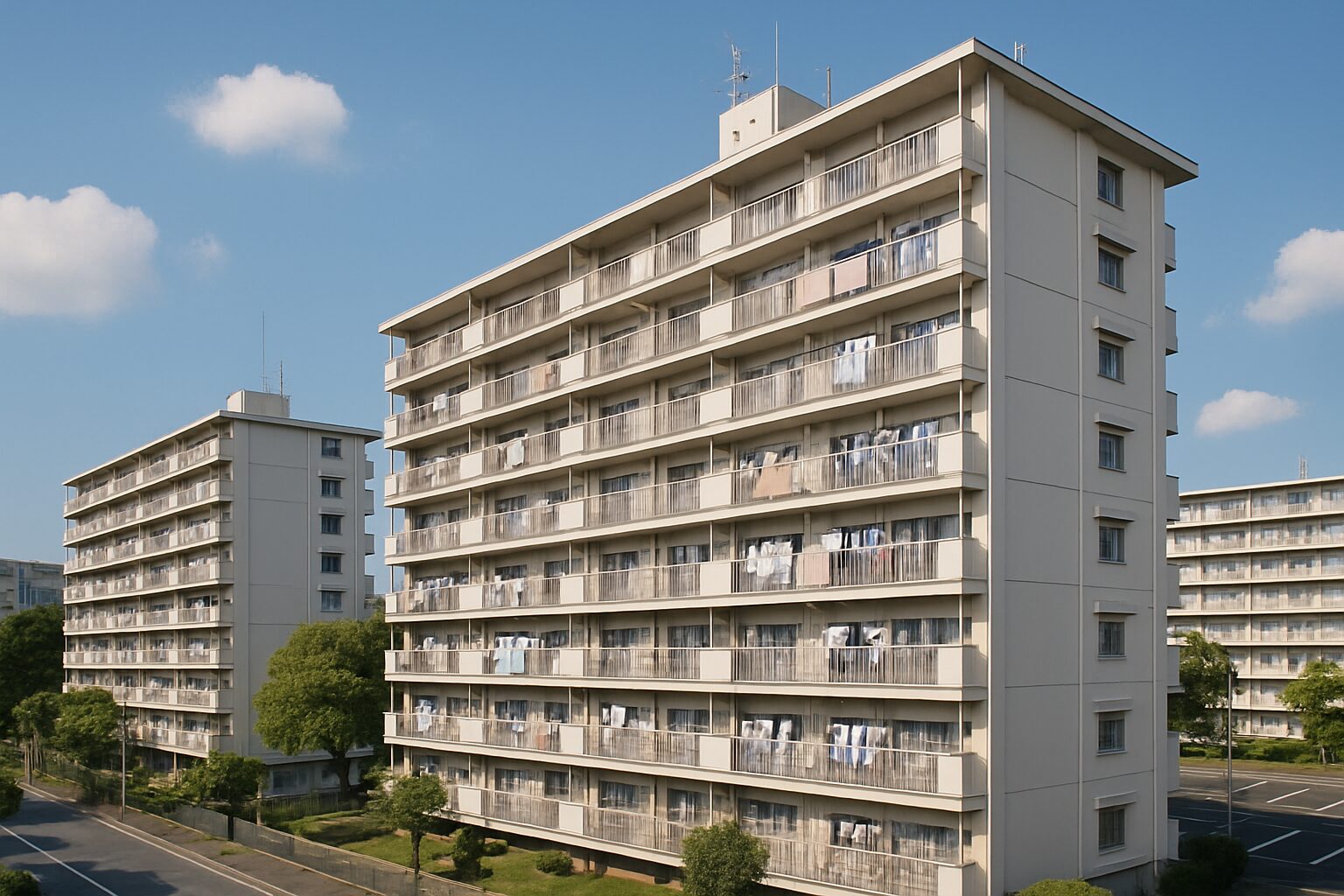
A large portion of UR’s housing includes apartments within extensive complexes known as danchi. Built to provide quality housing for Japan’s growing urban population, these complexes have a distinct character. Life in a danchi often brings great benefits, including ample green spaces—with parks, walking trails, and playgrounds integrated into the community design—offering a relaxing, suburban atmosphere even in the city. Many danchi communities also have on-site management and long-term residents, fostering a strong sense of community.
That said, it’s important to be aware of certain features. Many danchi buildings are older, and while the individual apartments may be beautifully renovated, common areas might lack modern conveniences like auto-lock security doors or parcel delivery systems. Community rules about garbage disposal and noise management are also important to respect. Living in a danchi means appreciating its mix of nostalgic charm and community spirit.
Location Matters in Osaka
Osaka is a large city with diverse neighborhoods, and UR properties are spread out across it. Your choice of location will significantly influence your daily life. Consider these popular UR regions:
- The Hokusetsu Area (North Osaka): Including cities such as Suita and Toyonaka, this area features the well-known Senri New Town. It’s highly family-friendly, with extensive parks, excellent schools, and a serene environment. Direct and convenient access to central Osaka is available via the Midosuji subway line and Hankyu railways, offering a perfect mix of urban convenience and suburban calm.
- The Kawachi Area (East Osaka): Located along the JR Gakkentoshi Line and various Kintetsu lines, this area often provides more affordable UR housing. It offers a more local, down-to-earth lifestyle while maintaining good rail links to the city center.
- The Bay Area: For a different ambiance, check out areas near Osaka Bay. Places like Nanko Port Town provide a unique living experience with sea breezes and open skies, often featuring more modern high-rise UR buildings.
When you find a potential apartment, use online maps to explore the surrounding neighborhood. Verify walking distances to the nearest train station, supermarkets, convenience stores, and the availability of parks or clinics nearby. Doing this groundwork will ensure the location suits your lifestyle perfectly.
Final Thoughts: Your Osaka Story Awaits

The journey to finding a home in a new country can feel like an overwhelming challenge, a complex maze of unfamiliar customs and bureaucratic hurdles. Securing a UR apartment in Osaka follows this pattern; it demands preparation, persistence, and some patience. There will be forms to complete, documents to collect, and a significant amount of Japanese to understand. However, this route is among the most straightforward, fair, and economically practical ways to start your life in this remarkable city.
Choosing UR means avoiding the financial pressures that burden many newcomers. It frees up resources that can be better invested in language lessons, exploring the Kansai region, or simply enjoying the comfort of a stable and affordable home. Every step, from the initial online search to the moment you turn the key in your new apartment, moves you closer to building a genuine life here. It’s about more than just renting a place; it’s about establishing a foundation—a personal sanctuary from which you can discover, grow, and truly connect with the heart and spirit of Osaka. Your adventure is just beginning, and your new home awaits.