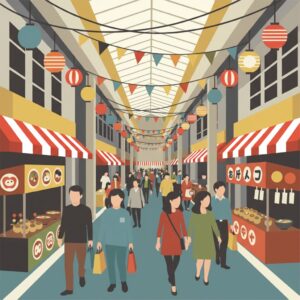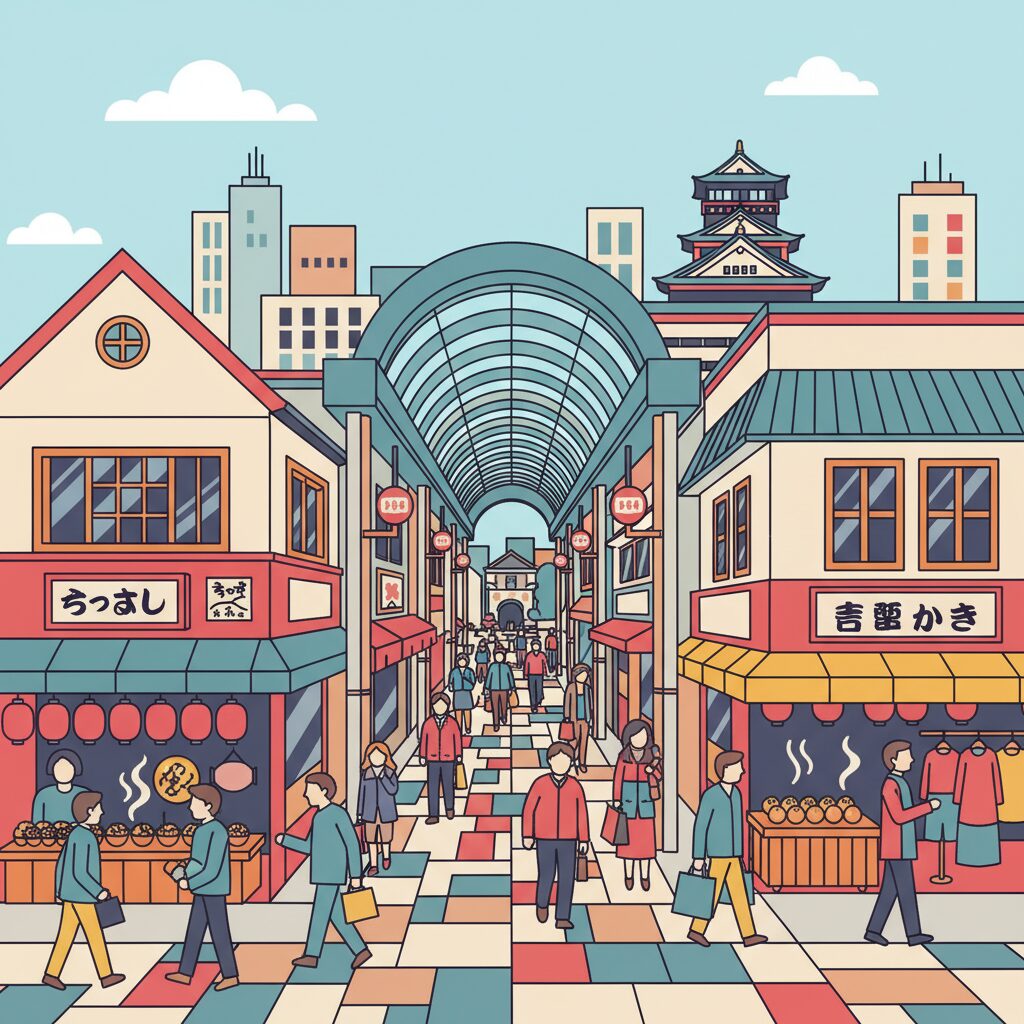
You’ve just moved into your new apartment in Osaka. The boxes are half-unpacked, you need groceries, and you decide to skip the sterile, brightly-lit supermarket for now. Instead, you wander down the street and into the mouth of a long, covered arcade. The air inside changes instantly. It’s a chaotic symphony of sounds and smells. A man with a voice like gravel is yelling about the freshness of his tuna. The sweet, smoky scent of grilling eel drifts from a tiny storefront. Bicycles weave through the crowd with impossible grace, their bells tinkling a high-pitched warning. An old woman shoves a pickled radish into your hand, gesturing for you to try it, not waiting for an answer. It feels overwhelming, a full-frontal assault on the senses. You might be tempted to think this is just an old, crowded market. A relic. But you’d be wrong. What you’ve stepped into is a shotengai, and it’s not just a place to shop. It’s the living, breathing, beating heart of an Osaka neighborhood. To understand this place, to decode its unspoken language and intricate social web, is to understand the very soul of Osaka itself. It’s the reason this city feels so fundamentally different from the cool, reserved elegance of Tokyo. This isn’t about politeness; it’s about connection. It’s not a transaction; it’s a relationship. Welcome to the real Osaka. It’s loud, it’s a little in your face, and it’s more human than you can imagine.
This vibrant, community-driven spirit is a key part of what makes the region attractive, which is why recent developments in the global hotel industry are so important for travelers planning a visit.
The Unspoken Language of Commerce
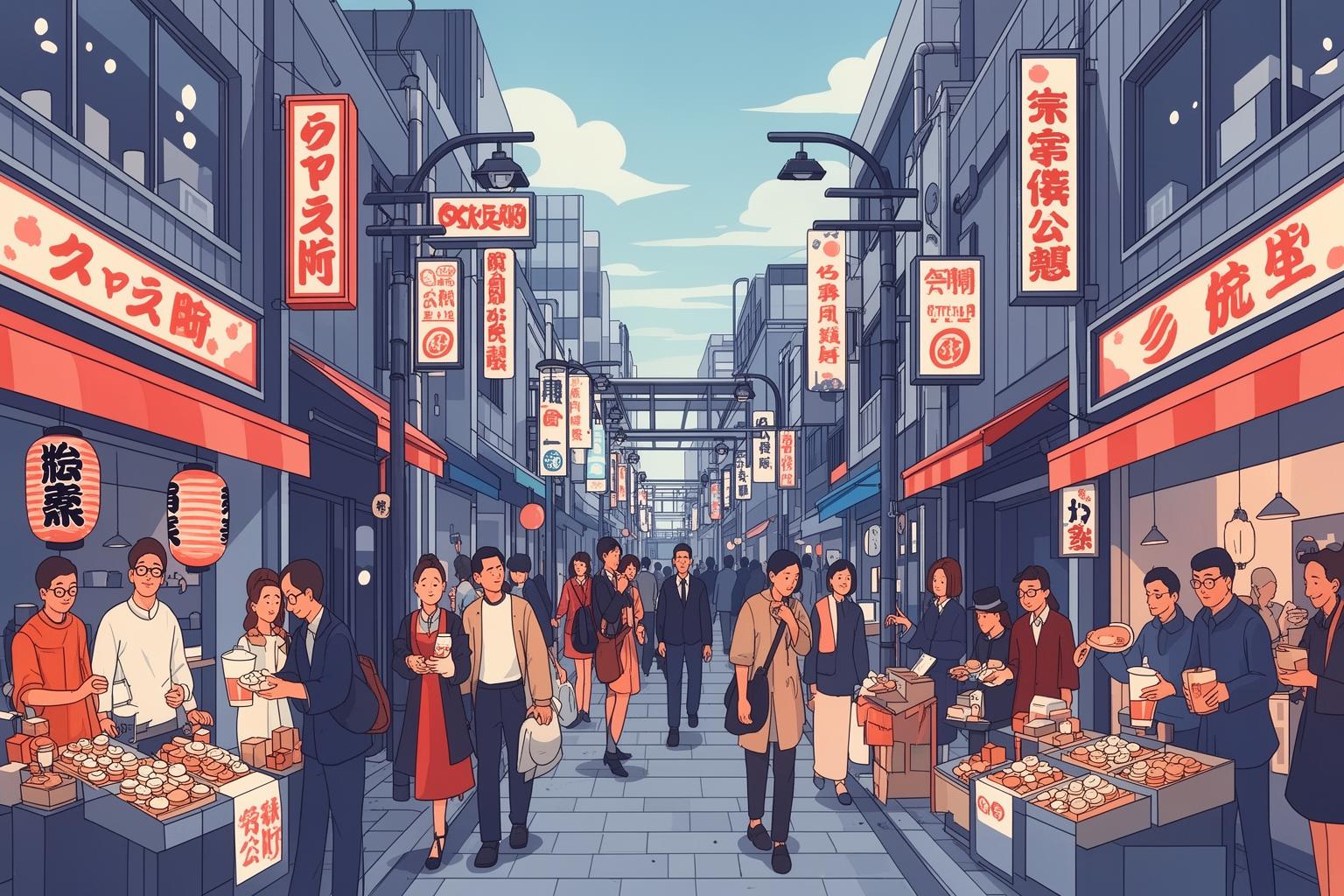
In Tokyo, commerce is a precise science—efficient, exact, and impeccably polite. Customers are treated with a respectful distance. By contrast, in an Osaka shotengai, commerce is a performing art: messy, loud, and deeply personal, focused less on economics and more on human interaction. The rules are unwritten, trust often serves as currency, and the objective is to turn a first-time buyer into a lifelong regular. To an outsider, it can seem confusing or even abrasive, but once you catch the rhythm, you understand it’s a dance where everyone plays a part.
“Maido!” Means More Than Just “Welcome”
Step into any shop in Tokyo, and you’ll hear a sharp, high-pitched “Irasshaimase!” meaning “Welcome, please come in!” It’s directed at everyone and no one in particular—a general announcement. Now, visit a tiny vegetable stall in Kuromon Ichiba or a family-run fishmonger on Tenjinbashisuji, and the greeting changes to a gruff, low-pitched “Maido!” This word fundamentally shifts the tone. “Maido” (まいど) means “every time” or “often,” short for “maido ooki ni,” which translates as “thank you for your continued patronage.” Consider that: the standard greeting doesn’t just welcome you; it already thanks you as if you’re a repeat customer. It assumes a relationship. Though you may be a stranger the first time you hear it, the shopkeeper is speaking your future loyalty into existence—offering an invitation to belong. When the butcher calls out “Maido!” as you pass by, even if you don’t buy anything, it’s an acknowledgment. He’s saying, “I see you. You’re part of this street. You’re one of us.” This verbal glue binds the arcade, affirming community in a way the formal “Irasshaimase!” never could.
The Art of the “Omake” (A Little Something Extra)
Imagine buying potatoes and asking for five. The shopkeeper, a woman with dirt-stained fingers and a perennial smile, weighs them. As she bags them, she tosses in a sixth, smaller potato with a wink. “Kore wa omake,” she says—”This one’s a bonus.” This is the sacred Osaka ritual of the “omake” (おまけ). On the surface, it’s a freebie—but it’s so much more. In a chain supermarket, every item is barcoded and measured precisely; there’s no room for generosity. The omake defies this logic. It’s a deliberate, human-powered inefficiency—a way for the shopkeeper to say, “I appreciate your business,” made tangible. It’s not a calculated marketing tactic, though it helps; it’s more organic—a spark of human connection within a commercial exchange. It might be an extra gyoza, a handful of spring onions tied to your daikon, or a piece of candy tossed into your bag. This small gesture transforms the relationship from mere commerce to mutual goodwill. You feel noticed and valued beyond your spending. Tokyo’s meticulously managed points cards and digital coupons might try to replicate this, but they can’t match the simple, profound impact of a hand reaching out with a little something extra, just because.
The Price Tag is a Conversation Starter, Not an Endpoint
Now, regarding money: foreigners often assume that Osaka is a place for haggling, picturing a lively bazaar with intense bargaining. This is a misconception. While small independent stalls offer some pricing flexibility, aggressive lowballing is considered deeply disrespectful. Instead, price functions as the opening line of a dialogue, a performance. You might spot a beautiful tuna and ask the vendor, “Nambo?” (“How much?”). He names a price, and you reply with a playful, “Chotto takai naa” (“A little expensive, eh?”). That’s your cue. The vendor launches into an animated monologue, waving his arms, insisting, “Mokaran wa!” (“I’m not making a profit at this price!”). He’ll tell the tale of how this fish was blessed by sea gods, swimming here just for you. It’s a show—the goal isn’t necessarily a big discount but the interaction itself. It’s classic Osaka banter. He might knock off a hundred yen or, more likely, add an omake as a compromise. You both laugh, you pay, and everyone leaves happy. You didn’t just buy fish; you joined a cultural ritual. Trying that in a polished Tokyo department store would earn confused stares or a discreet security call. Here in Osaka’s shotengai, it’s just another day.
The Theater of the Sale
It’s not just words; it’s the entire production. Watch the pickle vendor—he doesn’t just sit behind the counter. He stands, voice booming, offering samples on toothpicks with flourish. He narrates each pickle’s origins—where the vegetables were grown, how his grandmother’s secret recipe makes them the best in Kansai. Observe the fruit vendor, meticulously arranging strawberries into gleaming pyramids. His movements are practiced and deliberate, an expression of respect for the product and the customer. This isn’t the silent, anonymous shelving done by part-timers in supermarkets—it’s a craftsman showcasing his work. The energy is infectious. Vendors aren’t just employees; they’re proprietors, hosts, entertainers. They’re invested. Their reputation and livelihood hinge on every interaction. This personal stake fills the shotengai with vibrancy that feels absent in sterile modern retail spaces. They’re not just moving goods; they’re building community, one loud, theatrical sale at a time.
Your Neighbors are Your Lifeline (And Your Watchdogs)
If the shotengai represents the heart of the neighborhood, then its information network functions as the circulatory system. In the relative anonymity of a vast city like Tokyo, it’s possible to live for years in an apartment building without ever learning your neighbors’ names. Life is compartmentalized into distinct spheres: work, home, and social. But in an Osaka neighborhood, especially one centered around a lively shotengai, those boundaries dissolve completely. The arcade serves as the community’s shared living room, where everyone is aware of one another’s affairs. This can feel both deeply comforting and occasionally frustratingly intrusive. Yet it forms the foundation of the local social contract: we are all in this together, for better or worse.
The Neighborhood Information Network
You just moved in a week ago and stop by the local butcher to buy some ground pork. As he wraps your purchase, he leans in and says, “I hear you work at the new tech company near Namba. That’s quite a commute! Hope you’re settling in well. The apartment on the third floor can get a bit drafty in winter, so be sure to seal the windows.” You stand there, amazed—how could he possibly know all that? You’ve only told your landlord and boss. Welcome to the shotengai gossip mill, arguably the most efficient and low-tech social network in existence. The butcher is friends with the real estate agent, who mentioned a foreigner had moved in. The agent’s wife gets her hair done at the same salon as your downstairs neighbor, who overheard you talking on the phone about your new job. Information spreads naturally through daily chats over counters and casual greetings on the street. There’s no malice intended; it’s more of a mapping exercise. The community is continually updating its internal database of who’s who, who needs help, who’s new, and who might be struggling. This system of mutual observation also acts as a safety net. If an elderly resident skips buying her daily tofu, the shop owner will notice and might send someone to check in. This web of casual knowledge transforms a collection of households into a true community.
“Ame-chan” and the Currency of Kindness
You’re waiting in line at the fishmonger when an elderly woman, or “obachan,” in front of you turns around, smiling with a few gold teeth showing, and opens her cavernous handbag. After rummaging past tissues, keys, and numerous other odds and ends, she produces a small, brightly wrapped piece of candy. “Ame-chan, douzo,” she says, pressing it into your hand. “Have a candy.” This is no random act; it’s the ritual of the “ame-chan” (アメちゃん), a key part of Osaka’s social interaction. The “-chan” suffix adds warmth and familiarity, turning a simple “ame” (candy) into something affectionate. The Osaka obachan is renowned as a walking candy dispenser. This small gesture acts as social grease—breaking the ice and turning a stranger into a brief friend. It’s an offering expecting nothing in return other than perhaps a smile or a short chat. It says, “We share this space, this moment, so let’s be friendly.” It’s a micro-transaction of goodwill. This culture of casual sharing and kindness permeates the shotengai; it’s a tangible reflection of the city’s general attitude: don’t be a stranger. Engage. Connect. Share a little sweetness. Such a philosophy is difficult to imagine taking root in the more formal, reserved public spaces of other major Japanese cities.
The Social Contract of the Arcade
Living near a shotengai entails an unwritten set of rules and responsibilities. Participation is expected—not just by shopping there, but by greeting shopkeepers as you pass, making small talk about the weather, asking the vegetable seller how to prepare the odd-looking gourd you’ve never encountered, and supporting these small shops even if a supermarket like Aeon, ten minutes away by bike, is slightly cheaper. Why? Because you understand that you are more than a consumer; you are an investor in the social fabric of your community. These shops are what make your neighborhood a neighborhood. They serve as the third space between work and home. They are why Mrs. Tanaka down the street has someone to talk to daily. When a typhoon approaches, the hardware store owner will be the one reminding everyone to secure their windows. When you’re ill, the pharmacist remembers your history without needing to check a computer screen. This is a system of mutual support. By patronizing these businesses, you pay for more than just goods; you pay your dues to the community itself. It’s an ecosystem, and your involvement is vital to its survival.
What Foreigners Get Wrong About the Shotengai Vibe
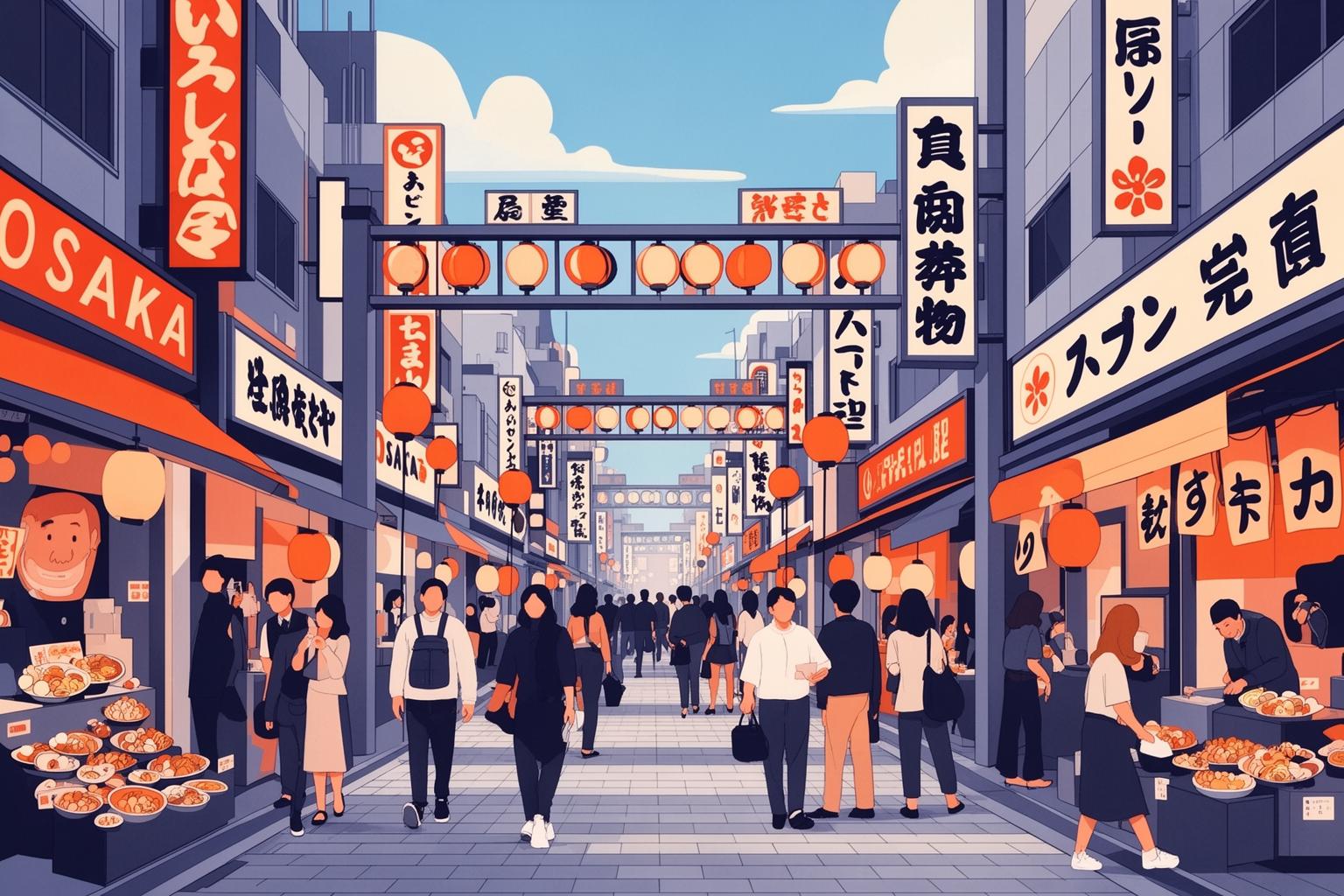
For many non-Japanese residents, the shotengai often serves as an initial source of culture shock. The sensory overload is one aspect, but the social dynamics can be even more bewildering. The directness may come across as rude, the familiarity can feel intrusive, and the entire institution might seem like a charming yet outdated relic. These are common misunderstandings that result from viewing Osaka through a lens shaped by other cultures or even other parts of Japan. Grasping the mindset behind the behavior is essential to truly appreciating—and ultimately loving—this vital part of Osaka life.
Loud and Direct Doesn’t Mean Angry or Rude
A shopkeeper shouts at you from across the aisle, “Hey, you! Foreigner! You wanna try this? Best in Japan!” Your initial reaction might be to pull back. It feels aggressive, perhaps even somewhat xenophobic. In Osaka, however, it’s quite the opposite—it’s an invitation. The communication style here is famously straightforward. There’s little room for the subtle, indirect nuances that often characterize Japanese conversation elsewhere. Osakans, particularly the merchant class that shaped the city’s culture, value efficiency and honesty. They get right to the point. The volume isn’t anger; it’s a way to project energy and enthusiasm. They are passionate about their products and want to share that passion with you. Questions that might seem overly personal in the West or in Tokyo—“Are you married?” “How much is your rent?” “Why is your hair that color?”—are not meant to intrude. They are conversational shortcuts, a quick way to find common ground and build rapport. They see you, they’re curious, and they’re trying to connect as directly as they know how. The key is not to get defensive. Embrace it. Answer their questions with a smile and a bit of humor. Ask them a direct question in return. This shows you understand the rules of engagement. Once you do, you’re no longer a spectacle; you become a participant, welcomed with open arms.
It’s Not Old-Fashioned, It’s a Parallel System
It’s easy to stroll through a shotengai, with its Showa-era buildings and elderly clientele, and assume it’s a dying breed. You see the sleek, multi-story shopping malls and enormous supermarkets and think they represent the future, while the arcade feels like a relic of the past. This is a fundamental misinterpretation of its role in Osaka life. The shotengai isn’t competing with malls on the same terms; it offers an entirely different product. The mall provides choice, convenience, and anonymity. The shotengai offers curation, expertise, and community. You go to the mall when you want to shop efficiently and anonymously. You visit the shotengai when you want advice from a butcher who has been cutting meat for forty years, to buy fish from a man who knows exactly where and when it was caught, and to feel a sense of belonging. It’s a parallel system fulfilling a different set of human needs. Many Osakans use both: shopping at supermarkets for bulk staples and cleaning supplies, while frequenting trusted arcade vendors for fresh produce, meat, fish, and tofu. It’s not an either/or choice. The shotengai endures because it offers something a corporation—no matter how efficient—cannot: genuine human connection.
The Difference Between a Customer and a Neighbor
This is perhaps the most crucial difference. In most modern retail environments, including those in Tokyo, you are simply a customer. Your identity is defined by your ability and willingness to buy goods. The staff are trained to be polite and helpful to facilitate these transactions. The relationship begins and ends at the cash register. In an Osaka shotengai, the ultimate aim is to evolve from being a mere customer to a “kinjo no hito”—a person of the neighborhood. This transition requires more than money. It demands your time, personality, and participation. You earn your place by showing up regularly, greeting people, remembering the shopkeeper’s name, and asking about their family. When you become a neighbor, the dynamic shifts. You are no longer just a source of income; you become part of the social fabric. The tofu maker sets aside the freshest batch for you. The fruit seller will call when the best melons arrive. You’re brought into the circle of trust. This status comes with responsibilities—to be a good neighbor and support the community—but the rewards are immense. It’s the difference between merely living in a city and genuinely belonging to a village that just happens to exist within a city.
How to Navigate the Shotengai Like a Local
Alright, so you’re convinced. You want to move beyond feeling like a lost tourist and become a savvy participant in your local shotengai. It’s less about strict instructions and more about adopting a new mindset. It’s about slowing down, observing closely, and embracing a more interactive and personal way of handling your daily errands. It’s about learning the local rhythms until they feel natural. Here are a few practical steps to get started.
Find Your “Go-To” Shops
Don’t try to tackle the entire arcade all at once. Begin small. Consistency is key to building relationships. Instead of buying your vegetables from a different vendor each time, choose one. Make it your place. Visit two or three times a week. At first, you’re just another customer. But after a week or two, the owner will start recognizing you. They’ll greet you with a nod, then a friendly “Maido!” Soon enough, small talk will follow. Do the same for your meat, fish, and tofu. Build a routine. This is how you get noticed in the neighborhood. This is how your network of local experts grows. Before you know it, your butcher won’t just sell you pork; he’ll share cooking tips and ask how your last recipe turned out. Shopping becomes more than picking up groceries — it’s checking in with your community.
Master the Local Lingo
While standard Japanese will get you through, using a few key phrases in the local Osaka-ben dialect acts like a secret handshake. It shows you’re making an effort and that you’re invested in the local culture, not just passing through. This will usually earn a warm smile and maybe a playful correction of your pronunciation. Skip the formal “Arigatou gozaimasu.” Instead, a heartfelt and simple “Oini!” (おおきに) for “Thanks!” carries much more local flavor. Rather than the usual “Ikura desu ka?” for “How much is it?”, try the classic Osaka phrase: “Nambo?” (なんぼ?). And if you’ve built up a good rapport with a vendor and feel confident, try a lighthearted “Chotto makete?” (ちょっとまけて?), a casual way to ask for a little discount. Don’t be pushy. Say it with a smile and laugh. The worst they can say is no, but simply asking in their dialect shows respect and a willingness to join in. It signals that you understand the vibe.
Embrace the Chaos
The shotengai isn’t a place for cautious, straight-line movement. It’s a lively, chaotic environment. People will stop mid-path to chat with friends. Bicycles appear unexpectedly. Shopkeepers shout across to one another. Don’t resist. Don’t get annoyed by the lack of orderly lines or personal space. This is organized chaos. It’s the visible expression of a community constantly engaging. Your task is to find your rhythm within the flow. Walk at a relaxed pace. Make eye contact. Smile at people. Be ready to pause for an impromptu chat. The best discoveries in the arcade come when you drop your shopping list and let the scene guide you. Follow an enticing aroma. Pause to watch a man making fresh mochi. Let the energy of the place move you. The shotengai isn’t a chore to be checked off; it’s an experience to be relished.
The Future of the Arcade Heartbeat
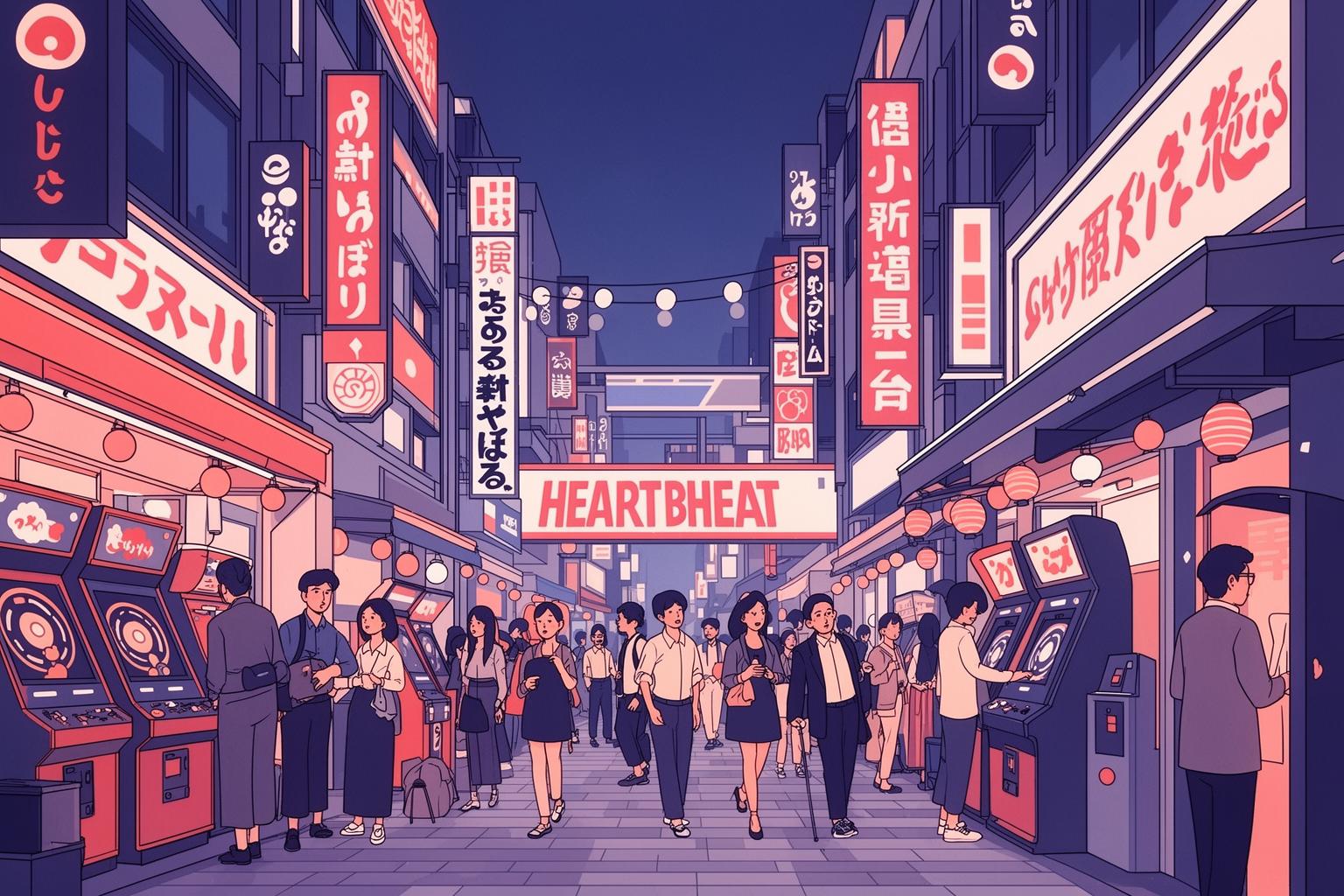
It would be misleading to portray the shotengai as a flawless, unchanging institution. Many face significant challenges. The owners are aging, and their children often pursue different careers. The appeal of large, convenient supermarkets and online retailers poses a constant threat. In some quieter, more residential areas, the signs of this struggle are evident: a few closed storefronts and fewer shoppers than a decade ago. This story of decline is easy to believe.
However, that is not the entire picture. The shotengai is not a single entity. It is a living organism that, like all living things, adapts to survive. In many of Osaka’s most famous arcades, and even in smaller neighborhood ones, a new generation is revitalizing these old spaces. Young entrepreneurs, attracted by lower rents and an authentic atmosphere, are opening specialty coffee shops, craft breweries, artisanal bakeries, and trendy vintage stores alongside the 80-year-old pickle stand and family-run fishmonger. This creates a compelling mix of old and new. The traditional community serves as the anchor, providing a sense of place, while the new businesses attract a younger crowd and fresh energy. The core product of the shotengai—community—is more valuable than ever in a world growing increasingly disconnected. As long as people seek a place where they are known by name, where daily errands are filled with humanity and a touch of theatrical charm, Osaka’s heart will continue to beat within these covered streets. Its rhythm may change or falter occasionally, but its pulse remains the most vital sign of life in this wonderfully chaotic city.