Osaka. The name itself crackles with energy, a city of sizzling takoyaki, blinding neon rivers reflecting in the Dotonbori canal, and a brand of commerce so loud and joyful it feels like a festival that never ends. It’s a place of motion, of progress, of relentless forward momentum. Yet, tucked away in the historic Tennoji district, a neighborhood that serves as the city’s spiritual anchor, lies a temple that dares to stand still and contemplate the very essence of endings, and in doing so, creates something astonishingly new. This is Isshinji Temple, a place that doesn’t just house history, but is quite literally built from it. Here, faith is not an abstract concept whispered in prayers; it is given form, sculpted from the collected ashes of hundreds of thousands of souls into silent, watchful Buddhas. It’s a concept that might sound startling at first, but to stand in their presence is to feel a sense of peace that transcends understanding, a profound connection to the countless lives that came before. This is not just a stop on a tourist trail; it is a deep, resonant journey into the heart of Japanese spirituality, a place where memory is made tangible and mortality is transformed into magnificent, eternal art.
After contemplating the profound spirituality at Isshinji Temple, you can explore the vibrant local food scene by discovering the unique kushikatsu culture near Dobutsuen-mae Station.
A Gateway Between Worlds: The Unmistakable Architecture
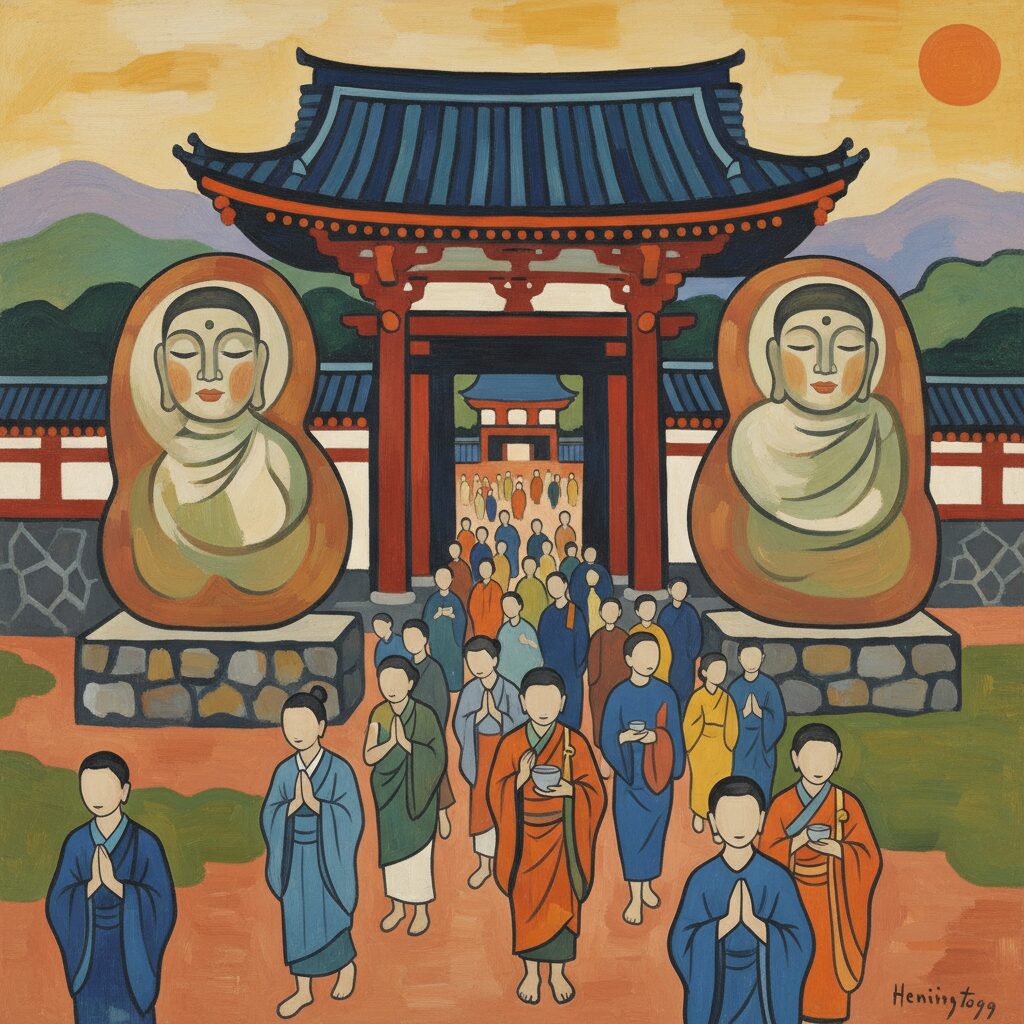
Your first encounter with Isshinji might catch you off guard. If you arrive expecting the traditional Kyoto architecture—sweeping tiled roofs, weathered wooden beams, and muted, earthy hues—you’re in for a surprise. Isshinji asserts its unique character from the moment you approach its main gate, the Sanmon. This is not an ancient wooden structure but a stunningly modern design of steel, concrete, and glass. Created by the temple’s current head priest, Kenji Takaguchi, who is also a skilled architect, the gate boldly symbolizes the seamless fusion of past, present, and future. It feels less like a conventional temple entrance and more like a gateway to another dimension, a sacred sculpture that primes you for the unconventional marvels inside. Two formidable Nio guardian deities stand vigil, as at countless temples throughout Japan, but here they are cast in gleaming bronze, their muscular forms emanating a vibrant contemporary energy. One has his mouth open, voicing the first syllable of the Sanskrit alphabet, “a,” symbolizing the beginning of all things. The other’s mouth is closed, forming the final syllable, “un,” representing the end. This classic Buddhist motif of the cosmos’ alpha and omega is presented in a style that feels both timeless and entirely modern. Passing through this gate is a purifying experience; you leave behind the bustling, chaotic city energy and enter a space devoted to serene contemplation.
The Heart of Remembrance: The Story of the Okotsubutsu
Deep within the tranquil grounds, beyond the fragrant incense smoke and the quiet movement of devotees, lies the heart of Isshinji Temple: the Okotsubutsu, or the “Bone Buddhas.” This is why so many undertake a pilgrimage here, and the story behind these statues is one of profound compassion and remarkable innovation. The practice began in the late 19th century, during the Meiji Restoration, a period of swift modernization in Japan. Osaka was expanding, along with its population. The temple’s cemetery, the final resting place for countless families, was nearing capacity. Confronted with this practical challenge, the 12th head priest conceived a revolutionary idea, grounded in the Buddhist belief in the interconnectedness of all beings. Instead of merely enlarging the cemetery, he suggested a way to honor the deceased collectively and eternally. Starting in 1887, he initiated a decennial tradition. The temple would accept the cremated remains of any devotee, regardless of social status or background. Over ten years, these ashes would be gathered. Once a sufficient amount was collected—often from more than 100,000 individuals—the ashes would be finely ground, mixed with a binding resin, and then meticulously crafted by a master sculptor into a large statue of Amida Nyorai, the Buddha of Infinite Light.
To stand in the Nokotsudo, the hall where these statues reside, is an experience difficult to put into words. It is neither macabre nor unsettling. Instead, a deep sense of peace pervades the space. The statues themselves, a rich, resonant grey, sit in quiet meditation, their expressions calm and compassionate. Each one is a composite entity, a tangible manifestation of tens of thousands of lives—shopkeepers, samurai descendants, teachers, mothers, fathers, and children—all united in a single image of enlightenment. The first six of these statues were sadly destroyed during the devastating air raids of World War II, a touching reminder of the fragility of even the most sacred objects. Yet the tradition persisted. The oldest surviving statue dates back to 1948, symbolizing rebirth and resilience in post-war Japan. Today, multiple statues are enshrined, each representing a different decade and generation of souls. You are not merely viewing art; you are in the presence of a community of spirits, a silent chorus of lives lived, resting together in eternal peace. It is a profound, visual embodiment of the Buddhist ideal that we are all parts of a larger whole, our individual lives merging like rivers into one vast ocean.
Beyond the Bone Buddhas: Exploring the Temple Grounds
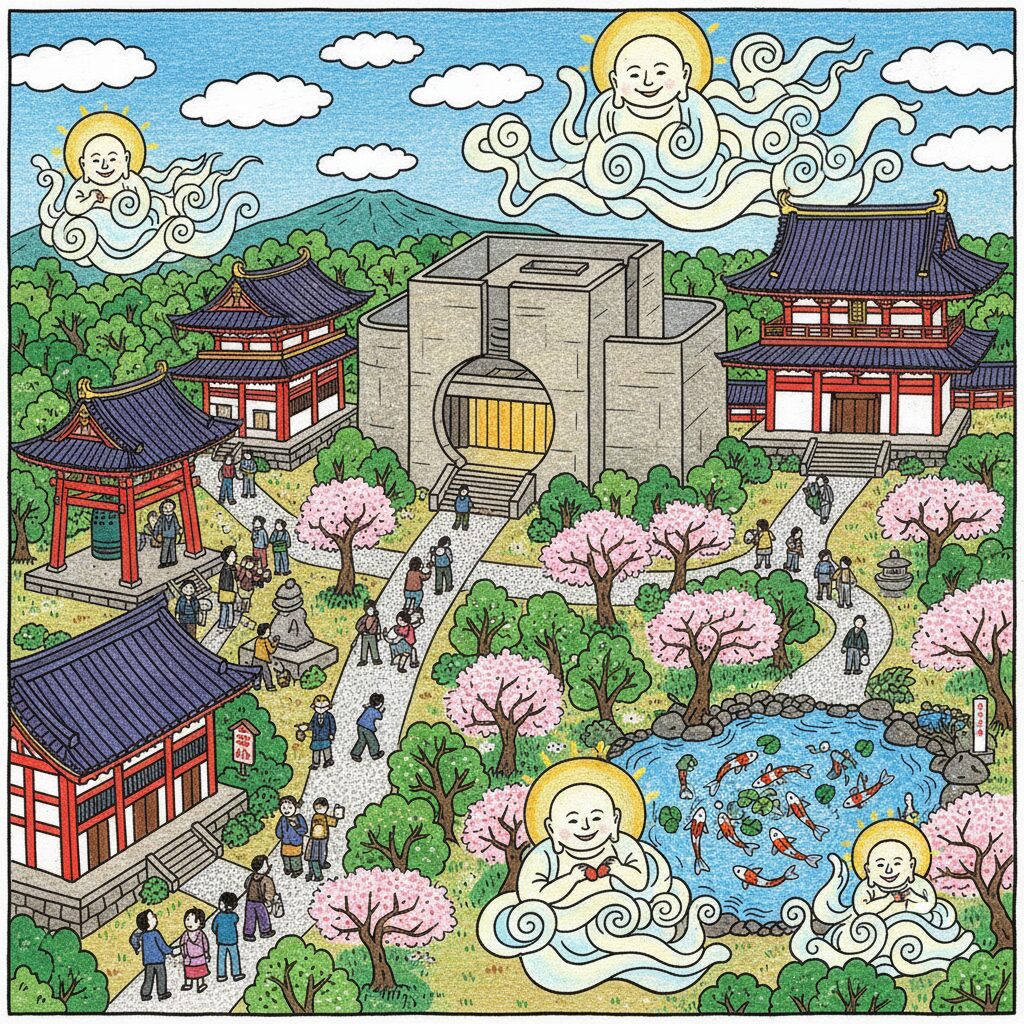
While the Okotsubutsu are undoubtedly the main attraction, Isshinji Temple has much more to offer the inquisitive visitor. The grounds present a captivating fusion of the traditional and the modern, embodying the temple’s progressive philosophy. Near the main hall, you can discover the Sanzenbutsudo Hall, an impressive structure housing thousands of small, golden Buddha statuettes, each symbolizing a donation from a devotee. The result is a shimmering cascade of faith, a visual harmony that mirrors the collective spirit of the greater Okotsubutsu. The temple’s history extends far beyond the creation of the bone Buddhas. It was established in the 12th century by Honen, founder of the Jodo Shu, or Pure Land sect of Buddhism, which remains one of Japan’s most prominent schools of thought. The central teaching of Pure Land Buddhism is that anyone, through genuine faith and chanting the name of Amida Buddha, can attain rebirth in the Pure Land, or paradise. This inclusive and compassionate philosophy permeates the atmosphere at Isshinji, known as a temple for the common people.
History enthusiasts will also discover a compelling link to one of Japan’s most renowned historical eras. During the Siege of Osaka in the early 17th century, the legendary shogun Tokugawa Ieyasu, who would later unify Japan, set up his military camp right here. A solemn memorial honors Honda Tadatomo, one of Ieyasu’s generals who perished in the final, decisive battle. This layer of samurai heritage adds depth to the temple, connecting its spiritual mission to the very ground where the nation’s fate was shaped. This confluence of histories—the ancient foundation, samurai conflicts, contemporary architectural vision, and the unique tradition of the Okotsubutsu—makes visiting Isshinji a journey through the many intertwined layers of Japanese culture.
The Rhythm of Life and Faith: A Living Temple
What truly distinguishes Isshinji from more tourist-oriented temples is that it remains, above all, a living, breathing center of faith. It is not a museum artifact preserved in time. On any given day, you’ll witness a steady flow of local Osakans coming to offer their respects. Elderly women can be seen with palms pressed together, softly chanting before statues that may hold the ashes of their parents or grandparents. Families light bundles of incense, the fragrant smoke carrying their prayers heavenward. The deep, resonant toll of the temple bell fills the air, vibrating through your bones and marking the passage of time. The atmosphere is thick with a palpable sense of devotion and remembrance. It’s a place of quiet, personal ritual. Visitors purchase incense and candles, wash their hands at the chozuya water pavilion in a purification rite, and bow deeply before the halls. Unlike the grand temples of Kyoto, which can sometimes feel like crowded tourist spots, Isshinji preserves an intimate, local reverence. This authenticity is its greatest appeal. To visit is to quietly observe this beautiful, daily rhythm of faith—a rhythm that has sustained the city’s people for centuries. It serves as a powerful reminder that a temple’s true purpose is not merely to be seen, but to be felt and experienced as an active part of community life.
Practical Guidance for a Soulful Visit
Reaching Isshinji Temple is incredibly straightforward, making it a convenient addition to any Osaka itinerary. Situated in the southern part of the city within the lively Tennoji district, the temple is most easily accessed via Tennoji Station, a major transit hub served by the JR Osaka Loop Line, the JR Yamatoji Line, and the Midosuji and Tanimachi subway lines. From there, it’s a pleasant 10 to 15-minute walk westward, passing the expansive Tennoji Park. Alternatively, you can take the Osaka Metro Sakaisuji Line to Dobutsuen-mae Station or Ebisucho Station, both just a short walk away. Admission to the temple grounds is free, a generous gesture that makes its profound experience accessible to everyone. To fully appreciate the serene atmosphere, a weekday morning visit is ideal, as the grounds are quieter, allowing for more personal and uninterrupted reflection. On weekends and holidays—especially during the Obon festival in August when families honor their ancestors—the temple is at its liveliest and most crowded. When visiting, please remember that Isshinji is a sacred and active place of worship. Dress modestly, and move respectfully through the grounds. Photography is generally allowed, but the use of flash is strictly prohibited, particularly inside the halls where the Okotsubutsu are enshrined. Above all, be a quiet and mindful presence, letting the temple’s unique spirit of peace surround you.
The Tennoji Neighborhood: A Journey Through Time
A visit to Isshinji also offers a chance to explore the remarkably diverse Tennoji area, a microcosm of Osaka itself. Just a short walk from Isshinji is Shitennoji Temple, one of Japan’s oldest officially managed Buddhist temples, established in the 6th century. Its expansive, traditionally designed grounds provide a striking contrast to Isshinji’s modern touches, allowing you to experience a more ancient form of Japanese temple architecture. Between the two temples lies Tennoji Park, a vast green space in the heart of the city. Within the park, you’ll find the elegant Keitakuen Garden, a classic Japanese landscape garden ideal for a tranquil stroll, and the Osaka City Museum of Fine Arts, home to an impressive collection of Japanese and Chinese artworks. For a complete change of scenery, head a bit further to the Shinsekai district, meaning “New World.” This area is a fascinating, gritty, and wonderfully charming glimpse into early 20th-century Japan. Dominated by the iconic Tsutenkaku Tower, Shinsekai’s streets are filled with retro pachinko parlors, vintage theaters, and numerous eateries famous for Osaka’s signature kushikatsu—deep-fried skewers of meat and vegetables. The contrast between the solemnity of Isshinji and the vibrant chaos of Shinsekai captures the essence of Osaka. For a view of the city’s modern side, visit Abeno Harukas, Japan’s tallest skyscraper, which rises above Tennoji Station. Its observation deck offers stunning panoramic vistas of the entire Osaka plain, putting your day’s exploration into a magnificent perspective.
A Final Reflection: The Democracy of Dust
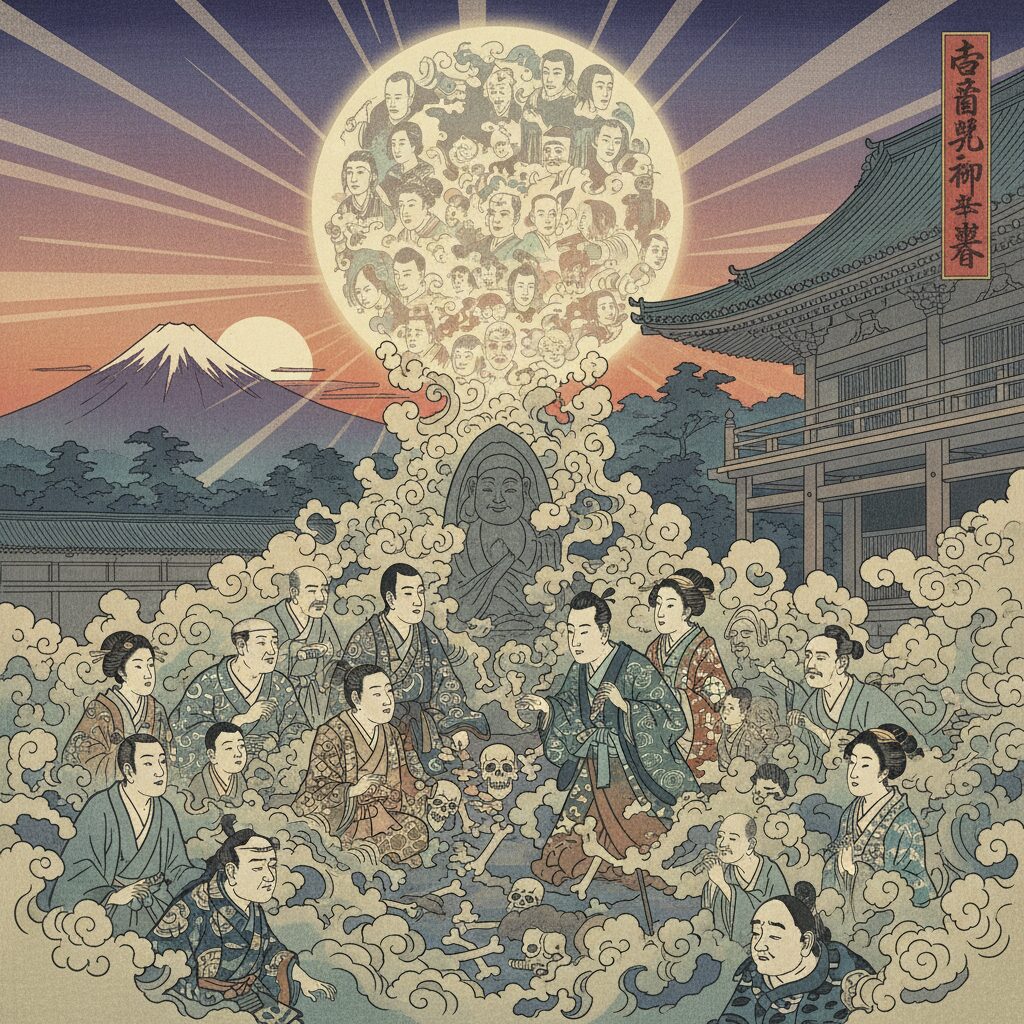
Leaving Isshinji Temple, as you pass back through its modern gate and reenter the bustling flow of city life, a subtle thought may remain. In a world so frequently marked by division, status, and the transient nature of personal achievement, Isshinji presents a compelling alternative narrative. The Okotsubutsu are, essentially, a democracy of dust. Within their tranquil forms, distinctions of wealth, power, and fame vanish. The ashes of a renowned artist lie alongside those of a modest noodle vendor; the remains of a formidable executive mingle with those of a quiet librarian. They are all equal, all united, all part of something greater than themselves. Visiting Isshinji is more than a cultural outing; it is a reflection on the very essence of existence. It invites us to reconsider legacy not as something we create solely for ourselves, but as the small portion of ourselves we contribute to the collective whole. It is a lesson in humility, compassion, and the beautiful, undeniable truth that ultimately, we all belong to one another. In the heart of Osaka, a city famed for its embrace of the material and the fleeting, Isshinji Temple stands as a timeless emblem of the spiritual and eternal, a place where countless souls have at last, and beautifully, found their true form.