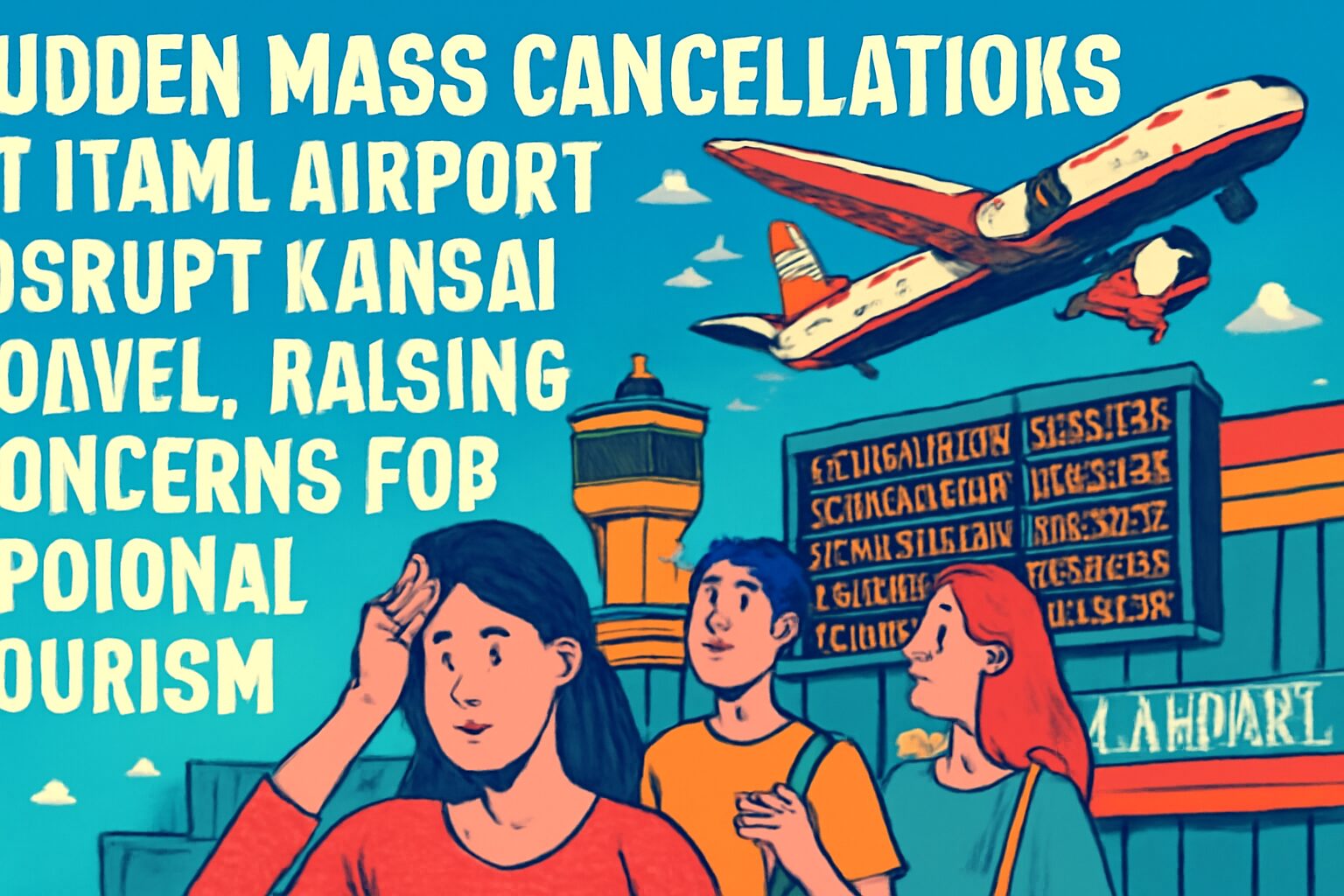
A sudden wave of over 20 flight cancellations at Osaka Itami Airport (ITM) on [Date of event, if known, otherwise use a general term like “recently”] has sent shockwaves through the Kansai region’s travel and tourism industry. The abrupt grounding of flights, affecting multiple airlines, has thrown travel plans into chaos and cast a shadow over a sector that has been on a strong recovery trajectory since the pandemic.
The Critical Role of Itami Airport
While Kansai International Airport (KIX) serves as the region’s primary international gateway, Osaka Itami Airport is the vital heart of domestic air travel. In fiscal year 2023, Itami Airport handled over 14 million passengers, connecting Osaka to major cities like Tokyo, Sapporo, and Fukuoka. For many domestic tourists and business travelers, Itami is the most convenient entry point to Osaka, Kyoto, and Kobe. This sudden disruption, therefore, strikes at a key artery of regional mobility and commerce.
The cancellations come at a time when Kansai’s tourism was experiencing a remarkable rebound. In 2023, Osaka Prefecture welcomed an estimated 8.46 million international visitors, a figure rapidly approaching pre-pandemic levels. With the 2025 Osaka-Kansai Expo on the horizon, the expectation for both domestic and international travel has been overwhelmingly positive. The stability of transportation infrastructure like Itami Airport is considered paramount to supporting this growth.
Immediate Impacts on Travelers and Businesses
The immediate effect of the cancellations was widespread confusion and frustration for thousands of passengers. Travelers were left scrambling to find alternative transport, with many turning to the Shinkansen (bullet train), leading to a surge in demand for last-minute tickets.
The ripple effect on the tourism industry was felt almost instantly.
- Accommodation: Hotels in Osaka and Kyoto reported an increase in last-minute cancellations from guests who could no longer reach the destination as planned.
- Tours and Attractions: Tour operators and popular tourist spots faced cancellations, directly impacting their daily revenue.
- Restaurants: Establishments, particularly those relying on reservations, experienced no-shows, disrupting their operations.
For an industry that relies on a steady and predictable flow of visitors, this unexpected halt in air traffic serves as a stark reminder of its vulnerability to logistical failures.
Future Outlook: A Warning for a Booming Sector?
While the direct cause of the mass cancellations is still under investigation by the airlines, the incident raises critical questions about the future.
Short-Term Concerns
The primary short-term concern is the erosion of traveler confidence. If the issue, whether it be related to staffing, maintenance, or system failures, is not swiftly and transparently addressed, potential visitors may hesitate to book flights into Itami, opting for other transport methods or even other destinations. This could lead to a temporary but noticeable dip in visitor numbers.
Long-Term Implications
Looking ahead, especially towards the 2025 Expo which is expected to draw millions of visitors, the reliability of Kansai’s transport network is non-negotiable. This incident could serve as a critical stress test, compelling airport authorities and airlines to re-evaluate their operational resilience. It highlights the need for robust contingency plans to minimize disruption and communicate effectively with the public during such events.
The Kansai tourism industry has proven its resilience time and again. However, this event underscores the delicate balance in which it operates. The success of major events like the Expo, and the region’s overall appeal, depends not just on its world-class attractions, but also on the simple promise of getting there reliably. For now, the industry watches and waits, hoping this is an isolated incident and not a symptom of a larger problem.