
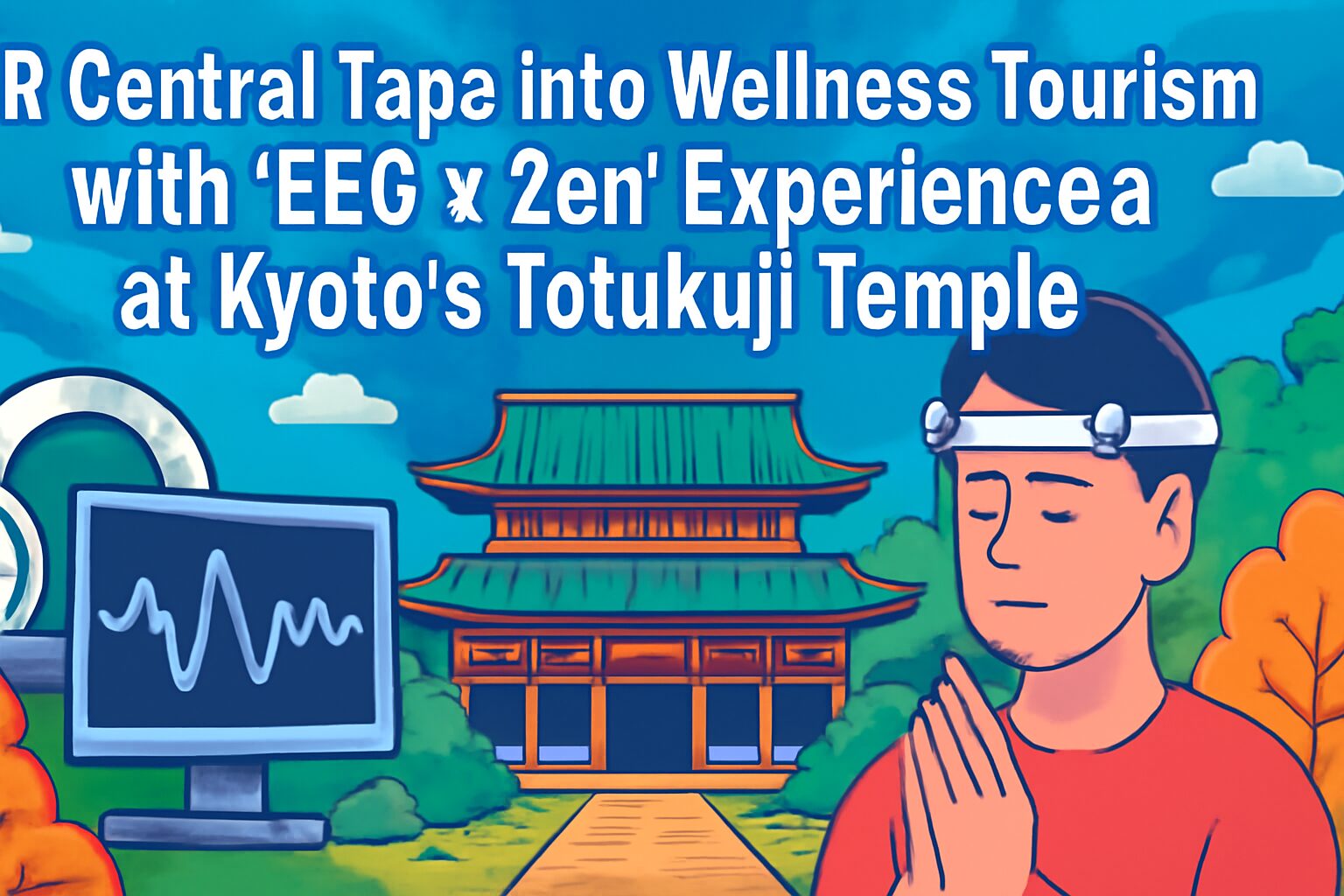
Central Japan Railway Company (JR Central) has announced a groundbreaking wellness tourism initiative, blending ancient tradition with modern technology. The new “EEG x Zen” program, unveiled on June 5, 2026, offers an exclusive nighttime Zen meditation experience at the historic Tofukuji Temple in Kyoto, enhanced by real-time brainwave analysis. This unique offering, available only to JR Central’s “EX” members, signals a strategic pivot towards high-value, experiential travel in the Kansai region.
A Deeper Dive: The ‘EEG x Zen’ Experience
Participants in this special tour will engage in Zazen (seated meditation) under the guidance of a temple monk within the serene, after-hours environment of Tofukuji Temple, a renowned center of Zen Buddhism. What sets this experience apart is the use of Electroencephalogram (EEG) technology. Each participant wears a discreet headband that measures their brainwave activity.
The data is then visualized, allowing individuals to objectively see their state of mental calmness and concentration during meditation. This biofeedback approach aims to demystify the practice of Zen, making it more accessible and rewarding for beginners while offering new insights for experienced practitioners. The program is designed not just as a tourist activity, but as a genuine tool for mental wellness.
Background: The Rise of Experiential and Wellness Travel
This initiative is launched against a backdrop of shifting global travel trends, particularly in post-pandemic Japan.
The Demand for Deeper Connections
Modern travelers, especially those returning to Japan, are increasingly seeking more than just sightseeing. They crave authentic, immersive experiences that offer personal growth and a deeper connection to the local culture. This trend, known as “experiential tourism,” has moved from a niche market to a mainstream demand. Japan’s rich cultural heritage, particularly its Zen traditions, is perfectly positioned to meet this demand.
The Booming Wellness Tourism Market
Globally, the wellness tourism market is experiencing significant growth. Valued at approximately USD 819.6 billion in 2022, it is projected to expand dramatically in the coming years. Inbound tourism to Japan has rebounded strongly, with monthly visitors consistently surpassing three million in early 2024. JR Central is strategically targeting this lucrative market by offering a product that directly addresses physical and mental well-being.
JR Central’s Strategy: Beyond Transportation
For JR Central, the operator of the vital Tokaido Shinkansen line connecting Tokyo, Kyoto, and Osaka, this program is a calculated move to add value beyond transportation.
Enhancing Membership Value
By making the “EEG x Zen” experience exclusive to its EX service members, JR Central is strengthening its customer loyalty program. The EX services, which facilitate easy Shinkansen reservations, boast a robust member base of over 6.5 million users as of 2023. Unique, high-value offerings like this incentivize both new sign-ups and continued engagement from existing members, transforming a simple transit service into a comprehensive travel platform.
Curating the Kansai Journey
The initiative also reflects a broader strategy to curate the entire travel experience. Instead of simply transporting visitors to Kyoto or Osaka, JR Central is now actively shaping what they do upon arrival. This positions the company as a key player in the regional tourism ecosystem and helps distribute tourist flow to unique, high-quality experiences, potentially alleviating pressure on overcrowded “honeypot” sites.
Future Impact and Predictions for Kansai Tourism
The fusion of tradition and technology at Tofukuji Temple is likely to be a catalyst for further innovation in the Kansai region’s tourism sector.
A New Model for Cultural Heritage
If successful, this model could be replicated at other temples, shrines, and cultural sites across Kansai. Imagine tea ceremonies enhanced by sensory analysis or traditional craft workshops guided by augmented reality. This approach allows heritage sites to preserve their authenticity while creating new, engaging revenue streams and attracting a tech-savvy generation of travelers.
Strengthening the Osaka-Kyoto Corridor
This program enriches the travel narrative of the Kansai region. Visitors can enjoy the vibrant, modern energy of Osaka—with its world-class food and entertainment—and then easily travel to Kyoto for a deep, introspective cultural experience. This synergy makes the entire region a more compelling destination for longer stays, encouraging travelers to explore beyond the standard itineraries.
A Solution for Sustainable Tourism
By offering exclusive, small-group experiences, this initiative also presents a potential solution to the challenges of overtourism. It shifts the focus from high-volume, low-spend tourism to a high-value, low-impact model. This ensures a better experience for the visitor, less strain on the cultural site, and a more sustainable future for tourism in one of Japan’s most cherished destinations.








