
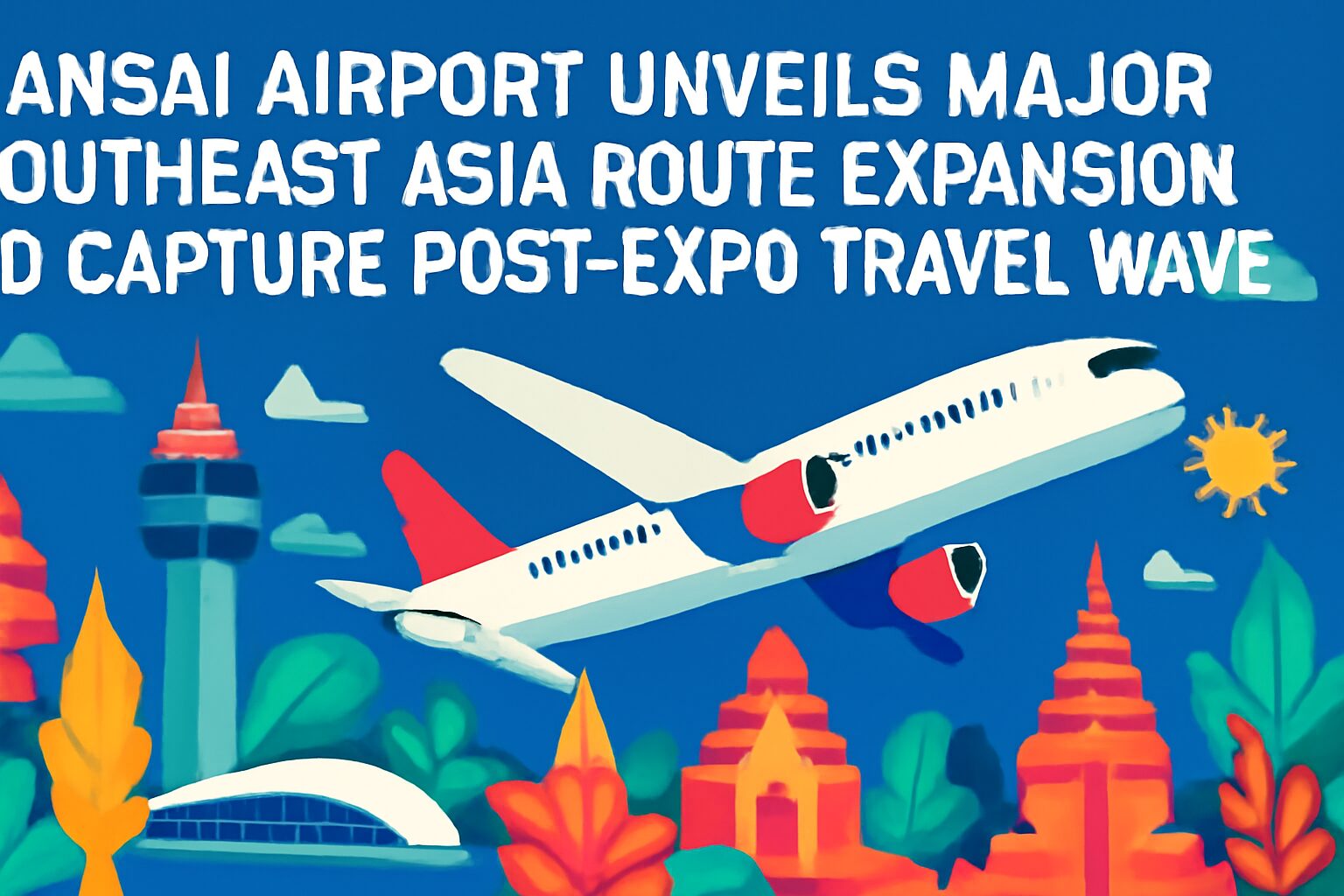
Kansai International Airport (KIX) has announced a significant strategic expansion of its flight network, focusing on Southeast Asia. The initiative, set to launch with the summer 2026 schedule, is designed to capitalize on the anticipated surge in tourism following the 2025 Osaka-Kansai Expo and solidify the region’s position as a top-tier international destination.
The Heart of the Expansion
The plan centers on the addition of over 50 new weekly flights connecting Kansai with key high-growth markets. The expansion will primarily be driven by low-cost carriers (LCCs), signaling a clear strategy to attract a new generation of travelers.
Key details include:
- Target Countries: The new routes will focus heavily on Thailand, Vietnam, and the Philippines, nations with rapidly growing middle classes and a strong interest in Japanese culture.
- Target Audience: The initiative aims to capture the market of younger, budget-conscious, and tech-savvy travelers who often prefer flexible and affordable travel options.
- Timeline: The new flight schedules are planned to be effective from the summer of 2026, creating a seamless transition from the global spotlight of the Expo to a new phase of sustained tourism growth.
Background: A Strategic Move in a Competitive Market
This expansion is not just about adding flights; it’s a calculated move to secure Kansai’s future as a tourism powerhouse. The 2025 Osaka-Kansai Expo is expected to draw millions of visitors, dramatically increasing global awareness of Osaka and the wider Kansai region. Airport officials are planning ahead to convert this temporary interest into long-term, sustainable tourism.
The focus on Southeast Asia is backed by strong data. According to the Japan National Tourism Organization (JNTO), visitor numbers from this region have shown remarkable resilience and growth. In 2023, visitor arrivals from the Philippines reached 622,300 (a 21.9% increase over pre-pandemic levels in 2019), while Vietnam sent 573,900 visitors (a 15.9% increase). By strengthening ties with these booming markets, KIX is tapping into a reliable and expanding source of inbound tourism.
The emphasis on LCCs is also crucial. These carriers have revolutionized air travel in Asia, making international trips more accessible than ever. By partnering with them, KIX can effectively lower the barrier to entry for first-time and repeat visitors, encouraging more frequent and spontaneous trips to Kansai.
Future Outlook and Impact on the Kansai Region
The ripple effects of this network expansion are expected to be substantial and far-reaching.
Economic Boost
The influx of over 50 weekly flights will directly translate into a significant increase in visitor numbers. This will provide a major lift to the regional economy, benefiting hotels, restaurants, retail stores, and local attractions. The focus on budget travelers does not mean less spending; these visitors often prioritize experiences, food, and shopping, distributing their spending across a wide range of local businesses.
A New Profile of Traveler
The region can expect to welcome a more diverse and younger demographic. These travelers are often independent, seeking authentic cultural experiences beyond traditional tourist spots. This will likely fuel demand for unique activities, local tours, and “Instagrammable” locations throughout Kansai, from the bustling streets of Osaka to the serene landscapes of Kyoto, Nara, and Wakayama.
Solidifying KIX as a Premier Asian Hub
This strategic enhancement of its route network strengthens KIX’s position as a leading international gateway to Japan and a key transit hub within Asia. Increased connectivity not only benefits inbound tourism but also makes Kansai a more attractive base for business and a more convenient departure point for Japanese travelers heading to Southeast Asia.
For travelers, this news means more choices, competitive fares, and easier access to the incredible culture, cuisine, and history that the Kansai region has to offer. As 2026 approaches, Osaka and its surrounding prefectures are poised to enter a new and exciting era of international tourism.








