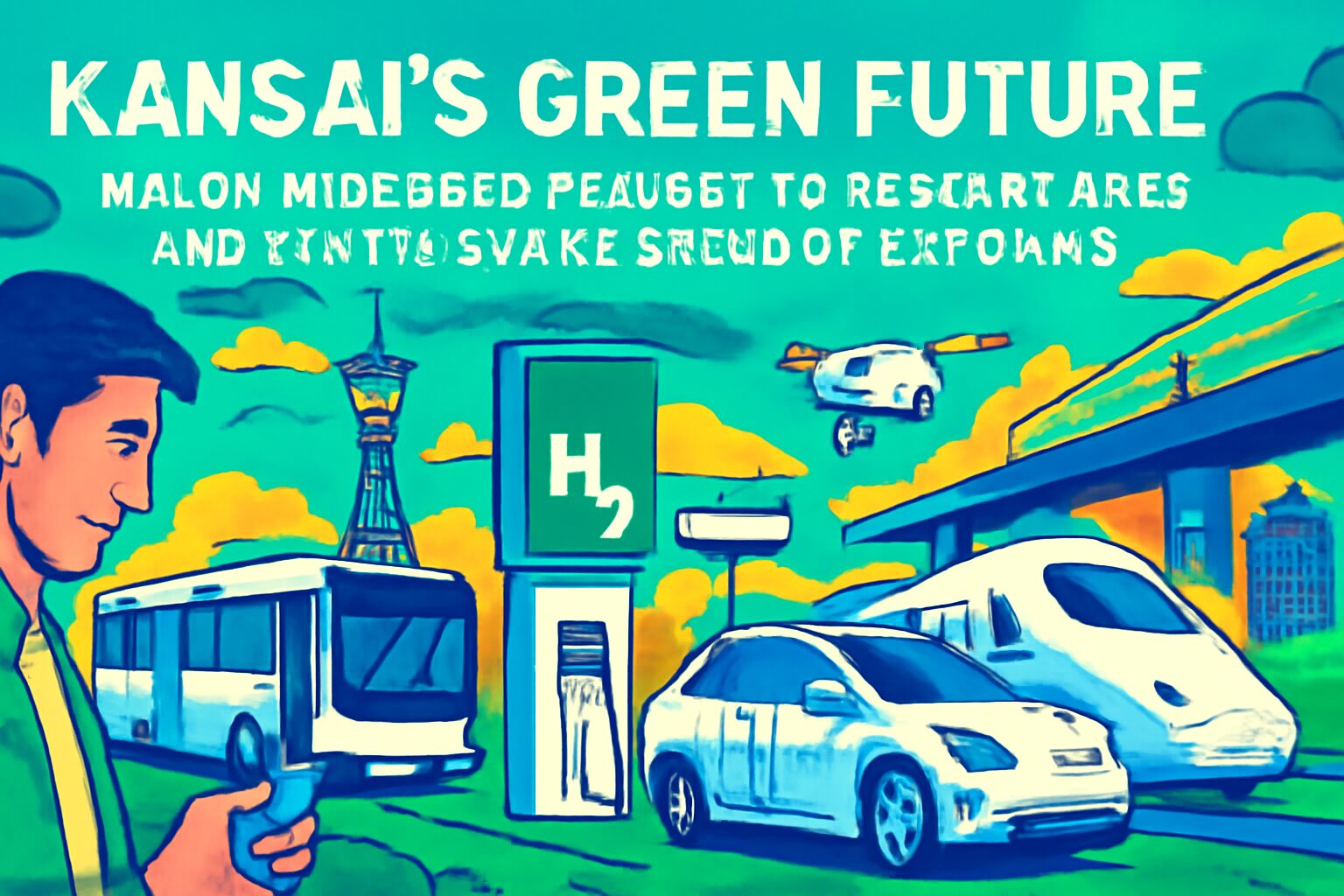
A landmark initiative is set to position the Kansai region, including Osaka, at the forefront of Japan’s green energy revolution. JR West and Kansai Electric Power, along with nine other leading companies, have announced a joint investigation to establish a major domestic hydrogen supply chain, promising to reshape the region’s industrial and transportation landscape and enhance its appeal for future-focused travelers.
What This Landmark Project Means for Kansai
This ambitious project aims to create a large-scale infrastructure for producing and supplying hydrogen and e-methane, a synthetic gas made from hydrogen and CO2. The collaboration, involving a total of eleven companies, is one of the most significant decarbonization efforts in Japan, focusing on the industrial heartland of the Kansai region.
The core objective is to provide a stable supply of clean energy to power factories, public transport, and other key sectors. By replacing fossil fuels with hydrogen, the project will drastically reduce carbon emissions, contributing to Japan’s national goal of achieving carbon neutrality by 2050. For residents and visitors, this means cleaner air and a more sustainable urban environment.
The Road to a Greener Future: Expo 2025 and Beyond
The timing of this announcement is no coincidence. With the world’s attention turning to Osaka for the 2025 World Expo, themed “Designing Future Society for Our Lives,” this hydrogen project serves as a powerful demonstration of Kansai’s commitment to innovation and sustainability. It showcases a tangible vision of the future that Expo visitors will be able to witness developing firsthand.
This initiative is not just about meeting environmental targets; it’s a strategic move to stimulate the regional economy. By building a new energy ecosystem, the project is expected to create new jobs, attract investment in green technology, and foster a hub of innovation that will extend far beyond the 2025 Expo.
How Will This Affect Your Trip to Osaka and Kansai?
While the direct benefits of a hydrogen supply chain may seem industrial, the long-term impact on tourism and the travel experience will be significant.
The Rise of Sustainable Travel
Imagine riding a JR West train powered entirely by hydrogen fuel cells, producing only water as a byproduct. This project paves the way for zero-emission public transportation, allowing travelers to explore the vibrant cities of Osaka, Kyoto, and Kobe with a minimal environmental footprint. This commitment to sustainability will increasingly appeal to eco-conscious tourists from around the globe.
A New Attraction: Kansai, the Tech Hub
This initiative adds a new layer to Kansai’s identity. Traditionally known for its rich history, delicious food, and unique culture, the region is now solidifying its reputation as a center for advanced technology and forward-thinking urban development. For travelers interested in innovation, science, and the future of cities, Kansai will offer a compelling reason to visit.
Enhancing the Visitor Experience
The economic boost from this project is expected to ripple through the tourism sector. A stronger, more vibrant regional economy often leads to better infrastructure, new attractions, and enhanced services for visitors. The project underscores a regional commitment to quality of life and progress, which ultimately translates into a more enjoyable and impressive destination for everyone.
In conclusion, this pioneering hydrogen project is more than just an energy initiative; it’s a blueprint for the future of Kansai. It promises to build a cleaner, more prosperous, and technologically advanced region, making Osaka and its surroundings an even more exciting and responsible travel destination for years to come.