When the sun dips below the Ikoma mountains, a fascinating transformation occurs across the Kansai plain. The region, a vibrant tapestry of commerce, history, and culture by day, reveals a dual personality as darkness falls. This is a tale of two cities, or more accurately, two iconic districts, separated by less than an hour by train but worlds apart in spirit. In one corner, we have Osaka’s Namba, a dizzying, electrifying carnival of neon, noise, and glorious culinary chaos. In the other, Kyoto’s Gion, a hushed, enchanting world of lantern-lit alleys, timeless traditions, and fleeting, graceful beauty. As a photographer, I’ve spent countless nights chasing the light and shadows in both, and I’ve come to see them not as rivals, but as two perfect, opposing expressions of Japan’s soul after dark. One roars, the other whispers. One grabs you by the collar and pulls you into its joyful fray; the other invites you to lean in closer, to listen to the stories carried on the evening breeze. For anyone living in Osaka and looking to understand the full spectrum of Japanese nightlife, the journey between these two realms is an essential pilgrimage. It’s a choice between a night that pulses with the raw, untamed energy of the present and a night that echoes with the elegant footsteps of the past.
To truly embrace Osaka’s culinary chaos, a visit to the vibrant Kuromon Ichiba Market is an essential experience.
The Electric Dreamscape of Osaka’s Namba
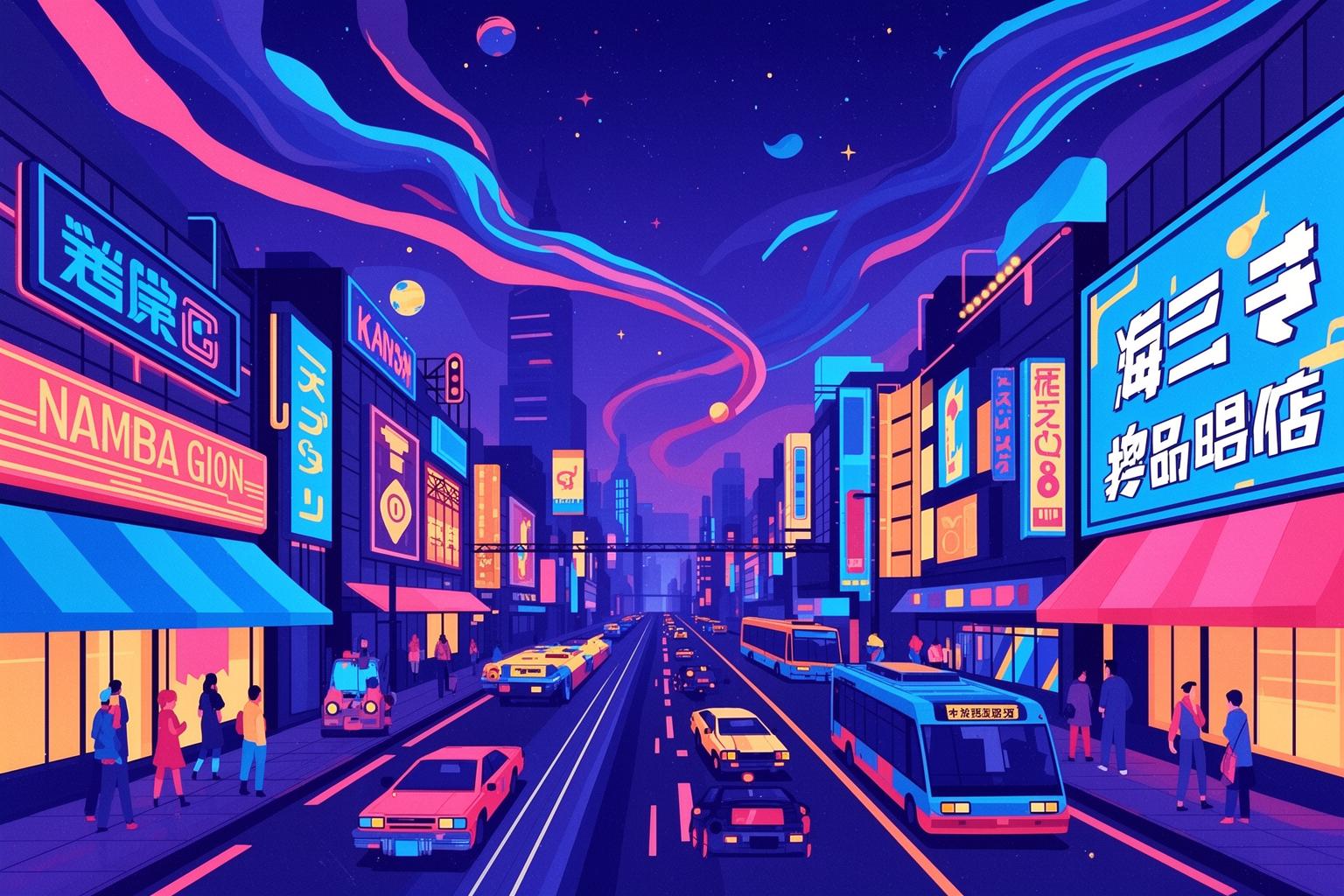
Exiting Namba Station feels like being directly connected to Osaka’s central power grid. An immediate, tangible wave of energy courses through you. It’s not merely sound; it’s a physical force. The air vibrates with a mix of pachinko parlor jingles, the sizzle of hotplates, shopkeepers’ calls, and the collective murmur of thousands on the move. Namba isn’t somewhere to watch from afar; it’s a place you become part of. It represents the living, breathing, unapologetically loud heart of Osaka’s reputation as Japan’s playground. The philosophy here is straightforward: more is more—more lights, more food, more fun. The district sprawls as a complex labyrinth of shopping arcades, entertainment centers, and narrow alleys, each pulsating with its own vibrant energy. To grasp Namba is to embrace its glorious, beautiful chaos and surrender to its ceaseless rhythm.
A Symphony of Light and Sound: The Dotonbori Experience
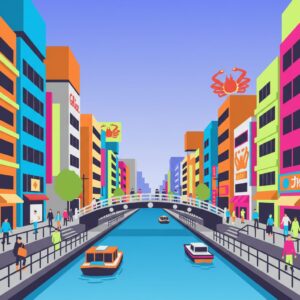
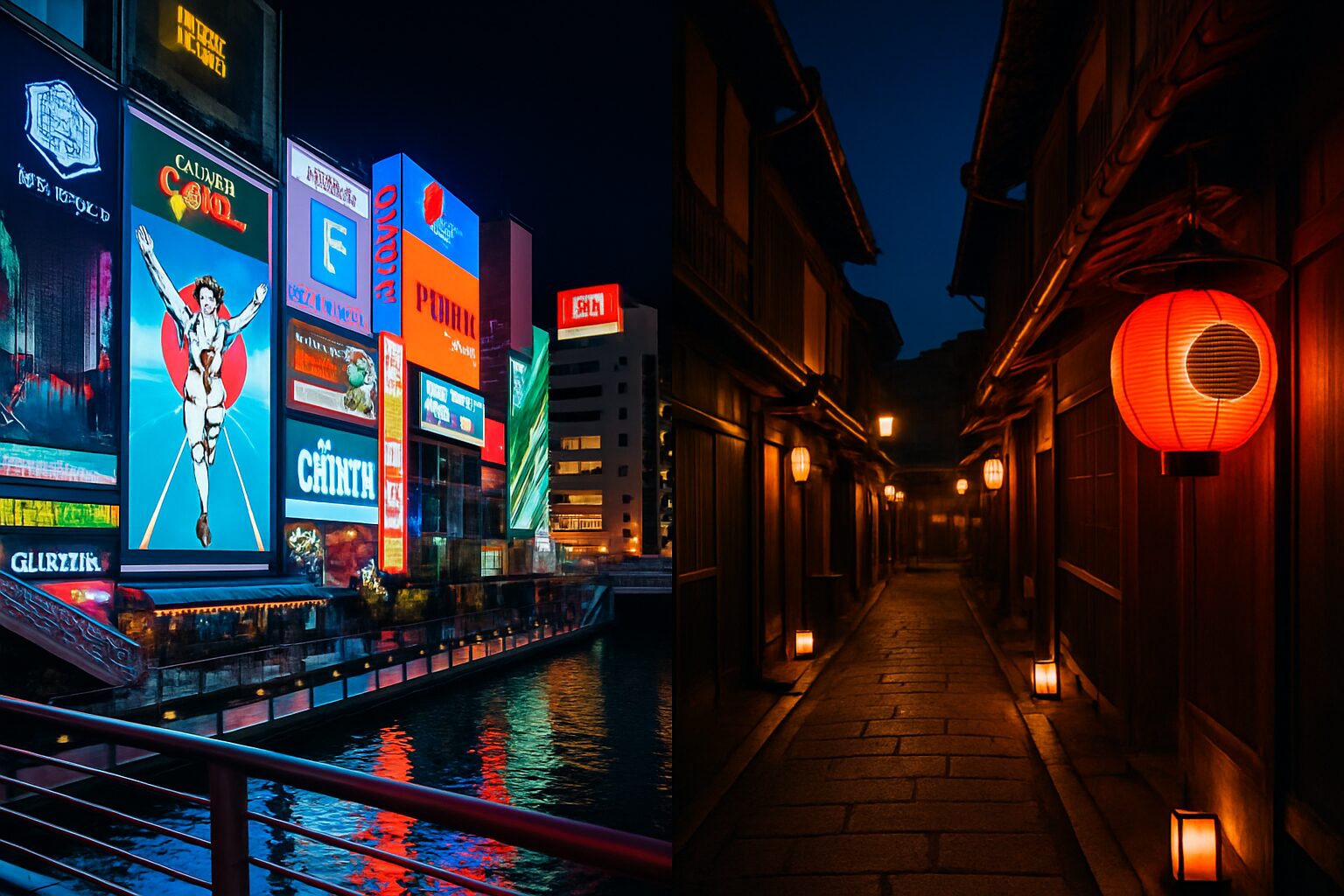
At the core of this neon tempest lies Dotonbori, the iconic canal-side promenade that stands as Osaka’s nightlife postcard to the world. From the Ebisu Bridge, you are enveloped in a 360-degree panorama of digital billboards and giant three-dimensional signs. This is where the famous Glico Running Man has been sprinting across his blue track for decades, symbolizing corporate resilience and civic pride. Below him, giant mechanized crabs wave their claws above Kani Doraku, colossal octopus figures guard takoyaki stalls, and a striking pufferfish lantern glows mysteriously. The spectacle is almost surreal—a commercial art gallery beneath the open sky. For photographers, it’s both a challenge and a joy, especially when capturing the shimmering reflections dancing on the dark, murky canal waters, transforming the scene into a vibrant, abstract canvas of liquid light. The constant parade of tour boats adds dynamic motion, their passengers waving to the crowds on the bridges. The soundscape is intense—a blend of J-pop blasting from storefronts, vendors’ amplified calls, and the excited buzz of many languages. This place feels alive, a living entity composed of light, steel, and collective human energy. It overwhelms in the most exhilarating way, a sensory feast that lingers long after you leave.
Kuidaore Culture: Eating Until You Drop
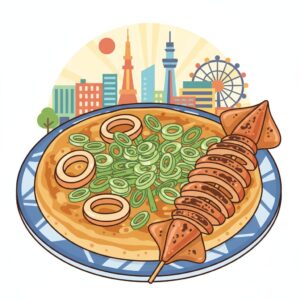
If Namba follows any creed, it’s kuidaore—roughly translated as “eat until you drop” or “spend yourself silly on food.” In Dotonbori and surrounding streets, this philosophy is practiced devoutly. The air is dense with savory, tempting scents of frying oil, sweet sauces, and grilled meats. This is Osaka’s soul food heartland. You can’t walk ten feet without coming across a stall selling takoyaki—the city’s signature grilled octopus balls—expertly flipped with metal picks by masters of the craft. The artistry on display is mesmerizing. Then there’s okonomiyaki, a savory pancake bursting with cabbage and your choice of meat or seafood, coated in tangy brown sauce and mayonnaise, topped with fluttering bonito flakes. And there’s kushikatsu, deep-fried skewers of pork, shrimp, cheese, and asparagus, governed by the sacred rule of no double-dipping in the communal sauce pot. Namba’s food scene is wonderfully accessible—you can enjoy a world-class culinary tour for just a few coins, hopping from stall to stall, beer or lemon sour in hand. It’s a profoundly democratic and social way to dine. You might find yourself sharing a tiny table with strangers, united by the simple, profound joy of delicious, unpretentious food. It’s where Osaka’s friendly, down-to-earth reputation truly shines. Food here is more than sustenance; it’s the primary language of connection and celebration.
Beyond the Canal: Exploring Namba’s Veins
While Dotonbori dazzles as the main attraction, Namba’s true charm lies in its diverse, sprawling network of side streets and neighboring areas. Each offers a distinct flavor and unique rhythm within the district’s complex pulse. To experience Namba fully, you must wander, get lost, and explore these vibrant tributaries.
Shinsaibashi-suji: The Endless Arcade
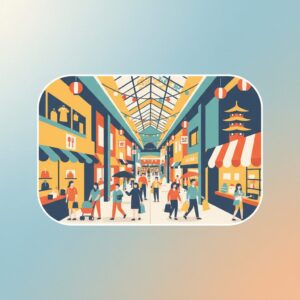
North of Dotonbori stretches the Shinsaibashi-suji Shopping Arcade, a covered retail artery exceeding half a kilometer in length. Walking its length feels like being swept along by a human river. The translucent roof shelters you from the elements, creating a constant twilight illuminated by the bright lights of hundreds of stores. It’s a dizzying blend of international brands, historic department stores, independent boutiques, and quirky souvenir shops. The density of commerce is staggering. You can find everything from high fashion to traditional sweets, cosmetics to character goods. Even without a shopping urge, people-watching here is unparalleled—a cross-section of Osaka society, a parade of styles, ages, and backgrounds flowing together under one roof. The arcade epitomizes the city’s commercial spirit, channeling market energy into a concentrated, high-intensity experience.
Amerikamura: The Youthful Pulse
Just a block west of Shinsaibashi-suji, the mood shifts dramatically entering Amerikamura, or “Amemura.” True to its name, this area has long been the hub of youth culture and American-inspired trends. It’s grittier, edgier, and more eclectic than the polished main arcade. Narrow streets and buildings adorned with murals and street art characterize the space. Vintage clothing stores crammed with finds, independent record shops, and tiny hip cafes abound. The district’s heart is Triangle Park (Sankaku Koen), a small concrete plaza serving as a meeting spot and informal stage for street performers and aspiring musicians. Fashion here is bold and experimental, reflecting Osaka’s youthful creative spirit. Amemura is where you feel the city’s countercultural heartbeat, discover unique clothing, or catch an intimate live show in a basement venue. It exudes raw, creative energy, providing an essential contrast to Namba’s commercial sheen.
Hozenji Yokocho: A Secret Slice of Old Osaka
For a complete shift in pace, a visit to Hozenji Yokocho is a must. Hidden just south of Dotonbori’s main drag, this narrow, stone-paved alleyway feels like a secret gateway to a bygone era. The transition is immediate—the roar of Namba fades, replaced by the soft clatter of wooden sandals and the warm glow of paper lanterns. Lined with traditional restaurants and small izakayas, their wooden facades radiate quiet charm. At its center stands Hozenji Temple, home to the famous Mizukake Fudo statue. The deity, Fudo Myo-o, is covered in a thick green moss, a result of worshippers splashing the statue with water instead of offering incense as they pray. The sight is serene, especially at night when the temple is softly illuminated. Hozenji Yokocho offers a rare moment of calm amid the surrounding frenzy—a reminder that even in Osaka’s busiest district, pockets of history and spirituality persist, offering a quiet sanctuary for those who seek it.
Namba’s Rhythmic Entertainment
Namba’s nightlife extends beyond food and shopping into a vibrant entertainment hub. The area hosts historic theaters like Osaka Shochikuza, which presents grand Kabuki performances that offer a glimpse of Japan’s classical arts. For something typically Osakan, the Namba Grand Kagetsu is the revered stage for Japanese comedy, especially the signature fast-paced manzai style. Even without understanding the language, the infectious energy and physical humor captivate audiences. For more interactive fun, Namba is filled with multi-story karaoke establishments where you can rent private rooms and sing until dawn. And the arcades—far from the dingy game rooms of old—are towering palaces of digital amusement, like Round1 Stadium, offering everything from the latest video games to bowling, billiards, and indoor sports. Namba presents a dazzling, nonstop variety of activities designed to keep you engaged; boredom here simply doesn’t exist.
The Timeless Elegance of Kyoto’s Gion
Leaving behind the electric buzz of Namba and journeying to Kyoto’s Gion is like tuning a radio from a static-filled, high-energy rock station to a clear, classical melody. The ride on the Keihan or Hankyu line is brief, yet the atmospheric transformation is striking. Gion, Kyoto’s most famous geisha district, has carefully maintained the appearance and ambiance of feudal Japan. Stepping onto its stone-paved streets, the modern world seems to fade away. The visual scene shifts from towering neon lights to the low, graceful lines of wooden machiya townhouses, their dark lattices casting intricate patterns of light and shadow. The very air feels different—quieter, cooler, and imbued with the scent of incense and subtle aromas of fine cuisine. Gion does not clamour for your attention; it invites you in with a quiet, assured elegance. It is a district shaped by subtlety, the beauty of imperfection, and centuries-old traditions. An evening here is less about indulgence and more about appreciation—an immersion in Japanese aesthetics and the quiet strength of restraint.
Stepping Through the Looking Glass: The Atmosphere of Gion
Gion’s experience begins simply with walking. Your footsteps echo on the stone—a sharp contrast to the bustling crowds of Namba. The main light source comes not from huge screens but from the soft, warm glow of paper lanterns outside each establishment, their light casting honeyed hues on the dark wood of the buildings. The architecture exemplifies quiet beauty. The two-story machiya feature tiled roofs, delicate bamboo blinds (sudare), and noren curtains hanging over doorways, hinting at the exclusive worlds inside. A palpable sense of history lingers here; one can almost hear the countless stories these old walls hold. Subtle yet evocative sounds fill the air: the distant click of wooden geta sandals on stone, faint melodic notes from a shamisen behind a screen, the gentle swish of willow branches by the canal. The atmosphere encourages slowing down, noticing small details—the arrangement of a single flower in a vase, the texture of weathered wood, the dance of shadows on the street. It is, in every sense, a photographer’s dream—a place where every frame waits as a perfect composition.
The World of Flowers and Willows: Geiko and Maiko
Gion is synonymous with the karyukai, or “Flower and Willow World,” home to Japan’s geishas. In Kyoto, fully licensed geishas are called geiko, while their apprentices are maiko. These women are not simply hostesses; they are highly trained artisans and entertainers, masters of classical dance, music, and the art of conversation. Their lives involve years of rigorous training to perfect these skills. A night with them at an ochaya (teahouse) is an exclusive, costly experience, usually accessible only through introduction. For most visitors, the real enchantment lies in glimpsing a geiko or maiko as she moves to an evening appointment. Seeing one—with her flawless white makeup, exquisite silk kimono, and intricate hairstyle—is like encountering a living masterpiece. It is essential to approach with the utmost respect. They are not tourist spectacles but professionals on their way to work. Chasing, blocking their path, or using flash photography is deeply disrespectful and intrusive. Proper etiquette is to observe quietly from a distance, appreciating their rare beauty with quiet dignity. This respectful space preserves the magic and mystery that makes Gion so special.
Gion’s Winding Paths: A Photographer’s Paradise
Like Namba, Gion is best explored on foot, with its most famous streets offering distinct and enchanting experiences. These are not just routes but destinations, each with its unique character and mood.
Hanamikoji-dori: The Grand Stage
Hanamikoji, or “Flower Viewing Lane,” is the principal street through Gion’s heart. Beautifully preserved, with telephone poles buried underground to maintain the historic view, the street is lined with elegant machiya housing exclusive ochaya and upscale ryotei (traditional restaurants). This is the prime spot to see a geiko or maiko, particularly in the early evening between 5:30 and 7:00 PM when they head to appointments. The ambiance is one of refined grace and anticipation. As darkness falls, lanterns emit a warm glow, and occasional silhouettes appear behind sliding paper screens. It feels like an open-air theater where the drama of a hidden world plays out in fleeting, poetic moments.
Shirakawa Lane: A Picture Postcard
Parallel to Shijo Avenue, the Shirakawa area is among Kyoto’s most picturesque spots. A small, crystal-clear canal here is lined with weeping willows, stone bridges, and beautifully preserved wooden houses, many now upscale eateries with water views. The setting is incredibly romantic, especially during spring when cherry blossoms carpet the canal with petals. In the evening, soft lighting and the gentle flow of water create a profoundly peaceful, beautiful atmosphere. This quieter, more intimate side of Gion is perfect for a romantic walk or photographers seeking iconic images of old Japan.
Pontocho Alley: A Culinary Corridor
Though technically a separate geisha district across the Kamo River, Pontocho is often included in a Gion evening. This narrow alley is densely packed with restaurants, bars, and teahouses. Walking through Pontocho is a unique experience—the lane is so narrow you can nearly touch both sides at once. Lanterns hang from every building, casting a magical light. In summer, many restaurants build temporary wooden platforms over the Kamo River called kawayuka. Dining on these platforms with a cool river breeze is a classic Kyoto summer tradition. Pontocho has a livelier and somewhat more accessible atmosphere than Gion itself, while still preserving deep tradition and charm.
A Taste of Refinement: Gion’s Culinary Arts
Gion’s culinary philosophy contrasts with Namba’s kuidaore approach. Here, the emphasis is not on quantity but on artistry, seasonality, and subtle flavor harmony. This is the realm of kaiseki, Japan’s traditional multi-course haute cuisine. A kaiseki meal is a carefully choreographed performance wherein each small, elegant dish celebrates seasonal peak ingredients. Presentation is as vital as taste, with careful choices of ceramics, lacquerware, and garnishes. Kyoto specialties such as obanzai—rustic home-style seasonal vegetable dishes—and yudofu, a simple yet refined simmered tofu dish, are also cherished. Dining in Gion is an immersive cultural experience. Often held in a private machiya room overlooking a small hidden garden, such meals are slow, deliberate, and often expensive, offering deep insight into Japanese aesthetics—beauty in simplicity and reverence for nature.
The Grand Duel: Namba vs. Gion, Night by Night
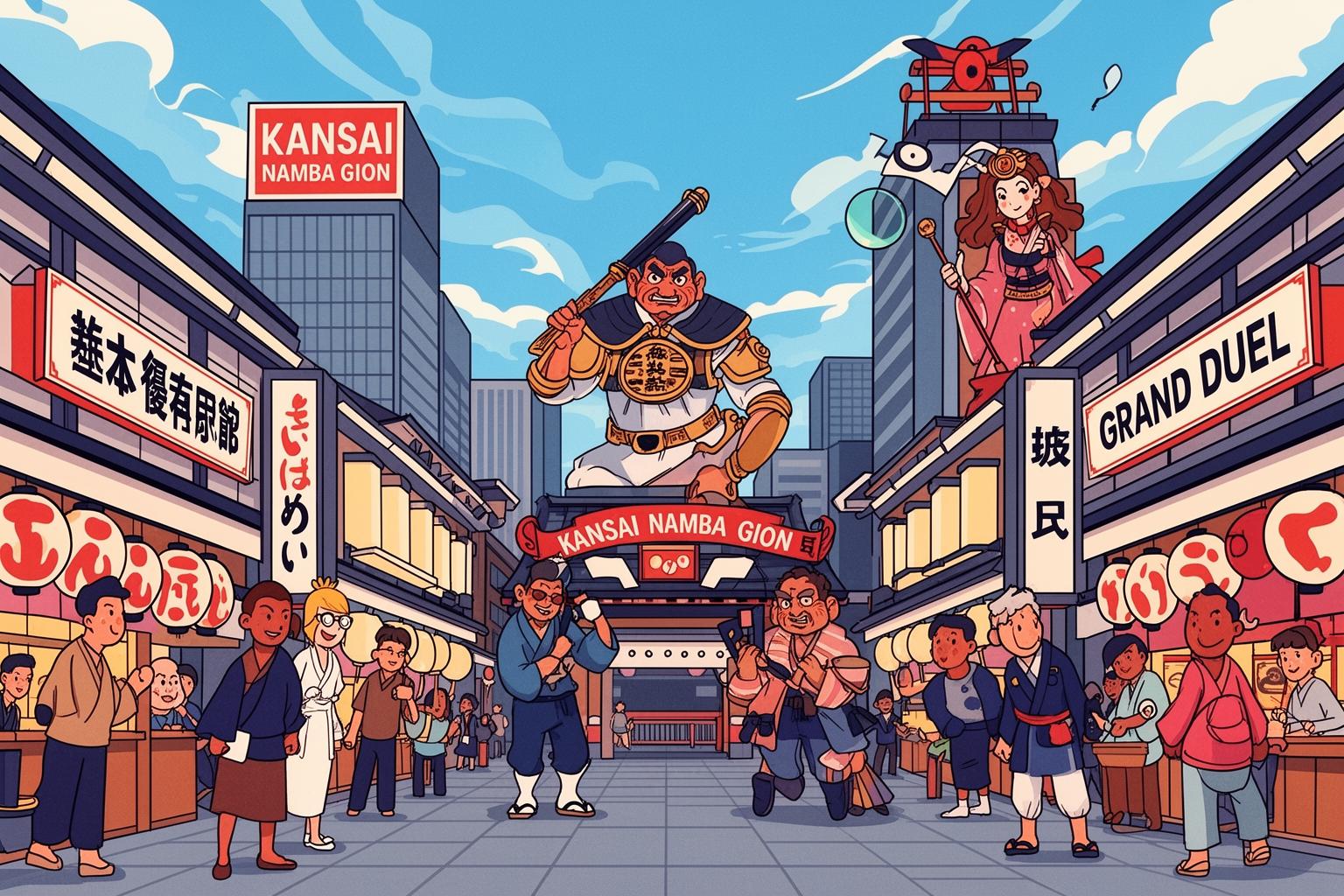
Choosing between Namba and Gion for an evening out is like choosing between two distinct states of being. Both are spectacular, yet they fulfill fundamentally different desires and moods. The choice depends on the kind of experience you want, the sensations you wish to embrace, and the memories you hope to create.
The Vibe: Maximum Overload vs. Minimalist Elegance
Namba is an all-out sensory bombardment. It’s loud, bright, crowded, and chaotic—a place of extroverted energy meant to excite and energize. You become an active participant in its massive, ongoing street festival. In contrast, Gion embodies introverted elegance. It invites you to be a quiet observer, to attune your senses to subtler rhythms. The atmosphere is calm, reflective, and deeply rooted in tradition. Namba delivers a burst of adrenaline; Gion offers a sip of perfectly aged sake.
The Palate: Bold Street Flavors vs. Delicate, Crafted Cuisine
The food mirrors the mood. Namba’s cuisine is bold, hearty, and deeply satisfying. It’s everyday food—robust, affordable, and drenched in flavor—best enjoyed on the go or in lively, bustling eateries. Gion’s culinary scene emphasizes precision and artistry. Flavors are subtle, refined, and meant to be savored slowly. It’s an intellectual as well as sensory experience, with every ingredient telling a story of the season. Meals here require your full attention in a serene, private setting.
The Entertainment: Interactive Chaos vs. Observational Elegance
Entertainment in Namba is hands-on. You sing karaoke, play arcade games, and lose yourself in the crowd. It’s about lively, active fun. In Gion, entertainment tends to be more contemplative. You admire the grace of traditional dance, the skill of musicians, the beauty of the architecture, or the fleeting presence of a geiko. It’s about witnessing a culture and art form preserved through centuries.
The Cost: A Tale of Two Wallets
The cost of a night out varies significantly. Namba can be very budget-friendly. You can enjoy street food, wander the streets, and soak in the atmosphere without spending much. Although pricier options exist, the district’s spirit is fundamentally democratic and accessible. Gion, however, hosts some of Japan’s most exclusive and expensive dining and entertainment experiences. A full dinner at a high-end ryotei or an evening at an ochaya can cost hundreds or even thousands of dollars. That said, enjoying Gion on a budget is entirely possible. Simply walking its beautiful streets at night is free. You can visit the glowing Yasaka Shrine, open 24 hours on the district’s edge, or have a reasonably priced meal nearby before taking a reflective stroll through the historic lanes.
Practical Guidance for the Night Explorer
Navigating these two distinct worlds calls for slightly different strategies. A bit of preparation can help ensure your night out is smooth, enjoyable, and respectful.
Getting There and Away
Namba is one of Osaka’s main transportation hubs, making it exceptionally easy to reach. It’s served by several subway lines (Midosuji, Yotsubashi, Sennichimae), major private railways (Nankai, Kintetsu), and the JR network. The station complex itself is a vast, confusing maze, so it’s smart to know which exit you’ll need. For Gion, the main access points are Gion-Shijo Station on the Keihan Line and Kyoto-Kawaramachi Station on the Hankyu Line. Both are conveniently situated. The last trains back to Osaka generally run until around midnight, but it’s crucial to check the schedule for your specific line to avoid being stranded. Taxis are an option, though the fare between the cities can be very expensive.
Navigating with Confidence
In Namba, the best approach is to embrace the chaos. Don’t hesitate to explore the side streets; that’s often where the most interesting finds are. Use the massive signs of Dotonbori and the Namba Parks tower as landmarks to help find your way. Stay alert in the busy crowds, but Osaka is overall a very safe city. In Gion, the key is to move slowly and with respect. Many establishments are private and not open to the public. A noren curtain hanging over a door indicates it is open for business, but many are exclusive ochaya. Stick to public streets, keep your voice down, and remember that residents live here. The district’s charm depends on visitors treating it with the reverence of an open-air museum.
A Photographer’s Tip Sheet
For fellow photographers, each district offers its own unique challenges and rewards. In Namba, a fast lens (f/2.8 or wider) is invaluable for handling low light while capturing the lively energy. Don’t hesitate to raise your ISO. Use slower shutter speeds to create motion blur in the crowds, capturing the flow of humanity. Focus on reflections in the canal and on wet pavement after rain. It’s all about seizing energy and vibrant color. In Gion, patience is essential. A tripod can be helpful for capturing the pristine, still beauty of the lanes, but be polite and avoid blocking the narrow streets. Concentrate on details: the texture of wood, the glow of a lantern, the silhouette in a window. When photographing geiko or maiko, be prepared. Have your camera ready but never use flash—it is blinding and disrespectful. Take your shot quickly from a distance, then put your camera away and simply enjoy the moment with your own eyes.
A Tale of Two Nights, One Soul
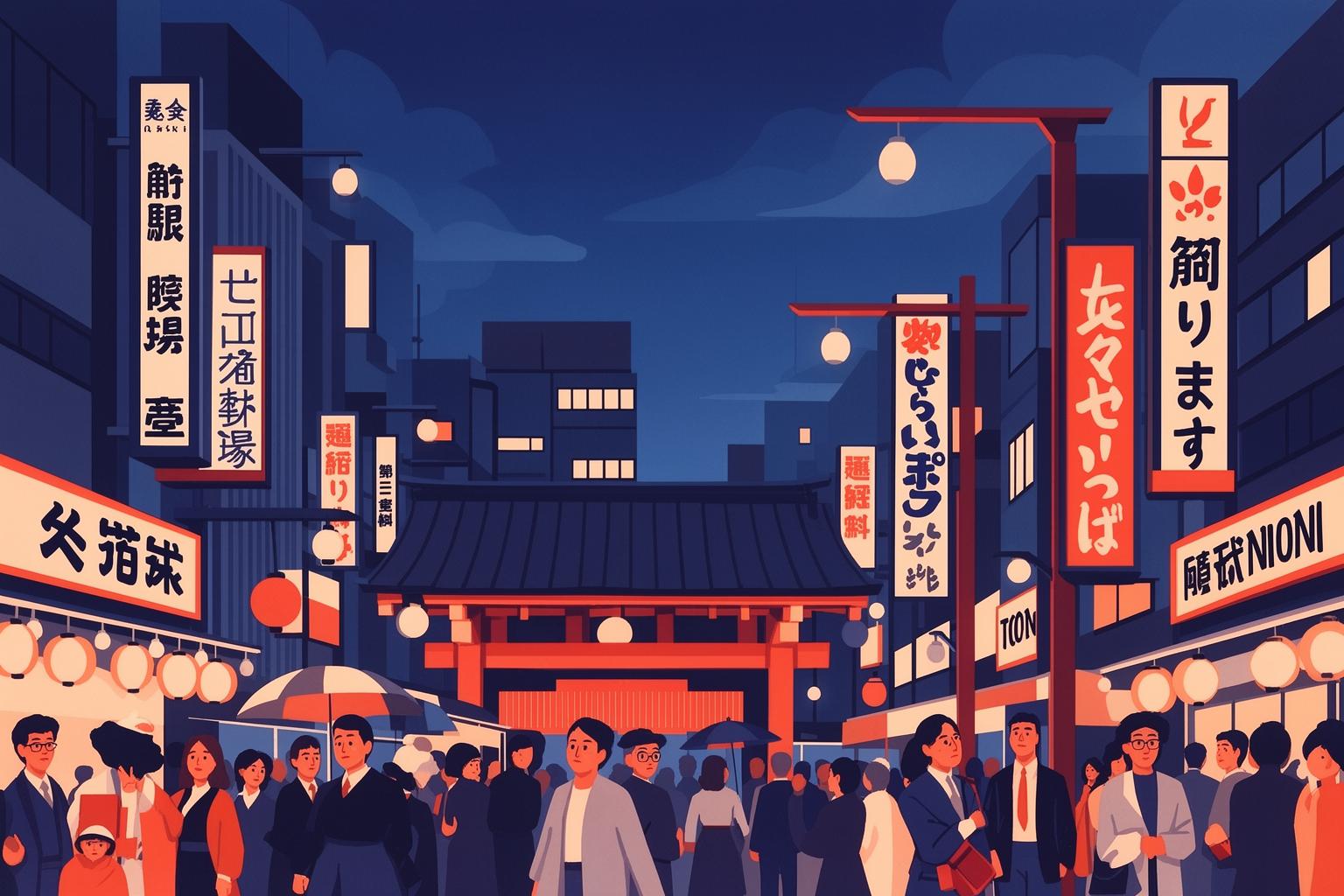
Ultimately, the comparison between Namba and Gion isn’t about picking a winner. It’s about appreciating the remarkable diversity of experiences Japan offers. They are two sides of the same cultural coin, each representing a distinct and equally important aspect of the national character. Namba embodies the modern, vibrant, and sociable side of Japan—a country that embraces the future with boundless energy and a passion for communal celebration. Gion, on the other hand, reflects its deep, enduring spirit—a culture that values beauty, respects tradition, and finds profound meaning in discipline and artistry. Living in Kansai grants you the privilege of choosing between these worlds any night you wish. You can immerse yourself in the electric vitality of Namba when your soul craves life, noise, and flavor. Or you can retreat to the tranquil, lantern-lit streets of Gion when you seek peace, beauty, and a connection to something timeless. The true magic lies not in favoring one over the other, but in recognizing that the journey between them—between the roar and the whisper—is where you discover the full, beautiful, and endlessly captivating story of Japan after dark.