
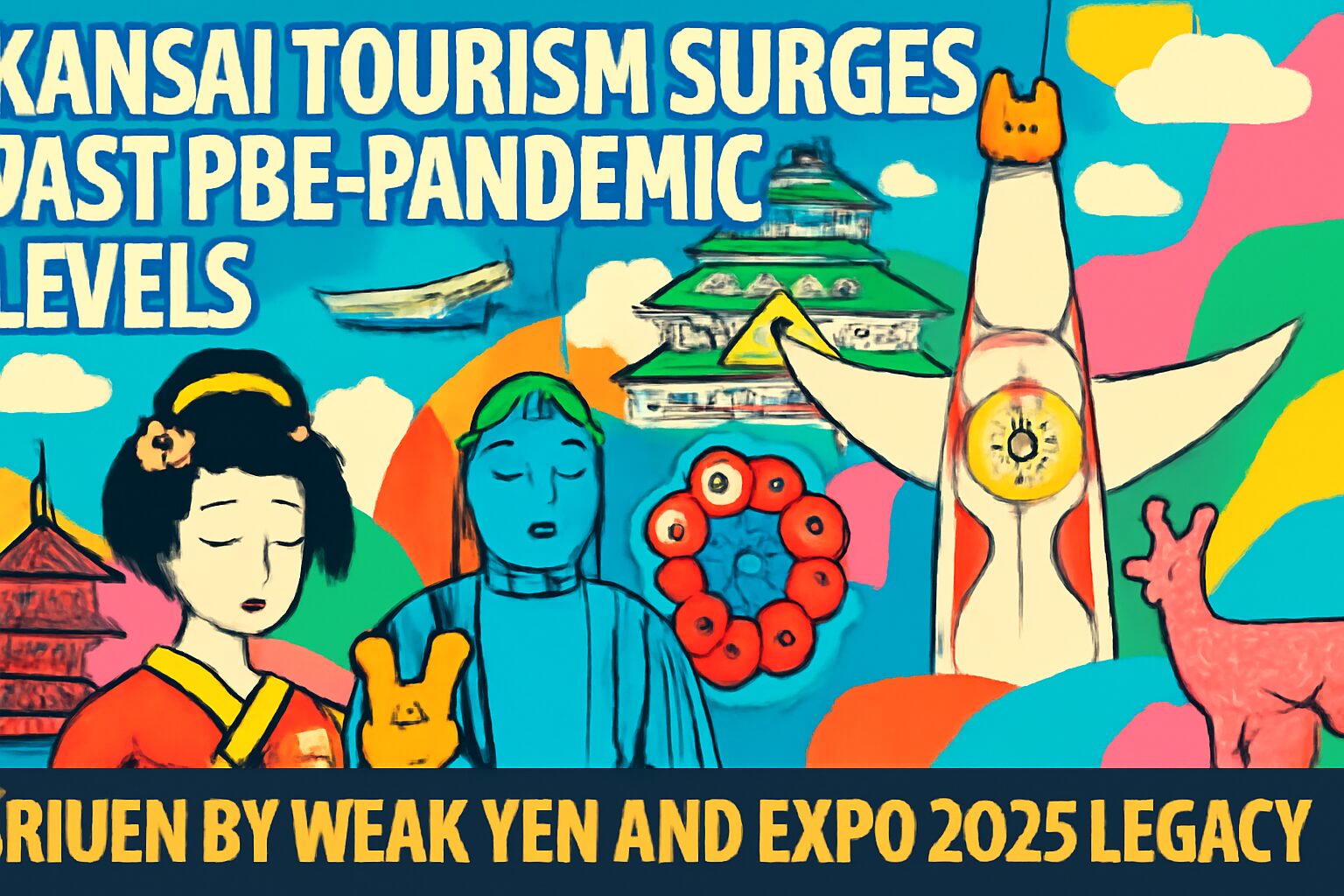
The Kansai region is currently experiencing a historic tourism boom in mid-2026. Data from the first quarter of this year reveals that international visitor spending has spectacularly surpassed pre-pandemic records by a remarkable 30%. Here at Osakaa, we have been closely monitoring this unprecedented influx, which is reshaping the local economy and urban landscape across Osaka, Kyoto, and the wider region.
The Twin Catalysts: Favorable Exchange Rates and Lasting Global Attention
Two primary factors are driving this remarkable surge in inbound tourism. The persistently weak yen continues to play a significant role, substantially increasing the purchasing power of international travelers. With favorable exchange rates making luxury goods, premium dining, and high-end accommodations far more accessible, tourists are extending their stays and spending more freely across the region.
Equally important is the enduring legacy of the Osaka-Kansai Expo held last year. The highly successful 2025 event cast a global spotlight on Kansai, showcasing its technological innovations, rich cultural heritage, and vibrant culinary scene to millions worldwide. Even months after its conclusion, the Expo’s promotional momentum continues to draw first-time visitors and returning travelers eager to experience the modernized urban infrastructure and newly developed attractions.
Economic Windfalls Revitalizing Local Sectors
The combination of increased visitor numbers and heightened spending power has translated into tangible economic benefits. The retail and hospitality sectors are currently witnessing a massive revitalization. Department stores in Osaka’s Minami and Kita districts are reporting record-breaking duty-free sales, while hotel occupancy rates consistently hover near maximum capacity.
The 30% increase in first-quarter international spending compared to pre-pandemic benchmarks indicates a definitive shift from mere recovery to robust economic expansion. This financial injection is encouraging local businesses to expand their operations, with many introducing multilingual services and tailored premium experiences to cater to the diverse international demographic.
Navigating the Looming Shadow of Overtourism
However, this rapid influx of visitors brings immediate challenges. The sheer volume of tourists navigating the Kansai region is raising acute concerns regarding overtourism. Popular destinations, particularly historical sites in Kyoto and major transit hubs in Osaka, are frequently operating beyond their comfortable carrying capacities.
Local residents are experiencing the strain through crowded public transportation, increased noise levels, and longer wait times for everyday services. Managing this friction is becoming a critical priority for local governments and tourism boards. Discussions are already advancing regarding the implementation of dynamic pricing for public transit, stricter regulations on short-term rentals, and crowd-control measures at major tourist hotspots.
Looking Ahead: A Sustainable Future for Kansai Tourism
As we progress through the latter half of 2026, the trajectory of Kansai’s tourism industry depends heavily on sustainable management strategies. The economic prosperity fueled by the weak yen and the Expo 2025 legacy offers a golden opportunity to invest in long-term infrastructure and sustainable tourism models.
Future initiatives will likely focus on encouraging off-peak travel and highlighting cultural experiences in neighboring prefectures such as Nara, Wakayama, and Shiga to disperse the heavy tourist traffic. By balancing economic growth with the preservation of local community well-being, the Kansai region aims to transform this current boom into a stable, thriving, and harmonious tourism ecosystem for years to come.








