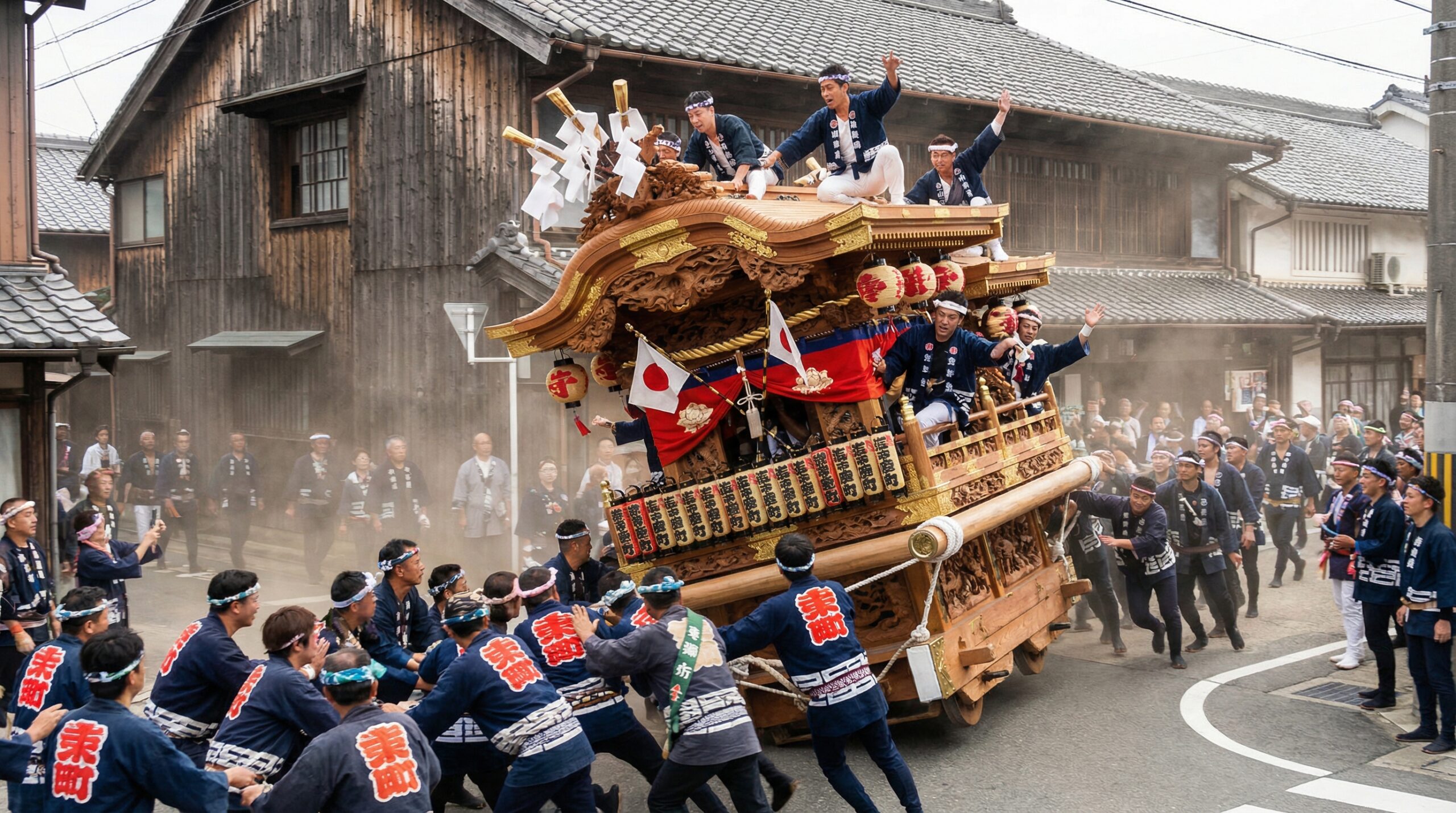
It begins not as a sight, but as a sound. A deep, seismic rumble that vibrates through the soles of your shoes, a feeling that travels up your spine and settles in your chest. It’s the sound of solid zelkova wood, tons of it, grinding against asphalt at an impossible speed. Then comes the chorus: a rhythmic, guttural chant, the unified voice of hundreds of men and women heaving on thick ropes, their bodies taut with effort. Flutes and drums beat a frantic, ancient rhythm from within the heart of the beast. This is the Kishiwada Danjiri Matsuri, and you don’t just watch it. You feel it in your bones. Welcome to Kishiwada, a coastal city in southern Osaka Prefecture, where for two weekends a year, life isn’t measured in hours or days, but in the heart-pounding moments between one corner and the next. This isn’t just a parade; it’s a high-speed, high-stakes declaration of identity, a tradition so deeply woven into the fabric of this city that it’s impossible to separate the people from their festival. It is raw, it is breathtakingly dangerous, and it is the most visceral expression of community spirit you may ever witness.
For a different kind of artistic energy in Osaka, explore the vibrant street art scene in the industrial neighborhood of Kitakagaya.
The Soul of the City Carved in Wood: The Danjiri Floats
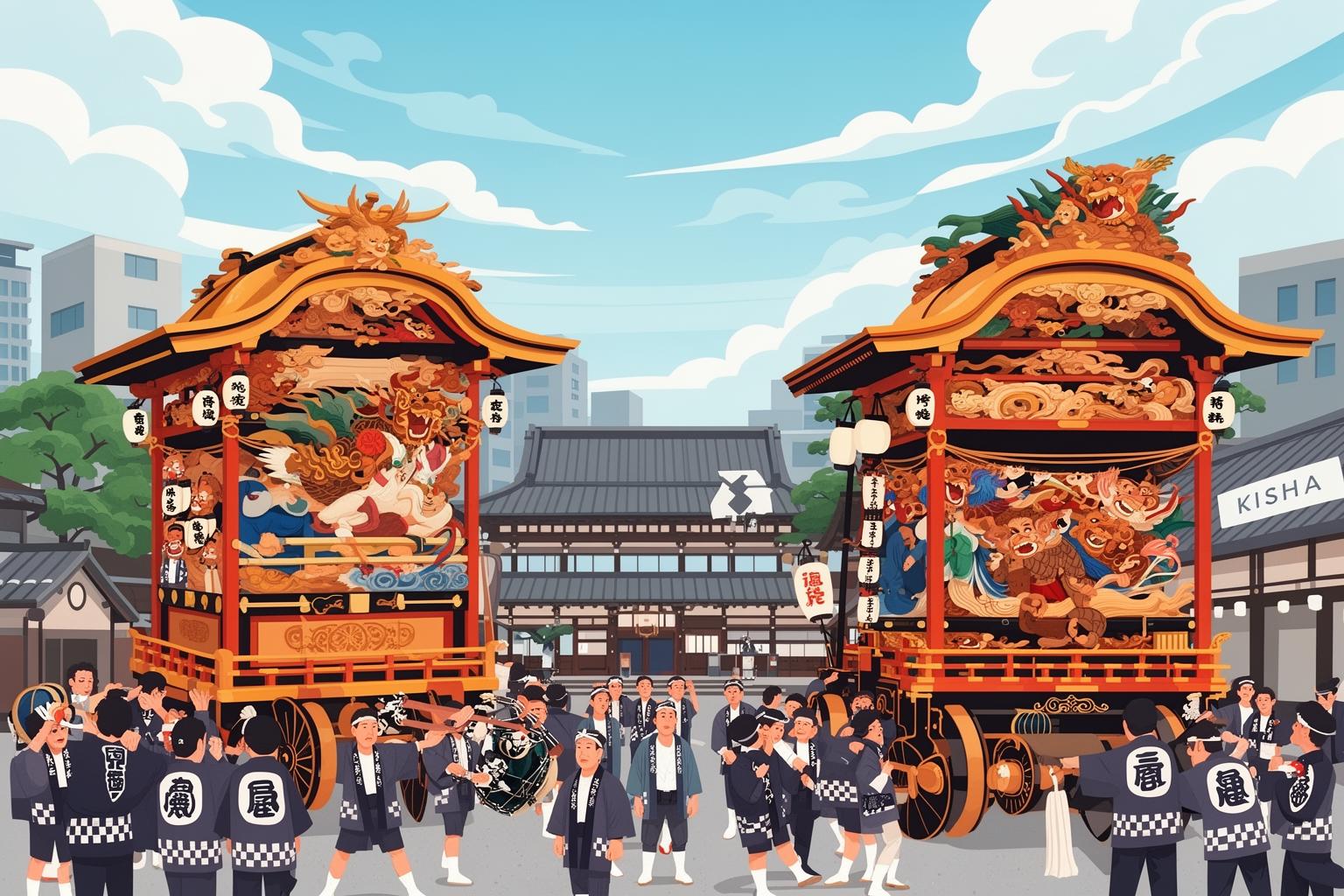
At the center of this spectacular chaos lies the danjiri itself. Calling it just a float is a significant understatement. Each danjiri is a moving masterpiece of sculpture and engineering—a rolling shrine weighing between three and five tons, primarily crafted from magnificent, dark-grained keyaki (zelkova) wood. They rise nearly four meters tall, a towering marvel of intricate carvings that cover every surface. These are not mere decorations; they are epic historical narratives brought vividly to life in three dimensions. Look closely, and you’ll find legendary samurai locked in the heat of the Genpei War, mythical creatures silently roaring from the eaves, and scenes from famous battles like the Battle of Shizugatake rendered with remarkable detail and dynamism. Each float is the pride of a specific neighborhood, or cho, representing a massive investment of money, time, and, above all, soul. The creation and upkeep of a single danjiri can cost hundreds of millions of yen, funded by the community over decades. Master carvers, known as horishi, dedicate years of their lives to each float, their names becoming local legends. These danjiri are not simply objects; they are living repositories of history, artistry, and neighborhood identity, passed down through generations as a sacred trust.
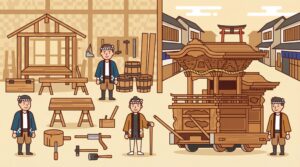
Every element of the danjiri reflects traditional Japanese craftsmanship. The massive, tiered roof, or ōyane, serves as the stage for the festival’s most daring performers. The intricate joinery, assembled without nails, enables the structure to flex and absorb the tremendous forces it endures. Even the wheels are works of art—solid wood bound with iron—designed not for smooth riding but for the raw, skidding friction needed for the festival’s signature maneuvers. Decorated with elaborate banners bearing the neighborhood’s crest and thick symbolic ropes (tsuna), the danjiri is a glorious kinetic sculpture embodying the community’s collective pride and spirit. When the festival ends, these magnificent structures are stored in dedicated warehouses, treated with the reverence of sacred relics, waiting to thunder through the streets once more the following year.
A Lifelong Vow: Born into the Danjiri Rhythm
In Kishiwada, joining the Danjiri Matsuri isn’t a mere decision—it’s something you are born into. The festival’s rhythm serves as the city’s lullaby, its heartbeat aligning with the spinning wheels of the danjiri. From their first steps, children are steeped in this culture, pulling child-sized miniature danjiri through the streets, imitating their fathers and older brothers. They learn the festival songs, the distinctive chants (kakegoe), and the unique musical patterns played on the flute, gong, and drum that signal turns or straightaways. This early involvement is more than play; it is a vital education in teamwork, tradition, and neighborhood spirit—a lifelong apprenticeship’s inception.
As boys mature into teenagers, they join the seinendan, the youth association, where serious training begins. This marks their rite of passage. They take their positions on the main ropes, mastering the art of pulling in perfect unison, reading subtle signals from leaders, and enduring the festival’s intense physical demands. This stage forges enduring brotherhoods, born from shared sweat, fatigue, and the exhilaration of a flawlessly executed run. Each danjiri team functions as a complex, hierarchical society, structured by age, experience, and respect—a society within society, where roles and responsibilities are upheld with utmost seriousness.
This dedication extends far beyond the festival’s two days. The real effort occurs in the months prior: countless evenings spent in meetings to plan routes and strategies, numerous practice runs through the streets to build stamina and perfect coordination, and meticulous maintenance of the danjiri—polishing the wood, checking ropes, ensuring everything is flawless. For participants, Danjiri is not a hobby; it is a fundamental part of their lives, shaping their calendars, social interactions, and identity. It is a passion deeper than blood, a sacred duty to ancestors and community.
Roles of a Lifetime: A Symphony of Skill
Watching a danjiri in motion reveals a perfectly coordinated human machine, each person fulfilling a highly specialized role. It is a symphony of strength, agility, and courage.
Daigukata: The Carpenters Dancing with Danger
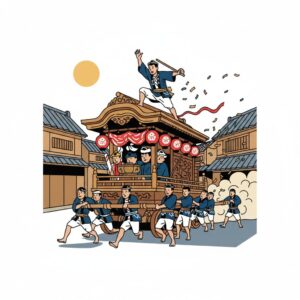
The most visible and iconic figures are the daigukata, carpenters who ride atop the danjiri’s main roof. These festival rock stars possess immense skill and bravery. As the massive float hurtles through the streets, the lead daigukata stands at the front, wielding only a fan, leaping, dancing, and signaling to the pullers below. His movements communicate turns and straightaways but also serve as a display of pure bravado. The position is perilous; one misstep or sudden jolt could throw him to the unforgiving pavement. Becoming a daigukata is the culmination of lifelong training—a role of great honor reserved for the most trusted and skilled team members.
Sako: The Human Engine
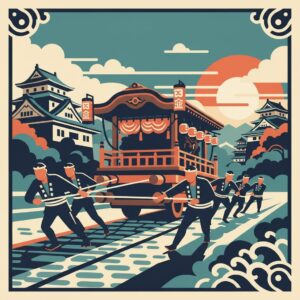
The danjiri’s raw power comes from the sako, the hundreds pulling the two main ropes. They form the float’s engine. This is no chaotic crowd but a disciplined unit moving as one. The front-runners, the maeteko, set the pace and initiate turns. They must combine strength with an intuitive grasp of the float’s momentum and leader signals. The physical exertion is enormous, a marathon of sprinting and heaving testing human endurance. Their unified chant forms the festival’s roaring heartbeat—a primal expression of collective effort and shared purpose.
Ushiro-deko: Masters of the Pivot
While the daigukata are the stars and the sako the engine, the most technically demanding task arguably belongs to the ushiro-deko, the rear steersmen. Hidden from view, these men operate massive wooden levers at the danjiri’s back, steering the float by applying pressure to the rear wheels and causing it to pivot sharply during high-speed turns. This requires immense strength, precision, and deep physics knowledge. Timing must be exact, coordinated to fractions of a second with the pullers and daigukata. A momentary lapse or error can lead to disaster—crashing into buildings or worse, tipping the float. They are the unsung heroes, the critical link that transforms raw power into controlled, breathtaking motion.
The Yarimawashi: A Ninety-Degree Act of Faith
The climax of the Kishiwada Danjiri Matsuri, the singular maneuver that embodies its spirit, is the yarimawashi. This is where speed, skill, and courage merge into a breathtakingly intense spectacle. A yarimawashi is a full-speed, ninety-degree turn at a street corner. Unlike floats in other festivals that slow down to turn, the danjiri rushes into the corner. As the float nears the intersection, the music and chanting reach a fevered pitch. The daigukata on the roof crouches low, pointing his fan to signal the turn. On the ground, the front pullers on the outside of the turn spread out, pulling the ropes tight to form a pivot point, while the inside pullers loosen their rope. At the exact moment, the ushiro-deko throw their full weight onto the levers, causing the rear of the float to skid sideways. For a heart-stopping instant, the inner front wheel often lifts completely off the ground as the five-ton machine slides around the corner in a cloud of dust and the screech of strained wood. When it straightens out and resumes its thunderous run down the next street, a collective roar of triumph rises from the crowd and participants alike. It is a pure adrenaline rush, a testament to the absolute trust and flawless coordination of the entire team. To witness a perfect yarimawashi is to grasp the very soul of Kishiwada.
Experiencing the Mayhem: A Guide for First-Time Visitors
Experiencing the Kishiwada Danjiri Matsuri can be intense, but with some planning, it becomes unforgettable. The festival occurs twice yearly: the most renowned and intense event is the September festival (held the weekend before the third Monday of September) in the old town area near Kishiwada Castle. A slightly less crowded yet equally passionate festival happens in the surrounding districts in October.
Getting There and Getting Around
The easiest way to get to Kishiwada is via the Nankai Main Line from Namba Station in central Osaka, a roughly 30-minute express train ride. Expect trains and Kishiwada Station to be extremely crowded on festival days. From the station, the main festival sites are reachable on foot. Prepare for large crowds; moving will be slow and difficult. The city effectively shuts down during the festival, with roads closed for the danjiri routes.
Practical Tips for a Safe and Exciting Day
- Safety First: This cannot be emphasized enough. The danjiri are very powerful and their movements erratic. Always stay behind police lines and follow festival officials’ instructions. Never cross the street when a danjiri is approaching. Find a safe spot and remain there.
- Arrive Early: Prime viewing spots, especially at famous locations like the “Kankanba” intersection (a famously difficult turn near the waterfront), are claimed hours ahead. To secure a good vantage point, arrive early in the morning.
- Wear Comfortable Shoes: You will be standing, walking, and maneuvering through dense crowds all day. Comfort is essential for endurance.
- Embrace the Atmosphere: Don’t focus only on the main corners. Explore the smaller streets to see the danjiri up close during breaks. Feel the team spirit, see the sweat on their faces, and admire the detailed carvings. This is where the festival’s true essence shines.
- Explore the Food Stalls: Like any great Japanese festival, the streets are lined with yatai (food stalls) offering everything from sizzling yakisoba and octopus-filled takoyaki to sweet candied apples. Sampling snacks and drinks is part of the fun.
The Two Sides of the Festival: Day and Night
The Danjiri Matsuri takes on a very different character depending on the time of day. The daytime events, especially the hiki-dashi (opening pull) in the early morning and the main runs in the afternoon, highlight raw power, speed, and thrilling danger.
As dusk falls, the festival shifts for the yoi-miya (evening parade). The danjiri are decorated with over two hundred red and white paper lanterns, creating a warm, magical glow. The pace slows considerably. Instead of racing, teams pull the floats at a walking pace, giving everyone time to appreciate their beauty. Children, who are kept away from the hazardous daytime runs, are now invited to ride on the danjiri. The mood changes from intense excitement to a family-friendly, festive celebration. It’s a striking and moving contrast, revealing the festival’s dual nature—the fierce spirit alongside its gentle heart.
A Tradition Carved into the Future
The Kishiwada Danjiri Matsuri dates back to 1703, when Okabe Nagayasu, the daimyo (feudal lord) of Kishiwada Castle, offered prayers at the local Fushimi Inari Shrine for a bountiful harvest. Over the centuries, this prayer festival evolved with the introduction of the danjiri floats and the emergence of the high-speed yarimawashi that characterize it today. Beyond its history, the festival is a vibrant, living tradition that shapes the city’s present and future.
It serves as the social glue that unites the community, a source of immense civic pride that crosses generations. For those wishing to explore further, a visit to the Danjiri Kaikan (Danjiri Museum) near Kishiwada Castle is essential. Here, you can get an up-close look at a full-sized danjiri without the crowds, watch exciting videos of the yarimawashi on a large screen, and even try your hand at being a daigukata through an interactive exhibit. This experience provides valuable context and deepens appreciation for the skill and dedication showcased during the festival.
To witness the Danjiri Matsuri is to see a city deeply connected to its own identity. It is to observe a tradition that is not preserved behind glass but lived out loud and at full speed on the city streets. It is a raw, powerful, and profoundly human spectacle. So come to Kishiwada. Don’t just come to watch a festival—come to hear the thunder of wood on pavement, feel the ground tremble, and witness the unbreakable spirit of a community that pulls together, not just on the ropes, but in life itself. It’s a rhythm that, once experienced, will stay with you forever.