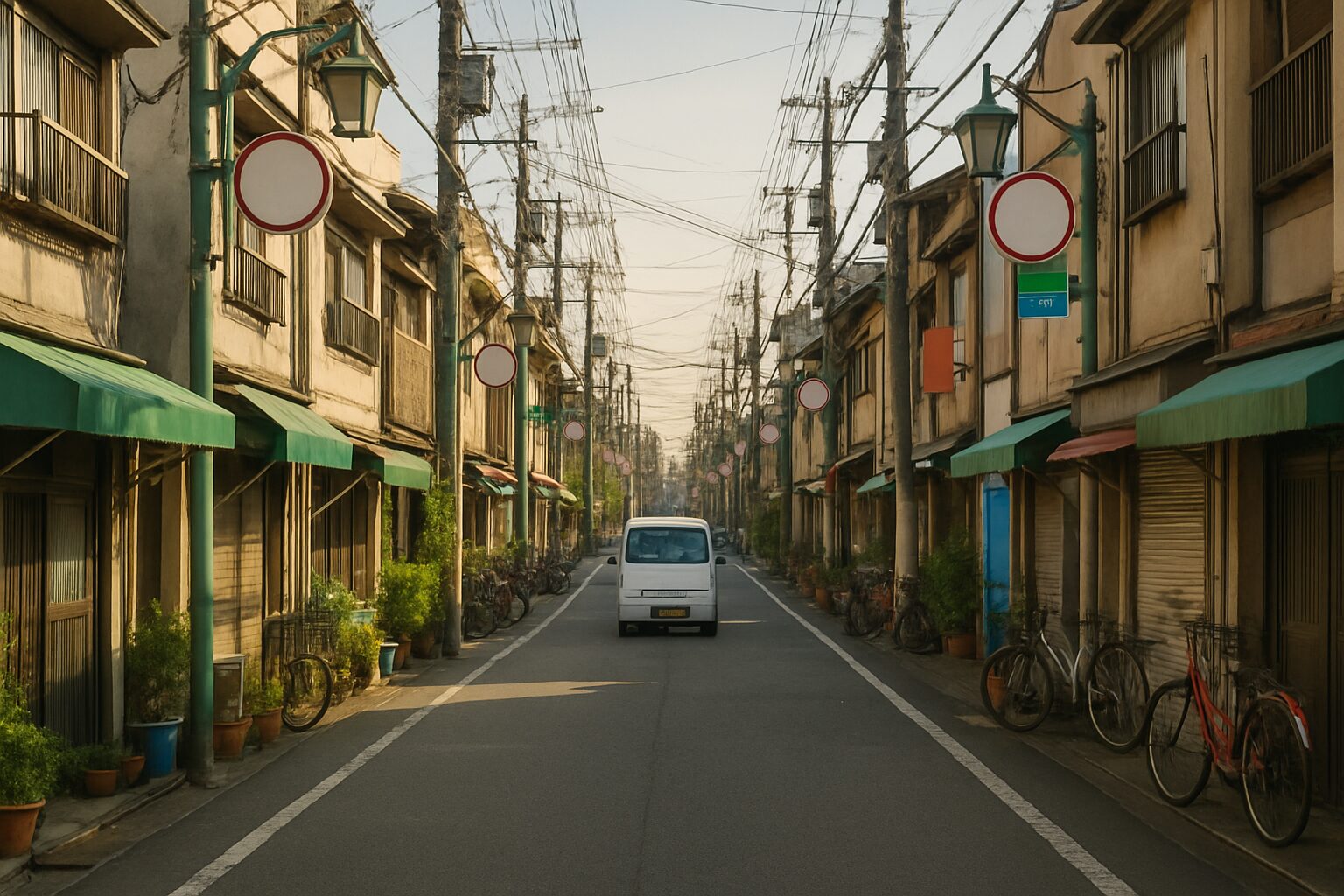
Step off the train at Kitakagaya Station, and you’ll feel it instantly. The air in this southern Osaka neighborhood tastes different. There’s a faint, lingering scent of salt from the nearby port, a metallic tang of industry that refuses to be completely painted over. But layered on top, vibrant and electric, is the unmistakable buzz of creation. This isn’t the neon-drenched chaos of Namba or the polished, historical grandeur of the castle area. This is Kitakagaya, a place of radical transformation, a district where the ghosts of colossal shipyards now play host to an explosive, world-class street art scene. It’s a neighborhood caught in the beautiful, gritty process of becoming, a sprawling outdoor gallery where every brick wall, every rusted shutter, every forgotten warehouse has a story to tell. For anyone living in Osaka who feels they’ve seen it all, or for the traveler craving a raw, unfiltered slice of the city’s contemporary culture, Kitakagaya isn’t just a destination; it’s a revelation. It’s a testament to the idea that beauty can bloom in the most unexpected of places, that the skeletons of an industrial past can become the framework for a brilliant, artistic future. This is where you come to wander, to get lost, and to witness a city redefining itself, one spray can and one brushstroke at a time.
If you’re captivated by the raw, creative energy of Osaka’s southern neighborhoods, consider extending your exploration with a weekend trip to Kishiwada, where castle town history meets coastal charm.
The Industrial Heartbeat and the Artistic Soul

To truly grasp Kitakagaya, you must sense the rhythm of its two colliding worlds. It’s a place marked by profound contrasts, and that’s where its charm resides. Walking along its wide, often deserted streets, you’re flanked by massive structures of corrugated metal and weathered concrete—the silent giants of a bygone era. These are the former shipyards and factories of the Namura Shipbuilding Co., which once established this reclaimed land as one of Japan’s most formidable industrial strongholds. The scale is vast, almost overwhelming. You can almost hear the air filled with the clang of hammers and the roar of furnaces, producing vessels that would navigate the world’s oceans. The decline of heavy industry in the late 20th century might have been a death knell for the area. Instead, it became an invitation. The silence that settled over these expansive, empty spaces created a vacuum, and as any artist knows, a vacuum is just a blank canvas waiting to be filled. Today, Kitakagaya’s soundtrack is a duet. You can still catch the low hum of active workshops and the rumble of trucks serving the remaining port facilities, a continual reminder of its blue-collar roots. But listen more closely, and you’ll hear the hiss of a spray can in a hidden alley, the faint echo of music from a gallery opening, the quiet murmur of conversation in a repurposed-warehouse café. The atmosphere blends post-industrial grit with bohemian cool. It feels raw, unrefined, and thrillingly genuine. There’s a sense of freedom here you won’t find in more polished parts of the city. It’s a place where artists aren’t merely decorating a neighborhood; they are inhabiting it, breathing new life into its very foundations, and creating a dialogue between past and present on a monumental scale.
A Gallery Without Walls: The Murals of Kitakagaya
The most striking and immediate feature of Kitakagaya is undoubtedly its street art. This isn’t mere random graffiti; rather, it is a museum-quality collection of murals crafted by some of the most skilled artists from Japan and around the world. The area has become a mecca for street art lovers, largely thanks to initiatives like POW! WOW! Japan, an international mural festival that has transformed Kitakagaya’s vast walls into its creative playground. The first thing that captures your attention is the immense scale of these artworks. Entire multi-story buildings are covered with vibrant, intricate compositions. Turning a corner away from a quiet residential street, you might find yourself face-to-face with a photorealistic portrait that seems to look deep into your soul, or a fantastical creature sprawling across a facade, its colors so bold they almost vibrate against the grey sky. Each mural tells a story, not only through its imagery but also through its relationship with its surroundings. A mural painted on a crumbling wall takes on a different aura than one on a sleek, modern surface. Rust stains and weathered textures become an integral part of the artwork, adding layers of history and depth. Discovering the art is an adventure filled with surprises—there’s no fixed route, no official map detailing every hidden gem. The pleasure lies in exploring. You might track a small stencil down a narrow alley, only to uncover a monumental masterpiece tucked away from the main street. The art is alive and constantly shifting—what was a blank wall last month may now burst with color, while a cherished piece might soon be painted over to make room for something new. This transient quality lies at the heart of street art’s spirit, and in Kitakagaya, it keeps the neighborhood vibrant and unpredictable. It invites you to be present and observant, since what you witness today could be a fleeting work of brilliance—a temporary splash of creativity in the city’s ongoing story.
The Super Wall: A Canvas of Giants
At the center of this artistic surge stands a site known simply as the “Super Wall.” Not just a single wall, but an enormous complex of interconnected factory walls serving as a shifting canvas for large-scale mural projects. This is the district’s primary stage, where internationally acclaimed artists are invited to leave their imprint. Standing before the Super Wall is a humbling experience, as its scale is nearly impossible to capture in photos. You feel small in the face of such ambition and technical mastery. The art here is often daring, provocative, and visually stunning. One visit may reveal an intricately detailed geometric design that interacts with the building’s architecture, while another might showcase a powerful, politically charged image or a piece of pure abstract expressionism. The Super Wall is a living entity. The creation process frequently becomes a public event, with artists working on towering scissor lifts for days or even weeks beneath the open sky. It offers a unique opportunity to witness the art form not as a polished gallery piece, but as a painstaking, passionate act of creation. The Super Wall embodies the essence of Kitakagaya: transforming the largest and most imposing relics of its industrial heritage into a platform for cutting-edge contemporary art. It stands as a declaration that this place isn’t about looking backward; it’s focused on the future. It is a bold statement, visible for blocks around, signaling that this corner of Osaka is a global hub in the urban art scene—a place where the conversation about what art can be, and where it belongs, is happening right now on a truly monumental scale.
Beyond the Streets: The Creative Hubs and Galleries
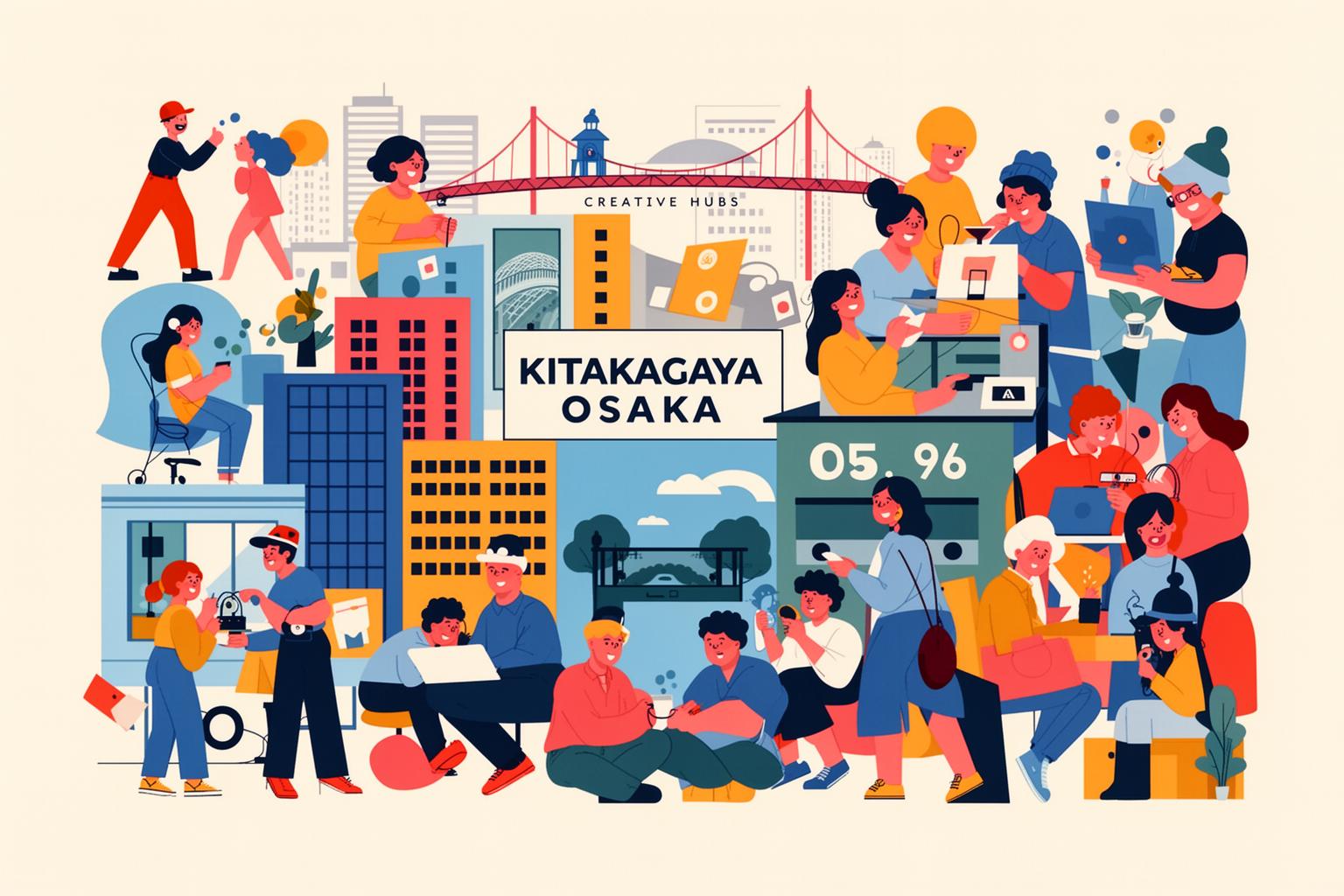
While the murals create a striking first impression, the true spirit of Kitakagaya’s creative community lies indoors, within the very warehouses the art decorates. A network of independent galleries, artist studios, and versatile creative spaces has emerged here, transforming vast industrial interiors into centers of culture and innovation. These are far from typical white-cube galleries. The spaces themselves contribute to the experience, preserving their raw, industrial essence. Imagine soaring ceilings with exposed steel beams, rough concrete floors, and giant factory windows bathing the rooms in natural light. Visiting these venues feels less like a formal art exhibition and more like entering an artist’s personal world.
Chidori-Bunka: A Phoenix Rising from the Ashes
Among the most iconic of these spaces is Chidori-Bunka. This complex consists of old, interconnected wooden apartment buildings and a former town hall, all lovingly and minimally restored. It’s a labyrinth of creaky floors, cozy rooms, and beautifully weathered wood. Inside, you’ll find a standing bar, a snug cafe, and a collection of small shops and gallery spaces that host an ever-changing lineup of exhibitions, workshops, and performances. Chidori-Bunka is much more than a gallery; it’s a community hub. It’s a place where artists and locals come together over coffee, where fresh ideas ignite through casual conversations. The atmosphere is warm, inviting, and deeply connected to a sense of history and place. It represents a different kind of revitalization—not through grand, sweeping gestures, but through the careful, loving preservation of the neighborhood’s character, breathing new life into it while honoring its past. It feels like a hidden clubhouse for the creatively curious, an ideal spot to pause on your art walk, soak in the local vibe, and view the smaller, more intimate works produced by the community.
Creative Center Osaka (CCO): The Heart of Events
On the opposite end stands the Creative Center Osaka, or CCO. Located in a massive former shipyard, this enormous space pays tribute to the area’s industrial past. The sheer scale of the main hall is awe-inspiring—a veritable cathedral of industry. The CCO has embraced this unique environment to become one of Osaka’s most vibrant venues for large-scale events. It hosts everything from international art fairs and design exhibitions to music festivals, theater productions, and bustling flea markets. Attending an event at the CCO is an unforgettable experience. The raw industrial backdrop adds a dramatic and authentic touch to any performance or exhibition. The space doesn’t conceal its history; rather, it celebrates it, using its past as a powerful stage for contemporary culture. Before visiting Kitakagaya, it’s always worth checking the CCO’s schedule. Experiencing an event here allows you to fully appreciate these repurposed spaces and feel the energy of hundreds or thousands gathering to celebrate creativity in a place once devoted to heavy industry. It stands as the boldest and proudest symbol of Kitakagaya’s successful transformation—a place where the echoes of industry now resonate with the sounds of art, music, and community.
How to Experience Kitakagaya: A Practical Guide
Exploring Kitakagaya is part of the enjoyment. Its informal, sprawling layout rewards those who are curious and patient. This isn’t a place to rush through with a checklist; it’s a place to truly immerse yourself in. Here’s how to get the most out of your visit.
Getting Your Bearings
Getting there is refreshingly easy. Take the Osaka Metro Yotsubashi Line (the blue line) to Kitakagaya Station. From there, the main cluster of art is a short walk away. Several maps are scattered around the area, often near key artworks, to help you get a general idea of the layout. However, the best approach is to embrace a spirit of exploration. Don’t hesitate to stray from the main streets. Some of the most impressive pieces are hidden in unexpected spots. The best way to explore the district is on foot. Wear your most comfortable shoes, as you’ll be doing a lot of walking. The art is spread across a wide area, and the distances between major works can be significant. Alternatively, renting a bicycle is a fantastic choice. It lets you cover more ground and experience the neighborhood’s open, industrial scale from a different perspective. The wide, flat streets are ideal for cycling, giving you the freedom to quickly move between different parts of the district.
A Day of Discovery: What to Do
Begin your day with no fixed plan. Pick up a coffee from a local café to fuel your journey. Then, simply start walking. A good place to begin is heading west from the station towards the waterfront. This area features the Super Wall and many of the largest murals. Let one artwork guide you to the next. Look up, down, and behind you—the art is everywhere. Mix your mural search with visits to indoor spaces. Drop into galleries like Kagoo or the Dot Art Space to see current exhibitions. Take a longer break at Chidori-Bunka to rest your feet and soak in the ambiance. The charm of a day in Kitakagaya is in the rhythm you find: periods of walking and outdoor discovery followed by quiet moments of reflection in a gallery or café. Be mindful of the neighborhood’s dual nature. This is not just an art theme park; it’s a living, working area. You’ll pass active factories and private homes right alongside the murals. Stick to public spaces, keep noise to a minimum, and appreciate that you are a guest in a community generously sharing its vibrant transformation with visitors. For photographers, Kitakagaya is a dream. The mix of textures—from rust and concrete to brick and brilliant paint—is endlessly captivating. The sheer scale of the murals presents a fun challenge. A wide-angle lens is essential for capturing the full extent of the larger works, while a standard or telephoto lens is great for focusing on the stunning details and textures within the art.
The Spirit of a Changing City
Kitakagaya’s story reflects a broader trend seen in post-industrial cities worldwide but carries a distinctly Osakan character. Osaka has always been a pragmatic, unpretentious city, known for its merchants and makers. The revitalization of Kitakagaya stays true to this spirit. It wasn’t a top-down, master-planned initiative; rather, it developed organically, from the grassroots level, fueled by the vision of artists, the support of local landowners, and the independent spirit of small business owners. There is a strong sense of community ownership here. The art is not viewed as an external imposition but as a new layer of the neighborhood’s identity, replacing the old trades. This grassroots approach is what gives Kitakagaya its raw energy and authenticity. It remains a work in progress, which is part of its appeal. It hasn’t been sanitized or overly commercialized—you can still feel the grit under your fingernails. However, as its reputation grows, the area will inevitably continue to evolve. The challenge for Kitakagaya will be balancing this growth: welcoming new visitors and investment while preserving the raw, creative freedom that defines it. It’s a delicate balance, but one the community seems uniquely prepared to manage. For now, it exists in a vibrant, dynamic state of flux—a place that honors its hardworking past while boldly forging its own creative future.
As you finally make your way back to the station at day’s end, your feet tired and your camera full, take a moment to glance back. The setting sun might catch the edge of a massive mural, causing its colors to blaze against the darkening industrial skyline. In that moment, you’ll understand: Kitakagaya isn’t just a series of paintings on walls. It’s a powerful, living narrative of resilience, imagination, and a community’s remarkable ability to reinvent itself. It reminds us that even in the shadows of forgotten factories, something new, beautiful, and vital can emerge. It is, simply put, the beating artistic heart of modern Osaka, waiting for you to come and discover its story.