There’s a certain frequency that Osaka hums at, a vibrant, electric pulse that thrums through the soles of your shoes as you navigate its kaleidoscopic streets. It’s a city of glorious, unapologetic excess, where sizzling takoyaki stalls and towering neon Glico men jostle for your attention. But just a whisper away from the brilliant chaos of Umeda’s commercial heart lies another world entirely. A world that trades broad daylight for the seductive glow of hidden lanterns, and the roar of the crowd for the hushed clink of ice against crystal. This is Kitashinchi, Osaka’s sophisticated, enigmatic soul. By day, it’s a district of sleek office buildings and power lunches. But when the sun dips below the horizon, the district performs a magical costume change, transforming into a labyrinth of exclusive restaurants and some of Japan’s most breathtakingly intimate bars. Forget what you think you know about a night out. This isn’t about sprawling beer halls or noisy pubs. A night in Kitashinchi is a ticket to an immersive performance, a curated experience where the drink in your hand is the star of the show. It’s an invitation to get lost, to follow a dimly lit staircase into the unknown, and to discover that the best secrets are the ones you have to work a little to uncover. For the traveler seeking a taste of true Japanese craftsmanship and a story to tell, Kitashinchi’s hidden bars are not just a destination; they are the destination.
While Kitashinchi offers a world of exclusive nightlife, for a more lively and accessible taste of Osaka’s after-dark soul, consider exploring a Muslim-friendly izakaya in the vibrant Tenma district.
The Pulse of the Phantom District
To truly understand Kitashinchi, you must first experience it. Step out of JR Kitashinchi station or take a short walk south from the vast Umeda hub, and the shift is instant. The atmosphere itself seems to radiate a unique kind of energy. The broad, lively streets give way to a tighter network of narrow alleys, each holding its own story. The city’s sounds transition from the rumble of trains to the soft, rhythmic click of expensive heels on polished stone and the gentle purr of a black sedan gliding silently to a stop. A complex fragrance lingers in the air—the sophisticated aroma of high-end French cuisine, the clean, vinegary scent of a master sushi counter, and a faint, sweet trace of costly cologne. This district engages all your senses before you’ve even ordered a drink. It’s not the loud, boisterous energy of Dotonbori; rather, it exudes the quiet confidence of old money and refined taste. It feels like stepping onto a film set, where you’re an extra who has stumbled into the private world of the main characters. The people here move with intent. Kimono-clad hostesses, their posture flawless, navigate the lanes with graceful urgency, offering a vibrant touch of tradition against the modern city backdrop. Businessmen in sharply tailored suits converse in low, important tones, their faces briefly lit by the glow of a discreet sign. There’s an undercurrent of formality, but it’s never stuffy. It’s a respectful atmosphere—a feeling that you’re in a place where things are done properly, with careful attention to detail and a genuine appreciation for craftsmanship. As a mother more familiar with the lively chaos of playgrounds and spilled juice, Kitashinchi’s serene, grown-up elegance is both a refreshing escape and a captivating cultural experience. It serves as a reminder that beauty resides not only in grand gestures but also in quiet, impeccably executed moments.
Decoding the Doorways: The Art of the Hunt
Finding a truly exceptional bar in Kitashinchi rarely involves spotting a large, bright sign. In fact, it’s often quite the opposite. The district thrives on a principle of quiet discovery, where the best establishments reward those who are curious and observant. This is the essence of the speakeasy experience—a tradition born of necessity on another continent and era, but refined here into an art form of exclusivity and intrigue. Your guide is the architecture itself. You must learn to interpret subtle hints: a single, artfully brushed kanji character on a small wooden plaque, a discreetly glowing lantern beside an otherwise plain door, or an immaculately polished brass handle on a door without a name. Many prized spots are concealed below street level. Look down, and you might notice a narrow staircase descending to a hidden basement haven. Look up, and a thin beam of warm light from a seventh-floor window of a nondescript office building might be your sole invitation. There is an exciting thrill in this search. Each possible entrance feels like a gateway. Will it lead to a quiet whisky library? A futuristic mixology lab? A time capsule from a past era? The uncertainty adds to the enchantment. You are not merely a passive visitor; you become an active participant in your own journey. For first-timers, my advice is to embrace the feeling of being a little lost. Wander without a strict plan. Let your intuition lead the way. Choose a lane that piques your interest and just walk. Don’t be put off by the absence of English signage. A smile and a polite gesture work wonders. The experience of pushing open a heavy, unmarked door and stepping into a beautifully crafted, intimate world is a reward no guidebook can truly convey. It’s a moment of pure, unfiltered travel magic, a story uniquely yours to tell.
Inside the Sanctum: A Guide to Kitashinchi’s Archetypes
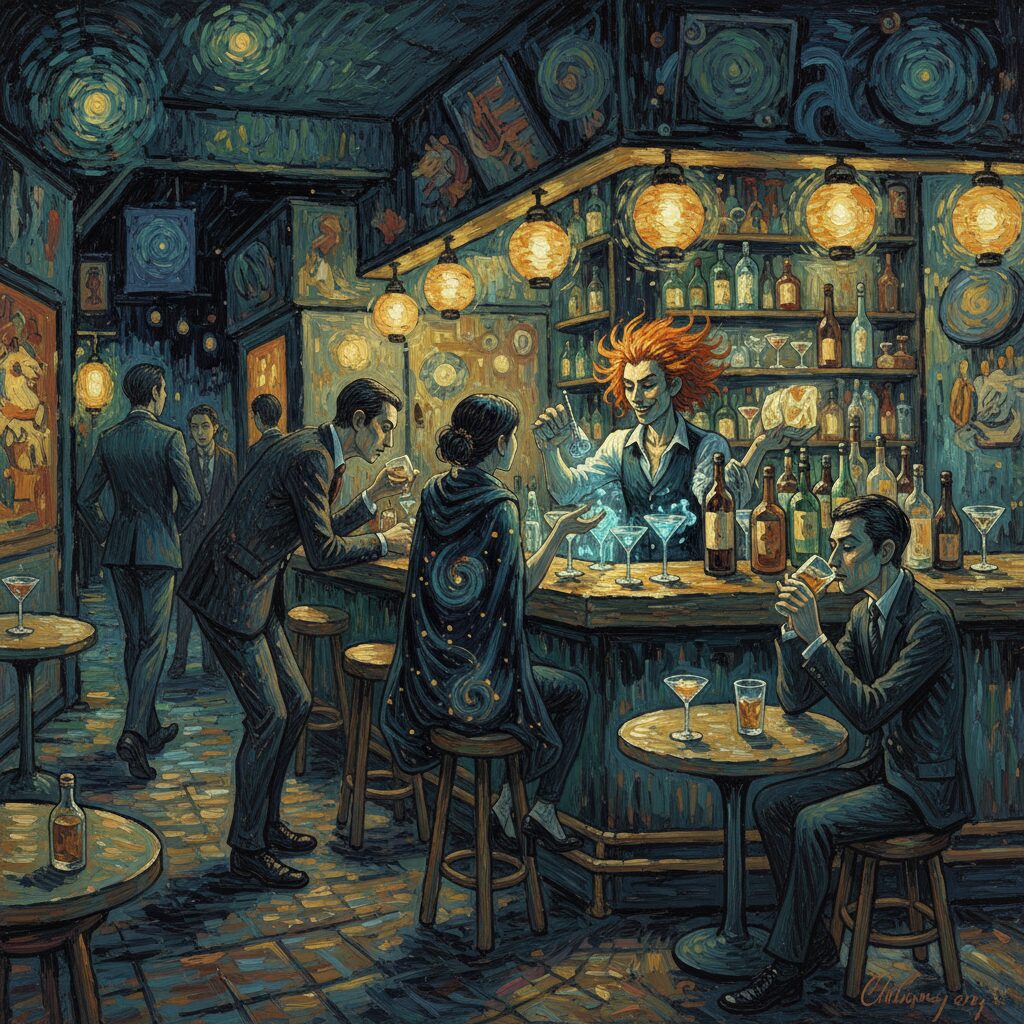
While every bar in Kitashinchi is distinct, many of the finest venues can be viewed as elegant interpretations of a few core themes. They serve as sanctuaries of flavor, each embodying its own unique philosophy and ambiance. Entering one is like accepting a bartender’s invitation into their personal realm. Here are several quintessential experiences you might encounter during your nighttime explorations, each a world waiting to be unveiled behind those mysterious doors.
The Whisky Library: A Cathedral of Spirits
Picture stepping out from the crisp Osaka night into a space filled with profound, reverent silence. The air is still, carrying faint scents of aged wood, leather, and the sweet, malty angel’s share. Before you, floor-to-ceiling shelves recede into shadows, lined not with books, but with hundreds of whisky bottles. This is the Whisky Library, a haven for spirit connoisseurs. The bottles are arranged with the precision of a master librarian—categorized by region, age, and distillery. The golden ambers of Speyside malts glow beside the deep, peaty hues of Islay smoke bombs, while rows of esteemed Japanese whiskies—Yamazaki, Hakushu, Hibiki, and rarer, silent stills—stand like revered ancestors. The bartender here is more than a server; they are a guardian of liquid history. Clad in a crisp white shirt and black waistcoat, their movements reflect years, perhaps decades, of devotion. Their hands are their most vital tools. Flashy shaking and theatrical pours are absent here. Instead, you’ll witness the meditative craft of carving an ice sphere by hand. Beginning with a large, crystal-clear ice block, they skillfully chip away with a sharp pick, then shave and rotate the ice repeatedly with a thin blade until a flawless, seamless globe forms in their palm. This isn’t mere showmanship; the dense, clear ice melts slowly, cooling the whisky without watering down its complex character. Ordering becomes a dialogue—you don’t simply request a whisky, but describe your taste: “Something smoky but smooth,” or “a Japanese whisky with floral notes.” The bartender listens carefully, posing follow-up questions if needed, and then selects a bottle, presenting it as a sommelier would fine wine. The whisky is poured with reverence into a delicate, thin-rimmed glass, designed to capture and release its aromas. The first sip is a revelation, inviting you to slow down, savor, and honor the immense craft and time invested in that spirit. It is a quiet, contemplative moment, far removed from the city’s frantic pace.
The Alchemist’s Laboratory: A Taste of the Future
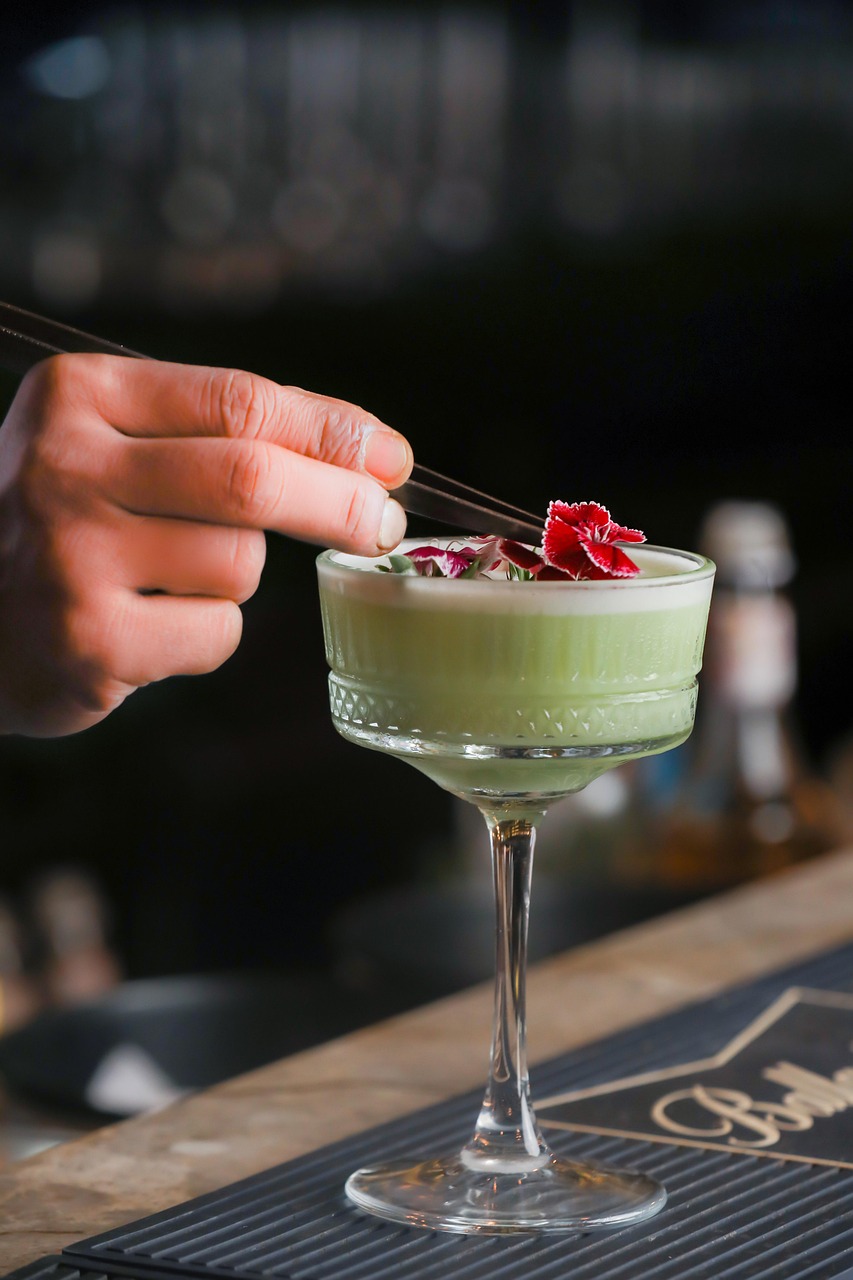
Push open another door, perhaps one crafted from brushed steel featuring a biometric-style scanner, and you step into a wholly different realm. The Alchemist’s Laboratory stands in stark contrast to the Whisky Library’s tradition. Sleek, minimalist, and dramatically lit, it might boast a polished concrete bar, glowing LED shelves, and a backbar resembling a scientist’s workshop rather than a liquor collection. Beakers, rotary evaporators, sous-vide machines, and smoke guns are on display. Here, the bartender is an innovator and culinary artist, viewing cocktails not merely as drinks but as multi-sensory experiences. The menu reads like a cryptic poem, featuring ingredients seldom seen in cocktails: fat-washed wagyu beef gin, clarified tomato water, infusions of shiso and sansho pepper, and foams made from local citrus. Crafting a single cocktail is theatrical. Order the “Kyoto Fog,” for instance. The alchemist places a rosemary sprig on a small chunk of cherry wood, then chars the wood with a culinary torch until it smolders, capturing fragrant smoke beneath an inverted brandy snifter. While the glass fills with haze, they move to a shaker to blend premium Japanese gin with house-made syrup infused with Uji green tea, a hint of yuzu liqueur, and a dash of elderflower. The shake is both precise and vigorous. The chilled liquid is strained into the smoke-filled glass, which is then presented to you. Lifting the snifter releases a fragrant cloud of rosemary and cherry wood, mingling with the drink’s citrus and botanical notes. The first sip is a complex flavor journey: smoke on the nose, crisp gin, earthy tea, bright citrus, and a lingering floral finish. These are not mere drinks but concepts crafted to challenge your palate and reinvent the cocktail experience. It’s an exhilarating, intellectual, and utterly delicious adventure for the daring drinker.
The Showa-Era Time Capsule: Jazz, Nostalgia, and Classic Cocktails
Some doors in Kitashinchi lead not forward, but deep into the past. Behind a sliding wooden door with frosted glass panels, you might discover a bar seemingly preserved from Japan’s Showa Era (1926–1989). This is the Time Capsule bar. From the moment you enter, the 21st century fades away. Low, warm light from vintage lamps with fringed shades illuminates the space. The air is thick with comforting scents of aged leather and polished wood. Soft crackling vinyl jazz—Miles Davis, Bill Evans, Chet Baker—plays from a vintage sound system tucked in a corner. The bar itself is a masterpiece of polished mahogany, worn smooth by countless elbows over decades. Plush, deep-red leather banquettes invite you to settle in and linger. The bartender is often an older gentleman, the owner, who has likely tended this very bar for thirty or forty years. He embodies quiet dignity, his movements deliberate and unhurried. Trendy ingredients are absent here. The backbar holds a carefully curated selection of classic spirits: London dry gin, VSOP cognac, bourbon, and vermouth. The menu, if present, is succinct: Martini, Gimlet, Manhattan, Sidecar. Ordering a classic here means tasting it in its purest, most perfected form. The Martini is stirred, never shaken, chilled to an impossibly cold temperature, the gin bruised just enough, served with a single perfect olive or a delicate twist of lemon peel. The Sidecar balances sharp citrus, smooth cognac, and sweet orange liqueur with flawless harmony. These bartenders are masters of proportion and temperature, fundamental to their craft. Conversation is hushed and intimate, a setting for quiet reflection, a heartfelt talk with a close friend, or simply losing yourself in the timeless cool of the music. It’s a deeply soulful experience, a reminder that while trends fade, true style and quality endure eternally.
The Unspoken Rules: Navigating Kitashinchi’s Bar Etiquette
To fully appreciate the distinctive atmosphere of Kitashinchi, it helps to understand some of the cultural nuances and unspoken rules that shape these intimate venues. This isn’t about strict regulations, but rather a mutual understanding that maintains the sophisticated and respectful environment that makes these bars unique. First and foremost is the concept of a cover charge, or otoshi. In many upscale Japanese bars, you’ll be charged a seating fee, usually ranging from ¥1,000 to ¥3,000 per person. This is not a scam or a tourist trap; it’s standard practice. In exchange for this fee, you’ll often receive a small, exquisite snack—perhaps some premium nuts, a piece of artisanal chocolate, or a seasonal delicacy. Think of it as your admission to the experience, recognizing the bartender’s skill and the exclusivity of limited seating. Rather than question it, simply accept it as part of the visit. Dress code is another subtle but important consideration. While there may not be explicit signs, Kitashinchi is not the place for shorts, sandals, or worn-out t-shirts. The local patrons dress impeccably. To feel comfortable and show respect for the establishment, smart casual attire is the minimum. For men, a collared shirt, and for women, a nice blouse or dress, are safe and suitable choices. It’s about matching the elegance of the setting. The atmosphere inside these bars tends to be one of quiet reverence. They are intended for soft conversation, not loud groups. Keep your voice low and be considerate of others who come to enjoy the serene environment. Putting your phone on silent is essential, and taking photos, especially with flash, is often discouraged. If you’d like to capture a memory of your beautiful cocktail, it’s polite to ask the bartender first. Communication can sometimes be challenging, but it’s seldom impossible. Many bartenders in these high-end places have some English skills, especially with drink names, but learning a few basic Japanese phrases is always appreciated. “Sumimasen” (excuse me) to get their attention, and “arigato gozaimasu” (thank you very much) are key. If there’s a language barrier, remember that politeness transcends language. You can point to a bottle that interests you or use a translation app to explain the flavor you want. The important thing is to be patient, respectful, and open. The bartenders are professionals who take great pride in their craft and want you to have a memorable experience.
Setting the Stage: A Culinary Prelude
An evening in Kitashinchi is best experienced as a complete symphony, with the overture nearly always being a spectacular meal. The district is renowned for its world-class dining just as much as for its bars, and combining the two results in an unforgettable experience. Starting your night with an exquisite dinner not only satisfies your hunger but also prepares your palate and mindset for the refined artistry you’ll encounter in the cocktail bars. Kitashinchi’s culinary scene is a dazzling blend of Japanese and international cuisine, often nestled within the very buildings that house the bars. You might opt for a high-end sushi-ya, where you can sit at a hinoki cypress counter and watch a master chef craft each piece of nigiri with surgical precision. The clean, delicate flavors of the fish and perfectly seasoned rice serve as an ideal prelude to the complexities of a fine Japanese whisky. Alternatively, you could enjoy a kappo experience, a more casual take on the elaborate kaiseki multi-course meal. Here, you sit at a counter and watch the chefs work their magic—grilling, steaming, and plating a series of seasonal dishes right before your eyes. This interactive and engaging style of dining builds a wonderful sense of anticipation for the rest of the evening. For those seeking something different, Kitashinchi also offers exceptional tempura restaurants, where each piece is fried to a weightless, crispy perfection, and exclusive wagyu beef establishments that will transform your understanding of steak. Reservations at many of these top-tier venues are essential, so advanced planning is advisable. By beginning your night with a meal that embraces the same principles of quality, craftsmanship, and seasonality as the district’s finest bars, you create a seamless narrative of taste. The transition from the dining counter to the bar stool feels like a natural step—two acts in the same magnificent play.
An Explorer’s Field Guide: Practical Notes
Exploring the enchanting maze of Kitashinchi for the first time is an exciting experience. A bit of practical knowledge will help ensure your visit goes smoothly and is enjoyable. The area is most easily reached from several major train stations. The JR Tozai Line’s Kitashinchi Station places you right in the center of the action. Alternatively, it’s a manageable 5-10 minute walk south from JR Osaka Station and the nearby Umeda stations (Hankyu, Hanshin, and the Midosuji subway line). Yodoyabashi Station on the Midosuji and Keihan lines is also a short walk away, just across the Dojima River. Regarding timing, Kitashinchi truly comes alive late. Arriving before 8 PM, you may find the streets surprisingly quiet. The real energy begins around 9 PM and continues well past midnight, as dinner services wind down and visitors seek a refined nightcap. Many bars remain open until 2 or 3 AM, catering to a late-night crowd. On the financial side, be prepared for a premium experience. Cocktails at these upscale venues generally start around ¥1,800 and can rise significantly depending on the rarity of the spirits. With the cover charge included, a night out for two with a couple of drinks each can easily reach ¥10,000 or more. While most establishments now accept credit cards, some smaller, older, owner-run bars may still be cash-only. It’s wise to carry enough yen just in case. Lastly, a word on discovery. While some bars have an online presence or appear in upscale magazines, many of the most genuine spots do not. They thrive on word-of-mouth and a sense of secrecy. Don’t be discouraged if your online searches come up short. The real charm of Kitashinchi lies not in following a fixed itinerary, but in the joy of wandering. Trust your instincts, stay curious, and prepare to be pleasantly surprised by what you find.
The Lingering Taste of Discovery
As the night winds down and you step out from the warm, intimate cocoon of a hidden bar into the cool Osaka air, the city feels transformed. The neon lights appear a little softer, and the city’s hum seems more distant. A night spent in Kitashinchi’s bars offers more than just exceptional drinks; it is a deep immersion in a culture of dedication, precision, and subtle elegance. It means witnessing a master at work, whether carving a perfect ice sphere or balancing the delicate flavors of a new creation. It is about the thrill of the hunt and the profound satisfaction of discovery. In a world that often values speed and convenience, Kitashinchi stands as a beautiful tribute to the art of slowing down, savoring the moment, and appreciating the quiet magic hidden behind an unmarked door. This experience lingers long after the final drop is savored—a secret whispered from the heart of Osaka for you to carry with you.