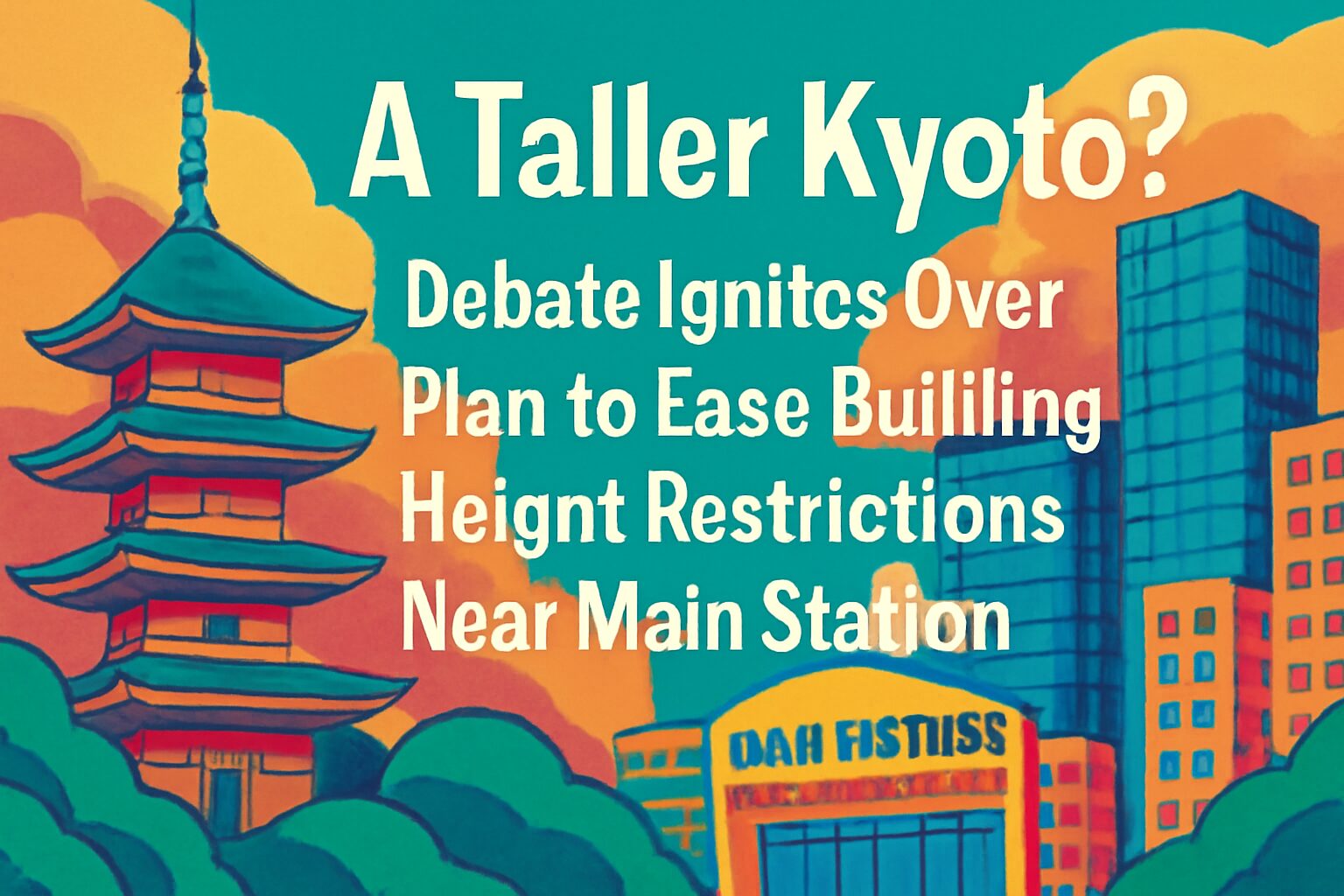
Kyoto, Japan’s ancient capital celebrated for its timeless temples and traditional townhouses, is facing a pivotal decision that could reshape its modern gateway. An expert advisory panel has submitted a bold proposal to the city government to nearly double the building height limit around Kyoto Station, from the current 31 meters (approx. 102 feet) to a maximum of 60 meters (approx. 197 feet). The plan, aimed at revitalizing the area and boosting the city’s economy, has ignited a fierce debate, pitting urban development against landscape preservation in the World Heritage city.
The Push for a Modern Gateway
The proposal is not a sudden whim but a response to pressing challenges Kyoto has been facing for years. Despite its strong brand as a tourist destination, the city is struggling with a significant outflow of its younger, working-age population. In 2021, Kyoto recorded the highest net population loss of any city in Japan. A primary reason cited is a critical shortage of modern office space, which stifles business growth and discourages companies from setting up or expanding their operations.
Kyoto’s office vacancy rate is one of the lowest in Japan’s major cities, creating a barrier for new industries and talent. The area south of Kyoto Station, in particular, has been identified as a strategic zone with high potential for redevelopment. Proponents of the deregulation argue that raising the height limit is essential to attract investment, create high-value jobs, and build a more dynamic economic hub that can retain its population and compete on a national and international level.
Details of the Proposal
The advisory panel’s report, finalized on March 25, recommends a selective easing of a long-standing city-wide policy.
- Current Restriction: For decades, a 31-meter height limit has been a cornerstone of Kyoto’s landscape policy, designed to protect views of the surrounding mountains and preserve the city’s low-rise character.
- Proposed Change: The new plan would allow for buildings up to 60 meters in designated areas, primarily south of Kyoto Station. This height is strategically significant, as it would surpass the iconic To-ji Temple’s five-story pagoda (approx. 55 meters), Japan’s tallest wooden pagoda and a symbol of the city.
- Objective: The goal is to facilitate the construction of large-scale office buildings, international hotels, and commercial facilities, transforming the station area into a modern “gateway” that welcomes visitors and businesses without altering the fabric of the city’s core historical districts.
A Clash of Visions: Preservation vs. Progress
The proposal has been met with staunch opposition from civic groups and the Kyoto Bar Association. Opponents voice deep concerns that taller buildings, even if confined to the station area, will irrevocably damage the city’s unique scenery.
The primary fear is the impact on “sightlines”—the protected views of historical landmarks from various points in the city. There is a worry that a 60-meter building could obstruct the view of the Higashiyama mountain range or loom over nearby World Heritage sites like To-ji Temple, fundamentally changing the delicate balance between the urban and natural landscape that defines Kyoto. Critics argue that once a precedent is set, it could lead to further deregulation and the gradual erosion of the city’s priceless aesthetic heritage.
What This Means for Travelers and the Future of Kyoto
The city administration will now carefully review the panel’s report before making a final decision, a process that will likely involve public hearings and further debate. The outcome will have significant implications for both residents and visitors.
If the plan is approved, travelers arriving at Kyoto Station in the coming decade might be greeted by a more modern, bustling skyline. This could bring new, high-end hotels, more shopping and dining options, and improved MICE (Meetings, Incentives, Conferences, and Exhibitions) facilities, enhancing convenience.
However, it also risks altering the “first impression” of Kyoto. For many, the current view from the station, with its relatively open sky and distant view of temples and mountains, is an integral part of the experience.
Ultimately, Kyoto is at a crossroads, forced to navigate the complex challenge of evolving as a living city while safeguarding its invaluable cultural and historical identity. This decision is more than just about building heights; it’s about defining the vision for Kyoto’s next century—a delicate balancing act for an ancient capital in a modern world.