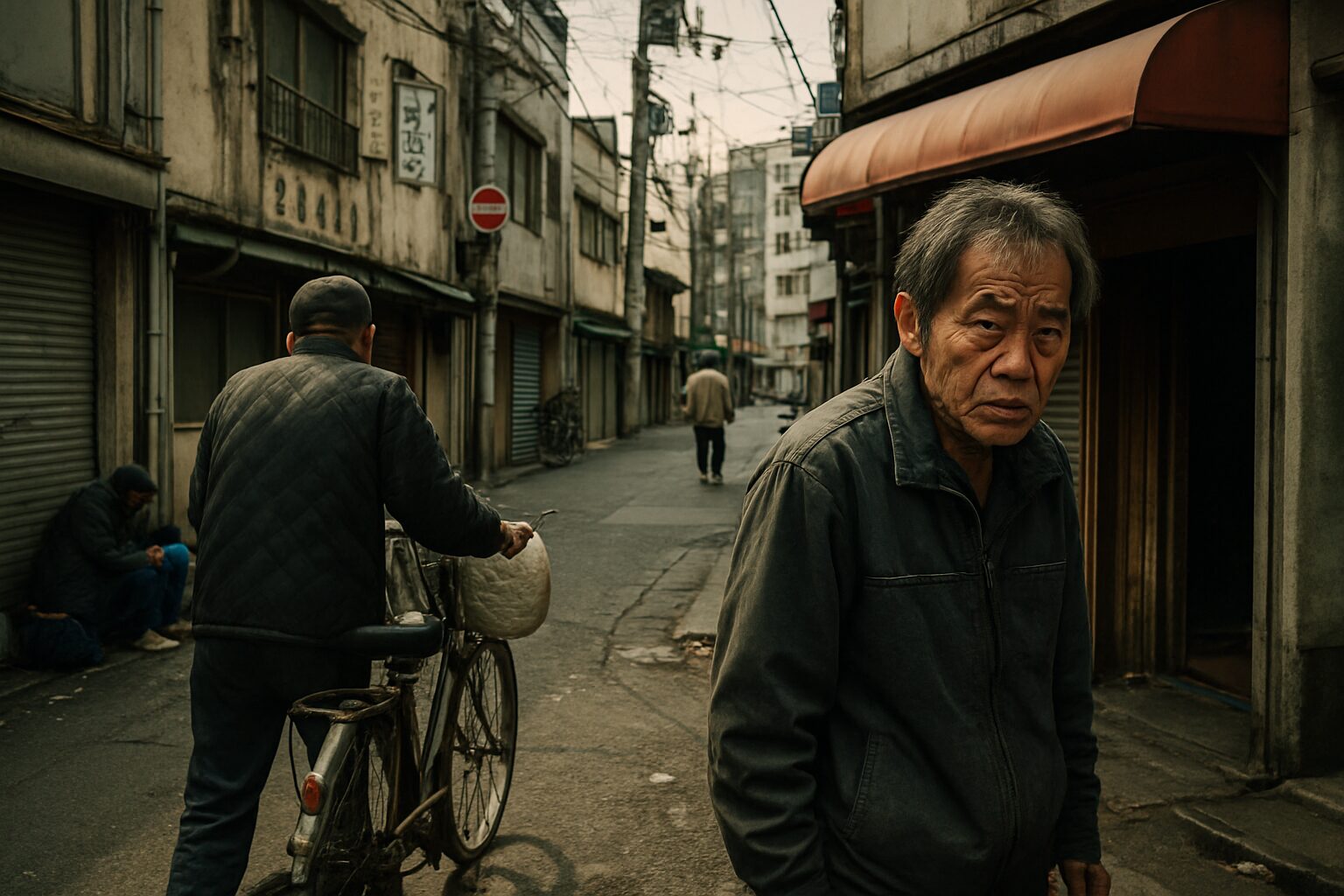
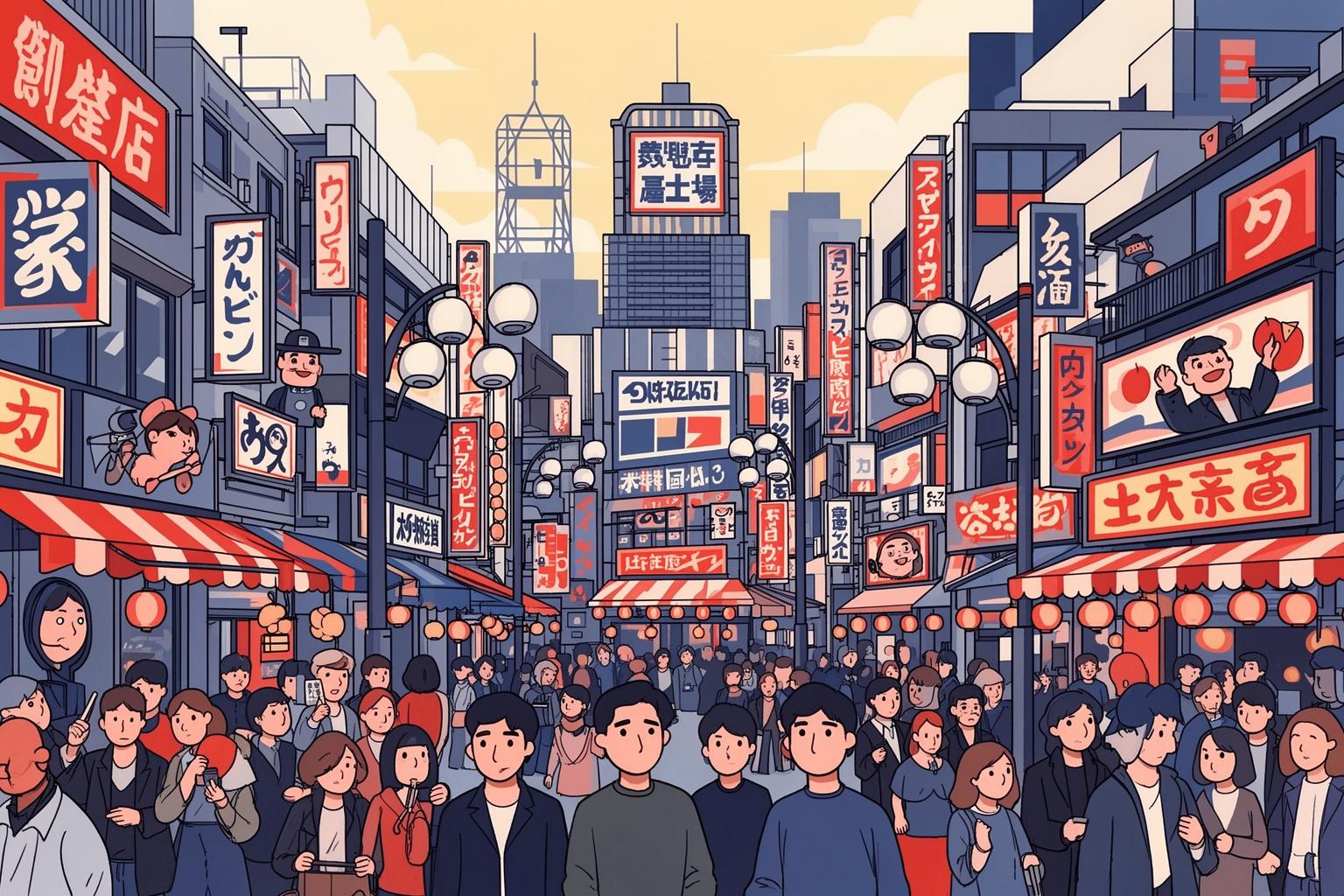
When you picture Osaka, what dances in your mind? Is it the electric river of neon signs reflecting off the Dotonbori canal, a whirlwind of steam rising from takoyaki stalls, the impossibly polite crush of commuters at Umeda Station? That’s the Osaka of postcards, the city of “kuidaore”—to eat oneself into ruin. It’s a vibrant, intoxicating truth, but it’s not the whole story. Just a few stops south on the JR Loop Line, a world away from the gleaming facade of Grand Front Osaka, lies a place with a different pulse, a grittier rhythm, a story etched into the very asphalt of its streets. This is Nishinari Ward, Osaka’s most misunderstood neighborhood, a place that holds a mirror up to the city’s past and present, reflecting truths that are often left in the shadows. For those of us living in this sprawling metropolis, understanding Nishinari is to understand the soul of Osaka in its entirety—not just its highlights, but its heart.
Nishinari is not a tourist attraction in the conventional sense. It doesn’t offer curated experiences or polished photo opportunities. Instead, it offers something far more potent: reality. It is the historical home of Japan’s day laborers, a sanctuary for those living on the margins, and more recently, a magnet for intrepid backpackers seeking the country’s cheapest lodgings. It’s a complex tapestry woven with threads of hardship, resilience, community, and a Showa-era nostalgia that feels startlingly authentic because it isn’t an act. To walk its streets is to peel back the layers of modern Japan’s economic miracle and see the gears, the grit, and the people who built it, many of whom have since been left behind. This article isn’t a simple guide; it’s an invitation to listen to the ward’s quiet roar, to see beyond the headlines and stereotypes, and to find the profound humanity that thrives in the unlikeliest of corners. It’s a journey into the heartland of a different Osaka, one that’s waiting just beyond the glow of the neon.
To truly understand the city’s rhythm, it’s essential to learn about Osaka’s unspoken cycling rules, which are as much a part of daily life here as the bustling streets of Nishinari.
The Echoes of Kamagasaki: Understanding Nishinari’s Core
To truly understand the essence of Nishinari, you must recognize its other name—the one that doesn’t appear on most modern maps but still resonates in local conversations: Kamagasaki. Officially called Airin-chiku today, this district stands as the historical and spiritual heart of the ward. Its history is deeply tied to Japan’s post-war reconstruction and its subsequent economic surge. As cities like Osaka rose from devastation, they needed strong, willing hands, ready to work daily. Kamagasaki became the central hub, the largest yoseba (day-laborer market) in the country. Men from across Japan, whether chasing dreams or fleeing their pasts, gathered here before dawn, hoping to be chosen for a day of grueling labor on construction sites, in factories, or at busy ports. This area powered the economic miracle, supplying the human energy that built the skyscrapers and highways defining modern urban Japan.
The neighborhood’s entire ecosystem revolved around this transient workforce. Rows of simple, affordably priced lodgings called ‘doya’ appeared, providing no-frills shelter for a few hundred yen a night. Small eateries served inexpensive, high-calorie meals to fuel the workers. Vending machines, more common here than nearly anywhere else, dispensed cheap canned coffee and sugary drinks for a quick boost. The Airin Labor and Welfare Center became a focal point—a place posting job opportunities and offering social services. This was a community of function, grit, and raw necessity, designed not for comfort, but for survival and work.
Then, economic tides shifted. The collapse of Japan’s asset bubble in the early 1990s dealt a severe blow from which Kamagasaki never fully rebounded. Construction projects ceased, demand for manual labor sharply declined, and the once robust workforce began to age. The men who had built new Japan found themselves unemployed, without savings, family support, or anywhere else to turn. Nishinari became a place many ended up not by choice, but by circumstance. The population aged, and problems like poverty, illness, and homelessness became increasingly visible. The doya that once housed active laborers turned into de facto welfare housing for elderly men. This history forms the foundation of Nishinari’s reputation—a reputation not rooted in inherent danger but in economic hardship and social neglect. Understanding this foundation is essential; it shifts judgment to empathy and enables you to see the residents not as mere statistics, but as individuals with complex backgrounds—men who carry the story of modern Japan in their weathered faces and calloused hands.
The Texture of Daily Life: A Walk Through the Ward
Stepping out of Shin-Imamiya Station brings an immediate shift in the senses. The air feels different, heavier with the stories woven into the streets. The visual landscape is a mosaic of eras. Dilapidated Showa-era buildings with faded signs stand alongside newly renovated budget hostels catering to international backpackers. The pace here is slower, less hectic than the commercial centers of Namba or Umeda. Life unfolds openly on the sidewalks. Elderly men sit on overturned crates, absorbed in a game of shogi, their silence broken only by the sharp click of wooden pieces. Community cats, well-fed and unbothered, wind between pedestrians with a sense of ownership. This neighborhood is lived-in, worn, and utterly without pretense.
As you explore further, you will inevitably come across the shotengai, the covered shopping arcades that serve as the lifeblood of many Japanese communities. Nishinari’s shotengai are an experience unto themselves. The Haginochaya Shotengai and others like it are a treasure trove for bargain hunters and a feast for the observant eye. Here, the idea of the ‘100 yen shop’ reaches an entirely new level. You can find everything from second-hand clothes and household goods to fresh produce and prepared meals at prices that seem almost impossible. The air is thick with the aroma of simmering dashi broth from a small udon shop, the sweet scent of batter from a takoyaki stand, and the clinking clang of pachinko balls from a nearby parlor. The vendors’ calls are not polished sales pitches but raw, rhythmic chants announcing the day’s deals. This is commerce at its most basic and vibrant—a living ecosystem of survival and community.
Then there is Tobita Shinchi. It’s impossible to talk about Nishinari without mentioning this area. As one of Japan’s last remaining and largest active red-light districts, it exists in a kind of legal and temporal gray zone. The architecture is beautifully preserved from the Taisho era (1912-1926), with elegant wooden facades, ornate carvings, and lanterns casting a soft, ethereal glow after dark. The atmosphere is surreal, a silent, almost theatrical world governed by its own strict rules. The most important rule for visitors is an absolute ban on photography. This is a place of business but also a sanctuary where privacy is paramount. To visit is to observe quietly a piece of Japanese history that is both beautiful and deeply complex. It demands respect and discretion, acknowledging that you are a guest in a world with its own unspoken codes.
Beyond these distinct areas, the true character of life reveals itself in the smaller details. It’s found in vending machines that sell not just drinks but also cheap cups of sake and beer, available around the clock. It’s in the ‘Super Tamade,’ the local supermarket chain famous for its garish neon signs and shockingly low prices, where a bento box can cost as little as a few dollars. And most of all, it’s in the food. Nishinari is the heart of Osaka’s B-kyu gurume (B-grade gourmet) soul cuisine. This is home to some of the city’s best and cheapest kushi-katsu (deep-fried skewers) and horumon-yaki (grilled offal). These dishes are not delicate or refined; they are hearty, flavorful, and crafted to satisfy. Eating at a small, standing-only horumon stall, shoulder-to-shoulder with locals, offers a taste of the genuine, unfiltered flavor of working-class Osaka. It is a delicious and humbling experience.
A New Chapter? Gentrification and the Changing Face of Nishinari
For decades, Nishinari remained in a kind of stasis—a pocket of Showa-era Japan seemingly untouched by the relentless advance of modernity seen elsewhere in the city. However, in recent years, winds of change have started to blow, bringing both promise and risk. The most obvious catalyst for this shift is tourism. Attracted by the area’s unbeatable location—a stone’s throw from major transport hubs like Tennoji and Namba—and its remarkably low accommodation prices, a new wave of international backpackers and budget travelers has discovered Nishinari. Old doya, once exclusively inhabited by laborers, are being refurbished and rebranded into stylish guesthouses and contemporary hostels. Trendy coffee shops and art spaces are beginning to emerge, tucked away in quiet side streets. This influx has breathed new life and money into the local economy, and for the first time in a long while, the world is starting to view Nishinari in a new light.
This transformation, often described as gentrification, is a double-edged sword. On one side, it infuses fresh energy and helps break down the long-standing stigma attached to the area. New businesses create jobs, and increased foot traffic can make the streets feel safer and more vibrant. The presence of young travelers from across the globe introduces a fascinating cultural contrast against the aging local community. It’s common and oddly harmonious to see groups of European backpackers sharing a laugh outside a shop where an elderly man is buying his daily sake.
On the flip side, this wave of development raises legitimate concerns. As property values climb, there is a real threat of displacing the very community that has called Nishinari home for generations. The cheap rents and low cost of living, which have served as a vital safety net for the poor and elderly, are at risk. The pressing question remains: can Nishinari embrace this new identity without erasing its old one? Can a trendy art gallery coexist with a 500-yen-a-night flophouse? The tension is tangible. The gleaming silhouette of Abeno Harukas, Japan’s tallest skyscraper, towers over the ward from neighboring Tennoji, serving as a constant reminder of the hyper-modern, consumer-driven Osaka just beyond the tracks. It stands as a powerful symbol of the forces pressing on this unique community. For now, a delicate balance persists. The future of Nishinari will depend on how this tension is managed—whether it becomes a model for inclusive urban renewal or another victim of unchecked development.
Navigating with Respect: Practical Tips for Visitors
Approaching Nishinari requires a shift in perspective—from tourist to mindful observer. The first step is getting there, which is surprisingly simple. The ward centers around Shin-Imamiya Station, served by the JR Loop Line and Nankai Line (offering direct access to Kansai Airport), and Dobutsuen-mae Station, located on the vital Midosuji and Sakaisuji subway lines. This excellent connectivity is one of the main reasons for its recent rise as a budget lodging hub. From these stations, the entire ward is easily explored on foot.
Nishinari’s atmosphere changes dramatically throughout the day. Early morning, before sunrise, is when you sense echoes of its past—when the remaining day laborers gather in a quiet, somber ritual. Midday brings bustling shotengai, alive with shopping and social activity. Evenings are mixed; the areas around the train stations and Shinsekai buzz with energy, while the deeper residential streets grow very quiet. For first-time visitors, exploring during daylight hours is the best way to grasp the neighborhood’s layout and rhythm.
Safety is a topic that often dominates conversations about Nishinari. The ward’s crime statistics are higher than more affluent parts of Osaka, but context matters. Much of this relates to petty theft and conflicts within the resident community. For casual visitors, the area is generally safe, especially during the day. The greatest ‘danger’ is not physical harm, but the emotional discomfort of encountering visible poverty, which can be unsettling for those unaccustomed to it. The key is to exercise the usual common sense you would in any major city: remain aware of your surroundings, avoid flaunting expensive cameras or jewelry, and stick to well-lit areas after dark if uncertain. Most residents are simply going about their daily lives and will not pay you much attention.
The most important advice, however, concerns etiquette. Nishinari is not a human zoo, and its residents are not exhibits. The cardinal rule is never to photograph people without their clear and enthusiastic consent. Pointing a camera at someone’s face is deeply disrespectful here. These individuals have endured immense hardship and deserve their privacy and dignity. Be discreet, humble, and move through the neighborhood with quiet respect. The best way to engage is by supporting the local economy—buy a drink from a vending machine, enjoy a meal at a local 食堂 (shokudō—small eatery), or purchase something from a shop in the arcade. Your small contribution helps sustain the community you are there to observe, transforming you from a passive onlooker into a respectful participant.
Beyond the Stereotypes: Finding the Soul of the City
A journey through Nishinari is, at its core, a journey into the essence of what drives a city. It removes the veneer and exposes the workings, the history, and the human spirit that sustain urban life. In a nation often seen as uniform and impeccably modern, Nishinari stands as a testament to Japan’s diversity and intricate social fabric. It serves as a living museum of the Showa era—a period marked by grit, struggle, and collective effort. The architecture, the small businesses, and the very way people connect all seem like a gateway to a fading era, one rapidly disappearing from much of the country amid waves of redevelopment.
Experiencing Nishinari offers a deeper understanding of Japan’s social contract. It exposes the fragilities within a system that has frequently prioritized economic growth over individual well-being. Yet it also reveals remarkable, persistent resilience. The sense of community here is tangible, born not out of wealth but shared hardship. Neighbors watch out for one another. NPOs and religious groups offer essential support networks. There is an unfiltered, raw honesty to the area that can be profoundly moving. It’s a powerful reminder that a community’s true wealth cannot be measured simply in yen.
One of Nishinari’s most striking features is its setting within Osaka’s broader geography. It borders Shinsekai, the quirky, retro-futuristic entertainment district dominated by the iconic Tsutenkaku Tower. Just a short distance beyond is Tennoji, with its expansive park, zoo, and the towering Abeno Harukas skyscraper. This juxtaposition is striking: you can stand on a gritty Nishinari street corner beside a 100-yen vending machine and see, in the distance, the gleaming apex of Japanese consumerism. This is neither a forgotten nor isolated slum; it is an integral part of the cityscape, a shadow that gives the city’s bright lights their depth and significance. It compels you to reconcile the often uneasy cohabitation of contrasting realities. As someone who spends time in the untamed outdoors, I see a parallel: Nishinari is like a rugged, unkempt trail. It’s challenging and sometimes uncomfortable, but it is authentic, and it offers a perspective you won’t find from the smooth, polished lookout points.
A Final Word from the Ward
Nishinari is not suited for everyone. If your idea of a trip to Japan involves serene temples, immaculate gardens, and flawless efficiency, this may not be the right place for you. It will challenge your assumptions and might even make you uneasy. It doesn’t provide easy answers or straightforward stories. It is messy, complex, and deeply human.
However, for the curious traveler, the urban explorer, or the student of humanity, Nishinari offers a reward of great value: a deeper insight into Japan. It invites you to set aside your preconceptions and simply observe, to listen to the stories carried by the wind through the shotengai and to see the history etched into the faces of the men playing shogi in the park. It is a powerful lesson in resilience and a portrait of a community that endures against all odds. So, if you are living in or visiting Osaka and feel drawn to explore beyond the neon lights, take a walk through Nishinari. Come with an open mind, a respectful heart, and a readiness to discover beauty within the grit. You may not find the Japan you expected, but you will certainly find a piece of the Japan that is real.