The first thing you notice about Kyobashi isn’t a sight, but a sound. It’s a low, constant rumble, the sound of a city’s circulatory system pumping thousands of people through its arteries every minute. It’s the metallic screech of the JR Loop Line trains arcing overhead, the cheerful jingle of the Keihan Line announcing its departure for Kyoto, the subterranean whoosh of the Nagahori Tsurumi-ryokuchi subway line. Step out of the station gates and the soundscape explodes. The rhythmic clatter of pachinko parlors, the sizzle of oil hitting a hot teppan grill, the cacophony of a dozen different sales pitches from storefront barkers, all layered over the murmur of a thousand conversations. Kyobashi isn’t a neighborhood you gently arrive in; you’re plunged into it, a sudden immersion into the raw, unfiltered energy of Osaka.
For many, Kyobashi is merely a transfer point, a logistical node on a map to be navigated as quickly as possible on the way to somewhere else—the buttoned-up offices of Osaka Business Park, the temples of Kyoto, the sprawling commercial canyons of Umeda. It’s a place of pure function. But what happens when you stop transferring and start living? What is the reality of calling this chaotic crossroads home? This isn’t a place that courts you with polished aesthetics or curated charm. It presents itself as it is: a brutally efficient commuter hub by day, and a sprawling, unpretentious playground for the city’s workforce by night. To understand Kyobashi is to understand a fundamental truth about Osaka itself. This city doesn’t waste time on pretense. It values utility, it worships cost performance, and it finds its soul not in pristine monuments, but in the loud, messy, beautifully human spaces where people live, work, and let loose. It’s a lesson in urban practicality, and Kyobashi is its most dedicated professor.
This raw, unfiltered energy is a direct reflection of the city’s unique character, which is perhaps best understood through its famous manzai comedy.
The Kyobashi Paradox: Where Salarymen and Showa-Era Grit Collide
Living in Kyobashi means existing in a constant state of duality. The neighborhood presents two distinct faces, shifting from one to the other with the predictability of a tide, driven by the rhythm of the nine-to-five workday. This paradox captures the essence of Osaka’s working culture—a city that toils relentlessly yet recognizes the crucial need to unwind without overspending.
A Tale of Two Cities in One Station
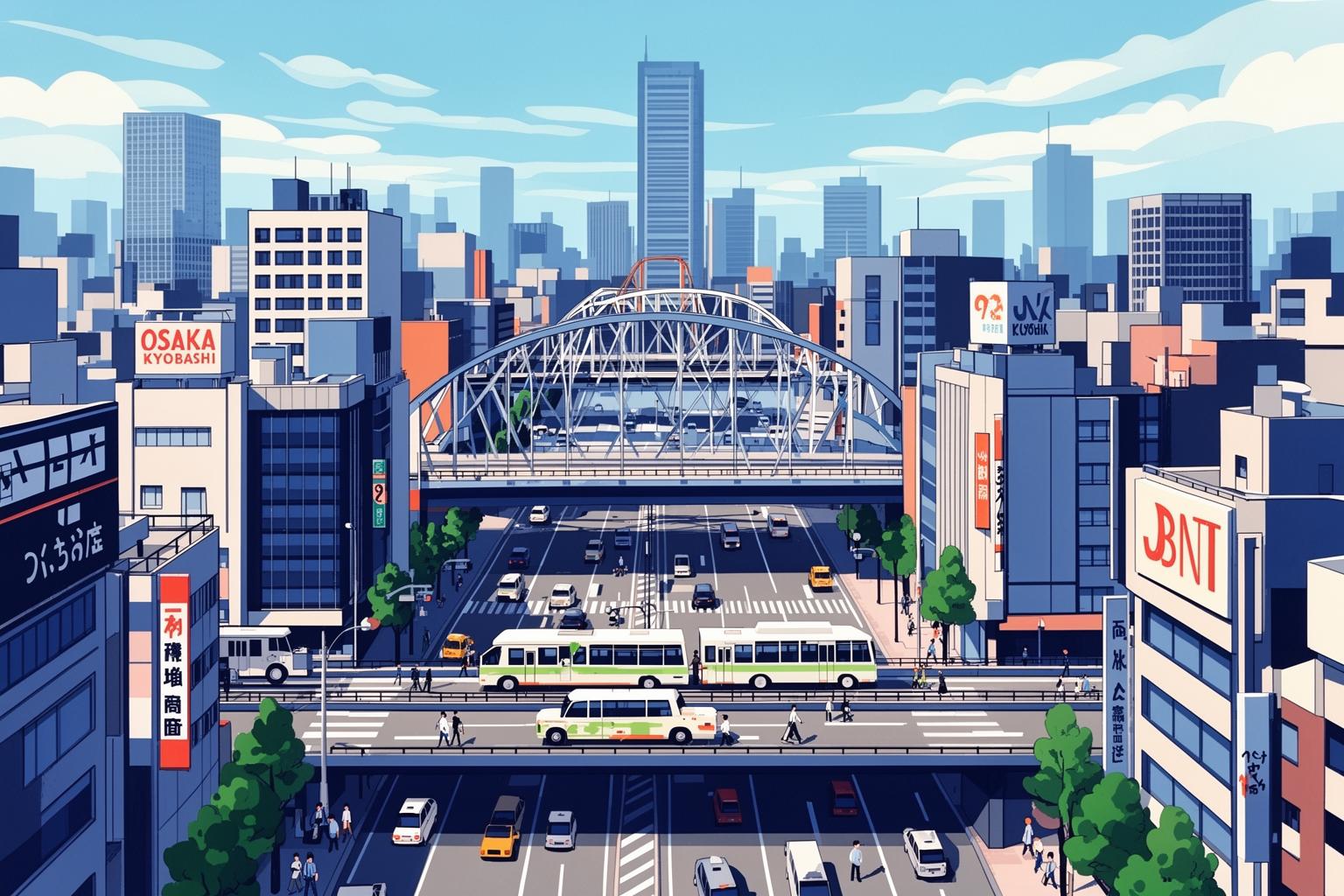
From the first train at around 5 a.m. until well after the evening rush hour, Kyobashi pulses with a relentless flow of people. This is its daytime identity: a hub of pure, unfiltered transit. Standing near the central ticket gates, you witness a masterclass in organized chaos. Streams of commuters flow from the JR platforms, merging with tributaries from the Keihan and subway lines, all driven by a shared, unspoken goal. There’s no hesitation. People here know their route, their transfer points, their exits. They move with the clipped, purposeful pace of those on a mission. The air is filled with the aroma of coffee from station kiosks and the sweet scent of pastries from the Vie de France bakery. The soundtrack consists of the rhythmic beeping of ticket gates and the steady roll of luggage wheels over tile. This is Kyobashi the machine—an impeccably tuned gear in the vast engine of the Kansai economy. It’s efficient, impersonal, and impressive in scale.
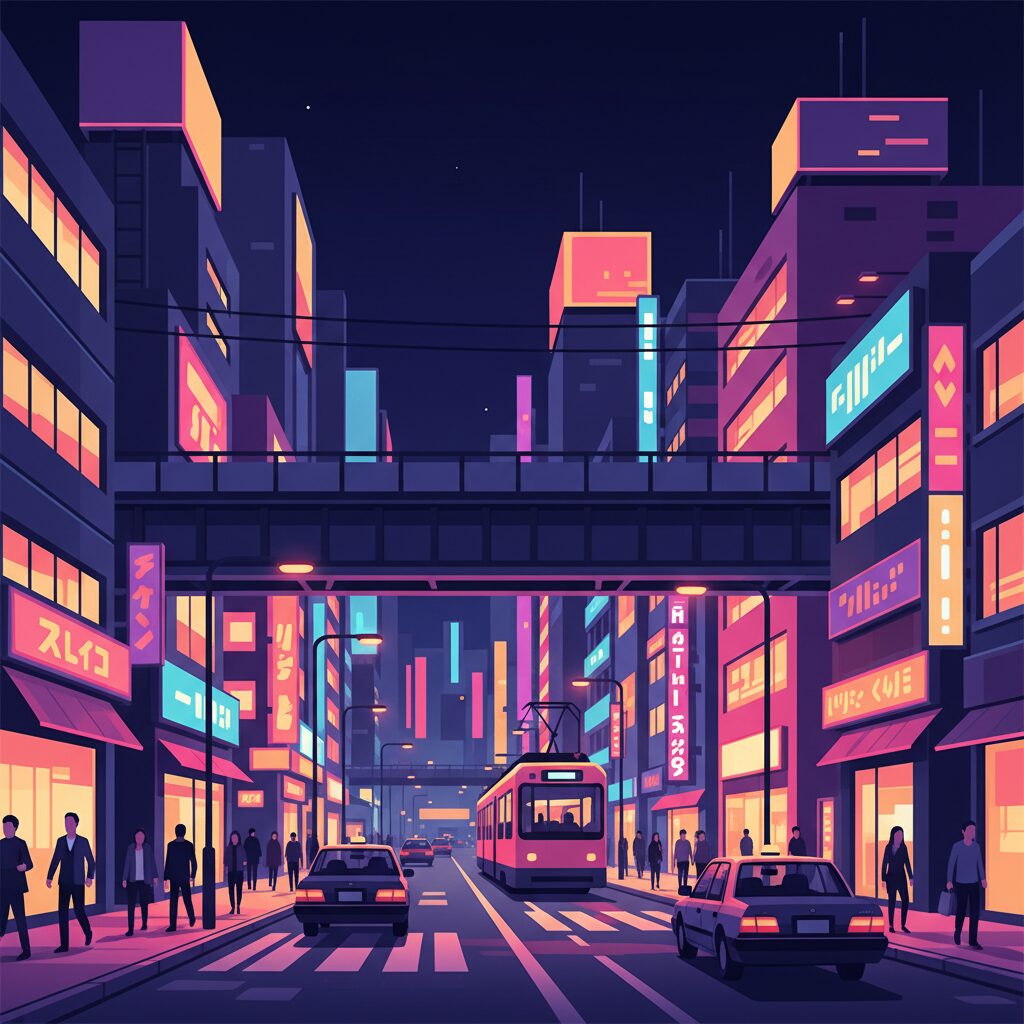
Then, as the sun sinks below the horizon, casting long shadows from the Keihan Mall and Osaka Business Park skyscrapers, a switch flips. The flow of people slows, and currents begin to swirl. The crisp white shirts of salarymen loosen at the collar. The purposeful walk home takes detours into narrow, lantern-lit alleys branching out from the station. The smells of coffee and bread give way to the rich, smoky aroma of yakitori grilling over charcoal, the savory scent of takoyaki, and the faint yeastiness of draft beer. Neon signs, garish and out of place by day, now flicker to life, bathing the streets in a warm, inviting glow of red, green, and blue. The daytime machine transitions into Kyobashi the release valve. Nighttime is about shedding the day’s pressures in the most Osakan way possible: loudly, communally, and affordably.
What Kyobashi Reveals About Osaka’s Work Ethic
This nightly shift offers a deep insight into the Osaka mindset, especially when compared to its perennial rival, Tokyo. In Tokyo, after-work gatherings often take place in chic, minimalist izakayas in Ginza or high-rise bars in Shinjuku—venues designed to impress clients or project success. The experience is carefully curated, and prices reflect both the atmosphere and the product. Kyobashi stands in stark contrast. Here, the preferred spot is the tachinomi, the standing bar. These are often cramped, brightly lit spaces or simple counters tucked into alleys, with no chairs and barely enough elbow room. Patrons stand shoulder-to-shoulder with strangers from all walks of life—construction workers in dusty uniforms, office ladies sharing laughter, and grizzled old-timers nursing a solitary cup of sake.
This is not about image; it’s about relief. It’s about maximum decompression at minimal cost. The concept of kosupa, or cost performance, is elevated to an art form in Kyobashi. A large bottle of Kirin or Asahi might be shared among friends. A plate of grilled chicken skewers costs just a few hundred yen. A bowl of simmered beef tendon, a local delicacy, offers a cheap and hearty meal. This isn’t a sign of poverty; it’s a deeply rooted cultural preference. An Osakan businessperson sees no sense in paying three times as much for the same beer just to sit in a fancier chair. There’s pride in this pragmatism. It’s a philosophy that says, “We work hard, play hard, but we don’t waste money.” Kyobashi’s nightlife is a nightly celebration of this ethos—a loud, smoky, and delicious tribute to the city’s practical spirit.
Deconstructing the Kyobashi Cost of Living: A Line-by-Line Ledger
Beyond philosophy and ambiance, the choice of where to live ultimately comes down to the numbers on a spreadsheet. Kyobashi’s main attraction is its nearly unbeatable combination of exceptional convenience and unexpected affordability. It’s a neighborhood that lets you live right in the heart of the city’s transportation network without the premium rents demanded in Tokyo or in other prime Osaka areas like Umeda or Shinsaibashi. Breaking down the cost of living here reveals the concrete financial advantages of embracing the Kyobashi paradox.
The Rent Reality: Finding Your Sanctuary Amidst the Chaos
For most residents, rent is the largest expense, and this is where Kyobashi stands out. The area offers a wide range of housing, from older Showa-era apartment buildings to sleek, modern condos, all at price points that feel like a bargain considering the location.
Apartment Types and Price Points
The typical rental for a single person or couple is the classic Japanese 1K (one room with a small, separate kitchen) or a 1DK (one room plus a dining/kitchen area). For a standard 1K apartment of about 25 to 30 square meters, within a 5 to 10-minute walk from Kyobashi Station, rents typically range from ¥55,000 to ¥75,000 per month. This is a notable discount compared to other major hubs. A similar apartment near Umeda or Namba would easily start at ¥80,000 to ¥90,000 or more. If Kyobashi’s connectivity were transferred to Tokyo’s Yamanote Line, a comparable apartment would likely rent for ¥110,000 or higher.
The trade-off often lies in the building’s age. Many affordable units are in structures from the 1980s or 1990s. These apartments are functional, safe, and often surprisingly spacious, but may have older kitchens, bathrooms with unit baths (a molded plastic unit combining tub, sink, and shower), and less soundproofing than newer buildings. More modern buildings with features like auto-lock security, delivery lockers, and separate toilets and bathrooms tend to be at the higher end of the price range. Initial move-in costs follow typical Japanese standards: security deposit (shikikin), non-refundable key money (reikin), agency fees, and the first month’s rent. These upfront costs usually total three to five times the monthly rent, making for a significant initial investment. Nonetheless, Kyobashi’s lower monthly rent softens this initial financial hurdle compared to pricier neighborhoods.
Location, Location, Location: North vs. South of the Station
The area right around the station buzzes with commercial activity, but just a few blocks away, the atmosphere shifts noticeably. Your residential experience largely depends on which side of the tracks you choose. To the north, in Miyakojima Ward, streets quickly become quieter and predominantly residential with a mix of mid-rise apartments and older single-family homes, offering a relaxed, local vibe. Westwards, across the Neyagawa River, lies Osaka Business Park (OBP), dominated by office towers but with modern residential buildings on its edges, offering stunning views of Osaka Castle at a somewhat higher price.
To the east and south, in Joto Ward, a grittier, more down-to-earth side of Kyobashi emerges. Here you’ll find hidden shotengai (covered shopping arcades), long-established family eateries, and a strong neighborhood community feel. Rents in this area are among the most affordable nearby. A mere five-minute walk can make the difference between living above a noisy pachinko parlor and residing on a quiet street where the only night sound might be the chime of a passing ramen vendor’s cart. This freedom to select your preferred level of urban intensity, while staying steps from a major transport hub, is one of Kyobashi’s most appealing traits.
The Daily Grind: Utilities, Internet, and Mobile Phones
While rent varies by location, the ongoing cost of utilities is fairly consistent across Osaka and Japan. These fixed monthly expenses shape your budget. For a single occupant of a standard 1K apartment, a typical monthly breakdown is:
- Electricity: The most variable utility, influenced by seasonal air conditioning use. Expect roughly ¥4,000 in mild months like spring and autumn, rising to ¥7,000–¥8,000 in peak summer heat or winter cold. Kansai Electric Power Company (KEPCO) is the standard provider.
- Gas: Used for cooking and especially heating water for showers and baths. Costs tend to be stable, typically between ¥3,000 and ¥5,000 per month with Osaka Gas.
- Water: Billed every two months, averaging about ¥2,500 to ¥3,500 monthly. It’s a predictable and affordable utility.
- Internet: High-speed fiber optic internet is standard, reliable, and fast. Services from companies like NTT, au Hikari, or Nuro Hikari cost around ¥4,000 to ¥6,000 per month.
- Mobile Phone: The competitive market offers various options. While major carriers (Docomo, au, SoftBank) have pricier plans, budget sub-brands (ahamo, povo, LINEMO) and low-cost carriers like Rakuten Mobile provide data plans for about ¥2,000 to ¥4,000 monthly.
Overall, budgeting roughly ¥15,000 to ¥26,000 per month for these essentials is wise. Though not unique to Kyobashi, understanding these fixed costs is key to grasping your total financial picture.
Fueling the Engine: The True Cost of Food
Food spending showcases Osaka’s love of kosupa — cost performance. Kyobashi boasts a vast array of affordable options, from supermarkets for home cooking to countless budget-friendly restaurants catering to workers.
Groceries: The Supermarket Showdown
Several quality supermarkets are conveniently located nearby. Life supermarket, just east of the station, is popular for fresh produce, quality meat and fish, and everyday items. For tighter budgets, Gyomu Super (Business Supermarket) offers bulk goods, frozen foods, and imports at rock-bottom prices. There are also smaller independent greengrocers and butchers with fresh local products.
Smart shopping is ingrained here. Savvy shoppers know evening (after 7 p.m.) is prime time when stores mark down perishable items such as sushi, bento boxes, and fresh fish with yellow waribiki (discount) stickers. Scoring a high-quality sashimi platter for 30% or even 50% off is a small, satisfying victory. It’s not about being stingy, but about being clever. A single person who cooks most meals can manage a weekly grocery bill of ¥6,000 to ¥9,000, translating to about ¥24,000 to ¥36,000 monthly.
Eating Out: From 500-Yen Lunch Sets to Izakaya Feasts
Kyobashi is arguably one of Osaka’s top spots for affordable dining. The density of restaurants, especially near the station and inside covered shotengai, is remarkable. Lunchtime sees a flood of salarymen seeking quick, inexpensive, filling meals. Hearty bowls of ramen, udon, or donburi are available for just ¥500 to ¥800. These meals might not be gourmet, but they’re delicious, satisfying, and excellent value.
Dinner is where things get more fun. Tachinomi (standing bars) offer the cheapest option, where drinks and a few small plates can be had for under ¥2,000. Even typical sit-down izakayas maintain reasonable prices. Dinner with friends, including beer or highballs and shared dishes, usually costs around ¥3,000 to ¥4,000 per person. For those mixing home cooking with dining out several times a week, a realistic monthly food budget ranges from ¥40,000 to ¥55,000.
Getting Around: The Commuter Hub Advantage
Kyobashi’s greatest strength is its transportation hub status. Rent savings multiply when considering the time and money saved on transit. The intersection of three major train lines means nearly anywhere in Kansai is within easy reach.
- JR Lines: The Osaka Loop Line connects you directly to major hubs like Osaka/Umeda (6 minutes), Tennoji (12 minutes), and Osaka Castle Park (2 minutes). The Gakkentoshi and Tozai lines also serve the station, linking to suburbs and Kobe.
- Keihan Main Line: A major plus. It offers a direct, comfortable, and affordable route to central Kyoto. Gion-Shijo, Kyoto’s renowned geisha district, is about 45 minutes away for roughly ¥400, enabling easy day trips or regular commutes.
- Nagahori Tsurumi-ryokuchi Subway Line: This east-west route crosses the city, providing access to areas like Shinsaibashi shopping district not covered by JR lines.
If your workplace is on one of these lines, commuting costs are usually reimbursed by your company, effectively making daily travel free. Personal travel fares are low—Umeda is about ¥170 away, while most of central Osaka costs under ¥250 by train. The mostly flat terrain also favors cycling. Using a bicycle can eliminate transportation expenses for local errands and short trips, further boosting Kyobashi’s affordability.
The Unspoken Rules of Kyobashi Nightlife: Beyond the Red Lanterns
Kyobashi’s nightlife is more than just a collection of bars and restaurants; it is a vibrant social ecosystem with its own set of unspoken rules and rituals. For a newcomer, the dense energy of the narrow, smoke-filled alleys can feel overwhelming. However, understanding the culture behind the chaos reveals a side of Osaka that is warm, inclusive, and refreshingly straightforward. It’s a place where social barriers disappear, and genuine human connections arise in the most unassuming settings.
The Art of the Tachinomi (Standing Bar)
The tachinomi is the core of Kyobashi’s social life. To an outsider, it may seem like a chaotic and uncomfortable way to spend an evening, but to a local, it embodies social efficiency. The first rule is to be bold. There’s no host to seat you—you find a space at the counter, squeeze in, and catch the staff’s eye to place your order. Menus are usually simple, displayed on paper strips pasted to the wall, and pointing is perfectly acceptable.
The transient nature of the tachinomi fosters a unique sense of community. Since no one settles in for a long, formal meal, the atmosphere remains fluid and dynamic. Conversations easily ignite between strangers. Osakans are famously direct and curious, so a simple “Where are you from?” is a genuine invitation to chat, not an imposition. You might find yourself talking baseball with a retired handyman on your left and sharing laughs about a tough day at work with a group of young salespeople on your right. The tachinomi acts as a social equalizer—titles and salaries fade away, and every person is simply someone seeking a good drink and company. The etiquette is straightforward: order, eat, drink, pay, and move on. You don’t linger for hours; you enjoy your food and conversation, then give way to the next guest. It’s a social refueling stop.
Navigating the Labyrinth: From Yakitori Stalls to Hidden Bars
Beyond the popular standing bars, Kyobashi is a labyrinth of culinary adventures. The covered shotengai branching from the station are lined with everything from generations-old okonomiyaki shops to modern craft beer bars. The true magic, however, lies in the unnamed alleyways—some so narrow you have to turn sideways to pass through. Peering down these corridors reveals a world of red lanterns, steam rising from food stalls, and the sound of boisterous laughter spilling out of tiny venues with only five or six seats.
Here, Kyobashi’s character sharply contrasts with Tokyo’s polished, often corporate nightlife. There is a rawness here, a sense of organic, unplanned growth. It feels lived-in, not designed. You will find a mix of establishments: numerous wholesome and welcoming yakitori stalls, oden restaurants, and small izakayas. You will also notice neon signs for “snack bars” and hostess clubs, catering to a specific clientele of Japanese businessmen. These are easily identifiable and generally operate in their own distinct sphere. For most people seeking a meal and a drink, the area is overwhelmingly safe and welcoming. The best approach is to be adventurous—if a place looks busy and smells good, it probably is. This is how you uncover the hidden gems that make living in Kyobashi a continuous journey of discovery.
Living Like a Local: The Everyday Rhythm of Kyobashi
The perception of Kyobashi as merely a noisy, 24/7 party zone is a common misconception arising from experiencing only the few blocks immediately around the station. In reality, living here offers a balanced lifestyle. The same convenience that places you at the center of the action also grants immediate access to some of Osaka’s most cherished green spaces and peaceful, community-focused neighborhoods. The true rhythm of daily life emerges in the moments between the rush hours and the late-night festivities.
Beyond the Concrete Jungle: Discovering Green and Quiet
One of Kyobashi’s greatest yet often overlooked advantages is its proximity to Osaka Castle Park. Just a ten-minute walk or a short bike ride west of the station transports you from the crowded urban landscape to a vast area of greenery, history, and calm. This is the city’s backyard—a 105-hectare oasis where residents come to escape the concrete. On any day, the park buzzes with activity: runners follow the paths along the ancient moats, families picnic under plum and cherry trees, and tourists admire the imposing castle keep. For those living in Kyobashi, this isn’t a place reserved for special occasions; it’s part of everyday life—a spot for a morning jog, an afternoon walk, or simply sitting on a bench with a book.
Just north of the station lies the Okawa River. Its banks are lined with cherry blossom trees, forming a stunning pink tunnel in spring that ranks among Osaka’s most popular sakura viewing locations. Even outside cherry blossom season, the riverside promenade serves as a peaceful retreat—a place for cycling, fishing, or watching the tour boats drift by. This easy access to expansive, natural spaces offers an essential counterbalance to the intensity of the area around the station, making Kyobashi far more livable and balanced than its reputation might imply.
The Shotengai Spirit: Community in a Commuter Town
To truly understand the heart of the Kyobashi community, you need to step into one of its local shotengai. These covered shopping arcades, such as Kyobashi Shin-shotengai, offer a glimpse into an older Japan. They stand in contrast to the sleek, modern Keihan Mall attached to the station. Here, flickering fluorescent lights illuminate a mosaic of small, family-run businesses: the tofu maker with a shop perennially filled with steam; the fishmonger deftly filleting the day’s catch; the futon shop with colorful piles of bedding; and the tiny tea seller who always offers a small sample cup.
Here, the fast-paced, impersonal world of the commuter hub slows to a human rhythm. The shopkeepers, who might initially seem gruff and reserved in typical Osaka fashion, soon recognize familiar faces. A nod becomes a greeting, and a greeting turns into a brief conversation about the weather or the local Hanshin Tigers baseball team. This is the nature of friendliness in Osaka—not the overly polite, performative customer service of Tokyo, but a quiet, earned familiarity forged through shared spaces and routines. In these shotengai, you come to see that Kyobashi is not merely a transit point but a collection of real, interconnected neighborhoods, each with its own rhythm and unique sense of place.
The Final Tally: Is Kyobashi the Right Place for You?
Choosing a place to live is a deeply personal decision, involving a balance of finances, lifestyle, and priorities. Kyobashi may not attract everyone, but for a certain type of person, it offers an almost perfect urban formula. It combines exceptional convenience and affordability with the cultural vibrancy of a neighborhood that is unapologetically and authentically Osaka.
A Sample Monthly Budget
To give a concrete example, here is a realistic baseline monthly budget for a single person living comfortably—but not extravagantly—in Kyobashi:
- Rent: ¥65,000 (for a modern 1K apartment, 5-10 minutes from the station)
- Utilities & Communications: ¥20,000 (electricity, gas, water, internet, mobile phone)
- Food: ¥45,000 (a healthy mix of home cooking and dining out)
- Personal Transportation: ¥5,000 (train trips not covered by a commuter pass)
- Entertainment & Socializing: ¥20,000 (izakaya nights, hobbies, etc.)
- Miscellaneous: ¥10,000 (household goods, toiletries, clothing)
Estimated Monthly Total: ¥165,000
This amount, about $1,100 USD at current exchange rates, represents an extremely reasonable cost of living for a neighborhood with this level of access in one of the world’s major cities. Naturally, your personal spending habits will cause this figure to vary, but it provides a solid benchmark for what’s possible in Kyobashi.
Who Thrives in Kyobashi (And Who Might Not)?
Kyobashi is perfect for a particular kind of urban dweller. You will thrive here if you:
- Prioritize convenience above all else. If the idea of reaching Umeda, Kyoto, and Shinsaibashi with no transfers thrills you, Kyobashi is paradise.
- Are social and eager to immerse yourself in local culture. If exploring a dense, lively nightlife and practicing Japanese in a bustling tachinomi excites you, boredom is unlikely.
- Are budget-conscious but don’t want to live in the suburbs. Kyobashi offers central-city living without the central-city price tag.
- Value the raw, authentic side of Japan. If you prefer grit to glamour and character over curation, Kyobashi’s straightforwardness will feel refreshing.
That said, Kyobashi may not suit you if you:
- Need absolute peace and quiet. While residential streets are relatively calm, the constant hum of the city and train lines is never far away.
- Dislike crowds and intense urban settings. The station area can be overwhelming, especially during rush hour.
- Seek a quaint, picturesque, or family-oriented neighborhood. Although families do live here, other Osaka areas offer more spacious parks, wider streets, and a more suburban vibe.
The Kyobashi Mindset: An Osaka Lesson in Practicality
Living in Kyobashi offers an education in the Osaka mindset. This neighborhood doesn’t apologize for what it is. It doesn’t try to be the most beautiful, sophisticated, or trendy part of town. Instead, it is a living machine, built with a sharp focus on function and value. It serves the city’s working people by providing affordable housing, efficient commuting, and places to relax.
Embracing Kyobashi means accepting that a city’s greatness isn’t always in its polished facades but in its bustling, chaotic, and deeply human spaces. It teaches you to look beyond the surface, find community amidst the crowds, and savor the simple joy of a cheap beer and grilled skewer after a hard day’s work. This spirit isn’t just that of one neighborhood—it’s the very essence of Osaka, captured in one convenient, chaotic, and compelling place to call home.