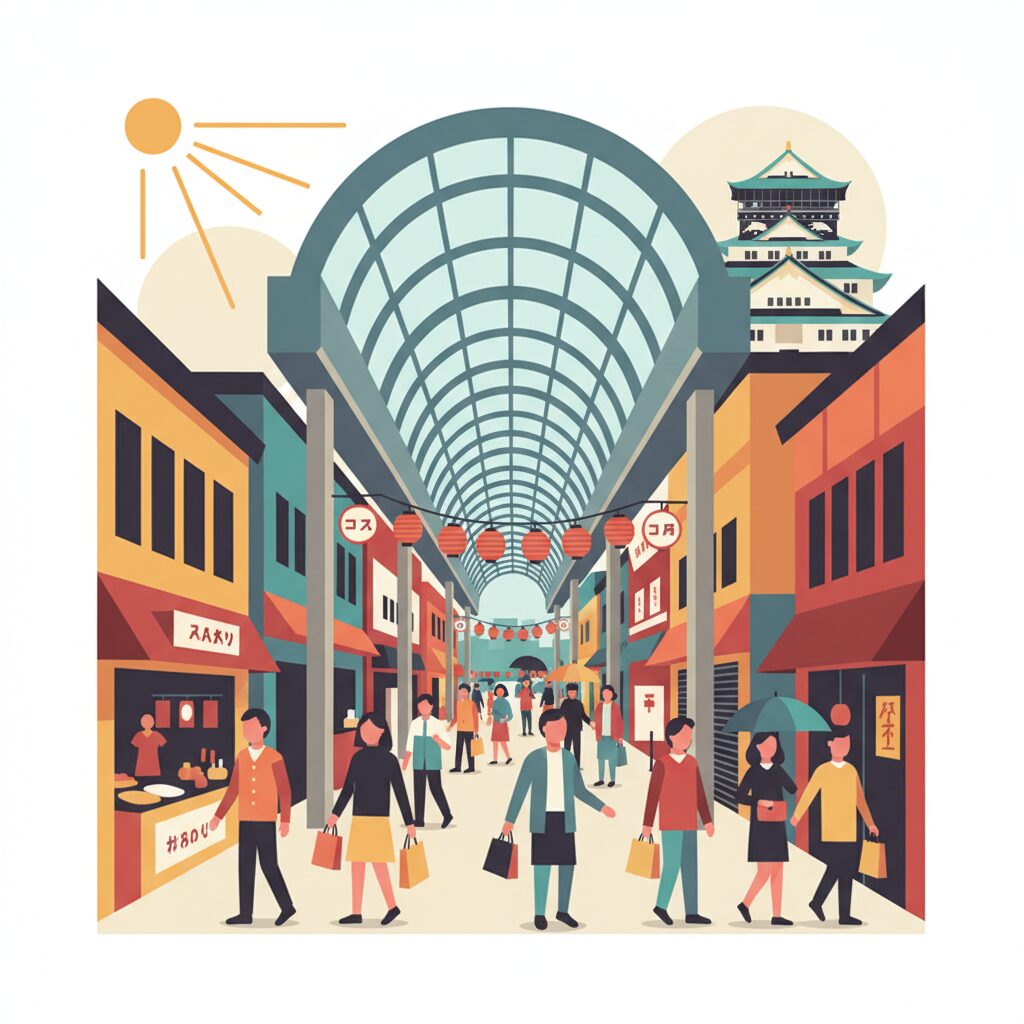
Step out of any local train station in Osaka, stray just a block or two from the main road, and you’ll likely find it. A covered archway, sometimes grand and brightly lit, other times faded and humble, announces the entrance to a world within a world: the shotengai. This is Osaka’s shopping arcade, a concept you might think you understand. It looks a bit like an old-school mall, a pedestrianized street shielded from the city’s notoriously brutal summer sun and its sudden downpours. But to mistake a shotengai for a mere shopping center is to fundamentally misunderstand Osaka. It’s like looking at a river and seeing only the water, missing the current, the ecosystem, and the way it carves the landscape around it. The real question isn’t what a shotengai is, but how it functions as the city’s living, breathing circulatory system. Why do these covered streets, often seen as relics in other parts of Japan, continue to be the absolute, non-negotiable heart of so many Osaka neighborhoods? Because here, the shotengai isn’t just where you buy your groceries. It’s where life is lived, loudly, honestly, and with a rhythm all its own. It’s the stage for daily dramas, the cradle of community, and the most tangible expression of the city’s soul. To live in Osaka is to live with the shotengai, and to understand one is to understand the other.
To truly grasp how these arcades shape the city’s character, it helps to understand the fundamental Kita vs. Minami divide that defines Osaka’s urban landscape.
The Shotengai Isn’t a Mall, It’s the Neighborhood’s Main Street
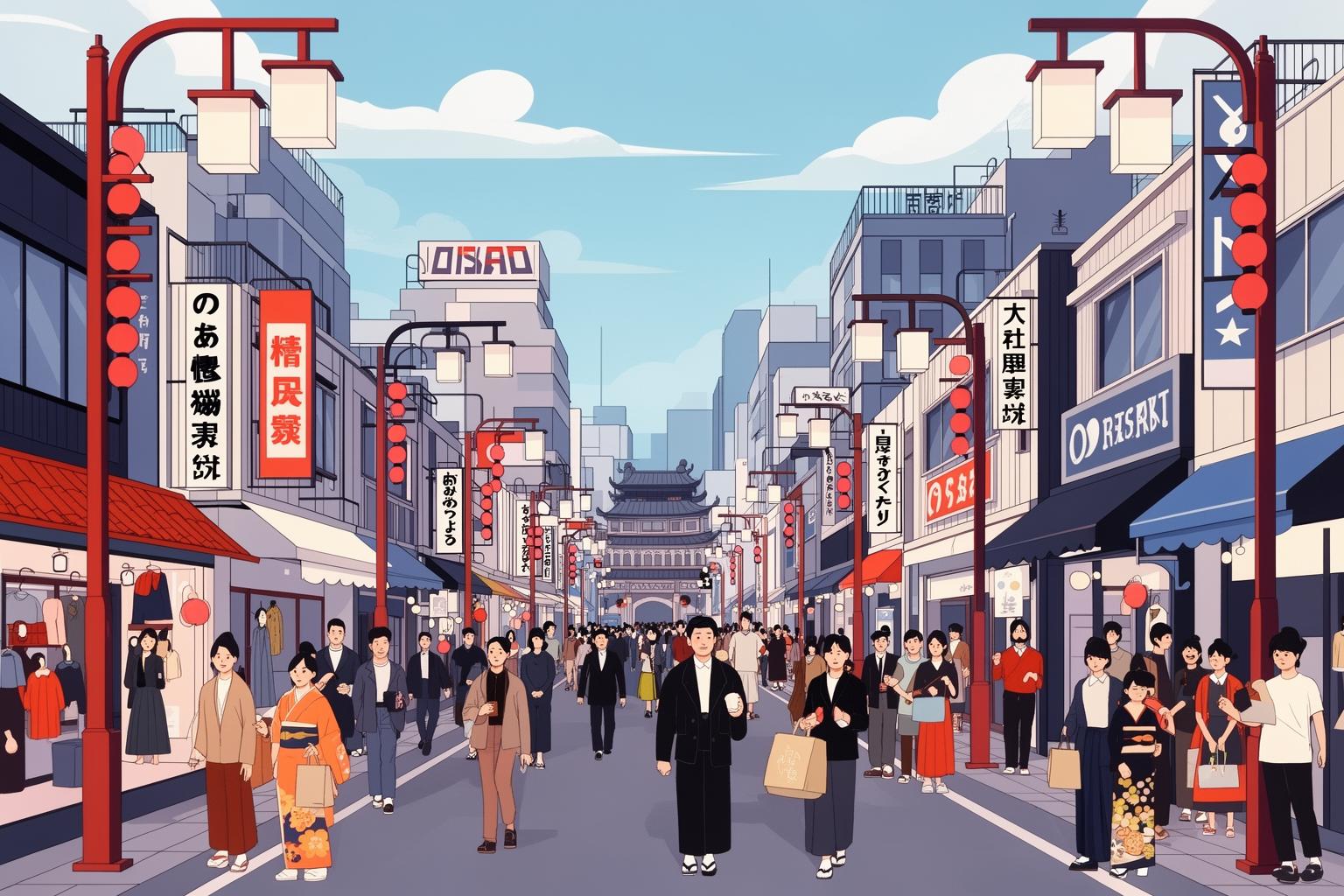
The first and most important distinction to understand is the atmosphere. A modern shopping mall, whether in Japan or elsewhere, is a carefully controlled environment. The music is selected, the temperature remains stable, the lighting is gentle, and interactions follow a corporate training manual. It’s a space designed for smooth, anonymous consumption. In contrast, an Osaka shotengai is entirely different. It’s a vibrant, chaotic sensory onslaught, a place of friction and deeply personal exchange. It’s not an escape from the city; it is the city, just sheltered by a roof.
A Symphony of Senses
Step into a shotengai like the one near Nagai Park or in the maze of streets around Juso station, and the first thing you notice is the sound. It’s a layered blend of human and mechanical noise. There’s the constant, rhythmic clatter and electronic jingles emanating from the wide-open doors of a pachinko parlor, a sound so essential to the arcade’s atmosphere that its absence would feel like silence. Then come the voices. It’s not the polite, whispered “irasshaimase” (welcome) of a department store. It’s a booming, gravelly shout from the greengrocer: “Heee, yasui yo, yasui yo! Kyabettsu hyaku-en!” (Hey, it’s cheap, it’s cheap! Cabbage for 100 yen!). His voice is not just an invitation; it’s a performance, an assertion of his presence and the quality of his goods. Further along, the butcher rhythmically chops meat on a thick wooden block, the thuds forming a backdrop to the high-pitched sizzle of a takoyaki stand. Bicycles—the official mode of transport in Osaka—thread through the crowds with bells ringing impatiently, their riders expertly maneuvering past toddlers, delivery carts, and elderly women pulling wheeled shopping bags. The air is thick with a mixture of aromas that tell the story of the day’s meals: the sweet, soy-sauce-and-sugar scent of grilled unagi; the savory, greasy fragrance of freshly fried korokke (croquettes); the clean, salty tang of the fishmonger’s stall, where shiny silver fish rest on beds of ice; and the warm, comforting smell of bread baking in a corner bakery that’s been there for fifty years. It’s messy, it’s loud, and it’s unapologetically alive.
The Rhythm of the Day
The shotengai’s life follows a clear daily rhythm, a pulse linked to the needs of the community it serves. To understand it is to witness the neighborhood’s schedule laid bare.
The morning, from roughly nine until just before noon, belongs to the serious shoppers: the elderly and homemakers. This is earnest business. They move with intent, their eyes searching for the best deals, the freshest produce. This is when the fish is at its peak freshness, when the best cuts of meat are still available. Conversations are brief and efficient. An old woman points at a daikon radish. “Koreなんぼ?” (Kore nanbo? – How much is this one?). The vendor, without skipping a beat while weighing tomatoes for another customer, calls out a price. A quick nod, and the sale is done in seconds. Shopkeepers know their regulars, their preferences, their families. They might inquire about a sick husband or a grandchild’s school exams. This is the community’s foundation being strengthened, one daikon at a time.
Midday brings a lull. The serious shoppers return home to prepare lunch. The shotengai now becomes a social space. Benches outside the tea shop fill with seniors sipping green tea and exchanging gossip. Shopkeepers, with business slowing, lean against their doorways, calling to their colleagues across the way. You see the tofu maker chatting with the flower shop owner, the pharmacist sharing a cigarette with the barber. This is the downtime, the pause between the day’s major activities, where the social fabric is woven. It’s a time for connection, not just commerce.
The late afternoon signals a second wave. The energy shifts as the sun begins to set. Schoolchildren, freed from classes, race through the arcade, sometimes stopping to spend pocket money on snacks. Then comes the after-work rush. Commuters, tired from the day, flood in from the nearby station. They aren’t browsing; they have a mission. They pick up dinner ingredients—a pack of gyoza from the specialty shop, some grilled fish, a pre-made salad from the sozai (side dish) store. The scent of cooking food grows stronger as izakaya (pubs) and small restaurants begin their evening preparations, their red lanterns glowing invitingly. The shotengai answers the daily question, “What’s for dinner?” and eases the transition from public work life to private home life.
The Merchant’s Spirit: Why Osaka’s Shotengai Feel Different
For centuries, Osaka has been Japan’s commercial hub, known as the “nation’s kitchen” where rice and goods from all over the country were gathered and traded. This rich history has ingrained a unique mindset in its people—an akindo seishin (merchant’s spirit) that is practical, straightforward, and deeply relational. This spirit is most evident in the shotengai, explaining why interactions here feel distinct from the polished, almost sterile customer service found in Tokyo.
“Mokarimakka?” – The Language of Connection
In Tokyo, a typical greeting is a polite remark about the weather. In Osaka, however, the common greeting—especially among business owners—is “Mokarimakka?,” which literally means “Are you making a profit?” The usual response is “Bochi bochi denna,” translating to “So-so, can’t complain.” A foreigner might think Osakans are overly focused on money, but this is a misconception. This exchange isn’t a serious inquiry about finances; rather, it’s a form of social shorthand, a cultural handshake meaning, “We’re both navigating life, trying to make a living. How are you doing?” It expresses solidarity rooted in a shared commercial legacy. It’s warm, direct, and quickly builds rapport. This banter echoes throughout shotengai all day long. It reflects a city that views business not as a cold transaction but as a human relationship. This pragmatism extends to customers as well. Osaka shoppers are famously discerning and budget-conscious—they expect value. Shopkeepers understand this and respond not with slick marketing but with genuinely good deals and personalized service.
The Art of Haggle and the “Omake” Bonus
Though aggressive haggling has mostly faded, playful negotiation remains in shotengai. It’s less about demanding a discount and more about a friendly give-and-take. You might buy five apples and jokingly ask if the vendor can offer a better price. He might chuckle and shave off ten yen. But the true essence of Osaka’s merchant spirit lies in the idea of omake—a little something extra, a bonus. If you buy a few hundred grams of chicken from the butcher you visit weekly, he may throw in an extra wing. The vegetable seller might add a handful of spring onions to your purchase. This isn’t a calculated marketing tactic; it’s a gesture of gratitude. It’s the shopkeeper’s way of saying, “Thank you for your loyalty. Here’s a little something for you.” The omake is the currency of the relationship. It builds a connection that a supermarket’s point card can never replicate. It encourages you to return, not just for the prices but for the bond. This is what underpins the shotengai’s resilience: competing with corporate giants not on scale but on humanity.
A Tale of Two Arcades: The Tourist Trap vs. The Local Lifeline
For many visitors and new residents, their first experience with an Osaka shotengai is often Shinsaibashi-suji. It’s long, well-known, crowded with tourists, and can give a deeply misleading impression of what these arcades truly represent. Recognizing the difference between a shotengai catering to tourists and one functioning as a local lifeline is essential to understanding the city.
The Shinsaibashi Illusion
Shinsaibashi-suji is, in effect, a vast outdoor mall. It’s dominated by global brands like Zara and H&M, national drugstore chains selling cosmetics by the pallet to tourists, and souvenir shops offering takoyaki-themed keychains. Although it’s technically a shotengai, it has lost its neighborhood spirit. You won’t find local grandmothers buying fish for their daily meals here. Nor will you come across a family-run tofu shop that has operated for three generations. The interactions are purely transactional and impersonal. Prices are set for visitors, not budget-conscious residents. For most Osaka locals, Shinsaibashi is a place to visit for a specific reason—to stop by a flagship store or meet friends—but it’s not part of their everyday routine. Judging all shotengai by the Shinsaibashi standard is like judging all American towns by Times Square. It’s a spectacle, not a community center.
Finding the Real Deal: Tenjinbashisuji, Kuromon, and Beyond
To discover the authentic shotengai, you need to explore further. Tenjinbashisuji, Japan’s longest shotengai at 2.6 kilometers, serves as an ideal example. It begins near a major shrine and tourist spot, with its southern end feeling more commercial and visitor-friendly. However, as you walk north, the atmosphere shifts block by block. Chain stores give way to independent shops. You’ll find stores specializing in very specific items: a shop dedicated solely to kombu (kelp), a traditional pickle specialist, a small shop stacked with affordable yet durable umbrellas. You’ll see more locals, their bicycles parked outside the butcher, their shopping bags full. By the time you reach the northern end, it feels like a different world—a quiet, residential shotengai where everyone appears to know one another.
Even Kuromon Ichiba, once called “Osaka’s Kitchen” and the city’s main market for chefs, has increasingly catered to tourists. While the quality remains high, stalls now predominantly sell single portions of grilled scallops and sea urchin for visitors to eat on the spot, rather than raw ingredients for local families. Prices reflect this change.
The true heart of Osaka lies in hundreds of smaller, unassuming shotengai that support its residential neighborhoods. Arcades like Komagawa Shotengai in Higashisumiyoshi ward or Sembayashi Shotengai in Asahi ward are completely free of tourist-oriented pretense. Here you find the pillars of daily life: the greengrocer with dirt still on his carrots, the fishmonger washing down his stall at day’s end, the tiny stationery shop selling notebooks for the neighborhood elementary school, the clothing shop offering comfortable, practical clothes for seniors. The restaurants aren’t trendy cafes but simple shokudo (diners) serving udon and curry rice for 500 yen. These arcades are not tourist destinations; they are lifelines. They serve as the social and economic glue of their communities, providing affordable essentials and services in a familiar, human-scale setting.
The Social Fabric: More Than Just Shopping
The most significant role of the local shotengai is not economic, but social. In an era marked by growing isolation and digital anonymity, the shotengai serves as a crucial, real-world network of human connection. In many respects, it acts as the neighborhood’s open-air community center.
The “Go-Yo-Kiki” Network
Many shotengai continue to function on the principle of go-yo-kiki, which roughly means “listening to your needs.” The shopkeeper is more than just a seller—they are a trusted member of the community. They know that Mrs. Sato’s husband suffers from back pain and must avoid salty foods. They are aware that the Tanaka family’s son recently passed his university entrance exams. This intimate local knowledge turns the shopping arcade into an informal social safety net, especially for the elderly. If a regular customer fails to appear for a few days, it doesn’t go unnoticed. The fruit stand owner may mention it to the butcher, who might then ask another regular living in the same apartment building to check on them. This subtle, low-profile system of mutual care is a powerful form of community support. It offers a sense of security that can’t be found in the impersonal aisles of a large supermarket. This is why many older residents remain deeply loyal to their shotengai: it’s a place where they are more than just consumers—they are known and cared for.
A Stage for Life’s Festivals
The shotengai also serves as the neighborhood’s public square and primary venue for seasonal celebrations and community gatherings. In summer, it is decorated with colorful tanabata streamers, featuring handwritten wishes from local children hanging from bamboo branches. In autumn, handmade decorations for the local harvest festival can be seen. Around the New Year, the arcade hums with a special energy as shops sell festive foods and decorations, filling the air with anticipation. These events are not corporate-sponsored promotions; they are sincere community initiatives. The shotengai promotion association, composed of the shop owners themselves, organizes these festivities. They hang banners to congratulate the local high school baseball team or promote neighborhood health campaigns. The arcade physically embodies the community’s shared experiences, marking the passage of time and celebrating life’s milestones together. This fosters a strong sense of collective identity and belonging.
The Practicalities of Living Near a Shotengai

For anyone thinking about living in Osaka, the proximity and nature of the local shotengai should play a significant role in their decision. Choosing to live near one is a lifestyle choice with tangible advantages and disadvantages.
The Upside: Convenience, Cost, and Community
The benefits are substantial. First and foremost is the sheer convenience. Under one roof and sheltered from the weather, you can complete nearly all your daily errands. You can purchase fresh groceries, pick up a prescription at the pharmacy, get a haircut, drop off your dry cleaning, and buy a birthday cake—all within a few minutes’ walk. Secondly, there’s the cost. Fierce competition among multiple independent vendors selling the same products—several butchers, multiple greengrocers—helps keep prices surprisingly low, especially for fresh food. The focus is always on value for money, a key Osaka principle. A weekly grocery bill from the shotengai can be noticeably cheaper than one from a large supermarket. Third, and perhaps most importantly for foreigners, is the community aspect. If you make the effort to become a regular—to greet the shopkeepers, frequent the same coffee shop, and buy your vegetables from the same stall—you will quickly be recognized. You will no longer be an anonymous foreigner but “the person from that new building.” This small change is huge. It offers an entry point into the local community, helping you feel grounded and connected to your new home in a way that is much harder to achieve in a more anonymous residential area.
The Downside: Noise, Age, and the Fading Light
That said, living by the shotengai is not for everyone. The same liveliness that brings energy can also create noise. The day begins early with the clatter of metal shutters being raised and doesn’t end until the last drunks leave the late-night izakaya. It is far from a quiet existence. Additionally, many of these arcades are aging. The infrastructure can feel outdated. Many shops operate as cash-only, which can be inconvenient in an increasingly digital world. The buildings themselves can be old and not always well maintained. There’s a certain rough charm that some may appreciate, while others might simply find it worn down.
There is also the sobering fact that many smaller shotengai face an existential threat. Japan’s aging and shrinking population, combined with younger generations’ preference for large, convenient supermarkets and online shopping, has led to a gradual decline. In less busy arcades, you may witness the sad phenomenon of “shutter dori,” streets where an increasing number of storefronts are permanently closed. The vibrant community hubs that once flourished are now struggling to survive. The future of these essential neighborhood centers is uncertain, and their potential disappearance would represent a loss of something fundamental to Osaka’s character.
The Beating Heart of Osaka
Ultimately, the shotengai is more than just a collection of shops under one roof. It represents the most genuine, unfiltered expression of Osaka’s identity. It is the place where the city’s history as a merchant capital merges with its practical, no-nonsense modern character. Here, the core values of the city are displayed daily: a deep appreciation for good food, an obsession with value, a preference for direct human connections over corporate anonymity, and a certain affection for lively, organized chaos.
The stereotypes about Osaka—that it’s friendly, loud, and a little rough around the edges—are not inaccurate, but they don’t tell the whole story. The shotengai reveals why those stereotypes exist. The friendliness springs from a culture of mutual dependence developed over centuries of trade. The loudness is the vibrant sound of life and commerce carried out with passion and authenticity. The roughness is the mark of genuine character, the grit of a place that values substance above style.
So, if you’re considering making a life in this city, my best advice is this: set aside the apartment listings and train line maps for a moment. Visit the neighborhood you’re thinking about and stroll through its shotengai. Do so in the morning, and again in the evening. Listen to the conversations. Observe what people are buying. Note the prices. Feel its rhythm. Does it seem lively and welcoming? Does it feel like a place where you could belong? The answer you find there, amidst the noisy, crowded, wonderfully human aisles of the local shopping arcade, will tell you everything you need to know about your potential new home. There, you will discover the true, beating heart of Osaka.