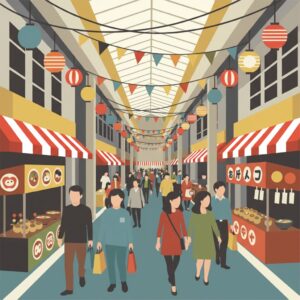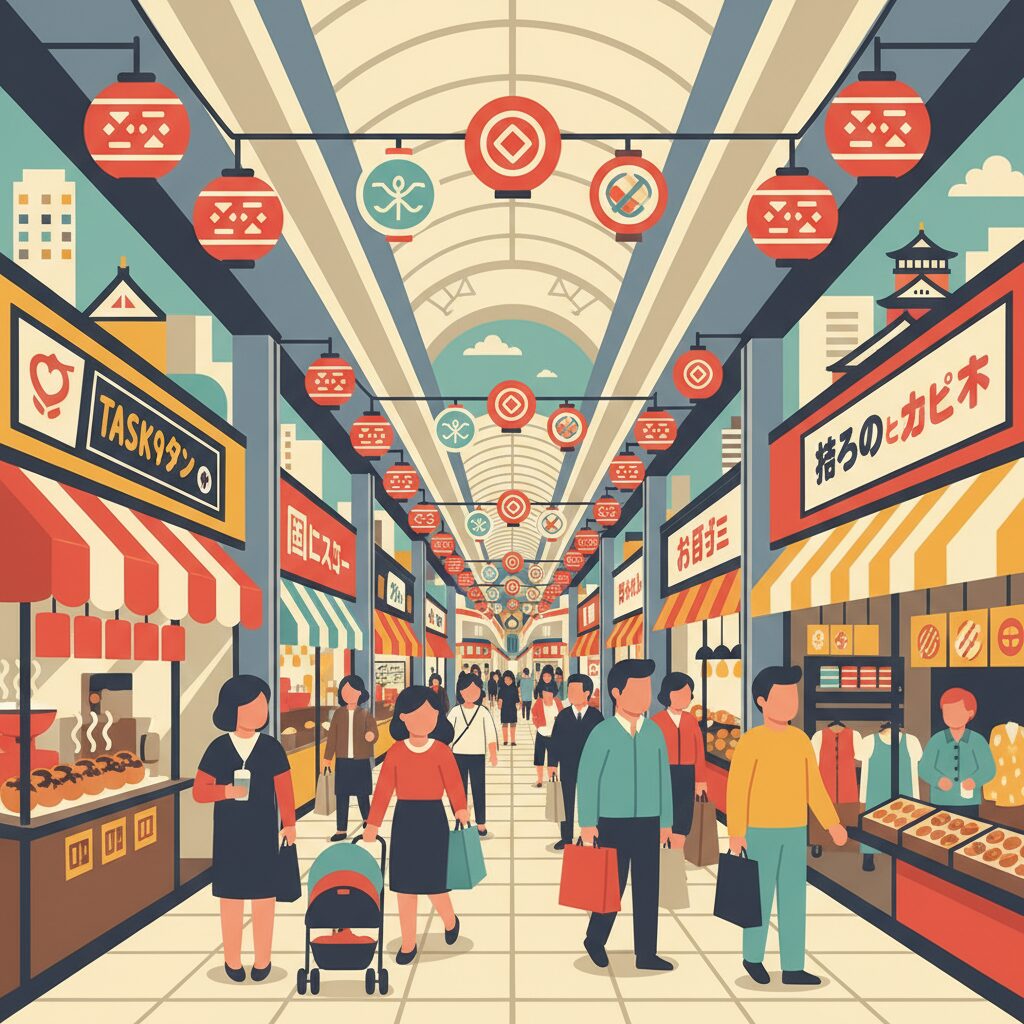
The first time you walk down a proper, old-school Osaka shotengai, it’s a full-on sensory assault. Not in a bad way, but in a way that makes every nerve ending stand at attention. It’s a chaotic symphony of sights, sounds, and smells. The clatter of a shop shutter rolling up, the rich, savory aroma of dashi stock simmering, the rhythmic chop-chop-chop from a butcher’s block, and over it all, a constant barrage of voices. Cries of “Yasui de!” (It’s cheap!) and “Hona, iko ka!” (Alright, let’s go!) mix with the laughter of neighbors catching up in the middle of the narrow lane. But one sound rises above the rest, a constant, percussive greeting that seems to follow you from one end of the arcade to the other: “Maido! Maido! Maido, ookini!”
For a newcomer, especially one from a culture where strangers generally keep to themselves, this can be baffling. Who are they talking to? Me? The person behind me? Everyone? My first instinct was to shrink, to make myself smaller, to avoid eye contact as if it were a binding contract. In the anonymous, polite world of a Tokyo supermarket or a British high street, the staff might offer a generic “Welcome,” but this felt different. This felt personal, insistent, and frankly, a little confusing. What was I supposed to do? Was I being rude by just walking past? Should I say something back? And what on earth does “Maido” actually mean? It’s not in the first chapter of your standard Japanese textbook. This single word is your entry point into the intricate, unwritten social contract of daily life in Osaka. It’s the key that unlocks the difference between merely existing in this city and truly living in it. The shotengai isn’t just a place to buy your groceries; it’s the neighborhood’s living room, its open-air community center, and the stage upon which the daily drama of Osaka life plays out. Understanding its language is the first step to finding your place here.
To truly grasp the depth of this unique social ecosystem, it’s essential to understand why Osaka’s neighborhood shotengai are considered the true hubs of daily life.
Beyond ‘Irasshaimase’: The Soundtrack of Local Commerce
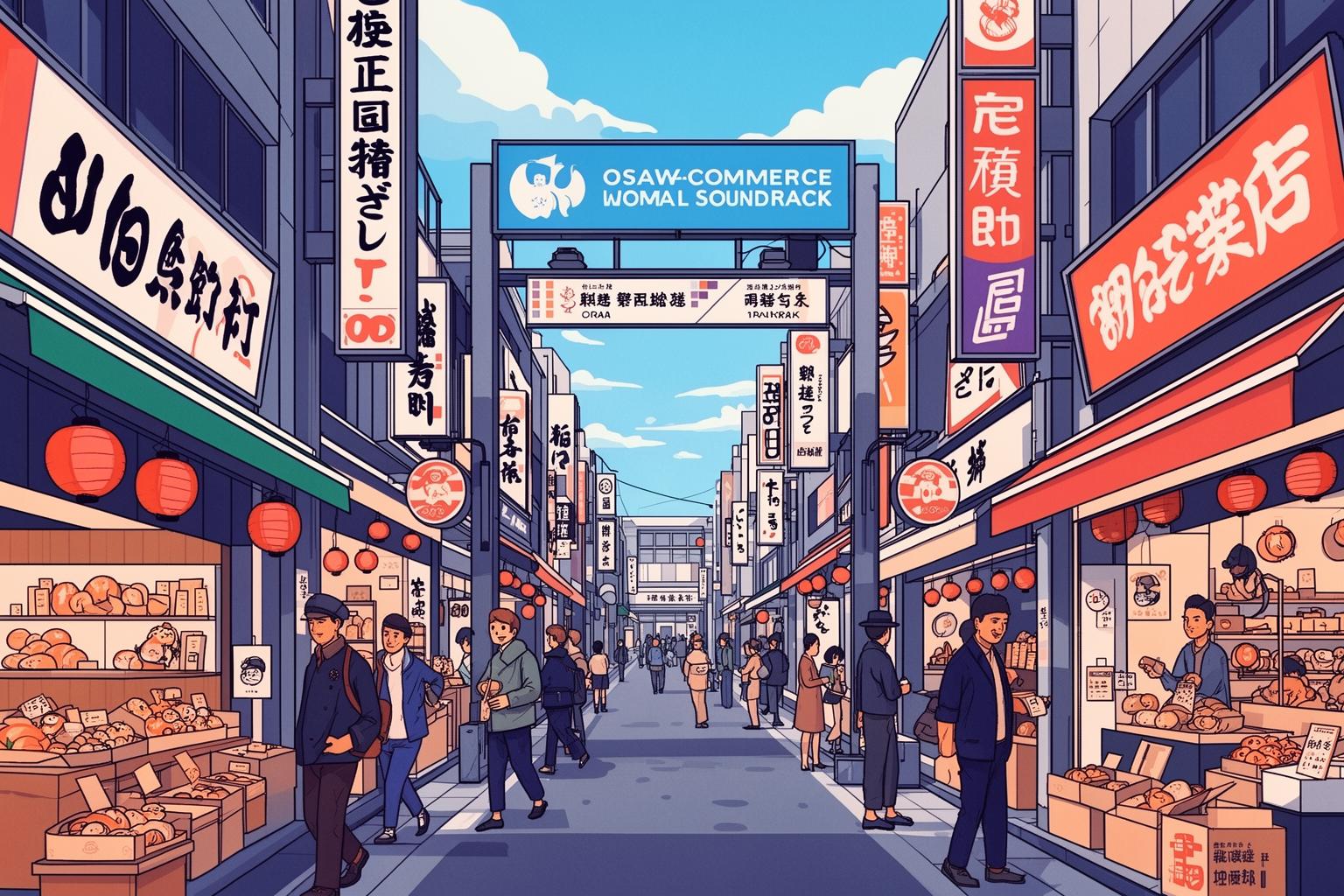
Across much of Japan, the typical retail greeting is “Irasshaimase!” It’s sharp, formal, and somewhat impersonal—a straightforward “Welcome.” You hear it broadcast over speakers in department stores, called out by uniformed staff in chain restaurants, and chirped by convenience store clerks. It’s a one-way message that acknowledges you as a customer without expecting anything in return. It’s a polished, professional sound that keeps a polite distance. While Osaka does use “Irasshaimase,” the true heartbeat of its local economy is “Maido!” Understanding the gap between these two greetings is key to grasping the local mindset.
The Anatomy of a Greeting
“Maido” (毎度) literally means “every time.” The full, more formal phrase is “Maido ookini arigatou gozaimasu,” which translates to “Thank you for your patronage every time.” Over the years, it has been worn down by frequent use, shortened to a punchy “Maido!” or a warm, emphatic “Maido, ookini!” Unlike “Irasshaimase,” it’s not a welcome aimed at newcomers. It recognizes an ongoing relationship—a thank you for past, present, and future business. It’s a word that assumes continuity.
Here’s the key difference: “Irasshaimase” is a passive welcome, casting you as a guest to be served. “Maido,” however, is an active acknowledgement, drawing you into a shared context. Even if the shopkeeper has never met you before, using “Maido” is an optimistic assumption. They greet you as a potential regular, a member of the neighborhood. They aren’t simply welcoming you into their shop, but into their world, assuming you are part of the local ecosystem. It’s a subtle yet profound shift in perspective, essentially saying, “I see you. You belong here. We’re in this together.”
The Call and Response You’re Not Taught in Textbooks
This brings us back to the common dilemma faced by foreigners frozen in an aisle: what is the proper response? The silence and averted eyes that might pass in a Tokyo 7-Eleven can seem oddly rude here. The truth is, there’s a sliding scale of engagement, and doing something is better than doing nothing.
At the simplest level, a slight nod as you pass by is sufficient. A small bow, called an eshaku, paired with a gentle smile, is even better. This completes the social exchange. You’ve accepted their acknowledgment and returned it. You’ve shown you’re a participant, not merely a passive observer. If you feel a little more confident, a quiet “Doumo” (“Thanks”) as you walk past is a perfect, low-pressure response suitable in almost any situation in Japan.
As you become more familiar, you can progress to the next level. A cheerful “Konnichiwa” works wonders. But the real sign you’re getting it is returning the greeting in kind. A confident “Maido!” called back to the butcher as you approach his counter is a game-changer. It signals that you speak the local language—not just literally but culturally as well. It’s a small moment of shared understanding that transforms the whole interaction. You’re no longer simply a customer; you’ve become a fellow player in the daily rhythm of shotengai life.
The Transaction as a Conversation
In many contemporary retail settings, efficiency reigns supreme. The aim is to complete the transaction as swiftly and smoothly as possible: get in, grab your items, pay, and leave. This approach is especially common in Tokyo, where time is highly valued and social interactions are often kept brief to avoid burdening others. In contrast, an Osaka shotengai is guided by an entirely different philosophy. Here, the transaction often serves merely as a pretext for the real event: conversation.
Why Your Tofu Seller Cares About Your Dinner Plans
Approach a tofu stall in a local arcade and point to a block of kinu (silken) tofu. In Tokyo, the shopkeeper would probably nod, bag it, state the price, and finish the exchange within fifteen seconds. In Osaka, the interaction is just getting started. The shopkeeper, likely a woman who has been making tofu in that very spot for forty years, might ask, “Kyou wa hiyayakko ka?” (“Cold tofu today?”). This is no casual question. If you say yes, she’ll ensure you get a fresh, perfectly chilled block. But if you reply, “Ie, nabemono ni,” (“No, for a hot pot,”) her eyes might brighten. “Ah, hona kore yori momen no hou ga ee de. Kuzurenikui shi, aji mo shimiru kara,” (“Ah, in that case, firm tofu is better. It doesn’t fall apart and it absorbs the flavor well.”).
This isn’t an attempt to upsell. It’s expert advice. It’s a type of customer service that transcends the product itself. She takes professional pride in making sure her tofu is enjoyed in the best possible way. The sale comes second to the proper use of the product. This pattern repeats at every stop. The fishmonger asks how you plan to cook the sea bream to decide how to scale and gut it. The greengrocer steers you away from your chosen tomatoes, saying, “こっちの方が甘いで” (“These ones are sweeter”), because he knows his produce inside and out. The interaction isn’t merely exchanging money for goods; it’s an exchange of knowledge and a shared passion for a good meal. This practical, engaged form of friendliness is what people mean when they say Osaka is friendly. It’s not an abstract warmth but a tangible, helpful engagement.
The Art of Banter (and Getting Teased)
As you become a regular, the conversations evolve, sprinkled with a uniquely Osaka element: humor, often in the form of gentle teasing or banter. This may surprise foreigners accustomed to more formal service cultures. You might be deciding which oranges to buy when the fruit vendor calls out, “Nee-chan, mayotteru naa! Sonna kirei na kao shiten nen kara, dore mo issho ya!” (“Miss, you’re hesitating! With a face that pretty, they’ll all taste the same!”). Or you might be buying beer on a Tuesday when the liquor store owner jokes, “Shigoto wa? Ee naa, nonbiri de,” (“How’s work? Must be nice taking it easy.”).
In other settings, this could feel intrusive or rude. But in the shotengai, it’s a mark of acceptance. They tease you because they recognize you. You are no longer just another anonymous customer. You’ve earned a nickname, become part of an ongoing joke, a small role in the neighborhood’s oral history. Responding with a laugh or a quick, even clumsy, retort in Japanese deepens the connection. This contrasts with Tokyo’s polite distance; it’s an embrace—sometimes a bit rough-around-the-edges but an embrace nonetheless. It signifies you’ve crossed the threshold from customer to neighbor.
‘Omake’ Culture: The Unofficial Loyalty Program
One of the most charming and tangible outcomes of these relationships is the culture of omake. Omake (おまけ) refers to a little extra given for free. After you’ve paid for three potato croquettes, the woman at the souzai (deli) shop might toss a fourth into your bag with a wink and a “Kore, omake.” The greengrocer might add a handful of spring onions to your vegetables. The baker might hand you a slightly misshapen bread roll at the end of the day.
It’s important to understand that omake is not a discount. It’s something you should never ask for. It’s a gift — a physical expression of the shopkeeper’s appreciation. It’s the real-world version of a loyalty program based on human connection rather than points or punch cards. It’s a reward for showing up, joining the conversation, and being part of the community. The appropriate response is a simple, sincere “Ookini!” (“Thanks!”). Accepting it graciously strengthens the bond and keeps the goodwill flowing. It’s a small, beautiful economic system built not solely on profit but on mutual appreciation and community spirit.
Navigating the Physical and Social Space

The shotengai is more than just a collection of shops; it’s a living entity with its own heartbeat and daily rhythm. Learning to navigate it comfortably means understanding not only the verbal cues but also the timing and spatial signals. It’s about knowing when to go, how to move, and how to engage with the space without feeling like an outsider.
The Rhythm of the Arcade: Morning, Noon, and Night
Visiting a shotengai at different times of the day reveals completely distinct aspects of its character.
The morning, around 9 or 10 AM, is calm and unhurried. This is the quiet before the rush. The air is filled with the clatter of metal shutters opening and the scent of fresh deliveries. Shopkeepers carefully arrange their goods, mist vegetables with water, and chat with neighbors over tea. It’s the ideal time for a peaceful, leisurely shopping experience. Conversations last longer, the pace is relaxed, and you can truly take your time to explore what’s available. At this time, the arcade feels most like a village square.
Midday, from 11 AM to about 2 PM, is the busiest and most energetic period. The arcade buzzes with activity: mothers with children, elderly shoppers pushing carts, and workers on lunch break fill the space. Bicycles skillfully maneuver through the crowd to the sound of bells. Vendors call out loudly, creating a vibrant, competitive yet friendly din. The atmosphere is electric. This isn’t a moment for casual browsing; it’s time for focused, efficient shopping, accompanied by the usual lively chatter.
The evening, starting around 4 PM, brings a different kind of energy. Lights flicker on, casting a warm, nostalgic glow. The air is filled with the enticing aroma of fried foods and grilled fish from souzai shops showcasing their evening fare. This is when people stop on their way home to pick up dinner. The pace slows once more, conversations grow quieter, tinged with the fatigue of the day. It’s a time to unwind, gather the last ingredients for dinner, and share one final chat before heading home.
To Browse or Not to Browse: The Intimidation Factor
Foreigners often feel pressured to buy, especially in small, stall-like shops run by an elderly person sitting just a few feet from their merchandise. Simply pausing and making eye contact can feel like an invitation to purchase. This concern is understandable, since social norms here differ from those in larger, anonymous stores.
The key is to gauge the environment. In very small, intimate stalls, it’s usually best to approach only with the intention to buy. If you’re just curious, a quick glance while passing by is perfectly acceptable. However, in larger shops within the shotengai—like a fruit stand with several employees, a fishmonger’s long counter, or a dry goods store with aisles—browsing is much more common. You can take your time to examine the items and consider your choices.
If a shopkeeper engages you while browsing and you’re not ready to purchase, there’s an easy and polite way to respond. A smile, a slight bow, and the phrase “Chotto miteru dake desu, arigatou.” (“I’m just looking, thank you.”) is all it takes. This simple sentence is very effective. It acknowledges the shopkeeper’s presence and greeting, which is important, while politely indicating you’re not ready to buy. It relieves any pressure and lets you continue without offense. The worst thing you can do is ignore them completely. In the shotengai, acknowledgment is essential.
Shotengai vs. Supermarket: Choosing Your Daily Life in Osaka
Every resident of Osaka faces a daily choice: the shotengai or the supermarket. Neither is inherently superior, but they represent two vastly different visions of everyday life, and the one you prefer reveals much about what you seek in your city experience. It’s a constant balancing act between convenience and connection.
The Trade-off: Convenience vs. Connection
The modern supermarket is a temple of efficiency. It is brightly lit, climate-controlled, and stocks nearly everything you need under one roof. You can pick up fish, bread, milk, toilet paper, and batteries in a single ten-minute trip. You push your cart, choose your pre-packaged goods, scan them at a self-checkout kiosk, and leave without having spoken a word to anyone. It is anonymous, predictable, and exceptionally convenient. Your money exchanges hands for goods in a clean, frictionless transaction.
The shotengai stands in stark contrast. It demands more from you—more time, more walking, and more social energy. You visit the tofu maker just for tofu, the butcher only for meat, and the fishmonger solely for fish. Each stop involves a separate transaction and a separate conversation. It can be slower, less efficient if measured purely by logistics. But the rewards are significant: the products are often fresher, carefully chosen by specialists who devote their lives to their craft. The guidance you receive is invaluable. Most importantly, you weave a web of weak ties, casual acquaintances that form the community’s foundation. Your money doesn’t just buy a product; it supports a family business, preserves a tradition, and fosters a human relationship.
Why This Model Thrives in Osaka
It is no coincidence that shotengai culture remains strong in Osaka. The city’s identity is deeply intertwined with its history as Japan’s commercial center, known as the “nation’s kitchen” (天下の台所). Unlike Tokyo, shaped by the rigid hierarchy of samurai and the imperial court, Osaka was molded by its merchants, artisans, and traders. For an Osakan merchant, a good deal meant a good personal relationship. Trust, familiarity, and playful banter mattered as much as product quality. Business has always been, and continues to be, deeply personal.
This merchant spirit lives on in the shotengai. Commerce here is not a sterile exchange but a lively, human, and sometimes messy interaction. The pragmatic, no-nonsense, yet warmly spirited character of Osakans is plainly evident. People value a good deal but also cherish a good conversation. This sharply contrasts Tokyo’s more reserved and formal public culture, where harmony often entails polite distance. In Osaka, harmony emerges through direct engagement, the ebb and flow of dialogue, and the shared experience of everyday trade.
Becoming a ‘Joren’: Your Passport to Deeper Osaka Life

In the world of the shotengai, there is a term for the ultimate goal: joren (常連). A joren is a regular customer, a familiar face who frequents the area. Becoming a joren represents the final stage of your integration—the moment you shift from being a foreigner living in the neighborhood to becoming a genuine local.
Being a joren means more than just occasionally receiving an omake. It’s when the fishmonger notices you approaching and starts preparing your usual order of salmon without being asked. It’s the vegetable seller saving the last bunch of especially good spinach for you because she knows you’ll stop by after work. It’s being greeted by name with a cheerful “Alex-san, maido!” It’s having someone ask about your recent trip or how your Japanese studies are progressing. These small, everyday moments of recognition are what make a place truly feel like home.
This status isn’t gained overnight. It’s earned. Earned through consistency and by showing up day after day. It’s earned through small gestures—the nods, the smiles, the earnest attempts to respond “Maido!” in their language. It’s earned by being a good customer and, more importantly, a good neighbor. The shotengai offers a clear, tangible pathway to community integration, something often hard to find elsewhere. Amid the anonymity of a big city, these arcades serve as anchors of community, human-sized spaces where relationships still matter.
So next time you find yourself at the entrance of one of Osaka’s covered arcades, don’t hesitate. Take a deep breath, step inside, and listen to the city’s true heartbeat. When the first “Maido!” is called your way, meet their gaze, give a nod, and maybe, just maybe, respond quietly with your own “Maido.” You’re not just buying dinner; you’re taking your first step into the heart of real life in Osaka.