So you’ve landed in Osaka. You’ve navigated the controlled chaos of Umeda Station, found your tiny but perfect apartment, and maybe even figured out how to separate your burnable trash from your plastics. You’re settling in. But then, a quiet Saturday afternoon hits, and you realize something profound. You’re surrounded by millions of people, yet you feel fundamentally alone. The friendly greetings from the konbini staff are transactional. The polite smiles from your neighbors are pleasant but distant. You’re here, but you’re not in. This is the great paradox of expat life in Japan, a place where societal harmony can sometimes feel like an impenetrable fortress of politeness. You want to connect, to find your people, to build a life that feels less like an extended vacation and more like home. But how do you breach the walls?
Many will point you toward language exchanges, international parties, or hobby classes. These are fine. They work. But they often keep you within the comfortable, predictable bubble of the international community. You’ll meet other foreigners, and Japanese people specifically interested in foreigners. It’s a curated experience. If you want to dive into the real, unfiltered, brilliantly messy heart of Osaka, you need to find a side door. You need a place where the pretense drops, where shared struggle and shared victory become the primary language. You need a team. I’m talking about futsal and baseball. Not as a way to get fit, though that’s a nice bonus. I’m talking about joining a local team as the single most effective cultural immersion tool you can find. It’s where you’ll stop being the “token foreigner” and start being “the guy with the decent left foot who always forgets the corner kick signals.” It’s a baptism by fire, a crash course in communication, hierarchy, and the unwritten social contracts that truly govern life in this city. It’s your ticket to understanding why Osaka isn’t just different from Tokyo—it’s a different operating system entirely. This isn’t just about making friends. It’s about earning your place.
For a more relaxed way to connect with locals after the game, consider unwinding at a traditional Osaka sento to soak up the local culture.
Why Sports? Decoding Osaka’s Social DNA on the Field

In a society that values harmony and subtlety, a sports field stands out as a rare space for raw, unfiltered expression. It’s a place where the carefully maintained layers of tatemae (public face) are shed through sweat, exhaustion, and the primal drive to win. This is especially true in Osaka, a city proud of its honne—its culture of speaking one’s true mind. Joining a team here is more than a pastime; it’s a social and cultural trial. It’s where you learn the real rules of engagement that extend well beyond the field’s boundaries.
More Than Just a Game: A Community Vetting Ritual
First, understand this: when you ask to join a team, you’re not merely asking to play. You’re seeking entry into a nakama—a band of comrades, a tribe. They’re evaluating more than just your athletic skill. Implicitly, they’re asking: Can you handle our humor? Can you show up on time, every time, even when it’s pouring and you’d rather stay home? Can you respect the hierarchy without groveling? Can you contribute to the team’s harmony, not just its score? Your trial practice, or taiken, assesses your character as much as your technique. Did you help carry the goals? Did you chase every loose ball, no matter how hopeless? Did you thank the captain clearly and loudly for the chance? These small deeds serve as data points, gradually building a profile of you—someone who understands that group success and cohesion outweigh personal glory. This is a microcosm of Japanese society, but in fast-forward, with immediate, visible consequences. In an office, a misstep might be whispered about for weeks. On the field, you get an immediate, loud critique, then it’s forgotten. It’s a far more efficient, if sometimes harsh, learning curve.
Osaka vs. Tokyo: Network Compared to Family
Joining a futsal team in Tokyo often feels like attending a business networking event with shin guards. It’s well organized, polite, and somewhat sterile. Conversations focus on your company or fashionable neighborhoods. The connections are real, but often transactional and utilitarian. It’s a network.
Osaka is entirely different. It’s a family—loud, chaotic, fiercely loyal, and communicating chiefly through teasing. Your teammates might not care about your job but will definitely remember and lovingly mock the moment you tripped and missed an open goal. This is not cruelty; it’s a sign of acceptance and affection. In Tokyo, a mistake might be met with silence or polite encouragement. In Osaka, you’ll hear a chorus of groans and inventive insults—proof they see you, acknowledge your presence, and are engaging with you. The senpai-kohai (senior-junior) relationship also differs. In Tokyo, it’s often a rigid hierarchy of deference. In Osaka, your senpai might put you in a friendly headlock as easily as offering wise advice. He’ll make you fetch balls after practice, but be the first to pay for your first round and ask if you’re eating well. The bond feels less formal and more paternal, more tribal. It’s a deeper, messier, and ultimately more gratifying connection that reflects the city itself—a place built not on corporate prestige but on centuries of merchant-class relationships where reputation and reliability are the most prized currency.
The Hunt: Finding Your Team in the Urban Jungle
Finding a team willing to take you in can seem like an intimidating challenge, wrapped in Japanese internet slang and unwritten rules. However, it’s a puzzle that can be solved. The key lies in knowing where these communities exist, both online and offline, and how to approach them in a manner that demonstrates seriousness and respect.
Digital Dugouts: Exploring Online Platforms such as Jimoty and LaBOLA
Your first stop will probably be online. Forget Craigslist or Facebook groups; the real activity takes place on Japan-specific platforms. The two main ones are `Jimoty` (ジモティー) and `LaBOLA`. `Jimoty` is a local classifieds site, Japan’s equivalent to Gumtree or Craigslist, where people post everything from used appliances to calls for new band members. Within its many categories is a lively section for local sports teams searching for players. `LaBOLA` is more sports-oriented, serving as a social network for athletes and teams, allowing more detailed profiles and better search options based on skill levels and location.
Decoding the Language: What “Enjoy-Oriented” Truly Means
While browsing listings, you’ll come across specific terms. Teams often describe themselves with words like `enjoy shikou` (エンジョイ思考 – enjoy-oriented), `gachi-zei` (ガチ勢 – serious/hardcore group), or `shoshinsha kangei` (初心者歓迎 – beginners welcome). These are more than just labels; they are important cultural signals. A common error is to interpret `enjoy shikou` as simply casual play. It’s not. In Japanese sports culture, “enjoy” means “we take pleasure in playing seriously and aiming to win.” It’s a level below `gachi-zei`, who might train several times a week and run set plays, but it’s definitely not informal. This means they won’t scold you for a bad pass, but they expect you to run hard, listen to the captain, and show up reliably. `Shoshinsha kangei` genuinely welcomes beginners, but even then, effort and commitment are expected. Pay attention to other details: do they mention a `nomikai` (drinking party) after every game? That suggests a close-knit social environment. Do they share their league results? That points to a more competitive approach. Read the entire post, not just the headline.
Writing the First Message: Making an Impression That Gets a Response
When you find a potential team, the first message you send is crucial. Avoid one-line messages like “Hey, can I join?” as you will likely be ignored. Your message should balance politeness, enthusiasm, and pertinent details within a semi-formal tone. Start with a courteous greeting (`Hajimemashite`). Introduce yourself, your nationality, and how long you’ve lived in Osaka. Honestly state your experience level. Mention something specific about their team’s post that attracted you—this shows you’ve read it carefully. Then clearly express your wish to join for a `taiken` (trial practice). Close politely (`Yoroshiku onegaishimasu`). Using a bit of Japanese, even if imperfect or translated, makes a positive impression, demonstrating effort and respect for their community. Expect a brief and direct reply; they may just send you a date, time, and location. Don’t mistake this for coldness; it’s simply efficient communication.
The Analog Route: Community Boards and Word-of-Mouth
Don’t overlook the power of offline connections. Visit your local ward office (`kuyakusho`). They often have community bulletin boards with flyers for local clubs, including sports teams. This is a great way to find a team nearby that’s well-rooted in your neighborhood. Another effective approach is to go where games take place. Visit a local futsal court or baseball field on a weekend morning. Watch a match. After it ends, as teams pack up, approach a player. This takes courage but can be highly effective in Osaka, where directness is appreciated. A simple, polite comment like, “That was a great game. I live nearby and I’m looking for a team. Are you accepting new members?” can open doors that websites cannot. It shows genuine interest and a willingness to step outside your comfort zone, qualities that are highly valued.
The First Hurdle: Surviving the “Taiken” (Trial Practice)
The `taiken` serves as your audition—a one-time chance to demonstrate that you are not only a capable player but also the right fit for their group. The pressure may feel overwhelming, but grasping the unwritten rules can make a significant difference. They are watching everything, from the moment you arrive until you depart.
Gear, Greetings, and Grit: The Unspoken Rules of Arrival
Your trial starts the instant you step out of your apartment. The most important and simplest rule is: do not be late. In Japan, punctuality means arriving 10-15 minutes early. If the meeting is set for 9:00 AM, you should be there, changed, and ready to help set up by 8:45 AM. Being late is seen as a deep sign of disrespect, implying you value your own time above the group’s, and is often an immediate disqualifier.
Punctuality is Non-Negotiable
Upon arrival, locate the person who appears to be in charge—the captain. Approach them directly, make eye contact, and deliver a clear, loud greeting: `Ohayo gozaimasu!` followed by your name and a thank you for the opportunity. For example, `Kyou wa taiken ni sanka sasete itadaki, arigatou gozaimasu. [Your Name] desu. Yoroshiku onegaishimasu!` (Good morning! Thank you for letting me participate in the trial today. I’m [Your Name]. I look forward to playing with you.) This formal greeting is essential as it establishes respect and seriousness. Then find a spot out of the way to put on your gear. Observe who is doing what—are they helping set up the goals or laying out the bases? Join in without waiting to be asked. This proactive attitude is a strong positive signal for the team.
The Art of the Self-Introduction
Before warm-ups begin, the captain will likely gather everyone in a circle to introduce themselves. This is a moment of high visibility, so keep it brief, clear, and confident. State your name, where you’re from, your playing experience (humble yourself), and conclude with a phrase that expresses your eagerness to work hard, such as `Minna no ashi wo hipparanai you ni ganbarimasu!` (I’ll do my best not to hold everyone back!). This self-deprecating humor is a classic Japanese icebreaker and demonstrates your understanding of your role as a newcomer. For the rest of practice, hustle—chase every ball, call for passes, and communicate, even if only with a hand signal or a loud `Hai!` Show that you’re engaged, energetic, and, above all, prioritizing the team’s needs over your own desire to stand out.
On-Field Communication: It’s Not Rude, It’s Osaka-ben
Many foreigners are thrown off by this. The polite, quiet Japan you expect disappears as soon as the whistle blows. The communication style, particularly in Osaka, can seem blunt, aggressive, and critical. You will be shouted at. Your mistakes will be loudly and colorfully pointed out. The key is to realize this is not personal, nor is it anger; it is the language of the game.
Understanding “Akan!” and Other Essential Curses of Encouragement
If you make a bad pass, don’t expect a gentle “unlucky.” Instead, you’ll hear a guttural `Akan!` (No good! / Useless!) from across the field. If you hesitate to shoot, someone will yell `Ute ya!` (Just shoot!). If you’re out of position, you’ll hear `Modore!` (Get back!). These commands drop all politeness for speed and clarity. In the heat of the moment, there’s no time for `-masu` forms. The teasing goes further—a badly missed shot might prompt `Doko蹴ってんねん!` (`Doko ketten nen!`), a thick Osaka-ben phrase meaning “Where the hell are you kicking!?” While extremely rude in an office setting, on the field it’s a sign of camaraderie. The right reaction is not defensiveness or sulking, but to laugh it off with a quick, apologetic hand gesture and then run twice as hard on the next play. Showing you can take criticism—and jokes—is just as important as proving you can handle a pass.
Body Language: Reading the Air When You Can’t Read the Kanji
With limited Japanese, you must become skilled at reading non-verbal cues. Watch your teammates’ body language—where they point, listen to tone rather than just words. A sharp, high-pitched shout signals a warning. A low, drawn-out groan means frustration. A quick clap and nod signals approval. After a goal, everyone, even defenders, rushes to celebrate with the scorer. Join in these rituals—high-fives, back slaps, shouting `Naisu!` (Nice!)—these are universal parts of the language. Your willingness to engage physically and vocally, even with limited vocabulary, shows your commitment to being part of the team’s emotional world. It proves you’re not a passive observer but an active participant in their environment.
From Guest to Teammate: The Path to Belonging
So, you made it through the `taiken`. You ran hard, laughed off the jokes, and at the end, the captain said, “See you next week.” Congratulations, you’ve overcome the first and biggest challenge. Now, the real process of becoming part of the team begins. This stage focuses on learning the duties, hierarchies, and social customs that turn you from a temporary guest (`gesuto`) into a full-fledged member (`membaa`).
The Financials: Grasping Dues, Fees, and Shared Expenses
Japanese amateur sports seldom come without costs. Teams are self-funded, and you’re expected to contribute your share. There will likely be a monthly or yearly team fee (`kaihi`). This covers league registration, insurance, and new equipment like balls or cones. On top of that, you’ll probably pay a small fee each time you play (`sankahi`) to cover field or court rental. This might be collected in cash in a small envelope before each game. Be ready. Always carry small bills. Handing over a 10,000 yen note for a 500 yen fee is a minor social faux pas. You’re also responsible for purchasing your own uniform (`yunifoomu`) if the team has one. The captain will tell you where to order it and how much it costs. Pay promptly. Financial dependability is a stand-in for overall reliability. Being late with your dues is viewed as just as bad as being late for a game. It signals you’re not fully committed to the group.
The Senpai-Kohai Dynamic, Osaka Style
Every Japanese group, from companies to classrooms, is structured around the `senpai-kohai` (senior-junior) relationship. Sports teams are no different; they’re actually one of the clearest expressions of it. But in Osaka, this dynamic has a distinct character. It’s less about strict formality and more about a gruff, hands-on mentorship wrapped in a thick layer of playful teasing.
It’s Not Subservience; It’s Respectful Banter
As the `kohai`, the newcomer, you have certain responsibilities. You carry the heavy equipment. You arrive first and leave last. During water breaks, you might be expected to help distribute drinks. This isn’t hazing; it’s a structured way to show respect for the experience of the `senpai` who built the team you’re now part of. However, your `senpai`’s role isn’t just to boss you around. In Osaka, their main way of interacting is often teasing (`ijiri`). They’ll find your weak spot—your funny running style, your odd Japanese accent, your terrible taste in music—and relentlessly poke fun. Again, this isn’t bullying. It’s both a test and a welcome. They’re testing your resilience and sense of humor. By including you in their circle of jokes, they signal you’re now one of them. The worst thing isn’t being teased; it’s being met with polite indifference. That’s the real sign of an outsider.
The Senior Player as Your Unofficial Life Coach
In exchange for your respect and patience with their terrible jokes, your `senpai` becomes an invaluable resource. This is the unspoken agreement. Once accepted, they’ll look out for you far beyond the sports field. Need a cheap place to fix your bike? Ask your `senpai`. Confused by a letter from the city office? Show it to your `senpai`. Looking for a new job? Your `senpai` might know someone. They become your lifeline, cultural guide, and first genuine safety net in a foreign country. This relationship, forged during a 9 AM baseball game on a sweltering August morning, can become one of the most meaningful and supportive connections you make in Japan. They’ll take a sincere interest in your wellbeing because, as their `kohai`, your success reflects on them and the team as a whole.
The “Third Half”: Where Friendships are Forged

If the game represents the first half and the cool-down the second, then the `nomikai` (drinking party) is the essential third half. It’s where true faces are revealed, hierarchies soften, and teammates turn into friends. In the West, post-game drinks might be optional; in Japan, especially in Osaka, they are a vital, nearly mandatory ritual. Consistently skipping it is social suicide. It clearly signals that you’re only interested in the sport, not the people. And in Japan, the people are always what matters most.
The Post-Game Nomikai: An Obligation You Shouldn’t Miss
After a tough match, someone will inevitably call out, `Kono ato, nomini iku hito!` (Who’s going for drinks after this?). Your response should almost always be yes, at least for the first hour. This is where genuine team bonding takes place. You’ll cram into a noisy, smoky izakaya, squeeze into a small booth, and the shift begins. The captain who was just yelling at you for being out of position will now attentively top off your beer and ask about your family back home. The quiet defender will, after a couple of highballs, reveal a surprisingly sharp sense of humor.
Navigating the Izakaya: Seating, Ordering, and Pouring Drinks
There are rules to the `nomikai`, naturally. As the `kohai`, it’s common to sit near the entrance or at the end of the table, a spot that makes it easier to get the staff’s attention and manage orders. Keep an eye on everyone’s glasses. It’s customary to pour drinks for your `senpai` and others at the table—never let their glass go empty. Likewise, if someone, especially a `senpai`, picks up the beer bottle to pour for you, lift your glass with both hands to receive it. These small acts of mutual care bind the group together. When the food arrives—usually large shared plates of `karaage` (fried chicken), `edamame`, and `yakitori`—don’t just dig in. Wait until others have taken some first. It’s a dance of shared consideration, and your participation doesn’t go unnoticed.
Beyond the Pitch: Conversations That Forge Real Bonds
This is your chance to be more than just a player. Ask questions. Show genuine interest in your teammates’ lives beyond the game. Inquire about their work, families, hobbies. And be ready to answer questions about yourself. They will be curious. Why did you come to Japan? What do you think about Osaka? Can you use chopsticks? Some questions might seem stereotypical, but they usually come from a place of sincere curiosity. This is where you move from being the “foreign player” to “Li-san, the guy from China who works in IT and surprisingly handles shochu well.” This is where inside jokes develop, stories are shared, and the groundwork for real friendship is built—one glass of beer at a time.
Beyond the Drinking Party: Team BBQs, Trips, and Weddings
Stick with a team long enough, and your social duties and invitations will multiply. There will be summer BBQs, the year-end `bonenkai` (forget-the-year party), and maybe even team trips to hot springs (`onsen`). These are key events on the team calendar. Your attendance isn’t merely requested; it’s expected. These occasions cement the group’s identity. Then comes the ultimate sign of acceptance: an invitation to a teammate’s wedding. This is huge. It means you’re no longer just a teammate; you’re part of their life—someone they want standing by them on one of their most important days. When you find yourself at a wedding reception, listening to your slightly tipsy captain deliver a heartfelt, rambling speech, you’ll know you’ve truly made it. You’re not just living in Osaka anymore—you belong.
Futsal vs. Baseball: Choosing Your Cultural Battlefield
While the underlying social dynamics remain similar, choosing between futsal and `kusa-yakyu` (grass baseball) presents two very distinct pathways into Osaka’s culture. One offers a fast-paced, modern, and relatively accessible introduction, while the other provides a slower, more ritualistic immersion into something deeply and fundamentally Japanese.
Futsal: The Fast-Paced, International Melting Pot
Futsal is the city’s sport. The courts are compact, tucked atop buildings in Namba or beneath highway overpasses. The games move quickly, teams are smaller, and the commitment tends to be more flexible. Thanks to its global popularity, futsal teams in Osaka are often quite diverse. You’re more likely to play alongside other foreigners, and Japanese players usually have experience interacting with non-native speakers. The game’s pace—with rapid passes, constant motion, and less rigid positions—reflects the more fluid and informal social structure typical of many futsal teams. It’s an excellent option if you want a quick way to get active, meet a wide range of people, and be part of a community that feels a bit more cosmopolitan. The social aspect remains important, but the weight of tradition is lighter.
Grass Baseball (Kusa-Yakyu): Tapping into Japan’s Soul
If futsal is a conversation, baseball is a ceremony. `Kusa-yakyu` is the amateur form of Japan’s national obsession. Joining a baseball team involves a much deeper commitment. The pace is slower, more intentional, and steeped in decades of ritual. Games are longer, often taking up a significant portion of your weekend. Teams tend to be older, made up of men who have played together for years, often following in their fathers’ footsteps. The language of baseball is a unique dialect, blending Japanese with Anglicized terms (`foa-boru` for a walk, `deddo-boru` for a hit-by-pitch). Rituals are essential: coordinated tipping of caps and loud greetings to the field (`Onegaishimasu!`) before the game, meticulous grooming of the infield dirt, and formal lining up and bowing to opponents after the final out. Playing `kusa-yakyu` means partaking in a cultural institution. It is less forgiving for beginners and demands greater dedication. Yet, if you find your place on a baseball team, you gain access to a layer of Japanese male society that few foreigners ever experience. You come to understand the quiet dedication, respect for form, and passionate love for a game deeply woven into the nation’s identity.
Final Whistle: What Joining a Team Really Teaches You About Osaka
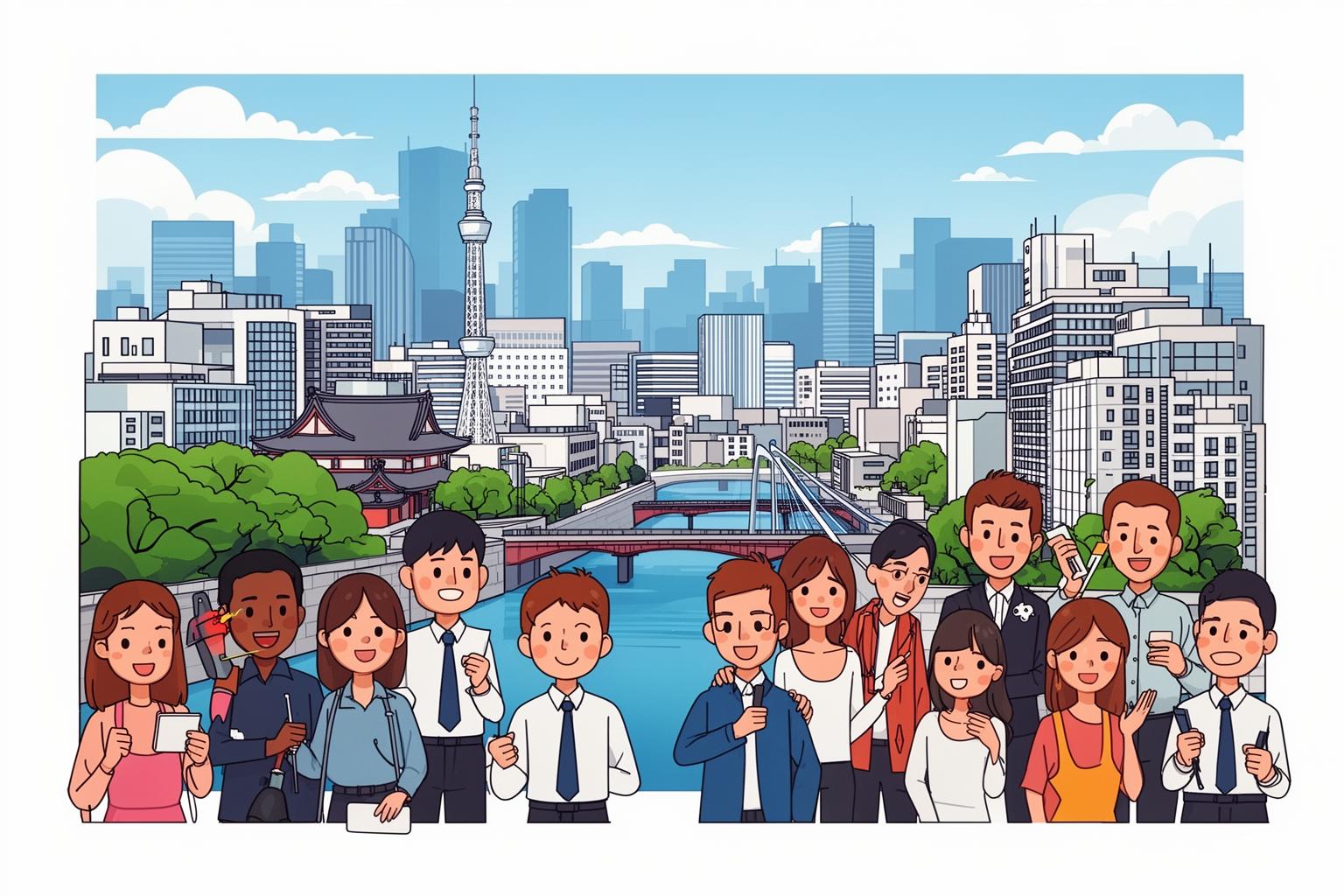
After months of early morning practices, post-game nomikai, and trying to keep up with the rapid-fire Osaka-ben of your teammates, you’ll come to realize that you’ve learned more than just how to trap a ball or lay down a bunt. You’ve absorbed how Osaka breathes. You’ve uncovered the city’s true spirit, not from a guidebook, but from firsthand experience on the field and in the izakaya.
Loyalty Beyond Reason: The Osaka Meaning of “Nakama” (Comrade)
You’ll discover that the gruff exterior and relentless teasing of the Osakan personality serve as a protective shell around a core of fierce, unwavering loyalty. Your teammates will mock you openly, yet they will defend you fiercely when you’re not around. They’re the ones who will show up with a truck to help you move on their day off, who will take you to the hospital if you fall ill, and who will celebrate your small victories as if they were their own. This is nakama—a bond deeper than friendship, forged through shared effort and mutual trust. In a city that can sometimes feel transient and anonymous, finding your nakama gives you an anchor. It gives you a reason to stay.
The Charm of Directness in an Indirect Culture
Above all, you’ll come to appreciate the honesty of Osaka. In a country often marked by ambiguity and subtlety, the sports field offers a refuge of clarity. That clarity spills over into your interactions with your team. They will tell you when you’ve done well. They will bluntly tell you when you haven’t. There is a refreshing absence of pretense. This directness is the very soul of Osaka. It’s the spirit of the merchant who honestly tells you if a product isn’t right for you, of the elderly woman who corrects your Japanese on the street—not to be rude but because she truly wants to help. By joining a team, you learn to speak this language of direct, compassionate, and humorous honesty. You learn to take it, and you learn to give it. And one day, you’ll find yourself on the field, shouting a colorful, unsolicited piece of advice at a new player, and you’ll pause and smile. You’re not an outsider anymore. You’re just one of the guys.